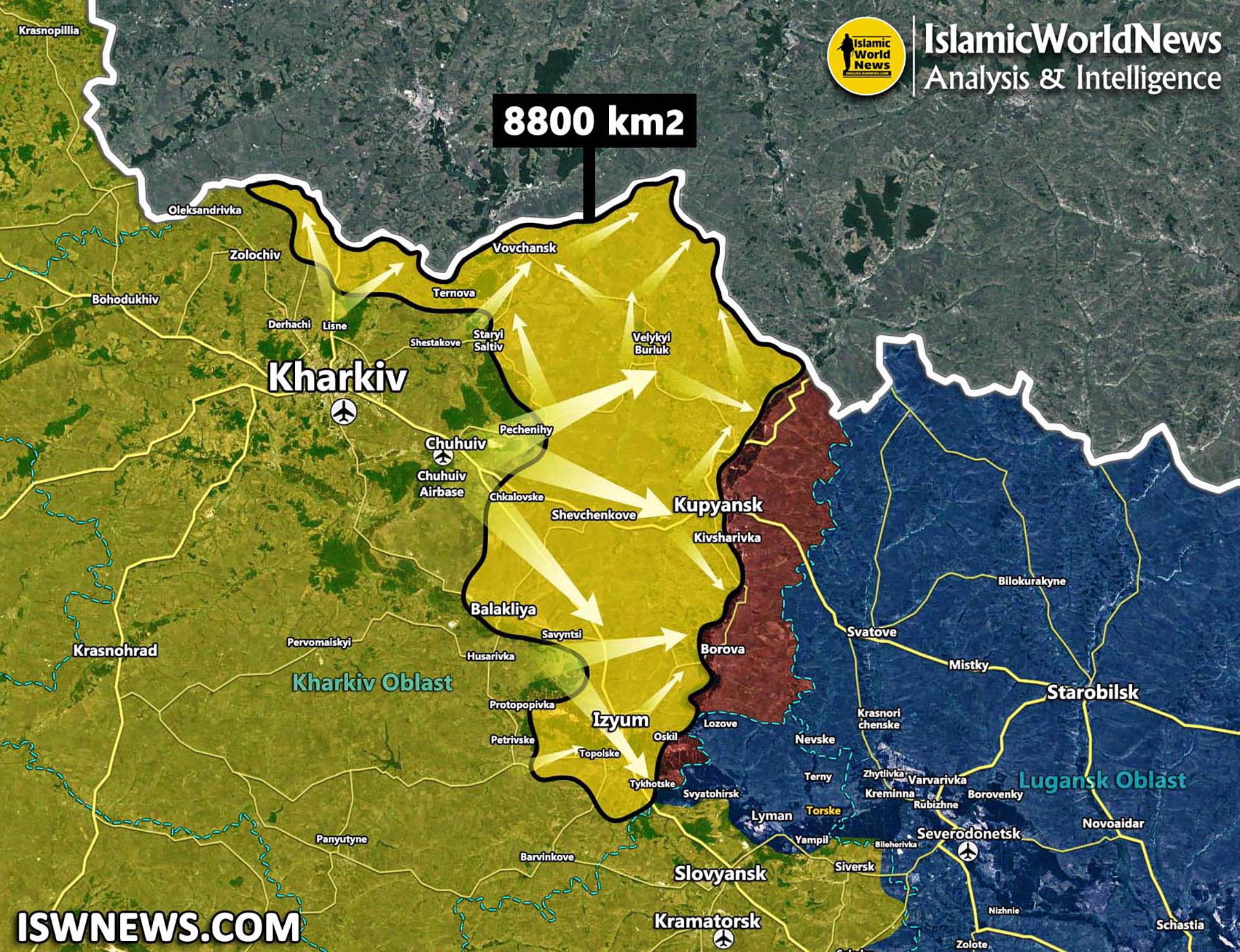
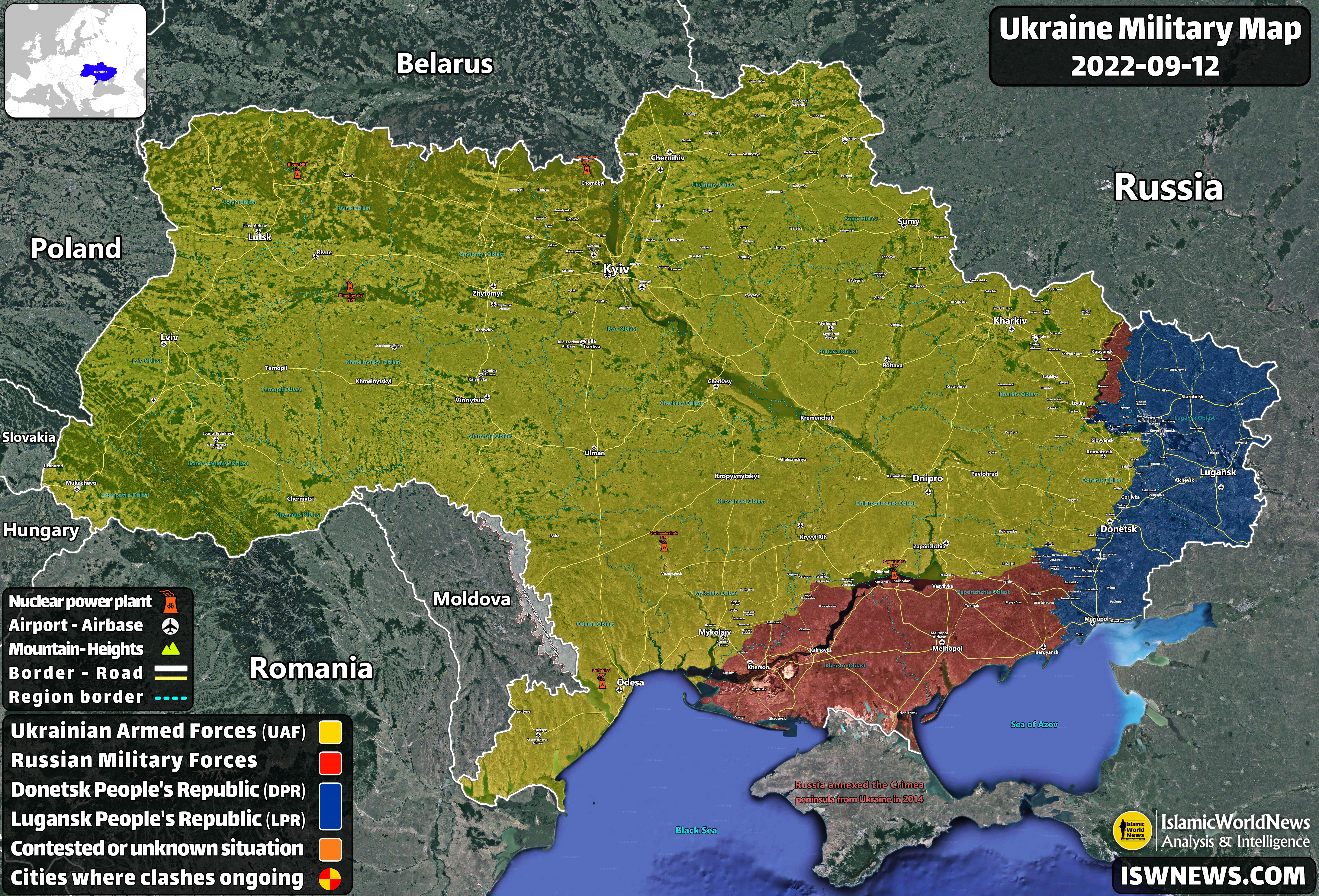
The Russian army completely withdrew from the northern and northeastern regions of Kharkiv oblast, and the Ukrainian army took control of these regions. As predicted, the Russian forces in the north of Kharkiv retreated to the international borders, and in the east of Kharkiv, the forces went behind the Oskil river, and the eastern areas of the Oskil river are the only areas of Kharkiv oblast that are currently under the control of Russian forces.
In this way and with the retreats, about 8800 square kilometers of Kharkiv oblast came back under the control of the Ukrainian government.
It is noteworthy to mention that during the withdrawal of the Russian army from these areas, many Russian descent people of these areas also fled to Russia for fear of genocide, being persecuted, etc.
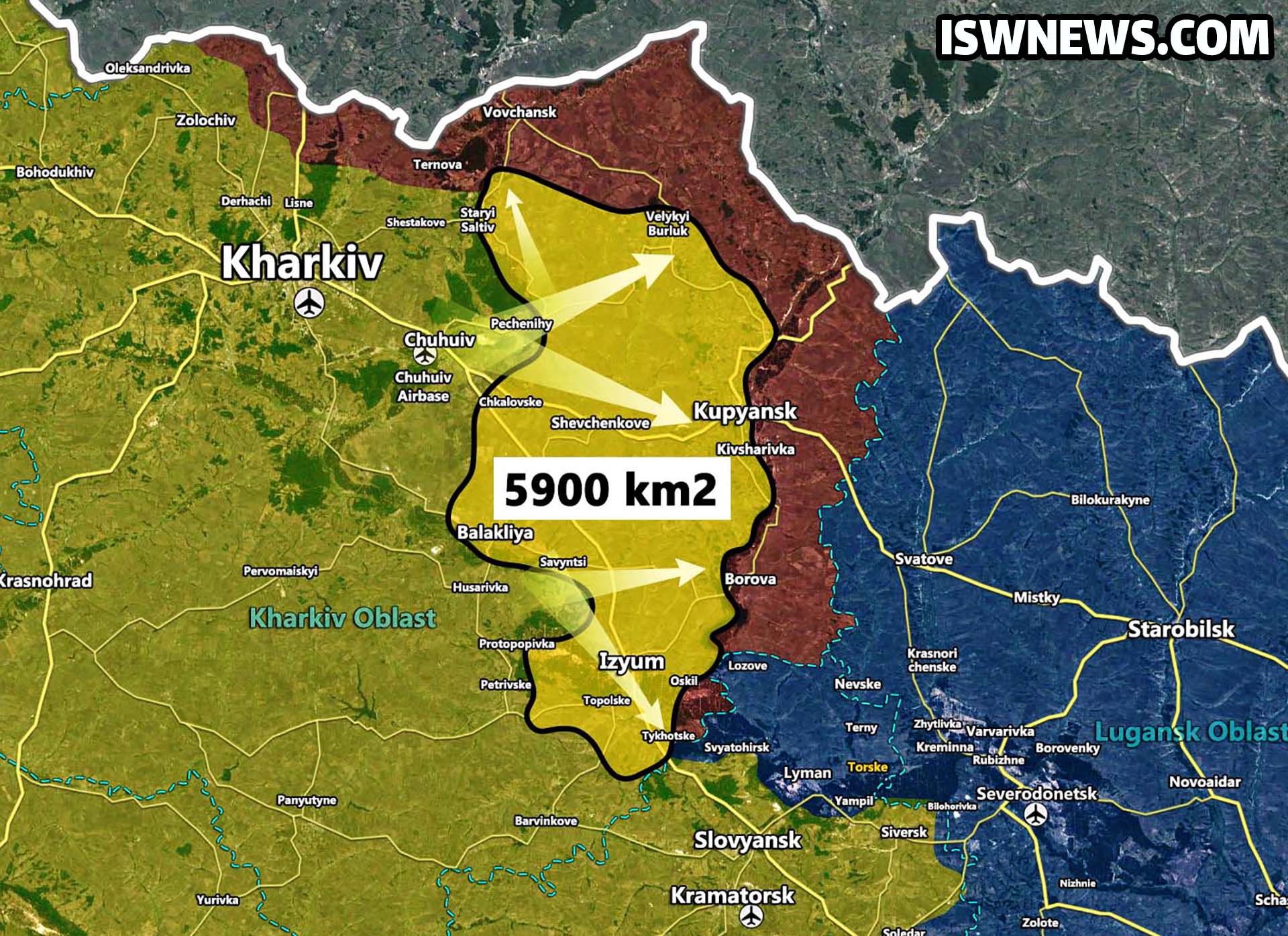
In recent days, Russian Army and its allies withdrew from large areas of the southeast and east of Kharkiv Oblast, and after that, the Ukrainian forces entered the areas almost without any particular conflict and dominated the villages and cities one after the other. During these retreats, important towns and areas such as Balakliya, Izyum, Kupyansk and Dvorichna came under the control of the Ukrainian army. It is safe to say that these retreats are considered to be Russia’s biggest defeat and retreat in the Ukraine war after Russia’s extensive retreats from the northern regions of Ukraine and the city of Kyiv in the early months of the war.
It should be noted that in the course of these retreats, an area of nearly 5900 square kilometers has been controlled by the Ukrainian army, and according to the developments in Kharkiv Oblast, it seems that this area will be increased and the Russian army will retreat to the border lines north-east of Kharkiv. According to the latest information, an order has been issued for the evacuation of the border town of Vovchansk, and the evacuation of this town means Russia’s return to the international borders in this region. During the battles of recent months, the town of Vovchansk was used as a logistic bridge of the Russian army towards the eastern regions of Kharkiv Oblast.
By carefully looking at the field map, it can be seen that the Russians’ purpose for these retreats is to move the forces behind the Oskil River and use this river as a natural defense barrier. A similar tactic that we saw earlier using the Siverskyi Donets River in the same region and parts of Donetsk Oblast in the Lyman axis or Luhansk Oblast at some point of the battles.
But what is the reason for this and why did the Russians withdraw from these areas?
There are many different reasons for the recent defeats of the Russians in Kharkiv Oblast. In the last two months, after Russia’s success in seizing the city of Severodonetsk and advancing towards the important towns of Slavyansk and Bakhmut, we witnessed a long-term stoppage and, in other words, “stagnation” in the eastern fronts of Ukraine. In addition to this issue, on the southern fronts in Kherson and Mykolaiv Oblasts, we have practically witnessed a confusion and stoppage of the Russians. The absence of a comprehensive operational plan by the Russian army and the lack of coordination of operations between the eastern front and the southern front and the failure to use all or most of Russia’s combat capacity in terms of manpower, logistics, ground forces and air fleet, failure to suppress the Ukrainian air force effectively, not suppressing the western military aid sent to Ukraine effectively, relying on old and outdated tactics in the war in Ukraine, etc. are among the reasons that can be clearly seen in the battles in Ukraine.
Despite the importance of the Ukraine war for Russia, in terms of logistics, the Russian army has practically used a small part of its manpower in this war, or has not used all its missile or air power in these battles. Or there are great uncertainties regarding the plan, the general picture and the ultimate goal of Russia’s operations in Ukraine; A subject that emerges in a strange way at every stage of the war. Failure to capture the entire city of Kyiv and its surrounding areas while this was possible, and then extensive retreats from the north, and then a complete focus on the eastern front and the entry of military power into this area, and again reducing or stopping operations in this axis for a period of Almost two months and the confusion between advancing or stabilizing areas in the southern front, practically shows the confusion of the Russian command. On the one hand, the Russians are looking for results, and on the other hand, they are not willing to spend more. If this war is important for Russia and the Russians want to achieve goals in this war, they must devote all or most of their combat power to this war, otherwise they will not have a chance against the Ukrainian army with high manpower; Or the goals will be achieved at a very high cost and in an unknown period of time.
On the other hand, maybe the Ukrainian forces have an easier task than the Russians, and that is to push the Russians back and take back the lost areas. A subject that does not have logistical difficulties and the difficulty of planning an attacker on several fronts. Considering the almost good logistic support of the western countries to Ukraine and the intelligence superiority of the Ukrainians and the use of human forces more than Russia in this war, only a little negligence on the part of the Russians is enough to change the tone of the war in favor of Ukraine. Ukrainian forces have shown that they are capable of resisting and inflicting heavy blows on the Russian army if they have proper support and sufficient logistics, and they have high combat power. Considering that more than six months have passed since the war, the Ukrainian forces have gradually found their combat organization and have come out of the confusion of the initial months. It seems that if the current trend of Russia does not change, in the coming weeks and months we will see more effective attacks and operations by Ukrainian forces to retake the eastern and southern regions.
News of other regions:
The military situation in Luhansk and Donetsk Oblasts has not changed significantly in the last two months, and sporadic clashes continue around Bakhmut, Soledar, North of Gorlivka, west of Donetsk in Mariinka and Pesky, and near Ugledar. In Mykolaiv and Kherson Oblasts, the clashes between the Russian and Ukrainian army forces continue in the Arkhanhelske and Sukhyi Stavok axes in the Ingulets axis. The conflicts in these areas are currently equal and neither side is able to make large advances.
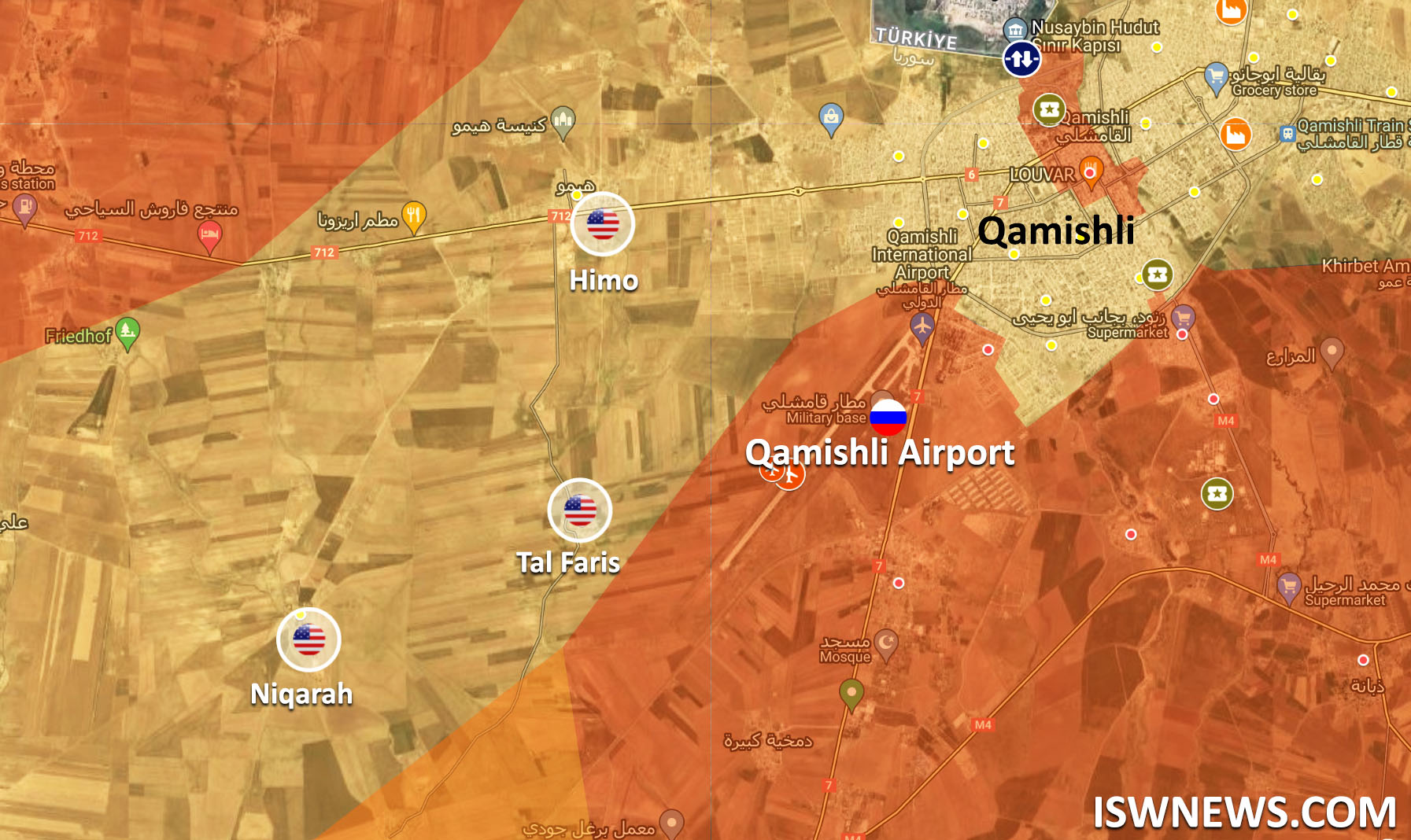
The US coalition built a new military base in al-Naqara village, three kilometers southwest of Qamishli city in Haskeh province. After the two US military bases in Himo village and Tal Faris, this is the third US base around the city of Qamishli.
Considering that the newly established base in Al-Naqara and Tal Faris are located near the Qamishli airport, the US coalition is able to monitor the movements of the Russian military in this airport.
During the last few years, the Russian army has deployed radars, air defense systems, all types of fighters, helicopters and other military equipment in this base and has actually turned Qamishli Airport into its main base in northeastern Syria.
Over the past months, the US coalition has expanded its presence in northeastern Syria by building new bases and deploying more equipment, including heavy weapons. Officially, the United States claims that there are fewer than a thousand American troops in Syria, but the actual numbers seem to be much higher.
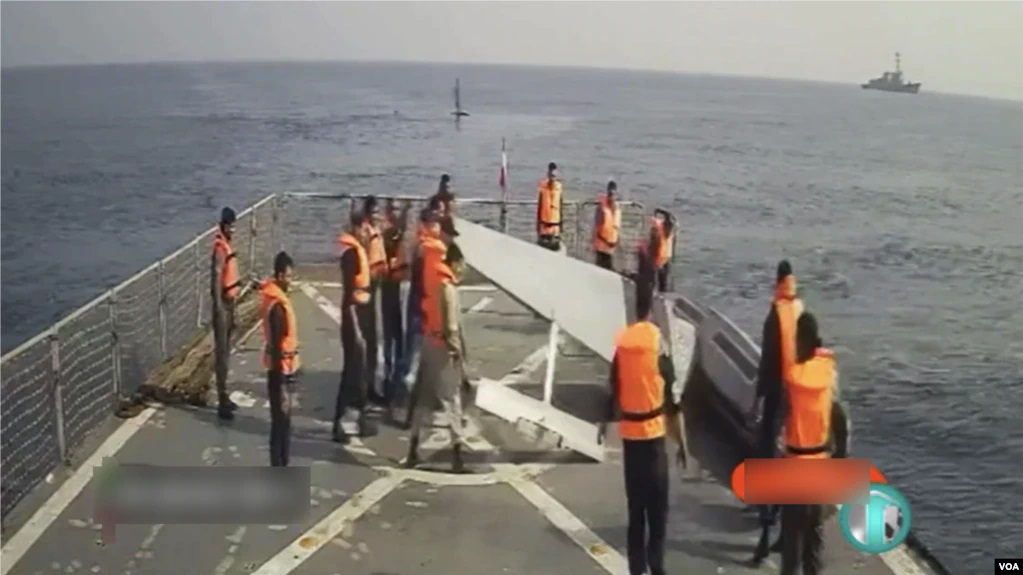
According to Iranian officials, the navigational communication of this unmanned vessel with the control center was cut off and the IRGC seized it with the aim of securing the shipping route in the Persian Gulf and finally with the presence of the US frigate USS Thunderbolt in the area and being justified by security issues and safe navigation, the US drone was released.
Although it is said that the “navigational system failure” is the main reason for its seizure by the IRGC Navy, however, it seems that the navigational communications of this vessel were cut off by the IRGC electronic warfare and then, in a clever move, this valuable asset was seized.
It is important to mention that the United States Fifth Fleet has deployed a new task force known as Task Force 59 since last year with the aim of integrate unmanned systems and artificial intelligence in the West Asia region. Rapid integration of advanced unmanned systems with maritime and coastal operations in areas under the control of the US 5th Fleet, including the Persian Gulf, the Strait of Hormuz, the Sea of Oman, the Strait of Bab al-Mandab, the Red Sea, the Suez Canal and parts of the Indian Ocean, are among the main tasks of this group.
The main purpose of the entry of unmanned vessels or so-called “sea drone” of the United States into the Persian Gulf is to increase the combat power and naval deterrence with low-risk for the American Navy in the southern waters of Iran. Sea drones on surface or below surface can provide many valuable capabilities. These capabilities are especially important in the shallow waters of the Persian Gulf to deal with Iran’s mine warfare systems, small submarines, and fast boats.
As a result, the presence of these systems in the Persian Gulf has a series of risks and also a series of benefits for Iran! Capturing the advanced and required examples of American unmanned vessels will obviously have a significant impact on the completion of the unfinished projects of Iranian unmanned vessels, and Iran’s upper hand in the waters of the Persian Gulf will be maintained.
Release footage of US sea drone by the IRGC in the Persian Gulf
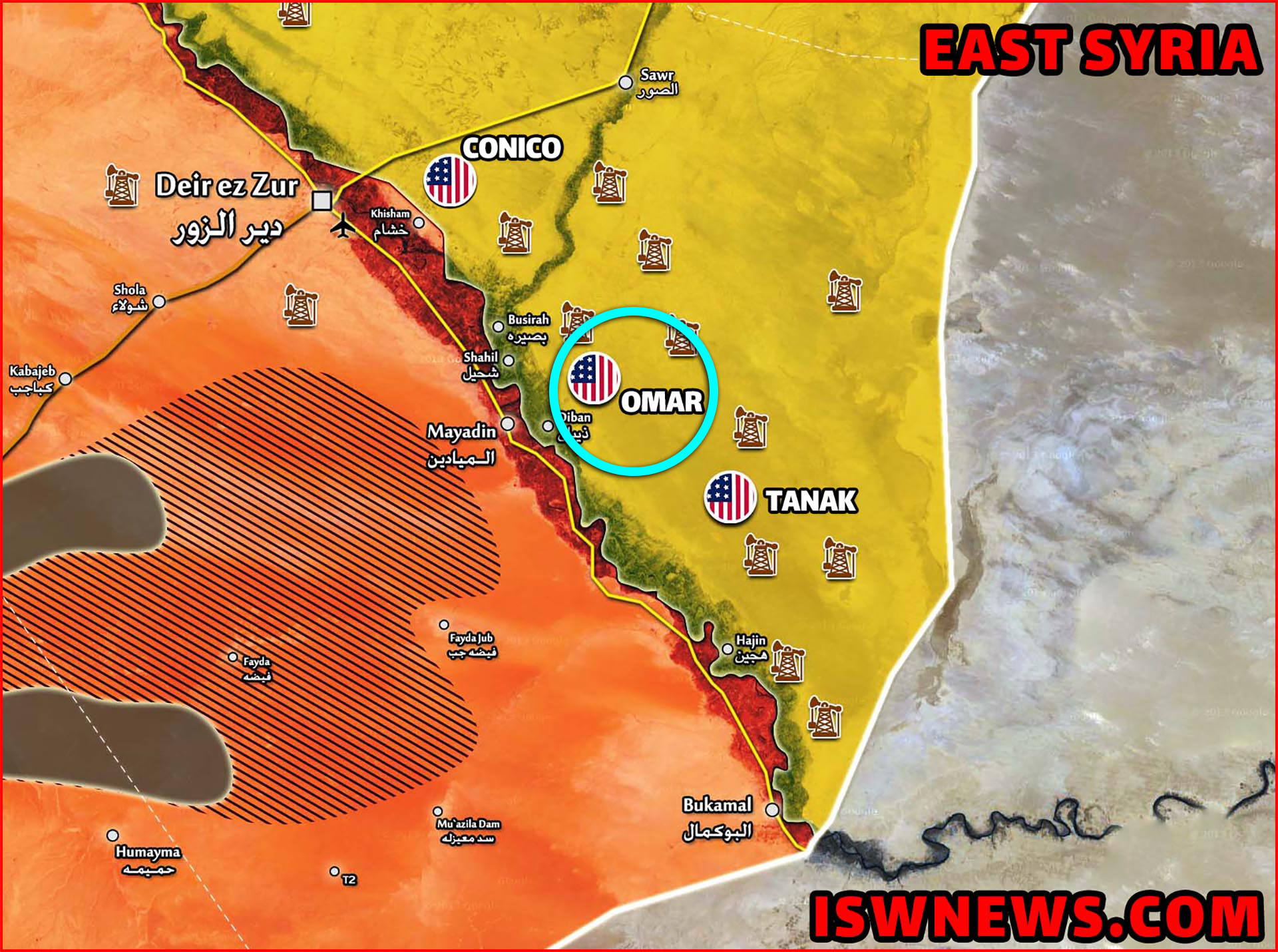
On September 3rd, the positions of the US coalition located in the Omar oil field were targeted by three rockets. So far, no information has been released about the amount of casualties and damages of this attack.
Although no group has claimed responsibility for this attack, but due to the increase of tensions and conflicts between the resistance forces and the US military, it is likely that resistance forces are behind the attack. Our field source has also confirmed this.
It is worth mentioning that also on August 25, in another attack, positions of the US coalition at the Omar oil field were targeted by a drone attack.
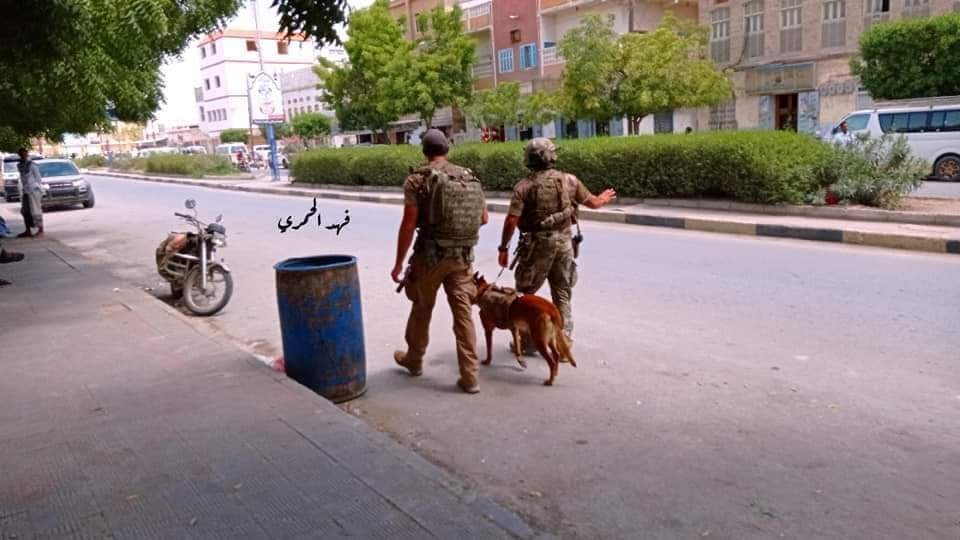
Following the recent escalation of tensions and insecurity in the occupied areas of Yemen, the United States has increased its efforts to increase the security of its forces in the oil fields of eastern Yemen. In this regard, the United States and England have deployed dozens of military personnel in the military base on the outskirts of Al-Ghaydhah airport during the last month.
According to local sources, quoting the employees of Al-Ghaydhah airport, the US transferred more than 20 military personnel to this airport only on Tuesday, August 30. These forces are supposed to be sent to secure the oil fields of Hadhramout province, which is under US colonial rule.
Al-Ghaydhah airport expansion plan was launched since 2018, with the role of General Joseph Votel, Commander of the US Central Command, Francis Townsend, the former US President Donald Trump’s advisor, and US Ambassador to Yemen, Christopher P. Henzel, and Saudi Arabia’s investment. .This base was created to monitor and control the information and security of the eastern and central regions of Yemen and is used by the military and advisers of the United States, UK, and Saudi Arabia.
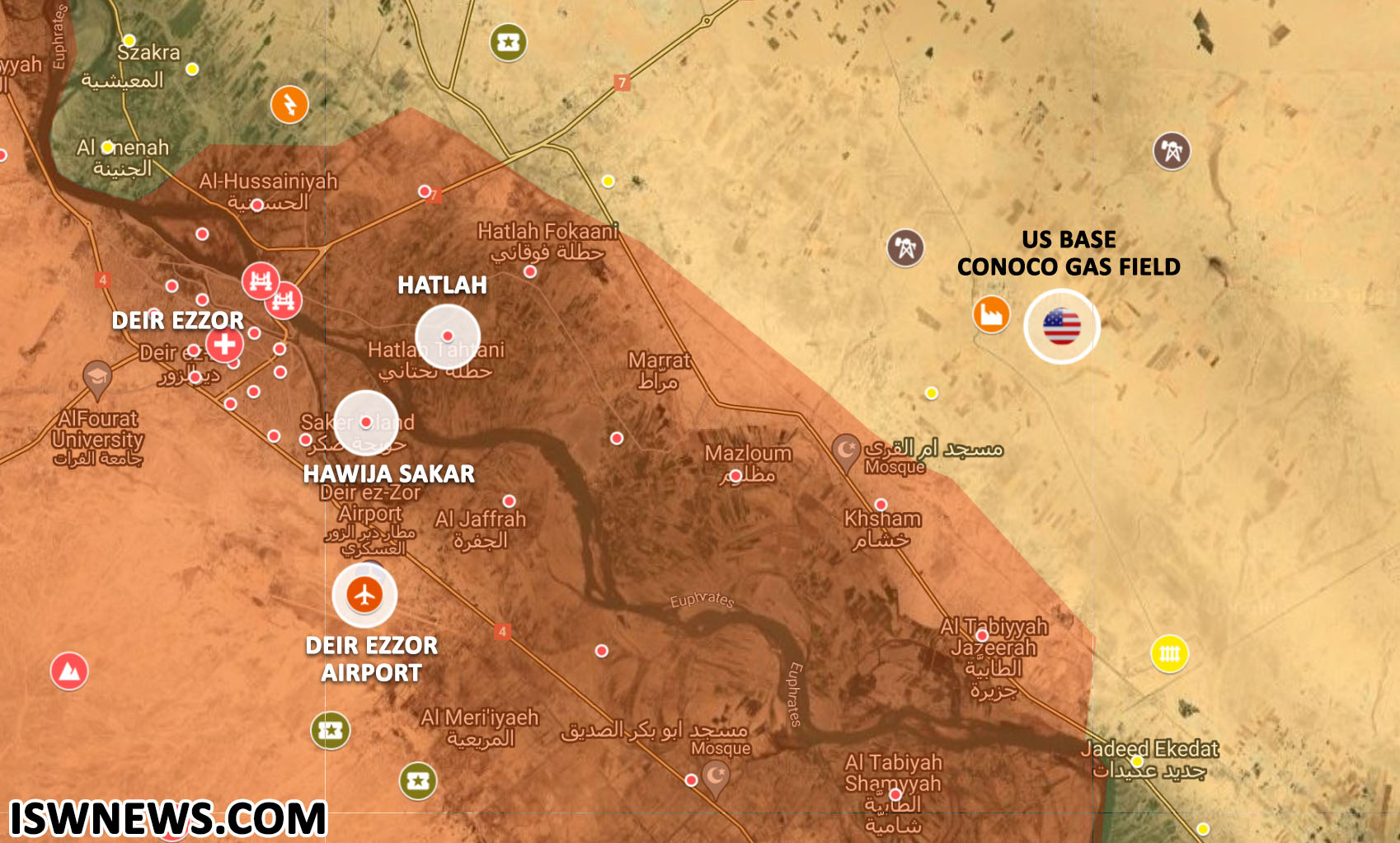
According to field observations, at the same time as the rocket attacks, Syrian army fighter jets and Russian military helicopters were patrolling around the city of Deir Ezzor.
The IWN field source in Syria, in a conversation with us, said that the rocket attacks against CONOCO gas facilities were carried out from Hawija Sakar area in north of Deir Ezzor. After this attack, the US fighter jets bombarded the rocket launch site in Hawija Sakar, as well as the airport and Hatlah area. However, none of the resistance forces and the Syrian army forces were harmed in the attacks.
According to the information released by the US CENTCOM, rocket attacks were carried out around 19:20 (local time) and three US servicemen were injured.
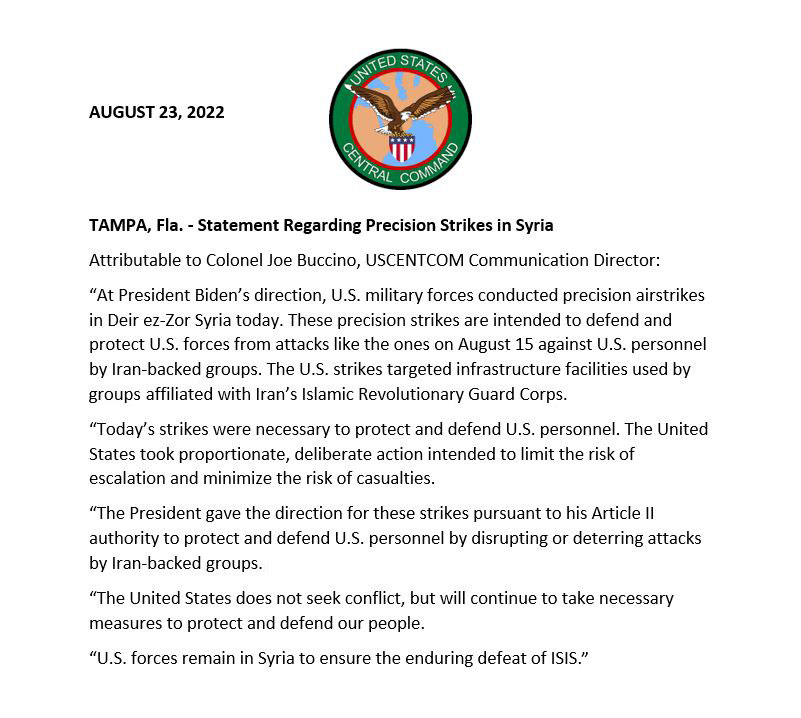
It should be noted that the SAA and the resistance forces rocket attacks were carried out in retaliation to the US missile attacks. One August 23, the US fighter jets bombed the facilities and ammunition depots of the resistance forces and the Syrian army in the Ayyash region of Deir Ezzor province.
According to the US claim, these targets belonged to the forces supported by Iran and the axis of resistance and was carried out in response to the attack of Iranian-backed forces on US positions on August 15.
Centcom’s statement did not mention the targets of this attack, but at the same time as the US attacks, local sources reported an air strike on an ammunition warehouse and a fire in the village of Ayyash located in the northern suburbs of Deir Ezzor city. In this regard, the residents of Deir Ezzor reported the sound of multiple explosions this morning.
It is worth mentioning that on August 15, there were two attacks against the positions of the US coalition in Syria. In the first attack, around 06:30 am (local time), the Al-Tanf US base in Homs province was targeted by a drone attack. At 21:00 (local time), the second attack against the US military was carried out in the Omar oil field with several rockets.