Category: Editor’s Picks

  • Infographic: Ansar Allah’s Report From 2019

    Infographic: Ansar Allah’s Report From 2019

    According to this information, Ansar Allah forces and popular committees:
    – Ansar Allah anti-armored units have destroyed 192 military equipment and 178 armored vehicles of Saudi-led coalition forces.
    – The Yemeni Army and Popular committees carried out 607 operation against the Saudi coalition, among which the most prominent one was liberating north of Dhale province and “Nasr Min Allah” operation in Saadah province.
    – AnsarAllah and Yemeni Army Air Defense Systems shot down 69 Saudi
    coalition aircraft including 7 warplanes, 9 UCAVs and 53 spy drones.
    – Yemeni Army Drone units carried out 2462 drone operations the coalition bases, infrastructures and airports, among which the most prominent one was targeting of the Al-Sheiba oil field, Operation Nine Ramadan and Operation Deterrence 2.
    Ansar Allah’s drone capabilities have increased by 400% since the last year.
    – In 2019, Ansar Allah performed 110 missile operations using Burkan missiles, Quds1cruise missile, Nikal, Qasim and type Badr missiles.
    – Engineering units performed 2752 operations including 1803 operations against gathering and strongholds and 769 against equipment and armored vehicles of the Saudi coalition.

    Click to see the full size infographic
  • US great gamble in Iraq on New Year’s Eve!

    US great gamble in Iraq on New Year’s Eve!

    The US Army’s attacks against Iraqi Kataib Hizballah base near Alqaim city, have left 27 killed and tens injured. This unprecedented attack , was confirmed by US army’s terroristic center(CENTCOM) unexpectedly and even was released photos of attack moment just like attack against ISIS.

    In the recent 90 days, US has been so active in political and civic field of Iraq. From field agents in IYLEP project to intellectual management of social networks with the help of Saudi or some Iraqi colleagues and also manipulation the Iraqi political process to exit the impasse. But what is more interesting , is that US claim that support Iraqi people by imposing sanctions against some Resistance members. While US is the former of the current political system in Iraq and has special portion in Iraqi sources and this country’s financial benefits by its big oil and security and military companies.

    US attacks on Dec 30, 2019 against the Resistance groups in Iraq was a big risk and perhaps a bigger risk for Trump in the eve of US presidential election . US Secretary of State and Secretary of Defense went to Florida to inform Trump about last night attacks!
    But if we go beyond the domestic politics of US and focus on the Iraqi field, it’s clear that US is taking advantage of the current unstable situation in Iraq. A country with an temporary prime minister and challenge in forming a new cabinet, a semi-resigned president and streets full of chaos.

    But what is caused US take such a gambling is a long expectation for destroying of Hashd Shaabi and making it weak. Last night attacks are a double- edged razor for US , because it can have so much strengths and also can be line of wane in Iraq!

    Determinant factor : Resistance response!
    Now all thing depends on the action of the Resistance groups and their supporters. It’s clear that if no proper response is given to these attacks, we will see the continuation and perhaps expansion of these attacks, especially if we see the inaction of the pro-Hashd Alshabi groups.
    After nearly 90 days of various stages of street chaos and challenges at the political level, now it’s clear that regardless of the uninformed people or street chaos, managing these movements in the street floor, public opinion, or in social networks is done by centers abroad Iraq , that have macro aims in Iraq and then beyond this country.

    So companionship of the street-floor protesters and their flow on social networks with these American attacks are predictable after months of trying to create anti-Iranian atmosphere.
    This is a complementary part of US military strikes process to further undermine the Hashd Al Shaabi social and structural level of dissolution.

    Although this is one of the worst scenarios, but it can be proven that this Americans risk may have a different situation. There is an opportunity that not only helps to confronting these attacks and preventing from their spread , but also changes the situation of Iraq developments in 3 recent months and returns the political, social and military balance to the pre-protests. Moreover , confines available options for US.
    So the Resistance’s response to these attacks should be multilayer, a military response in the battlefield and also a response at the community level or on the streets.

    Available solution!
    The swift, decisive and explicit response of Resistance groups with the participation and companionship of various Iraqi pro-resistance in the military dimension and the mobilization of pro-Hashd Shaabi groups with religious, identity and anti-American sharing, can change Iraq’s equation against US and in favor of Resistance movement.

    About the ability of military response by these groups has been proven that before this and with less equipment, forces and geographic accessibility, have been done heavy strikes against US in Iraq. Also a slight shift to an asymmetric battle and observing more protection principles with the cooperation and specialization of different aspects of this battle , will confine US response possibility.

    Today, we see a sharp anger among the supporters of Hashed Shaabi and the Resistance because of the US attack and this anger has been intensified in recent 3 months that several hundreds of people (in Shiite provinces ) with the clear signs of Baathi , anti-Shiite and secular disrupted people’s security and have committed some crimes against people. In this situation, mobilizing supporters crowds of Resistance does not seem to be so hard.

    Also continuing this inactive situation can reinforce majority of rioters and will despond the Resistance supporters, and even it’s possible that empower the opposition groups.

    The presence of anti-occupation people with the religious identity and deep signs in Shiite parts of Iraq can reform Iraqi security and military forces mood that has been weakened heavily in 3 months and can lead to more convergence between Hashd Shaabi and other Iraqi armed forces.
    If this presence, popular support and Resistance’s power of response in the field have a proper function, can be useful in solving Iraq’s political stalemate and also can give power to politicians involved in legal procedure for taking actions. In these situations, dependent or opponent politicians will accept these procedures.

    Meanwhile have been taken good positions by various political currents against the US invasion in the last 3 days. Even the main persons of Sadr group supported of Kataib Hizballah and Resistance, and if they did not support the Resistance response in the future, they will at least take a silent or moderate stance.
    We didn’t include the important and fundamental factor of “Marja” in this equation, because their silence is possible, but if they enter, the situation will certainly be different.

    Finally should be noted that after three months of intense developments in Iraq, Dec 30 attacks can be a fundamental turning point ; for getting all thing or losing everything . For US and for Islamic resistance, too. But effects of this challenge will not confine just to Iraq and will affect on Syria, Lebanon and Yemen directly.

    Written by : J.R.

    Read more:

  • Report of Ansar Allah battle with Saudi Coalition in 2019

    Report of Ansar Allah battle with Saudi Coalition in 2019

    Gen. Yahya Sari’, in a press conference:
    – The army and people’s immobilization could impose new conditions on Saudi coalition.
    We target any hostile act against our nation, forces and country.
    – Any military operation by enemy will be answered likewise and the scale of response to crimes of Saudi coalition against Yemeni civilians will be increased.
    – Saudi coalition forces targeting Yemeni mercenaries is a war crime which should be answered properly.
    We have special order from commandment not to target anyone fleeing from the battle specially Yemeni mercenaries.
    – If commandment orders for an operation, Yemeni forces are ready to blow the enemy hard.
    – We consider plundering Yemen’s wealth in the season and ground as a war crime and will answer it properly. Foreign sides who help the enemy in plundering should take the warning seriously.


    – The coalition launched 6,534 airstrikes against Yemeni provinces; 3,615 airstrikes against Saadah, 1,427 against Hajjah, 424 against Sanaa and 211 against Jawf.
    Other airstrikes, which count 857, were done in provinces Dhale. Marib, Amran, Hudaydah, Dhamar, Taiz, Baydha, Ibb, Lahij, Rimah, Aden, Abyan, Shabwah and Mahwit.
    – Our forces repelled 1,226 operations of Saudi coalition including 163 offensive, 656 defensive, 407 infiltrating operations.
    Also our forces performed 607 offensive, 1044 reclaiming and 35 infiltrating operations, among which the most prominent one was liberating north of Dhale province, “Nasr Min Allah” operation in Saadah.

    – In 2019, Yemeni army missile unit performed 110 operations. Three operations using Burkan missiles, four using cruise missile Quds1, 43 using Nikal, 12 using Qasim and 47 using Badr missiles.

    – Drone units also performed tens of offensive and surveillance operations targeting enemy inside and outside of Yemen.
    The attacking capabilities of the drones have increased up to 400%.
    2,462 drone operations were launched, from which five were joint with missile unit and in 196 operations bases, infrastructures and airports of enemies were hit.
    92 outstanding operations were launched using drones, including the targeting of the Al-Sheiba oil well, Operation Nine Ramadan and Operation Deterrence 2.

    – Air defense could shoot down 69 aircrafts of Saudi coalition, from which 53 were spy drones, nine surveillance and seven warplanes.

    – Sniper unit launched 16,643 operations, in which 228 Saudi soldiers, 142 Sudanese and more than 16 thousand local mercenaries were hit.

    – The armored unit of Yemeni army targeted 192 military equipment, 138 armored vehicles, 40 tanks and 40 bulldozers of Saudi coalition.

    – Engineering unit performed 2,752 operations including 1,803 operation against gathering and strongholds, 769 against equipment and armored vehicles and tanks of the coalition.

    – 2020 is the year of air defense and Inshallah(God willing) is the year of victory. In this year we have plans of expanding military capabilities and industry and strategic reservoirs, on top of them the strategic defensive weapons.
    – Saudi coalition won’t have any security and stability if they continue the war and besieging Yemen. Our defense will continue until complete independence and security of Yemen are achieved.

  • Opinion: The Normalization of the Arab Relations with Israel

    Opinion: The Normalization of the Arab Relations with Israel

    Last year when Benjamin Netanyahu travelled to the neighbor countries like Oman in the purpose of increasing the relationships, it didn’t have a good result not only in the region but also in the whole world.
    The Medias and the analysts expressed that the meeting of Oman officials and the Israeli regime was more than what expected. Even the Aljazeera reporter asked “Yusef Bin Alavi”, the foreign minister of Oman that why you had this meeting? Alavi replied “why shouldn’t I? Is this Haram? Israel is a country in the Middle East and we should look forward and make a new way to the future.

    A new happening is getting started in the Middle East. New plans have been planned for the new generations Muslims, and likely the project of Reforms started.

    The motivation of removing the Israel was formed in the decade 1960 by the union of Arabs in the presidential period of Abd Al-Naser in Egypt. But now the Arab neighbors of Israel are changing the process. By increasing the power of Iran and its allies, the leaders of some Arabic countries have lost their popularity and recently they concluded that Iran is the mutual threat of Israel and the Arab world.

    The surveys show that, from the beginning of the Arab Spring in 2011 till now, the reliability of Arabs to the Islamic parties have been decreased around one third.
    Three-quarters of the Iraqis do not trust the Islamic parties and the amount of youngsters who say no to the religion is really high. (In fact the Secularism school of thought has been increased.)
    The new generation of Arabic leaders are looking for the economic growth and lessening the political problems and even having relationship with Israel.

    This subject is named “Year of compatibility” in the United Arab Emirates. Muhammed Bin Zayed, the crown prince of Abu Zhabi has ordered to build an Ibrahimi family house for commemoration of the visit of Pope for visiting his country. (This house includes a synagogue, a chuch and a mosque.)
    Also in the month of February 2019, in a big change in Saudi Arabia, the pope Francis and 170 thousand catholic people travelled to this country and attended the Saudi festivals.
    In Dubai, the Jews are praying and are active in a synagogue.
    The rabbis of Israel, America, Australia and Europe are attending the conferences of Muslims holding in Abu Zhabi in last 2 years. The king of Bahrain also tried to make relationship with Israel.
    In 2016, he celebrated the “Hanuka Eid” with the Orthodox Jews of New York. Also he ordered some officials for providing the mutual singing and dancing among the Jews and the Muslims. In the following, a group of Bahrain Peace Commission visited Israel.
    These actions despite the conviction of Hamas and other Islamic resistance groups, have become controversial among the Arab Medias.

    By the changes that Bin Salman has made, in the viewpoints of Wahhabi scholars and the officials of Saudi turned completely. The Organization of the World Muslim League which is promoting the Wahhabi beliefs for many years, is holding some sessions with different Jews organizations.
    Some of the Arab social media activists are promoting the Normalization of having relationship with Israel. For example one of these activists is “Mohammed Saud” who travelled to Israel and also visited Netanyahu. He also talked in Hebrew language which he learned in Riyadh.

    Saudi Twitter activist Mohammed Saud meets Benjamin Netanyahu


    In addition to Al Saud the Emirates, Bahrain and Egypt are trying to normalize the relationships to Israel. This happens because they want to prevent the Arab Spring happening again, not let the Muslim Brotherhood gain the power, and not facing the ISIS in Sinai Peninsula and the most important standing against the Iran move and Shiite Islam.

    Israel also chose to have relationships with the Arab countries because their mutual enemy, Iran (which in last decades could rescue the Iraq, Syria, Lebanon and Yemen from the Takfirism) is now more united with the resistance groups in Palestine and decided to liberate this country. Israel definitely needs to have relationship with the Arab neighbor countries to stand against the Islamic resistance.
    Israel is a trading and security partner for the Arab governments and Trump also support this project heavily.
    We can say that the normalization of relationships between Israel and the Arab countries started in the Obama era. It’s because the Arab and Israelis didn’t accept the strategies of Obama so it helped them get closer to each other. After the victory of Muslim Brotherhood in Egypt, Obama abandoned Hosni Mobarak and tried to make friendship with Mohamad Morsi (which made the Saudis pay lots of expenses for the Coup). And he then signed the JCPOA with Iran which make the Saudis and Israelis feeling bad because they wanted Iran’s beliefs to be removed.

    Abdullah bin Zayed’s tweet of Arab-Israeli unity in the name of Islamic reform
    Benjamin Netanyahu’s tweet in response to Abdullah bin Zayed, welcoming normalization of relations


    In overall the normalization of the relations of the Arabs with Israel is in progress more than before.
    “Abdullah Bin Zayed”, the foreign minister of Emirates has tweeted recently and said that a new cooperation is getting formed from the Arab Nation and Israel. He also named it as an Islamic reform. Benjamin Netanyahu also replied to his tweet and said “I welcome the convergence of Israel and many Arab countries. It’s the time for normalization of relations and peace.”

  • Article: The scenario of the Popular Mobilization Forces (Al-Hashd Ash-Sha’bi) extirpating, Part 1

    Article: The scenario of the Popular Mobilization Forces (Al-Hashd Ash-Sha’bi) extirpating, Part 1

    Why do they want to extirpate the Popular Mobilization Forces?
    From the very beginning of the formation of the Popular Mobilization Forces until now, especially after the defeat of the ISIS terrorist forces, there have been numerous overt and covert attempts to dissolve and remove the Popular Mobilization Forces organization in Iraq. These efforts are being pursued by the United States, Saudi Arabia, the Zionist regime, and some political spectrums and groups inside Iraq, that there are numerous cases and varied instances to prove it.

    For example, Zionist drone strikes in recent months on Popular Mobilization Forces headquarters or the US condition for extension of Iraq exemption from Iran sanctions in exchange for the Popular Mobilization Forces disarmament can be mentioned. More recently, the U.S. Department of the Treasury imposed sanctions on four Iraqis on the pretext of human rights abuses whom three of them are the Popular Mobilization Forces leaders. [1] This note explains why there are some efforts to extirpate the Popular Mobilization Forces of Iraq.

    – Forming out of conventional processes
    The Popular Mobilization Forces in Iraq’s first and only military and defense entity that has been formed independent of existing processes such as political spectrums agreements, collusion and economic corruption or targeted US programs in Iraq. Although the militant groups under the Popular Mobilization Forces leadership are attributable to some Iraqi religious and political leaders, the ruling spirit of the Popular Mobilization Forces is completely independent of the conventional divisions in the country. This structure poses a serious threat to the United States, which is the main designer and beneficiary of current systems and structures in Iraq.

    – Massive and widespread social support
    Almost all provinces and regions of Iraq, including the Sunni areas, have been involved in the formation of the Popular Mobilization Forces. However, the role and contribution of Iraqi Shia have been far more effective than others. However, they can be considered as the only organization in Iraq, which has a pervasive range of members from most of Iraq cities. On the other hand, having representatives and recruitment offices in different areas of Iraq is also a strength of the organization. This has led some political parties, such as the Sadrist Movement, to consider the Popular Mobilization Forces as their serious competitor to draw public support.

    – The ideological and uniting foundation

    The Popular Mobilization Forces are the only institution that has not been formed under a political, religious, or tribal process. Rather, it is at the heart of the national-religious beliefs that have brought together various groups and provided the basis for the unity and unity of different groups. The multiplicity of religious and political spectrums in Iraq has caused the country to continue to face political and internal strife, so the United States and its favorable countries continuing to take advantage of this characteristic of Iraqi society. By founding the Popular Mobilization Forces, a new trend emerged, unlike previous practices that naturally had many dissenters.

    – The reason for confidence in Iraqi society
    Following ISIS’s entry into Iraq and the continuous defeats of the Iraqi army, an atmosphere of frustration and lack of self-esteem prevailed in Iraqi society, and the general public sought a way to make up for those failures. Most of the Iraqi youth who were highly motivated to compensate for their defeats voluntarily participated in the formation of various Popular Mobilization Forces groups, with the mandate of the Jihad of the Iraqi Marja’iyyat to confront ISIS. This has made the Popular Mobilization Forces a symbol of the Iraqi national self-confidence. Even in recent protests, the experience of victory over ISIS has given Iraqi youth confidence to fight economic and political problems. Having national self-confidence in Iraqi society means moving towards independence and relying on the power of its youth, which will lead to the formation of a powerful nation. However, a strong and independent Iraq conflicts with the interests of the US and Saudi Arabia. The US is already in the country under the pretext of the lack of security. Saudi Arabia, on the other hand, sees Iraq as its longtime rival in the leadership of the Arab states.

    – Affiliation to reputation and position of Marja’iyyat
    Given the effective role of the reputation and position of Marja’iyyat in the formation of Popular Mobilization Forces, the power and strength of the Popular Mobilization Forces mean the power and strength of Marja’iyyat in Iraq. It is clear that countries such as the United States and Saudi Arabia will never agree with strengthening the Shia Marja’iyyat in Iraq, and they see their interests threatened. On the other hand, some political movements that have long opposed the strengthening of Shia Marja’iyyat in Iraq will also oppose maintaining and strengthening the Popular Mobilization Forces’ power. The Sadr Movement, which has always tried to discredit Iraq’s current Marja’iyyat under the pretext of Arab and non-Arab Marja’iyyat, is also seeking the dissolution of the Popular Mobilization Forces.

    – Security and military competition with the US
    During the fight against ISIS, Popular Mobilization Forces, besides the gaining experiences in the intelligence and security, they succeeded in proper structuring in these parts as well. Before the recent protests, for example, the Popular Mobilization Forces intelligence units have identified and foiled various conspiracies, most notably the plot of some of the country’s top military commanders. On the other hand, one of the major bottlenecks the US has taken in the form of private and public companies in Iraq is the security and intelligence sectors. Like the highway and international airport security companies. According to the power and strength of Popular Mobilization Forces, it can be counted as a potential rival to take over the control form the US sectors.

    – Capability to build and rebuild infrastructure
    The experience of the Popular Mobilization Forces in the construction sector has been greatly increased over the years, and besides having the right equipment, their concern and approach have always been to rebuild and restore destroyed areas during the war. This capacity makes it possible to complete some infrastructure projects, far from political and economic collusion, if the government is well established and policy-driven. Naturally, Iraq’s move toward civilization and reconstruction, this means moving towards a sovereign, independent state that is against the interests of the United States and its favored countries.

    – The capacity to attract and rely on youth
    Perhaps the most important feature of the Popular Mobilization Forces that has led to many plots against it is its high capacity to attract Iraqi youth. Bringing Iraqi youth together through lofty goals means building the nation’s next generation with the aspiration to fight any aggression and oppression. The youthfulness traits also make Iraqi youths motivated spirituality to spread into society and become the dominant discourse.


    Other cases can be cited as reasons for some attempts to dissolve the Popular Mobilization Forces, such as the ideological link with the Islamic Republic of Iran or the existence of some senior commanders in there who have a close relationship with Iran. However, the main goal of this note is to allude the reasons which are the inside of Iraqi society, and the key factors are within Iraq itself.


    [1] In the second part, these cases and examples will be described in detail.

  • Opinion: Iraq Caught Up in Cognitive Warfare; What Can Be Done

    Opinion: Iraq Caught Up in Cognitive Warfare; What Can Be Done

    The crisis in Iraq and some similar countries have been triggered by years of British-based media activity on the culture and politics of West Asian countries, with few results now to be seen; however, the worse part is that the posterity will suffer.

    In cognitive warfare, people’s cognitive power is changed by an activity called perception management, and they perceive the facts upside down. Hence, the movement of the people will move in a direction that is against their interests and precisely beneficial for the West. This process is known as perception or perception management.

    What emerges in the minds of individuals in the community about important issues is the perception or understanding that the cultural sections of intelligence agencies in the Western world are trying to manage the opinions of the people of each country through cultural programs and the global media. This is a British method whose extensive description requires separate research.

    We have to take things in to account from a multitude of perspectives:
    The US occupation of Iraq, the deadly sanctions and the humiliating “oil for food” program that the United States has been subjected to, British divisions over the past two hundred years, and the foundation of ISIS with the design of Israel and the economical support of Saudi Arabia and the US management are facts that Iraqi people, especially the Shias in the south, are simply forgotten. Even the anti-Shia Ba’athist regime has been forgotten too.
    They ignore Americans who have official and evident influence in Iraqi ministries, which control the economy, especially the central bank, and then they set Iranian consulate on fire and chant slogans against Popular Mobilization Forces (Al-Ḥashd Ash-Shaʿbī) who defended the people against ISIS. But how this transformation has been possible in the memory of a nation.

    Mechanism of cognitive warfare:
    The inner layers of this warfare are not in the streets of Najaf, Karbala, or Baghdad, but it should be searched in the think tanks of politicians who are on the British axis. Unlike the United States, Britain is well-versed in Islam and Shia and has many connections with some Shia leaders and clerics, we are able to achieve this, and so we can enjoy it by having the clergy and the clergy. Whether before Saddam or after him. Basically, prior to the Iraq occupation and even before the destruction of the oppressive Ottoman rule, Britain studied Islam and the Shia religion and communicated with some Shia clerics. The design of the Arab countries was based on this. The emergence of British rule in the repression of the Thorat Al-Ashrin uprising (Anti-British revolution, 1920) and creating London-affiliated governments that looked like the British opposition on the face of it like Saddam is observable throughout the 20th century. The shock that the London court received from Mirza Shirazi in the tobacco boycott led them to institute false clerics and even fabricated religions such as the Baha’is.

    Two centuries have passed since the “Divide and Conquer” tactics of the British, they have been updating this policy every decade, then sparking off new crises.

    The British are well aware that the two elements of the inefficiency of government and false propaganda can be good triggers in any society. On the one hand, they prevent the government of Baghdad from serving the people to increase poverty; on the other hand, they attribute this situation to the Islamic Revolution and Iran by showing a few simple symbols of them. Since a year ago, the BBC’s British network concentrate its efforts to portray Iran as an enemy of the Iraqi people.

    For example, the eight-year war, which was the product of British design and the implementation of the Ba’athist regime, resonates in the minds of the young Iraqi audience as the Iranian nation was that had attacked the oppressed Saddam. As a result, the audience reached the inductive analysis that it was the Iranians who had shed the blood of Iraqis for eight years. Or attribute the infrastructures that Britain itself destroyed in the Kuwaiti war to Iran. This is just one way of managing the perception of the Iraqi people.

    The neglect of the main Shia factions who fought for years with Saddam in the eight-year war, the Sha’aban uprising (intifada), and afterward have caused the new Iraqi generations to have no right picture of the Ba’athist regime, the Wahhabism and the British occupation, and, on the contrary, images are instilled in them to show Iran as an enemy and oppressive. It is where Saddam’s actions are shown justified. Recall that Saddam expelled Iranian scholars and merchants at the start of his administration and later during the suppression of the Shia uprising in the year 1991, invaded the house of Supreme Ayatollah Khu’i’s, and more disastrous the barrage of Imam Ali (AS) shrine and entered the area between shrines in Karbala with tanks. These images are now completely erased in the memory of the Iraqi people. So mentioning those pictures revealing the British role and is an important step.

    Over the last 20 years since the US occupation of Iraq, these images have faded, but what is being promoted is Iran phobia that, unfortunately, no action will be taken against it. Worse still, some are repeating the same cognitive warfare tricks unconsciously or biased in Iran as if Iran has taken Iraq under its control.

    In fact, all of Iraq’s economy is under control of the US, and they are hampering the solution of problems and the growth of production and employment there. Two decades past and the United States has prevented the construction of power plants in southern Iraq. It has even prevented Iran from building a power plant free of charge for Najaf, but this news has never been heard by the Iraqi and Iranian people. The cognitive warfare exploits this neglect of the people and the slumber of the resistance axis precisely.

    What can be done?
    Iran and Iraq may not have enough tools to deal with the West, but there is a significant weakness in cognitive warfare, which is a strong dependence on Britain. The British, not in the form of a friend, but should be literally recognized as the most dangerous inhumane regime in the world.
    When London receives severe damage from the countries of the region, it will undoubtedly fall back quickly. Cognitive warfare is directed neither in the US nor in Saudi Arabia but London. Israel, America, and Al Saud are indeed enemies of Islam and humanity. Still, all their actions in Iraq, Lebanon, and even the Yemeni War are based solely on the careful planning of Britain.

    The only colonial government that has both a good knowledge of Shia and a deep connection between Whether an obvious connection like the British Shia and the Shirazi sect or some secret contact with some Iraqi officials, etc.

    If the people of Iraq, Lebanon, Turkey, the United Arab Emirates, and others want peace, friendship, and prosperity, there is only one quick and effective way to annihilate the British economic interest in West Asia and the eradication of all those affiliated with Britain.

    Note that a sign of dependence on Britain can be found in the residence and life of relatives and children of the political or cultural officials of the countries in Britain. People in the UK or its colonies (Canada and Australia) are being trained to play a role in the future, and they are kind of hostages taken from their fathers in the Muslim world.

    Anyone looking to Britain in some way or another will be the same as the cognitive warfare of England. There is no other way to repel the West’s invasion and win the cognitive war, then to achieve economic prosperity and social justice, unless opposing seriously with British policies In Iraq and all Islamic countries.

  • Article: Tariq Saleh’s Defeat; Investigating Movement and Activities of Tariq Saleh in Yemen

    Article: Tariq Saleh’s Defeat; Investigating Movement and Activities of Tariq Saleh in Yemen

    Tariq Muhamad Abdullah Saleh Affash, the cousin of Ali Abdullah Saleh (former President of Yemen) was born in 1970 became famous in the war between Saudi coalition against AnsarAllah.
    He was commander of Special Guards and two brigades of third Guard and 37th armored until dismiss of Ali Abdullah Saleh and after Ali Abdullah Saleh formed coalition with AnsarAllah, he did not have any position. He was Ali Abdullah Saleh’s hand in politics but after Sanaa’s clashes and after Ali Abdullah Saleh was killed by AnsarAllah, fled to Marib

    He was welcomed by Emirati forces in Marib and sent to Aden. Tariq Saleh in Aden constructed a base under support of UAE for immigrants from Sanaa and those who come from AnsarAllah ruled area.
    He gathered fleeing forces and tribes loyal to Ali Abdullah Saleh and formed “National Resistance Movement” forces.
    He then launched the first operation against AnsarAllah in Taiz and advanced until Khalid ibn Walid base and then along with Mansour Hadi’s, southerners and Saudi coalition’s forces entered battle of al Hudaydah.

    National Resistance Movement or Presidential Guard has almost 10 thousand forces and is made of several groups:
    1. Former members of Presidential Guards of Ali Abdullah Saleh.
    2. Security and army forces separated from Sanaa government.
    3. Amaliqah(Giants Brigades) and Tihamah(Tihamah Resistance) forces.
    4. Volunteer forces from tribes and towns under resistance of al-Hudaydah, Lahij and Aden.


    They receive a heavy blow from AnsarAllah in al-Hudaydah and after recent incidents in north of Saadah were sent to north of Yemen and border of Saudi.
    After AnsarAllah’s recent operation “Victory from God” in north of Saadah, the backbone of National Resistance forces is breaking and commanders are generally repenting and going back to Sanaa government.

    This can be interpreted in two ways:
    A. They act like a Trojan horse and are sent by Saudi coalition to infiltrate inside AnsarAllah for future intrigue.
    B. They are returning due to defeats of enemies of AnsarAllah and those who did not believe in presidency of Mansour Hadi are actually returning to AnsarAllah and Yemen’s revolution.

    In general Tariq Saleh, in despite of enormous supports of Saudi coalition, could not be effective as expected against AnsarAllah and now by separation of commanders is collapsing.
    After the death of Ali Abdullah Saleh that many of his supporters left AnsarAllah, everyone considered AnsarAllah over but we said that time if AnsarAllah stays united from inside they can save the revolution of Yemen and it causes people and groups to join them slowly.

  • Abdul-Mahdi Resignation; Iraq on an unclear Path!

    Abdul-Mahdi Resignation; Iraq on an unclear Path!

    On 29 November an hour after the speech of Friday Prayers by Ayatullah Sistani’s representative, Abdul-Mahdi announced he will submit his resignation to the Parliament. In this speech, Ayatullah Sistani was addressing the Parliament mainly and “searching for new candidates in Parliament” was an expression to hint for new government in Iraq.
    Therefore, after two months, the protests in Iraq result in fall of the government. The protests that became bloody in the last two nights and tens of people died and thousand injured in Najaf and Dhi Qar provinces. This was unprecedented at least in Najaf.

    It is important to analyze different movements in Iraq, specially inside the house of Shia. From behind the scene but active Ammar Hakim, Sadr’s surfing on the protests and passivity of Fath movement under leadership of Hadi al-Amiri, they all need to be studied to find the challenges and capacities.

    But Abdul-Mahdi, who barely reached one year of his Prime Ministry, faced serious challenges from the beginning to complete the cabinet and it actually never was complete! Some Ministers never got approval of Parliament.

    Abdul-Mahdi ‘s unstable cabinet ended, let’s remember how he was assigned. Abdul-Mahdi, unlike previous PMs, did not candidate himself for the position but others asked him. He was mainly decided by Muqtada Sadr and Muhammad Reza Sistani (son of Ayatullah Sistani).

    Muhammad Reza Sistani was looking for a moderate person in a sense that he does not follow Iran nor US. But Muqtada Sadr knew better what he was looking for. He was looking for a PM out of Islamic Dawa Party. It was the beginning of the successful way he imagined.

    Fath movement considered Abdul-Mahdi a suitable candidate but not perfect and better than Haider al-Abadi. They preferred to agree with the selection and get some privileges from Sadr when choosing the cabinet, that they couldn’t actually.

    Today we should ask those who chose Abdul-Mahdi that why became the main opposition to him? Are economic, infrastructural and corruption issues result of his performance? Or they expected Abdul-Mahdi miraculously solve everything in less than a year? Or the main question can be that if for any chaos and blood shedding in the streets government should go, when will this cycle stop? And even this ill political system might fall.

    Muqtada Sadr welcomed Adil Abdul-Mahdi’s resignation and asked for referendum for new PM by putting voting boxes in the squares where there were protests! Showing a nonsense level of populism.
    According to Iraq’s constitution, Prime Minister is proposed by the President and approved by Parliament’s vote of confidence. Sadr also invited to continue the protests and that the next government be a worthy government without partisan or religious considerations. A slogan which is said easier than done in Iraq. Sadr will be the first opposition of such a government!

    What is important after the resignation is the process of selecting the new Prime Minister, which is not that easy at all. Muqtada Sadr still continues his dual controversial stances by wanting his share in power and showing his opposition face. Seemingly it still works in Iraq!

    Fath movement close to Iran which achieved the highest number of seats after Saerun movement (Sadr) in the Parliament election, should be more active and know that being silent and away from battle is not useful and it might even result in losing their supporters. On the other hand by actively following their goals give other groups the lesson to be responsible for their actions.

    But also the main chaos and protests in Iraq, which had deviations from Sadr movement, does it continue as harsh and vast as now? It is important to know that the current protest was manipulated by foreign powers to fall Adil Abdul-Mahdi’s government only or it was a people movement which does not go back until reaches its goals including political structure and economic reforms or even a mixture of both.

    Everybody knows that Abdul-Mahdi was not famous for corruption nor the current situation is result of his one year being in the office.
    We believe future days will shed more light on the political scene of Iraq and the role of political groups in the incidents of these two Shia provinces will be more clear.

  • Video: Iran’s Air Defense Drill Modafe’an-e Aseman-e Velayat 98

    Video: Iran’s Air Defense Drill Modafe’an-e Aseman-e Velayat 98


    The air defense maneuver started on November 22 over an area of 416,000km2 in the central province of Semnan.

    The drill was held under the command of Khatam al-Anbia Air Defense Base, with the presence of the Iranian Army Air Force and the IRGC Aerospace Force in Semnan.

    Download

  • Details of Former Yemeni President Assassination Released

    Details of Former Yemeni President Assassination Released

    Ibrahim al-Hamdi was President of Yemen from 1974-1977 who was assassinated with his brother on 11 October 1977 mysteriously just two days before his trip to Aden. He was trying to cut foreign’s infiltration in Yemen and specially uniting northern and southern Yemen.

    According to Ansar Allah’s report, al-Hamdi (Chief of Staff then and next President after al-Hamdi) invites al-Hamdi and his brother to his home two days before their trip to Aden. A Saleh al-Hazyan and threw Saudi intelligence service troops kill al-Hamdi and his brother at al-Ghashmi’s home.

    Ali Bin Muslim(Yemen Case Officer and Advisor to the Saudi Court) and Saleh al-Hazyan (military mediator of Saudi embassy in Yemen) have roles in the assassination under King Sultan bin Abdulaziz Al Saud’s order. Ali Abdullah Saleh and Ahmad al-Ghashmi also participated in the assassination. It is said Ali Abdullah Saleh and his bodyguard killed brother of al-Hamdi and bring the body to al-Ghashmi’s home.

    In this report, the reason for his assassination by the Saudis stated as: his effort to unite northern and southern Yemen, confront Saudi’s influence in Yemen, his entry into Bab al-Mandeb’s case and control of the Red Sea, the launch of oil exploration programs, and claiming the return of Jizan And Asir and Najran.

  • Iran’s Security Counter Attack to A Three Year Plan! / Behind the Iran’s Recent Riots, Part 2

    Iran’s Security Counter Attack to A Three Year Plan! / Behind the Iran’s Recent Riots, Part 2

    Turkish intelligence service is fully aware of foreign services in Turkey and them contacting Iranian citizens and they concluded in near future there will be severe protests in Iran. In addition, a few weeks ago it was announced that the plan to assassinate General Soleimani was disclosed and neutralized. The assassinators said in their confessions that they were trained for military acts and how to use explosive. Security officials of Iran also spotted unusual weapon trafficking to Iran.

    The operation rooms of riots inside Iran were in several locations, the main goal was to hit Iran near the beginning of winter to lead the country into a severe depression. They spend millions of dollars on the Saudi television channel “Iran International”. Before than Pentagon spent on Manoto, CIA on Radio Farda and US Foreign Minister on VOA and did not get the desired results. Even BBC does not have the desired influence and after a decade turned into a normal network among others.

    Arresting Roohollah Zam, the head of Amad News, who was supposed to spread the program on the start date of the operation to the network in Iran, made Iranian officials to take it more seriously. Having information about the possible targets of the saboteurs including, besieging Bandar Imam Khomeini and Mahshahr as the main trading hubs of Iran, sabotaging Asaluyeh gas infrastructure as the main producer of gas in Iran for the cold season and powerplants and blocking the roads to Persian Gulf Star refinery as the main producer of gasoline in Iran; gave Iranian security officials a heads up.

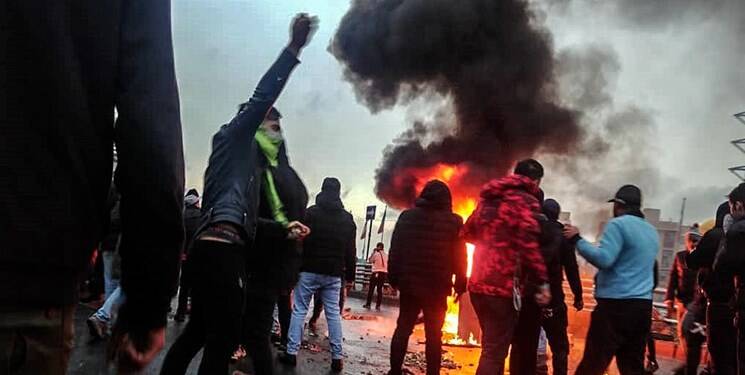
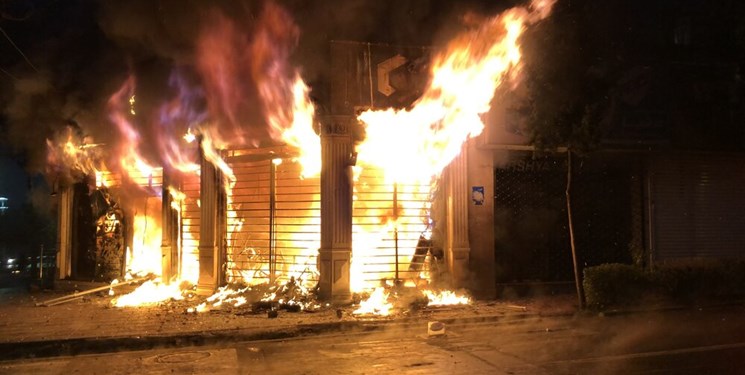
    Regarding the capital, Tehran, due to information overlook of security departments on the treacherous elements makes any plan difficult to implement in Tehran. Therefore they invested in other towns and as you saw the most damages were imposed in towns surrounding Tehran. Learning lessons from Syria, tried to first take control of the gates of Tehran and then disrupt the traffic in Tehran. Although there were some protests in Tehran but it was expected they enter the city and engage lower class districts.

    This plan however had several annexes including engaging military and increase the death toll. Discovering RPG, cannon, machine gun, bombs, grenades, etc. wasn’t that surprising. They had orders to attack some police stations and military bases and after occupying them bring those weapons from there and say they found them inside. However in some cities such as Shiraz and Isfahan and some towns in Khuzestan, this happened and even in Mahshahr, trucks of goods were fired at.

    Nevertheless, the information of Iran made the security officials to give them the opportunity to surface themselves before the plan is complete. This happened by increasing the gas price abruptly and the commanding rooms out of Iran activated and started riots in the streets according to their previous trainings. Having the list of more than 2,500 elements by Iranian security departments, the leaders of the network were arrested before Sunday morning(in the first 48 hours). With the new information another groups were also disclosed and destroyed and by cutting the internet, the communication between elements inside Iran and foreign was disrupted.

  • Iran’s Security Counter Attack to A Three Year Plan! / Behind the Iran’s Recent Riots, Part 1

    Iran’s Security Counter Attack to A Three Year Plan! / Behind the Iran’s Recent Riots, Part 1

    It is a few weeks that we are talking about Spider and Nimrod plan(remember these names), which according to its designers is a sophisticated plan to turn down the government in Iran. Don’t forget the statement of the Saudi crown prince who said that we bring the riots to Iran. Muhamad Bin Salman never ignored the multi billion dollars he spent to turn over Iran’s government and he had great hope in the network designed by “MEK”and intelligence services of Britain and Israel.

    The goal of “spider plan” was to use soft war to destabilize Iran up to three years. Some of the means to be used are political, economic, financial, cyber, media and juridical war against Iran to change the government of Tehran, according to Saudis, until (according to Saudis) the government of Iran does not support their allies, does not threaten the stability of neighbors and does not develop nuclear capabilities.

    These are exactly what Adel al-Jubeir announced in a series of tweets on early october. He wrote in his twitter: I repeat the stances of Saudi Arabia again maybe (Iran’s leaders) have heard it; stop supporting terrorism. Leave the policy of riots and destruction and stop interfering in domestic affairs of Arab countries. Stop developing weapon of mass destruction and ballistic missiles and behave like a normal country not an outlaw and supportive of terrorism.

    However, Saudi court follows three goals by the “spider plan”:
    1. Turning people’s troubles into public demand for change of regime using media and social media,
    2. Coordinate the social uprising and conducting vast protests against the government,
    3. Engineering the revolution in Iran by defining the turning point of the revolution and preparing the substitute leaders for Iran!

    The spider plan was followed in two parallel paths; the first which is for three years to destabilize the situation in Iran in short term and change the government in long term. The second is a short term goal for up to 12 months to send the message to Iran that they will pay for their interferences in the region and their opposite has the power of deterrence.

    Another aspect of the spider plan is the military and security aspect of it. According to this part, some people should be hired and trained for military purposes abroad. The transportation usually takes place via Turkey and after people are selected they are sent to Turkey and moved to another country after it. They would spend several weeks there to learn how to networking and to be military trained and then send back to Iran. The plan was for more than two years and after incidents of 2017, they learned social movements are not enough due to security power of Iran and also lack of interest of most people.

    In the last two months several important incidents happened. One was arresting the head of Amad News who had great information due to his relations and connections to several intelligence services, the second was Turkish President’s words who said that riots would reach Iran after Iraq and Lebanon! Erdogan did not sit still and gave Iran many first hand information probably; one of them is about observing Iranians who traveled to Turkey and then to a third country for training and they did not stay away from MIT’s eyes(Turkish intelligence service). According to reliable information, Turkey has provided a list of these individuals to Iran.

    To be continued…