In the early hours of 3 January 2020, , Hajj Qasem Soleimani, commander of the IRGC Quds Force and Abu Mahdi al-Mohandes, deputy head of the Popular Mobilization Organization, and their companions were assassinated in an airstrike by the US regime near Baghdad Airport. After this attack, resistance groups and prominent figures in the region, while emphasizing and appreciating the actions of martyrs Hajj Qasem Soleimani and Abu Mahdi al-Mohandes in the fight against terrorism and increasing security in the region, threatened the United States to receive a proper response to this crime.
The Iraqi people and groups also called for the expulsion of the United States from Iraq and revenge for the blood of the martyrs of this terrorist attack, given the oppressed martyrdom of their compatriots by the United States in recent years and the repeated violations of their country’s sovereignty.
Therefore, shortly after this crime, new Iraqi resistance groups emerged in this country. These groups declared that their main goal is a more serious military confrontation against the United States and its interests in all parts of Iraq until the complete expulsion of the occupying forces from the country.
So far, 19 Iraqi resistance groups have announced their presence in the country to counter the US occupation. The names of these groups are as follows: 1- “Qasim Al-Jabbarin Resistance” Group 2- “Ashab Al-Kahf Resistance” Group 3- “Saraya Oliya Al-Dam Resistance” Group 4- “International Resistance Faction” Resistance Group 5- “Saraya Thurat Al-Ashrin Al-Thaniyah” Resistance Group 6- “Usbat Al-Thaireen” Resistance Group 7- “Ulu Al-Azm” Resistance Group 8- “Katibat Al-Sabequn” Resistance Group 9- “Liwa Khaybar” Resistance Group 10- “Thar Al-Muhandis” Resistance Group 11- “Quwat Al-Zulfiqar” Resistance Group 12- “Kataib Abolfazl Al-Abbas” Resistance Group 13- “Saraya Al-Muntaqim” Resistance Group 14- “Martyr Karim Dar’am” Resistance Group 15- “Liwa Al-Montaqimun” Resistance Group 16- “Liwa Al-Thaireen” Resistance Group 17- “Saraya Ababil” Resistance Group 18- “Tashkil al-Warithin” Resistance Group
In 2022, Iraqi resistance groups directly and indirectly carried out 102 attacks against the U.S. troops and U.S. interests on Iraqi soil. Most of these attacks were carried out in the form of roadside bombs against American logistical convoys.
Click to see the full size image
Iraqi Resistance Groups collection of posters in Persian, Arabic, Kurdish, Azerbaijani, Russian for Social Media:
This Sejjil mid-range ballistic missile has an operational range of 2000 – 2500 km and has a great accuracy in hitting its target. Accuracy, short preparation time, portable launcher, capability of transporting ready missile and using TVC system are among the extraordinary properties.
Sejil is the first mid-range solid fueled missile of Iran. Some experts consider it the best Iranian ballistic missile. This missile has a mobile launch system capable of carrying a ready-to-launch missile.
The solid-fueled missile needs only a few minutes to prepare and the launcher leaves launching point immediately which gives the missile ultimate stealth mode. Sejjil has high acceleration which makes it difficult for enemy to track it at the initial stage of launch and thus intercepting.
Sejjil 1 did not have a guided warhead and its error was between 100 and 150 meters. However, in Sejjil 2, which was unveiled on December 15, 2009, fins were added to the Sejjil 2 warhead to guide it until it hit the target, which reduced the missile’s error to less than 10 meters.
Sejjil ballistic missile has a speed of Mach 12 to 14 (about 3400 to 4300 km/h) when entering the atmosphere and will hit the target at Mach 5.
Sejjil missile specifications: Length: 17.57 meters Diameter: 1.25 meters Weight: 23623 kg Warhead: High Explosive materials from 500 kg Fuel: Solid (two-stages) Range: 2000 to 2500 km Flight trajectory: Ballistic Accuracy: Error below 10 meters
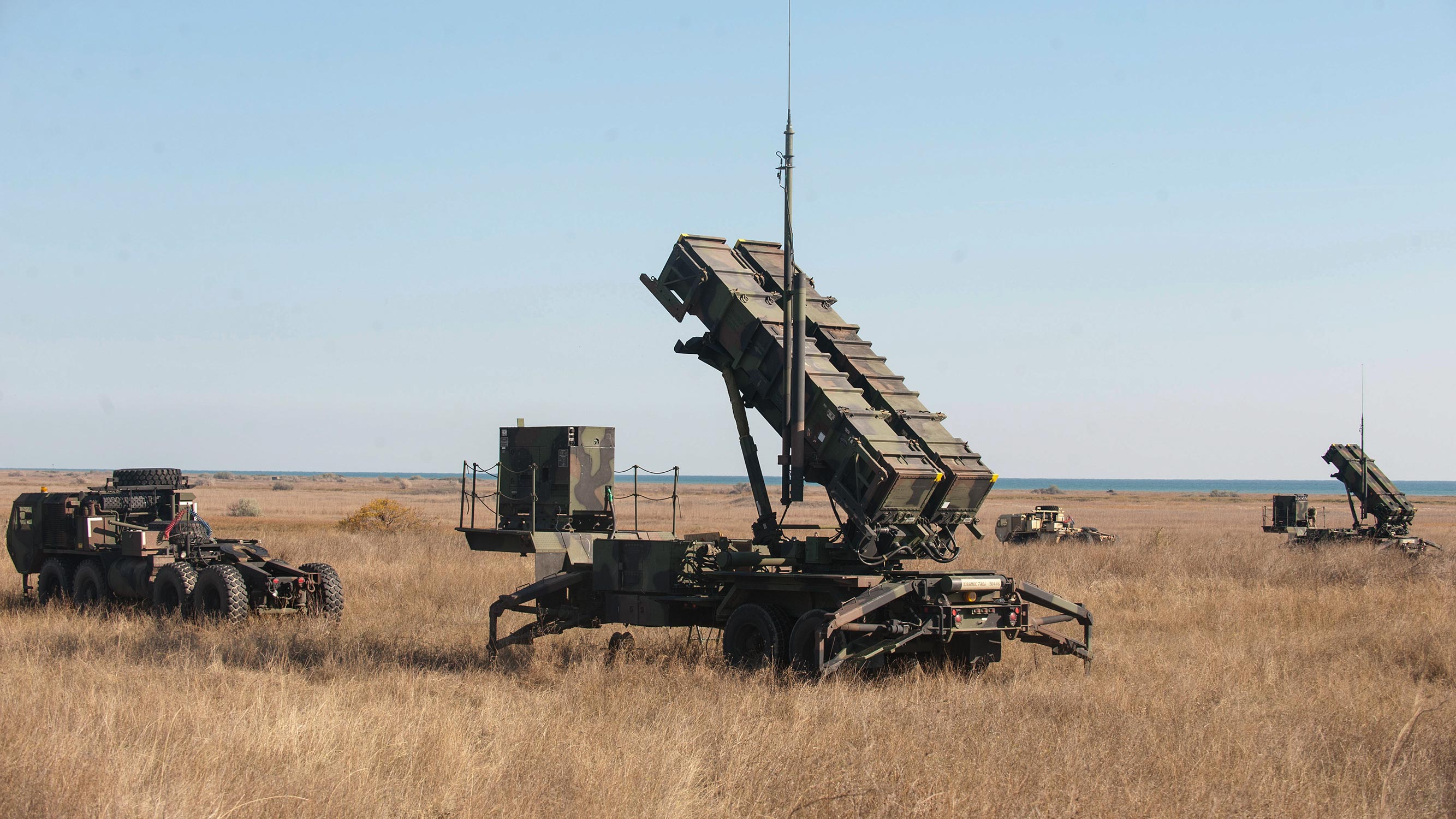
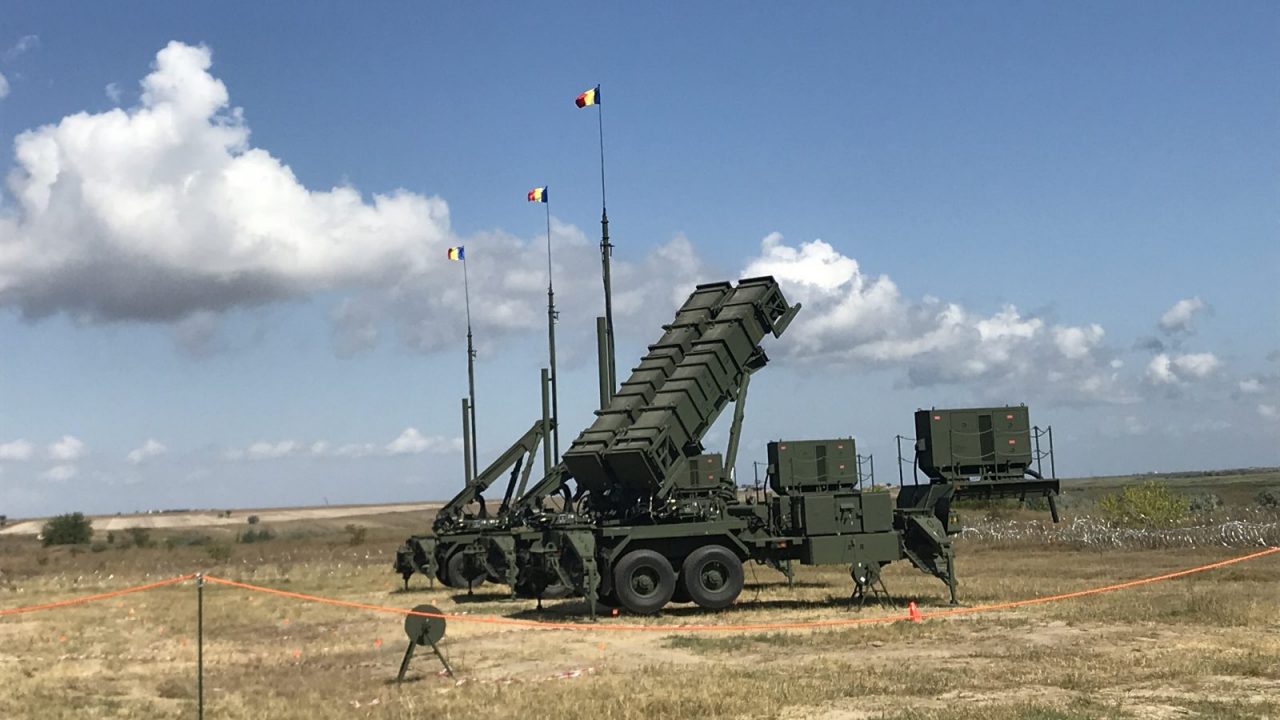
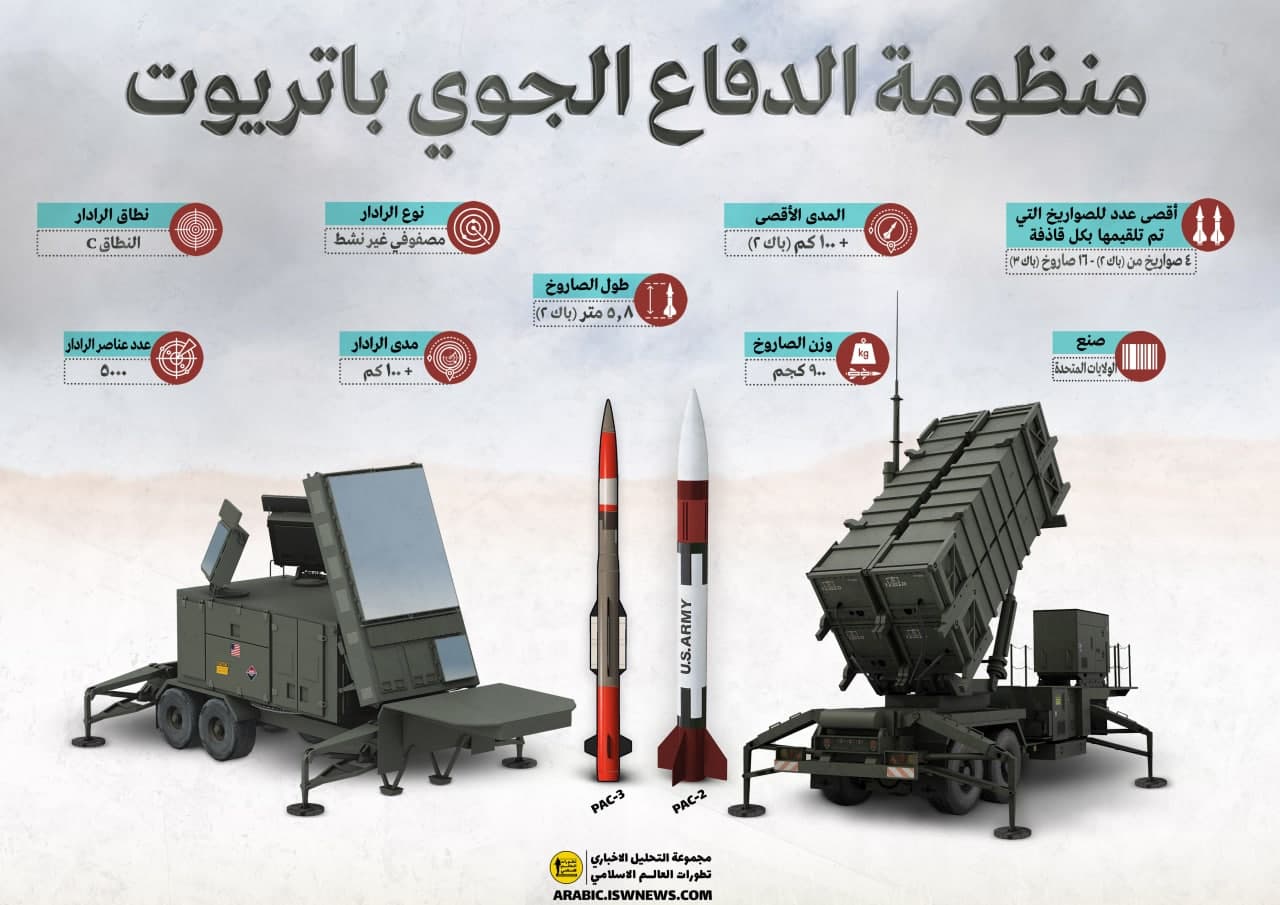
In the initial versions, this system uses AN/MPQ-53 passive Phased Array radar, in the next generation AN/MPQ-65 passive phased array radar and in the latest generation of this system it use active phased array radar using GaN semiconductor called LTAMDS.
The AN/MPQ-53 and AN/MPQ-65 radars have a 120 degree coverage angle limit. Therefore, the lack of full coverage was one of the major weaknesses of this system; But in the new generation of radar, this problem is solved and the coverage angle is 360 degrees.
The Patriot system mainly uses two missiles, PAC-2 and PAC-3. To use the PAC-3 missile, it is necessary to have MPQ-65 radar. PAC-2 missiles have a range of more than 100 km and are commonly used to hunt aerodynamic targets such as aircraft, drones, warplanes, AWACS, etc. and PAC-3 missiles with a range of 20-35 km (depending on the version) are more suitable for hunting ballistic and cruise missiles.
Currently, 16 US allies use the Patriot system; Saudi Arabia is the largest user of the Patriot system after the United States.
Patriot air defense system specifications: Maximum range: +100 km (PAC-2) Radar range: +100 km Radar type: Phased array Radar band: C band Number of radar elements: 5000 Missile length: 8.5 m (PAC-2) Missile weight: 900 kg Max number of missiles loaded per launcher: 4 rounds (PAC-2) – 16 rounds (PAC-3) Origin: USA
The CH-series drone have been sold to armed forces in more than 10 countries in the Middle East, Southeast Asia and Africa, making them the largest military drone family China has exported so far. The Saudi army is one of the main users of this drone.
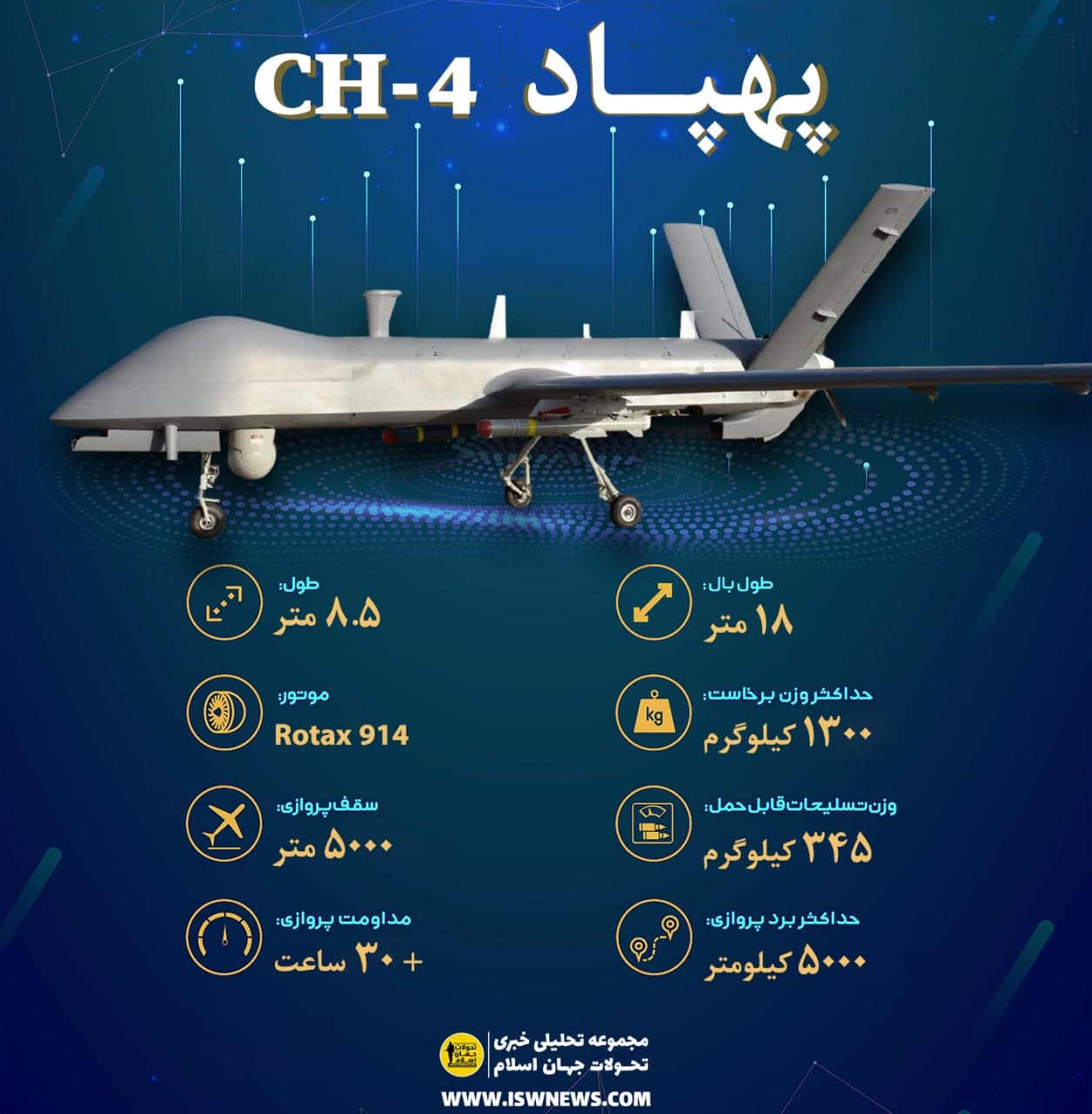
The CH-4 drone is similar to the US MQ-9 Reaper drone and is in the category of reconnaissance-combat drones with medium flight altitude and medium dimensions. It has endurance up to + 30 hours in reconnaissance mode and up to 12 hours in combat mode, and can carry a maximum payload up to 345 kg.
The main armament of CH-4 drone is Lan Jian 7 (Blue Arrow 7) laser-guided air-to-surface missiles, TG100 laser/INS/GPS-guided bombs, and AR-1/HJ-10 anti-tank missile – the Chinese equivalent to the American-made Hellfire missile.
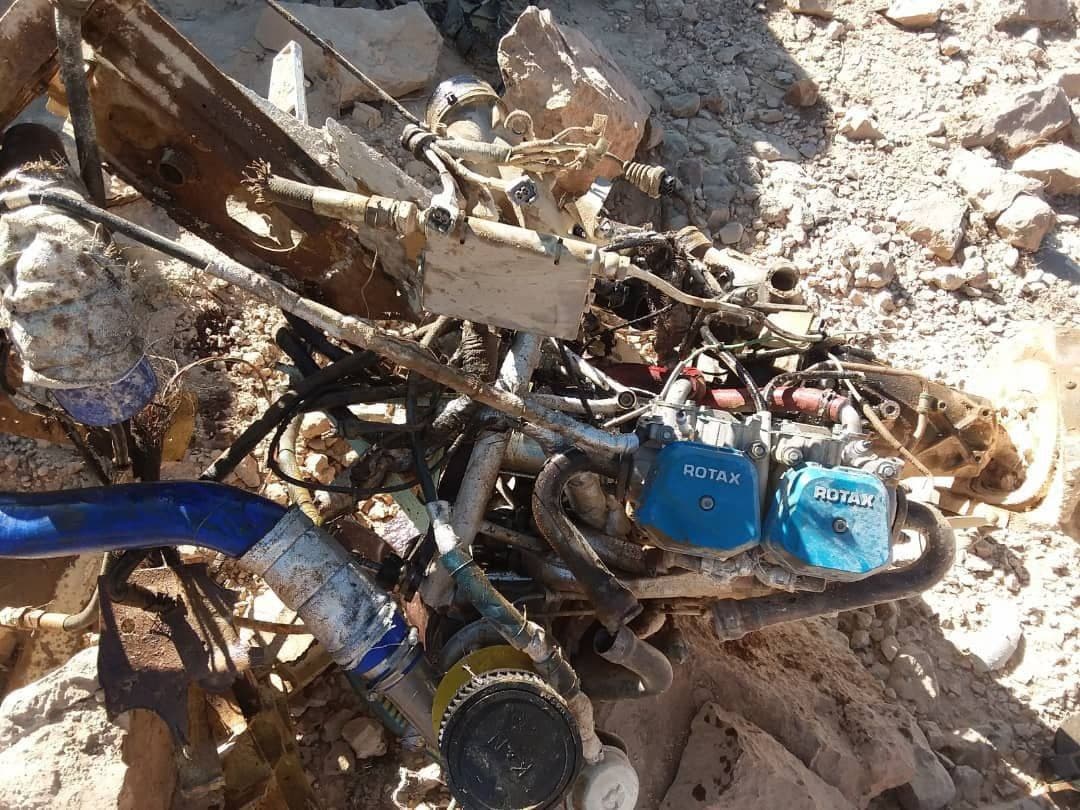
It should be noted that after a CH-4 drone was downed by the Yemeni Ansar Allah air defence system and obtaining the wreckage of this drone, it was determined that this drone uses the Austrian Rotax 914 engine. The Rotax 914 is a common propulsion in this category for drones worldwide.
Rotax 914 engine of CH-4 drone
CH-4B Drone specification: Length: 8.5 m Wingspan: 18 m Max takeoff weight: 1300 kg Max payload weight: 345 kg Maximum range (reconnaissance): 5000 km Maximum range (combat): 600 km Service ceiling: 5000 m Endurance(reconnaissance): + 30 hours Endurance(combat): 12 hours Powerplant: Rotax 914 Maximum speed: 330 km/h Origin: China
Click to see the full size image
CH-4 Reconnaissance Combat Drone collection of posters in Persian, Arabic, Kurdish, Azeri, Russian for Social Media:
The Seven Years of War in Yemen is the first battle in which almost all sides involved used MRAP vehicles extensively for the first time. Since the start of the Arab League invasion on the country on March 2015, more than 1,000 types of MRAP models used by coalition members or looted by Ansar Allah forces have been destroyed, and this statistic only related to damages for which visual documents are available. So the real number is much higher.
Most of the vehicles in Yemen war are made by Western arms companies, but there are also several models made by Saudi Arabia and the UAE. Saudi Arabia’s “Armored Vehicles & Heavy Equipment Factory” manufacture or assemble several models of protected armored vehicles, such as Al-Hazm 1, Al-Tuwaiq 1, Al-Shibl 1 and Al-Shibl 2, in their industrial subdivisions such as Al-Tadrea and Al-Araba.
Logo of Saudi Armored Vehicles & Heavy Equipment Factory
Al-Shibl 2 armored vehicle is one of the most widely used products in the Yemeni war, which has also been exported to two other countries, namely Libya and Turkmenistan.
So far, 57 units of Al-Shibl 2 model have been destroyed or looted by Ansar Allah forces.
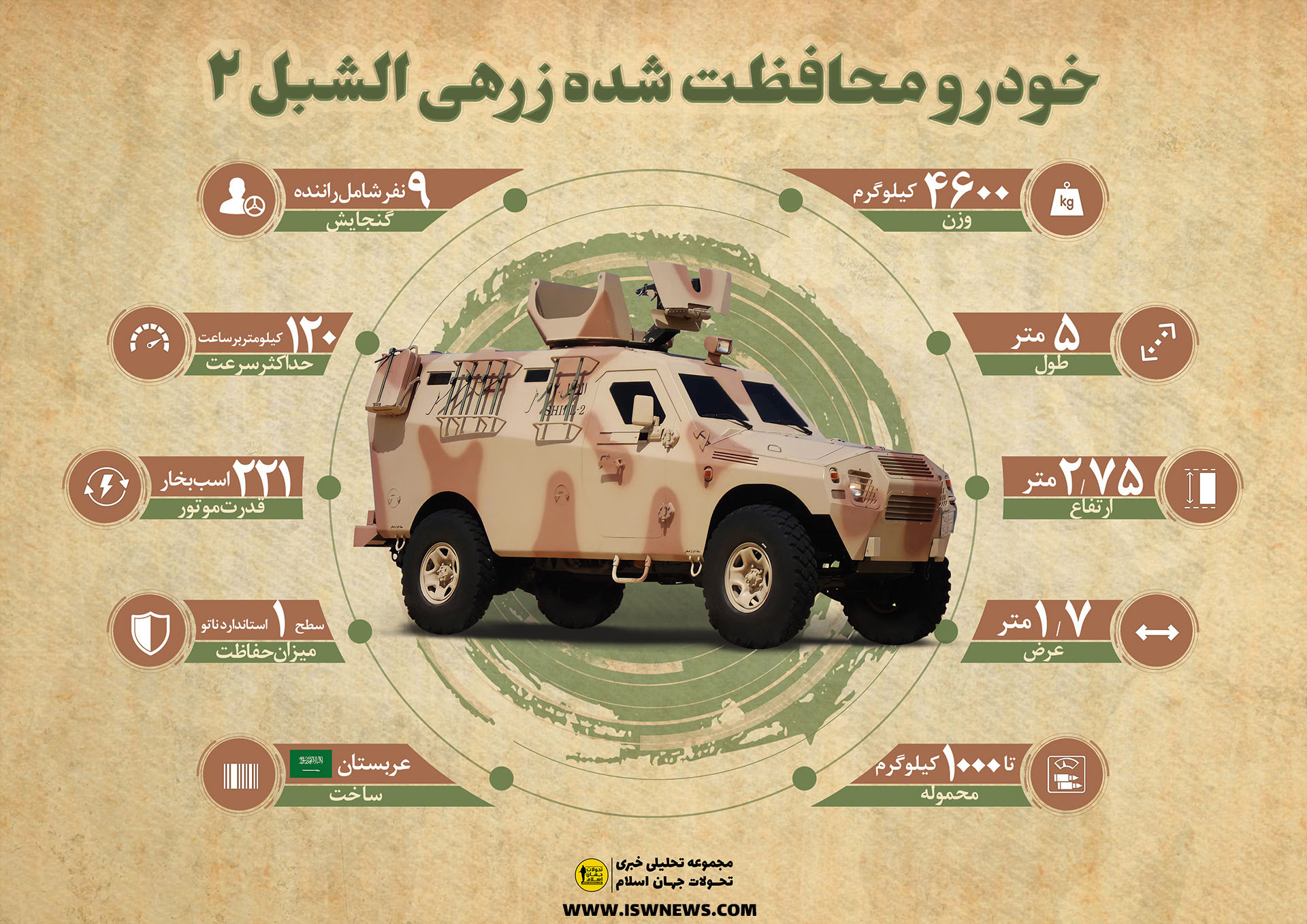
Al-Shibl 2 complies with NATO Protection Standard Level 1 (STANAG 4569), which means protecting the crew from 7.62 mm ammunition and hand grenades. On the upper part of this vehicle, it is possible to install various types of weapon turrets equipped with 7.62 or 12.7 mm machine guns, 40 mm grenade launchers or guided anti-armor missiles.
Al-Shibl 2 armored vehicle specifications: Weight: 4600 kg Length: 5 meters Height: 2.57 meters Width: 1.7 meters Operating weight: up to 1000 kg Crew: 9 people including driver Speed: 120 km/h Engine power: 221 hp Protection: Level 1 NATO standard Origin: Saudi Arabia
Al-Shibl 2 armored vehicle of the Saudi army that was hit by Yemeni forces in Jizan.Al-Shibl 2 vehicle used by Mansour Hadi’s forces, which was looted by Ansar Allah in the battle to capture the city of Al-Hazm in 2020.
The moment of destruction of the Al-Shibl 2 of the Saudi army in the Jizan region by the Ansar Allah ATGM on June 27, 2017Click to see the full size map
Al-Shibl 2 Armored Vehicle collection of posters in Persian, Arabic, Kurdish, Azeri, Russian for Social Media:
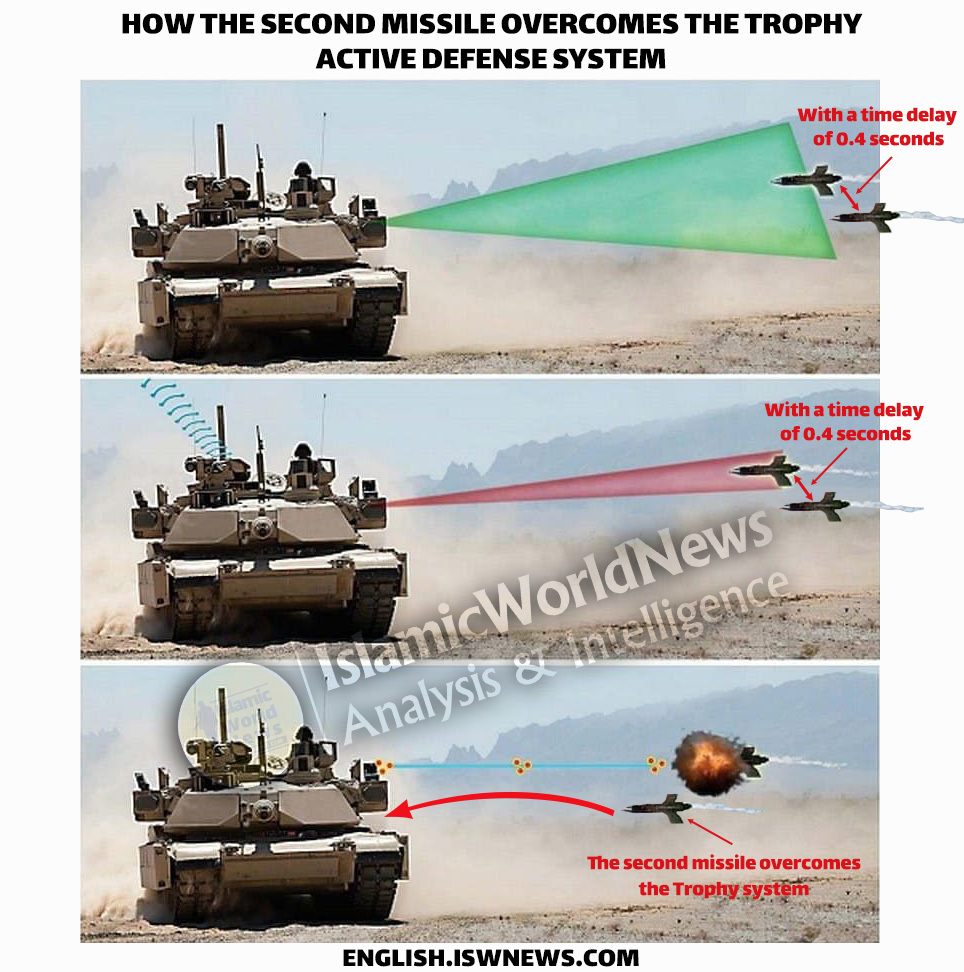
In the previous article, which reviewed the performance of the Trophy Active Protection System, we pointed out that one of the weaknesses of this system is the 1.75 second reload time of the counter. Although the Trophy system is a highly advanced system with a very high level of engineering, which has led top countries in the field of armor, such as Germany, the United States, the United Kingdom, etc. to use this system in their main battlefield tanks, but the solution to counter this system is relatively simpler and less expensive.
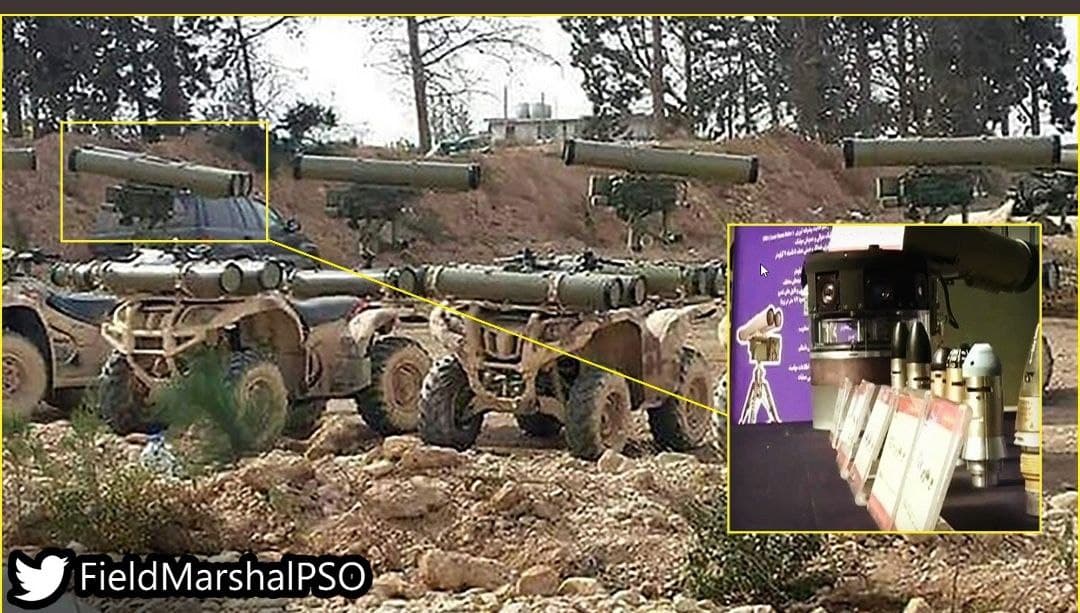
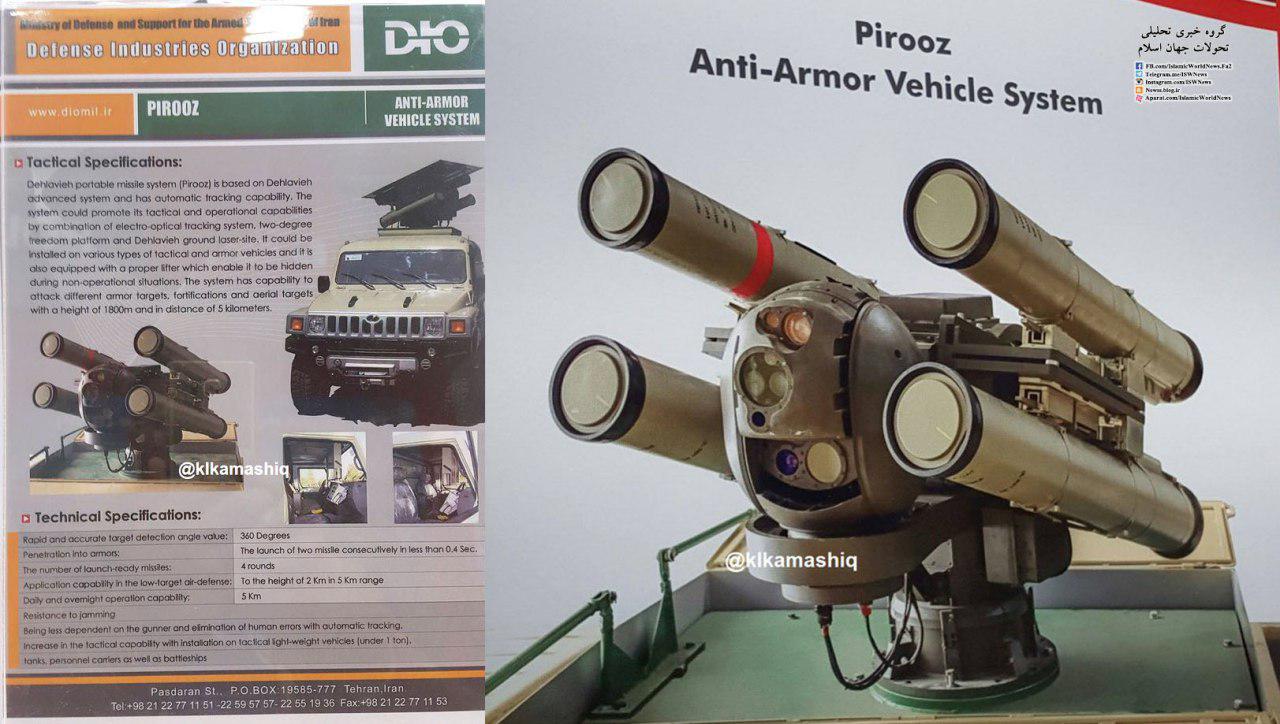
Iranian defense engineers, considering the weakness of the Trophy system, have developed a dual and quadruple launcher (Pirooz system) of Dehlavieh missile in which the time between launching two consecutive missiles is about 0.4 seconds; That is, less than a quarter of the loading time for the rotating launchers in the Trophy system. The main idea is that after Trophy system deal with the first missile fired, the Trophy system needs at least 1.75 seconds to reload to deter the next missile, while the second missile fired from the Dehlavieh launcher at 0.4 seconds after the first missile, passes through the barrier of the Trophy system.
Also another feature of the Dehlavieh missile dual launcher is the ability to control remotely (up to 150 meters), which increases the survival of the launcher and its personnel.
It is worth mentioning that immediately after equipping Israeli tanks with this Trophy system, the Lebanese resistance was also equipped with these launchers, and in practice, the Trophy system was largely neutralized and removed from the equations of this front. It seems that Iran has widely equipped resistance groups with these launchers on other fronts as well.
Dehlavieh dual missile launcher specifications: Laser beam rider system weight: 25 kg Moving platform weight: 35 kg Missile weight: 15 kg Missile penetration rate: 1200 mm Remote control capability: up to 150 m Target range finding: up to 20 km
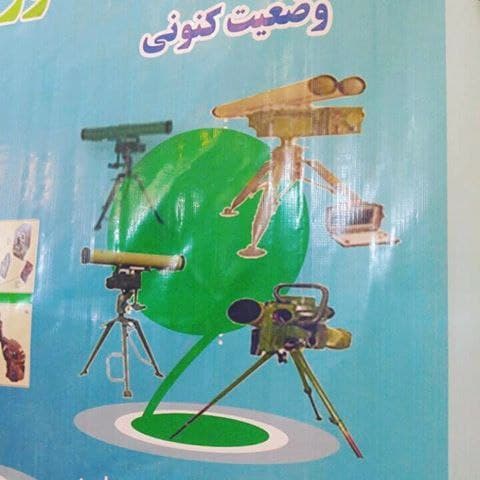
Dehlavieh dual missile launcher and Pirooz system with the ability to launch four missilesClick to see the full size image
Dehlavieh Dual Missile Launcher Collection of Posters in Persian, Arabic, Kurdish, Azeri, Russian for Social Media:
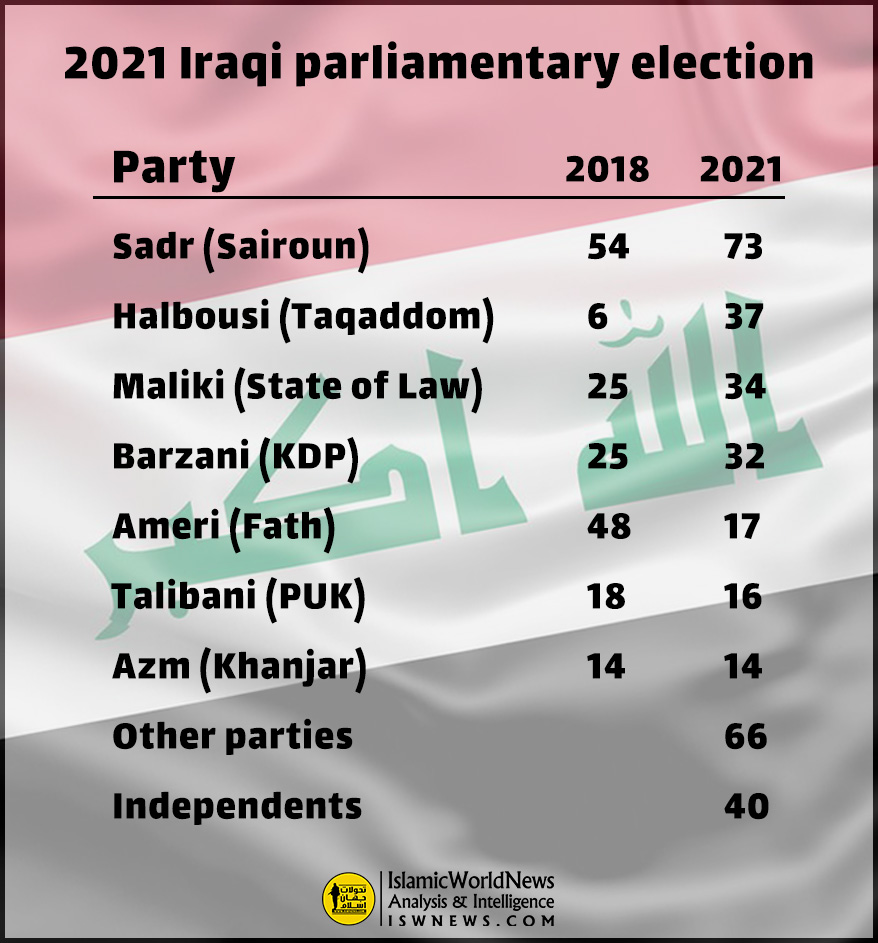
About 50 days after the Iraqi parliamentary elections, Iraq High Electoral Commission announced the final results of the October elections by amending the final results and changing five seats in the provinces of Kirkuk, Baghdad, Erbil, Basra and Nineveh.
Voter turnout in Iraq’s elections was 44 percent, a record low in the post-Saddam Hussein era, signaling widespread distrust of the country’s leaders and the vote for a new parliament.
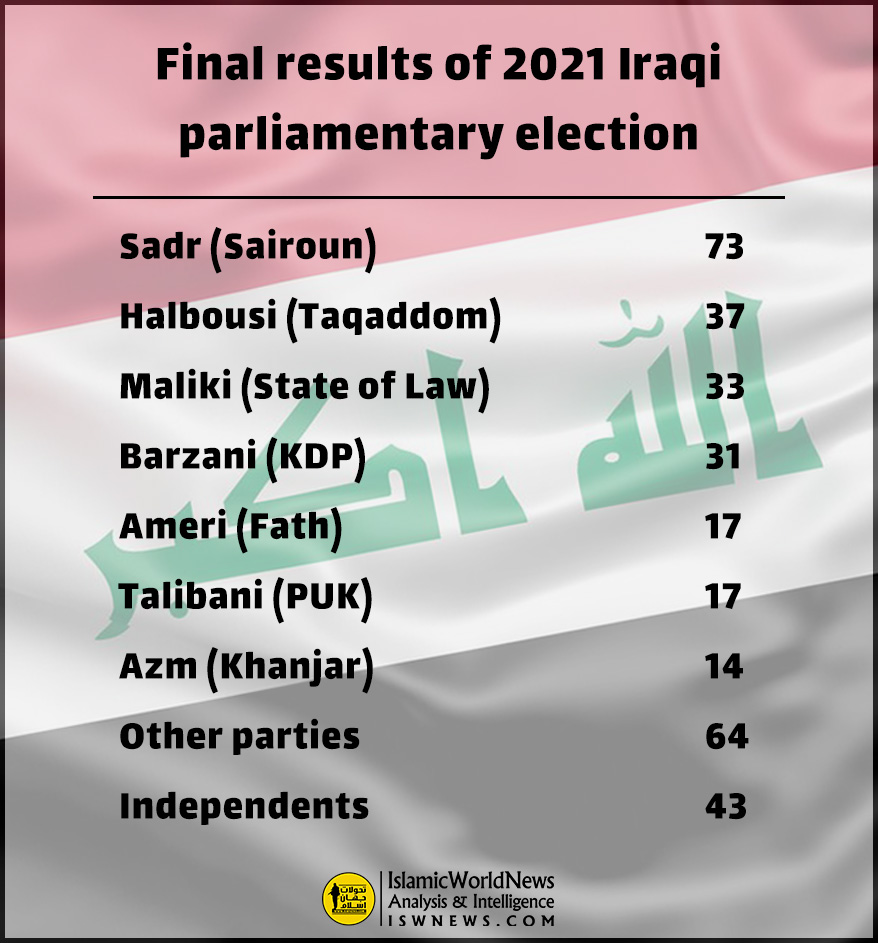
Based on the final results announced, parliament seats are distributed among coalitions and political groups as follows:
1- Sadr faction led by “Muqtada al-Sadr” with 73 seats. 2- Taqaddom coalition led by “Mohammad Al-Halbousi” with 37 seats. 3- State of Law coalition led by “Nouri Al-Maliki” with 33 seats. 4- Democratic Party of Iraqi Kurdistan led by “Massoud Barzani” with 31 seats. 5- Al-Fatah coalition led by Hadi Al-Amiri with 17 seats. 6- Patriotic Union of Kurdistan Party headed by “Bafel Talabani” with 17 seats. 7- Azm coalition led by “Khamis Al-Khanjar” with 14 seats. 8- Other parties with 64 seats. 9- Independents with 43 seats
According to the published statistics, there have been practically very few changes and no change in the order of the victorious coalitions.
It is noteworthy that the results of the Iraqi parliamentary elections were widely opposed by many Iraqi political groups, and a number of parties called for a review of the elections. Now, with the announcement of the final results after minor changes by the Iraqi High Electoral Commission, the ground for the continuation and intensification of the Iraqi popular protests remains.
On November 2017, with the fall of the town of al-Khokhah to the Saudi coalition, the battles on the west coast of Yemen entered al-Hudaydah province. After a year, these battles were extended to the east and north of the city of al-Hudaydah, and finally, with the Stockholm Agreement, on December 18, 2018, the ground clashes were stopped.
Despite the agreement reached by Ansar Allah and Mansour Hadi government, the Saudi coalition bombardment, widespread ceasefire violations, and the siege of Ansar Allah-controlled towns, including the town of al-Durayhami, continued for months. But finally, in the last week, with the withdrawal of the Saudi coalition forces from most of al-Hudaydah province on November 12, 2021, the battle of al-Hudaydah ended.
Ansar Allah exemplary resistance in al-Hudaydah and their fierce battle with the Saudi coalition over the past four years led to al-Hudaydah becoming even more famous. To the extent that these days al-Hudaydah is called “Stalingrad of Yemen”!
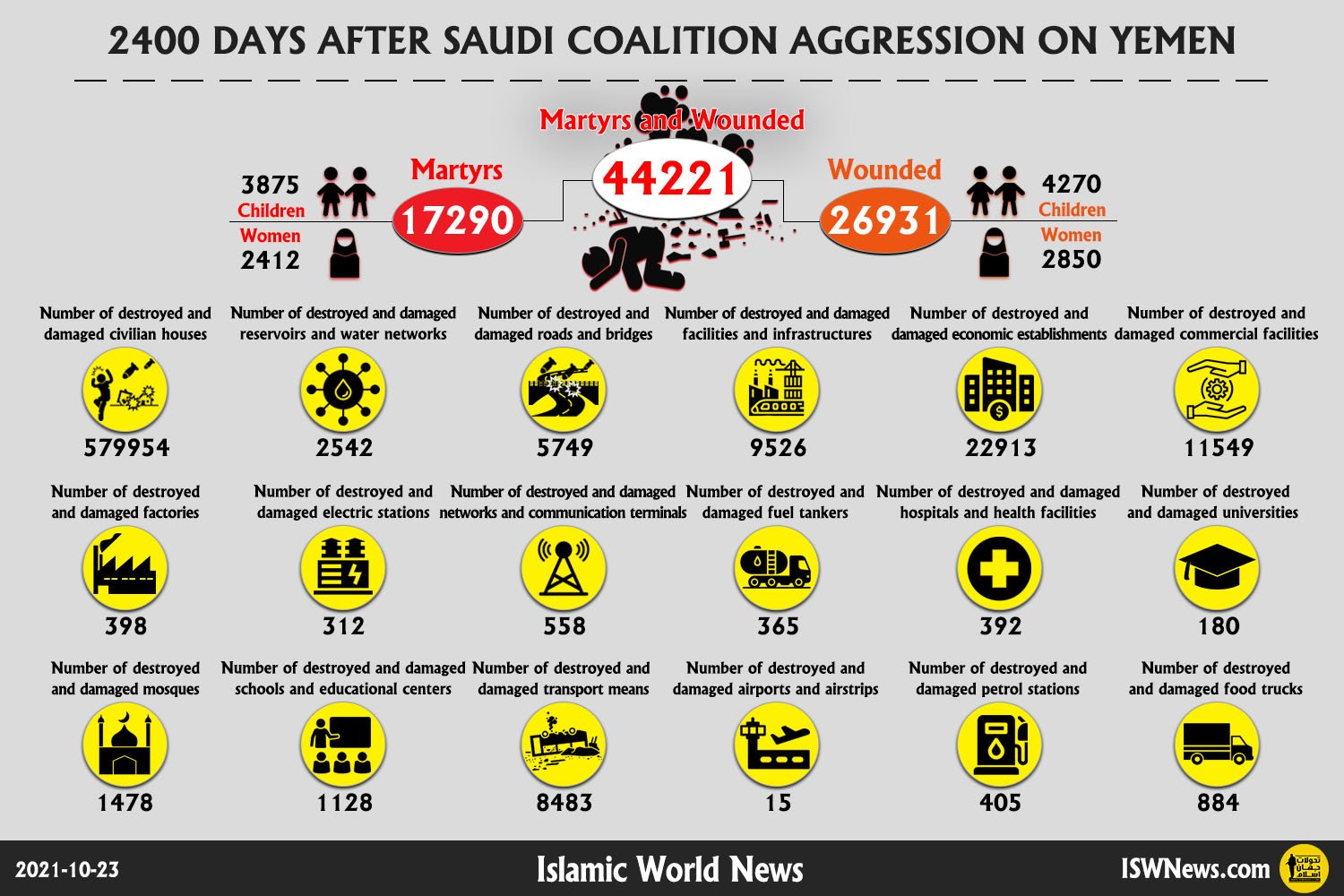
Statistics of the Saudi coalition aggression on Yemen after 2400 days: – Total martyrs and wounded: 44,221 people – 17,290 martyrs, including 3,875 children and 2,412 women – 26,931 people were injured, including 4,270 children and 2,850 women
– The total number of destroyed and damaged facilities and infrastructures is 9,526 – Destroyed or damaged 15 airports, 16 ports, 312 power plants and generators and 558 communication networks – Destroyed or damaged 2,542 warehouses and water supply network and 1974 government centers and 5,749 roads and bridges – The total number of damaged and destroyed houses is 579,954 – The total number of damaged and destroyed commercial centers is 11,365 – Destroyed or damaged 180 universities – Destroyed or damaged 1,478 mosques, 366 tourist centers and 392 hospitals and medical centers – Destroyed or damaged 1,128 schools and educational centers and 7005 agricultural lands, 133 sports centers, 245 ancient centers and 47 media centers
– The total number of destroyed and damaged economic centers is 22,913 – Destroyed or damaged 398 factories, 365 fuel trucks, 11,549 commercial centers and 411 poultry and livestock
The counting of votes of the Iraqi parliamentary election, which began on October 10, has finally ended and the final results have been announced. The head of the Iraqi High Electoral Commission has said that the final results would be announced after the complaints were reviewed and approved by the Supreme Judicial Council. And the announcement of the final results means that the results have been approved by the Iraqi Supreme Judicial Council.
The Iraqi High Electoral Commission has put the turnout of Iraqi citizens at 41 percent.
Based on the announced results, the parliamentary seats are distributed among the coalitions and political groups as follows: 1- Sadr faction led by “Muqtada al-Sadr” with 73 seats. 2- Taqaddom coalition led by “Mohammad Al-Halbousi” with 37 seats. 3- State of Law coalition led by “Nouri Al-Maliki” with 34 seats. 4- Democratic Party of Iraqi Kurdistan led by “Massoud Barzani” with 32 seats. 5- Al-Fatah coalition led by Hadi Al-Amiri with 17 seats. 6- Patriotic Union of Kurdistan Party headed by “Bafel Talabani” with 16 seats. 7- Azm coalition led by “Khamis Al-Khanjar” with 14 seats.
Other political groups are next in line, with independents holding 40 seats.
Given the success of the Sadr faction in the Iraqi parliamentary elections, some informed sources claimed that “Jafar Muhammad Baqir Sadr” nicknamed “Sayyid Jafar Sadr” will be the main option for the prime minister.
In the past few days, after the announcement of the preliminary results, the Al-Fatah Coalition, Asaeb Ahl al-Haq, State of Law and the Kataib Hezbollah protested against the election results and announced that they did not accept the announced results. It remains to be seen what the position of these groups will be in the face of the announced results.
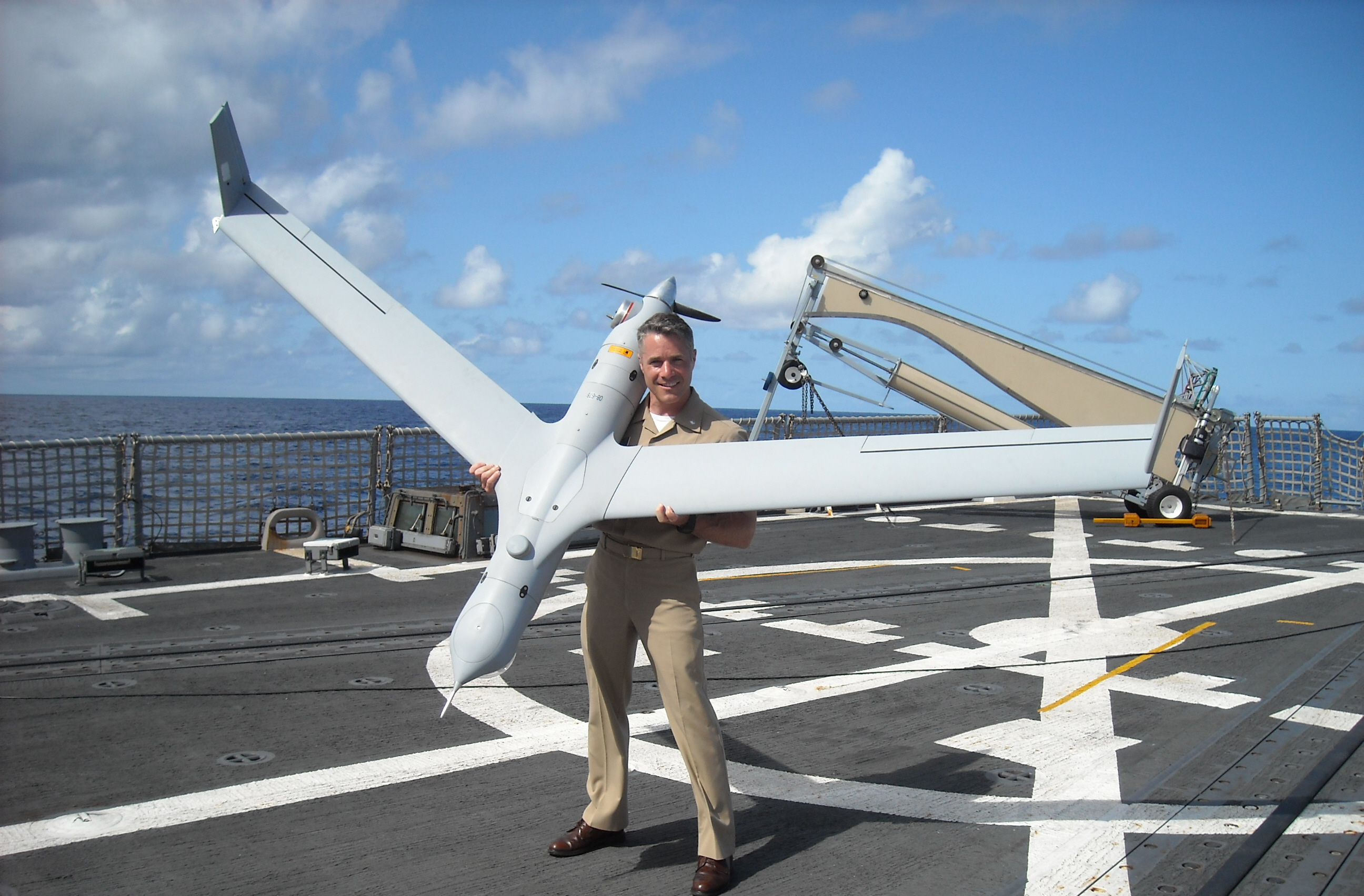
In year 2002, ScanEagle made its first successful flight. ScanEagle entered production at Boeing Aerospace, Oregon. In July 2004, the USMC contracted two aircraft to be flown to Iraq in September 2004. Under an agreement reached in April 2005, the United States Navy deployed ScanEagles on 25 destroyers and LSDs from July 2005.
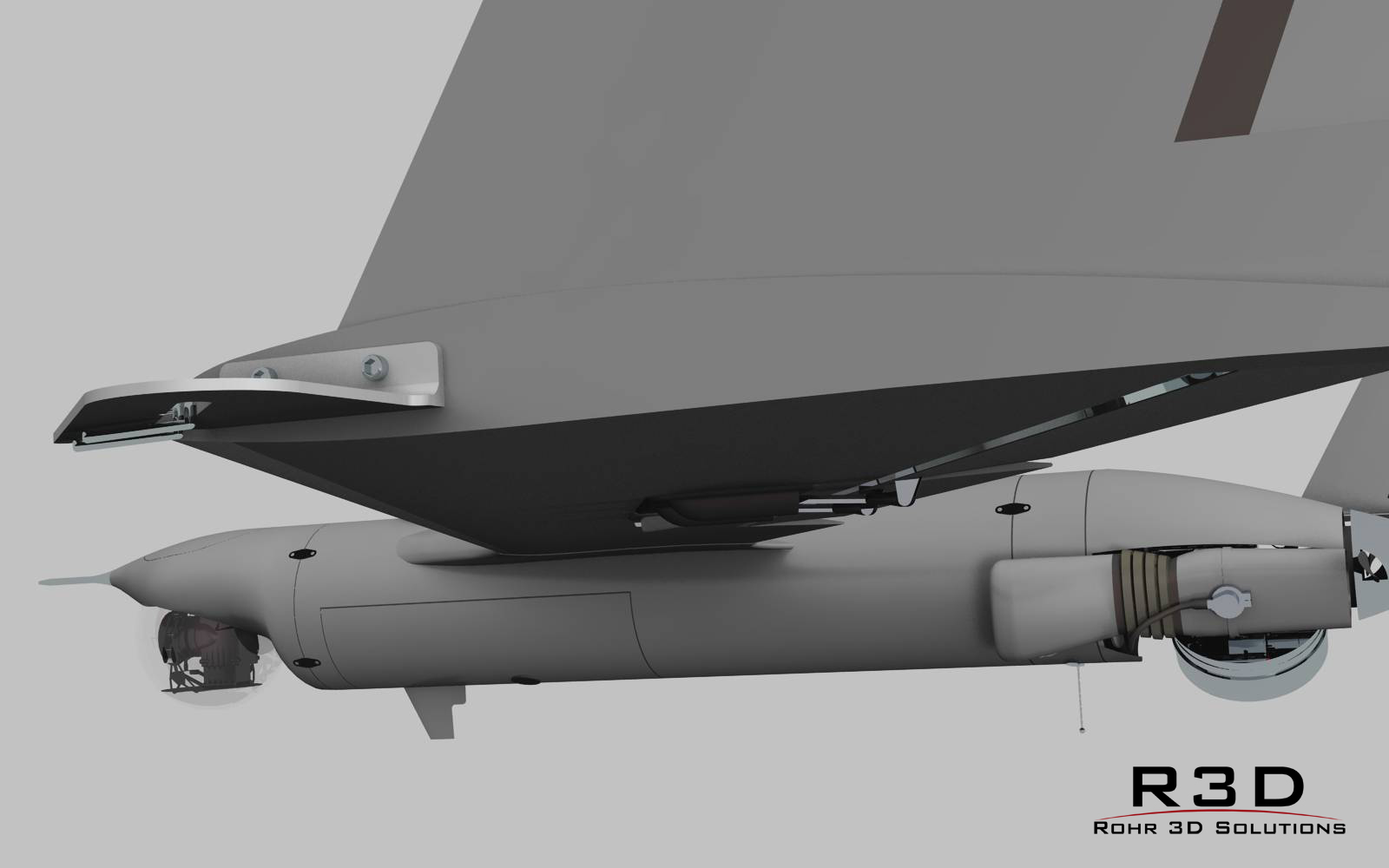
The ScanEagle drone consists of five main interchangeable parts (modules): nose, body, avionics, wings and propulsion system (engine).
It has a cylindrical body with a diameter of 200 cm with wings drawn in the middle at the top of the body with a length of 3.5 meters. It can also be equipped with carburetor heating and a phobic ice wing cover for working in cold environments.
ScanEagle missions include intelligence, surveillance and reconnaissance (ISR), special services operations, escort operations, sea and caravan protection, protection of valuable facilities, audio, video and high-speed data relays.
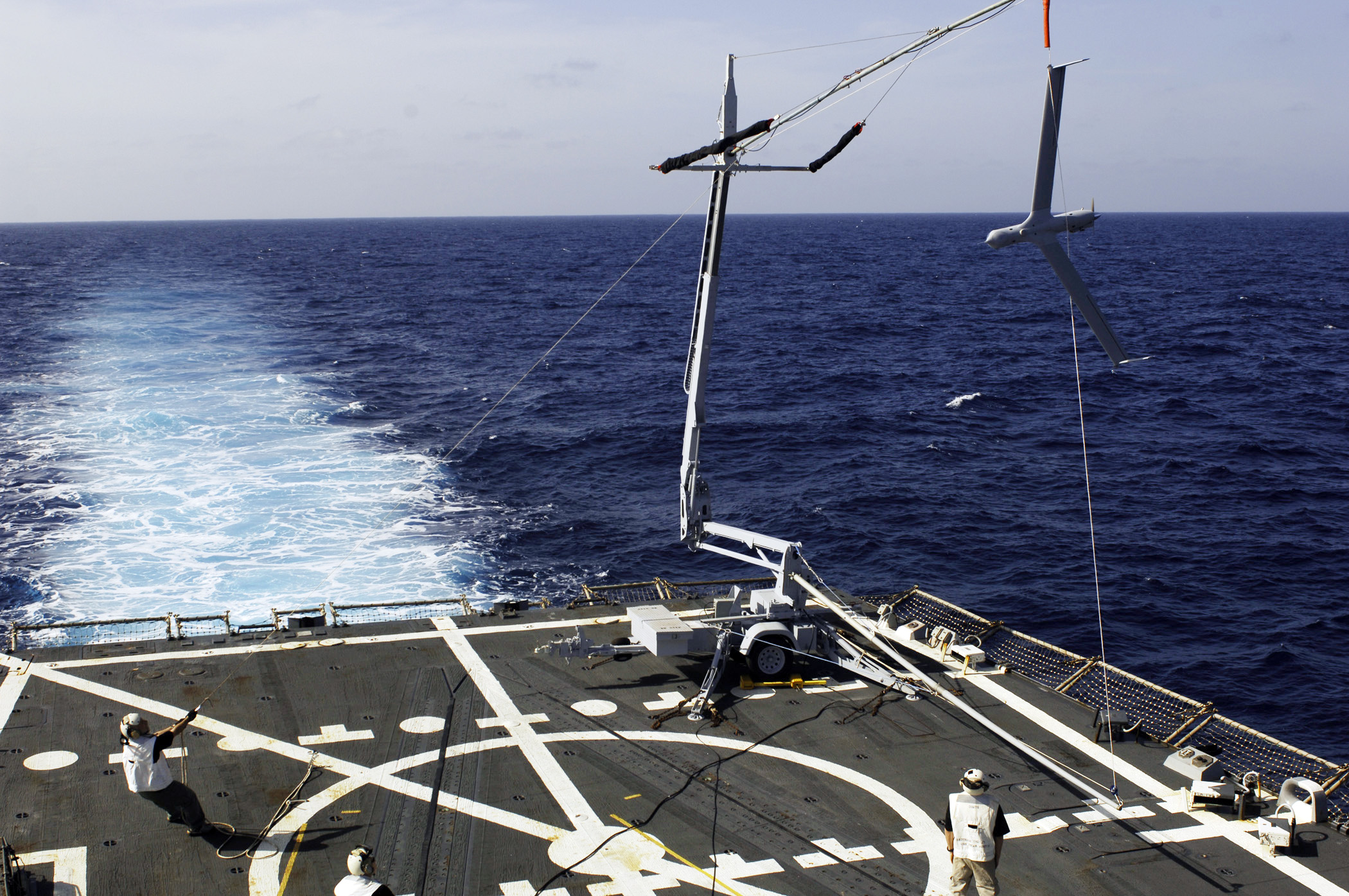
The ScanEagle drone can be launched on land, at sea with a pneumatic catapult at a speed of 25 meters per second. It can also be launched from C-130 Hercules or V-22 Osprey in aerial launch operations.
ScanEagle recovery system is based on the proven SkyHook Recovery System, originally developed for the SeaScan UAV. The SkyHook recovery system uses a stop or jamming line in which the vehicle flies straight to approach the line of attachment and the hook mounted on the wing tip of the aircraft catches the line.
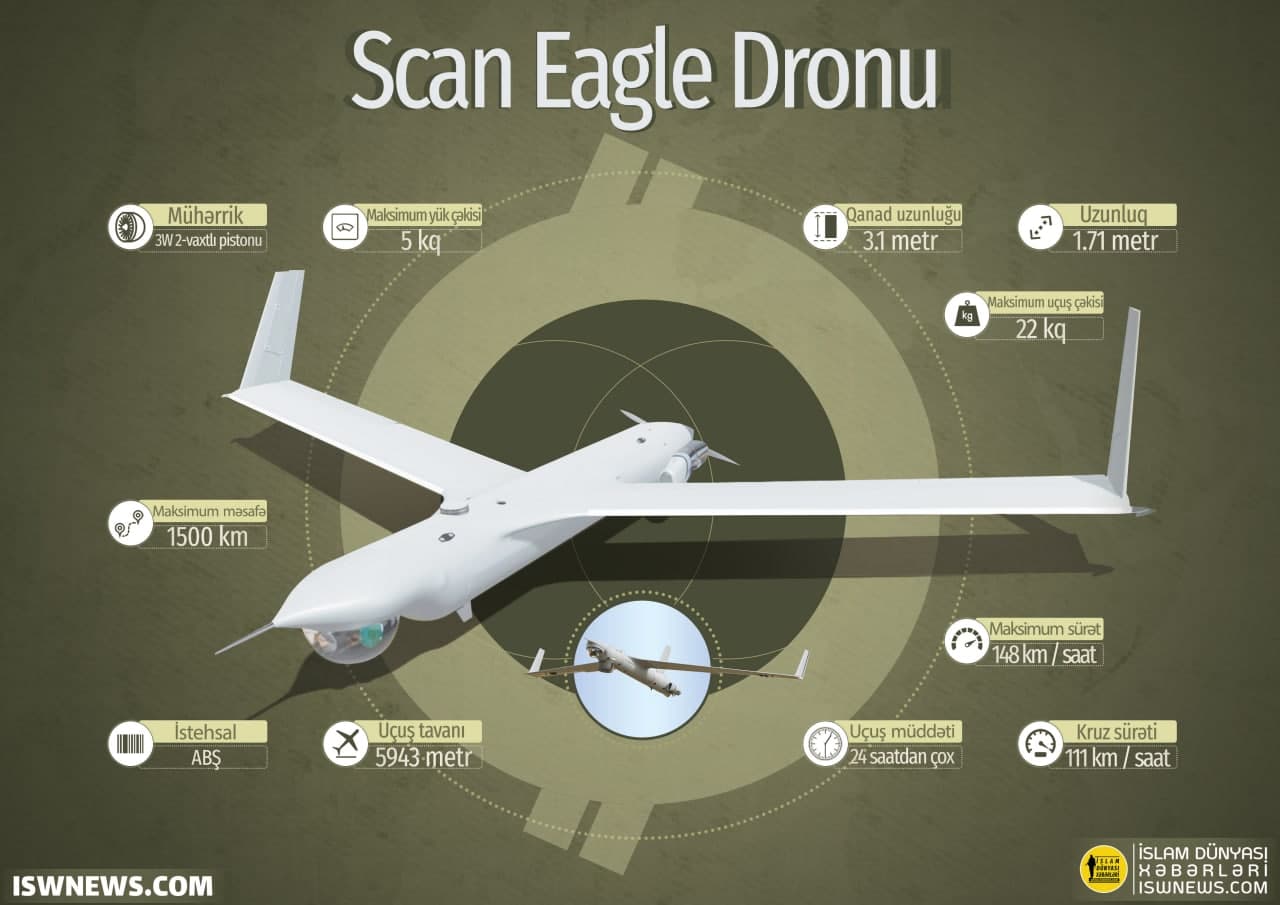
Specifications of ScanEagle drone: Length: 1.71 meters Wing length: 3.1 meters Max takeoff weight: 22 kg Maximum payload weight: 5 kg Engine: 2-stroke 3W piston engine Maximum range: 1500 km Maximum speed: 148 km / h Cruise speed: 111 km / h Endurance: more than 24 hours Service ceiling: 5943 meters Origin: USA
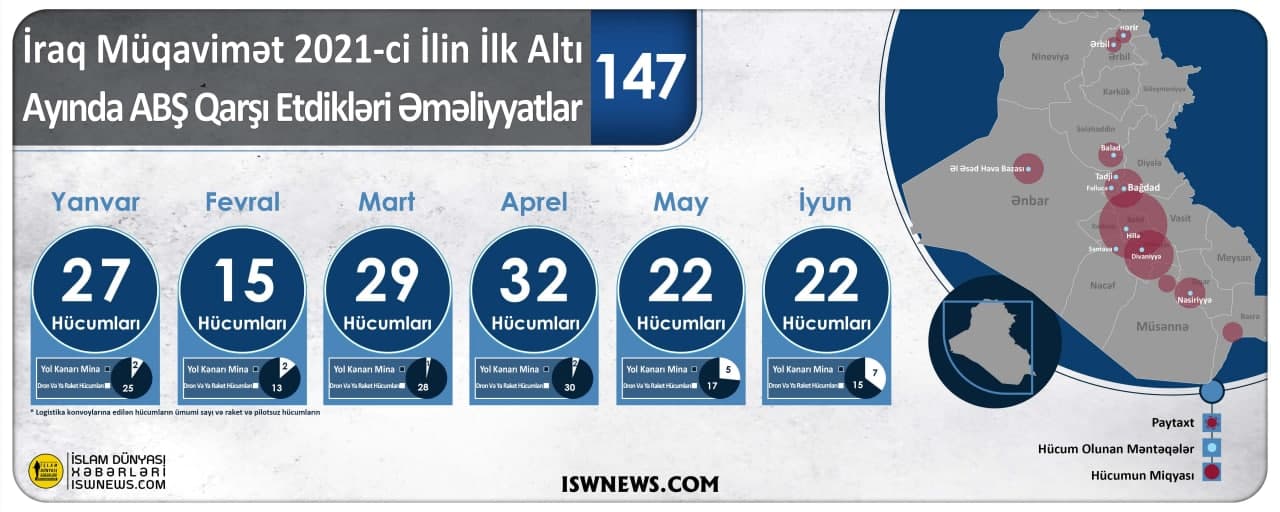
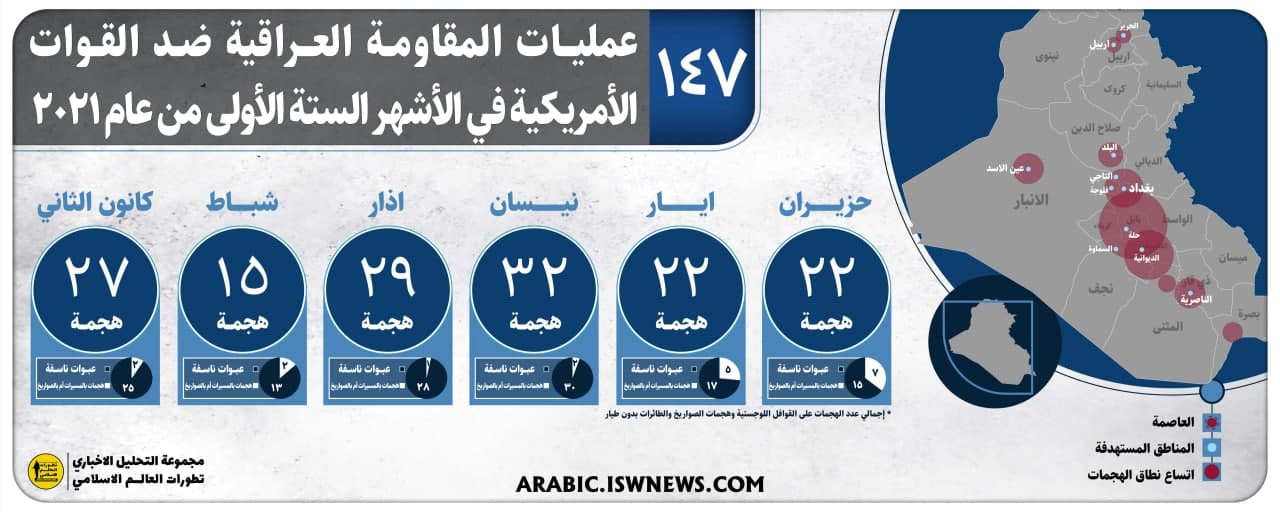
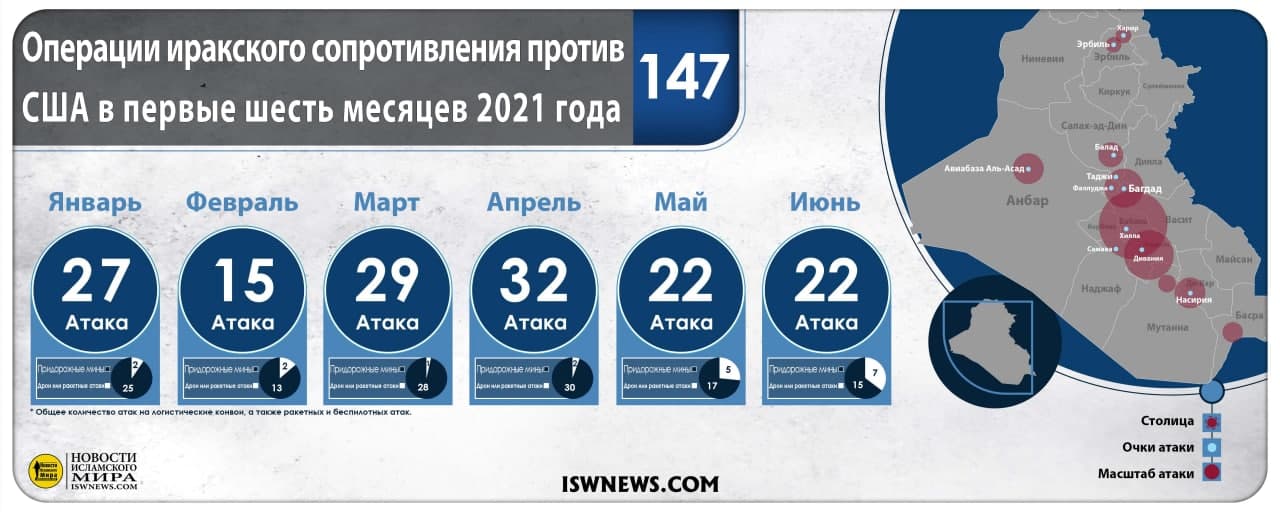
From the beginning of January to the end of June 2021, the Iraqi resistance groups carried out 147 attacks against the positions, logistics and military convoys of the US army in Iraq, the details of which are as follows:
1- IED attack on the US logistical convoy in Sharqat area by Ashab al-Kahf group. Date: 2021-01-01
2- IED attack on the US logistical convoy in Dujial by Qasim al-Jabbarin group. Date: 2021-01-05
3- IED attack on the US logistical convoy in Babel province by Karim Dara’m group. Date: 2021-01-05
4- Two IED attacks on the US logistical convoys in Baghdad’s Yusufiyah and Samawah by Qasim al-Jabbarin group. Date: 2021-01-08
5- Three IED attacks on the US logistical convoys in Naseriyah and Hillah by Qasim al-Jabbarin group. Date: 2021-01-09
6- Three IED attacks on the US logistical convoys in Naseriyah and Samawah and Diwaniyah by Qasim al-Jabbarin group. Date: 2021-01-18
7- IED attack on the US logistical convoy in Baghdad’s Yusufiyah by Qasim al-Jabbarin group. Date: 2021-01-20
8- Two IED attacks on the US logistical convoys in Samawah and Abu Ghurayb. Date: 2021-01-21
9- Five IED attacks on the US logistical convoys in Naseriyah, Abu Ghurayb, Diwaniyah, Babel and Tikrit by Ashab al-Kahf group. Date: 2021-01-22
10- Rocket attacks on Victory Camp. Date: 2021-01-23
11- IED attack on the US logistical convoy on Naseriyah-Basrah road by Saraya Olia al-Dam group. Date: 2021-01-25
12- Two IED attacks on the US logistical convoys on Naseriyah and Samarra. Date: 2021-01-26
13- Rocket attacks on Victory Camp. Date: 2021-01-28
14- IED attack on the US logistical convoy near Jarishan crossing. Date: 2021-01-28
15- IED attack on the US logistical convoy in Diwaniyah by Qasim al-Jabbarin group. Date: 2021-01-30
16- IED attack on the US logistical convoy in Babel. Date: 2021-01-31
17- IED attack on the US logistical convoy in Babel by Qasim al-Jabbarin group. Date: 2021-02-06
18- IED attack on the US logistical convoy in Samarra. Date: 2021-02-07
19- IED attacks on the US logistical convoys in Diwaniyah and Yusufiyah. Date: 2021-02-08
20- IED attack on the US logistical convoy in Yusufiyah by Qasim al-Jabbarin group. Date: 2021-02-10
21- IED attack on the US logistical convoy in Latifiyah by Qasim al-Jabbarin group. Date: 2021-02-11
22- IED attack on the US logistical convoy in Samawah. Date: 2021-02-12
23- IED attack on the US logistical convoy in Yusufiyah. Date: 2021-02-15
24- Rocket attack on Erbil Airport. Date: 2021-02-15
25- IED attack on the US logistical convoy in Naseriyah by Ashab al-Kahf group. Date: 2021-02-17
26- IED attack on the US logistical convoy in Diwaniyah. Date: 2021-02-18
27- IED attack on the US logistical convoy in Naseriyah. Date: 2021-02-19
28- Rocket attacks on Balad Airbase. Date: 2021-02-20
29- IED attack on the US logistical convoy in Babel. Date: 2021-02-25
30- IED attack on the US logistical convoy in Diwaniyah by Qasim al-Jabbarin group. Date: 2021-02-27
31- IED attack on the US logistical convoy in Babel by Qasim al-Jabbarin group. Date: 2021-03-02
32- Three IED attacks on the US logistical convoys in Samawah, Diwaniyah and Abu Ghurayb. Date: 2021-03-03
33- Rocket attacks on Ain al-Asad Airbase by Liwa al-Khaybar group. Date: 2021-03-03
34- Three IED attacks on the US logistical convoys in Samawah, Anbar and Basra-Naseriyah road. Date: 2021-03-11
35- IED attack on the US logistical convoy in Diwaniyah by Ashab al-Kahf group. Date: 2021-03-13
36- Two IED attacks on the US logistical convoys in Babel and Basrah. Date: 2021-03-15
37- Three IED attacks on the US logistical convoys in Diwaniyah, Anbar and Babel. Date: 2021-03-18
38- IED attack on the US logistical convoy in Salah ad Din province. Date: 2021-03-20
39- Three IED attacks on the US logistical convoys in Babel by Qasim al-Jabbarin group. Date: 2021-03-21
40- Five IED attacks on the US logistical convoys in Diwaniyah, Dhi Qar, Baghdad, Babel. Date: 2021-03-25
41- Three IED attacks on the US logistical convoys in Diwaniyah, Dhi Qar, Babel. Date: 2021-03-29
42- Three IED attacks on the US logistical convoys in Salah ad Din, Dhi Qar, Babel. Date: 2021-03-30
43- Two IED attacks on the US logistical convoys in Baghdad and Babel. Date: 2021-04-01
44- IED attack on the US logistical convoy in Diwaniyah by Ashab al-Kahf group. Date: 2021-04-04
45- Three IED attacks on the US logistical convoys in Diwaniyah, Baghdad, Babel. Date: 2021-04-05
46- Five IED attacks on the US logistical convoys in Salah ad Din, Anbar, Babel. Date: 2021-04-07
47- IED attack on the US logistical convoy in Babel by Ashab al-Kahf group. Date: 2021-04-08
48- IED attack on the US logistical convoy in Salah ad Din. Date: 2021-04-11
49- IED attack on the US logistical convoy in Samawah. Date: 2021-04-13
50- Four IED attacks on the US logistical convoys in Naseriyah, Diwanyah, Hillah and Erbil. Date: 2021-04-14
51- Two IED attacks on the US logistical convoys in Baghdad and Anbar by Ashab al-Kahf group. Date: 2021-04-15
52- Rocket attack on Ain al-Asad Airbase. Date: 2021-04-15
53- IED attack on the US logistical convoy in Naseriyah. Date: 2021-04-17
54- Two IED attacks on the US logistical convoys in Babel by Ashab al-Kahf group. Date: 2021-04-22
55- IED attack on the US logistical convoy in Anbar. Date: 2021-04-25
56- Four IED attacks on the US logistical convoys in Basra, Diwanyah, Dhi Qar and Anbar. Date: 2021-04-27
57- Drone attack on Balad Airbase. Date: 2021-04-28
58- Two IED attacks on the US logistical convoys in Anbar and Baghdad. Date: 2021-05-02
59- Two IED attacks on the US logistical convoys in Samawah and Hillah. Date: 2021-05-02
60- Rocket attacks on Balad Airbase. Date: 2021-05-03
61- Rocket attacks on Ain al-Asad Airbase. Date: 2021-05-04
62- IED attack on the US logistical convoy near Jarishan crossing by Katibat al-Sabequn. Date: 2021-05-04
63- IED attack on the US logistical convoy in Anbar. Date: 2021-05-06
64- Rocket attacks on Ain al-Asad Airbase. Date: 2021-05-08
65- IED attack on the US logistical convoy in Anbar. Date: 2021-05-10
66- Two IED attacks on the US logistical convoys in Diwaniyah and Hillah. Date: 2021-05-11
67- IED attack on the US logistical convoy in Anbar. Date: 2021-05-13
68- IED attack on the US logistical convoy in Naseriyah. Date: 2021-05-14
69- Three IED attacks on the US logistical convoys in Diwaniyah and Naseriyah. Date: 2021-05-18
70- Three IED attacks on the US logistical convoys in Diwaniyah, Hillah and Naseriyah. Date: 2021-05-23
71- Rocket attacks on Ain al-Asad Airbase. Date: 2021-05-24
72- IED attack on the US logistical convoy in Diwaniyah. Date: 2021-05-25
73- IED attack on the US logistical convoy in Samawah. Date: 2021-05-27
74- IED attack on the US logistical convoy in Naseriyah. Date: 2021-06-03
75- IED attack on the US logistical convoy in Baghdad. Date: 2021-06-04
76- Rocket attacks on Victory Camp. Date: 2021-06-05
77- Drone attack on Ain al-Asad Airbase. Date: 2021-06-06
78- Rocket attacks on Balad Airbase. Date: 2021-06-09
79- Drone attack on Victory Camp. Date: 2021-06-10
80- Five IED attacks on the US logistical convoys in Salah ad Din, Muthanna, Babel, Dhi Qar Diwaniyah. Date: 2021-06-13
81- Drone attack on Victory Camp. Date: 2021-06-14
82- Two IED attacks on the US logistical convoys in Baghdad. Date: 2021-06-15
83- IED attack on the US logistical convoy in Anbar by International Resistance Faction group. Date: 2021-06-16
84- IED attack on the US logistical convoy in Diwaniyah. Date: 2021-06-17
85- Rocket attack on Ain al-Asad Airbase. Date: 2021-06-20
86- Drone attack on north of Erbil. Date: 2021-06-26
87- Four IED attacks on the US logistical convoys in Diwaniyah, Babel, Baghdad and Salah ad Din. Date: 2021-06-26