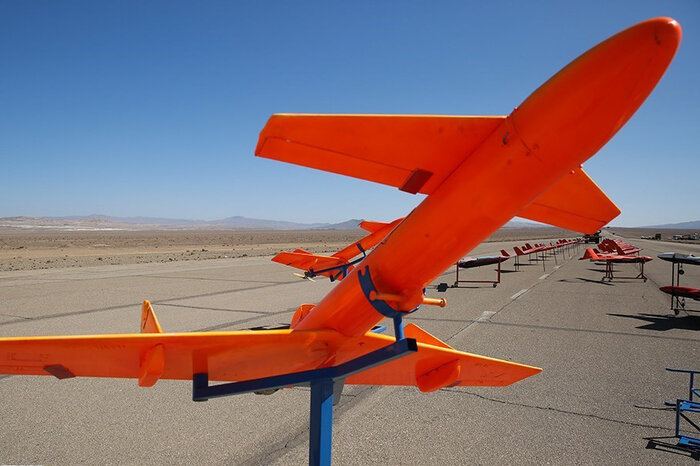
The Ababil-2 drone is a target, reconnaissance and suicide drone. Ababil-2, which was initially produced with a reconnaissance and target mission, was later defined as a suicide drone and is now at the disposal of the Iranian Armed Forces with this mission.
The Ababil series started operating in 1987. Ababil-1 was also used as a suicide drone during the Iraq-Iran war in 80s. Ababil-2 has been in mass production since 1991 by Iran Aircraft Manufacturing Industries (HESA) And since then entered the service of the Iranian Armed Forces.
The Ababil-2 drone does not need a runway to land and take off. The Ababil can be launched from a zero-length jet-assisted take-off platform or by a pneumatic catapult launcher with the help of a rocket attached to the end of the UAV. For landing and recovery, a parachute or skids can be used for conventional landings on a runway or field.
This drone with a high operating rate is a potential threat to a variety of enemy equipment from tanks, personnel and defense systems on the battlefield.
Ababil-2 has an operating range of 100 km, a flight duration of 75 to 120 minutes, a flight ceiling of 11,000 feet (3352.8 m) and a maximum cruising speed of 220 km/h and 370 km/h in dive mode.
Guidance and control of Ababil-2 is done by the ground control center. In this case, the images are transmitted online to the control and command center. The newer Ababil-2 models are equipped with 123 system (automatic stabilizer) and GPS. “123 System” is a new project in the electro avionics engineering department of HESA. This system provides features such as easy flight with more safety by non-professional pilots (in long and short range), automatic take-off and semi-automatic landing, planning and guidance on a desired route with the help of global navigation system, the possibility of disconnecting the control center from the drone and automatic operation of the drone, sending information from the UAV to control center in 17 separate channels, including information on engine speed, ascend and rotation angles, fuel quantity, battery voltage, altitude, and travel speed for Ababil-2.
Ababil-2 uses a cheap camera with 12 megapixel image quality.
Ababil-2 is responsible for tasks such as reconnaissance, battlefield surveillance, border patrol, aerial photography, artillery firing correction, as bait to luring air defenses, carrying out suicide missions and training drone personnel.
Two Ababil-2 models have been observed to date that also have different engines. The difference in appearance of these models is in the tail, the first model has a vertical tail attached to the main body and the second model has two identical vertical tails on the rear wing.
Left image: with two identical vertical tails – Right image: with one vertical tail
Ababil-2 specifications: Length: 2.88 m Wingspan(rear): 3.25 m Height: 0.91 m Empty weight: ~ 27 kg Maximum take-off weight: 83-128 kg Payload: 40 kg of cargo or explosives Internal fuel capacity: 16 liters Engine: W3 or MD series with 20-30 hp Maximum speed: 370 km/h Cruise speed: 250 km/h Combat range: 120 km Endurance: 75-120 minutes Service ceiling: 3352.8 m Origin: Iran
Click to view full size imageClick to view full size image
“Ababil-2 Drone” collection of posters in Arabic, Persian, Kurdish, Russian, Chinese, Azeri and Hebrew for social media:
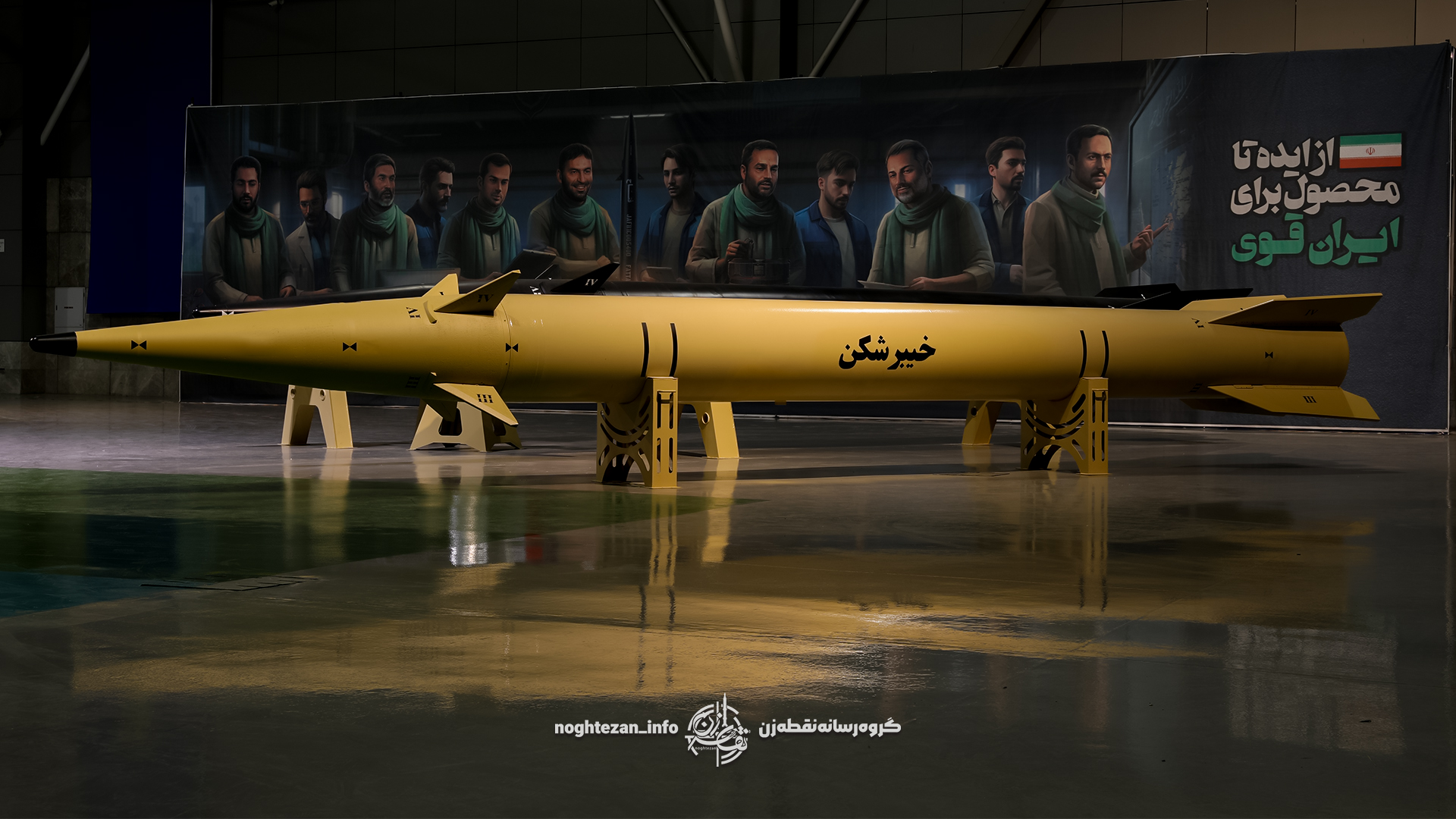
On February 9, 2022, during the visit of the Chief of General Staff of the Iranian Armed Forces, Major General Mohammad Bagheri, and the Commander of the IRGC Aerospace Force, Brigadier General Amir Ali Hajizadeh, to one of Iran’s underground missile bases, the Khaybar Shekan or Kheibar Shekan (Khaybar Breaker) tactical short-range ballistic missile was unveiled.
The unveiling of this missile on the eve of the forty-third anniversary of the victory of the Islamic Revolution of Iran, and especially the unique name of this missile, attracted many attention and reactions around the world. “Khaybar” refers to the famous war between Muslims and Jews in the early years of Islam and the victory of Muslims over the Jews after Imam Ali (as) threw down the door of the final fort.
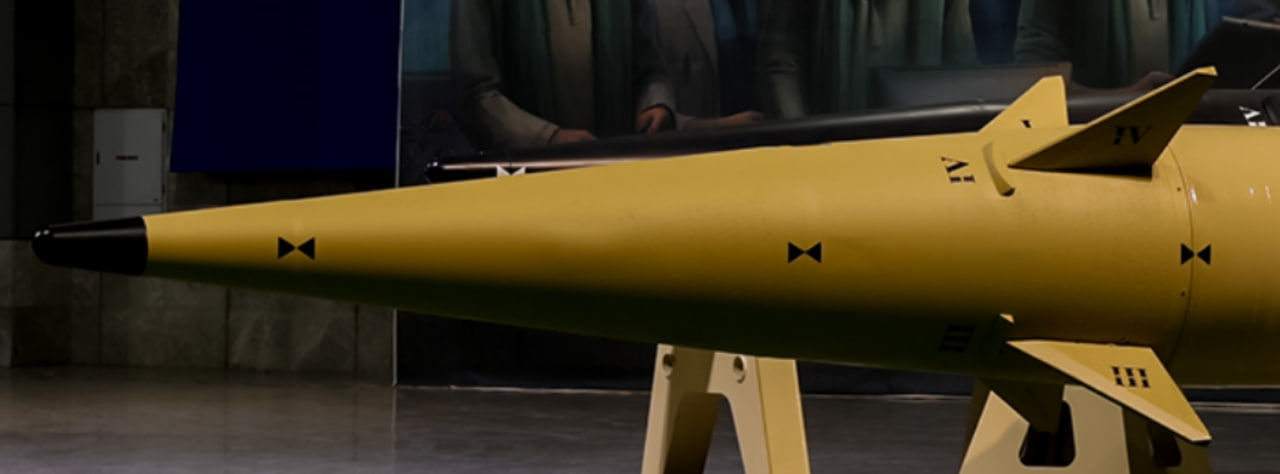
The first thing that catches the eye in the Khaybar Shekan missile is the relatively larger dimensions of its warhead movable fins. Increasing the size of the fins, increases the maneuverability of the warhead after entering the atmosphere and allows for more sophisticated and faster maneuvers in order to pass more effectively through layers of in-atmosphere anti-missile defenses such as the David Sling and Patriot.
Khaybar Shekan missile warhead and larger movable fins
The warhead configuration is of Tri Conic type. The use of this conservative configuration is to maintain the stability of the warhead during heavy maneuvers and in the landing phase causes high maneuverability to pass through the layers of missile defense systems. Of course, the amount of drag in this configuration is a bit high. In engineering, increasing the drag force is intended by the weapon designer to achieve greater maneuverability.
An example of how a maneuverable warhead (MaRV) works
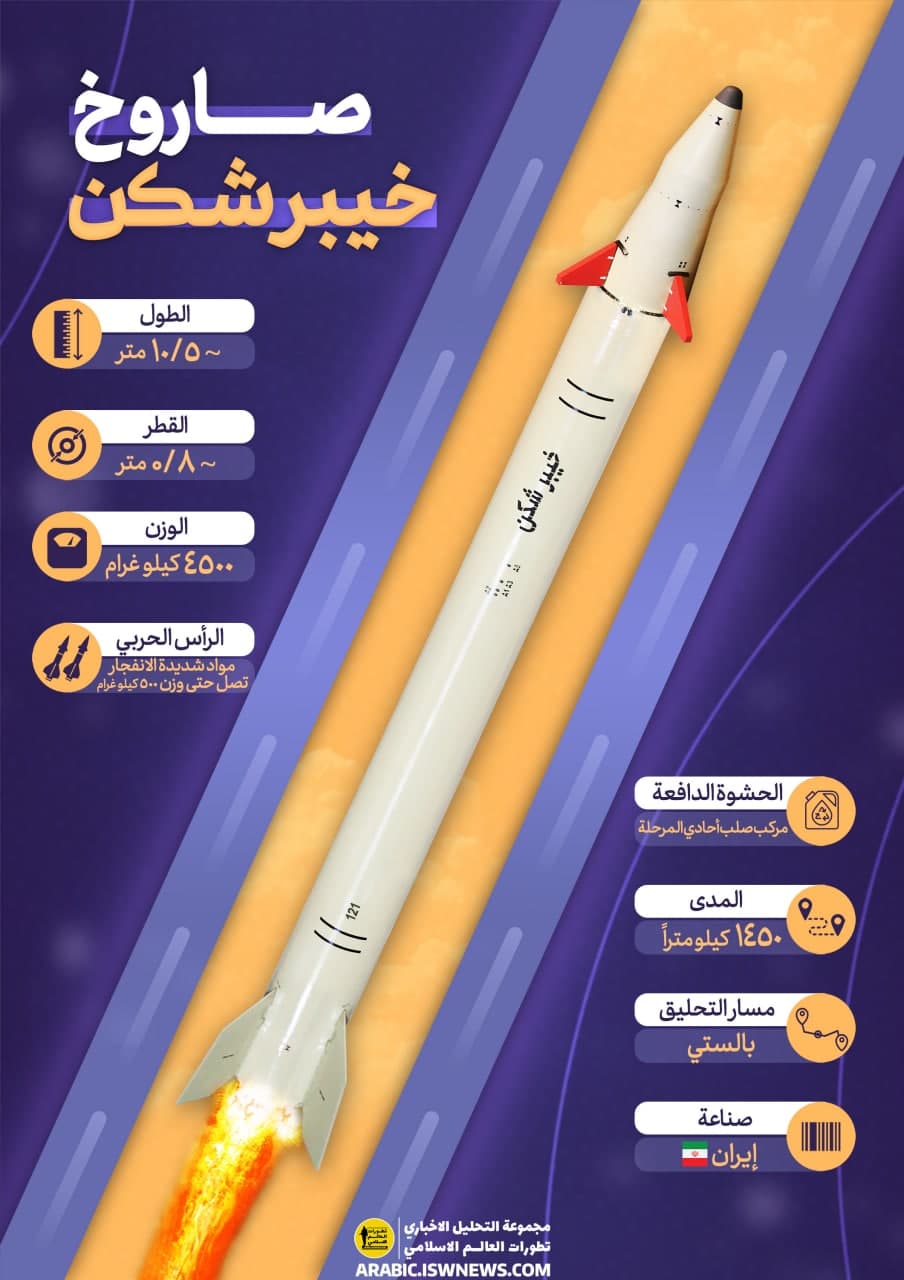
Unfortunately, the exact details of the missile, such as weight, length, diameter, warhead weight, etc., have not been officially provided by Iranian officials; But according to estimates, the diameter of the missile is 800 mm and its length is about 10.5 meters.
Length and diameter of Kheibar Shekan missile
Due to the reflection of light from the missile body and its texture, it seems to be a composite body material, which means low deadweight of engine. Therefore, the missile weighs between 4.5 and 5 tons, assuming the weight of the warhead is 500 kg, which is a unique number for a short-range ballistic missile with a range of 1450 km. At the time of unveiling, it was mentioned that the weight of this missile has been reduced to one third, which is consistent with one third of the mass of the 15-ton Qadr S missile.
Extreme agility and speed in hitting targets at a range of 1450 km is one of the main capabilities of this missile.
Body of Khaybar Shekan Ballistic Missile
As mentioned, this missile is based on the Dezful missile and with a weight of 30% of liquid fuel missiles, it has achieved the range of the same missiles. Therefore, this missile has solid fuel, and due to the reduction of dimensions and weight of this missile, it is possible to use two missiles of this type on dual launchers.
Smaller missile dimensions have significant advantages. The smaller the missile, the more missiles can be stored in the confined space of underground missile bases. Also, the need for drilling to increase the length of the tunnels and the cost and time is reduced. It should be noted that in the past, due to the lack of space for missiles, the IRGC Aerospace Force implemented the idea of multi-floor missile depots.
Iran Underground Missile Base
Another advantage of reducing the dimension of missiles is the use of a wide range of launchers; So that the Khaybar Shekan ballistic missile can be launched from the Iran Khodro Diesel’s Aria 10-wheel launcher. This truck has recently joined the Iranian Armed Forces.
Iran Khodro Diesel’s Aria 10-wheel launcher
Another item that was revealed with the unveiling of Khaybar Shekan missile is the use of a dual launcher that have the ability to carry and launch up to two Khaybar Shekan short-range missiles. Until now, short-range missiles, such as Iranian Qiam missiles with a maximum range of 1,000 km, were carried by the launcher as a single unit; Increasing the number of missiles means increasing the firing rate, which is a very effective and proven tactic in overcoming on missile defense systems.
Another important issue that occurred during the unveiling of the Khaybar Shekan missile, which led to much speculation, was the naming of the missile and the type of warhead: Khaybar Shekan (Breaker). At first, it looked like a bunker buster warhead, but with the release of more footage of the missile firing and hitting the target, the bunker buster warhead theory was rejected due to the angular impact on the target and how it exploded instantly.
Of course, the possibility of developing a bunker buster warhead for this missile is quite possible. However, in the unveiling footage of the missile, the missile uses the HE warhead, which according to the commander of the IRGC Aerospace Force, Sardar Hajizadeh, the explosive used in the warhead, is several times more than its TNT equivalent, and provides more explosive power. Therefore, a combination of RDX and HMX has probably been used to provide such performance.
Video of the unveiling and performance of the Khaybar Shekan ballistic missile
In 2023, another variant of the Kheibar Shekan missile was unveiled. This missile, which is known as Kheibar Shekan-2, is almost identical to Kheibar Shekan-1.
Khaybar Shekan-2 with a range of 1800 km
The only difference in the appearance of Khaybar Shekan-2 with Khaybar Shekan-1 is the warhead. The Khaybar Shekan-1 missile has a three-cone warhead, but the Khaybar Shekan-2 missile uses a single-cone warhead.
In the booster section, the boosters of the Khaybar Shekan-2 and 1 missiles are exactly the same size with a diameter of 76 cm, but the weight of the Khaybar Shekan-2 missile is less than the Khaybar Shekan-1 missile. The range of Khaybar Shekan-2 has also increased from 1450 km to 1800 km.
The image on the right is the three-cone warhead of Khaybar Shekan-1 and the image on the left is the single-cone warhead of Khaybar Shekan-2.
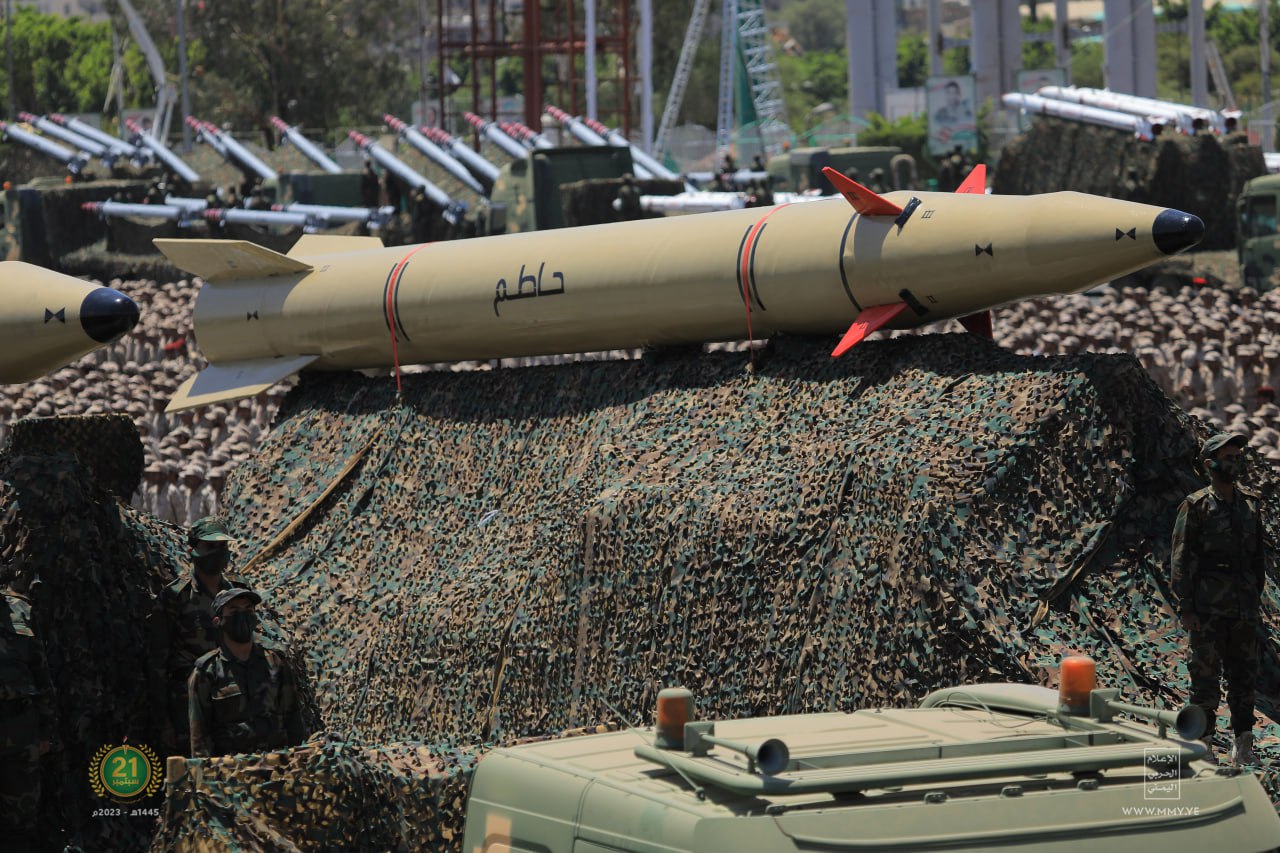
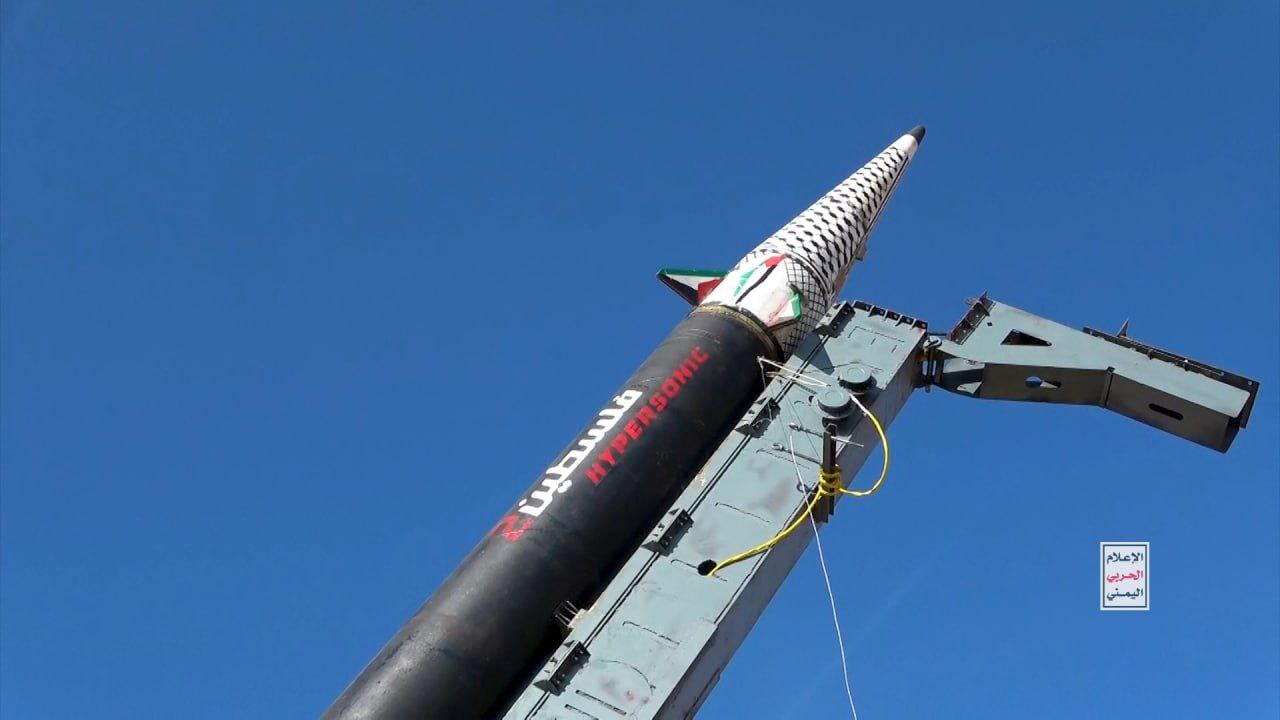
It should be noted that the variants of Khaybar Shekan 1 and 2 missiles named Palestine and Hatem missiles have been put into service by the Yemeni army (Ansar Allah).
In fact, the Hatem-1 and 2 missiles with a three-cone warhead are similar to the Khaybar-Shekan-1 missile, and the Palestine-1 and 2 missiles with a single-cone warhead are similar to the Khaybar Shekan-2 missile.
Hatem-1 missileHatem-2 missilePalestine-1 missilePalestine-2 missileHatem 1 and 2 and Palestine 1 and 2 missiles
Regarding the range of these missiles, apart from the Palestine-2 missile, no exact information is available, but naturally, their range should be similar to the Iranian variants.
The range of these missiles is classified as follows based on the announced information: Khaybar Shekan-1 »»» 1450 km Hatem-1 »»» 1450 km Hatem-2 »»» unknown range and Khaybar Shekan-2 »»» 1800 km Palestine-1 »»» 1800 km Palestine-2 »»» 2150 km
The Palestine-2 missile was used in an attack on a target near the city of Tel Aviv, and its range was officially announced as 2,150 km. Considering that Palestine-2 is similar to Khaybar Shekan-2 (with a range of 1,800 km), it seems that its warhead has been greatly reduced in order to reach a range of 2,150 km.
Khaybar Shekan-1 missile specifications: Length: 10.5 m Diameter: 0.8 m Weight: 4500 kg Warhead: High Explosive up to 500 kg Fuel: Solid (One-stage) Range: 1450 km Flight trajectory: Ballistic, MaRV warhead Origin: Iran
Click to view full size
“Kheibar Shekan Ballistic Missile” collection of posters in Persian, Arabic, Kurdish, Azeri, Russian for Social Media:
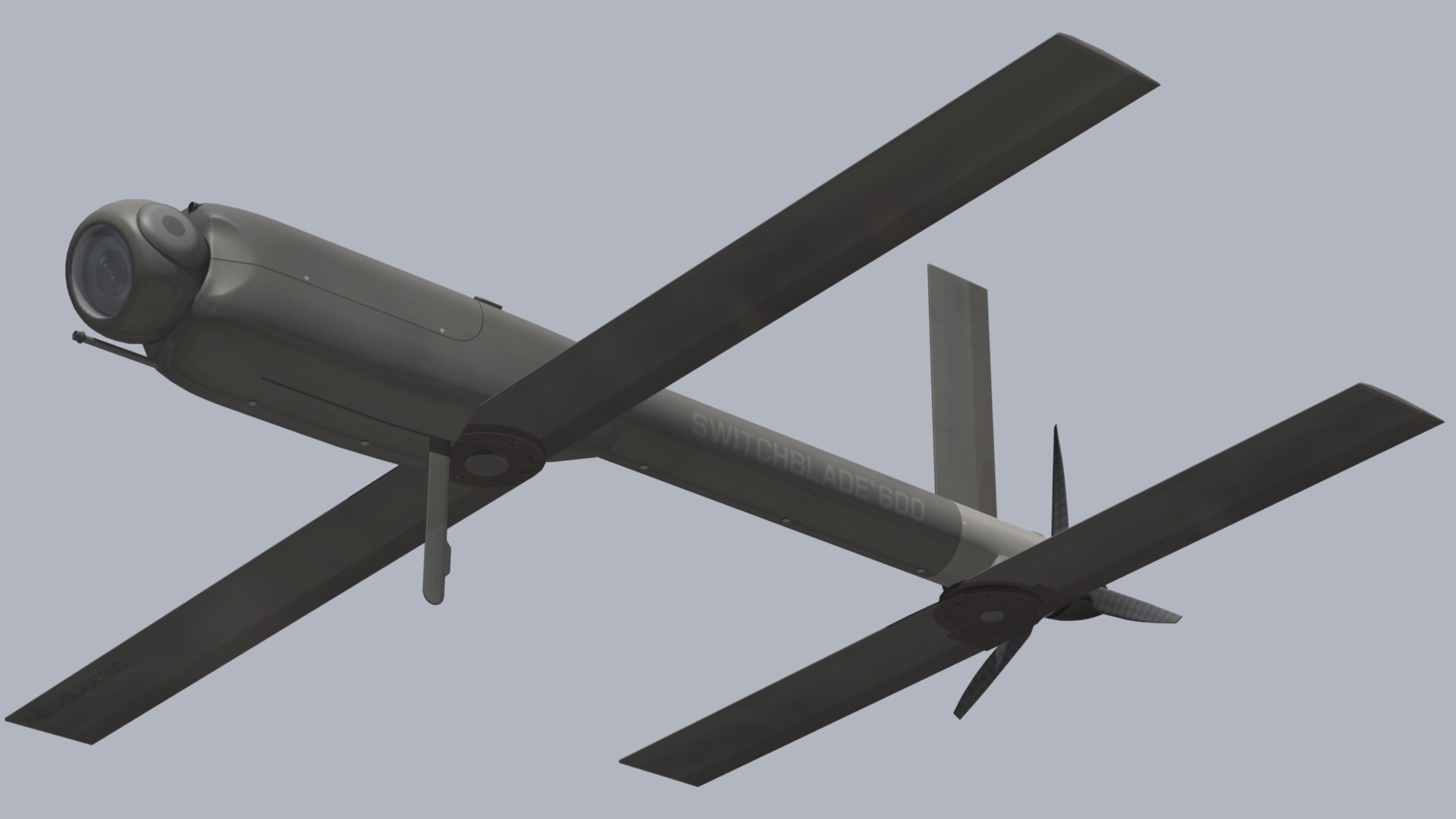
Switchblade drones are a type of miniature loitering munition developed by AeroVironment specifically for the US military. The dimensions of these drones are so small that they can be carried in a backpack. The Switchblade launches from a tube, flies to the target area, and crashes into its target while detonating its explosive warhead. The first prototype of the Switchblade drone was introduced in 2011 and reached the production stage; But in 2020, after the unveiling of the Switchblade drone, the first version was rebranded to Switchblade 300.
It is worth noting that during the Ukraine-Russia war, the US military provided more than 100 of these drones to the Ukrainian army.
Switchblade 300 drone: The Switchblade 300 drone is designed as an expendable drone to increase precision firepower for platoon-sized infantry units. It is 49.5 cm long and weighs 2.7 kilograms including the carrying case and launcher, making it small and light enough for one soldier to carry. The name switchblade comes from the way the spring-loaded wings are folded up inside a tube and flip out once released.
Launch and function of the wings of the Switchblade 300 drone
It can be controlled up to 10 kilometers. Its small size limits its endurance to 10 minutes. This makes it unsuited for scouting roles, but it is useful for inexpensively engaging long-range targets and assisting in relieving units pinned down by enemy fire. The Switchblade uses a color camera and GPS locating to identify, track, and engage targets, as well as being able to be pre-programmed on a collision course. Its warhead has an explosive charge equivalent to a 40mm grenade to destroy light armored vehicles and personnel. If a situation causes a strike to be called off, the operator can call off the Switchblade and re-target it.
Switchblade 300 performance and observing by Puma UAV – Switchblade 300 launch capability from Jump 20 UAV
Switchblade 300 is propelled by an electric engine, so its small size and silent flight makes it extremely difficult to detect or try to intercept, enabling it to close in on a target at 160 km/h. The Switchblade uses the same Ground Control Station as other AeroVironment drones including the Wasp, RQ-11 Raven, and RQ-20 Puma. This creates commonality and the potential for teaming of longer-endurance small UAVs to recon for targets, then having the Switchblade attack once they are identified with the same controller. It should be noted that the multi-pack launcher with remote control capability is also designed for Switchblade 300 drones. This launcher comes in a standard 6-pack configuration weighing 73 kg. The design is scalable from 2 to 20 rounds and allows fast reloading in less than 30 seconds per round. The U.S. military has been deploying these packages since early 2019 to defend its bases. The system can be placed outside and remotely fired from the relative safety of a command-and-control center more rapidly and with up to six shots.
Switchblade 300 Multi-pack launcher – Six-tube firing system
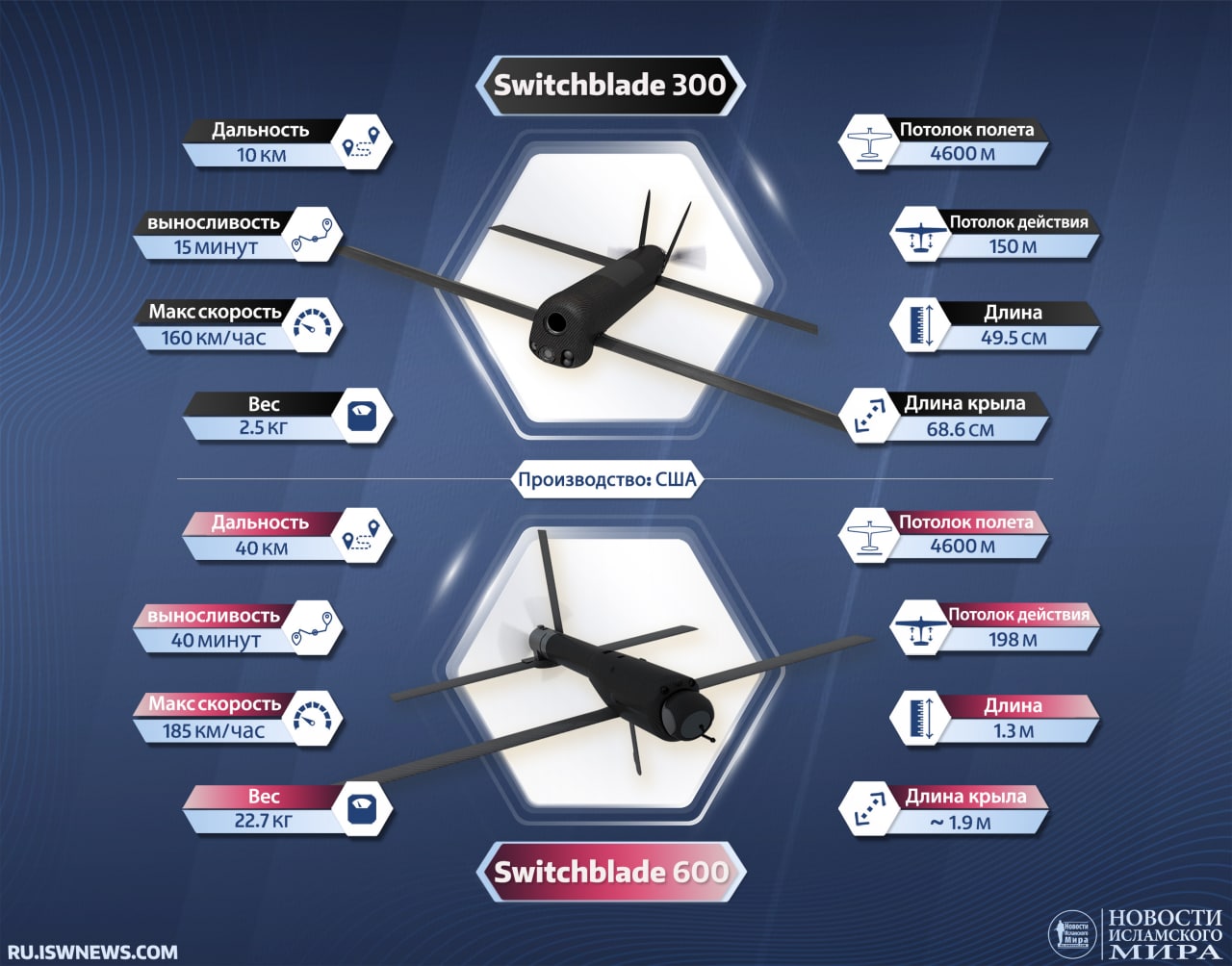
Switchblade 300 specification: Range: 10 km Endurance: 15 minutes Max speed: 160 km/h Weight: 2.5 kg Length: 49.5 cm Wingspans: 68.6 cm Flight ceiling: 4600 m Flight altitude: 150 m Origin: USA
Switchblade 600 drone: The Switchblade 600 drone is larger than the Switchblade 300. The length of this drone is 1.3 meters and its weight is 22.7 kilograms; However, it is still portable by man and can be assembled in 10 minutes. The Switchblade 600 is designed to fly up to 40 km in 20 minutes, as well as for a further 20 minutes of roaming, which means a final range of 80 km (40 minutes in total). The Switchblade 600 attacks at a 185 km/h dash speed, carrying an ATGM warhead based on the FGM-148 Javelin, designed to neutralize armored vehicles.
Launch and function of the wings of the Switchblade 600 drone
A touchscreen tablet-based fire control system can manually or autonomously control the Switchblade 600. It is secured through onboard encrypted data links and Selective Availability Anti-Spoofing Module GPS with a patented wave-off capability. An optional pocket digital data link module allows engagements beyond 90 km. The Switchblade 600 was developed for the Single Multi-Mission Attack Missile development program. Other methods could include a six-pack vehicle-mounted version and by air-launch. One of the advantages and interesting points of the Switchblade 600 drone is that it can hunt targets with a much longer range than Javelin ATGM, but it costs less than a Javelin missile.
Switchblade 600 specification: Range: 40 km Endurance: 40 minutes Max speed: 185 km/h Weight: 22.7 kg Length: 1.3 m Wingspans: ~ 1.4 m Flight ceiling: 4600 m Flight altitude: 198 m Origin: USA
Click to view full sizeSwitchblade 300 drone – Click to view full sizeSwitchblade 600 drone – Click to view full size
“Switchblade Loitering Munition” collection of posters in Persian, Arabic, Kurdish, Azeri, Russian for Social Media:
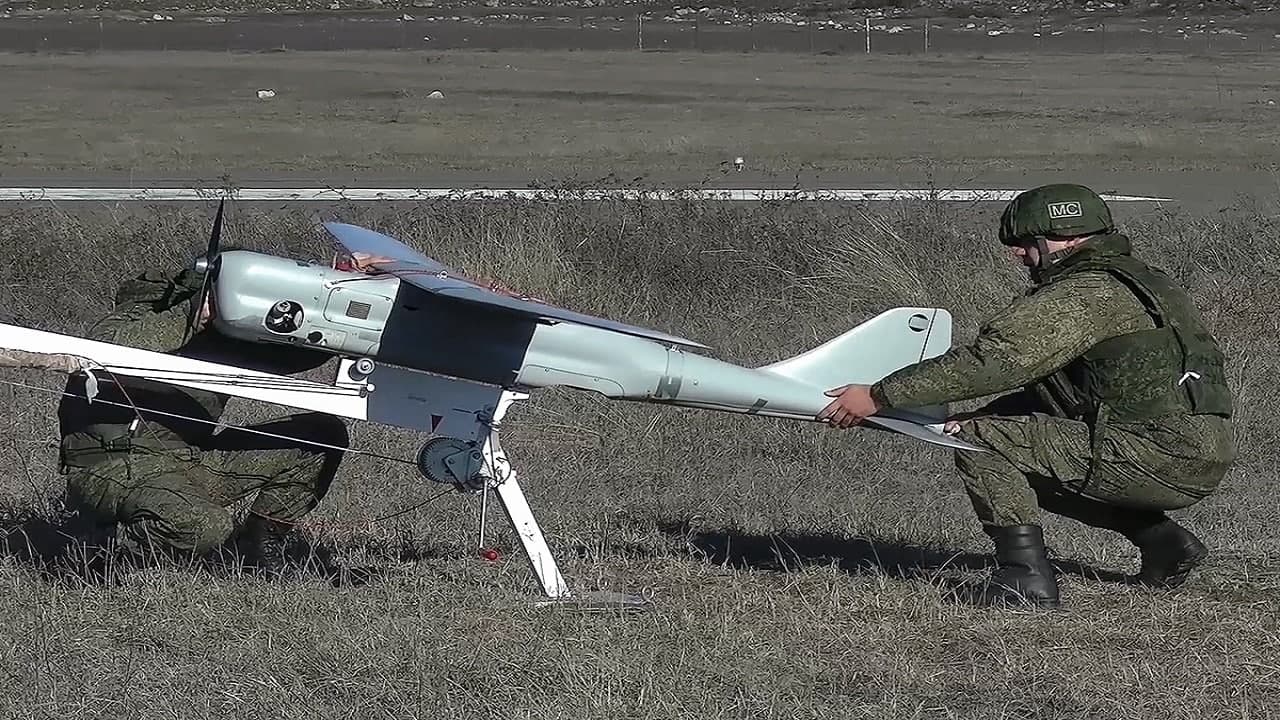
The Orlan-10E, an export variant of the Orlan-10 drone, was unveiled at the 19th FIDAE International Exhibition in March 2016, and ROSOBORONEXPORT (the sole state intermediary agency for Russia’s exports/imports of defense-related and dual use products, technologies and services) also announced plans to export the Orlan-10E drone.
The drone is used for a variety of missions, including reconnaissance, surveillance, electronic warfare, search and rescue, combat training, radio signal detection and target tracking on difficult terrain.
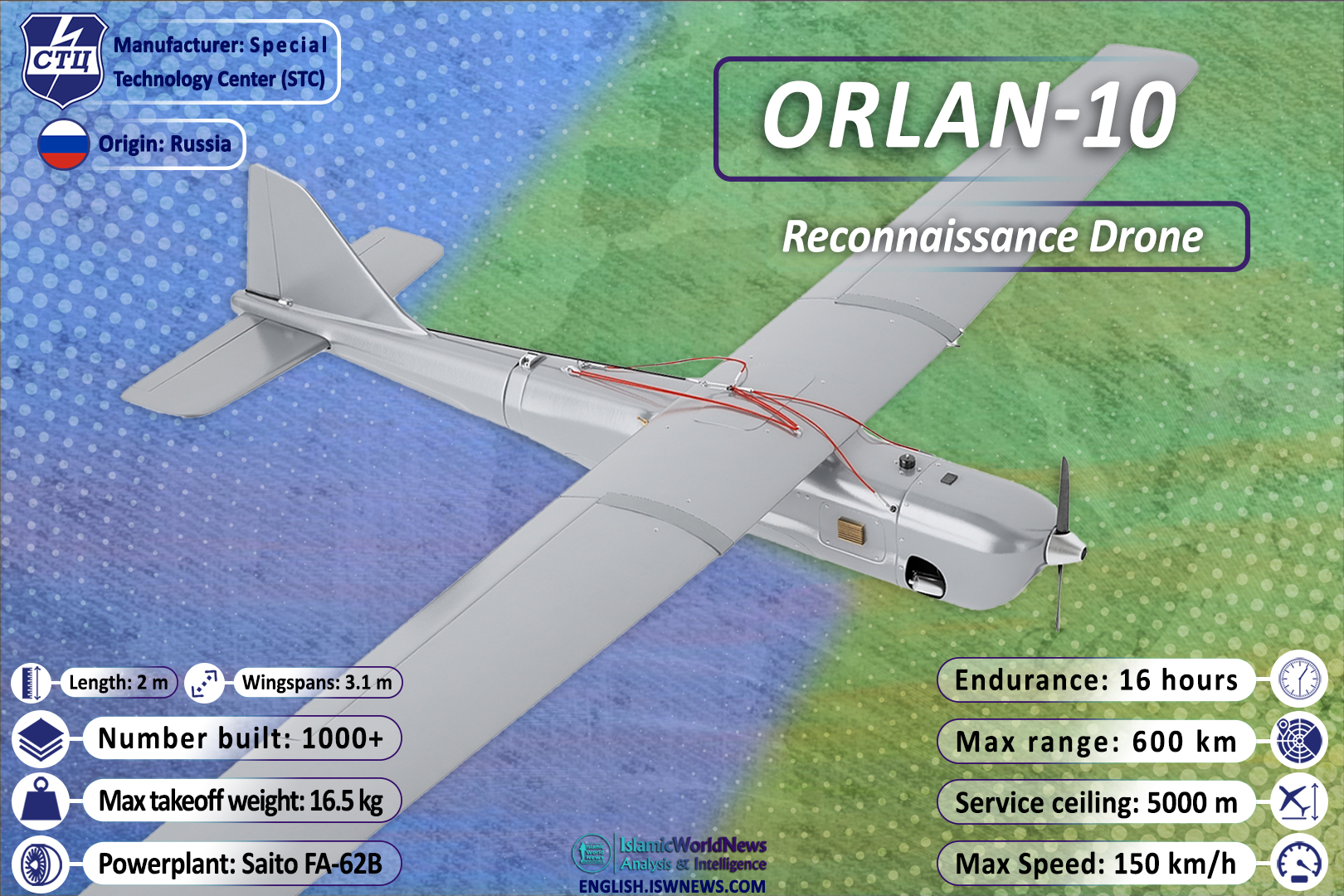
Orlan-10 specifications: Length: 2 meters Wingspans: 3.1 meters Max takeoff weight: 16.5 kg Empty weight: 12.5 kg Endurance: 16 hours Combat range: 140 km Maximum(ferry) range: 600 km Service ceiling: 5000 meters Speed: 150 km Engine: Saito FA-62B single cylinder four stroke gasoline piston engine, 0.75 kW (1 hp)
Click to view full sizeClick to view full size
“Orlan-10 Reconnaissance Drone” collection of posters in Persian, Arabic, Kurdish, Azeri, Russian for Social Media:
The Ayn al-Ansaniyah Research and Statistics Center has released statistics on the crimes and atrocities committed by the Saudi coalition against Yemen during the 2555 days of war.
Statistics of the Saudi coalition aggression on Yemen after 2555 days: The total number of martyrs and wounded is 46,262, of which 17,734 are martyrs, of which 2434 are women and 4017 are children. 26931 people were injured, of which 2910 were women and 4586 were children.
In the past 2555 days, the Saudi coalition has destroyed 15 airports, 16 ports, 340 power stations and generators, and 609 networks and communication stations. Also, 2799 reservoirs and water distribution system, 2091 government facilities and 6743 bridges and roads were targeted or destroyed.
The number of destroyed and damaged factories reached to 404. 378 fuel tankers, 11901 business establishments, 433 poultry and livestock, 9770 transport means, 482 fishing boats, 999 food stores, 416 fuel stations, 696 markets and 965 food trucks were destroyed and damaged.
The number of destroyed and damaged civilian houses has reached 590,069. 182 university centers, 1612 mosques, 375 tourist centers and 410 hospitals and health centers were destroyed and damaged. The Saudi coalition attacks also destroyed and damaged 1214 schools and institutes, 9721 agricultural lands, 139 sports facilities, 253 historical sites and 60 media centers were destroyed and damaged.
The spokesman for the Yemen Armed Forces, Brigadier General Yahya al-Sari’, on the occasion of National Resistance Day presented the statistics of seven years of fighting with the Saudi coalition.
General Yahya al-Sari’: “Today, we are still standing on the eve of the eighth year of steadfastness and after seven years of resistance. This is a historic achievement that the children of a free Yemen have achieved with the help of God. In this battle, tens of thousands have been martyred and wounded, and millions of people have been affected by the enmity and siege of the enemies, and these sacrifices will not be lost, and we will fulfill our covenant with the martyrs and there will be no retreat from our achievements. On March 26, 2015, the Yemenis were surprised by the enemy’s all-out military offensive on land, sea and air. The aggression in the first year was at an unprecedented rate, and in that year the armed forces were unable to monitor the various attacks of the enemy due to the large number of attacks. We faced 100 to 400 airstrikes in one day, and in addition to the bombing, the invasion from the sea and border areas continued fiercely. The total number of air strikes that the armed forces managed to observe is 274,243.
We do not forget the scenes of horrific massacres. We do not forget the scenes of our children when they are pulled out from under the rubbles. We do not forget the murder scenes of our women. We will never forget the tears of the mothers of the martyrs. We will not forget the horrible crimes of what has happened to us and what is happening to us. Proud and lofty homeland, Yemen… Yes Yemen… We will not forget the history, identity, culture, economy and foundations of Yemen.
Despite the pain and terror created by the enemy, we did not cry! But we shouted. From American crimes in the region and their stupid mercenaries like: criminal Saudi and others in Abu Dhabi and other countries. We have not seen anything in Yemen except American bombs and use of prohibited weapons. Stop interfering in the internal affairs of Yemen, in order to gain security. Security must be for everyone!
The Armed Forces, with the help of God Almighty, carried out more than 13,208 military operations during the battle to counter the brutal aggression, of which 6,681 were offensive operations and 6,527 were repelling and neutralizing enemy attacks. Among our most prominent military operations are Operation Nasr Min Allah in three phases, a large military operation whose details have not been announced, Operation Bonyan al-Marsous, Operation Famkana Minhom, Baas al-Shadid, Operation Rabi al-Intisar, Operation Al-Bayda, Al-Dhala, Shabwa, Marib, Operation Deterrence Balance, Operation Aasar al-Yemen (Storm of Yemen) in three phases, Operation Kasra Al-Hesar (breaking the siege of Yemen) in three phases, and ten other operations, the details of which have not been disclosed.
Yemen Armed forces operations have killed and wounded 10,759 members of the Saudi army, 1,251 members of the UAE army, 9,440 Sudanese mercenaries and more than 253,693 Yemeni mercenaries.
More than 17,397 vehicles, armored vehicles, personnel carriers, tanks, bulldozers and military machinery were destroyed and set on fire. Of these operations, 10518 operations have been documented visually.
The missile force conducted 1,826 military operations, including 1,237 operations inside Yemen and 589 operations outside Yemen.
The number of operations of the Air Force UAV unit is 11562 operations, which includes 2176 operations inside and 953 operations outside Yemen and 8433 reconnaissance operations.
The operations of the Air Defense Forces are 4221 operations, of which 1971 operations led to enemy aircraft destruction and losses, and 2250 operations that forced the enemy aircraft to withdraw. Air defense operations have resulted in the downing of 158 UAVs, 13 fighter jets, 10 Apache helicopters, and 6 military transport helicopters. 34 American drones and 95 spy drones were destroyed.
The Navy and Coast Guard conducted 35 operations during the seven-year battle, the most important of which were attacks on the Saudi Medinah Frigate, the Saudi-owned Dammam Frigate, and the UAE HSV-2 Swift warship, as well as the seizure of the UAE-owned Ravi military cargo ship in the Yemeni waters.
The total number of operations carried out by the ground forces are 211,136. In these operations, the engineering unit has performed 52,175 operations, including 22,854 operations against enemy gatherings, 24,907 offensive and defensive operations and targeting enemy fortifications, and 4414 operations of enemy armored and military vehicles.
The anti-armor unit carried out 7412 operations, including 2689 operations against enemy fortifications, gatherings and barracks, and 4723 attacks against military and armored vehicles.
The artillery unit carried out 85,634 operations, including 1,150 joint operations with UAVs, 15,269 operations with Zilzal-1 missiles, which resulted in fires, damage and destruction of more than 1,078 vehicles, armor, tanks, artillery, rocket launchers and weapons depots.
The total operations of the sniper units since entering the battles has reached 65,915 operations. Over the past two years, this unit has been able to increase its presence on the northern and eastern fronts and, with God’s help, has achieved significant achievements. Since the unit became active, 941 Saudi soldiers, 1,127 Sudanese mercenaries and 54,417 Yemeni mercenaries have been attacked. Also, 9298 attacks on armored and military vehicles, 124 enemy snipers and 8 UAVs were attacked by the sniper unit.
The Yemeni people and armed forces are using their legal right to defend themselves against foreign aggression and will continue to defend their land, sovereignty and independence. It does not matter what our cost is, what matters is the cost to the enemies. The Yemeni Armed Forces, with God’s help, are conducting a test operation for new quality weapons that will enter the battlefield in the next phase. We renew our covenant with God and promise the oppressed and victorious people that, God willing, the eighth year will see a quality military operation that will lead to the further liberation of the occupied territories and the enemy’s territory. Our target bank will include the aggressors’ assets and its most prominent vital features. The Armed Forces calls on all the free people of Yemen to fully preserve the achievements of the past years and to build on them as the resistance continues until freedom and independence are achieved.
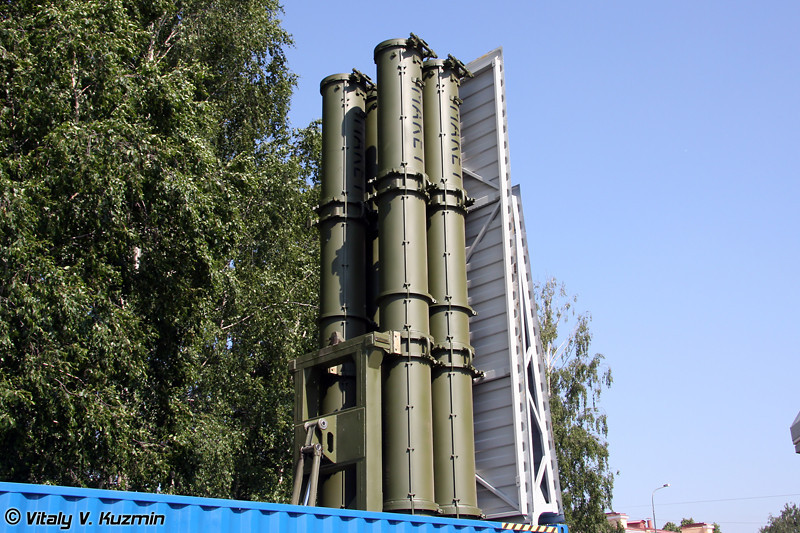
There are different types of Kalibr cruise missiles, each of which has different names depending on its function and model. These missiles are produced in two versions: “domestic” for use in the Russian army and “export” for sale to other countries.
Some versions have secondary rocket propulsion to achieve ultrasonic speeds in the final phase of target hunting. This feature reduces the reaction time of air defense systems.
The components of the submarine-launched version and the one that launch from a surface ships is designed to be as common as possible between the parts of these missiles; Of course, there are some major differences between some of the main components. For example, in the surface ship version, the rocket booster needs to control the thrust vector due to its vertical launch, but the submarine-launched version does not require this system. The fact that the Kalibr missile can be fired from vertical tubes means that it can be used on a wide range of small and large warships. Therefore, the navy of any country that has such a weapon will benefit from very precise and strategic long-range firepower.
In the air-launched version, in order to reduce the effects of the environment on the missile, the missile is placed inside a tube and after being released from the warplane, it will release from the tube and launch.
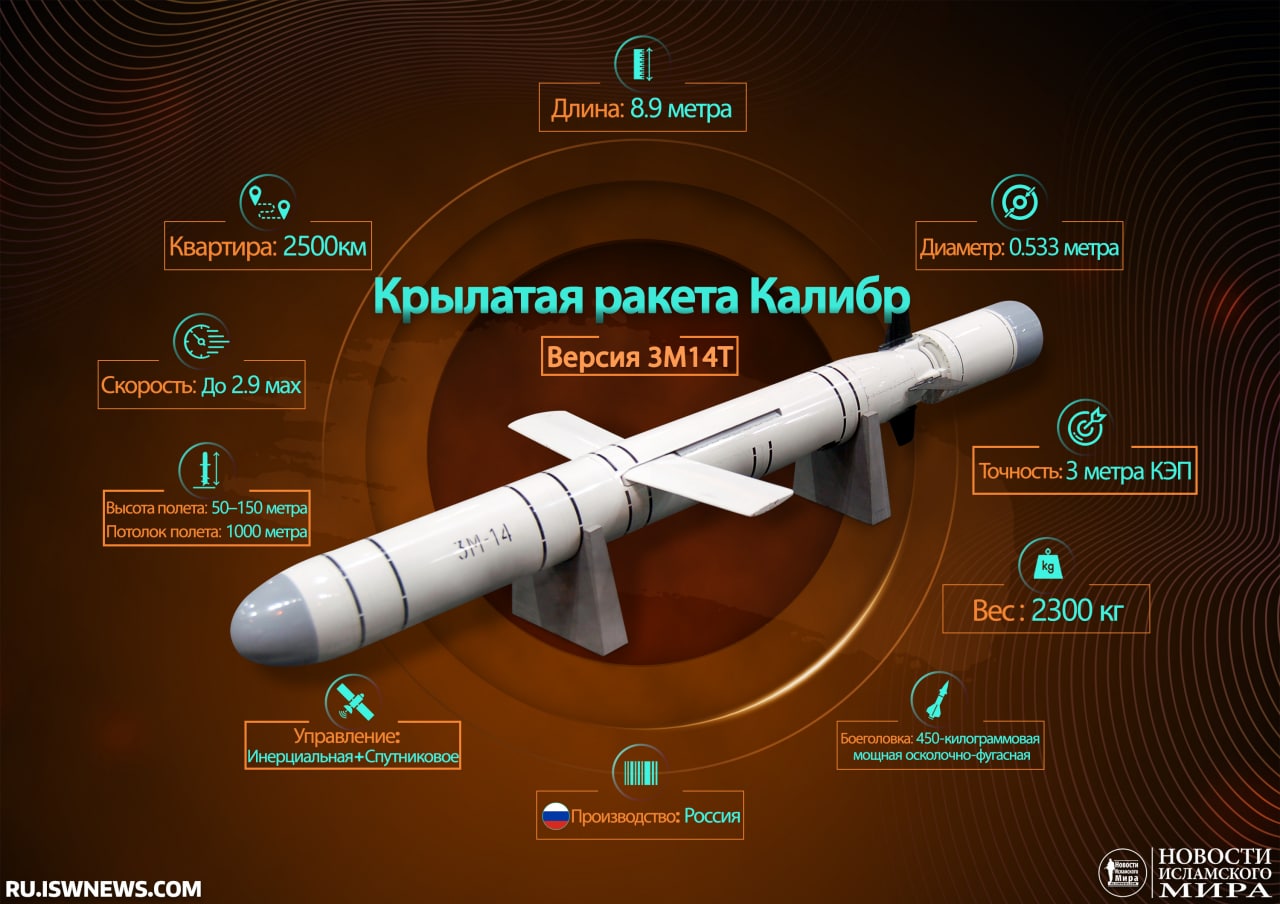
The range of all Kalibr missiles in the service of the Russian army is not exactly known; But given past operations and operational use of the missile, conservative estimates put the maximum range of 2,500 km for the longest-range version of the missile. Thus, the Kalibr cruise missile can hit targets with very high accuracy with a circular error probability (CEP) of 3 meter at 2500 km range with conventional or thermonuclear warheads. The flight ceiling of this missile is 1000 meters, but after firing it flies towards the target with a flight altitude between 50 to 150 from the ground level or with a flight altitude of 20 from the sea level. Kalibr cruise missile navigation system is a combination of inertial navigation system (INS) and satellite guidance.
Kalibr cruise missile variants
Versions used in the Russian army: Domestic versions used in the Russian Navy are divided into two general categories, 3M-54 and 3M-14 with the suffixes K and T. K means the ability to fire from submarines and T means the ability to fire from surface ships. – The 3M54 missile has two general versions, the 3M54K and the 3M54T. 3M54K missile: A submarine-launched anti-shipping variant and its length is 8.22 meters and it has a warhead of 200 kg. Its range is between 375 and 500 km. 3M54T missile: An anti-shipping variant that launches vertically (VLS) from surface ships and its length is 8.9 meters and it has a warhead of 200 kg. Its range is between 375 and 500 km.
– The 3M14 missile has two general versions, the 3M14K and the 3M14T. 3M14K missile: A submarine-launched land attack variant with a length of 6.2 meters and a warhead of 450 kg. Its range is 2500 km. 3M14T Missile: A land attack variant that launches vertically (VLS) from surface ships with a length of 8.9 meters and a warhead of 450 kg. Its range is 2500 km.
The Russian military also has other types of air-launched and land-launched cruise missile versions, but detailed specifications are not available. It is worth noting that most of the Russian army’s Kalibr cruise missiles are of the sea-launched type, and so far the Russian army has used more Kalibr sea-launched versions.
A new version of the Kalibr-M missile is also being designed, which has a larger warhead and a range of about 4,500 kilometers. The missile is expected to join the Russian Navy between 2022 and 2025.
Export variants: Export and attenuated versions (in terms of range and accuracy) of Kalibr cruise missiles fall into four main categories: Club-S, Club-N, Club-T, and Club-A. The Club-S versions are submarine-launched, the Club-N versions are surface ship-launched, the Club-T versions are land-launched, and the Club-A versions are air-launched.
The Club-S version has four types: 3M-54EClub-S,3M-54E1, 3M-14E, 91RE1. – 3M-54E Club-S: It is the submarine-launched anti-shipping variant and its length is 8.2 meters and it has a warhead of 200 kg. Its range is 220 km. -3M-54E1: It is the submarine-launched anti-shipping variant and its length is 6.2 meters with a warhead of 200 kg. Its range is 300 km. – 3M-14E: It is the land attack variant fired from a submarine and its length is 6.2 meters and it has a warhead of 450 kg. Its range is 300 km. – 91RE1: It is the submarine-launched anti-submarine variant and its length is 7.65 meters and it has a warhead of 76 kg. Its range is 50 km.
Club-S land attack, anti-shipping and anti-submarinevariants
The Club-N version has four types: 3M-54TE Club-N, 3M-54TE1, 3M-54TE, 91RTE2. – 3M-54TE Club-N: It is the surface vessel with VLS launched anti-shipping variant with a length of 8.9 meters and a warhead of 200 kg. Its range is 220 km. – 3M-54TE1: It is the surface vessel with VLS launched anti-shipping variant with and its length is 6.2 meters and it has a warhead of 200 kg. Its range is 300 km. – 3M-14TE: It is the surface vessel with VLS launched land attack variant with a length of 8.9 meters and a warhead of 450 kg. Its range is 300 km. – 91RTE2: It is the surface vessel with VLS launched anti-submarine variant and its length is 8.9 meters and has a warhead of 76 kg. Its range is 40 km.
The Club-T version has two types, the land-based 3M-54E2 for targeting warships and the Land-based land-attack 3M-14E1. These missiles are used as mobile missile systems for coastal defense. These missiles have a warhead of 450 kg and probably have a range of about 300 km.
Coastal defense version of caliber cruise missiles
The Club-A version has three types: 3M-54AE, 3M-54AE1 and 3M-14AE. – Versions 3M-54AE1 and 3M-54AE are anti-shipping missiles fired from warplanes. The 3M-54AE missile weighs 1950 kg and has a warhead of 200 kg and a range of 300 km. – The 3M-14AE is a air-launched land-attack variant fired from warplanes. It is 6.2 meters long, weighs 1400 kg and has a warhead of 450 kg. Its range is 300 km.
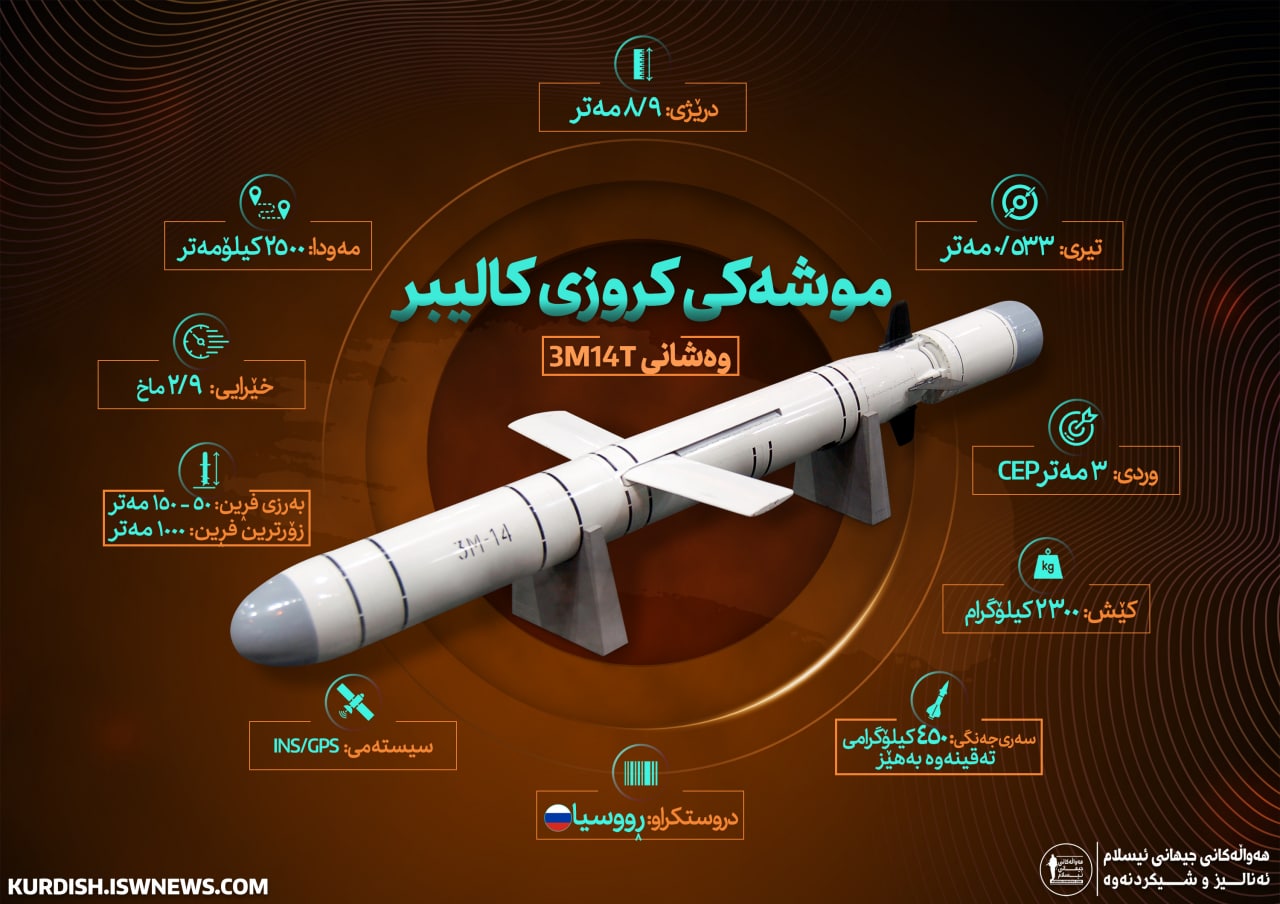
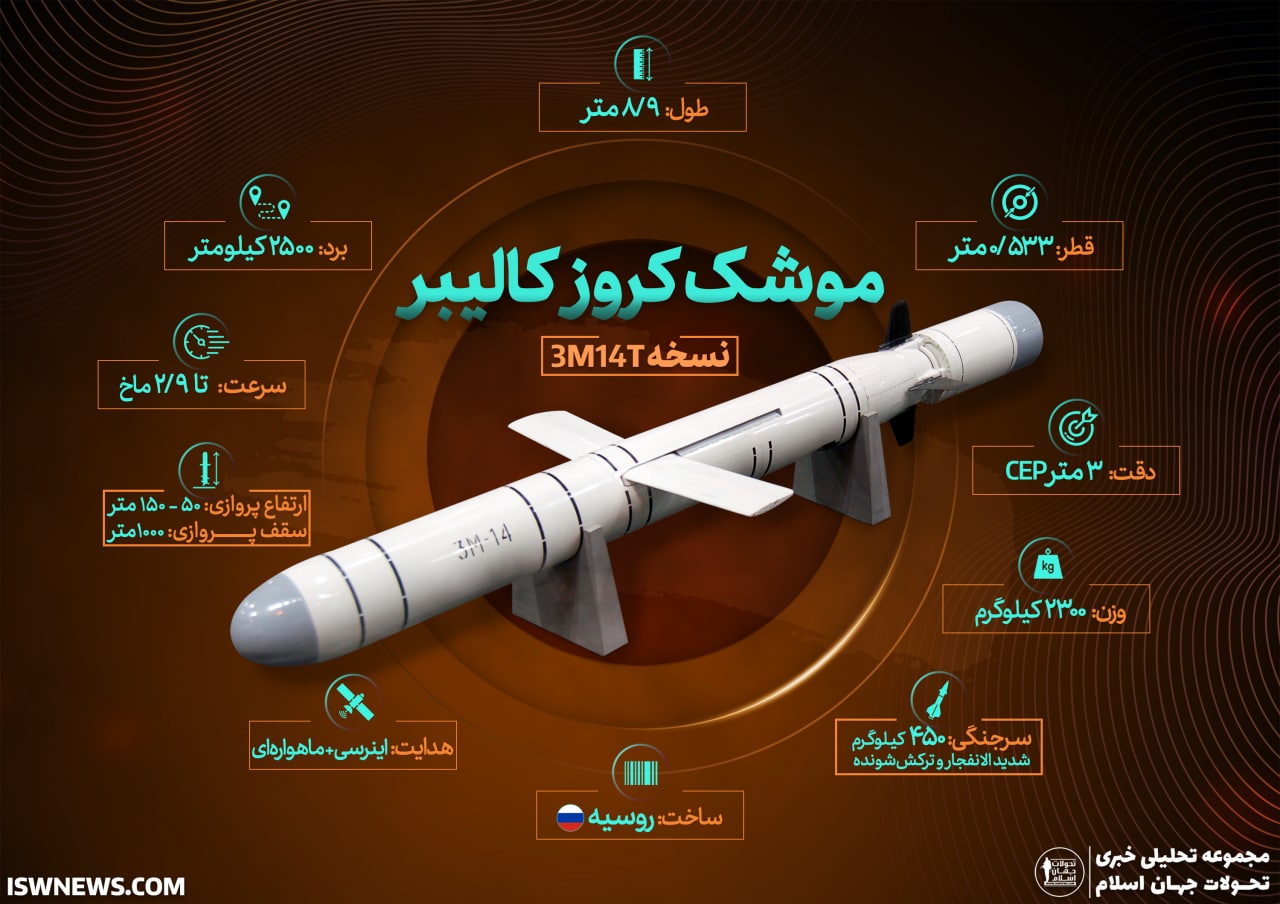
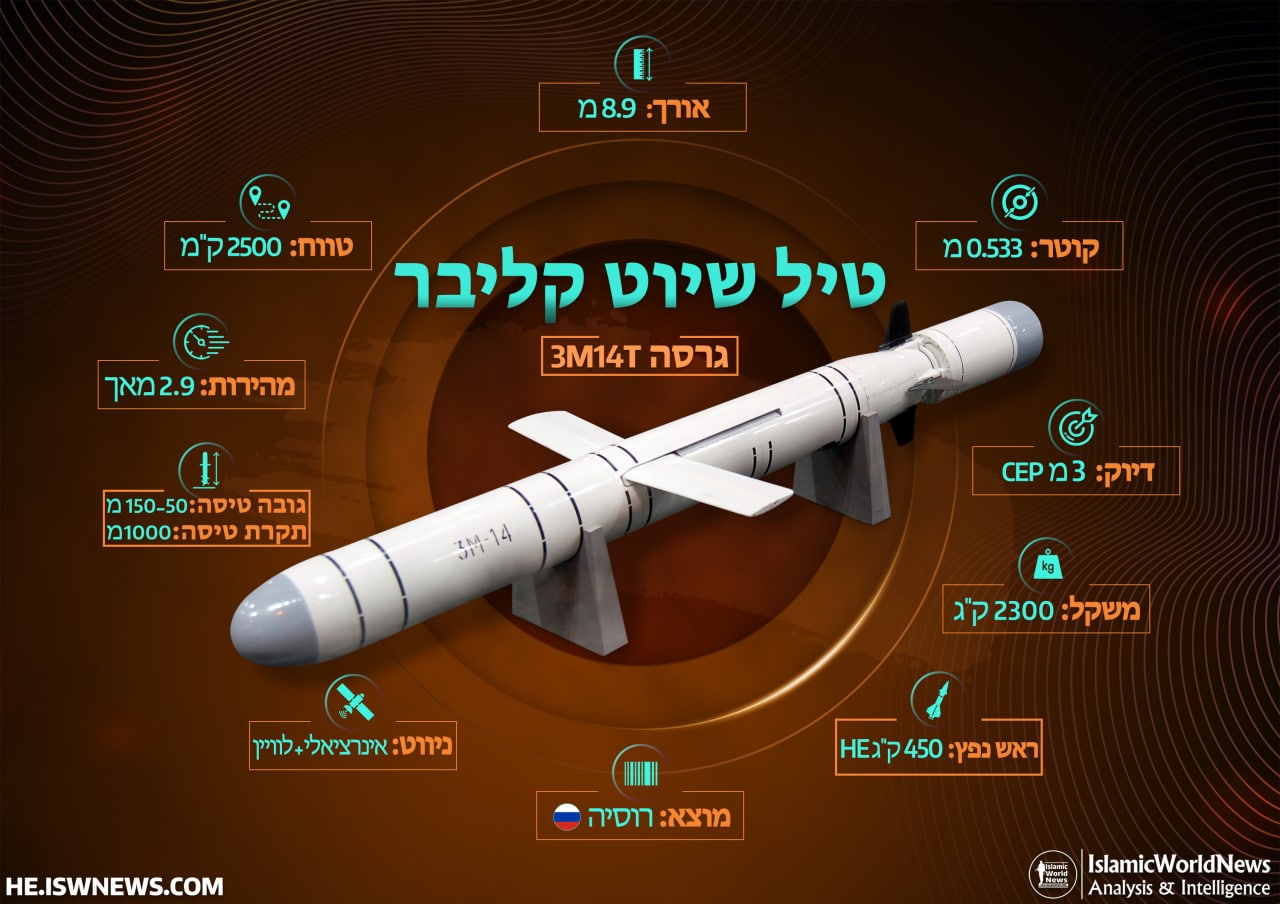
Kalibr cruise missile specifications (3M14T variant): Length: 8.9 m Diameter: 0.533 m Wingspan: 3.080 m Weight: 2300 kg Warhead: 450 kg HE Range: 2500 km Speed: Mach 2.9 Flight ceiling: 1000 m Flight altitude: 50 – 150 m Guidance: Inertial + satellite Accuracy: 3 m CEP Origin: Russia
Click to view full size3M14T and 3M54T caliber cruise missiles fired from Russian warships
“Kalibr Cruise Missile” collection of posters in Persian, Arabic, Kurdish, Azeri, Russian, Hebrew and Chinese for Social Media:
This missile was used during Operation Martyr Soleimani against the US forces at Ain Al Asad Airbase, Iraq, and the very high accuracy of this missile was proven. Fateh-313 missile with a maximum error rate of 3 meters is one of the most accurate missiles in Iran and the world.
In this missile, by using more advanced inertial navigation and possibly combining it with satellite navigation, a kind of terminal guidance has been obtained, which has provided the ability to guide the Fateh-313 missile until it hits the target.
The Fateh-313 is almost identical in length and diameter to the Fateh-110 missile; But the use of the new propulsion system with more power generation capacity has increased the missile range from 200 km to 500 km. This missile uses “composite solid fuel” unlike the Fateh-110 missile, which uses solid fuel. The use of composite solid fuel results in better fuel efficiency, greater safety and greater stability of the missile during flight.
The expanded range of the Fateh-313 makes more targets available to Iran, and due to the high accuracy and capability of using a mobile launcher and move the missile anywhere in the country allows Iran to fire its missiles from more locations within its territory, complicating the enemy’s attempts to attack the missile launchers before the missiles can be launched.
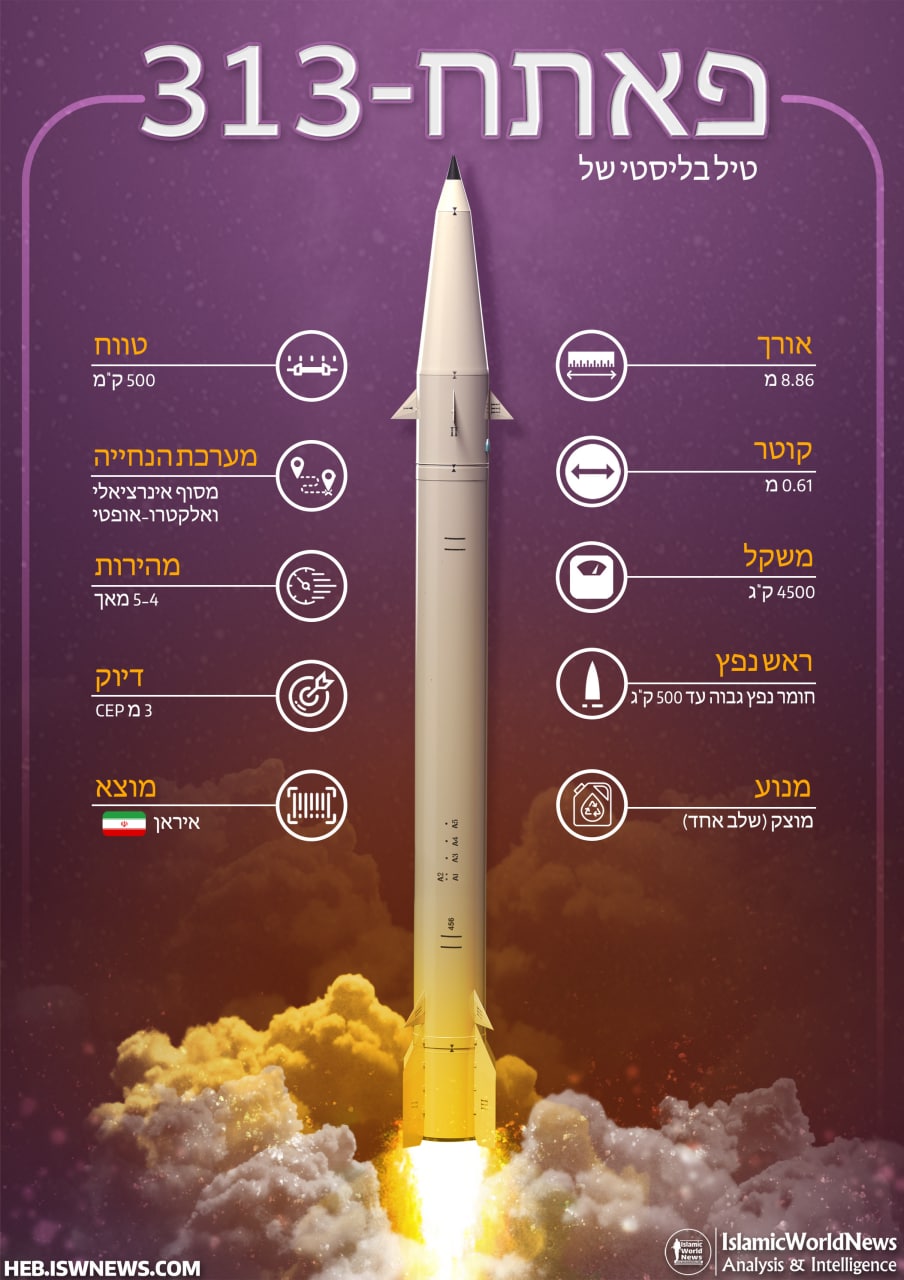
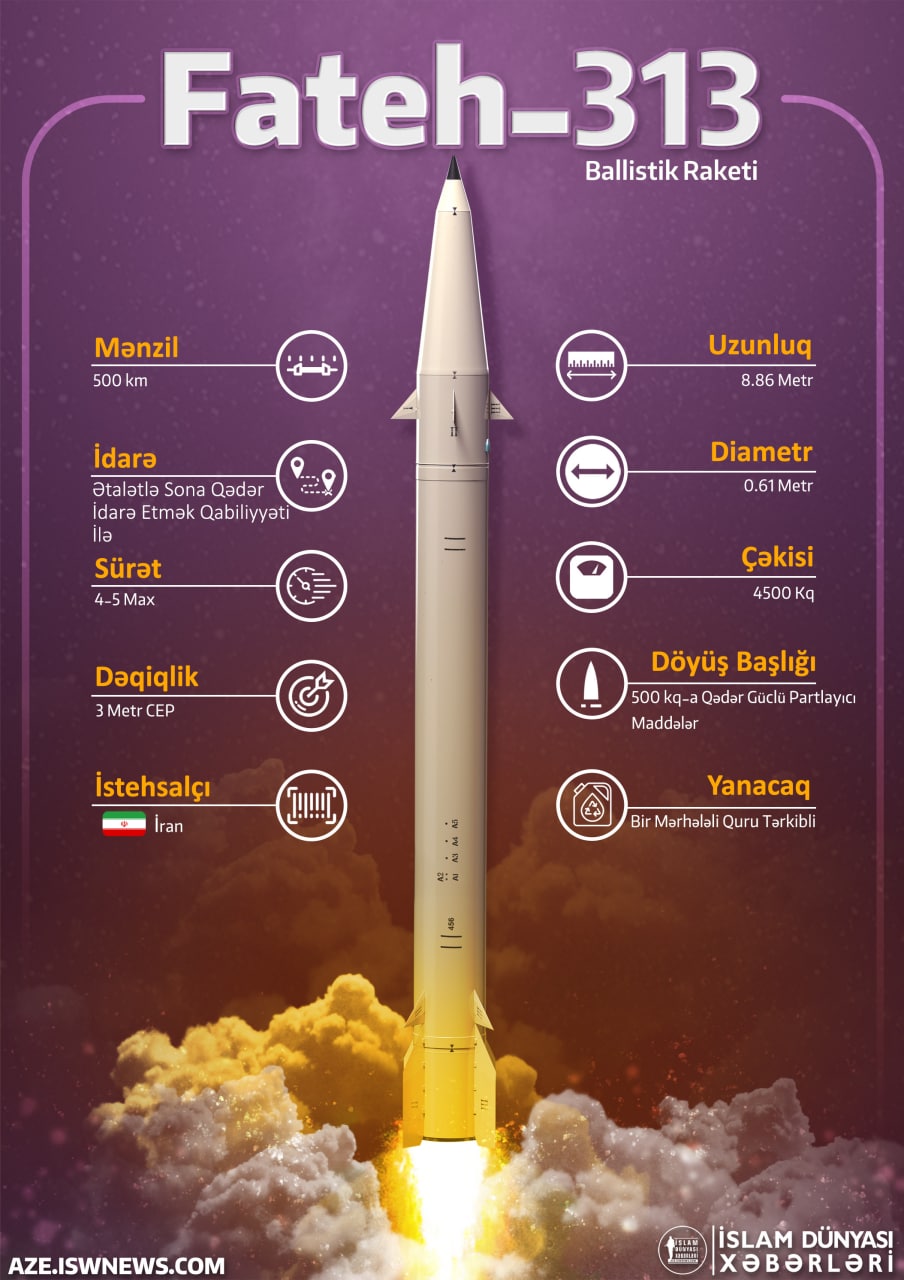
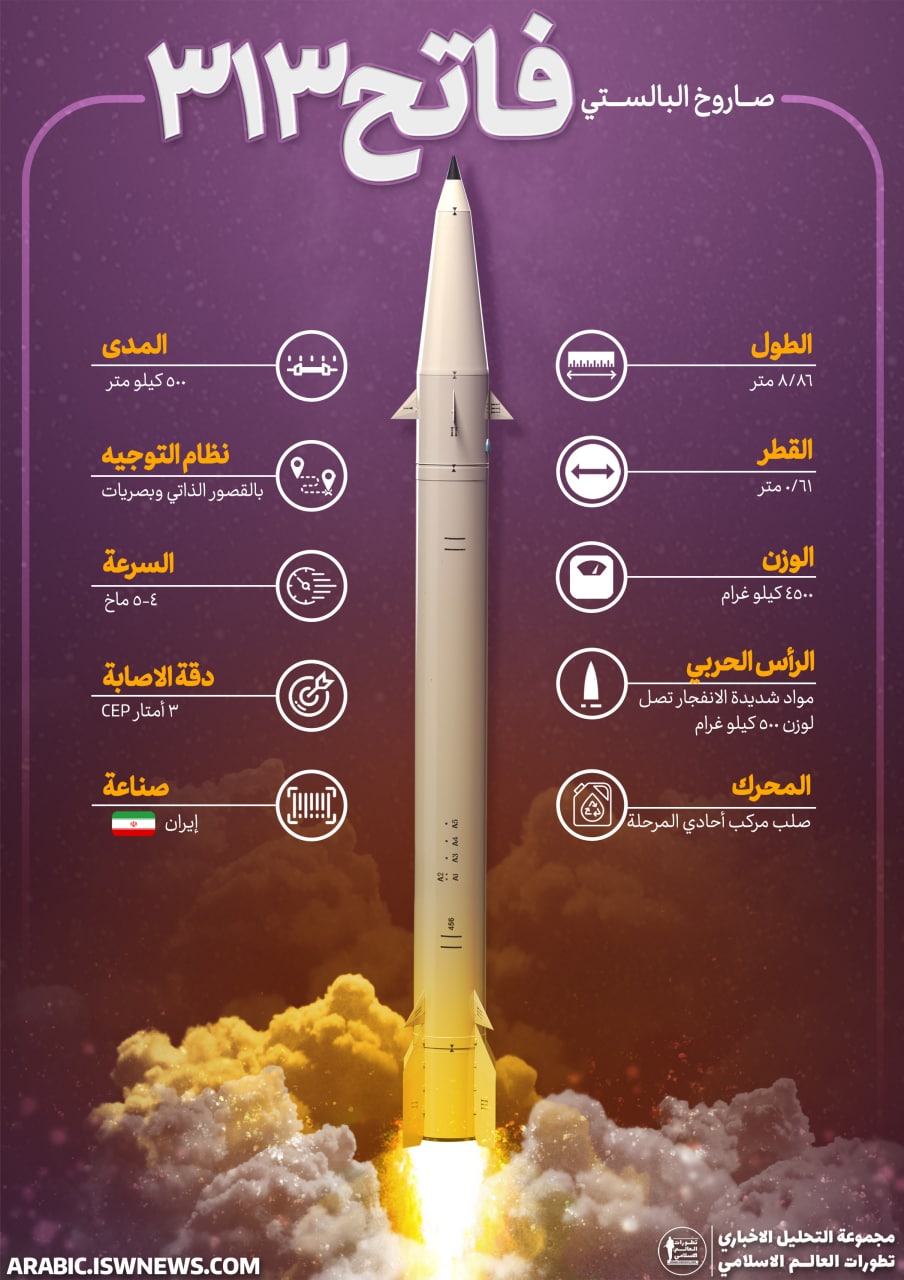
Fateh-313 ballistic missile specifications: Length: 8.86 m Diameter: 0.61 m Weight: 4500 kg Warhead: High explosive up to 500 kg Engine: Solid (single stage) Range: 500 km Speed: Mach 4-5 Guidance system: Inertial and electro-optical terminal Accuracy: 3 m CEP Origin: Iran
Click to view full sizeClick to view full size
“Fateh-313 Ballistic Missile” collection of posters in Persian, Arabic, Kurdish, Azeri, Russian, Hebrew and Chinese for Social Media:
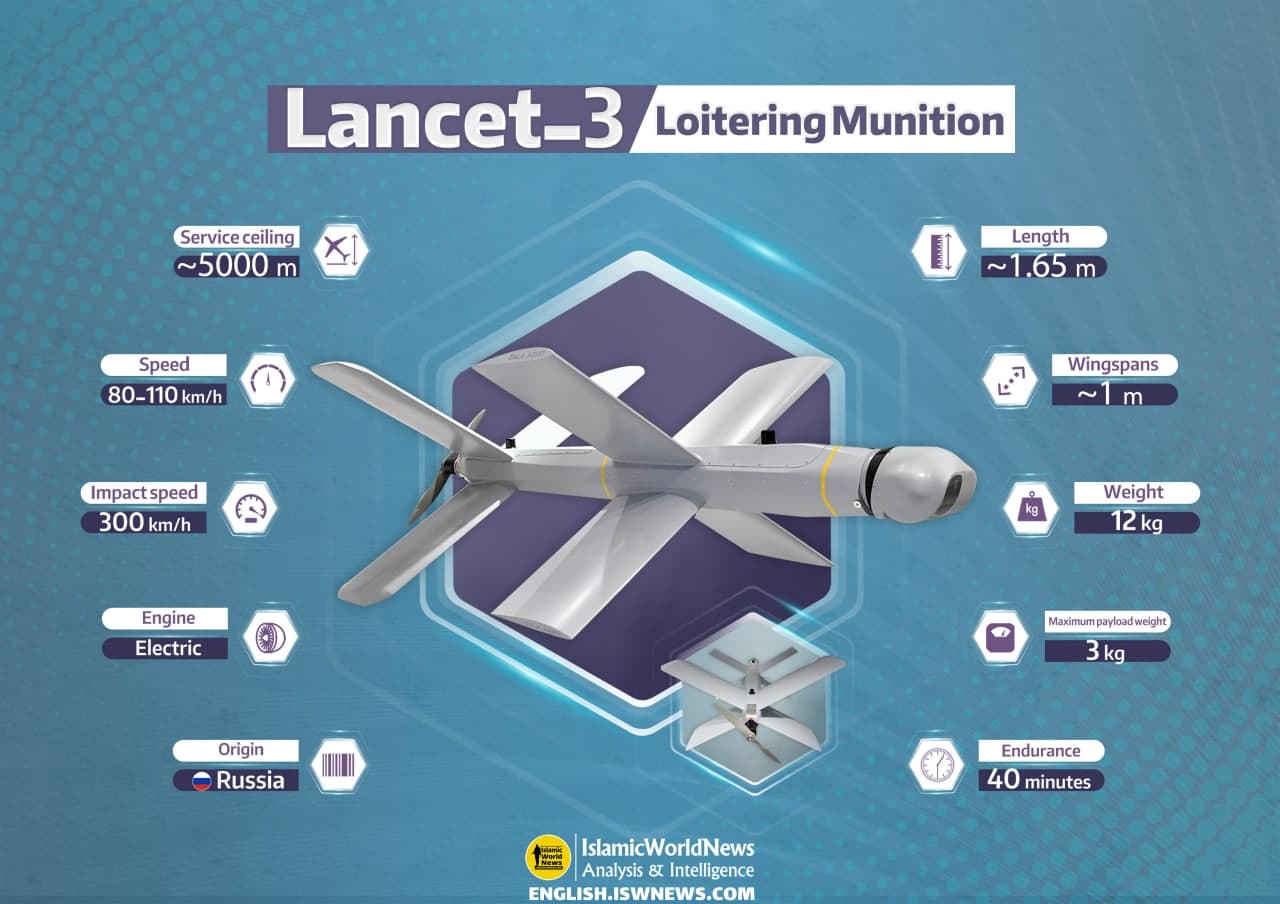
Lancet-3 loitering munition is a Russian drone made by the ZALA AERO GROUP. Since 2004 ZALA AERO GROUP is the leading Russian developer and manufacturer of unmanned aerial systems, unique payloads and mobile systems. Starting from January 2015, the Zala Aero Group became a subsidiary of the famous Russian arms company Kalashnikov. Hence, the Lancet-3 is also known as the Flying Kalashnikov.
ZALA AERO GROUP has recently developed the Lancet-3 loitering munition, And its seems the drone was inspired and modeled on other competitors.
The Zala Lancet drone was announced in late June 2019 at the Russian Army Expo exhibition with the development trials already being completed. The Lancet attack drones were deployed successfully by the Russian Armed Forces in Syria targeting Idlib militants in November 2020.
A loitering munition (or suicide drone) is a weapon that loiters around the target area for some time and attacks only once a target is located. This process can be self-reliant based on artificial intelligence or based on target approval by the operator. Loitering munitions enable faster reaction times against concealed or hidden targets that emerge for short periods without placing high-value platforms close to the target area, and also allow more selective targeting as the attack can easily be aborted. Loitering munitions fit in the niche between cruise missiles and unmanned combat aerial vehicles (UCAVs), sharing characteristics with both. They differ from cruise missiles in that they are designed to loiter for a relatively long time around the target area, and from UCAVs in that a loitering munition is intended to be expended in an attack and has a built-in warhead.
Video published by ZALA AERO GROUP on performance of the Lancet-3 suicide drone
The Lancet-3 suicide drone appears to have been modeled on the Israeli regime’s Hero family drone. Lancet-3 offers the ability to hunt targets with a range of 40 km with the ability to confirm the target before hitting. In this method, through the data link, the images of the drone electro-optical system are transmitted to the operator and the operator, after confirming the target, gives the order to engage.
The warhead fuse of this drone is of the proximity type in order to increase its effectiveness against soft targets such as tents, gatherings of enemy personnel, etc. This fuse is activated before the weapon hits the target.
According to information released by the manufacturer of this drone, the built-in laser protection device embedded in the Lancet-3 drone can effectively resist the laser weapons which are used to shoot down drones. Lancet-3 uses dual X-shaped tail design that increases its stability and maneuverability based on aerodynamic principles. This design has also helped to reduce the size of the drone effectively.
Kalashnikov’s promotional video of the Lancet-3 drone
The Lancet-3 drone weighs 12 kg and is easily portable. Also, the maximum amount of cargo (warhead) carried by this drone is 3 kg. The Lancet-3 drone can fly for 40 minutes at a speed of 110-180 km / h.
The previous version of this drone, the Lancet-1, weighs 5 kg with a payload of 1 kg and a flight time of 30 minutes and smaller dimensions. Comparing the Lancet-3 and Lancet-1 drones, it can be seen that the new version has a much better offensive capability.
The drone uses an electric motor to operate at the lowest noise level. This type of electric motor uses for surprise attacks and this method has a significant psychological effect on the enemy. Lancet-3 is launched from a catapult. The drone has no provision for landing as it is designed to self-destruct when it hits enemy targets. The drone is also capable of crashing into enemy drones.
It should be noted that Lancet-3 has earned the nom La Guerre “flying Kalashnikov” (or flying AK-47) for its simplicity, usability, and reliability.
Lancet-3 suicide drone specifications:Length: ~ 1.65 m Wingspans: ~ 1 m Weight: 12 kg Maximum payload weight: 3 kg Endurance: 40 minutes Service ceiling: ~ 5000 m Speed: 80-110 km/h Impact speed: 300 km/h Engine: Electric Origin: Russia
Click to view full size
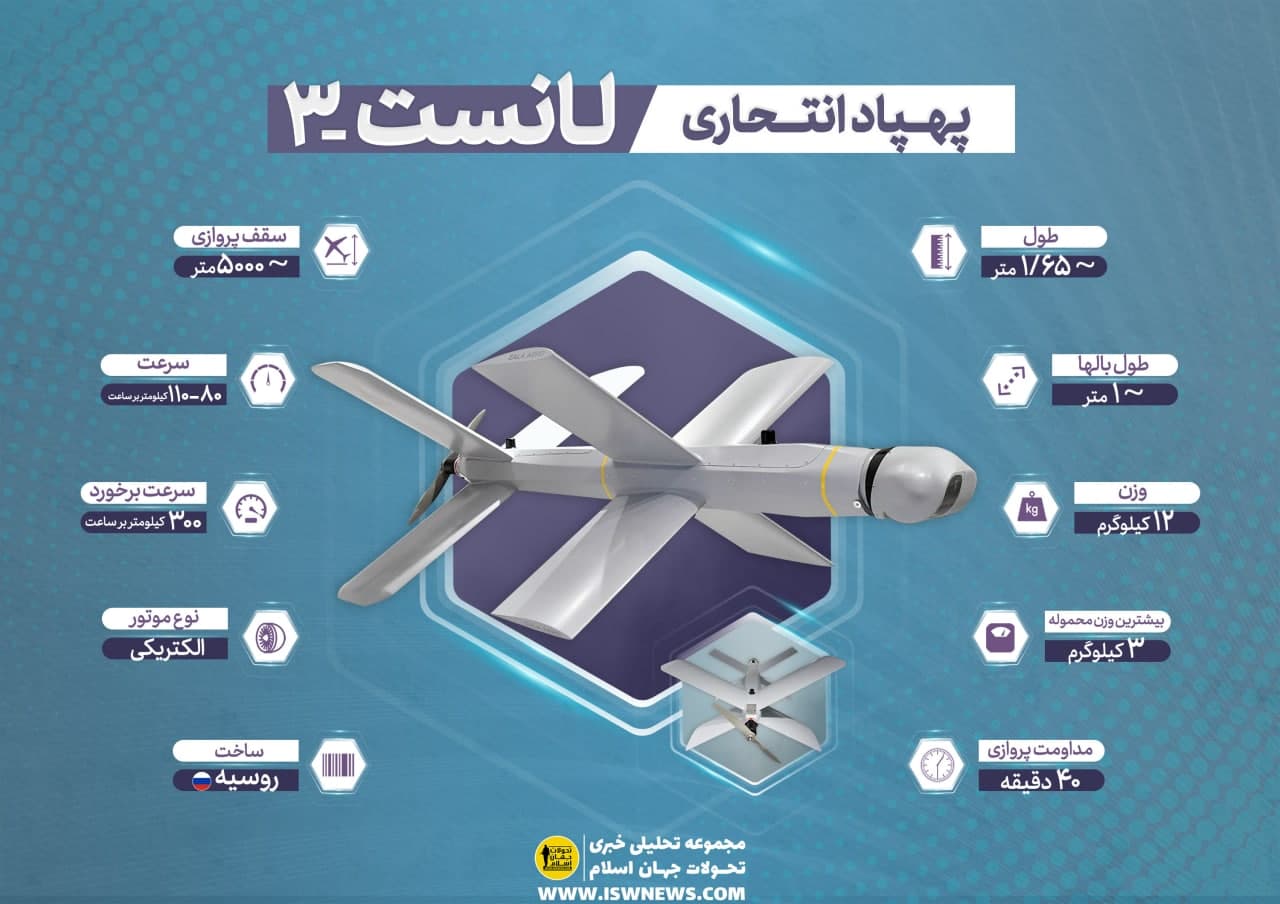
“Lancet-3 Suicide Drone ” collection of posters in Persian, Arabic, Kurdish, Azeri, Russian for Social Media: