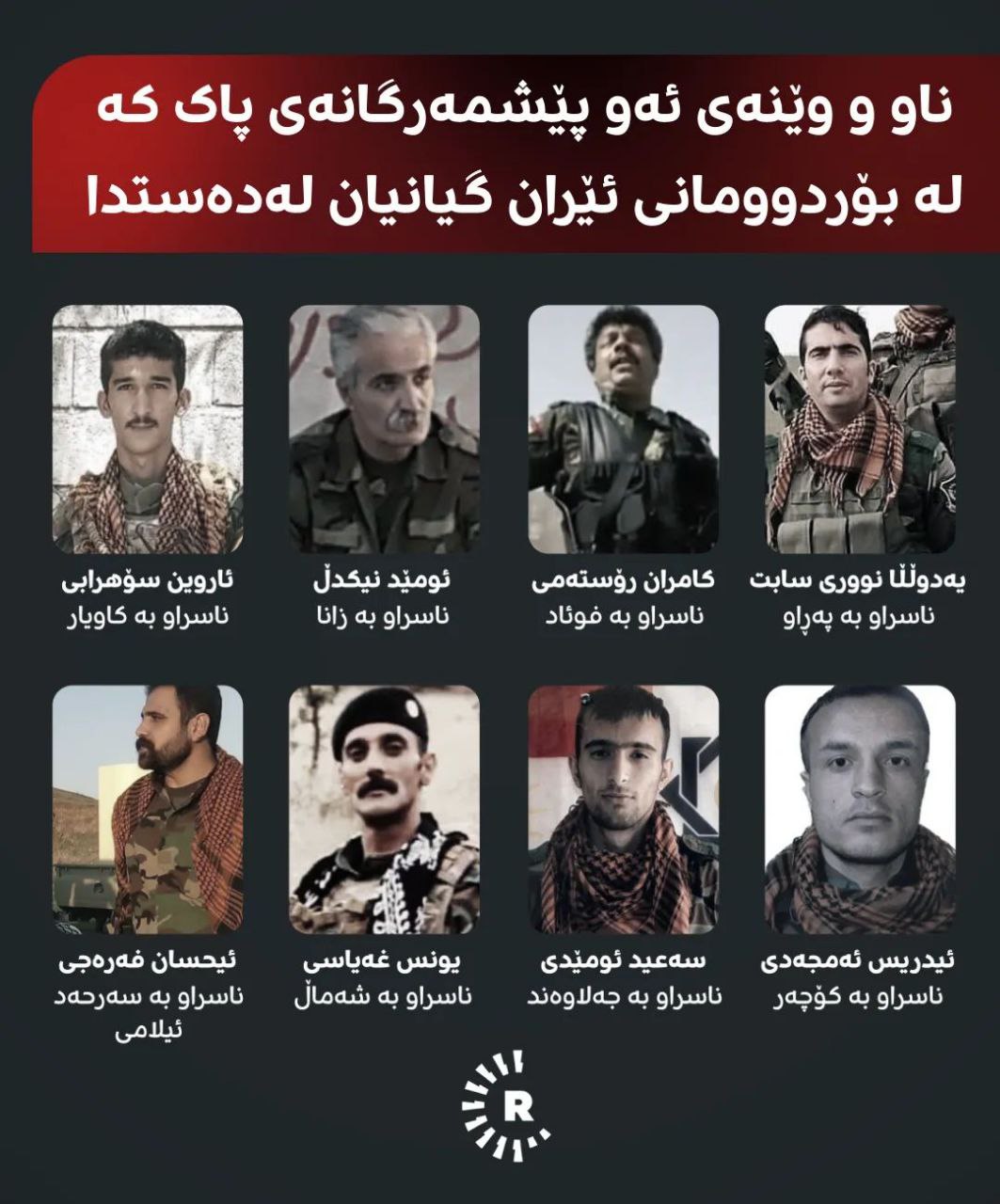
The Iraqi Kurdistan Region media published the pictures of 8 members of the Kurdistan Freedom Party (PAK) who were killed in the recent drone and missile attacks of the Iranian Armed Forces. With these 8 militants and 7 others from the Kurdistan Democratic Party of Iran (KDPI), the terrorist groups in the Kurdistan region of Iraq have officially admitted death of 15 of their forces.
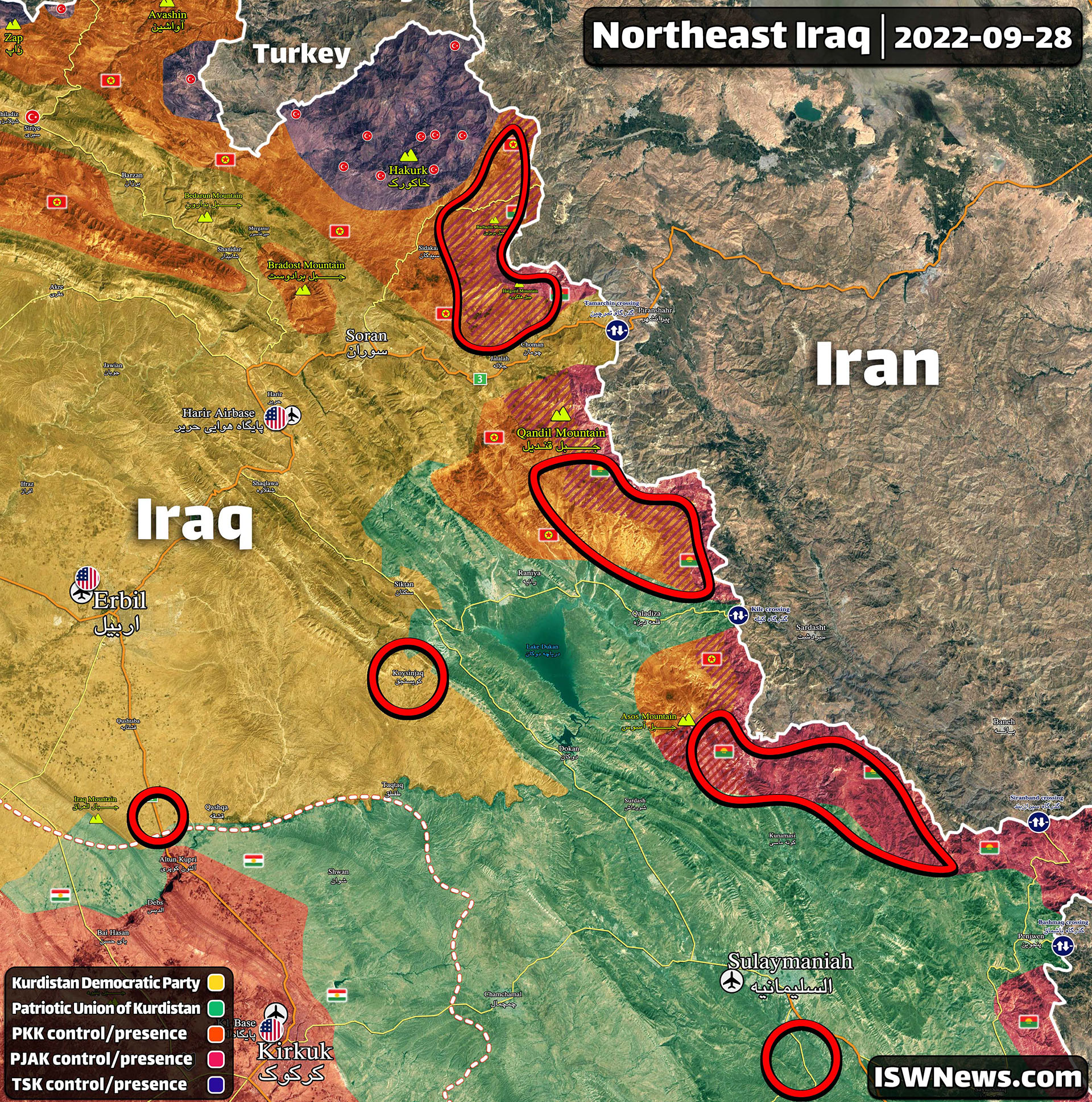
Now, six days have passed since the start of missile and drone operations by the IRGC and the Islamic Republic of Iran Army, and the positions of the terrorist groups Komala, KDPI, PAK, PJAK and PKK in different regions of the Iraqi Kurdistan region are still under heavy fire from Iran.
The new round of Iran’s attacks against terrorist groups in northeastern Iraq began after these groups took advantage of the recent protests in Iran to enter sabotage teams and a large amount of weapons into Iran’s soil And they intended to carry out terrorist operations in Iran. Therefore, these activities were met with a strong reaction from the Iranian armed forces, and their positions were targeted in different parts of the Iraqi Kurdistan region.
So far, the heads of some countries such as the United States of America, France, Saudi Arabia and the Iraqi government have condemned Iran’s attacks against terrorist groups and demanded that Iran stop the attacks.
On the other hand, at the same time as these attacks, Turkish fighter jets also bombarded the positions of terrorist groups in Bradust Mountain in the northern Kurdistan region of Iraq.
Based on the available information, in the last four days, the headquarters and camps of the terrorist groups of the KDPI around the city of Koysinjaq, the groups of Komala and PJAK in south of Erbil and north of Sulaymaniyah, and PEJAK and PKK in the Sidekan region have been targeted.
The Iranian Armed Forces have used suicide drones (Shahed-136), artillery rockets and ballistic missiles in these attacks. The intensity of the attacks has been such that the authorities of these groups have admitted that some of their members were injured and killed. Kurdistan regional media reports that 10 people were killed and more than 24 others were injured, citing the Ministry of Health of Iraqi Kurdistan.
The moment when two Shahed-136 suicide drones dived and accurately hit the positions of terrorist groups in the Kurdistan region of Iraq.
It is worth mentioning that the new round of Iran’s attacks against terrorist groups in northeastern Iraq began after these groups took advantage of the recent protests in Iran to enter sabotage teams and a large amount of weapons into Iran’s soil And they intended to carry out terrorist operations in Iran. Therefore, these activities were met with a strong reaction from the Iranian armed forces, and their positions were targeted in different parts of the Iraqi Kurdistan region.
The attacks against terrorist groups continue and the Iranian authorities have not commented on the results or the end time of these attacks.
The Iranian Armed Forces had previously warned the Iraqi government and the authorities of the Kurdistan Region of Iraq about the terrorist and illegal activities of the aforementioned groups and had announced that if the Iraqi government and the Kurdistan Region did not take the necessary measures to contain and prevent the terrorist activities of these groups, Iran reserves the right to act against these terrorist groups and suppress them with the strictest necessary measures.
Click to view full sizeUsing the Shahed-136 suicide drone to target terrorist positions in the Kurdistan region of IraqBombing terrorist positions in the Kurdistan region of IraqBombing terrorist positions in the Kurdistan region of IraqBombing terrorist positions in the Kurdistan region of IraqBombing terrorist positions in the Kurdistan region of Iraq
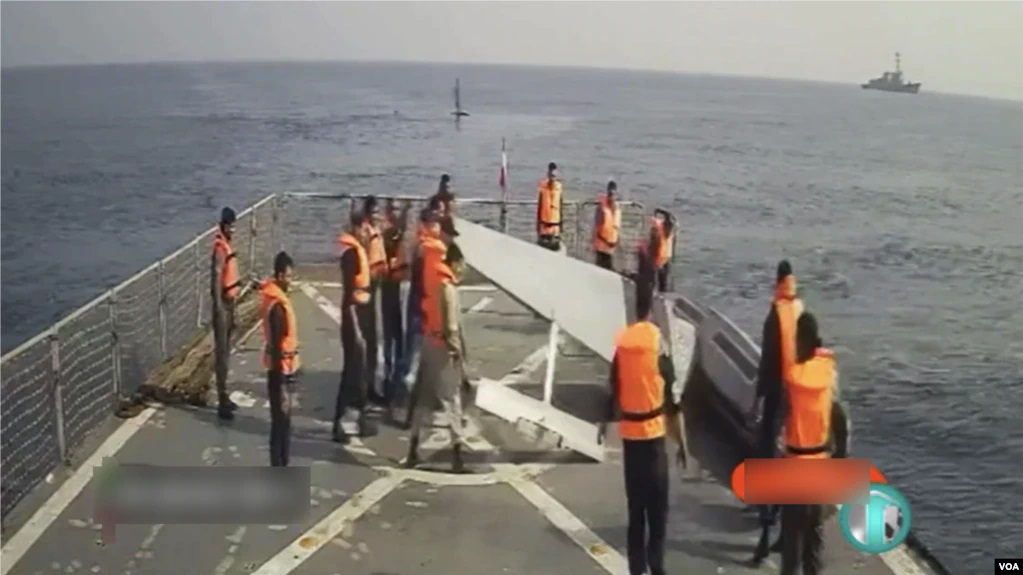
According to Iranian officials, the navigational communication of this unmanned vessel with the control center was cut off and the IRGC seized it with the aim of securing the shipping route in the Persian Gulf and finally with the presence of the US frigate USS Thunderbolt in the area and being justified by security issues and safe navigation, the US drone was released.
Although it is said that the “navigational system failure” is the main reason for its seizure by the IRGC Navy, however, it seems that the navigational communications of this vessel were cut off by the IRGC electronic warfare and then, in a clever move, this valuable asset was seized.
It is important to mention that the United States Fifth Fleet has deployed a new task force known as Task Force 59 since last year with the aim of integrate unmanned systems and artificial intelligence in the West Asia region. Rapid integration of advanced unmanned systems with maritime and coastal operations in areas under the control of the US 5th Fleet, including the Persian Gulf, the Strait of Hormuz, the Sea of Oman, the Strait of Bab al-Mandab, the Red Sea, the Suez Canal and parts of the Indian Ocean, are among the main tasks of this group.
The main purpose of the entry of unmanned vessels or so-called “sea drone” of the United States into the Persian Gulf is to increase the combat power and naval deterrence with low-risk for the American Navy in the southern waters of Iran. Sea drones on surface or below surface can provide many valuable capabilities. These capabilities are especially important in the shallow waters of the Persian Gulf to deal with Iran’s mine warfare systems, small submarines, and fast boats.
As a result, the presence of these systems in the Persian Gulf has a series of risks and also a series of benefits for Iran! Capturing the advanced and required examples of American unmanned vessels will obviously have a significant impact on the completion of the unfinished projects of Iranian unmanned vessels, and Iran’s upper hand in the waters of the Persian Gulf will be maintained.
Release footage of US sea drone by the IRGC in the Persian Gulf
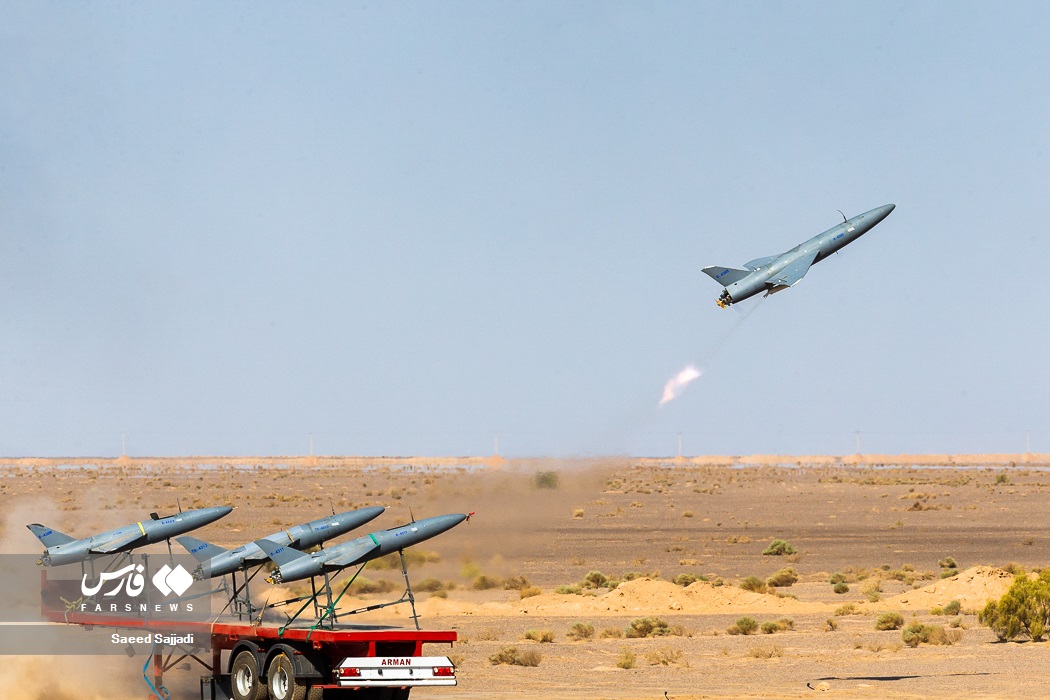
On August 24, the 1401 joint drone exercise of the Islamic Republic of Iran Army began with the presence of the Army’s Ground Force, Navy, Air Force and Air Defense Force in the north, south, west and center of the country and with the participation of more than 150 drones.
On the first day of this exercise, the surveillance and reconnaissance drones successfully performed the operation of monitoring the country’s borders and identifying the desired targets in the general area of the exercise.
According to Rear Admiral Seyed Mahmoud Mousavi, the spokesman of the joint military drone exercise, the Yasir, Sadeq, Pelikan, Ababil 3, Yazdan and Mohajer 6 drones were sent to identify targets and also to monitor the desired areas on the borders and international waters.
Iran Army’s 1401 joint drone exercise
In the continuation of the main stage and on the second day of this exercise, Kaman, Mohajer and Ababil drones, using indigenous accurate and pinpoint weapons, including Qaem bombs, Almas missiles and MK-82 bombs, targeted the simulated positions of enemy like the command and control centers, fuel tanks, ammunition dumps, radar and missile systems and gathering places with high accuracy.
Iranian military experts and technicians have in recent years made substantial headways in manufacturing a broad range of indigenous equipment, making the armed forces self-sufficient in the arms sphere.
Iranian officials have repeatedly underscored that the country will not hesitate to strengthen its military capabilities, including its missile power, which are entirely meant for defense, and that Iran’s defense capabilities will be never subject to negotiations.
Images of the Iran Army’s 1401 joint drone exerciseIran Army’s 1401 joint drone exercise
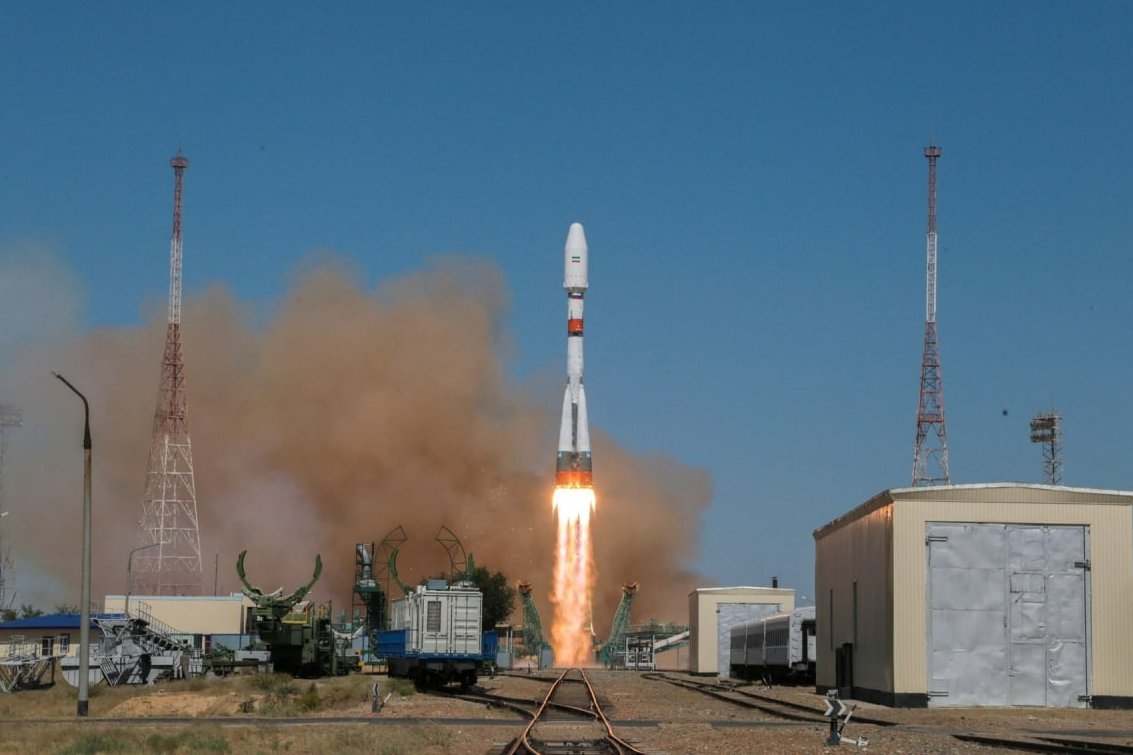
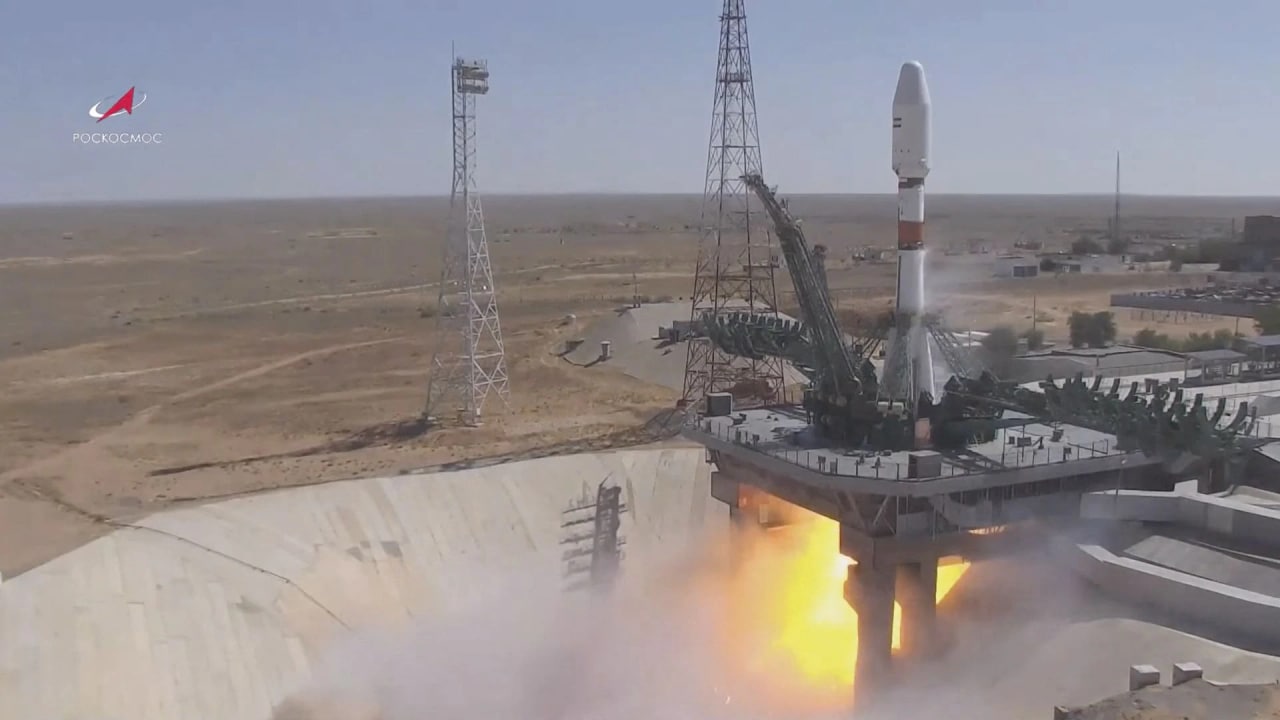
Khayyam satellite was launched by a Russian Soyuz rocket from the Baikonur Cosmodrom in Kazakhstan on the morning of August 9 and successfully placed in a 500 km orbit. It should be noted that the Soyuz launcher has had the largest number of successful space missions among the launchers of different countries in the world.
According to the officials of the Iranian Space Agency, the Khayyam satellite is a non-military satellite that is under the control and operation of the Islamic Republic of Iran. The order for the construction of this satellite was given in 2018 by the Iranian Space Agency (ISA). The name of its manufacturer or manufacturers has not been officially announced. The guidance and control of this satellite will be done through ground stations in Iran and its information and data will be sent to these stations. Khayyam satellite is capable of imaging with an accuracy of one meter. The imaging accuracy of one meter will make this satellite the highest quality Iranian satellite.
Khayyam satellite launch by Soyuz rocket
Productivity improvement in the field of agriculture, accurate monitoring of water resources, managing natural risks, monitoring repurposing changes, unauthorized constructions and fighting deforestation, monitoring of environmental risks, monitoring of mines and mineral discoveries and monitoring borders, are among the applications of data received from Khayyam’s satellite.
Iranian Zuljanah satellite carrier has the possibility of sending a satellite with a weight of 220 kg in an orbit of 500 km, but the weight of the Khayyam satellite is 600 kg (unofficially) and its injection height is more than 500 km. Therefore, the Zuljanah satellite carrier was not able to perform this mission and the Soyuz launcher was used. Zuljanah launcher has two successful injections of Noor 1 and Noor 2 military satellites in its portfolio.
The first telemetry data of Khayyam satellite has been received at Mahdasht station after hours of launch. The operating height of the satellite is fixed at 500 km and its life will be about 5 years. This satellite operates in the Leo orbit (160 to 2000 km) and due to receiving the signal over Iran, the rumor of using this satellite in Ukraine is completely ruled out. According to the work schedule, the Khayyam satellite will make four passes over Iran every 24 hours.
According to Iranian officials, Iranian Space Agency plans to develop domestic capabilities in the field of building and launching satellites needed by the country and develop the relevant ground stations, and continue to meet the current needs of the country in the field of providing satellite data through advanced scientific and technological cooperation with the leading countries in the space industry. In addition to meeting the needs of the country, by transferring knowledge and experience, accelerate the Indigenization of space technology in the country.
Following the Taliban militants attempt to plant a flag at a border point on the border of Doost Mohammad region, the Iranian Border Guards fired warning shot at the Taliban militants and prevented their activities. According to the statements of the local Taliban officials in Nimroz province, one of the Taliban militants was killed and another person was injured in this conflict. Some other local sources have published pictures, stating that the Taliban’s casualties are more than four dead and an unknown number of wounded.
Taliban militants have repeatedly caused conflicts and border tensions with the mistaken idea of the border wall built inside Iran. This wall was built by Iran few kilometers behind the official border line inside the Iran’s soil to deal with the criminals and smugglers. But the Taliban militants did not realize this despite the explanation and warnings of the Iranian Border Guard Command.
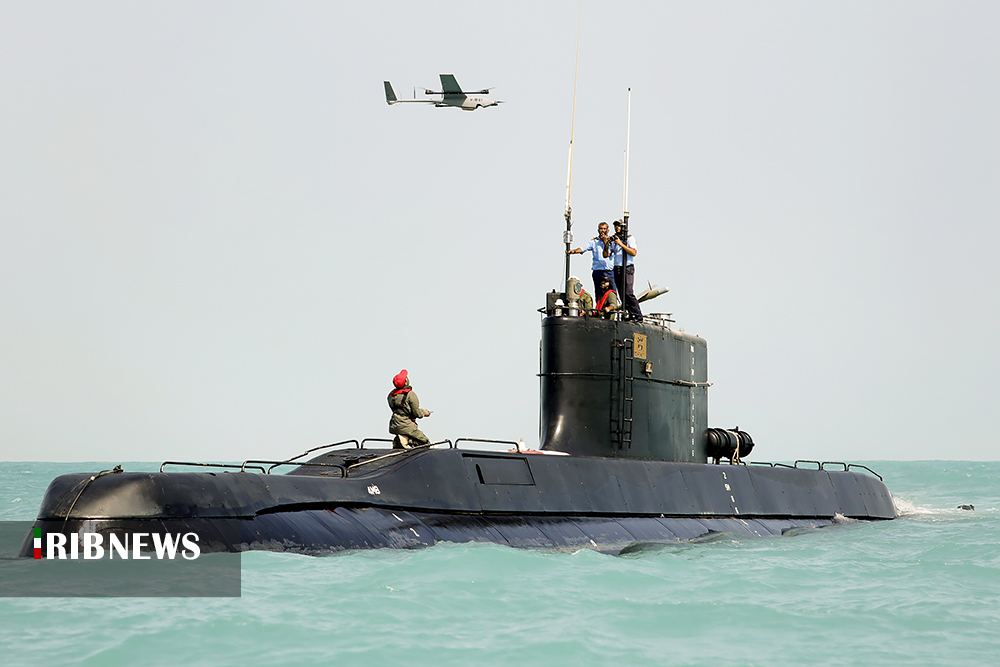
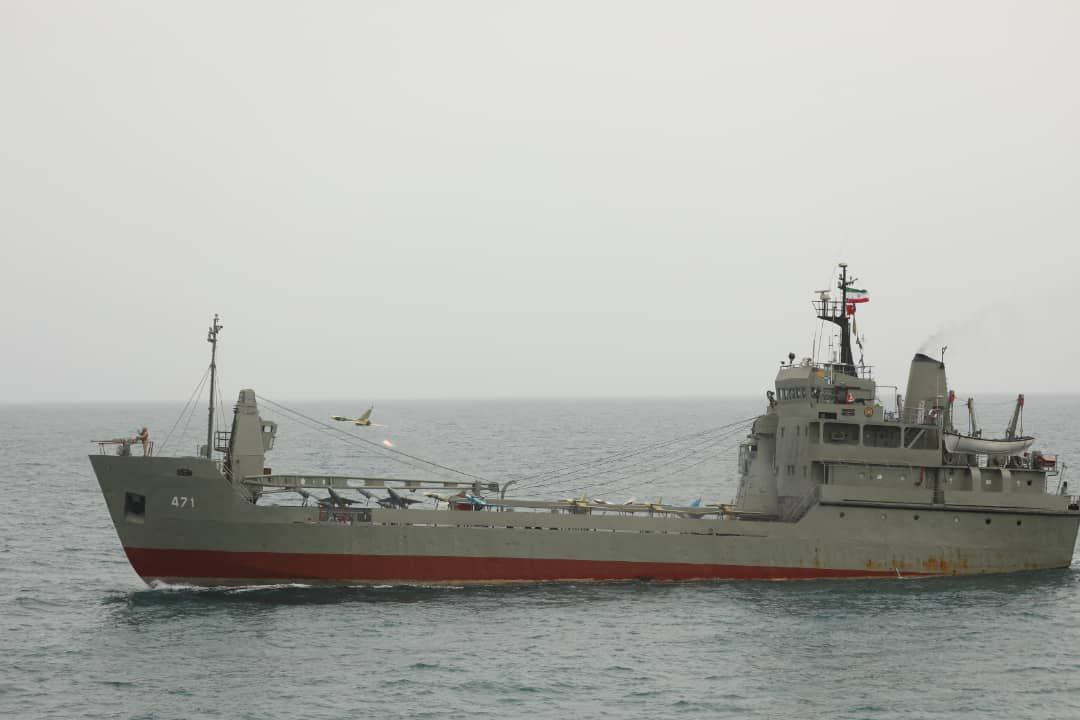
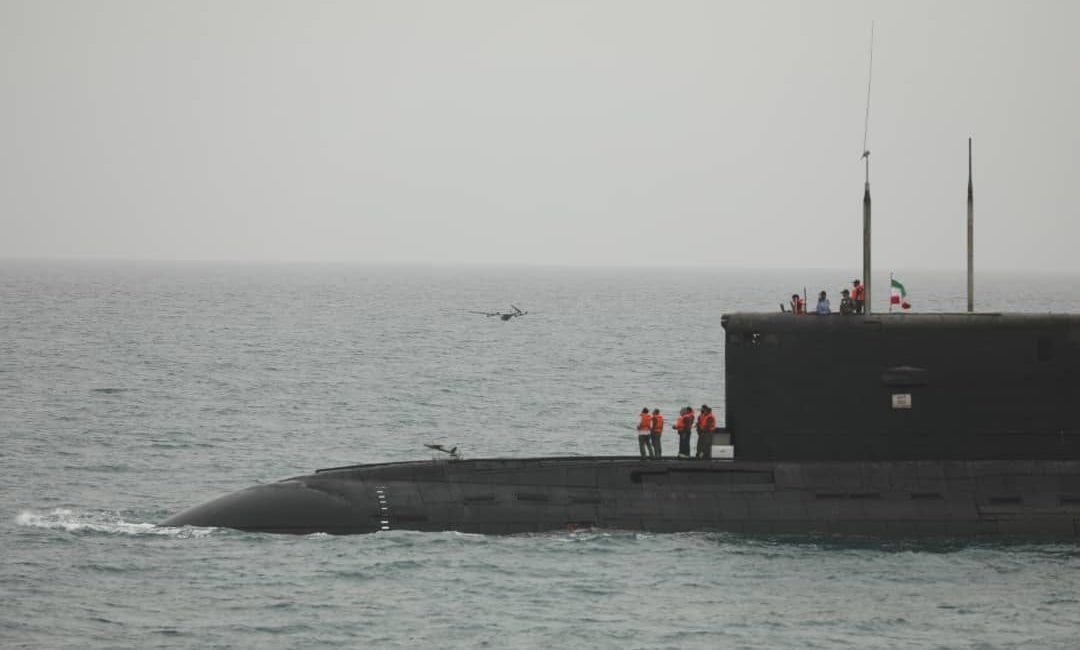
In this ceremony which was held on July 15, the Lawan and Delavar warships were converted into drone carriers, and for the first time, several drones were launched from the Iranian Fateh and Tariq submarines.
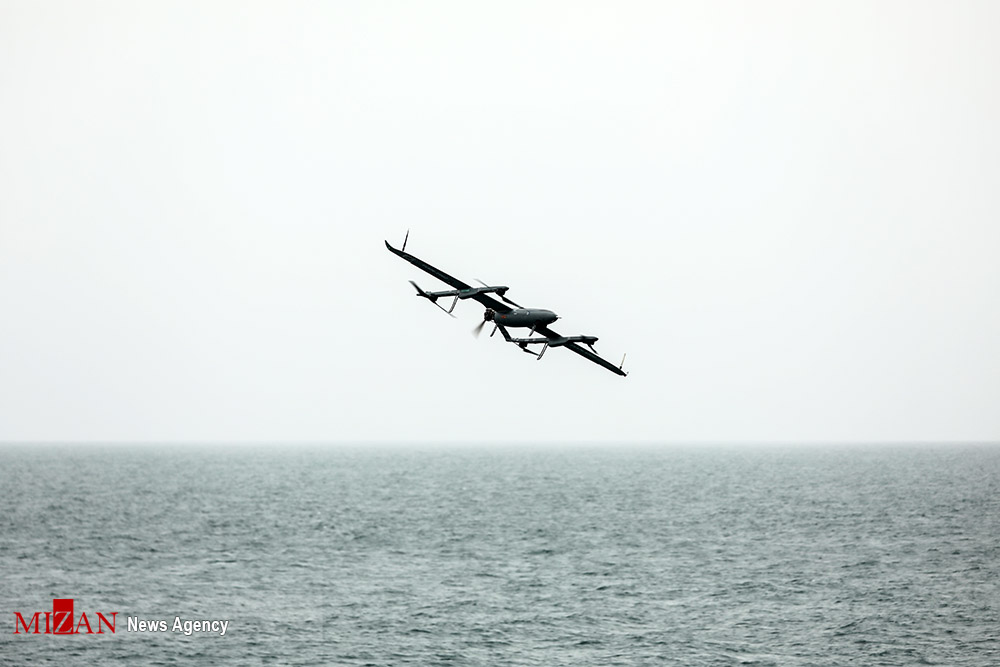
Drones such as Arash and Ababil 2 suicide drones, Pelican and Homa vertical take-off and landing drones, Karar combat and suicide reconnaissance drones, and Ababil 4 reconnaissance and combat drones were showcased and flew in this ceremony.
Click to view full size
The most important challenge for this drone carriers is the recovery of reconnaissance drones. The conventional method is to use nets; in this way, the drone hits a net installed on the ship at the lowest possible speed. This method is effective for small drones that have a short range, but it is not so favorable for larger drones. Larger drones like the Ababil 4 drone sit in a runway after taking off and completing the mission. In the unveiling ceremony, the Ababil 4 drone landed on the landing strip in Jask after taking off from the drone carrier.
In the interview of Admiral Shahram Irani, important points were mentioned about the drone fleet, which can be mentioned as follows:
The possibility of repairing and producing drones inside the fleet
The possibility of combined operations in the form of flight groups of drones and swarm operations
The possibility of moving the command control center from one ship to another or subsurface guidance or using a flight unit for command.
The possibility of setting different targets for several different categories of drones
The possibility of using drones for electronic warfare
The possibility of flying 40 to 50 drones at the same time to support any mission and the possibility of replacing them quickly
UAVs launched from submarines enable the detection of targets in the distance. For this reason, the range of submarine weapons, especially cruise missiles such as the Jask 2 missile, increases. But the main challenge for subsurface fleet use of UAVs is the launch and recovery of the UAV. If a submarine comes to the surface for every launch, the risk of detection increases greatly during the war. This also applies to the recovery of the reconnaissance drone. According to the commander of the Iranian Navy, it will be possible to launch drones under the surface in the future. Also, the possibility of discovering underwater targets will be added to drones.
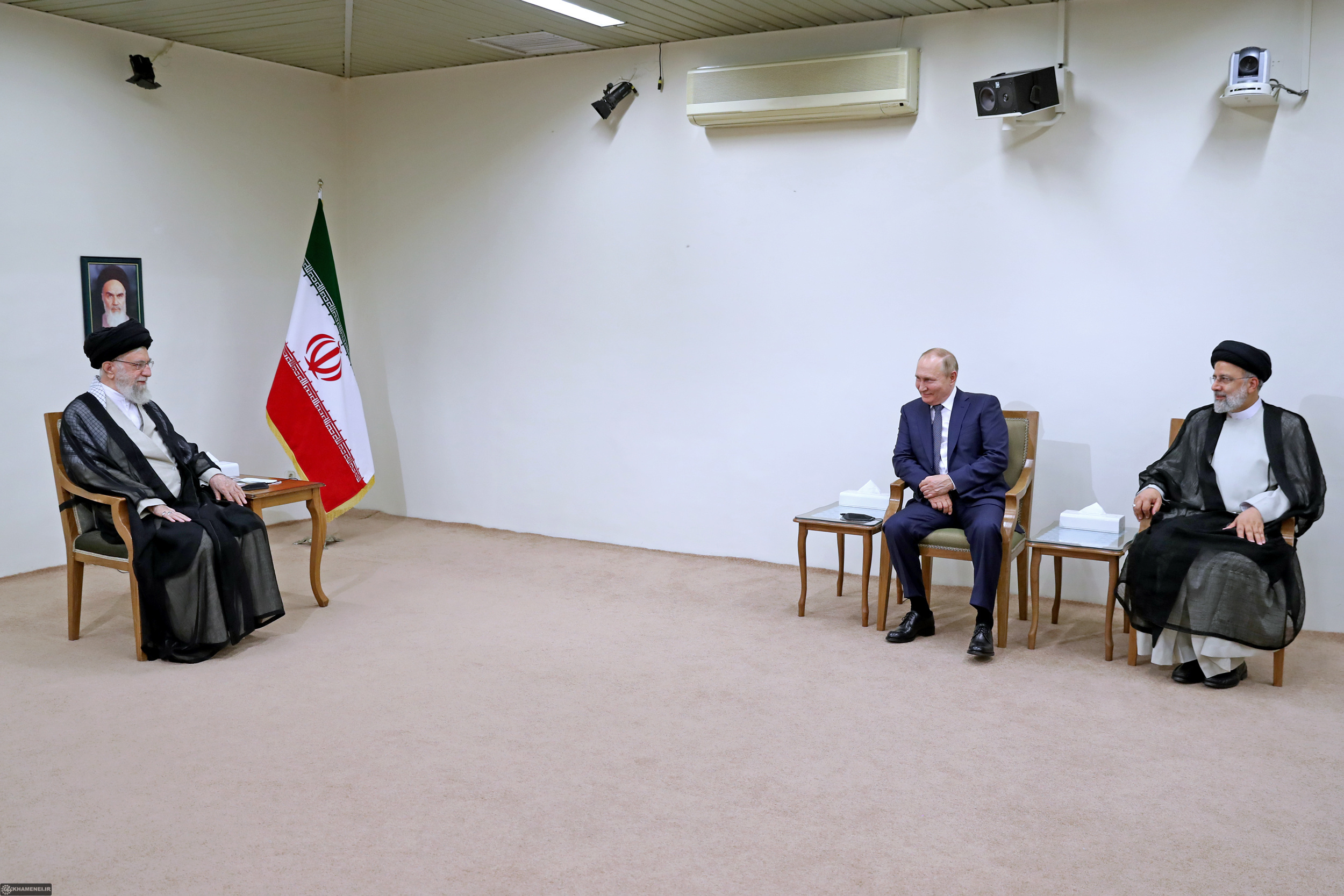
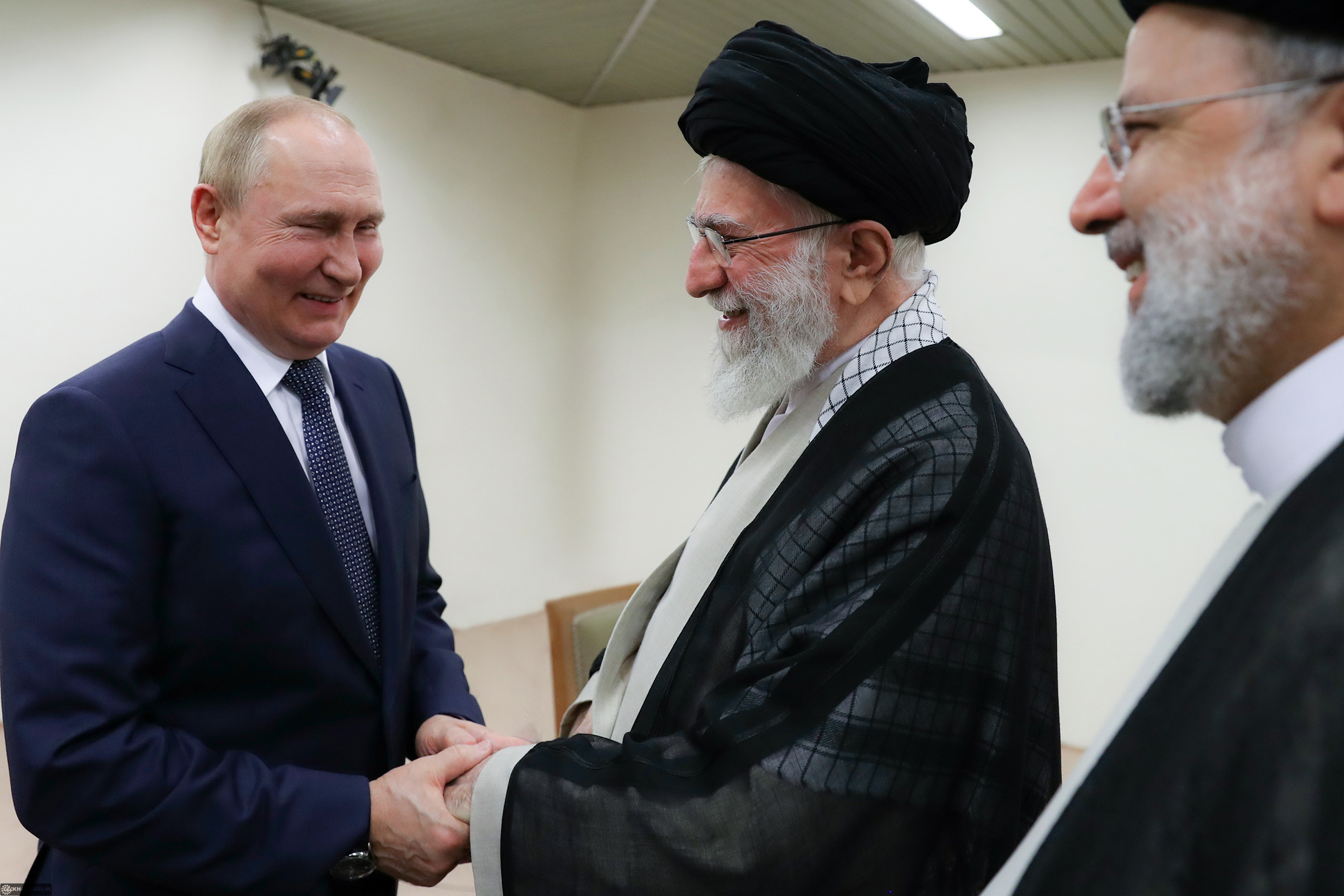
Imam Khamenei, the Supreme Leader of the Islamic Revolution, in his meeting with Mr. Vladimir Putin, the President of Russia and the accompanying delegation, emphasized the necessity of operationalizing the understandings and contracts between the two countries and considered long-term cooperation to the benefit of both countries. In this meeting, Imam Khamenei pointed out the necessity of increasing and mutual cooperation between Iran and Russia in global events and confronting Western sanctions, and added: “There are many understandings and agreements between the two countries, including in the oil and gas sector, which must be operational and followed up to the end. Your Excellency and our president are both action-oriented and follow-up, so the cooperation between the two countries should reach its peak in this period.”
After confirming the words of the President of Russia about the necessity of starting the Rasht-Astara railway line, he considered this work to complete the North-South transportation line and benefit both countries.
Imam Khamenei said about the events in Ukraine: “War is a harsh and difficult category, and the Islamic Republic is not at all pleased that ordinary people suffer from it, but in the case of Ukraine, if you did not take the initiative, the other side would cause a war with its own initiative. Westerners are completely against a strong and independent Russia. NATO is a dangerous entity and knows no boundaries if the way is open to them, and if it was not stopped in Ukraine, they would have started the same war some time later under the pretext of Crimea. Of course, today America and the West have become weaker than before, and despite the great effort and expense, the success of their policies in our region, including in Syria, Iraq, Lebanon, and Palestine, has been greatly reduced.”
He added: “It is necessary to be vigilant against the deception of the West. The Americans are both forceful and cunning, and one of the factors of the collapse of the former Soviet Union was being deceived in front of American policies, although Russia has maintained its independence during your highness’s period.”
The Leader of the Islamic Revolution, Ayatollah Khamenei, condemned the interference of the Zionist regime in the affairs of the region, praised the recent positions of the Russian President against the Zionists, and emphasized the position of the Islamic Republic of opposing a military attack on Syria and the need to prevent it, saying: “Another important issue in Syria is the occupation of the fertile and oil-rich areas east of the Euphrates by the Americans, which should be resolved by expelling them from that area.”
He further emphasized: “The Islamic Republic will never tolerate policies and programs that lead to the closing of the border between Iran and Armenia.”
Imam Khamenei also approved the policy of replacing national currencies in the relations between the two countries and using other currencies instead of the dollar, saying: “The dollar should be gradually removed from the path of global transactions, and this is possible gradually.”
In this meeting, Vladimir Putin also said about the war in Ukraine: “No one is in favor of war and the loss of lives of ordinary people is a great tragedy, but the behavior of the West made us have no choice but to react.”
Enumerating the factors and roots of the differences between Russia and Ukraine, especially the provocative actions of the West and the United States in recent years, including the coup in Ukraine, as well as NATO’s expansion policy despite their previous commitments to avoid any advance towards Russia, Putin said: “Some European countries said that we were against Ukraine’s membership in NATO, but we agreed to it under American pressure, which shows their lack of sovereignty and independence.”
The President of Russia considered the assassination of General Soleimani as another example of the evils of the Americans, and in another part of his speech, referring to Western sanctions against Russia, he said: “These sanctions are to the detriment of the West, and the result is problems such as the increase in oil prices and the food supply crisis. The US abuses the dollar tool to embargo and loot other countries, and this ultimately harms them and weakens global trust in this currency. Also, countries are going to use alternative currencies and we are designing new ways to use national currencies in the relations between the two countries.”
Confirming the position of the Leader of the Revolution regarding the Caucasus region, the President of Russia called the positions of the two countries on the Syrian issue, including the opposition to the military attack on the north of this country, completely compatible with each other and said: “The region east of the Euphrates should be under the control of the Syrian military forces. Iran and Russia are jointly fighting terrorism in Syria, and in the military field, we are also trying to develop cooperation between the two countries, as well as trilateral cooperation and maneuvers with China.”
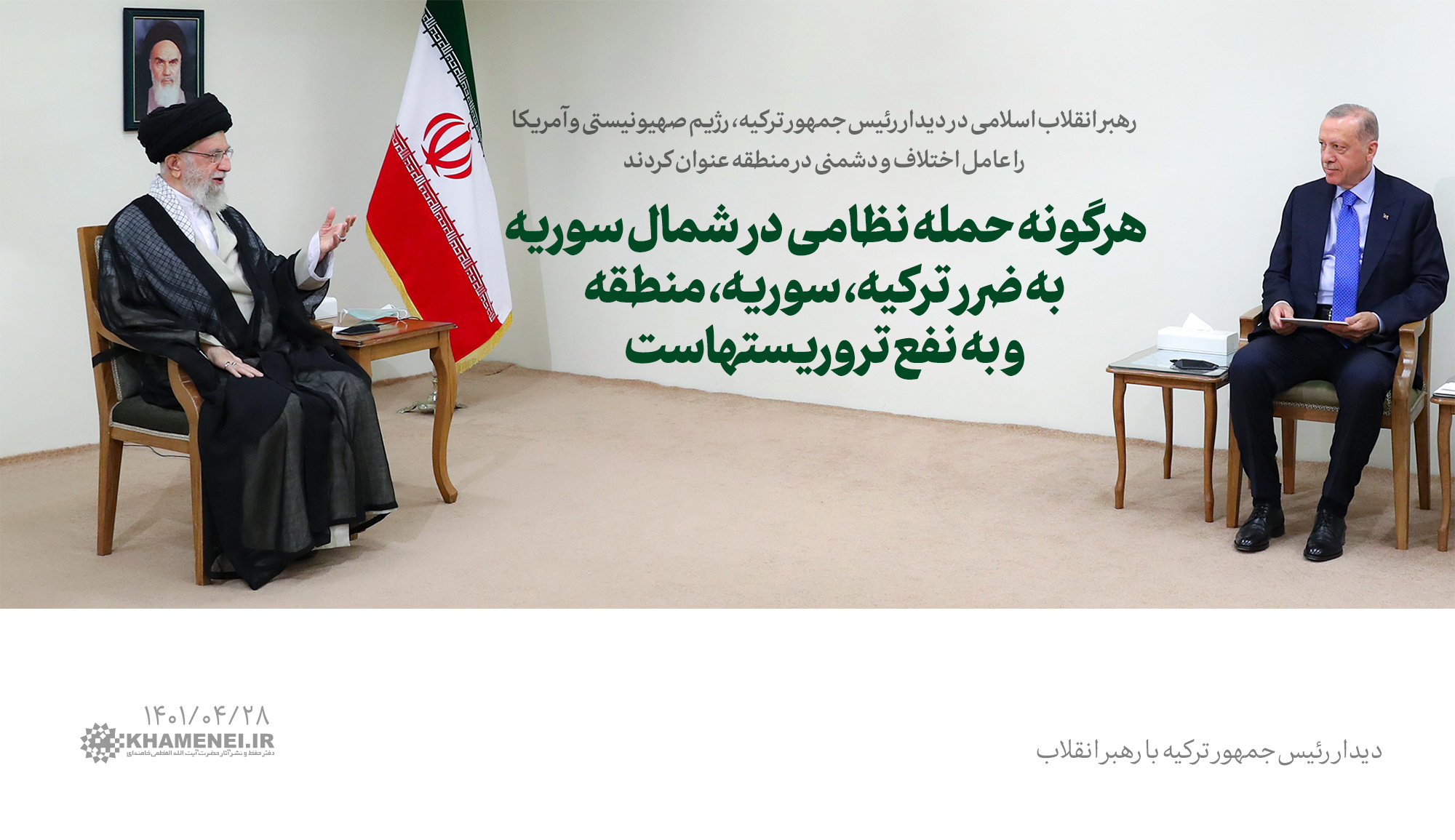
The Supreme Leader of the Islamic Revolution, Imam Khamenei met and discussed with Turkish President Recep Tayyip Erdogan and his delegation about bilateral and regional issues.
Emphasizing the need to increase the cooperation between the two countries, especially in the commercial field, the leader of the revolution called the current amount of economic exchanges between the two countries much less than the existing capacities and emphasized: “This issue should be resolved in the negotiations between the presidents.”
He further pointed to the developments in the region and listed the Zionist regime as one of the main causes of discord between Islamic countries and emphasized that US and the usurping regime cannot stop the deep movement of the Palestinians and despite the favor of some governments to the Zionist regime, the nations are deeply against this usurping regime.
Imam Khamenei said about the recent developments in northern Syria and the news about Turkey’s military operation: “Maintaining the territorial integrity of Syria is very important, and any military attack in northern Syria will definitely harm Turkey, Syria and the entire region, and benefit terrorists, And the expected political action from the Syrian government will not be realized either. Terrorism must be opposed, but a military attack in Syria will benefit the terrorists, and of course the terrorists are not limited to a specific group.”
In response to the Turkish President’s request for Iran’s cooperation in fighting terrorist groups, the Leader of the Islamic Revolution said: “We will certainly cooperate with you in the fight against terrorism. We consider the security of Turkey and its borders to be our security, and you also consider the security of Syria to be your security. The Syrian issues should be resolved through negotiations, and Iran, Turkey, Syria and Russia should end this issue through dialogue. We have always defended your government in internal issues and against interference, and as you said, we are friends in difficult times and we pray for the Muslim nation of Turkey.”
Imam Khamenei further pointed to the issues of the Caucasus region and said: “We are pleased with the return of Karabakh to Azerbaijan. Of course, if there is a policy to block the border between Iran and Armenia, the Islamic Republic will oppose it, because this border is a communication route that is several thousand years old.
Congratulating on the holidays of Qurban and Ghadir Khom, the President of Turkey considered it necessary to unite the Islamic Ummah and increase the solidarity between Iran and Turkey and said: “Turkey has never been silent in the face of atrocities against Iran, and the brotherhood of Iran and Turkey must be expanded in all fields. We have always been and will be against unilateral sanctions against Iran. In Syria, terrorist groups are supported by heavy weapons from Western countries such as Germany, England, France and especially the US. We expect the Syrian government to start political processes. At the Astana summit, the Syrian issue is on the agenda, and we hope to achieve good results.”
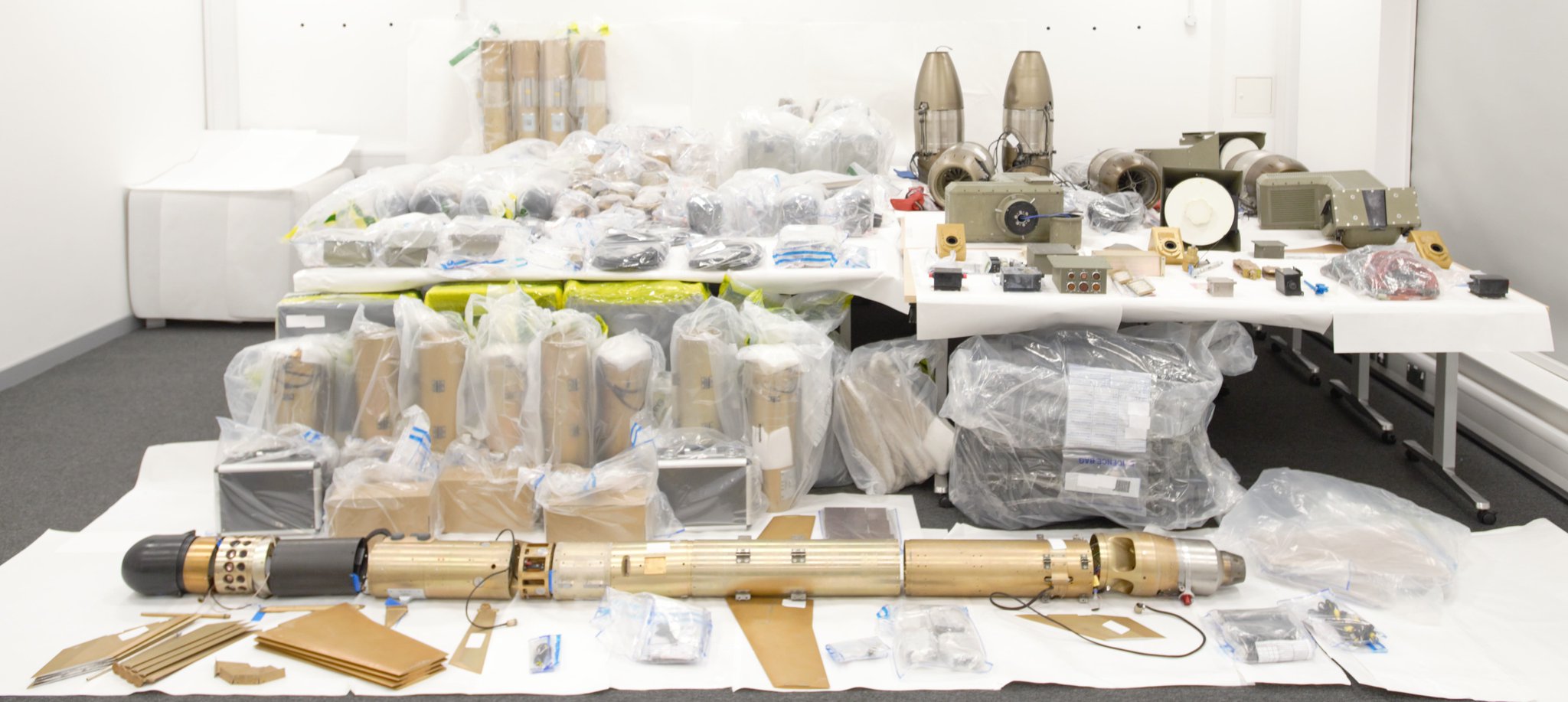
Britain’s Ministry of Defence on Thursday said one of its warships on patrol in the Persian Gulf earlier this year seized the arms shipment en route to Yemen.
According to Britain’s Ministry of Defence claims, the HMS Montrose warship with the support of attack helicopters and the US Navy USS Gridley destroyer, succeeded in discovering and confiscating Iranian weapons shipments in the smugglers’ speedboats in the morning of January 28 and February 25, 2022 en route to Yemen.
The seized weapons included 358 surface-to-air missiles and 351 land attack cruise missile engines with a range of 1,000 km. The British Ministry of Defense believes that these weapons are the same that Ansar Allah used in recent years attacks on Aramco’s facilities in Saudi Arabia and last year’s attacks on the UAE.
The British authorities have considered Iran’s action as a violation of United Nations Security Council Resolution 2216 and demanded compliance with international law obligations and maintaining order in the seas.
Iran also responded to this late news and rejected the Britain’s claim.
Nasser Kanani, an spokesman for the Iran’s foreign ministry announced the Britain’s claim as “baseless” and slammed the UK of being complicit in the war in Yemen.
Nasser Kanani said: “By continuously selling advanced weapons to the self-proclaimed military coalition against the defenseless people of Yemen, Britain has been a partner in the war and aggression against Yemen.”
The United States, Saudi Arabia, and now the United Kingdom have repeatedly claimed to seize Iranian weapons shipments in the Red Sea and other international waters, but these claims are one-sided and have not been confirmed by Iran and Yemeni authorities. On the assumption of the correctness of sending weapons in this way, it should be said that in the situation where all the eastern and western countries are supplying all kinds of weapons to Iran’s regional enemies, including the Israeli regime and the member countries of the Saudi coalition; sending military aid to Yemen by Iran seems to be a reasonable and logical action.
The seized alleged Iranian weapons by British Navy
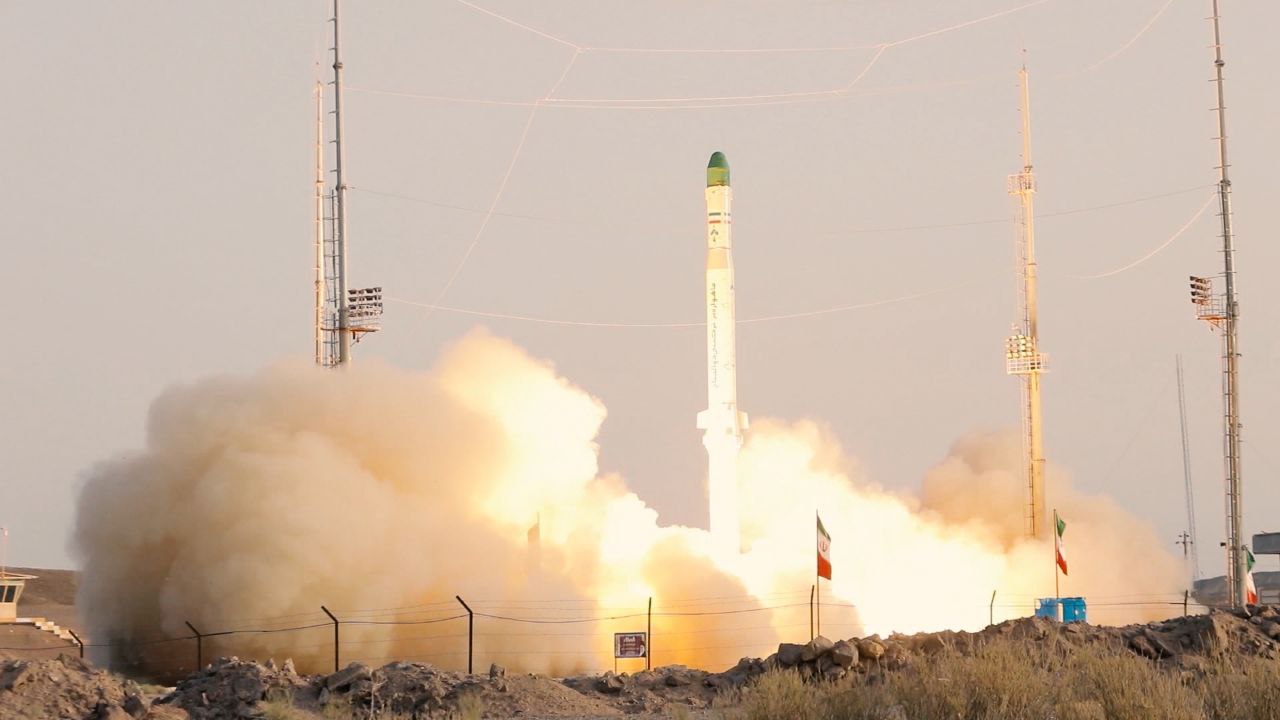
According to Ahmad Hosseini, spokesman for the Ministry of Defense of the Islamic Republic of Iran, the Zuljanah satellite carrier is in three phases. This satellite carrier has two phases of solid propulsion and one phase with liquid propulsion and its launch has been done with the purpose of suborbital. Also, the third phase of the development of this satellite carrier has started by using the information obtained from this launch.
The first launch of Zuljanah satellite carrier was made on February 1, 2021 from the Semnan Space Center. The main mission of this satellite carrier is to place a satellite with a weight of about 220 kg or 10 lighter satellites with a weight of 20 kg into 500 km orbit. The length of Zuljanah is 25.5 meters, its diameter is 1.5 meters and its weight is 52 tons. After Safir and Simorgh satellite carriers, Zuljanah is the third Iranian non-military satellite made in the country. Due to its agility and low preparation time, Zuljanah is mentioned by some western experts as the first subcontinent missile of Iran!
Iran’s satellite program, like other Iranian indigenous capabilities, has always been criticized by Western countries, especially the United States, for alleged violating UN Security Council resolutions. They see Iran’s advances in the field of Aerospace Science as a significant concern for the proliferation of nuclear weapons!
Once the cargo of these tankers is unloaded, the refining process will begin quickly.
Due to US sanctions against Syria, there is a shortage of fuel in the country, and Tehran is preventing a crisis in Syria by selling oil to Damascus.
In the last 10 days, the fuel crisis in Syria has risen again and has disrupted the country’s transportation system. The existing problems are expected to be resolved with the arrival of this oil shipment to Syria.