Tag: Armenia

  • Iran Leader Meets With Tajik President, Armenian Prime Minister

    Iran Leader Meets With Tajik President, Armenian Prime Minister

    In a meeting on Tuesday with Armenian Prime Minister Nikol Pashinyan and his accompanying delegation, the Supreme Leader of the Islamic Revolution emphasized that the Islamic Republic of Iran’s definitive and consistent policy is to expand relations with its neighbors, especially Armenia.

    Imam Khamenei also called for the development of relations and cooperation between the two countries based on defined interests of both nations and regardless of the policies of other states.

    Armenian Prime Minister Nikol Pashinyan met with Supreme Leader of the Islamic Revolution

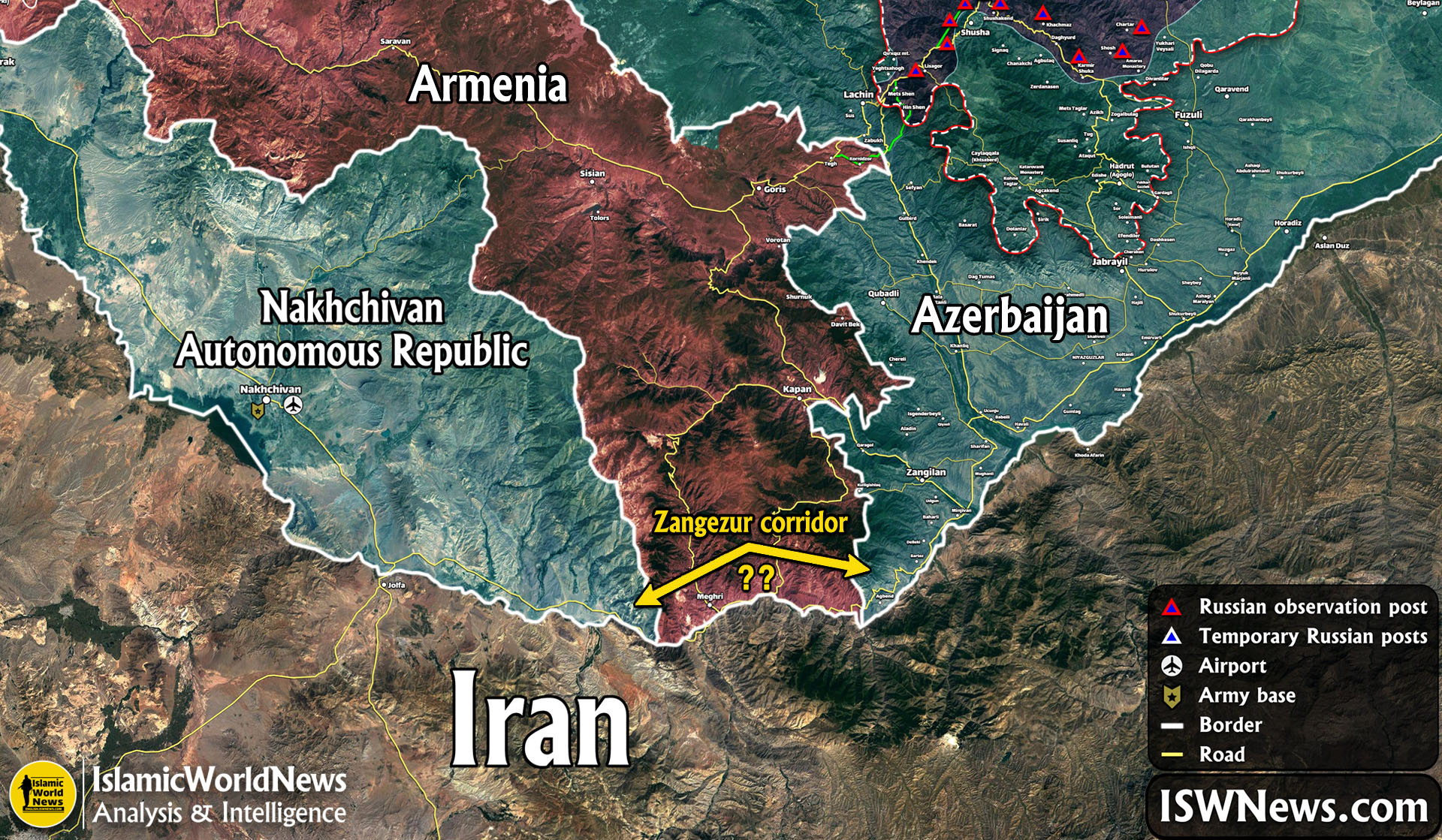
    The Leader of the Islamic Revolution went on to say that the Islamic Republic of Iran considers the Zangezur corridor – a concept for a transport corridor which, if implemented, would give Azerbaijan unimpeded access to Nakhchivan Autonomous Republic – to be to the detriment of Armenia; therefore, Iran continues to stand by this position.

    Foreigners should not place restrictions on the relations of countries with their neighbors, the Leader stated, arguing that what ensures the security and well-being of countries is reliance on themselves and their close allies, and the actions of some states who come from far away and interfere in the affairs of other nations are to their detriment.

    The Armenian Prime Minister, for his part, emphasized that he has repeatedly stated that he does not accept any extra-regional route within his country, describing the relations between the Islamic Republic of Iran and the Republic of Armenia as strategic. The Armenian premier also expressed satisfaction with the expansion and diversification of ties with Iran, underscoring that he gives importance to the continuation of this process.

    In another meeting on Tuesday morning, Imam Khamenei received Tajik President Emomali Rahmon and his accompanying delegation.

    Tajikistan President Emomali Rahmon met with Supreme Leader of the Islamic Revolution

    The Supreme Leader said that Iran’s main policy and priority is to expand relations with the countries of the region, especially states with the same language and common culture, history and religion.

    Ayatollah Khamenei further emphasized: The Islamic Republic of Iran is ready to cooperate sincerely with Tajikistan in various fields, as in the past.

    The Leader of the Islamic Revolution also called the official visits by authorities of the two nations a basis for the expansion of cooperation and said: The Persian language is one of the important commonalities between Iran, Tajikistan and Afghanistan, and more cooperation should be made to preserve and expand this language and prevent some attempts to isolate the shared language.

    The Leader of the Islamic Revolution also noted: There are some opponents who disagree the expansion of relations between Iran and Tajikistan; thus, there must be a plan to confront them.

    The President of Tajikistan, for his turn, said: As you said a few years ago, the two countries are linked and we want to expand relations and use the experiences and advances of the Islamic Republic of Iran in the fields of science, health and industry.

    The top officials of Armenia and Tajikistan along with their accompanying delegations arrived in Tehran on Tuesday morning in order to take part in the inauguration ceremony of Masoud Pezeshkian, the ninth President of the Islamic Republic of Iran, on Tuesday (July 30) at the Iranian parliament. More than 70 foreign delegations and 600 domestic and foreign journalists attended the inauguration ceremony at 6 p.m. local time.

  • Ministry Of Defense Of Armenia Denies Arms Purchase From Iran

    Ministry Of Defense Of Armenia Denies Arms Purchase From Iran

    The pro-Zionist TV network Iran International recently claimed in a report that Iran and Armenia have signed a secret arms contract worth $500 million, according to which a variety of suicide, reconnaissance, and combat drones such as the Shahed-136, Shahed-129, Mohajer-6, as well as the defense systems such as the Khordad-3, Majid, Khordad-15, and so on, will be exported to Armenia.

    To elaborate this news, it should be noted that the figure of $500 million for the purchase of weapons by Armenia is a large figure and is not small in the size and economic capacity of this country.

    Moreover, Armenia’s geographical location and conditions are not suitable for the mentioned weapons, especially defense systems, and from this phony information, it can be understood that agents of the Iran International TV network in conjunction with the Pan-Turkism media outlets in Turkiye and Azerbaijan Republic have propagated false or incomplete reporting mission.

  • Armenia Returns 4 Occupied Villages To Azerbaijan

    Armenia Returns 4 Occupied Villages To Azerbaijan

    The eighth meeting of the state commission on the delimitation of the borders of the Republic of Azerbaijan and the Republic of Armenia was held on April 19 with the participation of Deputy Prime Minister of the Republic of Azerbaijan Shahin Mustafayev and Deputy Prime Minister of Armenia Mher Grigoryan.

    According to the agreements reached at this meeting, the four border villages of Baghanis Ayrum, Ashagi Askipara, Kheyrimli and Gizilhajili, which had been occupied by the Republic of Armenia since the early 1990s, were returned to the Republic of Azerbaijan.

    Also, as a result of the agreements reached at this meeting, the two countries agreed on the process of adjusting the border coordinates based on geodetic measurements.

    It should be noted that due to the remaining problems in the borders of the Soviet era in this region, some villages were located on the border between the two Soviet Socialist Republics of Azerbaijan and Armenia, and after the collapse of the Soviet Union and the independence of the Republic of Azerbaijan and the Republic of Armenia, this issue became a source of the constant tensions between the two countries.

    During the First Karabakh War and the invasion of parts of the region by Armenian forces, some of these villages also came under Armenian occupation. Now, after the liberation of the Karabakh region by the Republic of Azerbaijan, the situation of these villages and the borders of the two countries will be addressed and resolved by the border demarcation commissions.

    On the other hand, after this agreement, various groups of people in the Republic of Armenia took to the streets in the border areas, including Tavush, to protest against this issue by blocking roads. The protesters believe that Armenian Prime Minister Nikol Pashinyan is handing over Armenian territory to the Baku government.

    Four border villages of Baghanis Ayrum, Ashagi Askipara, Kheyrimli and Gizilhajili (yellow color) on the border of the Republic of Azerbaijan and Armenia – click to view in full size
  • Armenia-Azerbaijan Peace Process Talks In Tehran After 31 Years!

    Armenia-Azerbaijan Peace Process Talks In Tehran After 31 Years!

    The Caucasus region was known as an area under the influence of Iran and the Ottoman Empire centuries ago, to them the Russian Empire was added about two centuries ago; so, it can be claimed that the developments in the Caucasus region over the past two centuries have been a function of the developments of the Iran, Ottoman, and Russian triangle. However, the establishment of Soviet reign heavily enhanced Russia’s foothold in the Caucasus region, and the policies of this state paved the way for separating the Caucasus region from Iran and Turkiye.

    But the collapse of the Soviet Union in the 1990s once again added importance to regional players such as Iran and Turkiye and forced these two countries to play a role in resolving conflicts that led to the First Nagorno-Karabakh War that took place from February 1988 to May 1994. The Islamic Republic of Iran turned into the first player in terms of resolving disputes between the two republics (Armenia and Azerbaijan) due to its strong communication channels with the two fledgling republics, and in this process, several ceasefire agreements were reached and prisoner swaps were carried out.

    But the most important achievement of the Iranian diplomatic mission was the issuance of the Tehran Communiqué also known as the Joint statement of the heads of state in Tehran, which is the joint communiqué mediated by then Iranian President Akbar Hashemi Rafsanjani and signed by the acting President of Azerbaijan Yagub Mammadov and President of Armenia Levon Ter-Petrossian on May 7, 1992. The communiqué gained the consent of the leaders of the two warring countries to begin negotiations in order to resolve disputes between Baku and Yerevan. A process that failed with the intervention of forces affiliated with extra-regional powers such as the United States and ultimately with the end of the First Nagorno-Karabakh War and the establishment of a ceasefire; thus, the Azerbaijan-Armenia disputes were entrusted to a group of representatives from Belarus, Germany, Italy, Sweden, Finland, and Turkiye, known as the Minsk Group. However, this group has not achieved any tangible result in its three decades of activity.

    The formation of a establishment known as the Republic of Artsakh or the Republic of Nagorno-Karabakh over the past three decades prevented officials of the two countries of Azerbaijan and Armenia from ignoring the issue of Nagorno-Karabakh region and focusing on resolving issues and disputes between the two nations; so, many of these issues were forgotten during this time. But with the outbreak of the Second Nagorno-Karabakh War and the return of this region to the territory of Azerbaijan, existing issues between the two countries, such as determination of border lines and the fate of transportation routes, as well as legal, judicial, and diplomatic systems, have become more serious, which paved the way for the direct negotiations between Baku and Yerevan in a more appropriate ground.

    However, the geopolitical situation in the Caucasus region makes it impossible to advance such actions without considering the interests and goals of traditional regional powers (Russia, Turkiye, and Iran); therefore, deciding on the framework and format of future talks will largely determine how negotiations will proceed and how will be their level of success. Russia, as the most influential state in the Caucasus region, was involved in the developments following the 2020 war, but recent political developments in Armenia show that there are signs of a rapid distance between Yerevan and Moscow. On the other hand, Russia’s policies in recent years have been strongly protested by Armenians to the point where Armenian officials announced their dissatisfaction with the progress of negotiations under the heavy influence of Russia and proposed a return to the European Union. However, Azerbaijan, which experienced bitter experiences with the intervention of extra-regional powers and remembers the neutral performance of the Minsk Group, did not agree with the proposal from Armenia, especially since EU officials have largely supported the Armenian side during recent developments and their role in such a framework could have increased Armenian bargaining power. The intervention of extra-regional powers could have turned the dispute into a new crisis, in addition to slowing down the process of resolving disputes; thus, both sides agreed to resolve issues within a regional framework and expressed their readiness to participate in the 3+3 format.

    A look at the field developments and political atmosphere of the region shows that the current conditions should be considered in continuing to the Tehran Communiqué in 1992, when both warring parties were in the most balanced point. The First Nagorno-Karabakh War had not yet begun in 1992 and its financial and human losses had not been incurred by both sides. Tens of thousands of Azerbaijani refugees (for 30 years) and Armenians (who left Nagorno-Karabakh in recent months) were still stationed in their homes. But now, after 31 years of these harmful events, Nagorno-Karabakh is empty of population and its fate is once again linked to the negotiations in Tehran!

    Image: The front page of Iran’s Ettela’at newspaper 31 years ago, which discussed the topic of those days’ negotiations in Tehran and resolving the dispute between Azerbaijan and Armenia in Tehran.

  • Iran President Receives Envoys From Azerbaijan, Armenia

    Iran President Receives Envoys From Azerbaijan, Armenia

    ISWNews Analysis Group – President Raisi held talks with assistant of Azerbaijani President Ilham Aliyev in special affairs Khalaf Khalaf and secretary of the Security Council of Armenia Armen Grigoryan, when the president and the two representatives discussed developments in the Caucasus region.

    In the meetings, the Iranian president stressed the need to enhance relations between these northern neighbors and Iran with the aim of countering plots that aim to create divisions and disrupt the bilateral relations between Armenia and Azerbaijan.

    Raisi went on to say that the Islamic Republic of Iran, as a powerful neighbor of both Azerbaijan and Armenia, is fully prepared to help resolve the two countries’ disputes and problems.

    Emphasizing the importance of maintaining border lines and the existing geopolitical structure of the region, the president stated that Iran welcomes regional dialogues in the form of 3+3 or any other format that can contribute to resolving issues and opening up avenues for cooperation between Azerbaijan and Armenia.

    He further noted that the countries in the region have the capacity to resolve regional problems and that the engagement of foreign countries into the region, under any pretext, is not in the best interest of any of the regional states.

    Mohammad Jamshidi, the Iranian president’s deputy chief of staff for political affairs, said that in both meetings, the President emphasized that the Zangezur Corridor serves as a platform for NATO’s presence in the region and poses a threat to national security, which the Islamic Republic of Iran strongly opposes.

    Simultaneously with these meetings, Chief of Staff of the Armed Forces of Iran General Mohammad Bagheri announced the readiness to send observers to the borders of Armenia and the Republic of Azerbaijan.

  • Eagle Partner 2023; Joint Military Exercise Of Armenia And U.S.

    Eagle Partner 2023; Joint Military Exercise Of Armenia And U.S.

    The joint military exercise between Armenia and America, called Eagle Partner 2023, kicked off on September 11 near the Armenian capital city of Yerevan.

    The purpose of the military exercise is to increase the level of cooperation capabilities of the participating units in international peacekeeping missions and to increase the coordination of Armenian forces with NATO standards.

    The Kremlin warned that the military exercise has caused concern for Russia.

    Dmitry Peskov, a spokesman for the Kremlin, said: Of course, such a news story is particularly worrying in the current situation. Therefore, we will deeply analyze this news report and monitor the situation.

    Currently, groups of Russian peacekeepers are present in the disputed border areas between Republic of Armenia and the Republic of Azerbaijan.

    Since November 30, 2020, when a ceasefire was signed between Armenia and Azerbaijan, about 2,000 Russian forces have been deployed in the region in order to shoulder the responsibility for maintaining peace and tranquility.  

    However, the military exercise is being held amid increasing Armenian despair over Russia’s failure to guarantee and secure the establishment of a peace agreement and ceasefire in Karabakh region.

    Both the Republic of Azerbaijan and the Republic of Armenia are dissatisfied with the performance of Russian peacekeepers in Karabakh region, and it is feared that this trend will ultimately lead to foreigners entering the Caucasus region.

    With the rekindling of tensions with Baku, Armenians have expressed disappointment at Russia’s lack of military and political support.

    Furthermore, Armenia’s Prime Minister Nikol Pashinyan recently said that Moscow “cannot or does not want” to control and manage the Lachin corridor, which provides access from Nagorno-Karabakh to Armenia.  

    Pashinyan stated that Armenia’s historical security reliance on Russia was a “strategic mistake.”

    Some analysts believe that Russia, due to the war in Ukraine, has focused all its attention on Ukraine and therefore, Moscow lacks a clear plan and strategy in the Caucasus region.

    It seems that Russia may have become isolated on the international scene and it is losing its influence in its Soviet era backyard, namely the Caucasus region.

  • Armenian, Azerbaijani Border Guards Wounded In Exchange Of Fire At Karabakh Corridor (Video)

    Armenian, Azerbaijani Border Guards Wounded In Exchange Of Fire At Karabakh Corridor (Video)

    In a statement, Armenia’s National Security Service said that a group of Azerbaijani border guards had attempted to cross a bridge over the Hakari river, which marks the internationally-recognized border between the two countries, and hoist a flag on Armenian territory. The service added that the attempt had been thwarted.

    The bridge lies at the start of the Lachin corridor, the last remaining route linking Armenia with Nagorno-Karabakh, which is mainly inhabited by ethnic Armenians. The key corridor is policed by Russian peacekeepers.

    Footage that surfaced online showed Azerbaijani border guards coming under fire while attempting to hoist their flag. The border guards were accompanied by a number of Russian peacekeepers.

    After the Armenian attack, Azerbaijan closed the Lachin corridor, preventing Armenians from leaving or entering Nagorno-Karabakh.

    TASS cited Azerbaijan’s border service as saying one of its guards was wounded in the attack. Later, the Russian news agency quoted the Armenian border service as saying that one of its guards had been wounded during Azerbaijani shelling of a village close to the bridge.

    The Lachin corridor has been blocked to most traffic since December, after Azerbaijani civilians identifying themselves as environmental activists began a blockade.

    Tension remained high between Armenia and Azerbaijan after the Nagorno-Karabakh war of 2020. The deployment of Russian peacekeepers helped prevent any further escalation. However, the two countries are yet to reach a settlement and end the conflict.

    Source: SouthFront

  • From Controversy In weightlifting Event To Crisis In Armenia-Azerbaijan Borders

    From Controversy In weightlifting Event To Crisis In Armenia-Azerbaijan Borders

    Azerbaijan Republic’s flag burned!

    On April 14, the opening ceremony of the 2023 European Weightlifting Championship was held in Armenian capital city. In a part of the ceremony, famous Armenian designer Aram Nikolyan set fire to Azerbaijan’s flag on stage! The move was lauded by a group of the Armenian people…
    Following the incident, security forces arrested the designer, and Prime Minister of Armenia Nikol Pashinyan, who was present in the event, ordered Nikolyan’s dismissal.

    The flag of the Republic of Azerbaijan was set on fire at the opening ceremony of the European Weightlifting Championship in Yerevan

    Azerbaijani team’s return and prosecution

    Azerbaijan Republic took part in the 2023 European Weightlifting Championship with 12 weightlifters, but after the incident, Azerbaijani authorities called on the athletes to leave Yerevan to Baku. The interesting point is that the weightlifting team of Azerbaijan did not participate in the opening ceremony due to security issues.
    The Ministry of Foreign Affairs of Azerbaijan condemned the flag burning incident in Armenia, and the attorney general of Azerbaijan ordered filing a lawsuit at the international court. Some nationalist citizens gathered in capital Baku, hoisted their flag and chanted anti-Armenia slogans.

    Turkiye’s implicit support

    Among other events related to the issue, the support by a Turkish athlete from Azerbaijan Republic was interesting. Cansu Bektash dedicated his medal of this round of competitions to Azerbaijan’s team.

    Tension in borderline of Kalbajar-Gegharkunik

    Concurrent with tension in Yerevan, tension escalated in border areas between Armenia and Azerbaijan, and Azerbaijani forces fired at the Sotk gold mine in Gegharkunik, Armenia. The Sotk gold mine is located in the borderline between the two countries.
    Rosanna Grigoryan, representative of the GeoProMining Gold, said that the armed forces of Azerbaijan fired at the mine from 19 to 23 local time on Friday to Saturday morning. The mining company stopped its activity and staff were pulled out from the mine.

    Sotk gold mine in the borderline between the two countries

    The incidents happen in circumstances that the tension over arrest of Azerbaijan’s military forces in Armenian soil has not subsided; so, it seems that we should wait for more escalations. It can be said that the public opinion is being prepared for a war between the two nations.

  • Armenia, Azerbaijan Clash In Tegh-Zabukh Borderline

    Armenia, Azerbaijan Clash In Tegh-Zabukh Borderline

    In the afternoon of April 11, local sources in the Tegh Municipality of the Syunik Province in southern Armenia reported a clash between the Azerbaijani and Armenian military forces.

    According to the Ministry of Defence of the Republic of Azerbaijan, the struggle left three Azerbaijani soldiers dead and a few others injured. The Ministry of Defence of Armenia also declared that the confrontation left four Armenian soldiers dead and six others wounded.

    Azerbaijan claims that the clash erupted following a shooting by Armenian forces towards positions of the Azerbaijani soldiers on the way to Lachin Corridor. Then, the Azerbaijani army responded to the attack, which led to some casualties among the Armenian ranks.

    Now, the two sides have reached a consensus to halt the confrontation; so, there is not any more details of the battle ground in Tegh-Zabukh borderline. Zabukh is a village located in the Lachin District of Azerbaijan Republic.

    A weird and unrelated issue regarding to the incident is that some media outlets in Azerbaijan’s capital Baku claimed that Armenia utilized Iran-made drones in the mentioned confrontation, but Yerevan ruled out the fake news story, attributing the propaganda to media outlets affiliated to Azerbaijan’s President Ilham Aliyev. The unfounded accusation has been leveled in line with Baku’s Iranophobic policy and its strategy to pave the ground for potential clashes with Iran.

    It should be mentioned that Azerbaijan’s army held joint military drills along with the allies of the country in its border areas with Armenia.

    Baku resorted to anti-Tehran accusations in recent months, while the Islamic Republic has called on Azerbaijan and Armenia to abide by international borders and stop escalating tensions.

    Read more: Challenging Path Of Lachin Corridor!

  • Opinion: Iran Increasingly Uneasy About Threats to Common Border With Armenia

    Opinion: Iran Increasingly Uneasy About Threats to Common Border With Armenia

    Before the Second Karabakh War, Tehran was not particularly concerned about its border with Armenia. After the war, Iran’s main concern became Azerbaijan’s hopes to realize the Zangezur Corridor by force, in such a way that the 40-km border between Iran and Armenia could be compromised or blocked. In truth, Iran has no objection to the implementation of the ninth clause of the 2020 Karabakh ceasefire agreement, which includes granting Azerbaijan communication access to Nakhchivan. During the past three decades, communication between Baku and this region only took place via Iran. While Tehran does not object to this arrangement, it strongly opposes the change of international borders in the Caucasus, the blocking of the Iranian-Armenian border and the possibility of renewed conflict between Armenia and Azerbaijan.

    For this reason, the massive maneuvers of Iran’s army and the Islamic Revolutionary Guard Corps (IRGC) on its northwestern border in September and October 2021, unprecedented in the three decades since the collapse of the Soviet Union, signals the level and depth of Iran’s concerns about recent developments in the South Caucasus. Indeed, the outbreaks of violence between Armenia and Azerbaijan, the repeated threats of Baku to open the Zangezur Corridor by force, Turkey’s ongoing support of Azerbaijan and Russia’s silence and ambiguous position regarding the region have further exacerbated Tehran’s concerns. On the sidelines of the 7th Summit of the Astana Peace Process in Tehran, Supreme Leader Ayatollah Ali Khamenei met with Turkish President Recep Tayyip Erdoğan and clearly delineated that “if there is a policy to block the Iranian-Armenian border, the Islamic Republic will oppose it because this border has been a communication route for thousands of years.”

    Recent fighting between Armenia and Azerbaijan in September 2022 resulted in nearly 300 deaths and dozens of injuries on both sides, further aggravating Iran’s concerns. Some news sources even announced that Tehran had deployed 50,000 troops to the Armenian border. Indeed, Mohammad Pakpour, commander of the IRGC’s ground forces, on September 16, visited the units located on the border with Armenia, Azerbaijan and Nakhichevan, stating that their readiness level is high. Additionally, the chief of staff of the Iranian Armed Forces, Mohammad Bagheri, during a military parade on the anniversary of the Iran-Iraq War (1980–1988), declared, “Iran will not tolerate any change in the borders in the region and call on Azerbaijan and Armenia to solve the issues between them peacefully, through dialogue. We do not seek conflicts and wars, but we do not remain silent when it is necessary to resist them.”

    Several reasons underline Iran’s concerns regarding the possible blocking or destruction of its border with Armenia. If this border is destroyed, all of Iran’s northwestern regions will border Azerbaijan and Nakhchivan—and the number of Iran’s neighbors will decrease from 15 to 14. Iran will also lose one of its most crucial transit routes to the Caucasus, as the land route through Iran and Armenia that reaches Georgia is a main part of the Persian Gulf–Black Sea Corridor. The Iranian government’s decision to open a consulate in Kapan, the administrative center of Armenia’s Syunik Province bordering the Islamic Republic and the reciprocal decision of the Armenian government to open a consulate in the northwestern Iranian city of Tabriz clearly indicate Tehran’s desire to preserve and strengthen this transit route. Indeed, in terms of diversifying transit routes, Iran hopes to maintain this corridor (Iran-Armenia-Georgia) parallel to the North-South Corridor (Iran-Azerbaijan-Russia).

    Additionally, in terms of water resources in the Aras river basin, Turkey and Armenia are “upstream” countries, while Iran and Azerbaijan are “downstream” countries. Therefore, if Baku captures the southern part of Syunik Province along the Zangezur Corridor, then Azerbaijan will become an “upstream” country, leaving Iran as the only “downstream” country with limited control over the water supply.

    In a wider sense, Iran also has deeper concerns about geopolitical change and the balance of power in the region. In this context, Tehran considers the regional roles of Turkey, Israel, the United States and the North Atlantic Treaty Organization as extremely influential. From this point of view, Iran, unlike Russia and others, does not view the tensions in the South Caucasus merely as a “border clash” between Yerevan and Baku. In truth, opening the Zangezur Corridor would also provide direct military access for Turkey as a NATO member in the Caucasus.

    Indeed, a significant number of Iranian elites and experts believe that Azerbaijani President Ilham Aliyev’s emphasis on “uniting the geography of Turkic world” via the Zangezur Corridor and the expansion of Turkey’s presence in the South Caucasus will strengthen Pan-Turkism in the region, which could incite ethnic and separatist sentiments. In addition, considering the close relations between Azerbaijan and Israel, Tehran is worried that, if Baku does capture the southern part of Syunik Province, this will bolster Israel’s intelligence, espionage and security presence vis-à-vis Iran.

    As a result, although, among Iran’s 15 neighbors, its border with Armenia is the shortest, this 40-km border is of the utmost strategic importance for Tehran. Although the Azerbaijani authorities have stated many times that there is no real threat to the Iranian-Armenian border, Tehran’s reactions in the past two years and after the Second Karabakh War clearly show that Iran is extremely worried about the realization of the Zangezur Corridor by force, especially if this compromises its highly consequential border with Armenia.

    It seems that the new diplomatic developments of the past two months have not reduced Tehran’s worries. In Prague, a quadrilateral meeting between the leaders of Armenia and Azerbaijan together with the presidents of France and the European Council took place, as well as the historic meeting of Armenian Prime Minister Nikol Pashinyan with Turkish President Recent Tayyip Erdogan. Yet, during both the meeting between Iranian President Ebrahim Raisi and Pashinyan on the sidelines of the UN General Assembly and the meeting between the Raisi and Aliyev in Astana, Kazakhstan, Iran’s opposition to changing international borders in the Caucasus was clearly emphasized. As such, Brigadier-General Mohammad Pakpour, commander of the Islamic Revolutionary Guard Corps Ground Forces (IRGC) announced that “the massive exercise dubbed ‘Eghtedar/Power’ of the IRGC ground forces will be held at the northern border in the Aras region at the regional IRGC Ashura military base.”
    Tehran’s decision to hold this military maneuver one year after large-scale military exercises near the Azerbaijani border, clearly shows that “Iran increasingly uneasy about threats to its common border with Armenia”.

    Source: The Jamestown Foundation

  • New war crime by Azerbaijan Army + Video

    New war crime by Azerbaijan Army + Video

    According to the available information, this war crime took place in the early days of border conflicts and Azerbaijan’s encroachment on Armenian territory, probably on the 13-14 September.

    This video is published while another video of insulting and desecrating Armenian women killed in the border areas such as stripping, cutting off limbs, etc. was also published on social media.

    Therefore, the Ministry of Foreign Affairs of Armenia issued a statement demanding the pursuit of the war crimes of the Republic of Azerbaijan in international courts. A part of this statement reads: “The Republic of Armenia demands a clear assessment of the terrible war crimes committed by the armed forces of Azerbaijan in this and previous periods. We will continue to follow up to raise the issue in relevant international forums and courts and bring the perpetrators and organizers of the aforementioned crimes to justice, including through the application of international sanctions.”

    Desecration of the dead, field executions and war crimes in the Karabakh wars are not a new issue; And in fact, these kinds of actions clearly show the existence of deep-rooted grudges in the Caucasus.

    Field execution of Armenian soldiers by the Azerbaijani army
  • Azerbaijan’s massive military invasion of Armenia

    Azerbaijan’s massive military invasion of Armenia

    According to the ISWNews field information from the Republic of Azerbaijan, the government and the army of this country are preparing to launch a large-scale military offensive against Armenia and occupy the areas of Syunik, Vayots Dzor and Gegharkunik provinces in the south of Armenia after September 27, i.e. after the anniversary of the start of the second Karabakh war. The main goal of Azerbaijan is to occupy the historical region of Zangezur, which now geographically corresponds to Syunik province of Armenia.

    According to the received information, it is very likely that the Azerbaijani army will start its military attacks after September 27 (the end of September or the beginning of October) with the focus on occupying the Zangezur region and connecting the main territory of the Republic of Azerbaijan to the Nakhchivan region.

    The historical area of Zangezur is marked in red

    During the last two weeks, the Azerbaijani army has sent troops and heavy military equipment to the borders of Armenia and these activities are still ongoing. In one of these cases, about 60 Azerbaijani military trucks have transferred and deployed a significant number of Azerbaijani military forces to Fuzuli area.

    The deployment of S300 air defense systems in Baku and its surroundings and the increase of air defense measures are observed in this region more than before.

    Also, the people who have just finished their military service have been re-called to the army, and soon a general call will be announced for a certain age range to introduce themselves to the army.

    On Turkey’s side, several thousands of troops have been prepared for a possible attack on Armenia from the west, and they will enter the war if necessary.

    All these cases and a series of other events show Azerbaijan’s serious intention for a large-scale military attack, and if nothing special happens, this attack will be carried out.

    Simultaneously with these activities, the US, British, and French embassies in Armenia have issued statements and maps asking their nationals not to travel to the mentioned areas. In the map published by the French Embassy, the possible areas of Azerbaijan’s operations in Armenia are clearly marked.

    On September 24, Azerbaijan’s Defense Minister, Zakir Hasanov, officially announced in a statement that the country’s army may carry out further military operations against Armenia as they did between 12 and 14 September. Also, the military posts that were recently occupied by Azerbaijan in Armenia will receive supplies and equipment.

    In another move, Baku is hosting NATO’s OCC E&F training course from September 26. The Operational Capability Concept Evaluation and Feedback Programme (OCC E&F) is a multipurpose military mechanism designed to develop and establish closer operational relationships between NATO and potential contributor (here Azerbaijan) that are fully interoperable and capable of operating with NATO standards and procedures.

    Read more:
    Azerbaijan Army occupied another 7.5 kilometers from Armenia
    Continuation of border conflicts between Azerbaijan and Armenia

    Click to view full size