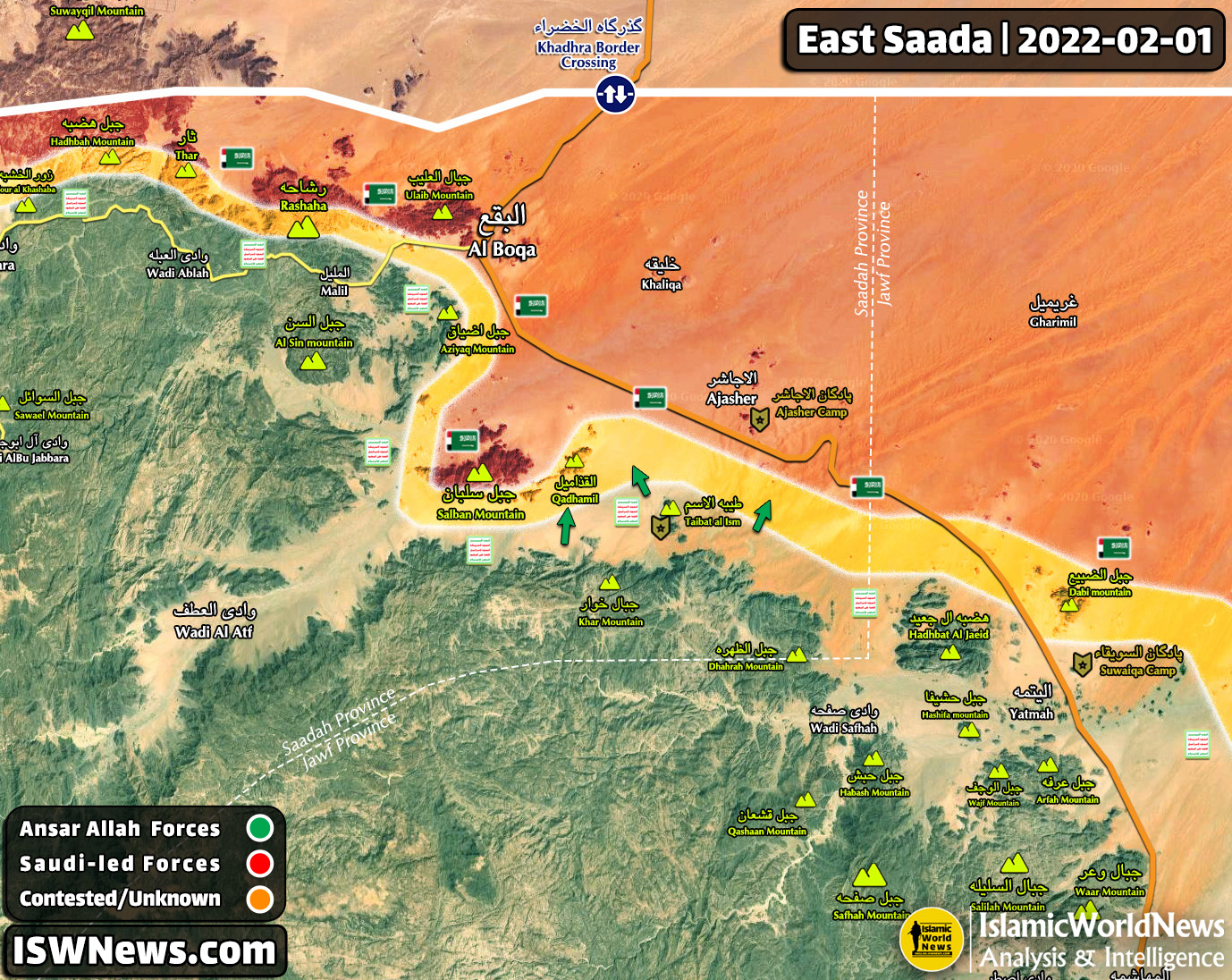
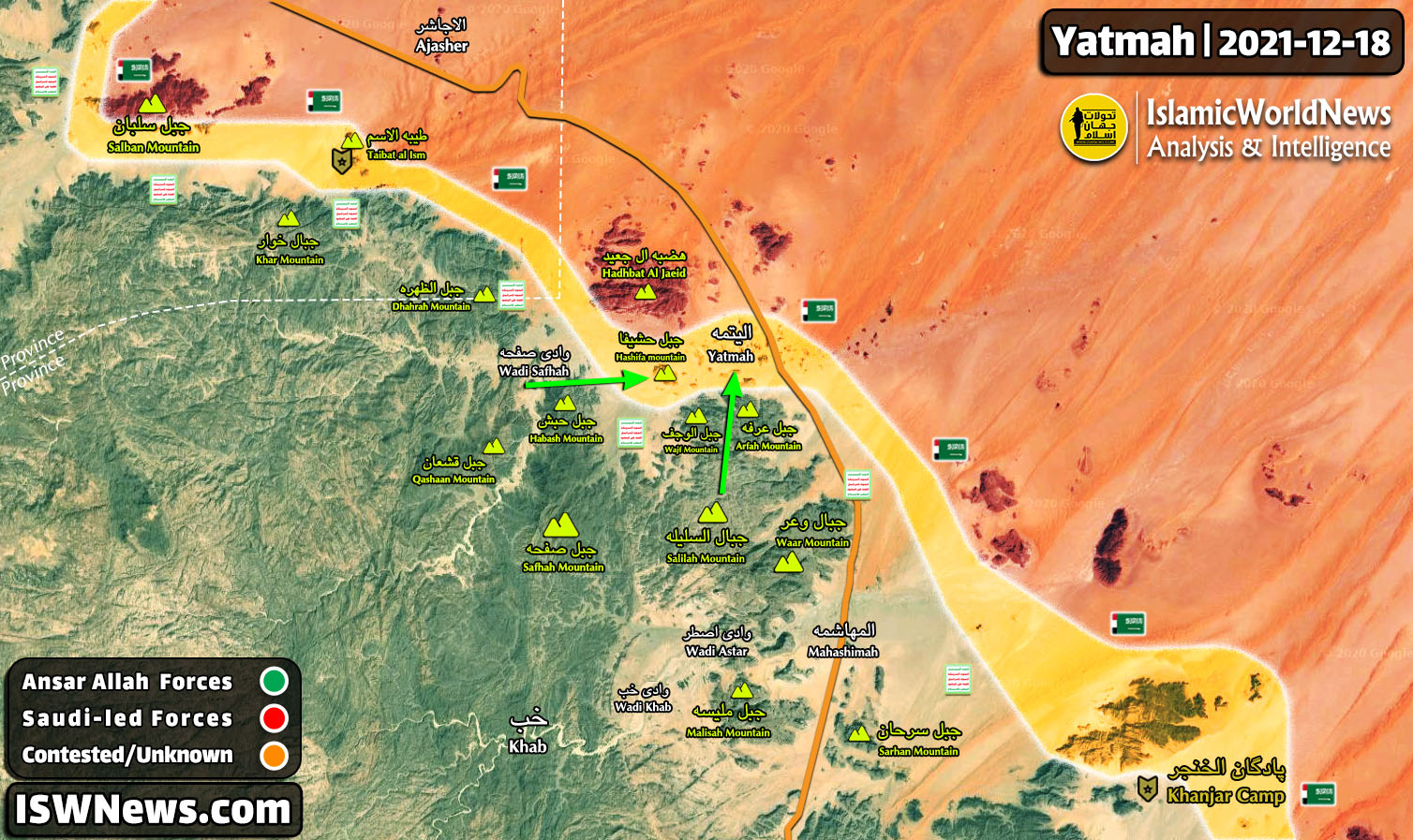
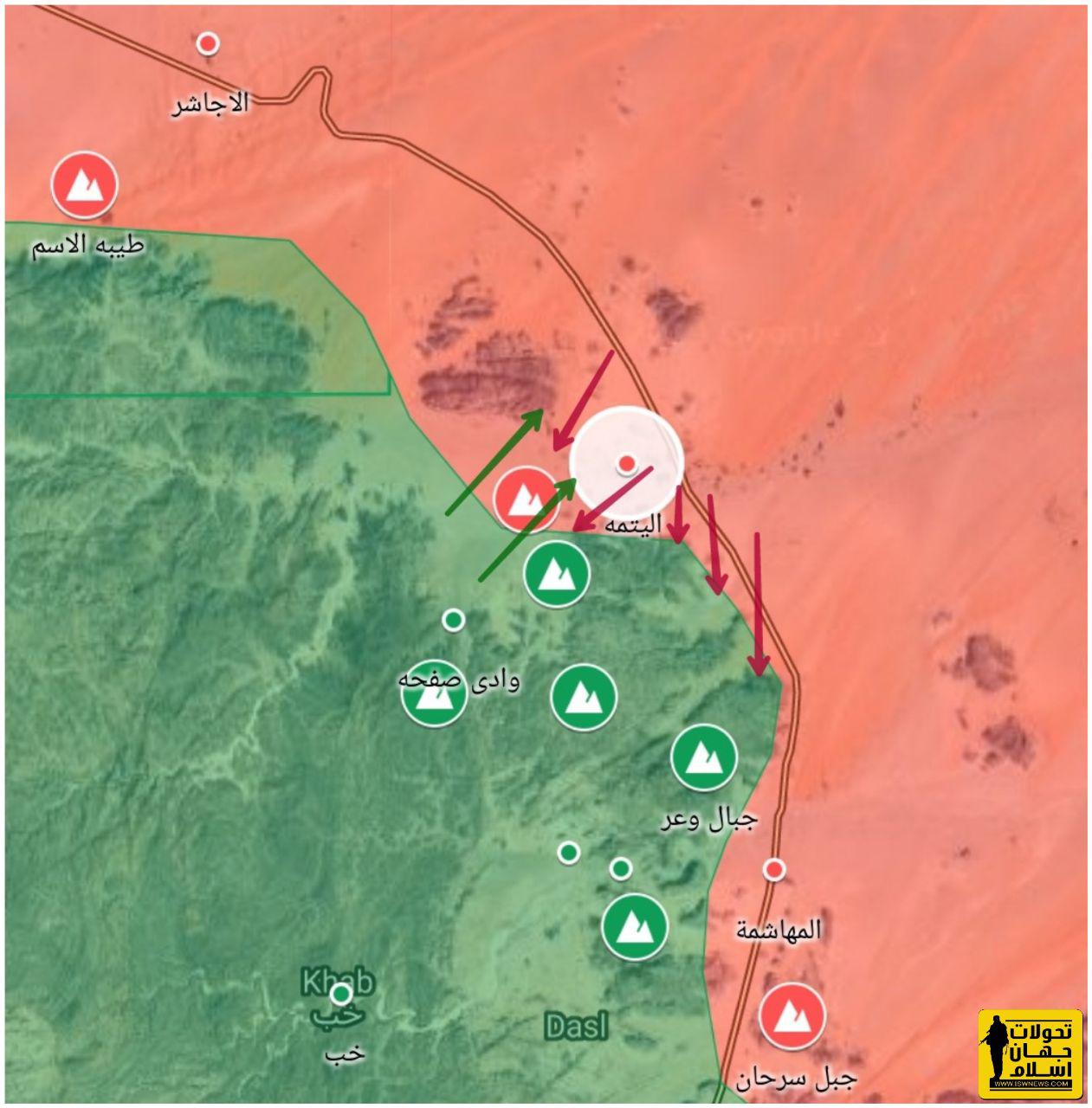
During the operation, Ansar Allah liberated the Taibat al-Ism camp, Qadhamil heights, Qahira, al-Rabaa, al-Ramla al-Sawda and al-Mahour from the control of the Saudi coalition.
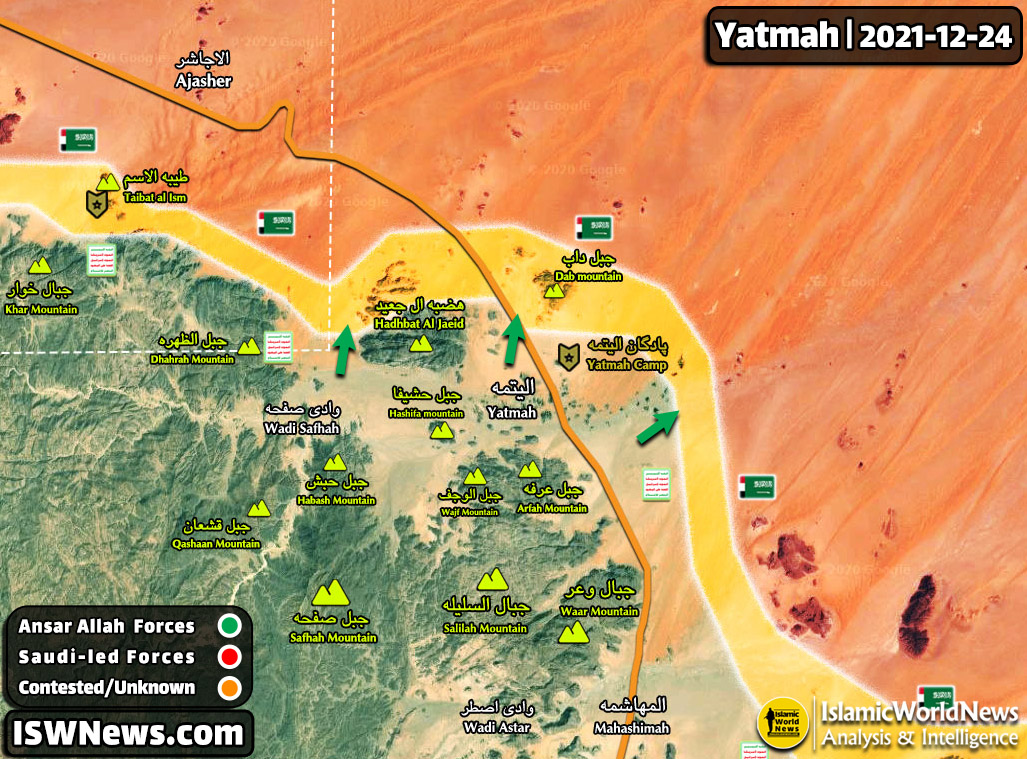
Prior to the operation, Ansar Allah had liberated the town of Yatmah and its suburbs during Operation Fajr al-Sahra on December 24, 2021. Considering the direction of Ansar Allah progress in these areas, it seems that Ansar Allah’s goals in these operations are the following:
1- Clearing the mountainous areas north of al-Jawf province and the border areas of Saada province from the control of the Saudi coalition. 2- Ensuring the security of areas and roads leading to small towns such as: Kataf, Yatmah, etc. 3- Reducing the pressure from other fronts and disrupting the focus of the Hadi government on the battles of Marib. 4- Increasing pressure on the border areas with Saudi Arabia, which will force the Saudi coalition to deploy more forces in these areas.
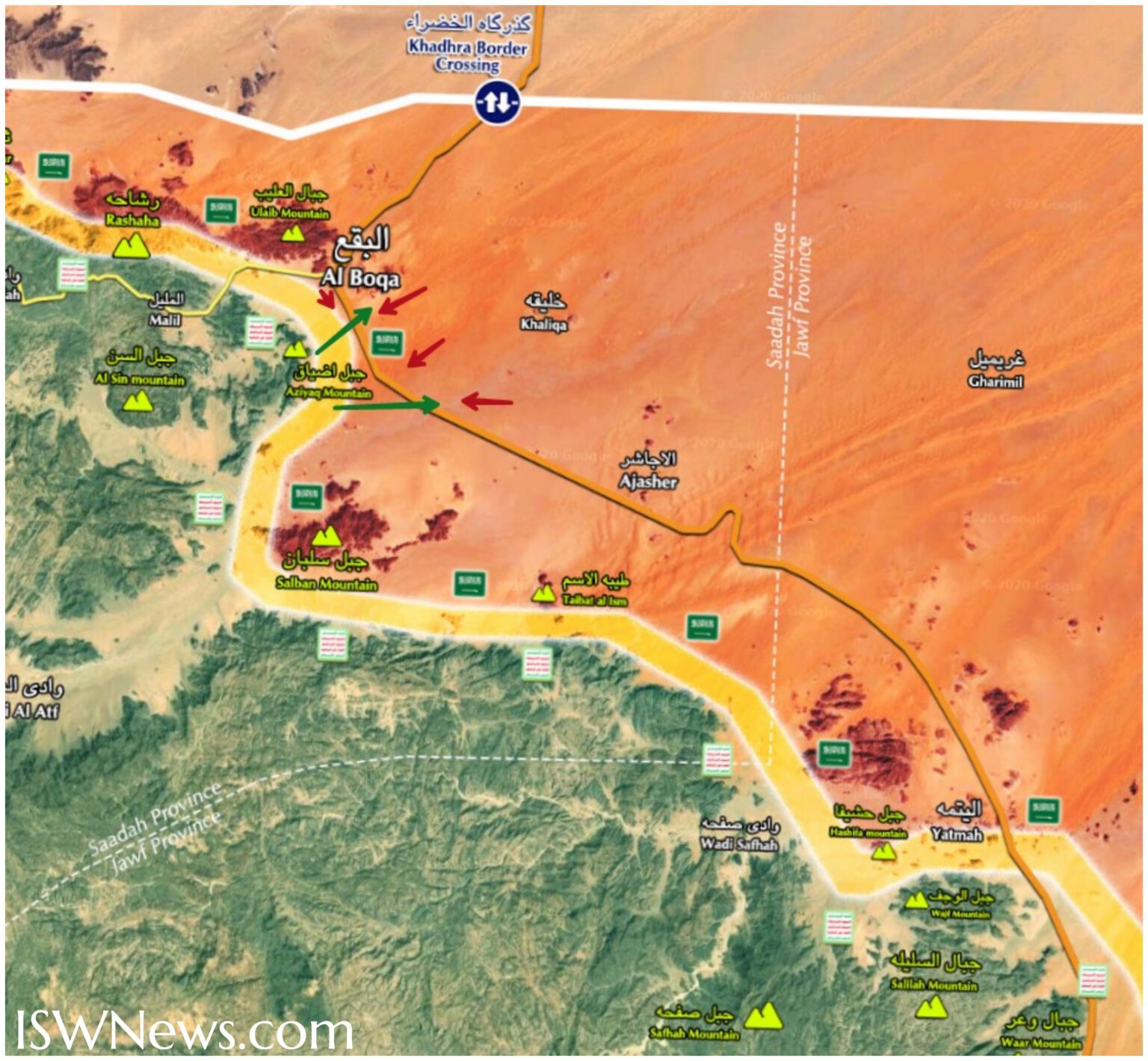
AnsarAllah’s possible goals in future operations in the region could be to move to al-Atfin area, al-Ajasher base, al-Boqa town, and finally the al-Khadhra border crossing and enter Saudi territory.
After the end of Operation Faamkana Minhom in March 2020, the clashes in al-Jawf province continued in the northern axis from al-Khanjar camp to al-Yatmah town and the eastern axis from the eastern desert of al-Maraziq to al-Labanat base. The Saudi coalition equipping local forces under the command of Sheikh Amin al-Akimi, the governor of Mansour Hadi in Jawf province, had focused its attacks on the northern heights of al-Jawf and the al-Khanjar camp. Al-Akimi, with the support of the Saudi coalition and the Yatmah tribes, repeatedly attacked Ansar Allah positions, and despite several limited Ansar Allah operations in the al-Dhahra and Qash’an heights, his attacks on Ansar Allahcontinued.
Finally, with the escalation of the clashes on this axis from December 4, Ansar Allah started Operation Fajr Al-Sahra.
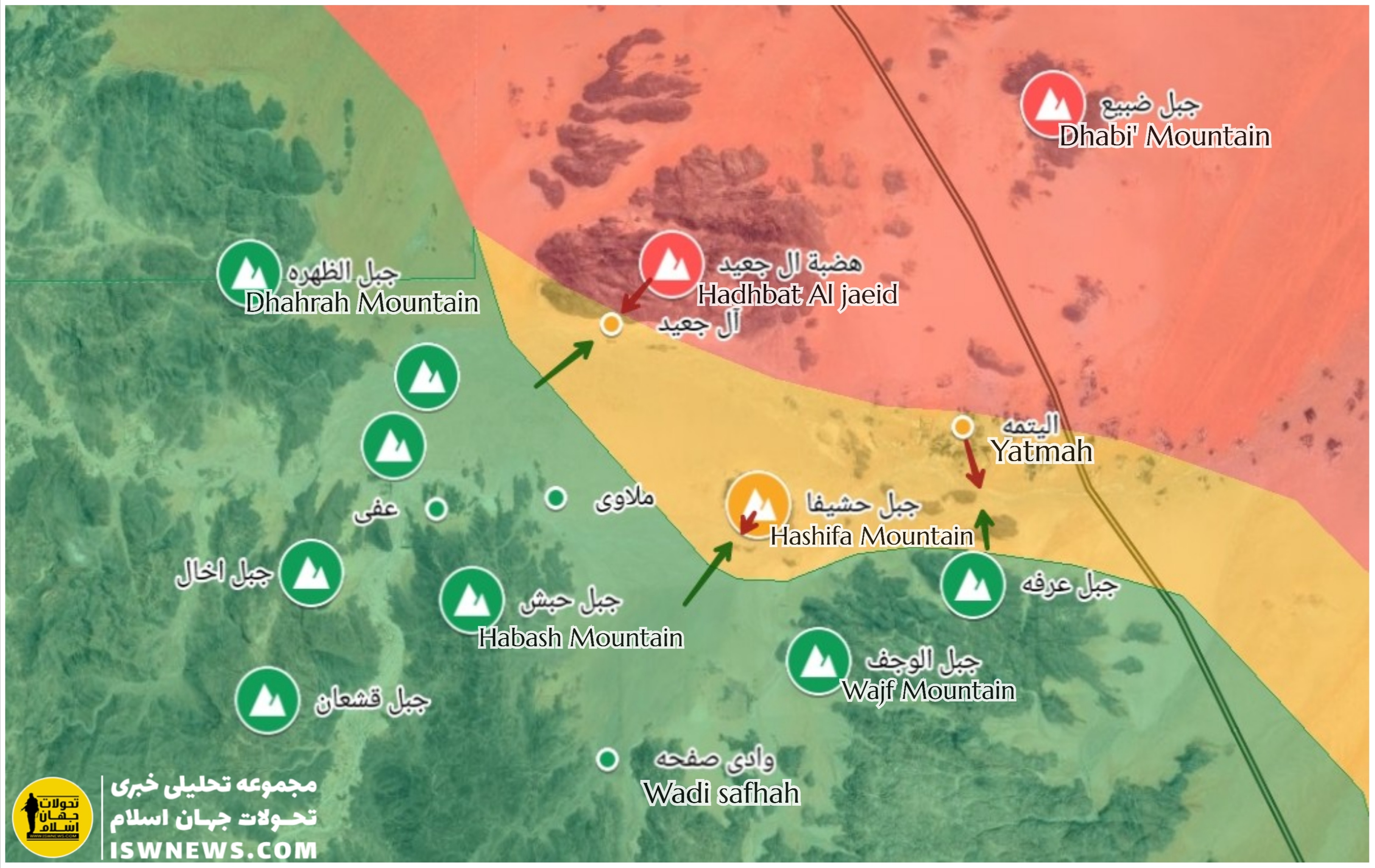
In its initial stages, Ansar Allah succeeded in liberating the areas of Qarn Ibn Shaman, Qarn al-Hijra, and Malawi, and consolidated its fire control over the area by strengthening its positions in Jabal Arafah. This was followed by clashes in Jabal al-Hashifa and al-Ja’id, and the news of the coalition commanders fleeing from the Yatmah led the leaders of the Yatmah tribes to talk and compromise with Ansar Allah.
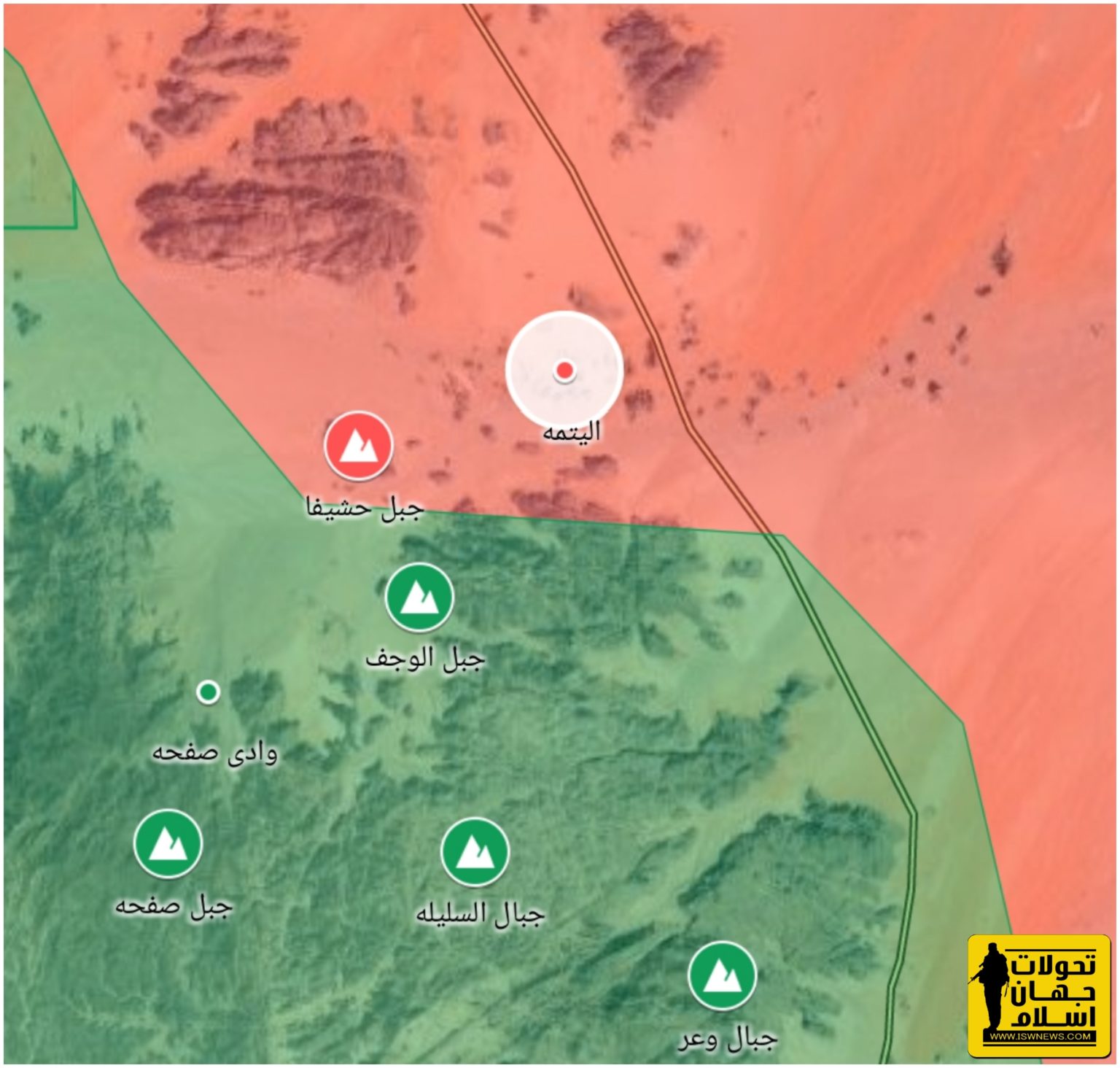
According to the agreement reached between the Yatmah tribes and Ansar Allah, it was decided that Ansar Allah would not enter the Yatmah and that the representatives of the tribes in the area would control and prevent the entry of Saudi-led forces into the area. However, this agreement failed with the deployment of the Saudi coalition forces to the Yatmah and the inability of the tribes against them. Ansar Allah also took the opportunity and on December 16, by launching several ground attacks, succeeded in pushing the Saudi coalition back from the Yatmah and Hadhbat Al-Jaid areas on the evening of December 23, and Ansar Allah forces and popular committees entered the Yatmah on December 24.
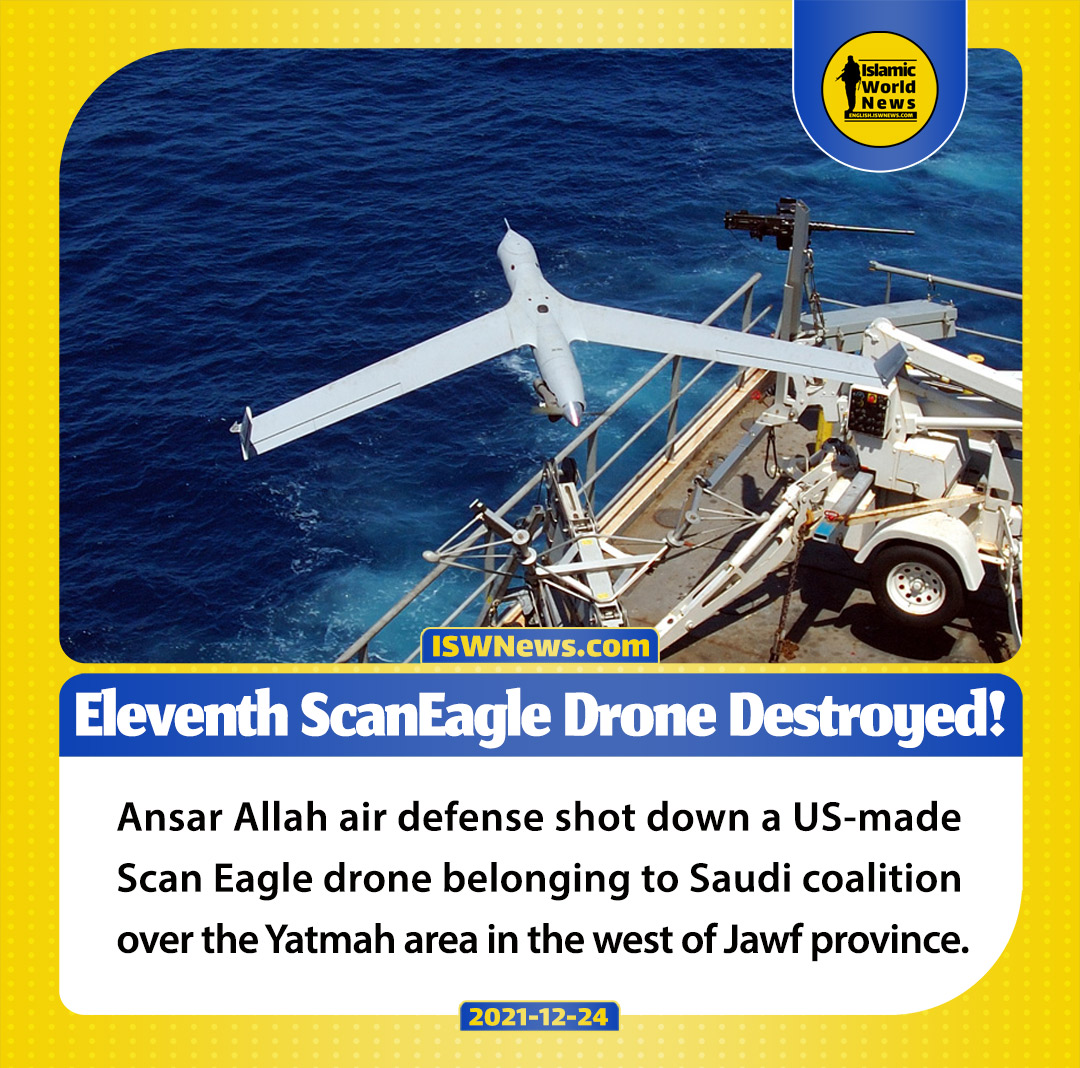
According to a statement from the Yemeni Armed Forces, Ansar Allah destroyed 15 military and armored vehicles in the operation. The death toll from the Saudi-led forces was 35, with 37 wounded and 45 captured. Saudi coalition warplanes have also bombed northern al-Jawf more than 60 times, with little effect on Ansar Allah advances. During the operation, Ansar Allah air defense shot down the 11th US-made Scan Eagle drone over the skies of Yatmah and in several other operations, prevented Saudi warplanes from entering the battles north of al-Jawf.
In the eastern axis of al-Jawf, clashes continue in the suburbs of al-Khanjar camp to the eastern desert of al-Maraziq and the hills of al-Alam.
As Brigadier General Yahya al-Sari’ pointed out in his statement, Ansar Allah has taken control of all important urban areas in al-Jawf province with the liberation of al-Yatmah, and the Saudi coalition has no control over any important point other than the eastern deserts of Khab and Shaaf district.
So far, this drone is the eleventh US Scan Eagle drone have been shot down by Ansar Allah during the Yemen war.
The first US Scan Eagle drone was shot down on June 19, 2021 over the al-Mashjah heights in the west of Marib province, the second on June 21, 2021 over al-Mashjah heights in the west of Marib province, the third on August 14, 2021 over the Madghal district in the west of Marib province, the fourth on September 27, 2021 over the Madghal district in the west of Marib province, the fifth on November 9, 2021 over the al-Jubah district in Marib province, the sixth on November 13, 2021 over the al-Jubah district in Marib province, seventh on December 4, 2021 over the al-Jubah district and the eighth on December 8, 2021 over the al-Jubah district in Marib province, the ninth on December 10, 2021 over the Sarwah district in the west of Marib province and the eleventh on December 16, 2021 over the Wadi district in east of Marib province.
The ScanEagle is a spy drone equipped with an electro-optical and infrared camera that does not require a runway to fly. The drone can fly for more than 20 hours for reconnaissance operations.
The drone plays an important role in gathering information and images of Ansar Allah positions on the outskirts of Marib. Thus, destroying and preventing their flight over the sky of Marib disrupts the planning of Saudi forces for operations against Ansar Allah and reduces the effectiveness of the Saudi warplanes bombing in the Marib region.
Clashes between Ansar Allah and Saudi-led forces in the north of al-Jawf province began on December 4th and intensified with airstrikes by coalition warplanes. Finally, on December 16th, Ansar Allah launched an operation to liberate the Yatmah area and its suburbs, And finally on December 24th, Ansar Allah succeeded in liberating the important Yatmah area in the north of al-Jawf province.
After the liberation of the town of Hazm during Operation Fa’amkan Minhom on March 1, 2020, Sheikh Amin al-Akimi, the governor of Mansour Hadi for the Jawf province, made the al-Yatmah area a center for preparing new attacks against Ansar Allah. So, the al-Yatmah area became one of the main targets of Ansar Allah in al-Jawf province.
Therefore, it can be said that with the liberation of Yatmah, in addition to controlling important points in the north of al-Jawf province, Ansar Allah has removed the Saudi coalition leverage on the Marib and Jawf fronts.
According to the latest news, clashes on the southern front of the city of Marib are still going on around the al-Balaq al-Sharqi and Balaq al-Gharbi, without any change in the frontlines. It seems that Ansar Allah and the Popular committees need to adopt different tactics at this stage of the Marib war than in the past. Activating other fronts in western Marib and southeastern al-Jawf, in other words increasing pressure from several fronts against the Saudi coalition, are among the effective options that could lead to breaking coalition lines in Marib.
On the western front, some Ansar Allah officials and news sources have also claimed to have advanced on the al-Nakhla and al-Atif fronts. This news is not true and currently conflicts are taking place in these areas and neither side is in control of these two areas.
On the al-Jawf front, the agreement between Ansar Allah and the tribes of the Yatmah region has not been finalized and the clashes have resumed. Following this, the Saudi coalition has sent more manpower and military equipment to the region. Air strikes on the northern front have also increased. In this regard, the Saudi coalition warplanes have bombed the southern front of Marib 49 times, the western front of Marib 18 times and the Yatmah front 11 times.
The provisions of this agreement are as follows: 1- Ansar Allah fighters will not enter the town of Yatmah and the control of these areas will be handed over to the elders and representatives of the Yatmah tribes. 2- The weapons left behind by the Saudi coalition in their bases in Yatmah will be handed over to the tribal fighters to ensure the security of the region. 3- The Yatmah tribes have also pledged not to follow the Saudi coalition and to prevent the Saudi-backed figures from entering the Yatmah and attacking the Ansar Allah positions.
Currently, the clashes continue in the northern areas of al-Jawf province, and Ansar Allah is stabilizing the progress in this area.
Clashes between Ansar Allah and Saudi-led forces in the north of al-Jawf province began on December 4th and intensified with airstrikes by coalition warplanes. Finally, on December 16th, Ansar Allah launched an operation to liberate the Yatmah area and its suburbs, which is still ongoing.
According to the latest news from al-Jawf front, Ansar Allah has succeeded in liberating the heights of Habash and Qasha’an in the north of al-Jawf province in the last two days. According to the ISWNEWS field source, the Saudi-led forces withdrew from the al-Yatmah area on the Hazm-Boqa’ road. However, Ansar Allah forces have not yet entered the area and advances on this front has not yet been stabilized. Talks are underway with local elders for Ansar Allah to enter the area. Ansar Allah’s usual policy has been to interact with the elders of the opposition tribes and prevent further bloodshed.
These areas have always been a place of conflict in recent months, and its suburban heights have been repeatedly changed between the two sides.
According to surveys of ISWNEWS, the conflict in the northern axis of al-Jawf province has intensified since December 4, and during this period, the Saudi coalition warplanes have bombed different areas in the districts of Khab and al-Shaaf and Hazm 27 times.
After the liberation of the town of Hazm during Operation Fa’amkan Minhom on March 1, 2020, Sheikh Amin al-Akimi, the governor of Mansour Hadi for the Jawf province, made the al-Yatmah area a center for preparing new attacks against Ansar Allah. So, in such circumstances, two goals were of great importance to Ansar Allah: 1- Capturing the al-Yatmah area, 2- Capturing positions of the Saudi coalition in the al-Jawf desert like al-Kanais camp, etc.
Therefore, it can be said that Ansar Allah can achieve its first goal in al-Jawf, which is to capture the Yatmah, by carrying out a small operation simultaneously with operation in Marib province. The success of this operation in al-Jawf will ease the coalition pressure on Ansar Allah on the al-Jawf front.
In this attack several AFVs and military vehicles were destroyed and several Saudi-led forces killed and injured. Ansar Allah forces returned to their position in Aziyaq mountain after the successful attack.
Currently liberation of Yatmah and al-Boqa is not difficult for Ansar Allah but it seems Ansar Allah left the area of north of al-Jawf and Saadah open to drain Saudi coalition strength and impose heavy casualties and damage to them.
According to local sources report, in this attack Sheikh Askar Ali Ofan Sheikh Al Muslim (one of the fugitive chiefs of the Al Ghayl tribes) and two of the Qaraan tribe have been killed, and also Sheikh Amin Al Akimi (former government’s appointed governor for Al Jouf ), Ali Mohsen Al Hoda (operation commander in the north of Al Jouf), Sheikh Al Basha bin Hizam and several others seriously wounded.
Some sources have announced the reason of this attack the Saudi coalition mistake bombardment and some others have announced the drone or AnsarAllah missile as the reason of this attack. AnsarAllah local and news sources have not published any news in this regard, yet. Due to the heavy casualties of Mansour Hadi forces in the Al Jawf fronts, they are likely to retreat from the Al Yatmah.
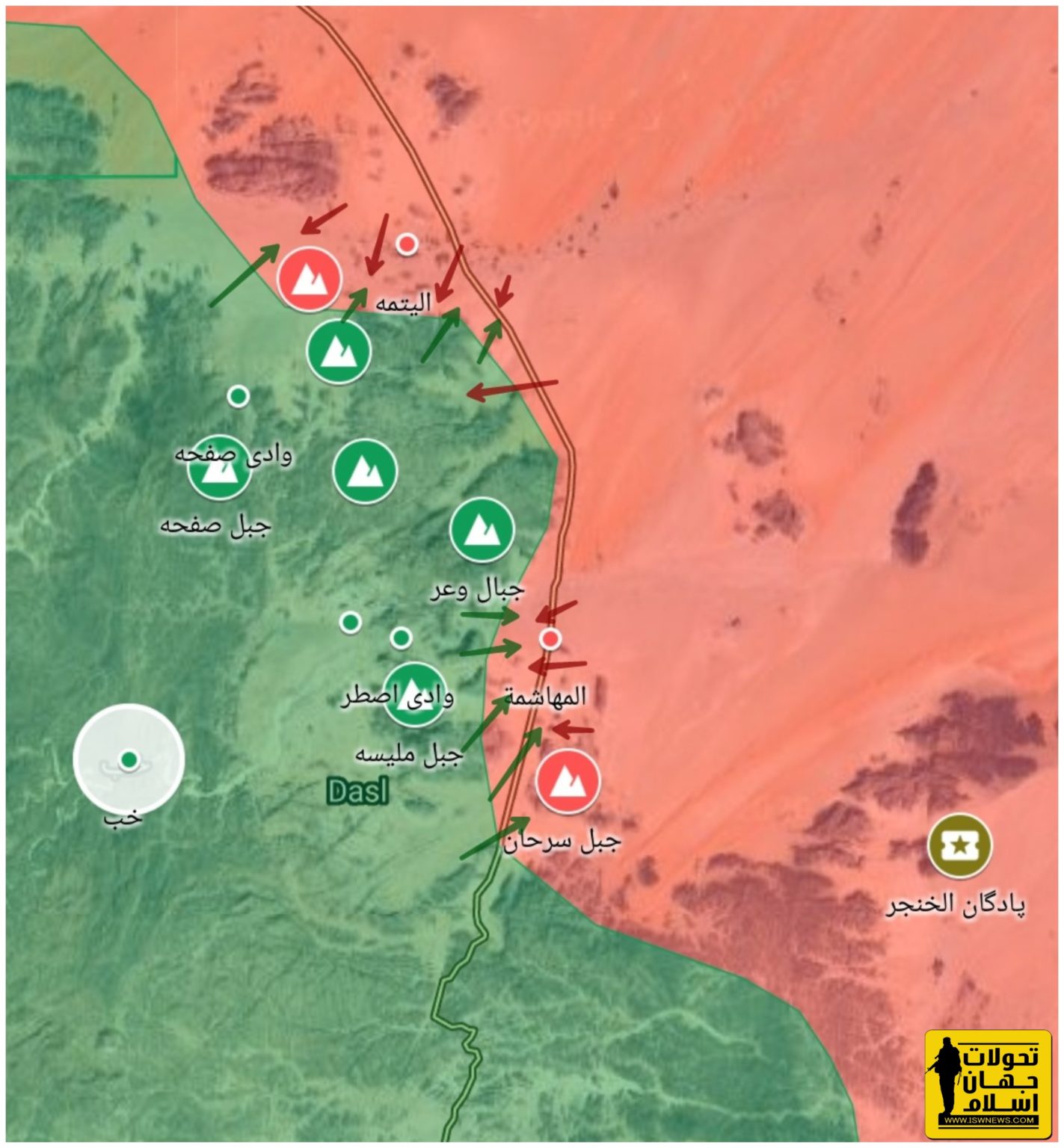
During the past two days: 1- Clashes between Ansar Allah and Saudi-led forces continue in the al-Yatmah area and as we said in the last news, Ansar Allah forced to retreat from the Yatmah after the Saudi warplanes pounded the area 18 times.
2- Unlike the news of the pro-Saudi sources, Ansar Allah has not had any attacks on al-Khanjar camp (east of al-Mahashima) and the news of recapturing the al-Khanjar camp by the Saudi coalition is practically false.
3- The Saudi-led forces has carried out sporadic attacks on Ansar Allah’s positions on the southwestern axis of al-Boqa’.
4- The Saudi-led coalition forces carried out attacks to recapture al-Mahashima and Mount Sarhan, which was repulsed by Ansar Allah so far.
Saudi coalition warplanes have bombed Yatmah and al-Mahashima 12 times so far. Saudi coalition air and artillery attacks on these areas continue, and Ansar Allah may forced to retreat from some of the liberated positions.
In the same sense, militants of “Zu Hussein” tribes in Yatmah district, after death of Sheikh Hassan Ayyash al-Atiyah al-Hazmi and some others by Mansour Hadi’s forces, attacked them. Although Ansar Allah’s tactic in these areas are mainly hit and run, but if the situation continues, Mansour Hadi’s forces might be forced to retreat. Ansar Allah’s domination over Yatmah means cutting the Boqa’-Hazm road in another point of the road that weakens Saudi coalition positions in Mahashima and Sarhan mountain.