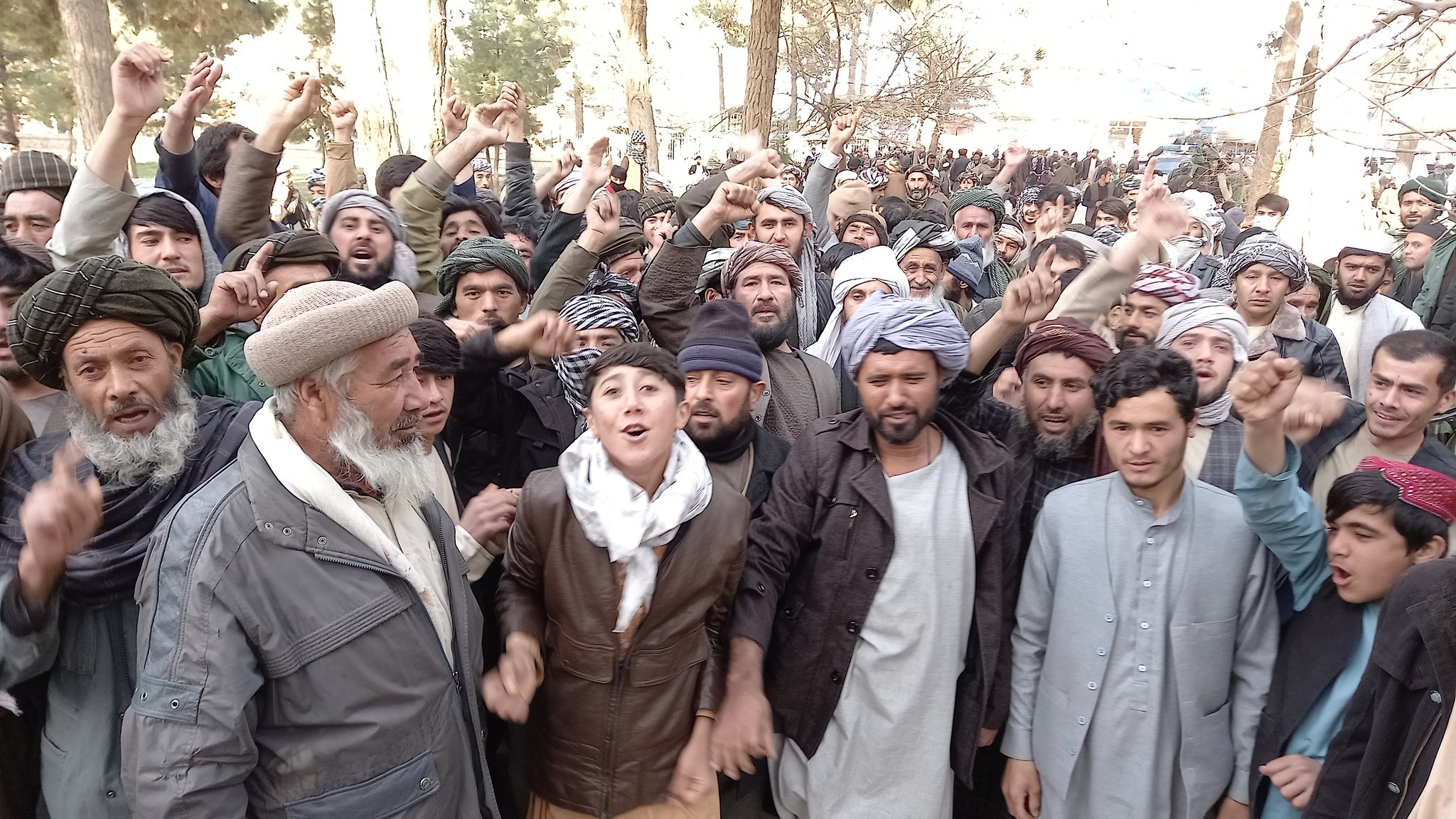
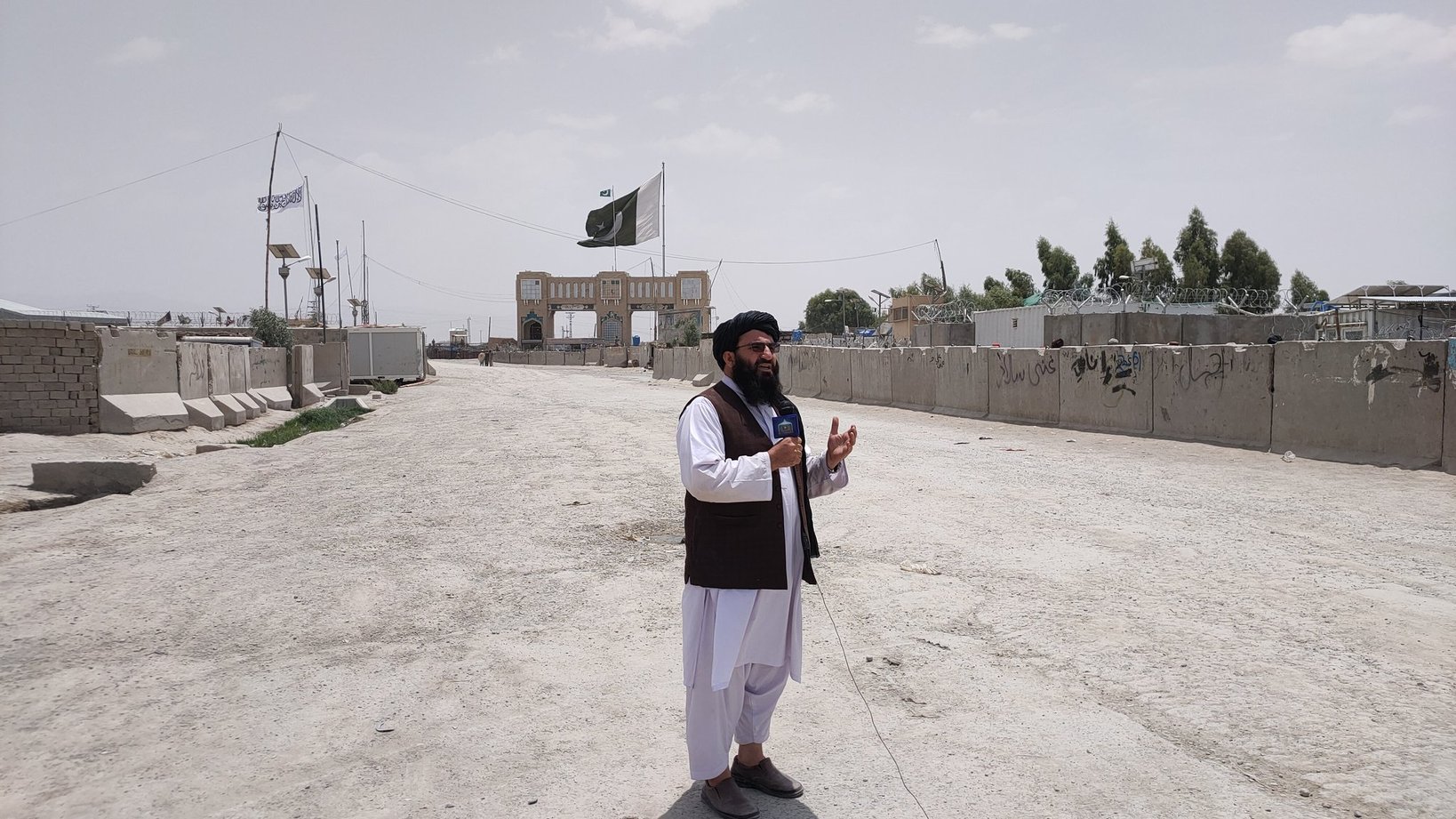
On Wednesday, January 12, Makhdoom Alam, the senior Uzbek commander of Taliban, was arrested in Mazar-e-Sharif on the orders of Mullah Fazel, the Taliban’s deputy defense minister. Following this action, the supporters of “Makhdoom Alam” gathered in the city of Maimana in protest and surrounded the security command building in Faryab province and demanded his release. Security officials in Faryab province also declared martial law in the city of Maimana and warned pro-Makhdoom militants.
On January 14, also Qari Wakil, another senior Uzbek commander was arrested in Faryab province.
As popular protests escalated, Turk oglu, Makhdoom Alam’s deputy, threatened that if the Taliban did not release Mulavi Alam, the Taliban flag would be lowered permanently from the Faryab security command building.
Mulavi “Makhdoom Alam” is the head of the Taliban military commission in Faryab, Jawzjan and Sar-e-Pul provinces and played a key role in the fall of the previous government in northern Afghanistan. His arrest is the first by the Taliban against their Uzbek commanders, and the continuation of such actions will seriously weaken the Taliban’s popular body.
Pictures of Mulavi “Makhdoom Alam”, the Uzbek commander of the Taliban
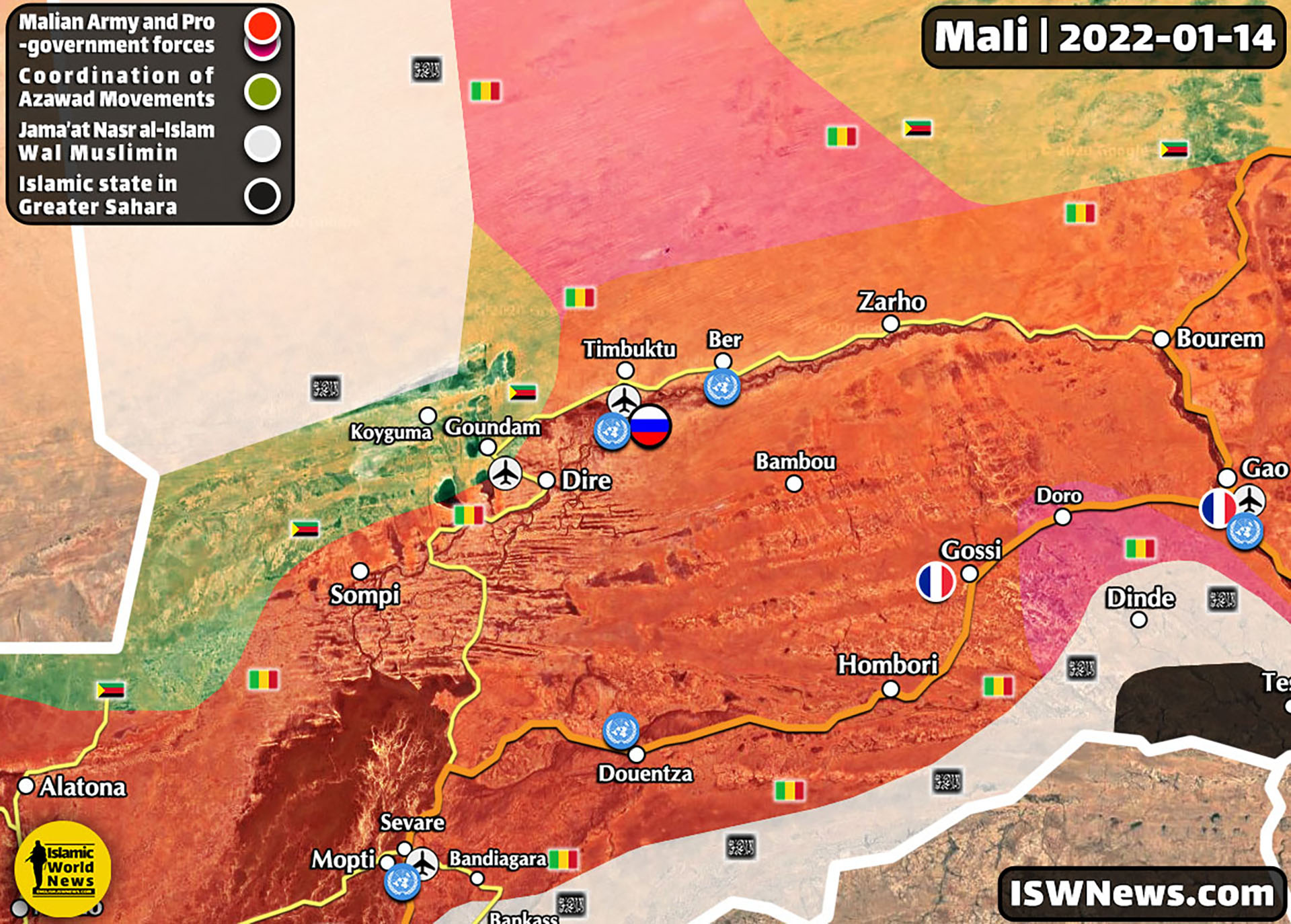
Russian Private Military Contractors (known as Wagner) has been stationed at the Timbuktu base to train Malian military personnel, a spokesman for the Malian Army said on Thursday. He further confirmed that Mali had received Russian military aid, including several helicopters (Mi-17) and other military equipment.
The Timbuktu base had been under French control for eight years, but French troops withdrew in December 2021 following tensions between France and the Mali government over the presence of Russian troops in Mali.
Russia’s Private Military Contractors (PMC) are a group of Russian military individuals referred by the Western media as “Wagner.” Western countries have repeatedly accused the group of human rights abuses and war crimes. According to “ISWNEWS” from informed Russian sources, there is no such group as “Wagner Group” in Russia; In principle, the Russian parliament and military structure do not allow the formation of such private military groups in the Russian Federation. These contractors are in fact part of the Russian military proxy forces in the target countries. Therefore, its structure seems to be very different from that of companies and private contractors in Western countries, including the United States.
Russia’s private military contractors are currently active in the wars in eastern Ukraine, Syria, Libya, and elsewhere. In Mali, too, the government has denied Western allegations And says that Russian forces are present in the country within the framework of a bilateral agreement.
According to preliminary information, the Turkish army’s Ba’ashiqah base in the Zelkan area, north of Mosul, was targeted by three 122-mm rockets. No casualties have been reported so far.
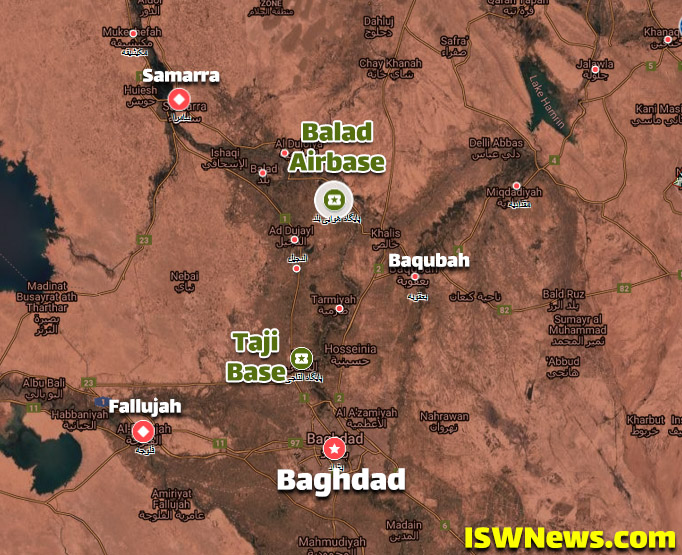
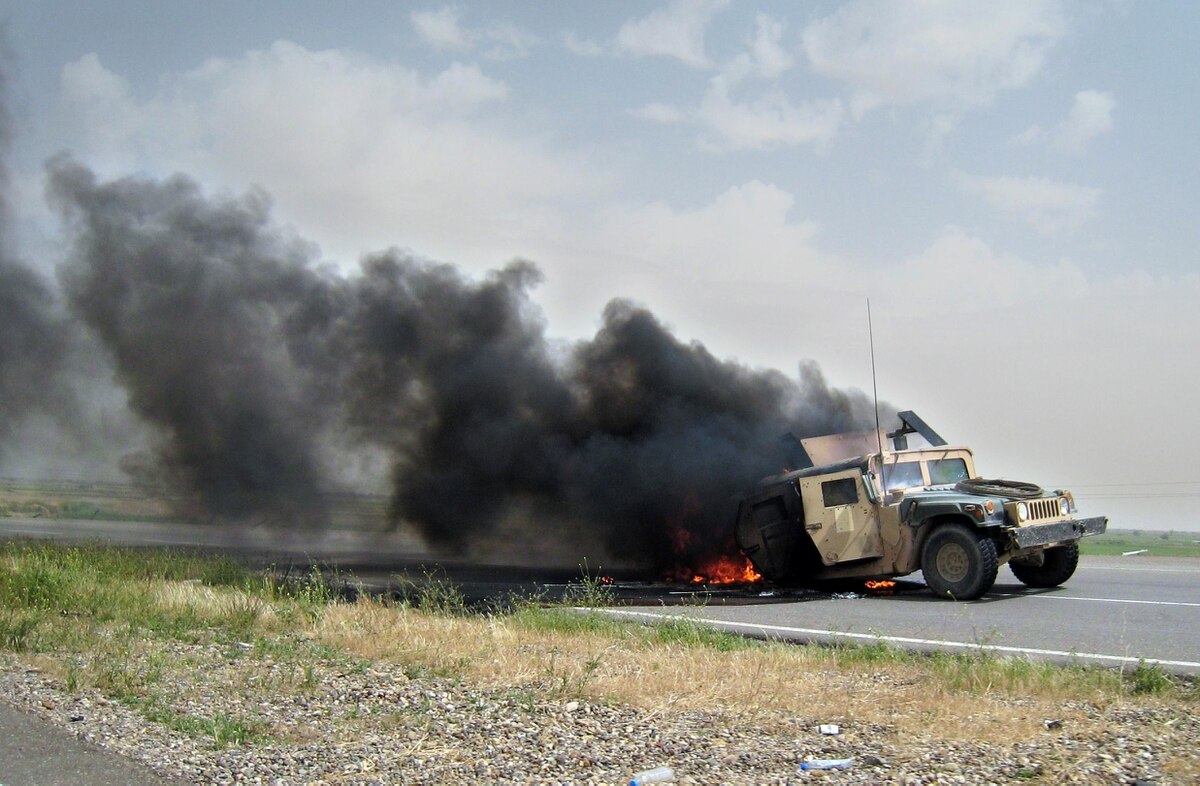
Early on January 15, at 6:10 a.m. local time, US military positions at Balad Air Base were hit by three drones and set the parts of base on fire. No information is available on the extent of the damage.
The Iraqi Security Information Center also confirmed the drone attack on Balad Air Base: “This morning, three drones approached the southern side of Balad Air Base in Salah al-Din province. The drones were visible to the naked eye, and the guards on the watchtowers spotted them, and when they were convinced that the drones were hostile, they fired at them, causing the drones to leave the area.”
According to data obtained by ISWNews, this is the 26th attack by Iraqi resistance groups on US logistical convoys in 2022.
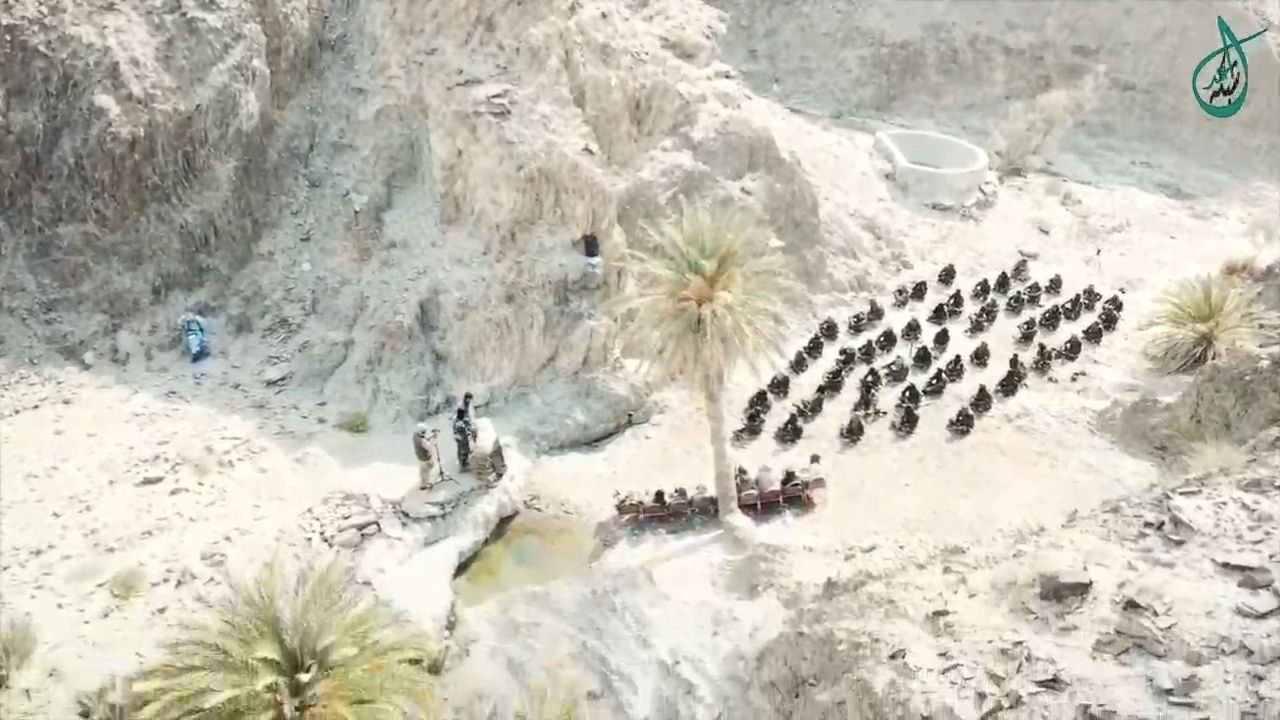
Prior to this footage, Jaish ul-Adl released a statement taking responsibility for conflicts in east of Kerman and Sistan and Baluchestan province in December and January.
Jaish ul-Adl is a terrorist group in Sistan and Baluchestan province of Iran and Balochistan province of Pakistan which founded after Jundallah terrorist group was destroyed by Iran’s IRGC in 2011. This group is active in armed conflict, IED, assassination, abduction, etc.
The activity of this group increased since the beginning of 2021 and it is expected the activities of this group at Iran’s border increase more due to secession plans by USA, Israel and Persian Gulf states for Iran.
1- Balkh: On January 11, Taliban militants engaged with people of Sholgara district. One civilian killed and ten wounded. The reason of the conflict stated to be confiscating people’s farms by local Taliban authority.
2- Kabul: On January 12, Taliban militants vehicle hit by IED of ISIS. Two Taliban wounded or killed.
3- Nangarhar: On January 12, Mulavi Abed Bashir, security commander of Bati Kut, was killed. Mulavi Abed Bashir went to a house in Bati Kut to solve some tribal conflict who was hit by unknown people’s bullets.
4- Herat: On January 11, ISIS members assassinated a Taliban member in Herat and took his AK-47.
5- National Resistance Front (forces of Ahmad Massoud) issuing a statement called the meeting of Ismail Khan and Ahmad Massoud with Amir Khan Muttaqi in Tehran as fruitless and stressed on forming an inclusive government, social justice and citizen rights. National Resistance Front thanks efforts of Islamic Republic of Iran to host this meeting. Afghanistan embassy head in Tehran claims that both sides agreed on peace and the atmosphere of the session was positive.
6- Pakistan has demanded the severance of ties between the Afghan Taliban and terrorist organizations, especially the Pakistani Taliban. Pakistan considers these relations harmful and worrying for the Taliban.
7- Qari Fasihuddin, Taliban chief of staff, warned Pakistan on building border fences with Afghanistan.
8- Kassym-Jomart Tokayev, Kazakhstan president, claimed on January 10 that people from middle Asia and Afghanistan were present in the recent chaos in Kazakhstan.
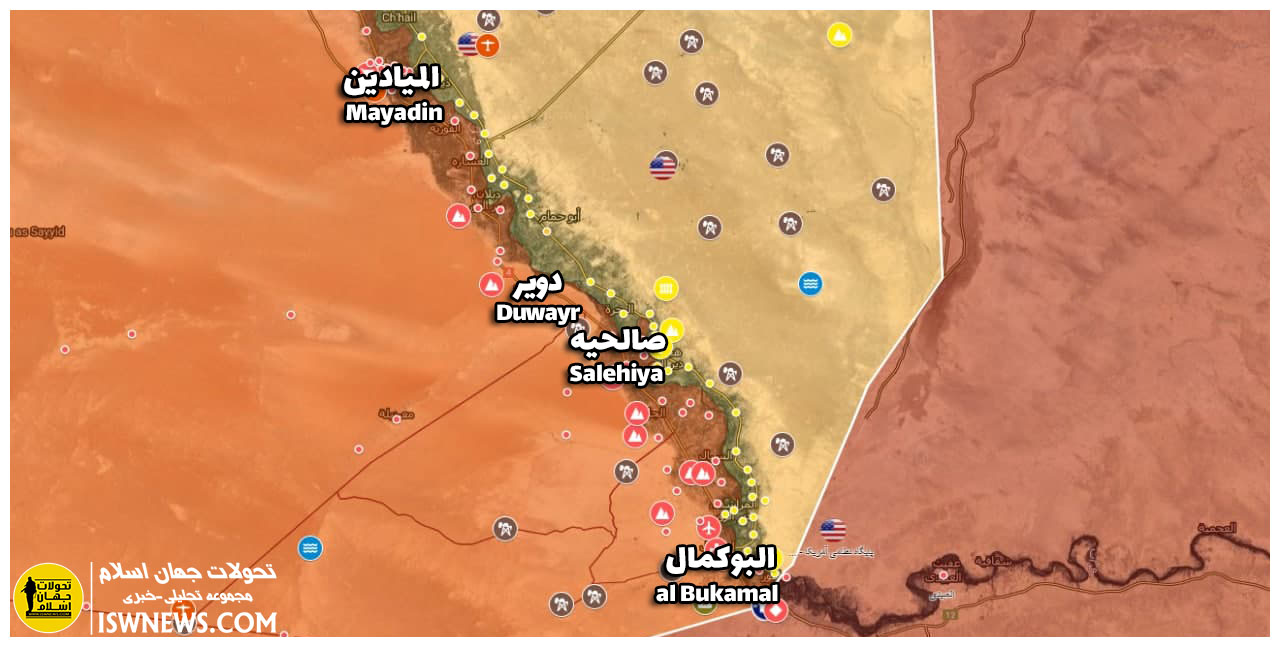
On the morning of January 12, ISIS terrorists, using the fog and weather conditions in the region, attacked two Syrian Army points on the outskirts of Bukamal, near the towns of al-Duwair and al-Salehiyah. As result of the attacks, five SAA members lost their lives and several others were wounded.
According to available information, new units of the Syrian army have been sent to areas in Deir Ezzor province to confront ISIS elements and clear suspicious areas.
It should be noted that despite the extensive air and ground operations of the Syrian army and its allies against ISIS hideouts, the Syrian desert is still not cleared of ISIS, and ISIS elements are also targeting positions and units of the Syrian army and its allies in the area.
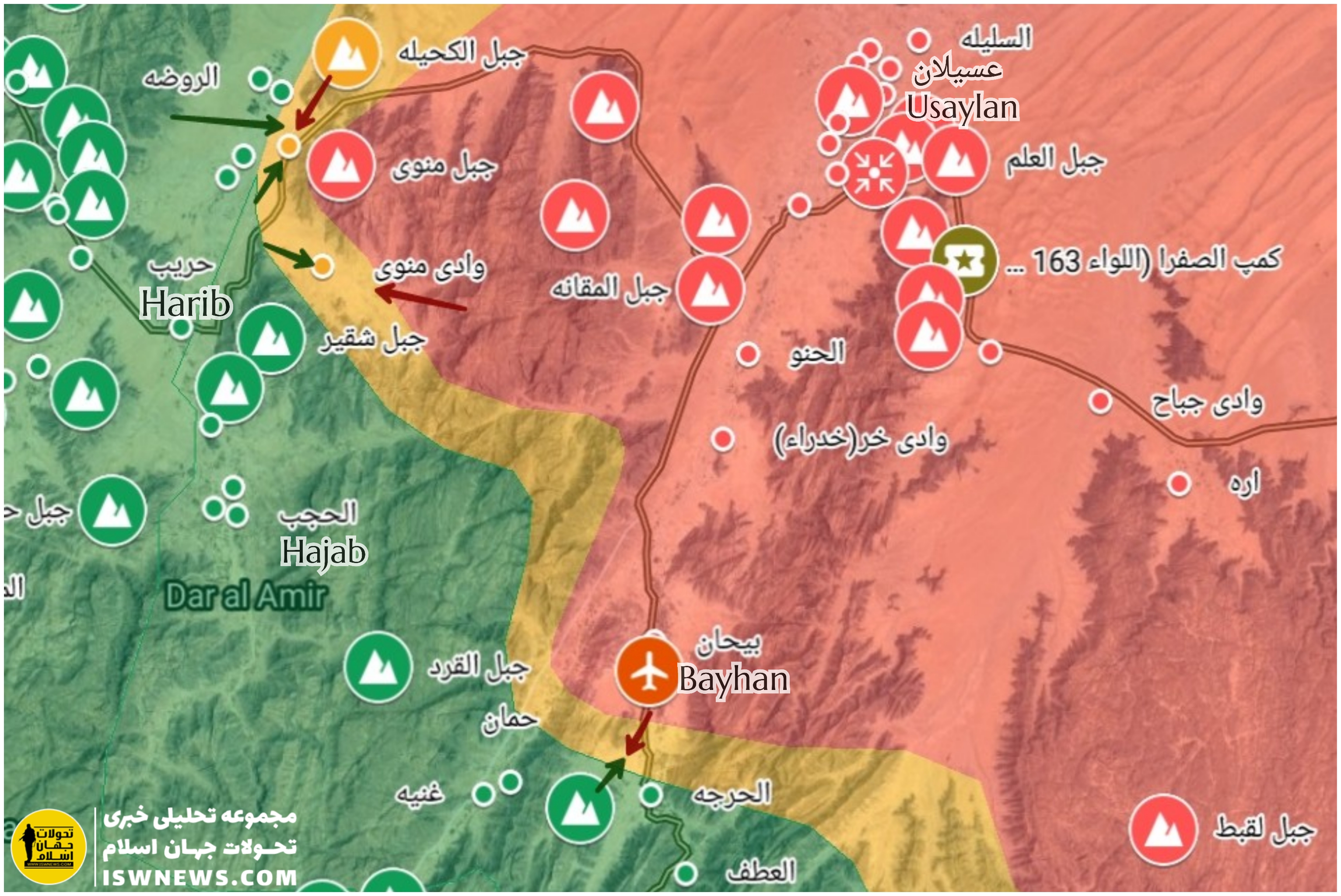
1- Shabwa: – The Saudi coalition attacks on the Ain district and the southern heights of the Beyhan district were repulsed by Ansar Allah. – The spokesman of the Yemeni Armed Forces, Brigadier General Yahya al-Sari, announced that the Saudi coalition’s casualties in the battles of Shabwa province in the recent days were 515 killed, 850 wounded and more than 200 missing. Also, 102 military and armored vehicles of the Saudi coalition were destroyed.
2- Marib: Ansar Allah repelled a heavy attack by Saudi-led forces to seize the town of Harib.
3- Saudi coalition air strikes: Saudi coalition warplanes bombed Ansar Allah-controlled areas 116 times in the past 48 hours.
4- Al-Hudaydah: – The Saudi-led forces have violated the ceasefire 184 times in the past 48 hours. – Two civilians were killed by the Saudi airstrikes on the al-Jarrahi area.
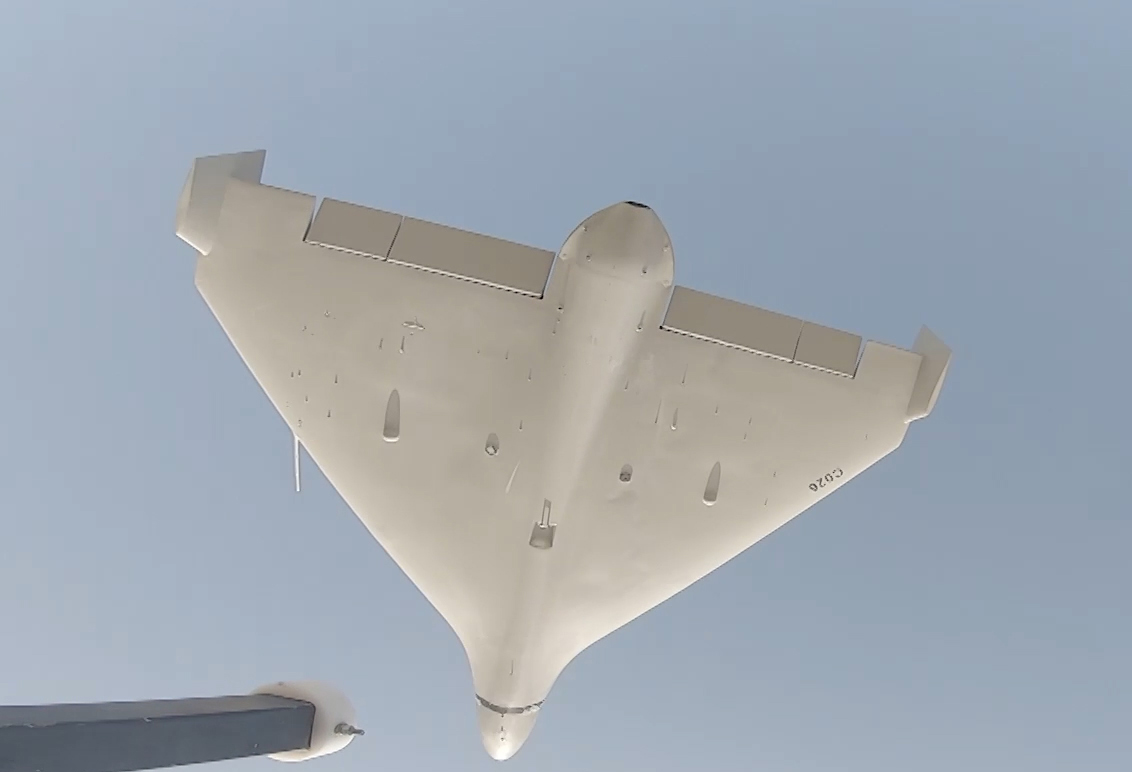
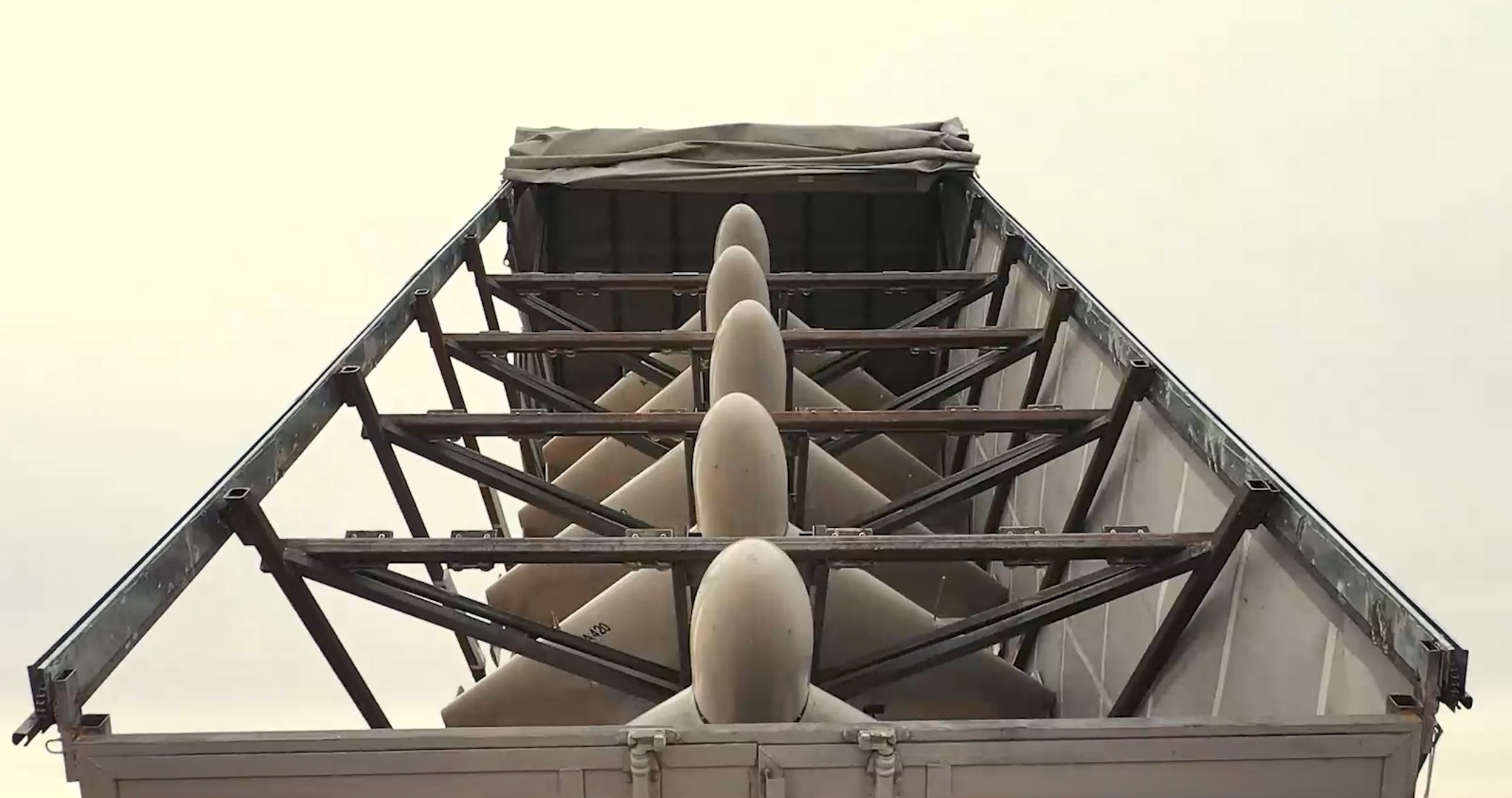
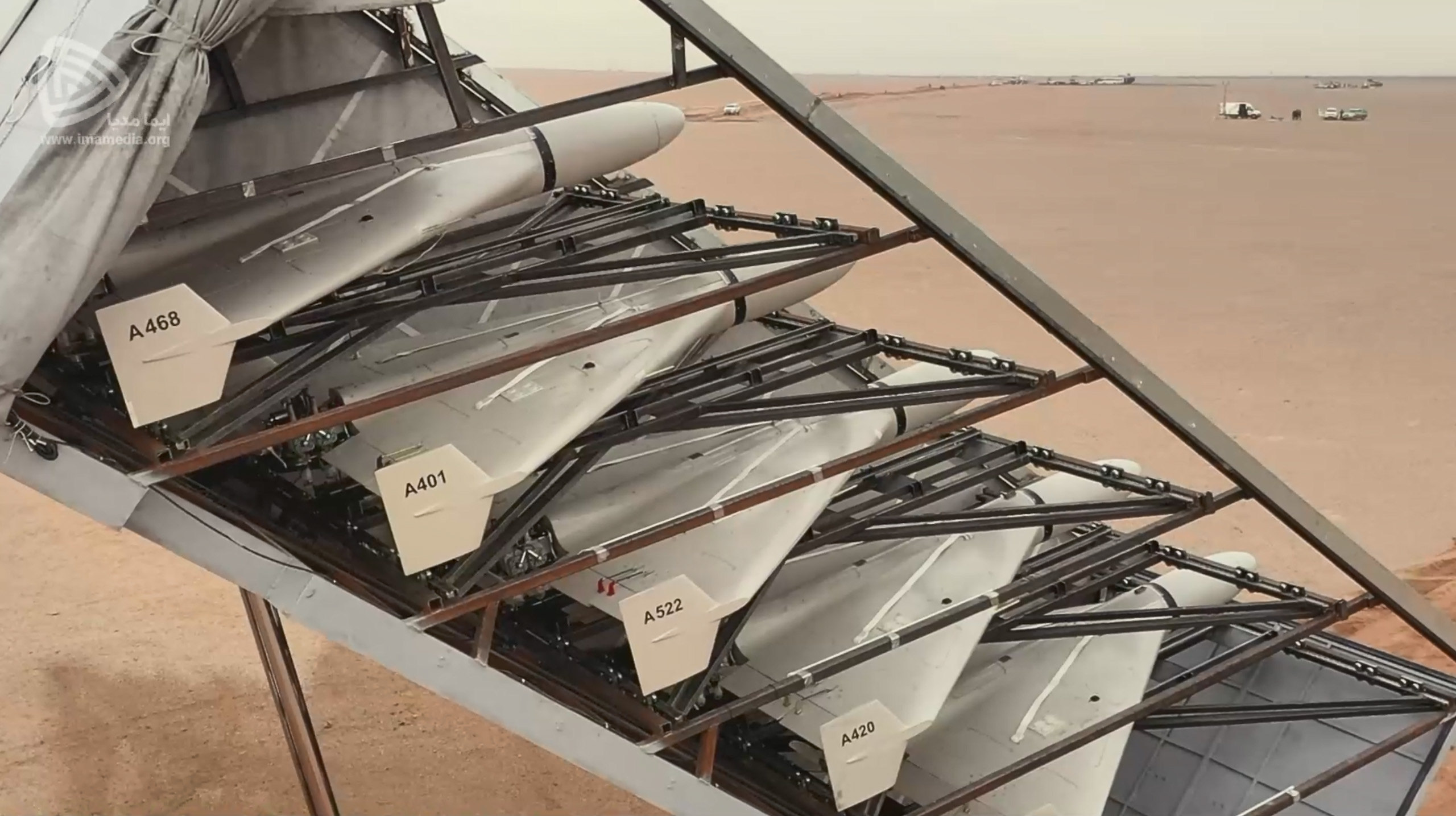
In the ‘Great Prophet (PBUH) 17‘ exercise for the first time, close-up images of Shahed-136 suicide drone and its performance were shown publicly. As part of the exercise, Shahed-136 suicide drones launched from a pod or a rack with five launcher, hitting its targets with exemplary accuracy. This phenomenon attracted many comments but where does this high accuracy come from?
In some parts of the video released from the exercise in some frames, it seems that the color and amount of light reflection from the nose of the drone is different from the body, which can indicate the use of an infrared nose (IR Dome).
Footage of the performance of Shahed-136 drone in the Great Prophet (PBUH) 17 exercise
Due to the fact that the nose color is milky in color, it seems that ZnS sulfide (without applying hot isostatic pressing process) or magnesium fluoride is used in the manufacturing process to reduce the manufacturing cost. These materials are capable of transmitting infrared spectrum and largely absorb the visible spectrum. This feature could mean using a standard camera sensor that detects only the near-infrared (NIR) spectrum by absorbing the visible light spectrum through the infrared nose. (Visible camera sensors have the ability to detect near-infrared spectrum)
Considering the defense policies of the Iranian Armed Forces, weapons such as suicide drones should be as low-cost as possible, and using conventional/standard camera sensors instead of expensive infrared sensors is fully consistent with this strategy. Of course, it is possible to use infrared sensors in the MWIR and SWIR spectrum for night operations, and radar nest detectors for suppression operations of enemy defence systems.
Also, it is noteworthy that some sources, by examining the progress of infrared air-to-air missiles and examining their infrared nose, have rejected the use of infrared nose in Shahed-136. Because in the infrared imaging models of heat-finding missiles, a transparent nose is used. However, with the some more deep studies performed, it was revealed and confirmed that in the electro-optical system of Iranian Shahed-149 drone, a milky infrared nose has been used, which indicates that these noses can be used even for imaging sensors. Therefore, the idea of using an infrared nose for the Shahed-136 is still valid.
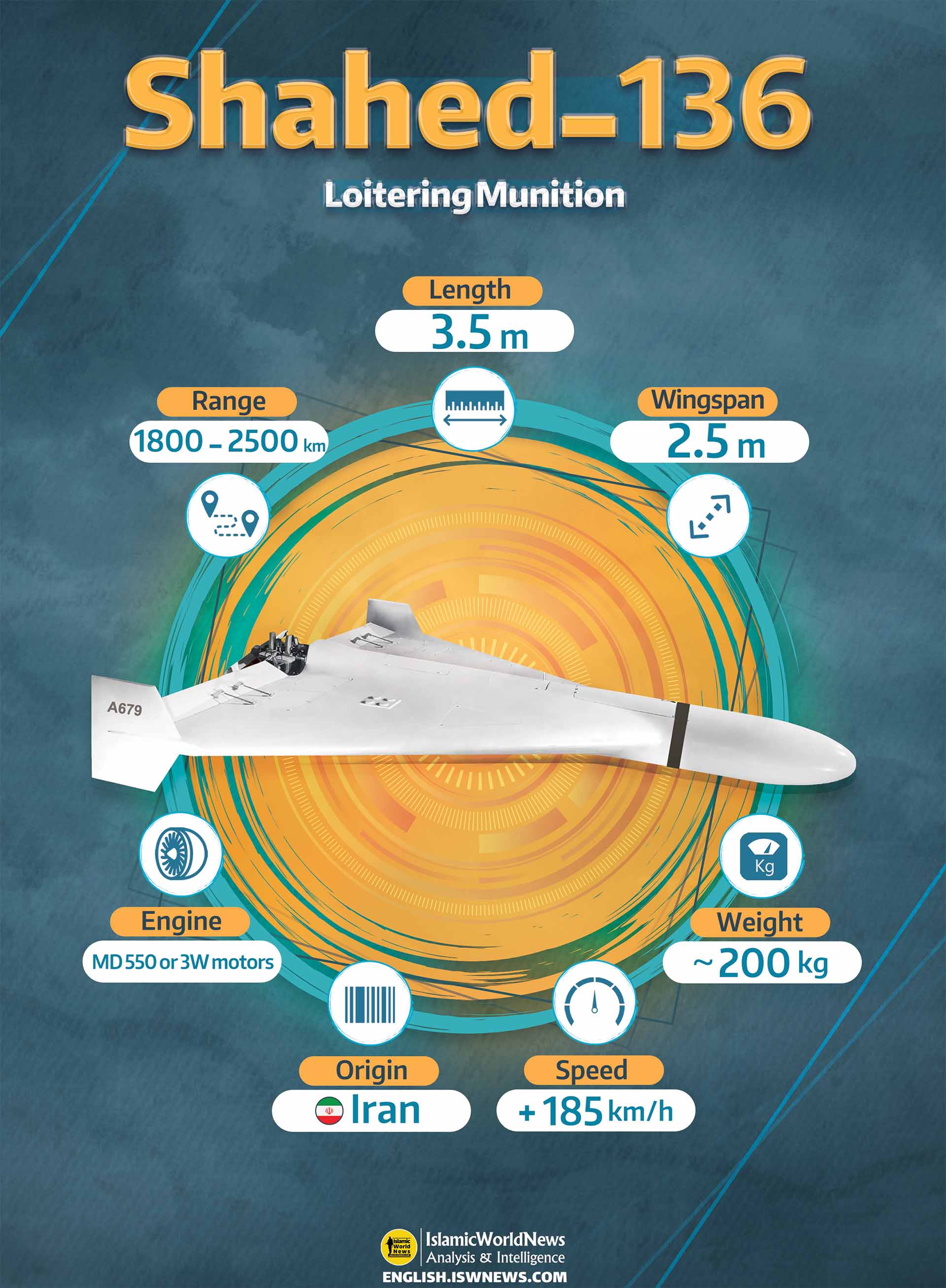
Shahed-136 suicide drone specifications: Length: 3.5 m Wingspan: 2.5 m Range: 1800 – 2500 km Weight: ~ 200 kg Speed: + 185 km/h Engine: MD 550 or 3W motors Origin: Iran
Shahed-136 suicide drone – click to view full size
The new version of the Shahed-136 suicide drone equipped with a jet engine
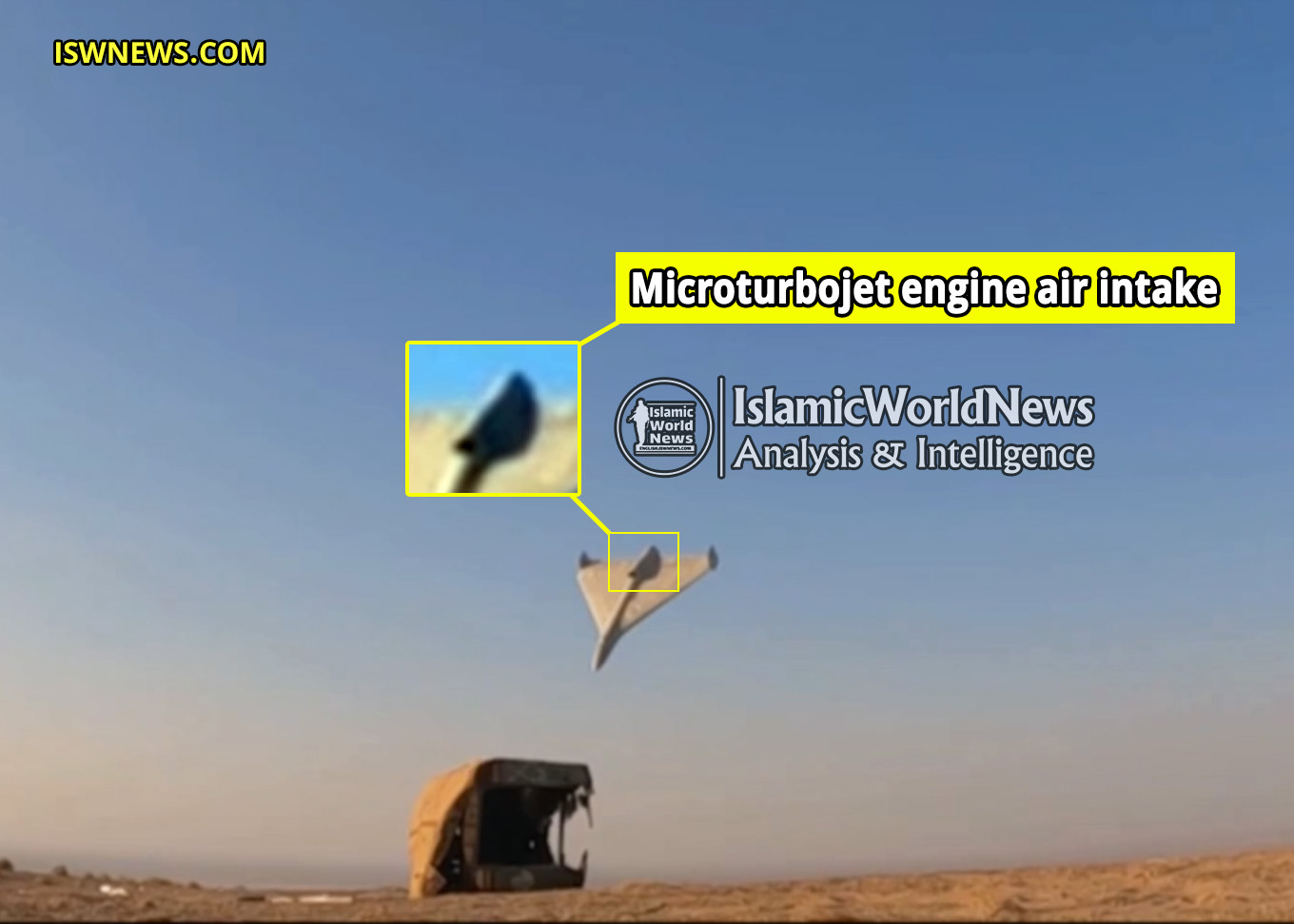
The new version of Shahed-136 suicide drone, which was unveiled recently, is equipped with a mini turbojet engine and has a higher speed and less noise than the basic version of Shahed-136. This new version was first unveiled in an Iranian documentary in October 2023 and is now known as Shahed-238.
A screen grab of the new version of the Shahed-136 suicide drone equipped with a micro-turbojet engine
The Shahed-136, despite its low radar cross-section (RCS), due to its piston engine, low speed, and distinctive loud noise, provided the enemy’s air defense systems and even ground forces with enough time to identify it. However, the use of a turbojet engine in the Shahed-238, while increasing the speed and reducing the noise, along with the drone’s specialized airframe, provides much better protection against heavy machine guns and anti-aircraft cannon, improving the overall success rate of the drone.
Air intake of the micro-turbojet engine in the new version of the Shahed-136 drone
The increase in the speed of the UAV and its very low cross-sectional area make this UAV practically a more dangerous version than the previous one, and the air defense systems that previously had problems in intercepting the Shahed-136, become more vulnerable to this new suicide drone.
More images of the Shahed-136 drone:
Click to view full size
Shahed-136 Loitering Munition posters in Persian, Arabic, Kurdish, Azeri, Russian for Social Media: