According to data obtained by ISWNews, this is the 92nd attack by Iraqi resistance groups on US assets in Iraq in 2022.
Read more:
Infographic: Iraqi Resistance Groups Operations Against the US in 2021
Infographic: Iraqi Resistance Groups

According to data obtained by ISWNews, this is the 92nd attack by Iraqi resistance groups on US assets in Iraq in 2022.
Read more:
Infographic: Iraqi Resistance Groups Operations Against the US in 2021
Infographic: Iraqi Resistance Groups

Imam Khamenei, the Supreme Leader of the Islamic Revolution, in his meeting with Mr. Vladimir Putin, the President of Russia and the accompanying delegation, emphasized the necessity of operationalizing the understandings and contracts between the two countries and considered long-term cooperation to the benefit of both countries. In this meeting, Imam Khamenei pointed out the necessity of increasing and mutual cooperation between Iran and Russia in global events and confronting Western sanctions, and added: “There are many understandings and agreements between the two countries, including in the oil and gas sector, which must be operational and followed up to the end. Your Excellency and our president are both action-oriented and follow-up, so the cooperation between the two countries should reach its peak in this period.”
After confirming the words of the President of Russia about the necessity of starting the Rasht-Astara railway line, he considered this work to complete the North-South transportation line and benefit both countries.
Imam Khamenei said about the events in Ukraine: “War is a harsh and difficult category, and the Islamic Republic is not at all pleased that ordinary people suffer from it, but in the case of Ukraine, if you did not take the initiative, the other side would cause a war with its own initiative. Westerners are completely against a strong and independent Russia. NATO is a dangerous entity and knows no boundaries if the way is open to them, and if it was not stopped in Ukraine, they would have started the same war some time later under the pretext of Crimea. Of course, today America and the West have become weaker than before, and despite the great effort and expense, the success of their policies in our region, including in Syria, Iraq, Lebanon, and Palestine, has been greatly reduced.”
He added: “It is necessary to be vigilant against the deception of the West. The Americans are both forceful and cunning, and one of the factors of the collapse of the former Soviet Union was being deceived in front of American policies, although Russia has maintained its independence during your highness’s period.”
The Leader of the Islamic Revolution, Ayatollah Khamenei, condemned the interference of the Zionist regime in the affairs of the region, praised the recent positions of the Russian President against the Zionists, and emphasized the position of the Islamic Republic of opposing a military attack on Syria and the need to prevent it, saying: “Another important issue in Syria is the occupation of the fertile and oil-rich areas east of the Euphrates by the Americans, which should be resolved by expelling them from that area.”
He further emphasized: “The Islamic Republic will never tolerate policies and programs that lead to the closing of the border between Iran and Armenia.”
Imam Khamenei also approved the policy of replacing national currencies in the relations between the two countries and using other currencies instead of the dollar, saying: “The dollar should be gradually removed from the path of global transactions, and this is possible gradually.”
In this meeting, Vladimir Putin also said about the war in Ukraine: “No one is in favor of war and the loss of lives of ordinary people is a great tragedy, but the behavior of the West made us have no choice but to react.”
Enumerating the factors and roots of the differences between Russia and Ukraine, especially the provocative actions of the West and the United States in recent years, including the coup in Ukraine, as well as NATO’s expansion policy despite their previous commitments to avoid any advance towards Russia, Putin said: “Some European countries said that we were against Ukraine’s membership in NATO, but we agreed to it under American pressure, which shows their lack of sovereignty and independence.”
The President of Russia considered the assassination of General Soleimani as another example of the evils of the Americans, and in another part of his speech, referring to Western sanctions against Russia, he said: “These sanctions are to the detriment of the West, and the result is problems such as the increase in oil prices and the food supply crisis. The US abuses the dollar tool to embargo and loot other countries, and this ultimately harms them and weakens global trust in this currency. Also, countries are going to use alternative currencies and we are designing new ways to use national currencies in the relations between the two countries.”
Confirming the position of the Leader of the Revolution regarding the Caucasus region, the President of Russia called the positions of the two countries on the Syrian issue, including the opposition to the military attack on the north of this country, completely compatible with each other and said: “The region east of the Euphrates should be under the control of the Syrian military forces. Iran and Russia are jointly fighting terrorism in Syria, and in the military field, we are also trying to develop cooperation between the two countries, as well as trilateral cooperation and maneuvers with China.”


The Supreme Leader of the Islamic Revolution, Imam Khamenei met and discussed with Turkish President Recep Tayyip Erdogan and his delegation about bilateral and regional issues.
Emphasizing the need to increase the cooperation between the two countries, especially in the commercial field, the leader of the revolution called the current amount of economic exchanges between the two countries much less than the existing capacities and emphasized: “This issue should be resolved in the negotiations between the presidents.”
He further pointed to the developments in the region and listed the Zionist regime as one of the main causes of discord between Islamic countries and emphasized that US and the usurping regime cannot stop the deep movement of the Palestinians and despite the favor of some governments to the Zionist regime, the nations are deeply against this usurping regime.
Imam Khamenei said about the recent developments in northern Syria and the news about Turkey’s military operation: “Maintaining the territorial integrity of Syria is very important, and any military attack in northern Syria will definitely harm Turkey, Syria and the entire region, and benefit terrorists, And the expected political action from the Syrian government will not be realized either. Terrorism must be opposed, but a military attack in Syria will benefit the terrorists, and of course the terrorists are not limited to a specific group.”
In response to the Turkish President’s request for Iran’s cooperation in fighting terrorist groups, the Leader of the Islamic Revolution said: “We will certainly cooperate with you in the fight against terrorism. We consider the security of Turkey and its borders to be our security, and you also consider the security of Syria to be your security. The Syrian issues should be resolved through negotiations, and Iran, Turkey, Syria and Russia should end this issue through dialogue. We have always defended your government in internal issues and against interference, and as you said, we are friends in difficult times and we pray for the Muslim nation of Turkey.”
Imam Khamenei further pointed to the issues of the Caucasus region and said: “We are pleased with the return of Karabakh to Azerbaijan. Of course, if there is a policy to block the border between Iran and Armenia, the Islamic Republic will oppose it, because this border is a communication route that is several thousand years old.
Congratulating on the holidays of Qurban and Ghadir Khom, the President of Turkey considered it necessary to unite the Islamic Ummah and increase the solidarity between Iran and Turkey and said: “Turkey has never been silent in the face of atrocities against Iran, and the brotherhood of Iran and Turkey must be expanded in all fields. We have always been and will be against unilateral sanctions against Iran. In Syria, terrorist groups are supported by heavy weapons from Western countries such as Germany, England, France and especially the US. We expect the Syrian government to start political processes. At the Astana summit, the Syrian issue is on the agenda, and we hope to achieve good results.”

On July 22, the US drones targeted a motorcycle in the village of Khalitan in the outskirts of Jindires town, during which one person was killed.
Confirming this news, the US CENTCOM announced the killing of a person named “Maher al-Aqal”, one of the five main leaders of ISIS. Also, during this attack, one of the people close to Maher al-Aqal was also seriously injured. No information has been released about the identity of the injured person.
It is said that Maher al-Aqal nicknamed “Abu Al-Bara al-Shamali” has been active as the governor of the Levant and responsible for the coordination and development of ISIS terrorist cells outside of Syria and Iraq.
It is worth mentioning that since September of last year, the US coalition has carried out at least five drone attacks against the field commanders of the militants and ISIS, as a result of which five alleged Al-Qaeda commanders and one ISIS commander were killed.
Read more:
Biden: ISIS leader killed by US attack in Syria
13 killed in US invasion of northwestern Syria + Video
ISIS confirms Abu Bakr al-Baghdadi death


On July 17, the Turkish Ministry of Defense announced that three Turkish servicemen, Omur Ertugrul Sari, Muhammed Mustafa Koca and Murat Yildirim were killed during Operation Claw Lock in northern Iraq.
Thus, the number of casualties of the Turkish army in Operation “Claw Lock”, which began in the morning of April 18 increased to 36 servicemen.
Read more:
Four Turkish soldiers killed in northern Iraq
Two Turkish soldiers killed in northern Iraq
One Turkish servicemen was killed in northern Iraq


Britain’s Ministry of Defence on Thursday said one of its warships on patrol in the Persian Gulf earlier this year seized the arms shipment en route to Yemen.
According to Britain’s Ministry of Defence claims, the HMS Montrose warship with the support of attack helicopters and the US Navy USS Gridley destroyer, succeeded in discovering and confiscating Iranian weapons shipments in the smugglers’ speedboats in the morning of January 28 and February 25, 2022 en route to Yemen.
The seized weapons included 358 surface-to-air missiles and 351 land attack cruise missile engines with a range of 1,000 km. The British Ministry of Defense believes that these weapons are the same that Ansar Allah used in recent years attacks on Aramco’s facilities in Saudi Arabia and last year’s attacks on the UAE.
The British authorities have considered Iran’s action as a violation of United Nations Security Council Resolution 2216 and demanded compliance with international law obligations and maintaining order in the seas.
Iran also responded to this late news and rejected the Britain’s claim.
Nasser Kanani, an spokesman for the Iran’s foreign ministry announced the Britain’s claim as “baseless” and slammed the UK of being complicit in the war in Yemen.
Nasser Kanani said: “By continuously selling advanced weapons to the self-proclaimed military coalition against the defenseless people of Yemen, Britain has been a partner in the war and aggression against Yemen.”
The United States, Saudi Arabia, and now the United Kingdom have repeatedly claimed to seize Iranian weapons shipments in the Red Sea and other international waters, but these claims are one-sided and have not been confirmed by Iran and Yemeni authorities. On the assumption of the correctness of sending weapons in this way, it should be said that in the situation where all the eastern and western countries are supplying all kinds of weapons to Iran’s regional enemies, including the Israeli regime and the member countries of the Saudi coalition; sending military aid to Yemen by Iran seems to be a reasonable and logical action.


It is said that this young man, Farid Mustafa, works for the Baath Party in Hader and was threatened by Israel before.
Israel’s attacks against Syria and the killing the Syrian citizens are taking place while international organizations and the United Nations have closed their eyes to the aggressions and crimes of the Israeli regime.
It should be noted that on July 2, the Israeli regime also attacked some farms in south of Tartus, injuring two civilians and causing material damage.
Read more:
Israel aggression on Syria’s Tartus
Israeli missile attack south of Damascus
Israeli airstrikes on Damascus, Three people were killed
Infographic: Israeli air and missile strikes against Syria in 2021
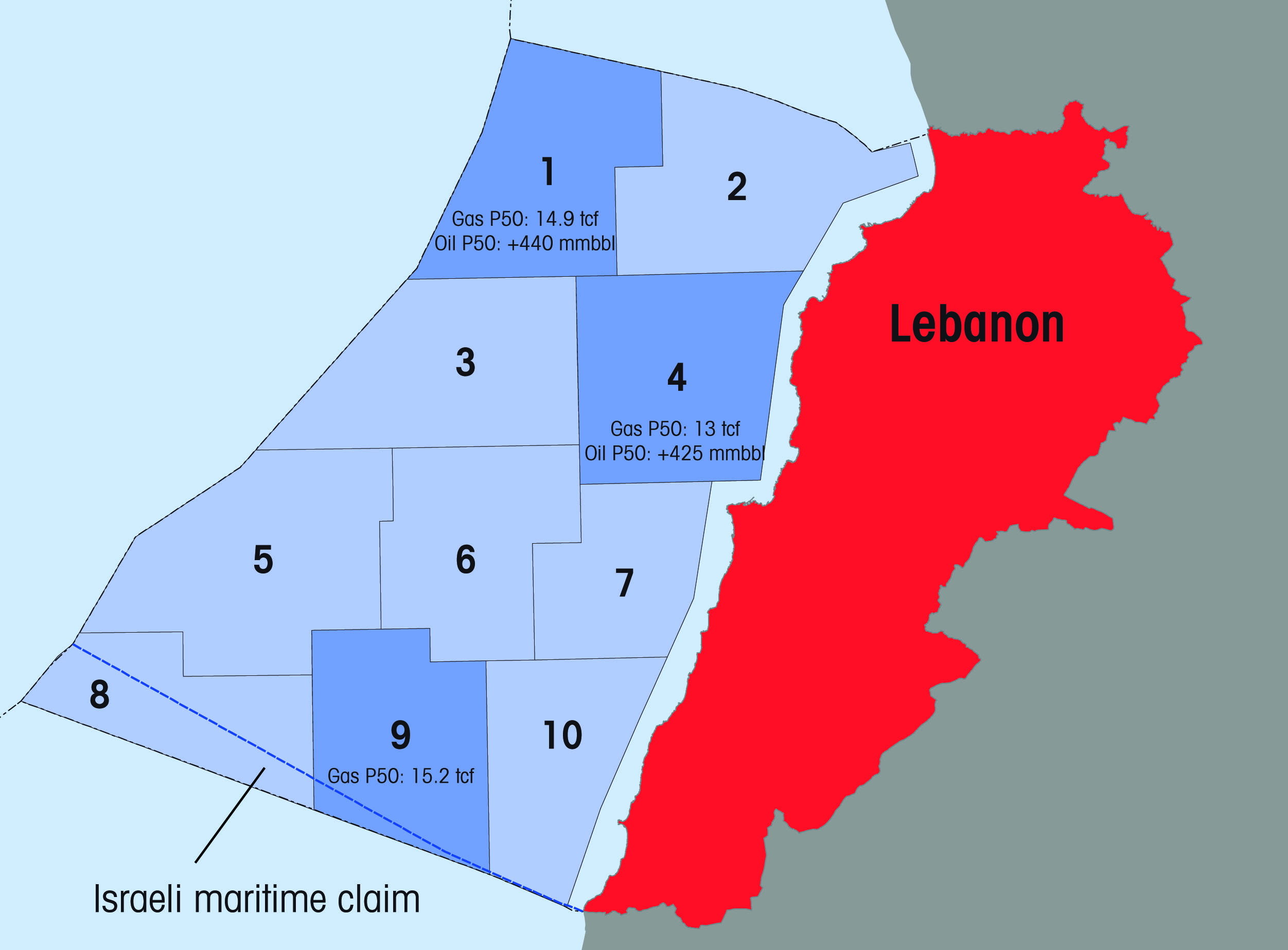
On July 2, the Israeli army claimed to have intercepted and destroyed three drones near the Karish gas field located in the north of occupied Palestinian waters in the Mediterranean Sea. One of these drones was destroyed by a warplane and the other two were destroyed by missiles fired by a warship.
In response to this claim, the Lebanese Islamic Resistance only confirmed the sending of three reconnaissance drones to the disputed area with the Zionist regime in the Mediterranean Sea and did not mention any other details of this matter. Hezbollah considered this operation successful and announced that these drones carried out their mission in a good and appropriate way and the desired message was delivered to Israel.

The dispute between Lebanon and the Zionist regime is over the exclusive economic zone (EEZ), as well as the exploration of natural gas and oil energy in parts of these areas. Through the US mediation, Israel is trying to directly negotiate with the Lebanese government to send drilling ships and harvest these common resources, but Lebanon’s Hezbollah considers these actions as occupation and aggression against Lebanon and has announced that it will confront Israel’s activities in this area. Therefore, sending drones to Karish Field is a kind of Hezbollah’s warning to Israel for recent activities in the eastern Mediterranean Sea.
Read more: Turkey and Israel, Europe’s New Energy Alternative

In the early hours of July 2, the Israeli warplanes fired several missiles at Hamidiyah area in south of Tartus. Two civilians reportedly were injured by the attacks.
According to the Syrian military source, “At around 06:30 local time on Saturday, the Israeli enemy fired several missiles from the direction of the Mediterranean Sea, west of Tripoli, Lebanon, and attacked several chicken farms in the suburbs of Hamidiyah town, located in the south of Tartus. This attack resulted in the injury of two civilians, including a woman, and caused material damage.”
Read more:
Israeli missile attack south of Damascus
Israeli airstrikes on Damascus, Three people were killed
Infographic: Israeli air and missile strikes against Syria in 2021


1- Taiz:
Following the Yemeni ceasefire talks mediated by the United Nations, the military committee of the Yemeni Salvation Government agreed to the UN plan to reopen two routes in Taiz. The first route is the northeastern road of Taiz (Saleh-Sanaa) and the second route is the southwestern road of Taiz (Lahij-Aden).
2- Marib:
Abdul Razzaq al-Baqma, one of the commanders of Al-Yaman al-Saeed forces (under the command of Saghir bin Aziz), was assassinated by unknown gunmen on the way to Wadi Obaida.
3- Al-Hudaydah:
– The Saudi-led forces violated the ceasefire 144 times in the past 48 hours in the province.
– Tariq Saleh, after meeting with the military commanders of the Tihamah forces, announced their full accession to the forces under his command.
Read more: Tariq Saleh’s Defeat; Investigating Movement and Activities of Tariq Saleh in Yemen
4- Shabwa:
The Golf Itos tanker left the shores of Shabwa province for a possible destination to the UAE after loading more than 400,000 barrels of crude oil (worth $ 44 million) from the port of Rudum.
5- In a telephone conversation with Mehdi al-Mashat, chairman of the Yemeni Supreme Political Council, Iranian President Ibrahim Ra’isi stressed Iran’s support for lifting the siege and achieving full peace in the country. Al-Mashat also appreciated Iran’s support and positions towards Yemen and Palestine and called for strengthening relations and developing cooperation between the two countries.

According to Ahmad Hosseini, spokesman for the Ministry of Defense of the Islamic Republic of Iran, the Zuljanah satellite carrier is in three phases. This satellite carrier has two phases of solid propulsion and one phase with liquid propulsion and its launch has been done with the purpose of suborbital. Also, the third phase of the development of this satellite carrier has started by using the information obtained from this launch.
Read more: ‘Raafe’ rocket engine, the most advanced Iranian first stage solid-fueled engine + Video
The first launch of Zuljanah satellite carrier was made on February 1, 2021 from the Semnan Space Center. The main mission of this satellite carrier is to place a satellite with a weight of about 220 kg or 10 lighter satellites with a weight of 20 kg into 500 km orbit. The length of Zuljanah is 25.5 meters, its diameter is 1.5 meters and its weight is 52 tons.
After Safir and Simorgh satellite carriers, Zuljanah is the third Iranian non-military satellite made in the country. Due to its agility and low preparation time, Zuljanah is mentioned by some western experts as the first subcontinent missile of Iran!
Iran’s satellite program, like other Iranian indigenous capabilities, has always been criticized by Western countries, especially the United States, for alleged violating UN Security Council resolutions. They see Iran’s advances in the field of Aerospace Science as a significant concern for the proliferation of nuclear weapons!
Read more:
Iran successfully launches second military satellite into orbit + Video
The Successful Launch of Iran’s First Military Satellite

The attacks took place on June 22, 24 and 25. According to available information, these attacks did not cause severe damage.
The Sulaymaniyah Counter-Terrorism Directorate also confirmed the rocket attack, saying that the gas field had been targeted by six rockets.
Qubad Talabani, the Deputy Prime Minister of the Kurdistan Region, visited the Kormor gas field after the rocket attacks and visited different parts of the complex. “We seek to save the lives of the field staff and work with the Iraqi federal government to prevent the rocket attacks on Kurdistan Regional Government facilities,” he said.
No group has claimed responsibility for the attacks, but some sources claimed that Iraqi resistance groups were responsible for the rocket attacks. On the other hand, Jafar al-Husseini, a spokesman for the Kataib Hezbollah, blamed groups linked to the Turkish intelligence service for the attacks. He called on the popular mobilization organization (PMU) to identify and detain these individuals and provide them to the Iraqi judiciary.
The Iraqi Resistance Coordinating Committee also called the attack on some companies in Sulaymaniyah a sabotage by foreign parties hostile to the Iraqi people.