Two other Turkish soldiers were also wounded in northern Iraq and taken to medical centers, according to the Turkish Defense Ministry.
On May 21, a Turkish soldier named “Tunahan Erbashi” was killed by an explosive device planted by PKK militants in northern Iraq.
Thus, the number of casualties of Turkish Army in Operation Claw Lock, which began on April 18, increased to 17 personnel.
It should be noted that on the morning of April 18, Turkey has launched a new ground and air cross-border offensive named ‘Operation Claw Lock’ against Kurdish militants in northern Iraq. Turkish military has conducted dozens of military operations against PKK militants in northern Iraq in recent years.
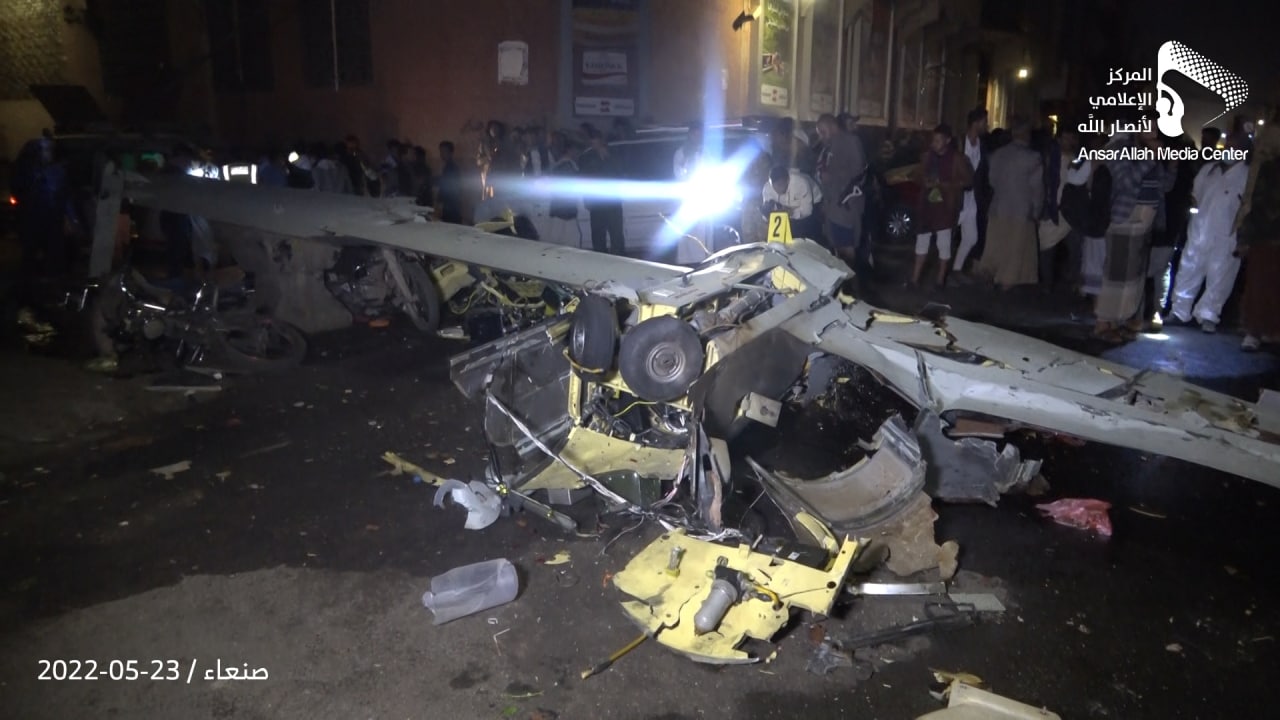
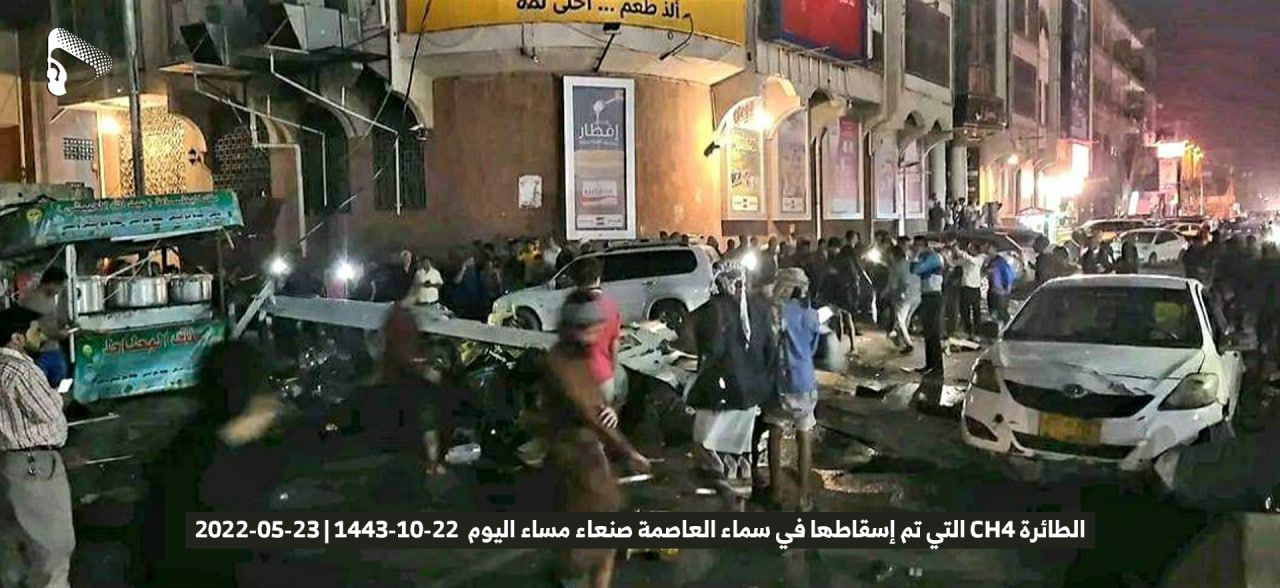
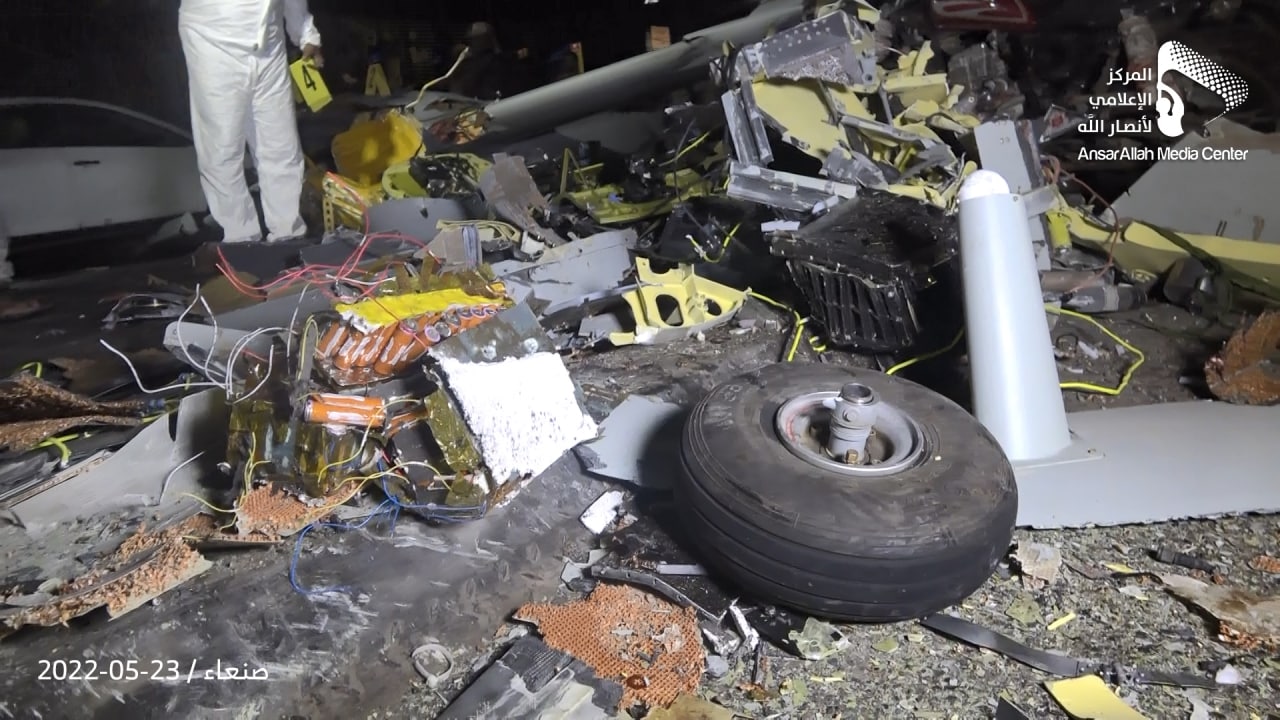
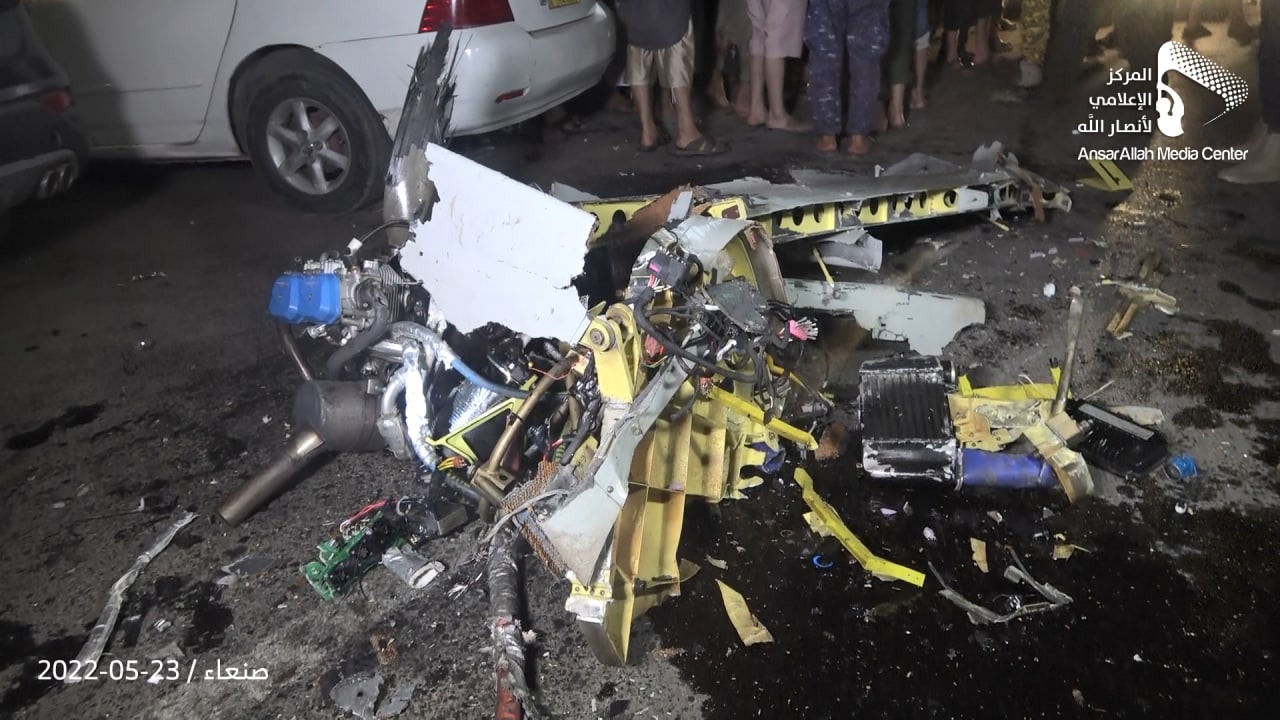
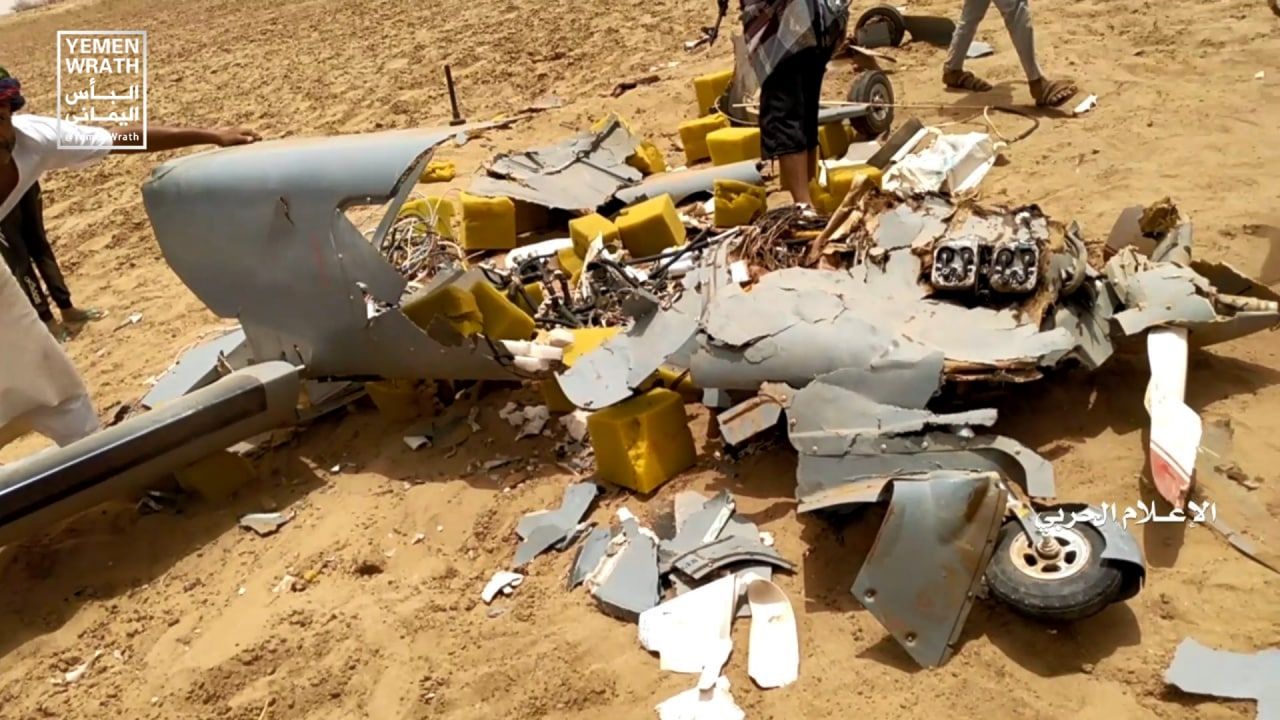
Despite the ceasefire agreement announced by the United Nations and 50 days after its start, the Saudi coalition continues to conduct military and reconnaissance flights over Yemen. In response to this blatant violation of the ceasefire agreement, Ansar Allah air defense systems shot down a Saudi coalition drone in the skies over the areas under its control for the third time since the agreement was implemented.
This is the 16th CH-4 drone to be shot down by Ansar Allah since the start of war in Yemen.
It should be mentioned that three civilians lost their lives and three others were injured when the drone carcass fell in a populated area in the city of Sanaa.
A video of the wreckage of the Saudi coalition CH-4 drone in the city of Sanaa, which resulted in the martyrdom of three civilians and the wounding of three others.The wreckage of the Saudi coalition CH-4 drone in the city of Sanaa
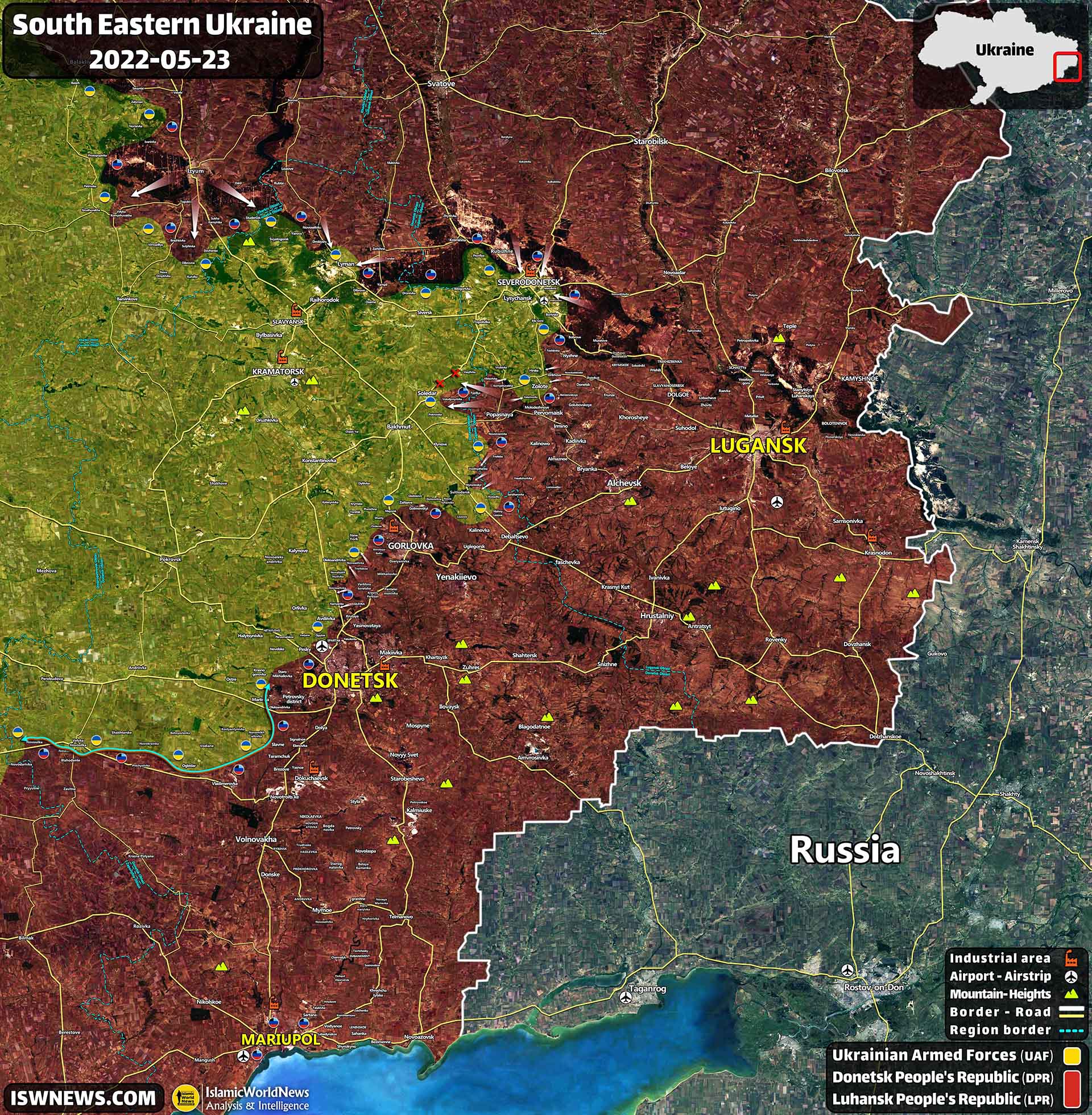
In Donetsk Oblast, on the Mariupol front, on May 30, with the surrender of the last Ukrainian troops to the Russian army in the Azovstal industrial zone south of Mariupol, this important port city came under full control of Russia and its allies. The complete capture of the city would allow the Russian army and its allies to transfer troops from this town to other fronts and increase focus on advancing elsewhere.
In the north of Donetsk, sporadic clashes continue along the Gorlivka and Donetsk front lines. Field changes in this axis are slow. In recent weeks, Russian and Donetsk forces have made minor advances along this axis. The capture of New York near Gorlivka and the capture of Avdiivka near Donetsk are among the main objectives of the Russian military operation on this axis.
In the northeast of Gorlivka, Russian and its allies entered the Donetsk oblast from the Luhansk oblast and the Troitske and took control of the Myronivskyi area. The purpose of advancing on this axis is to capture Svitlodarsk and the surrounding areas of the lake and to secure the city of Gorlyuka from the northeast.
To the west of Donetsk, sporadic clashes continue along the front lines from Mariinka to Velyka Novosilka. Last month, the Russian army and Donetsk (DPR) forces launched an unsuccessful offensive to seize the Mariinka region. Currently, most of the clashes continue on the Mariinka, Novomykhailivka, Ogledar and Velyka Novosilka axes between Russian and Ukrainian forces. It seems that the Russian army and its allies do not have a serious intend to make progress on this axis at the moment, and clashes are taking place on this axis to keep Ukrainian forces busy.
In the Luhansk oblast, clashes and field changes are taking place more intensely, and the completion of work on this oblast seems to be a priority for the Russian army and its allies. Now, 89 days since the start of the war in Ukraine, 95 percent of Luhansk oblast is under the control of the Russian army and its allies, leaving only the city of Severodonetsk and the surrounding area. Hence, the capture of the important and industrial city of Severodonetsk is the main and ultimate goal of the Russian army and Luhansk (LPR) forces in this area.
It should be noted that after the withdrawal of the Russian army from the northern fronts of Ukraine, the Russian army announced its focus on the liberation of the southeastern regions of Ukraine, and in particular the Donbas region. Since then, we have witnessed a change in tactics in the way the Russian army is advancing. Under the new tactic, key areas and areas where face fierce resistance by Ukrainian forces are bypassed by Russian forces and its allies, forcing the defensive forces to retreat from the area by creating an quasi-siege and increasing pressure. This tactic is clearly visible in the northern regions of Donetsk oblast and the Severodonetsk front in areas such as Popasnaya, Zolote, Lyman, etc.
On the Popasnaya front, in recent days and weeks, Russian forces and its allies have been able to expand their contact lines and reach the important town of Soledar from the west. With the advance on this axis, the logistic route of the Ukrainian forces from Bakhmut to the city of Severodonetsk was practically cut off. Ukrainian forces also came under a quasi-siege in the Zolote area. On the Lyman-Izyum axis, progress is slow, but Russian forces have expanded frontlines around Izyum over the course of a few weeks, advancing from village to village. And operations to capture the town of Lyman have also begun. According to the tactics adopted by the Russian army, it seems that all the progress made on these axes is made with the ultimate goal of completing the siege of the city of Severodonetsk.
On the ciity of Severodonetsk front, heavy fighting continues around and at the entrances to the city. In recent weeks, Russian and LPR forces have been able to approach the city from both the northern and southern axes. In south of the city of Severodonetsk, clashes continue in the areas of Metolkine, Voronove and Syrotyne. On the northern front of Severodonetsk, heavy clashes continue at the northern entrances to the city. The Russian offensive is focused on the four main roads leading to the city. The Russian military has also blown up the main bridge between Severodonetsk and Lysychansk, with the aim of cutting off Ukrainian forces in the city of Severodonetsk from outside the city. The complete capture of the city of Severodonetsk plays an important role in determining the future of the battles in the southeastern regions of Ukraine.
According to the progress made until the 89th day of the war, about 55% of Donetsk oblast and 95% of Luhansk oblast have been captured by the Russian army and its allies.
On the morning of May 16, Maj. Gen. Mohammad Hossein Bagheri, Chief of General Staff of the Iranian Armed Forces, headed a high-level military delegation at the official invitation of Tajik Defense Minister Col. Gen. Sherali Mirzo to Dushanbe.
The visit was aimed at implementing the agreement reached by the Joint Commission on Military Cooperation between the two countries and meeting with senior Tajik political and military officials.
Referring to the policy of the Islamic Republic of Iran to develop relations with its neighbors and strengthen military and defense cooperation with Tajikistan, General Bagheri said: “The Islamic Republic of Iran and the Republic of Tajikistan are in a geopolitical region and the events of both countries will affect each other. In order to improve the security and peace of both countries, we will have bilateral meetings with military and political officials during our visit, and in the future we will see more cooperation and interaction at all levels of military defense between the two countries.”
During the visit, General Bagheri inaugurated the production and assembly plant for the Iranian Ababil-2 tactical drone and symbolically handed over the plant key to the Tajik Defense Minister.
In the opening hall, images of other drones can be seen, including the Iranian Fotros drone, the Chinese Wing Loong 2 drone and the Russian Orion drone, for which there is no explanation for their production or use.
“Ababil-2” is one of the reconnaissance and suicide drones made by Iran Aircraft Manufacturing Industries Corporation, which has an operating range of 100 km with a flight duration of 75 to 120 minutes.
Infographic of Iranian Fotros UAV in the opening hall of Ababil-2 production lineIranian Chief of Staff symbolically handed over the plant key to the Tajik Defense MinisterIranian and Tajik officials visit Ababil-2 UAV production line hall
PS: One of the interesting sidelines of the inauguration of the Ababil-2 drone production line in the Tajik capital, Dushanbe, was the posters mounted on the wall of one of the hangars. These posters shows Iranian Fotros drone, Chinese Wing Loong 2 drone and the Russian Orion drone. And interestingly, the poster that General Bagheri is watching from a distance is the poster of the Iranian Fotros drone, which was designed and published by the “Islamic World News” two years ago!
Ahrar Sinjar group claimed responsibility for the attack.
According to preliminary information, two Turkish soldiers and a Turkish Army contractor reportedly were killed in the attack.
Darman Tawous Malak, the spokesman of “Ahrar Sinjar” group stated: “We warned the Turkish occupiers of the consequences of continuing the repeated invasions of Iraqi territory and its safe heavens, and our operation was carried out in response to the recent aggression of Turkey on the outskirts of Kirkuk and Dohuk.” He added: “We targeted the Turkish occupation base in Ba’ashiqa with two drones. The two drones hit their targets with high accuracy and according to preliminary information, inflicted material and human losses on the Turkish occupiers.” Darman Tawous Malak emphasized: “Our operation will continue as long as the occupiers continue their acts of savagery and aggression, and we confirm what we have said before, that we consider the attack on every part of Iraqi territory as an attack on Sinjar.”
The drone is the fourth Turkish Vestel Karayel combat reconnaissance drone to be shot down by Ansar Allah during the Yemeni war.
Ansar Allah has already destroyed three other Karayel drones in January 2, 2020 in the al-Salif area of al-Hudaydah province, January 6, 2021 in the al-Mahashimah area of al-Jawf province and in March 7 in the al-Maraziq area of al-Jawf province.
Following the ceasefire announced on Monday, May 16, the remnants of the Azov neo-Nazi battalion and the Ukrainian army, which had been under siege for a month in the Azovstal plant, surrendered to the Russian army. According to the Russian Ministry of Defense, during this period, 2,439 members of the Ukrainian army surrendered to the Russian army. Also, according to available information, a total of about 500 civilians have been evacuated from the Azovstal area in the past month.
Earlier, about 1,000 Ukrainian troops were captured during the Battle of Mariupol as Ukrainian forces tried to break the siege of the Illich plant in the north of the city. Thus, in total, due to the capture of about 3,500 Ukrainian troops in the city of Mariupol and the loss of between 500 and 1,000 servicemen for the Ukrainian forces, about 4,500 Ukrainian troops were present in the city after the siege of Mariupol.
The main and final battle for the capture of Mariupol began on February 24, and with the expansion of the advance of Russian and Donetsk (DPR) forces around Mariupol, the city was completely besieged from March 1. On March 12, the first area on the eastern outskirts of Mariupol was captured by Russian and DPR forces, and fighting was dragged into Mariupol city. The advance of the Russian forces and the DPR continued in the neighborhoods of Mariupol until finally on April 20, all areas of Mariupol except the Azovstal plant came under the control of the Russian army. After that, on the orders of Russian President Vladimir Putin, large-scale ground attacks to seize Azovstal were almost stopped due to the achievement of the main goal which was taking the control of the city and to prevent an increase in Russian Army casualties. Over the past month, most of the attacks have come in the form of artillery and air strikes, as well as minor advances in some areas, to pressure Ukrainian forces to accept surrender. Finally, due to increasing pressure from the Russian military and the deteriorating situation of Ukrainian forces in Azovstal, the Ukrainian Armed Forces agreed to a ceasefire and surrender on Monday, May 16th. Following the completion of the surrender operation and the withdrawal of Ukrainian troops from the Azovstal area on 20 May, the Azovstal came under the control of Russian and DPR forces after an 82-day siege, resulting in the complete capture of Mariupol city by Russia.
The industrial city of Mariupol was one of the most important port cities in Ukraine, which played an important role in the economy of this country. In recent years, the city of Mariupol, along with the city of Severodonetsk, has been used as the main headquarters of the Ukrainian army against Donetsk and Luhansk. Therefore, the complete capture of this city is a great blow to the Ukrainian Armed Forces.
According to a statement from the Syrian Ministry of Defense, “At about 23:01 local time on Friday, the Israeli army fired several surface-to-surface missiles from the occupied Golan Heights at south of Damascus. The attack has so far resulted in the martyrdom of three Syrian soldiers and other material damage.”
Als, a civilian was wounded when a wreckage of one of the downed Israeli missiles landed on the outskirts of the Al-Rawdha Hotel in the Zainabiya district of Damascus.
It is also said that as a result of this attack, a large fire broke out near Damascus International Airport and two flights of this airport were delayed.
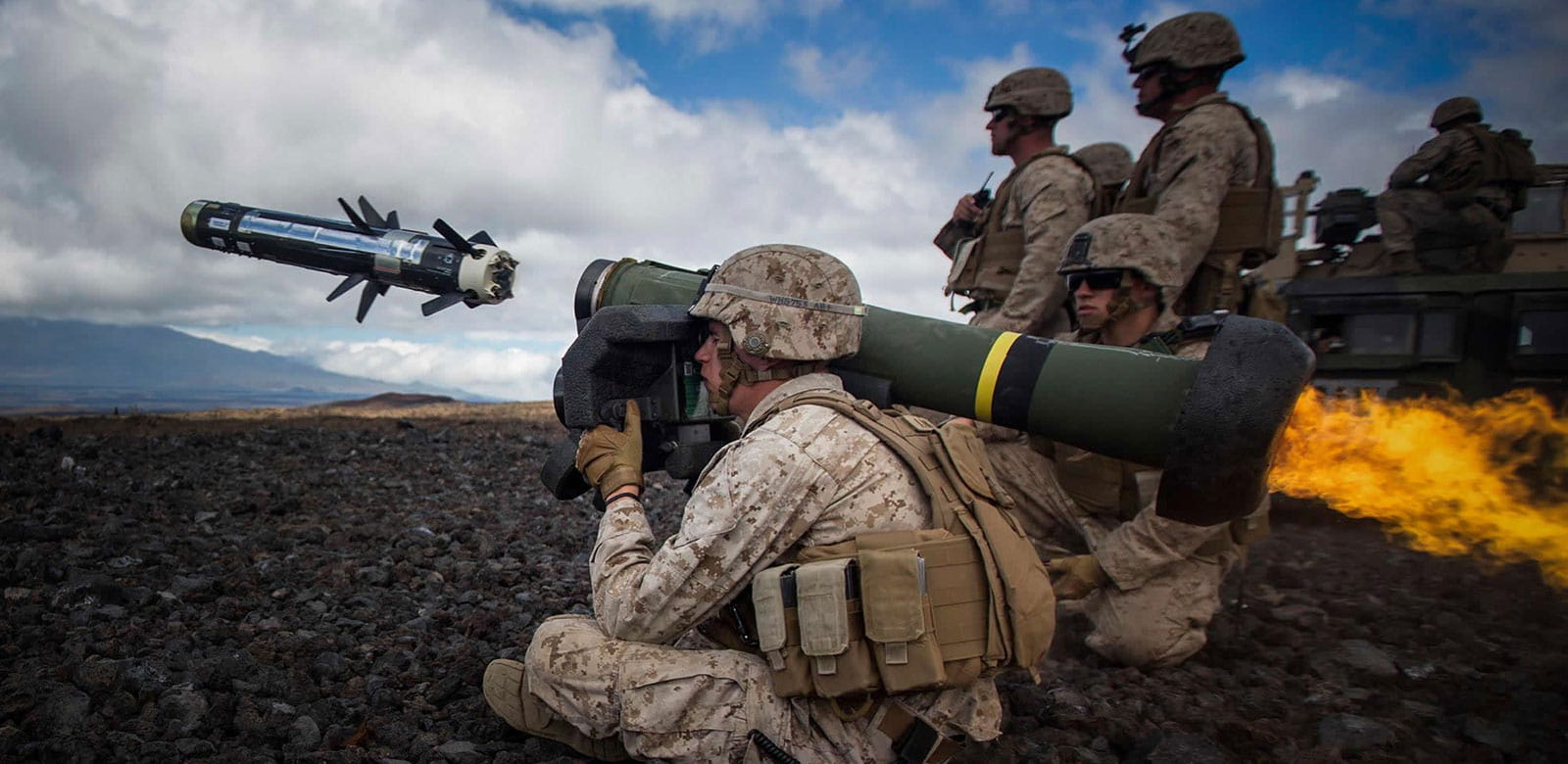
The gunner carries a reusable Command Launch Unit (CLU), which is the targeting component of the two-part system. The CLU has three views which are used to find, target, and fire the missile and may also be used separately from the missile as a portable thermal sight. Infantry are no longer required to stay in constant contact with armored personnel carriers and tanks with thermal sights.
The CLU weighs 6.4 kg and uses passive infrared guidance to fix and track targets. The day sight is equipped with 4x magnification and the infrared-imaging night sight features 4x and 9x magnification.
Both the gunner and the ammunition bearer carry the Launch Tube Assembly, a disposable tube that houses the missile and protects the missile from harsh environments. The tube has built-in electronics and a locking hinge system that makes attachment and detachment of the missile to and from the Command Launch Unit a quick and simple process.
The Javelin measures roughly 1.2 m in length, 127 mm in diameter, and weighs 22.1 kg, with some minor differences depending on the variant. The missile carries a single 8.4 kg tandem-charge, high-explosive antitank (HEAT) warhead. This round utilizes an explosive shaped charge to create a stream of superplastically deformed metal formed from trumpet-shaped metallic liners. The result is a narrow high velocity particle stream that can penetrate armor. It has a qualified maximum range of 2,500, though the U.S. notes that it has “demonstrated performance to 4,000 meters in most operational conditions.”
The Javelin employs a soft launch mechanism. This means when an operator pulls the trigger, an initial low-g motor ejects the missile from the firing tube. Once it exits the firing tube, the missile then ignites its main flight motor to propel it toward its target. The Javelin’s soft launch mechanism prevents missile exhaust from hitting the operator, enables fires from inside confined spaces and buildings, lowers recoil for shoulder-launched fires, and minimizes launch smoke trails that indicate launch locations and invite counterfire.
Operators can select to use the weapon in top attack mode or direct attack mode. Top attack mode is designed to target tanks; the missile flies upward to reach a peak altitude of 150 m before striking the tank’s more vulnerable roof. The direct attack mode is designed to engage fortified targets, bunkers, buildings, and helicopters. In this mode, the missile flies relatively straight to its target at a peak altitude of 50 m.
Early versions of the Javelin had a range of 2000 meters, which was later increased to 2500 meters. Javelin has been used in more than 5000 conflicts in Afghanistan and Iraq. This system is supposed to remain in service until 2050. The United States has been buying Javelins at the rate of about 1,000 a year. The maximum production rate is 6,480 a year, though it would likely take a year or more to reach that level. The delivery time is 32 months; that is, once an order is placed, it will take 32 months before a missile is delivered.
FGM-148 Javelin specifications: Length: 1.1 m Barrel length 1.2 m Diameter 142 mm Total system weight: 22.3 kg Warhead weight: 8.4 kg Tandem-charge HEAT Penetration rate: 800 mm RHA Effective range: 75 to 2500 m Target discovery range: 4000 m Guidance system: Infrared homing Origin: U.S.