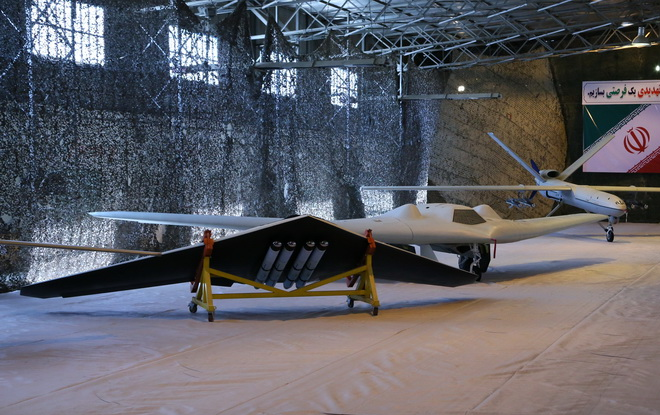
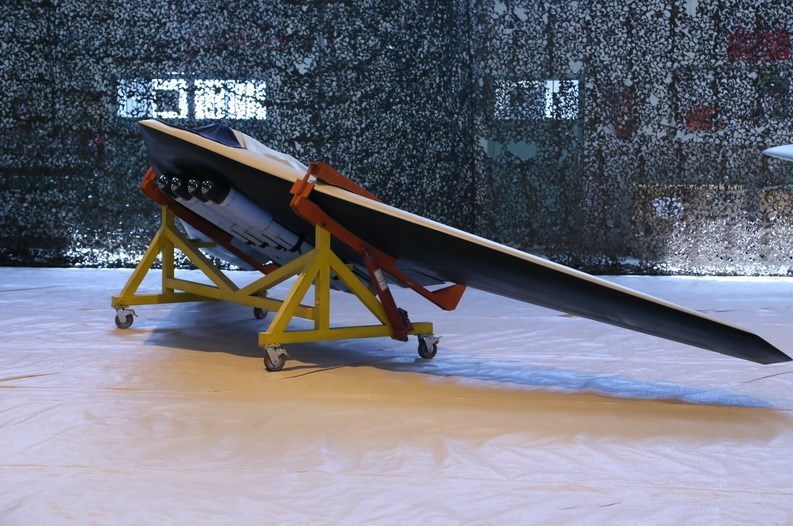
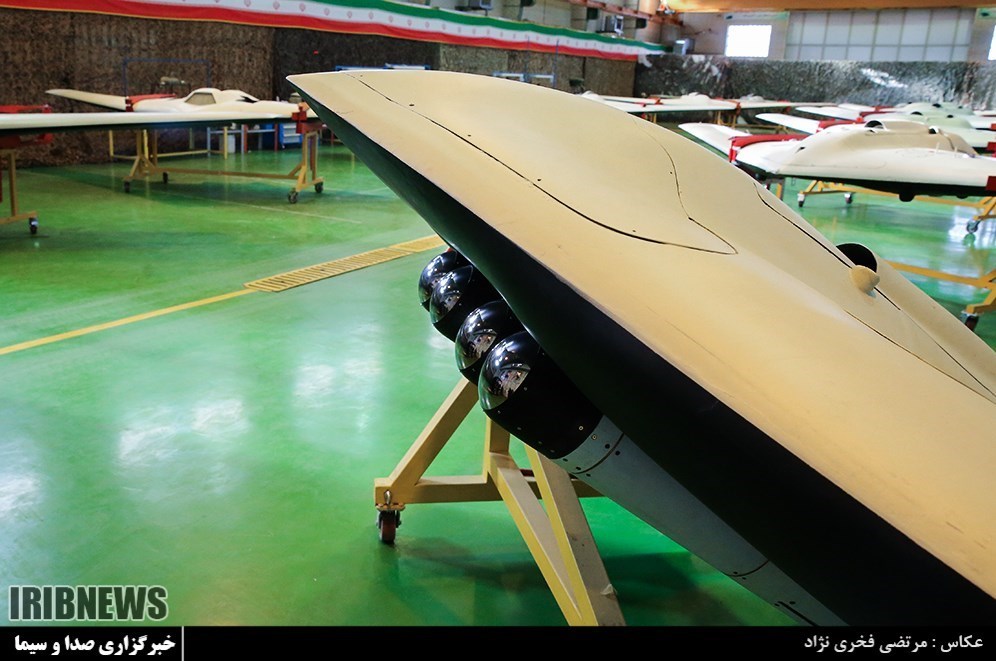
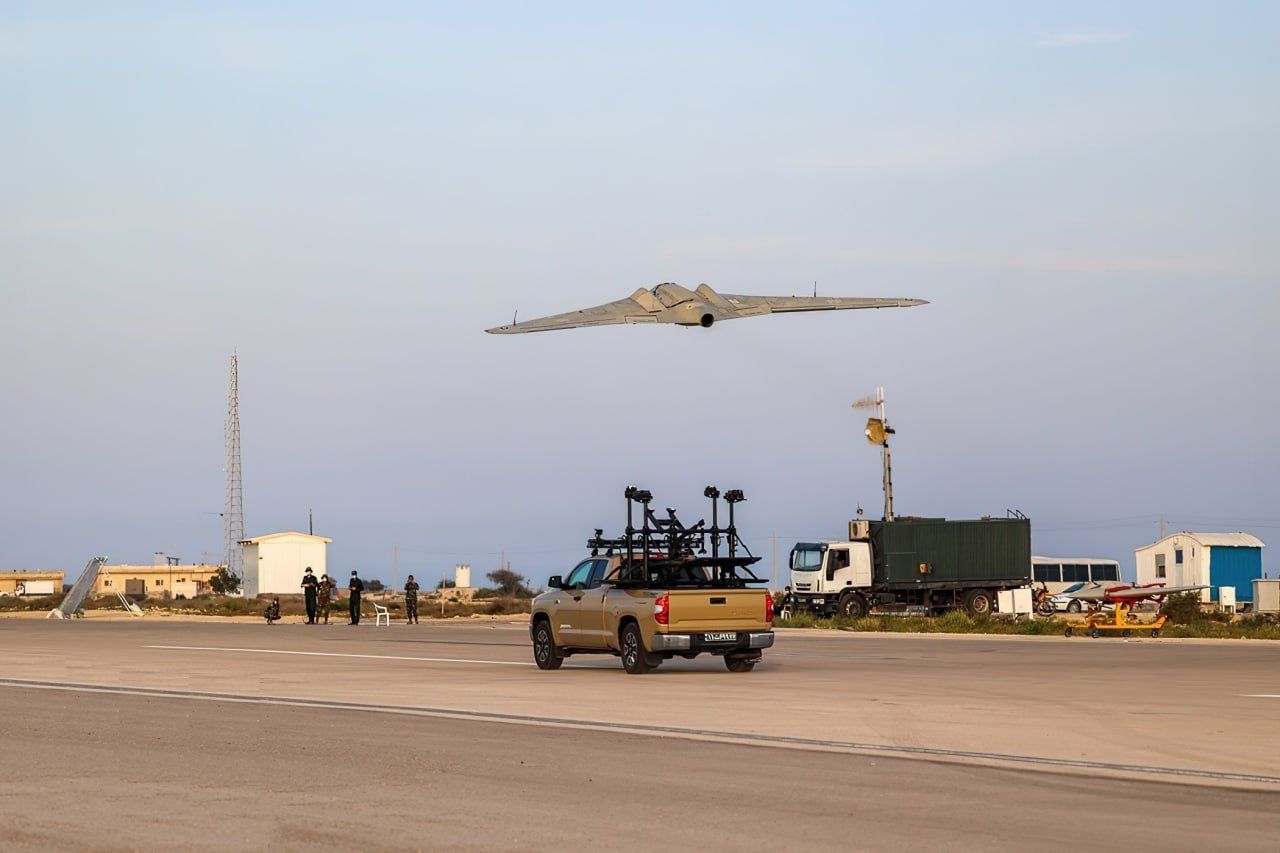
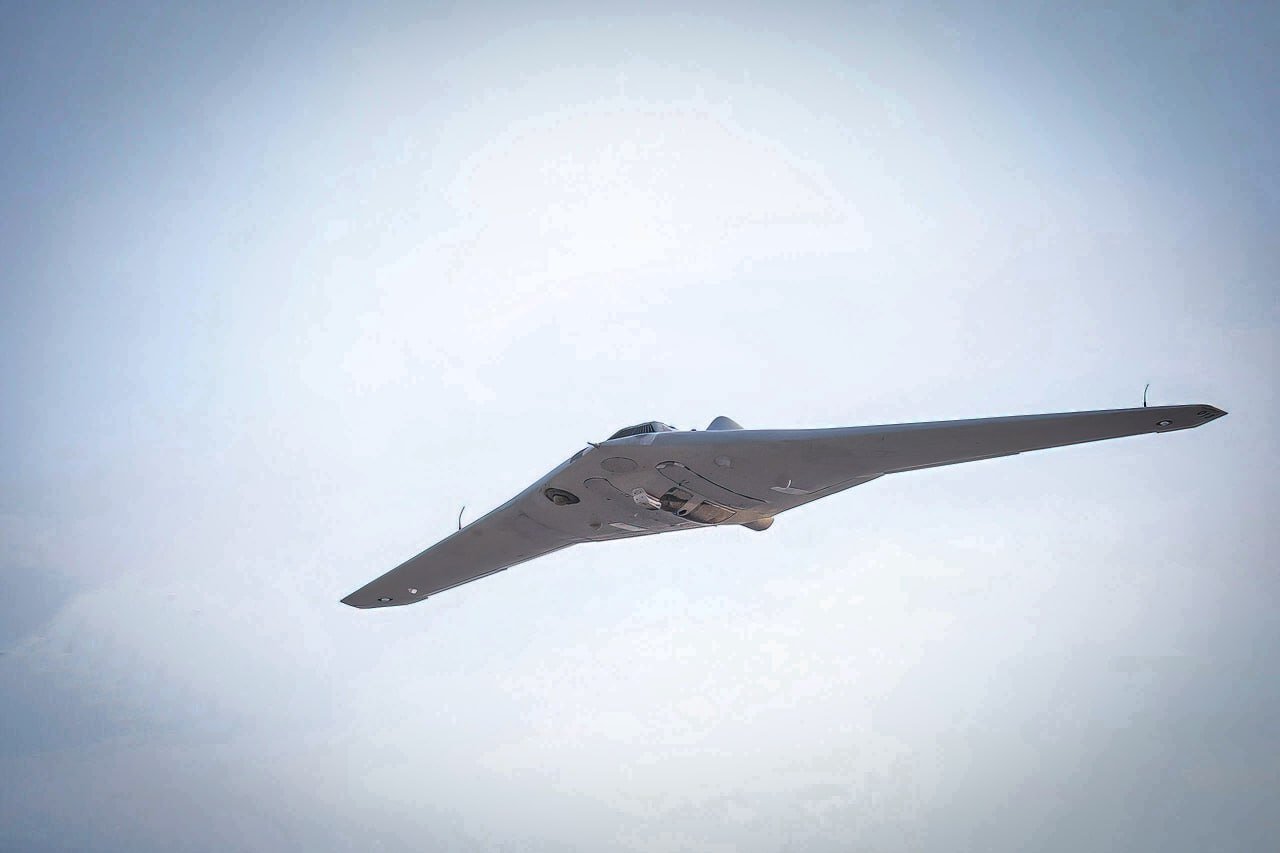
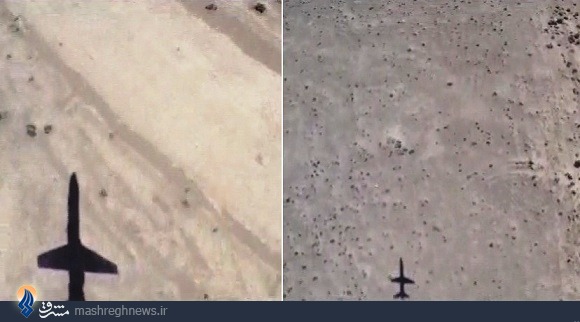
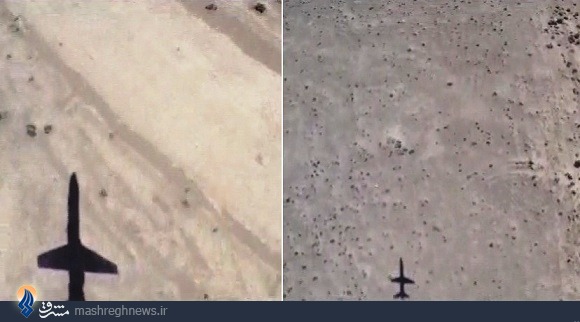
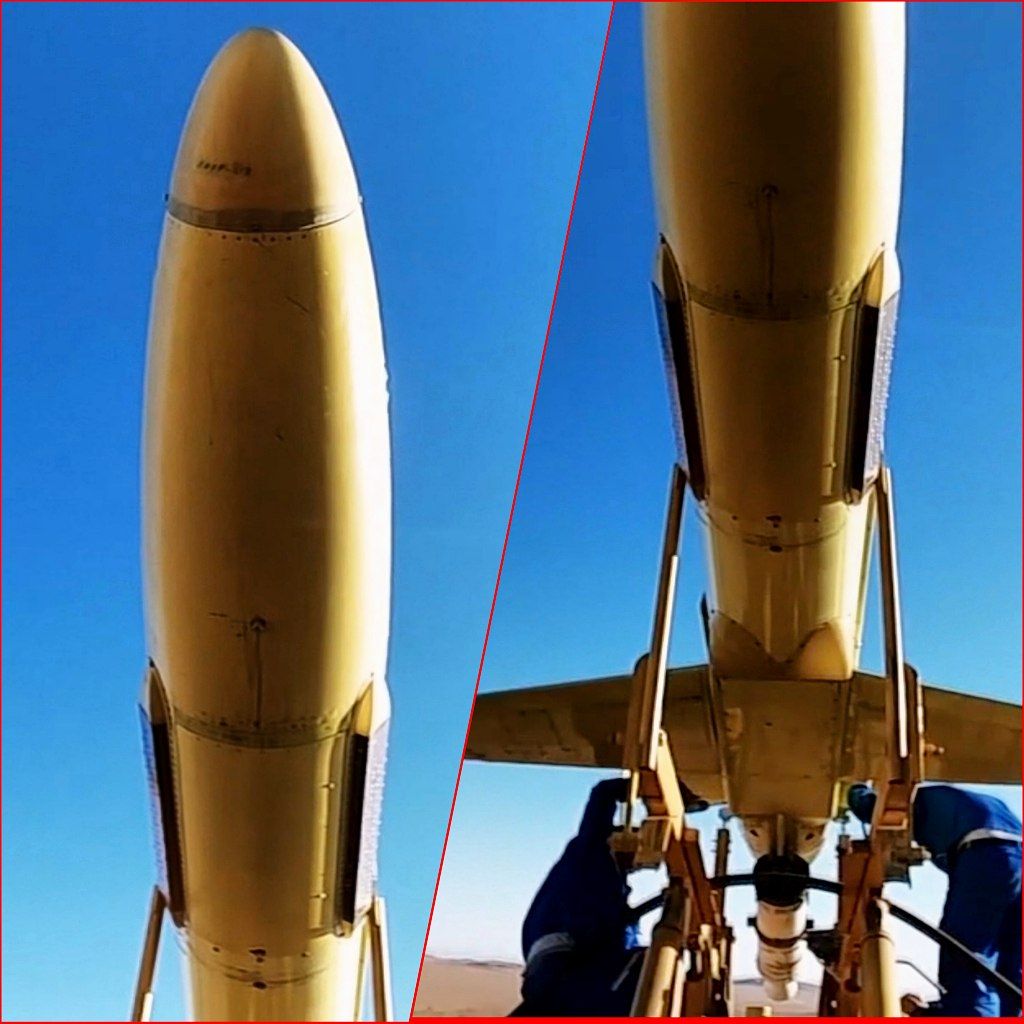
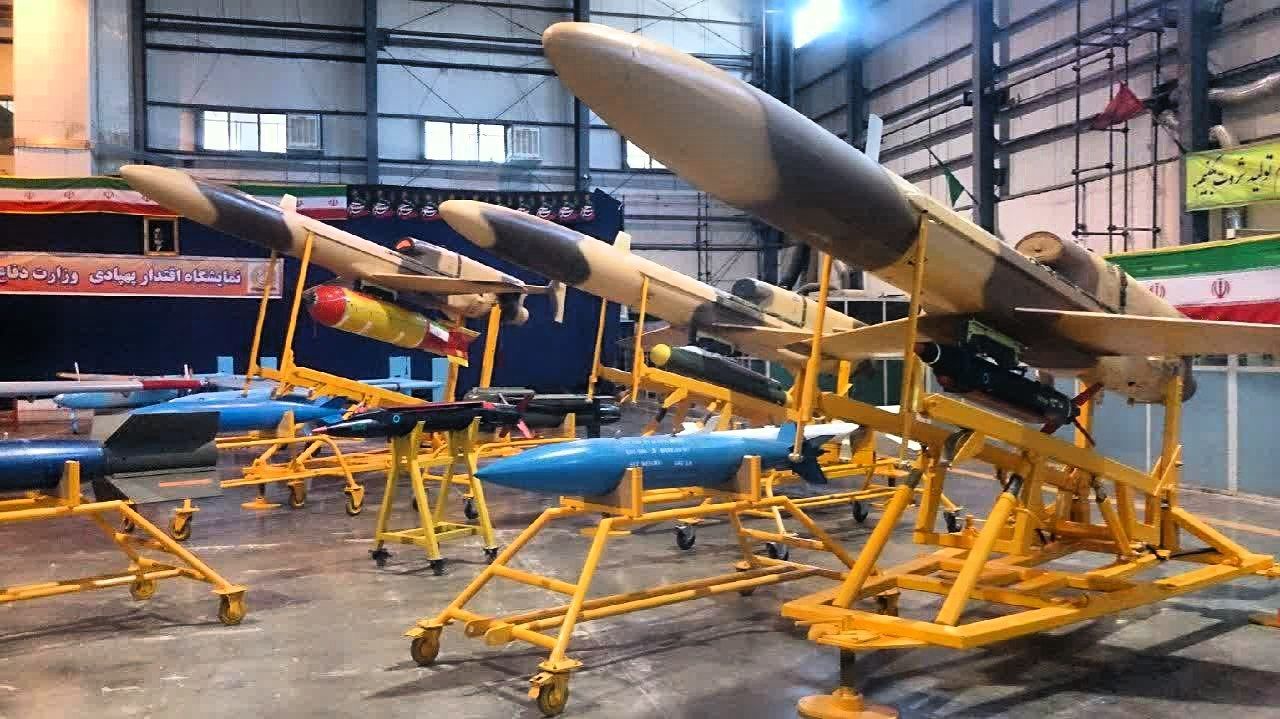
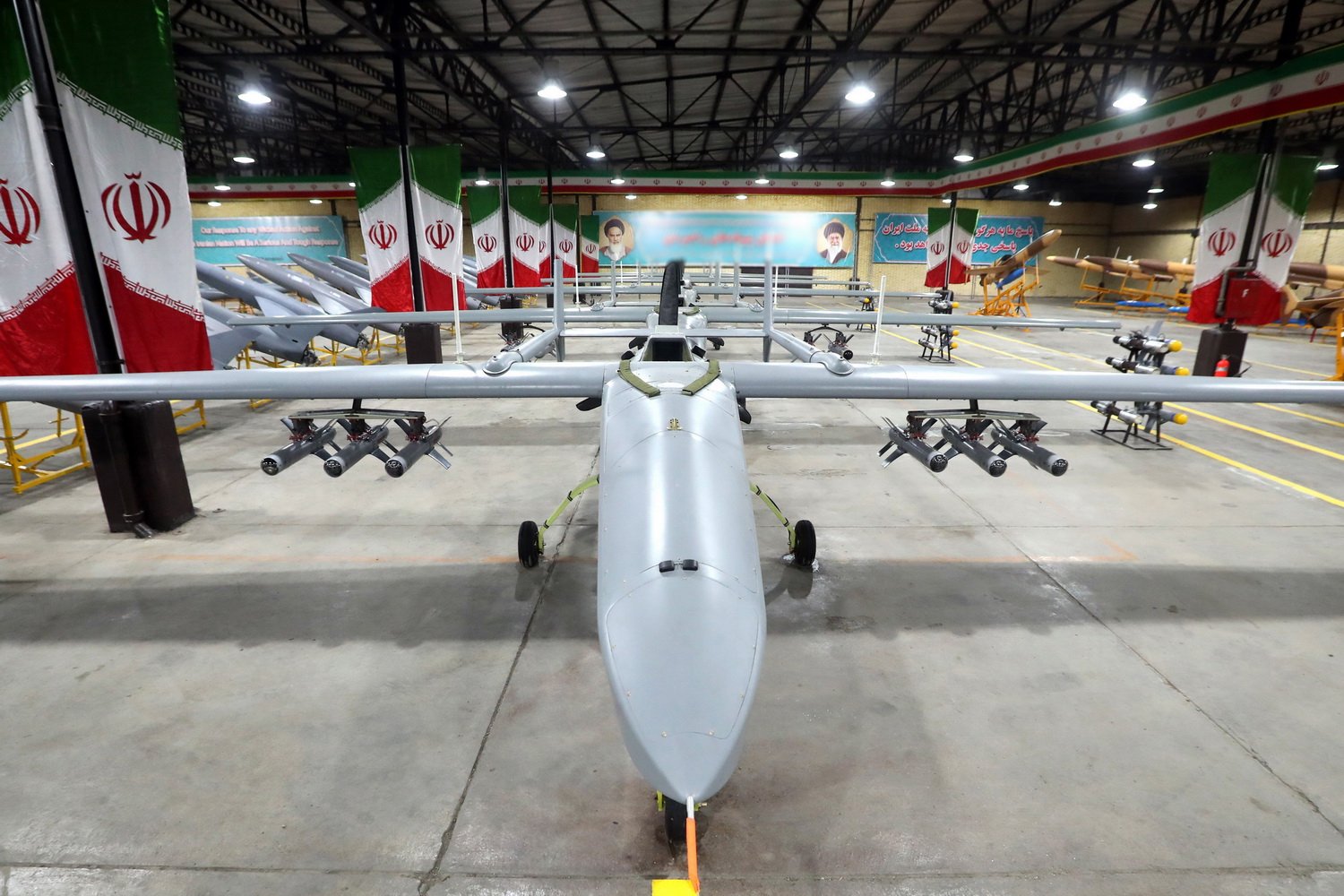
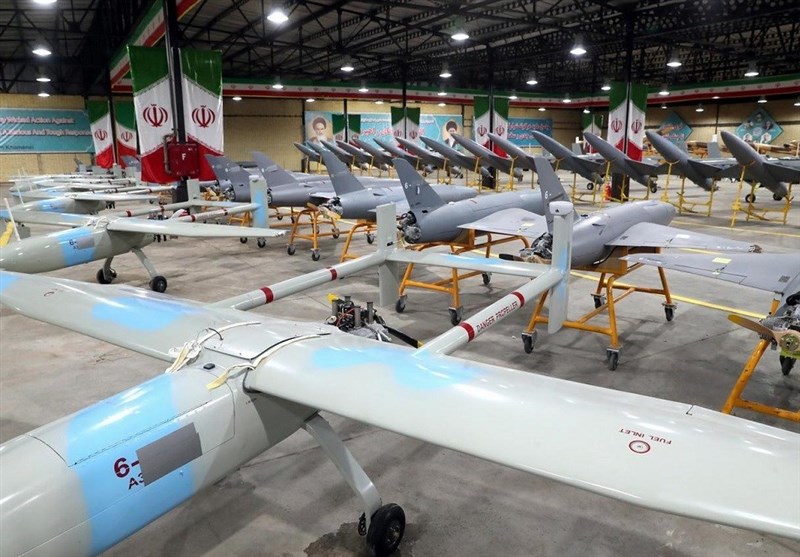
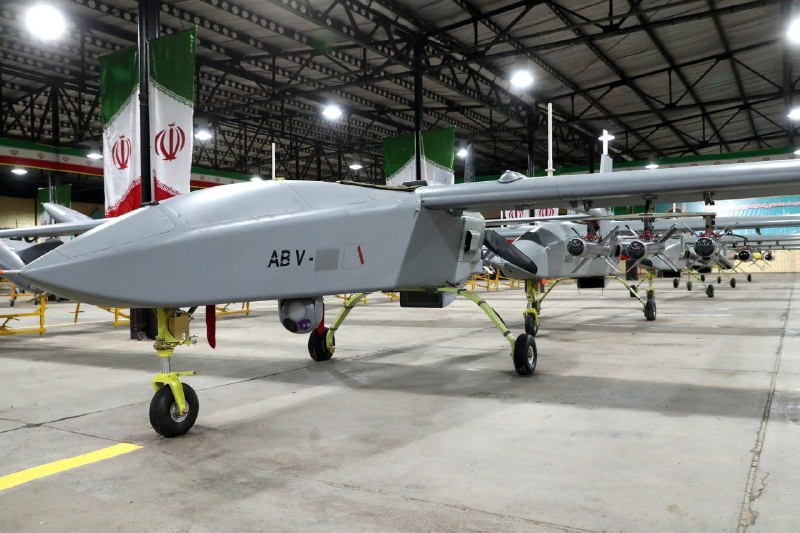
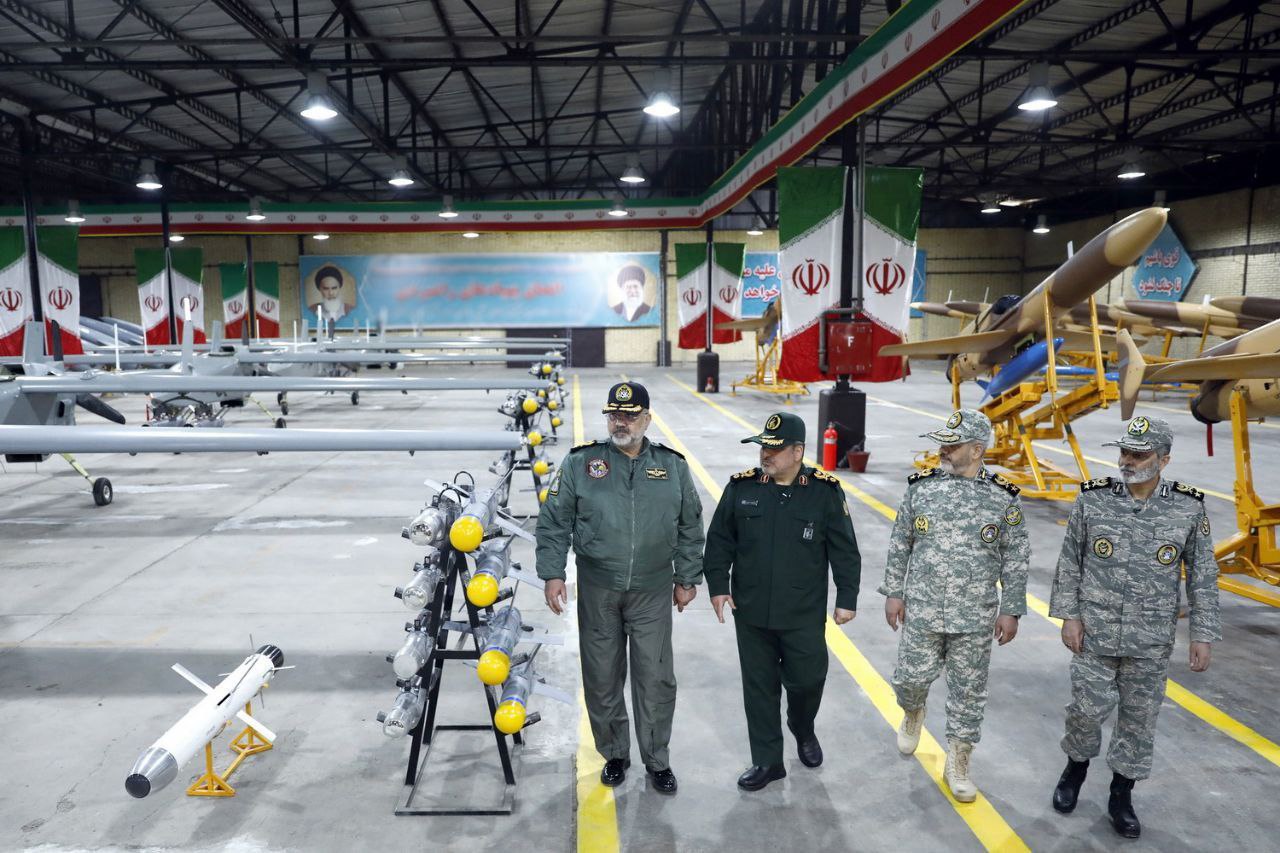
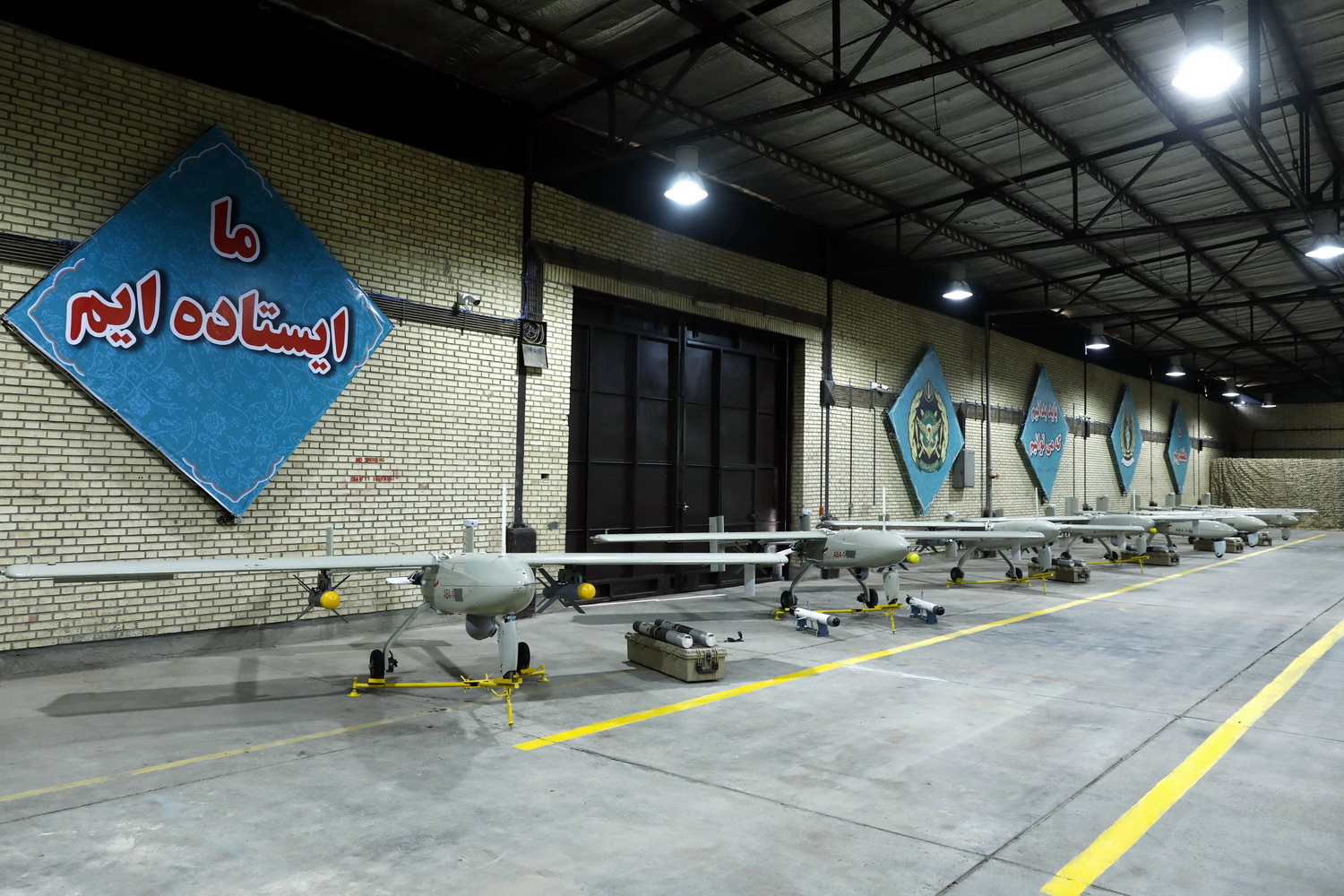
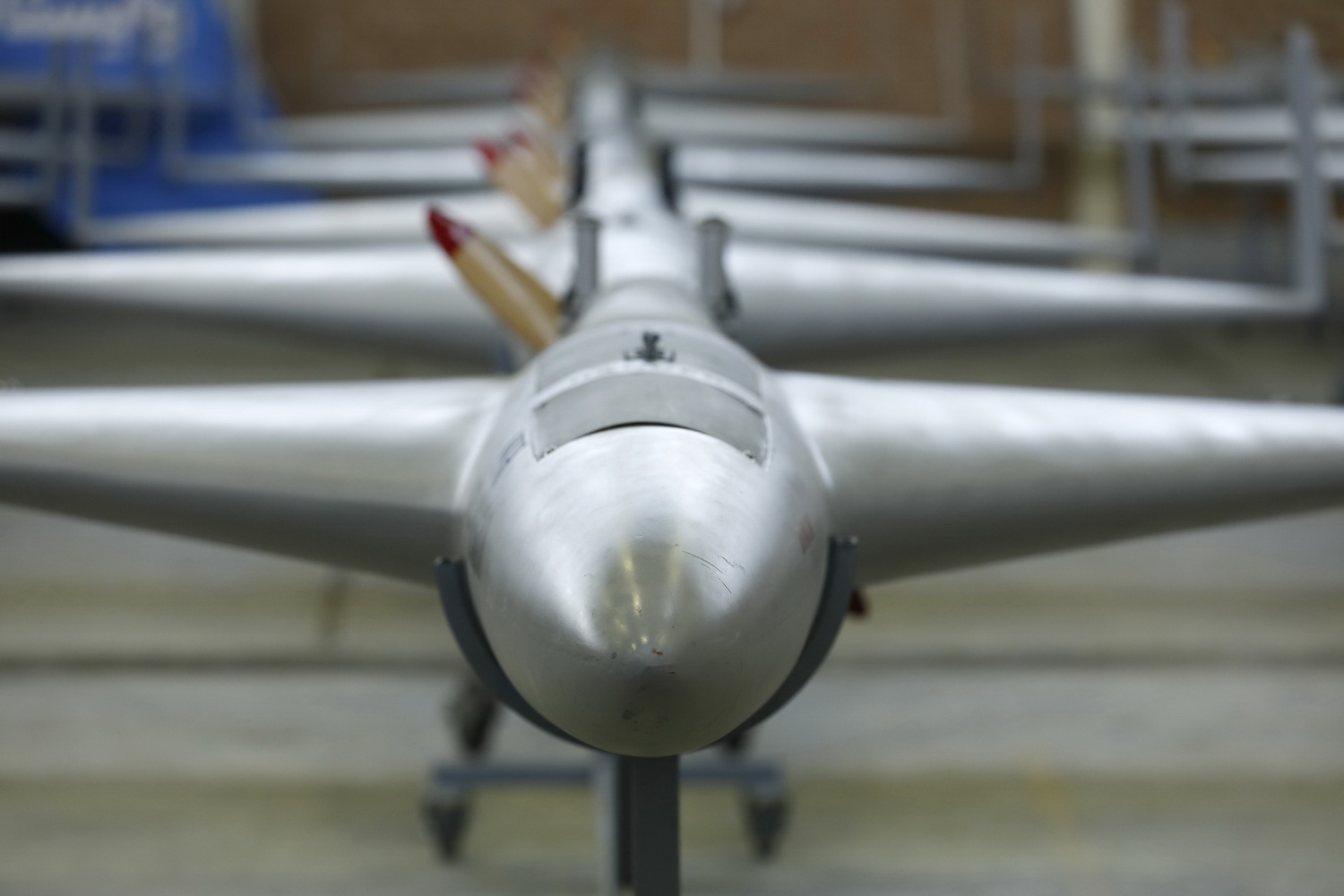
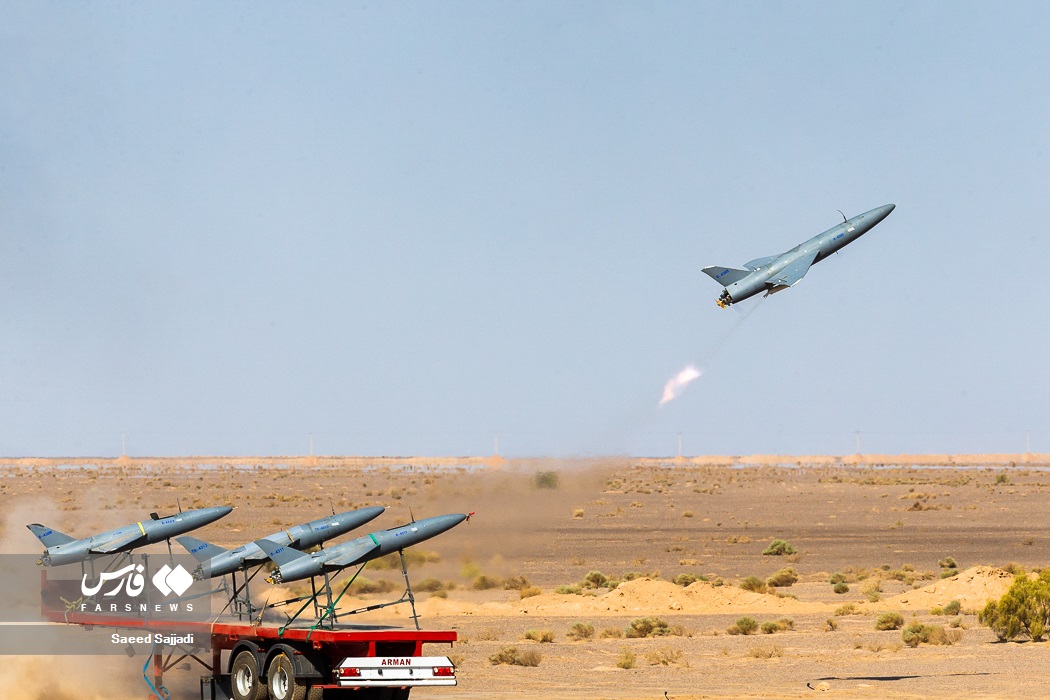
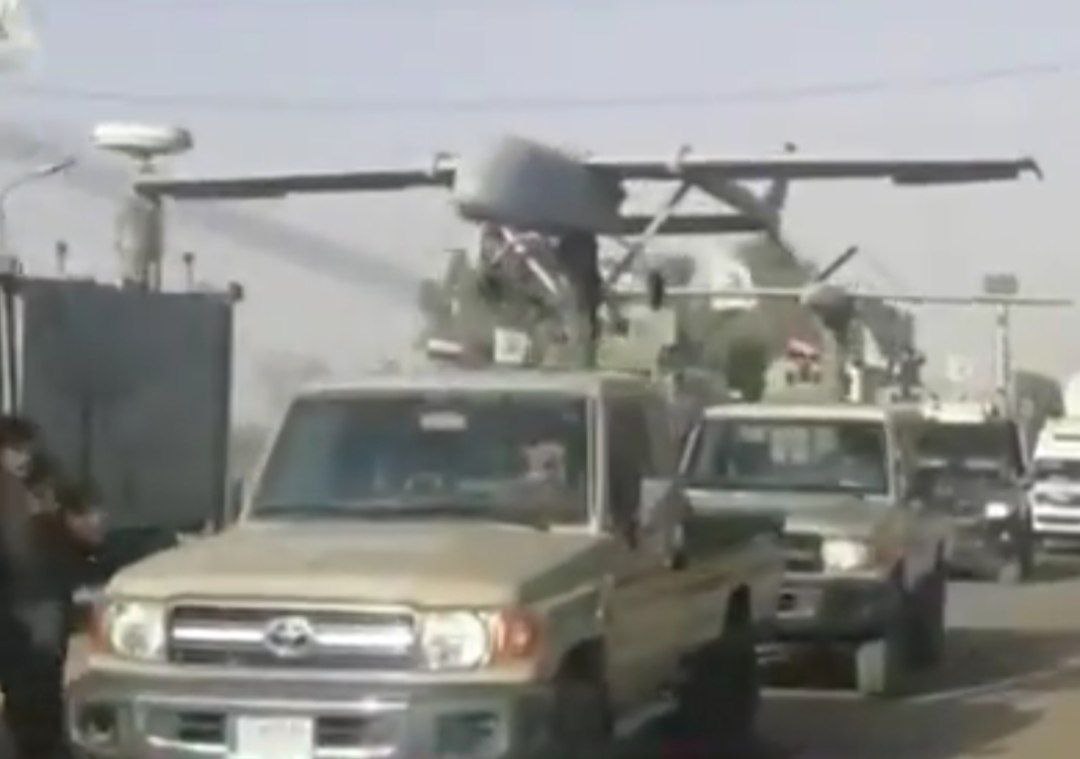
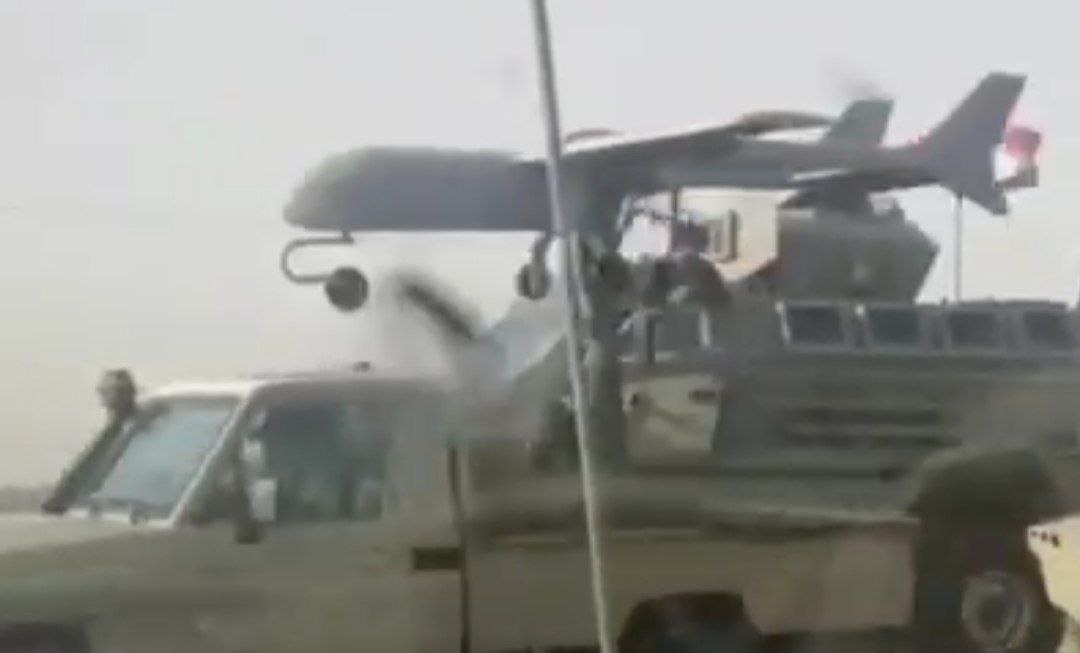
During a parade held on April 18th, 2022 in Tehran, a new drone called “Ababil 5” (also known as Ababil-V or AB-V) was revealed to the public. Prior to this event, no official information about the Ababil 5 drone had been released. Although the exact specifications of the Ababil-5 drone have not been officially disclosed, we will analyze the available footage to review its specifications and features in this article.
The aerodynamic design of this UAV is generally akin to that of the Mohajer-6. While the Mohajer-6 features a High Boom Tail configuration, the Ababil-5 employs a Boom Tail configuration. This design choice not only shortens the runway length needed for landing and takeoff but also enhances the drone’s ability to perform more intense maneuvers.
Types of aircraft tail configurations
The body of this drone has sharp angles and lines, which are clearly designed to reduce the radar cross section from the front, i.e., when the bird is approaching the radar.
Sharp angles and lines
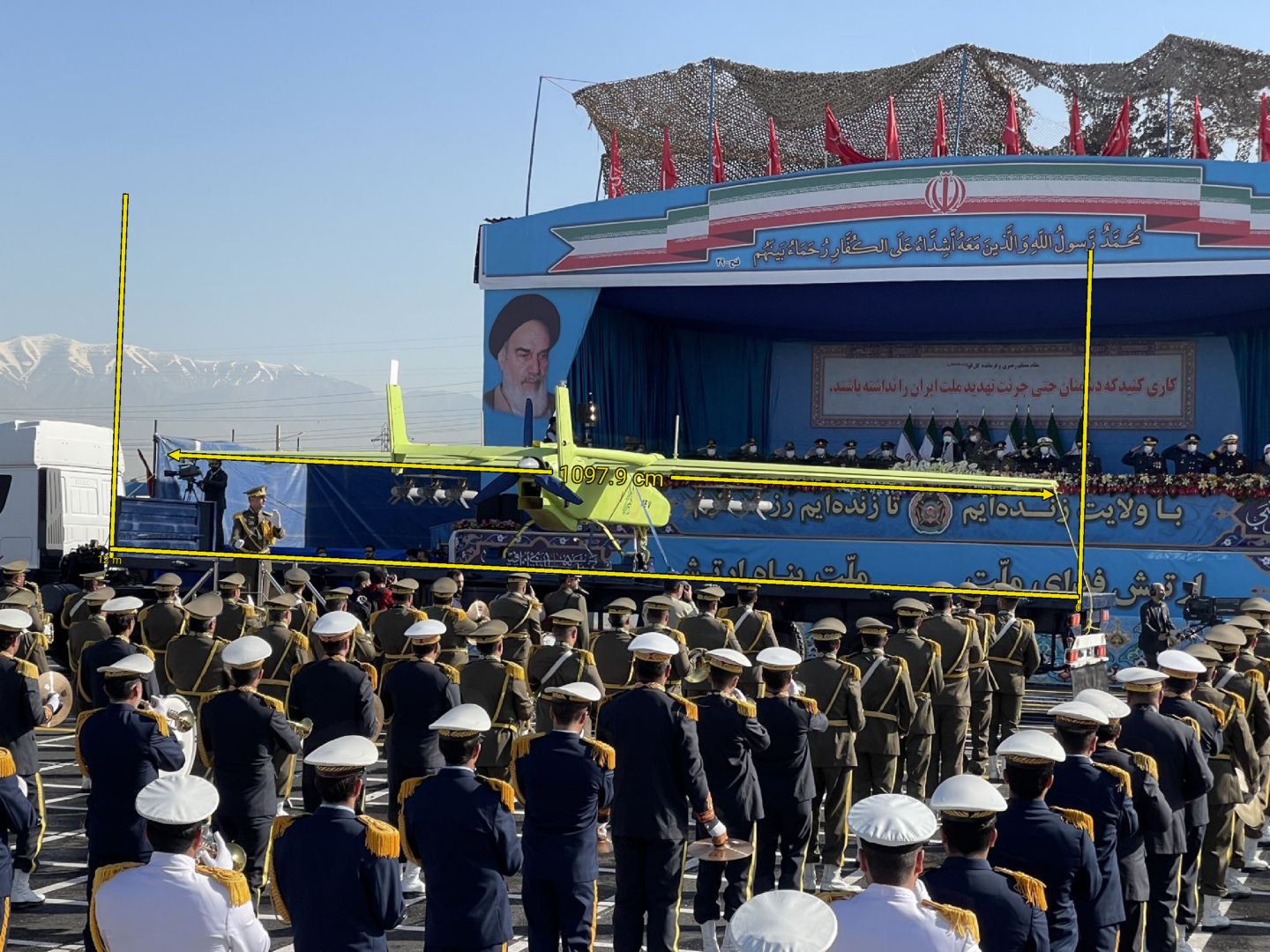
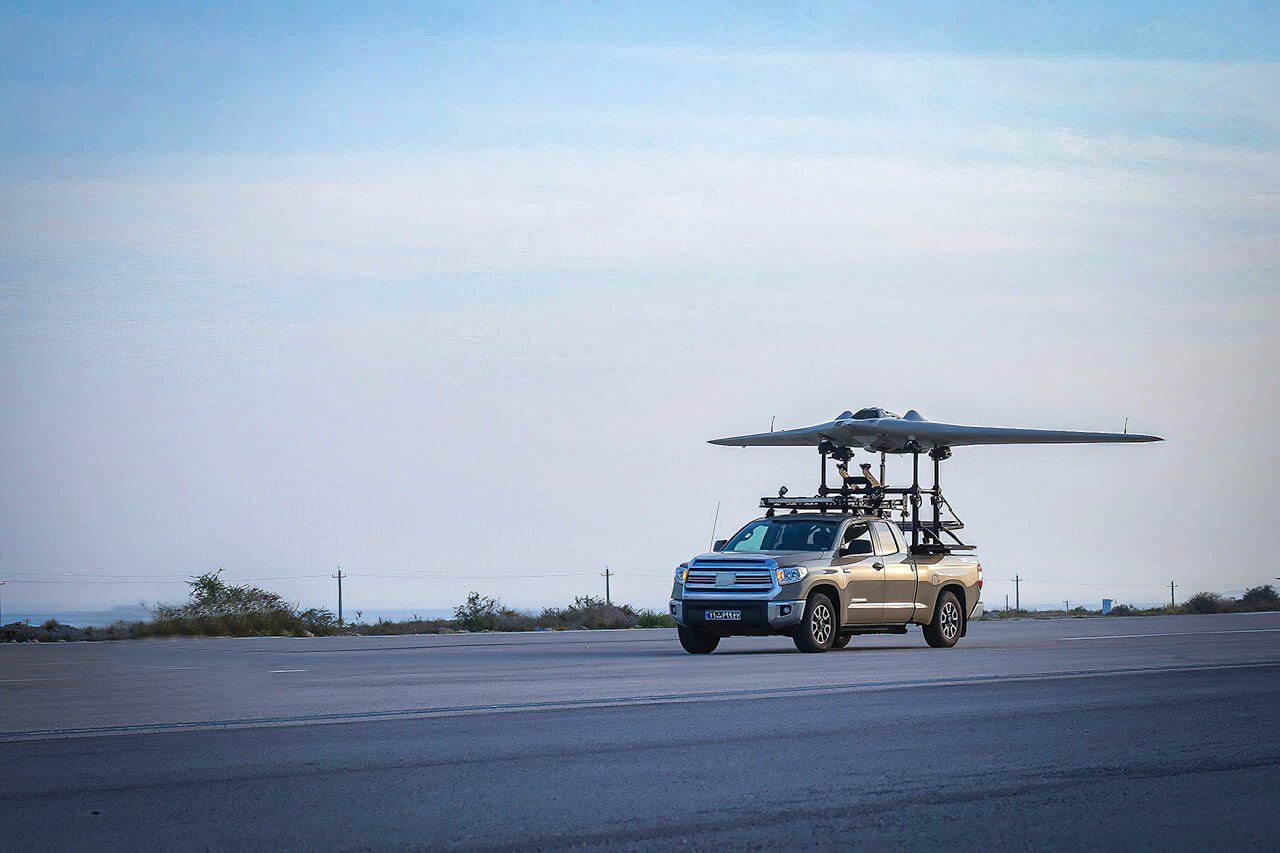
Considering the dimensions of the truck floor, the Ababil-5 drone is estimated to have a wingspan of approximately 12 meters.
Ababil-5 estimated wingspan
The Ababil-5 boasts a wingspan that is 20% larger than that of the Mohajer-6. This increase in wing area allows for a greater cargo mass, enabling the Ababil-5 to carry six Qaem-1 bombs, compared to the Mohajer-6, which can carry up to four bombs.
Click to view full sizs
The landing gear is designed to retract, which helps to reduce drag and minimize the radar cross-section. This reduction in drag, facilitated by the retractable landing gear, enhances the UAV’s cruise speed, flight endurance, and range.
Another reason for incorporating retractable landing gear at the front of the body is to prevent obstruction of the electro-optical’s view. If the camera system were placed in front of the landing gear, as seen in the Mohajer-6, the increased distance from the drone’s center of mass would require additional balance weight, potentially affecting the drone’s performance. Therefore, retractable landing gear is utilized to avoid these issues.
Ababil-5 front wheel landing gear
The rear wheel landing gear is fixed type. According to the published images, the base of the rear wheels are connected to each other by a wire, which limits the amount of final bending of the landing wear during landing and prevents the body from hitting the runway surface.
Ababil-5 rear wheel landing gear
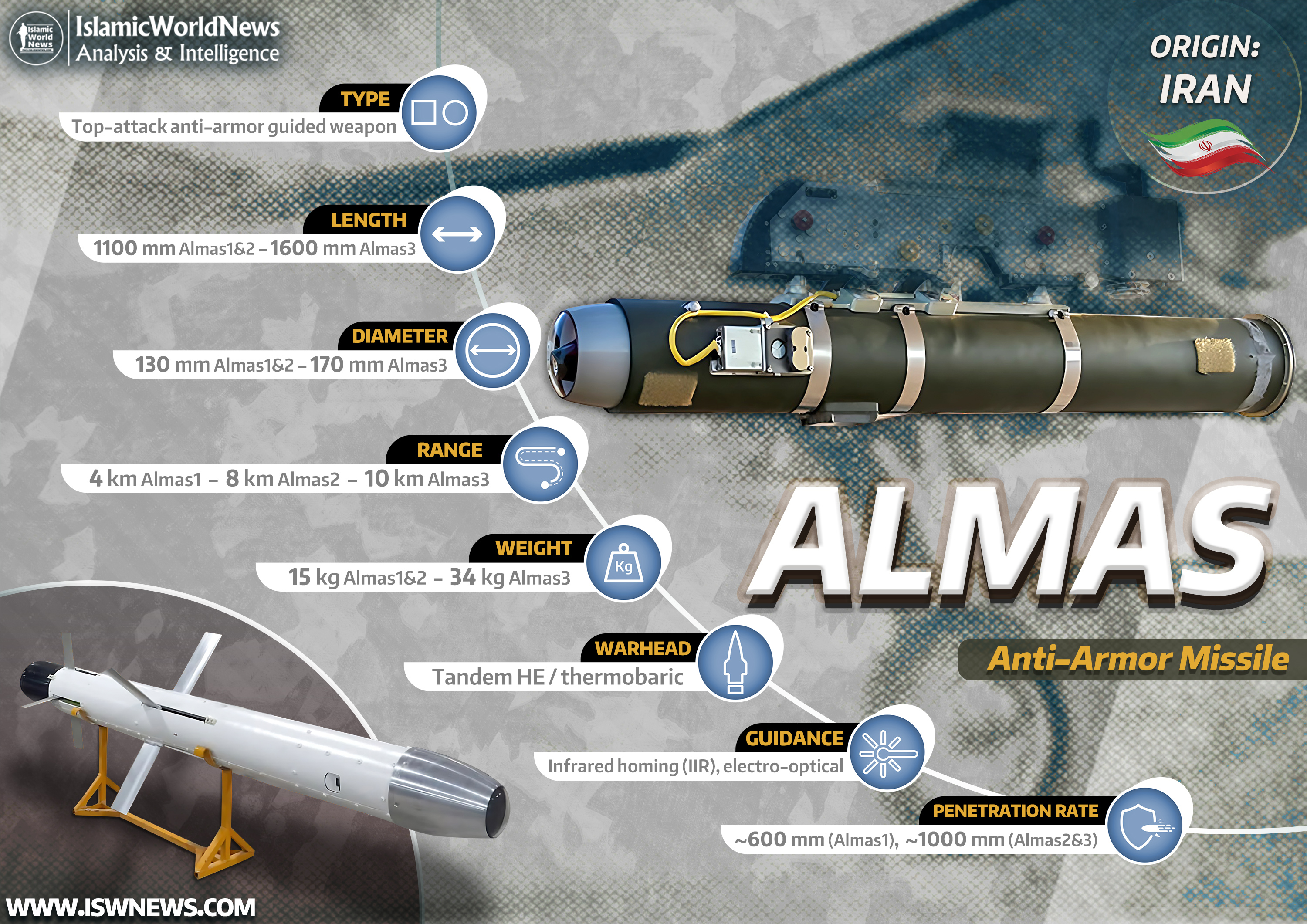
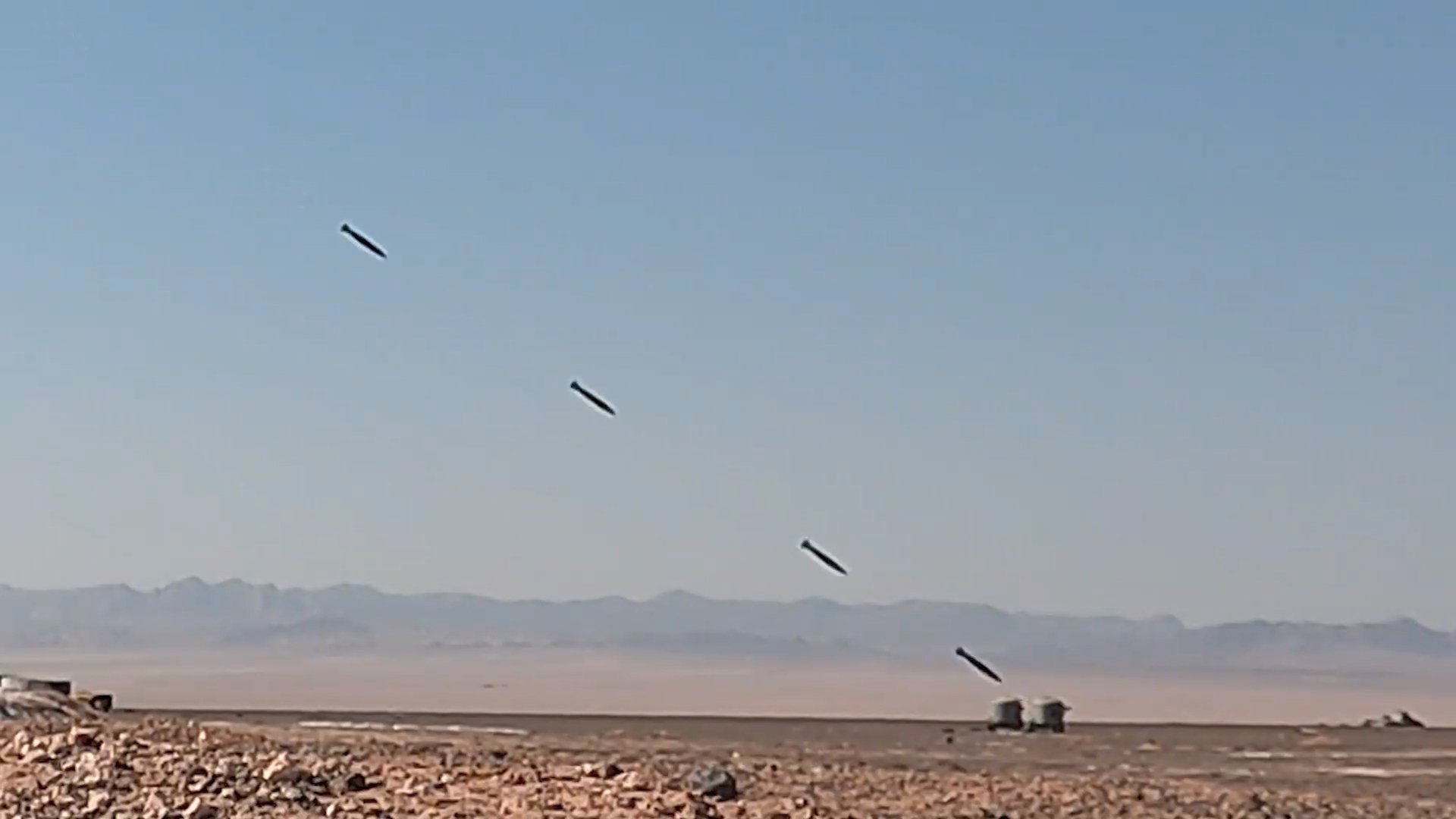
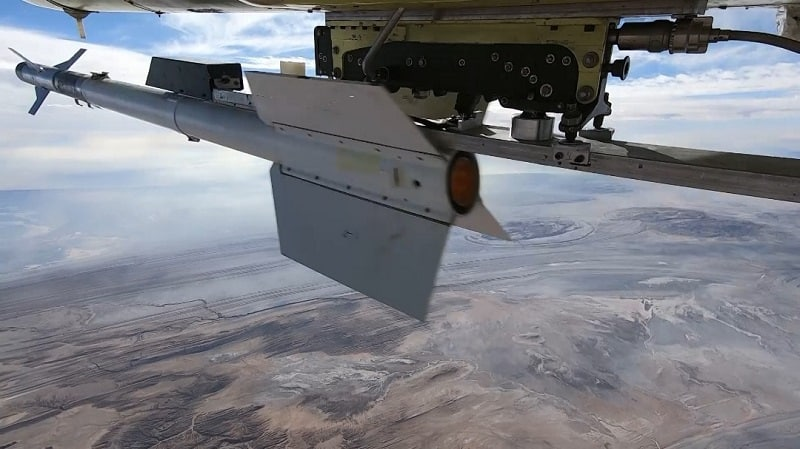
When it comes to weaponry, the Ababil-5 has been observed equipped with Qaem Glide bombs, Almas missiles, and Arman-1 bombs. This drone is capable of carrying six Ghaem-1 bombs and four Ghaem-5 bombs.
Almas missiles, Qaem smart bombs, and Arman-1 bombs
Given that the Ababil-5 has been adopted by both the Iranian Army and the IRGC, and considering it is manufactured by the Iran Ministry of Defense, there’s a possibility that the ammunition used in the Mohajer-6 could be compatible with the Ababil-5, due to the similarity of some of their components.
Click to view full size
Carrying a larger number of bombs or cargo effectively increases the lethality of the UAV, and economically, it destroys targets with fewer sorties and hunts targets at a lower cost. Also, reducing the number of flight sorties can be important both in terms of maintenance and increasing the operational rate of the fleet.
In terms of camera system, the Ababil-5 drone can be equipped with a more advanced electro-optical system, in addition to using older electro-optical systems such as the Eagle 4 models. This advanced camera features at least 60x zoom capabilities, along with a thermal imaging camera and a laser rangefinder.
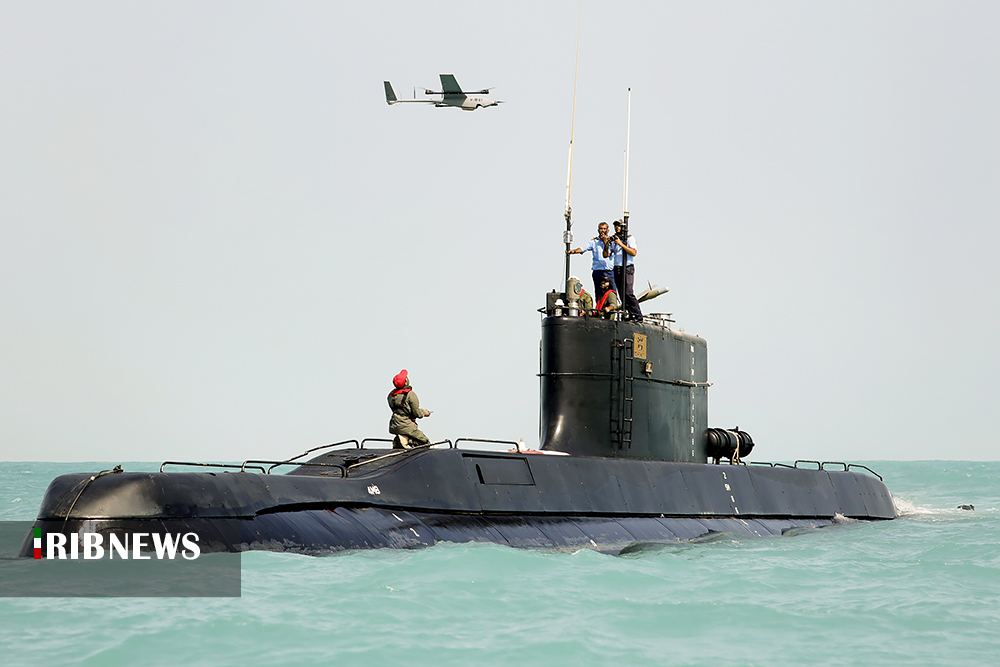
Ababil-5 electro-optical systemDuring the 1402 Joint Drone Exercise of the Islamic Republic of Iran Army, the Ababil-5 drone was used to observe an Arleigh Burke-class destroyer in the Indian Ocean for four hours
This drone is powered by a piston engine. Images from the NAZAJA exercise in February 2024 reveal that the Ababil-5 is equipped with a Rotax 915 iS engine or a similar model. The Rotax 915 engine delivers up to 141 horsepower at its peak performance.
Rotax 915 in Ababil-5
Overall, Rotax engines are commonly employed in many Iranian drones. Due to sanctions targeting Iran’s military and aviation sectors, direct procurement from Rotax is not feasible. Consequently, to cater to the varied requirements of drones in Iran, numerous components of different Rotax engines have been domestically produced, with some models achieving a complete localization rate of 100%.
With the Rotax 915 iS engine, the Ababil-5 achieves a flight ceiling of approximately 7,000 meters (23,000 feet) and a speed of around 210 kilometers per hour. Its maximum takeoff weight is estimated to be about 1,000 kilograms.
The Ababil-5 drone boasts a flight duration of 12 hours in combat mode, and up to 24 hours in reconnaissance mode without a combat payload. It has a maximum range of up to 2,400 kilometers.
Video showcasing the Ababil-5 drone’s performance during the Islamic Republic of Iran Army Ground Forces exercise in February 2024
Ababil-5 UCAV specifications: Length: ~ 8 meters Wingspan: ~ 12 meters Maximum range: up to 2,400 kilometers Flight ceiling: 7,000 meters Flight endurance: 12 hours combat – 24 hours reconnaissance Engine type: Rotax 915 – 141 horsepower (at its peak) Speed: 210 km/h Hardpoints: 2, with the ability to carry 6 missiles and bombs Maximum takeoff weight: ~ 1,000 kilograms Weapons payload: up to 150 kilograms Origin: Iran
Ababil-5 UCAV – Click to view full size
More images of Ababil-5 drone:
Click to view full size
“Ababil 5” UAV poster collection in Farsi, Russian, Arabic, Chinese and Hebrew:
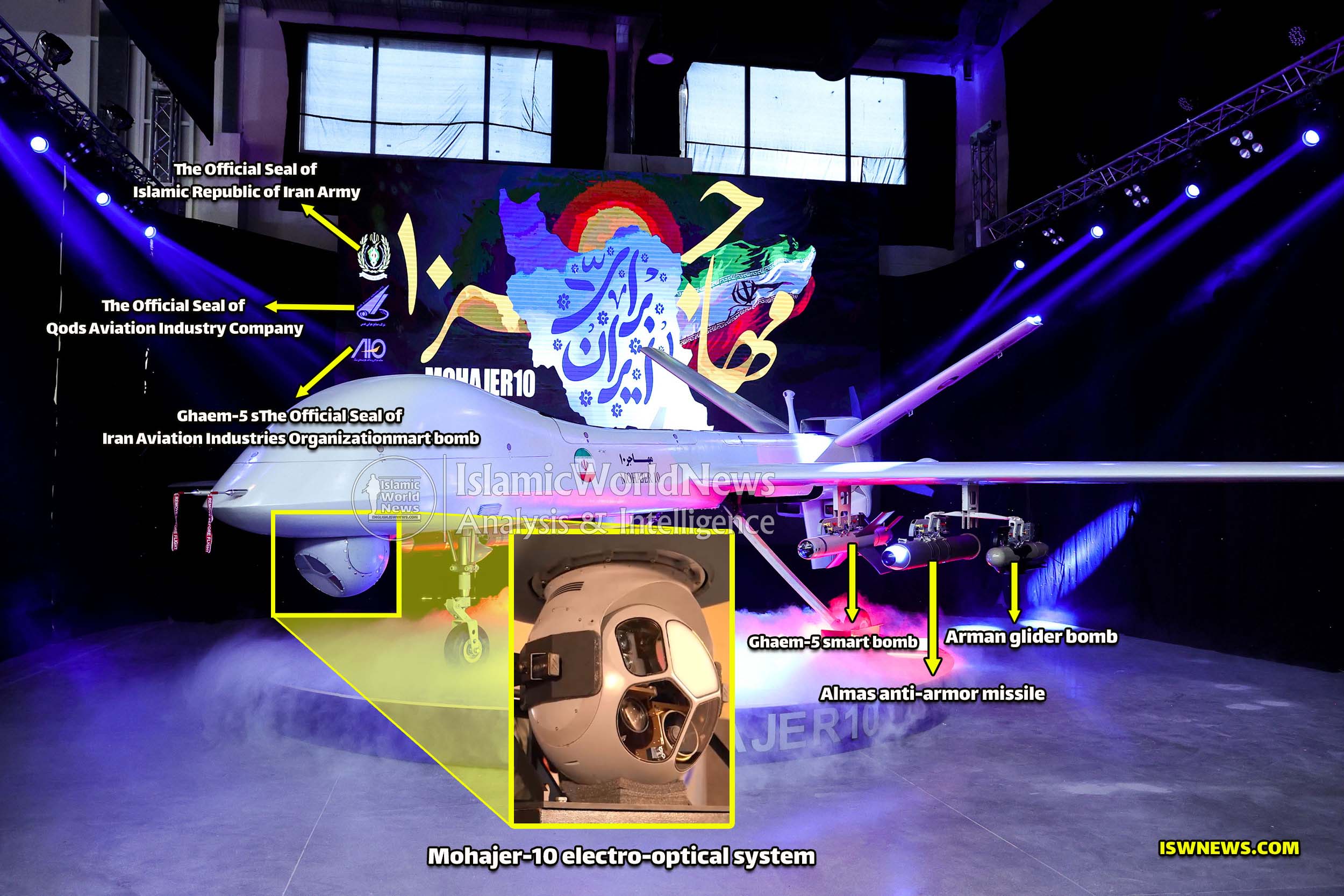
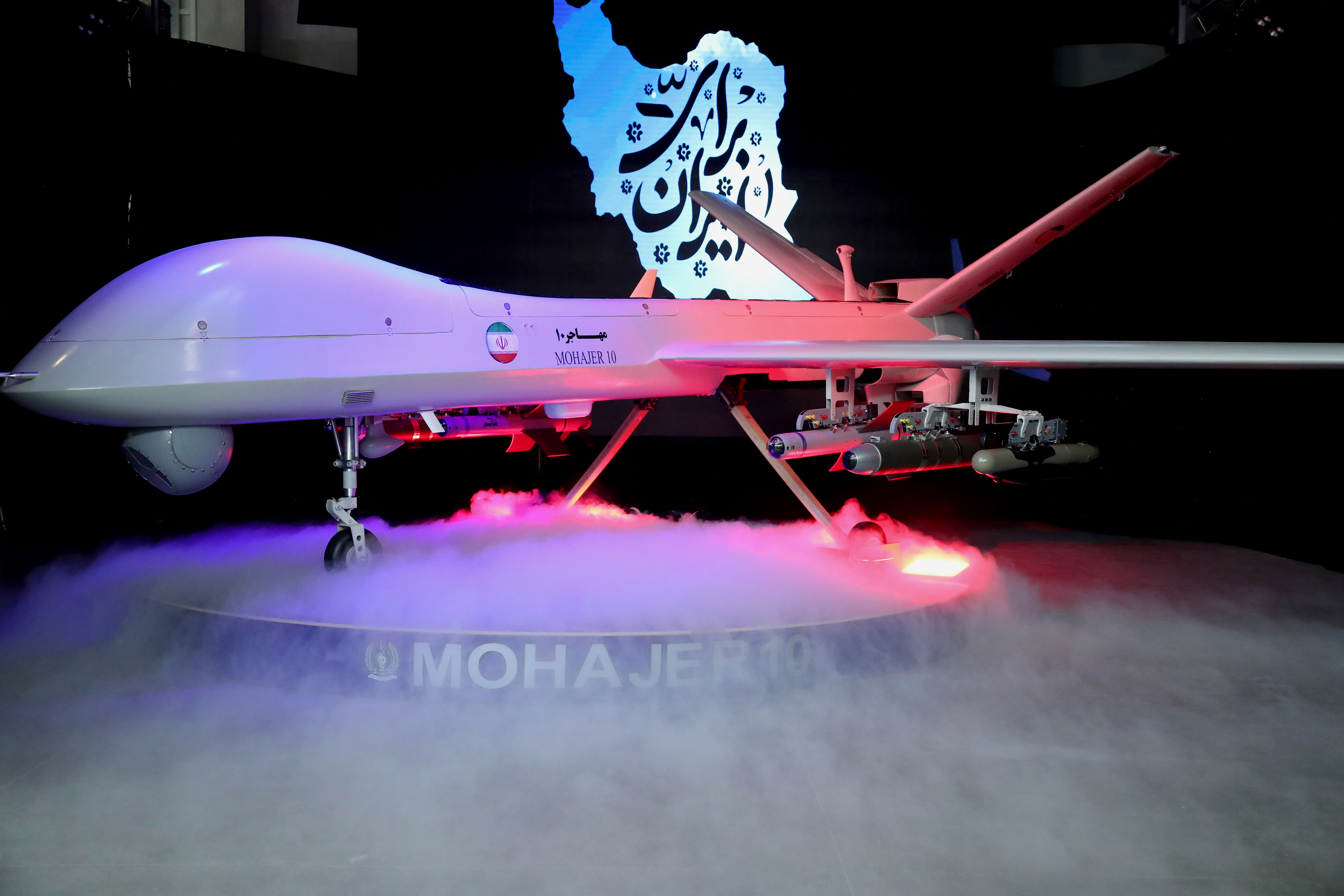
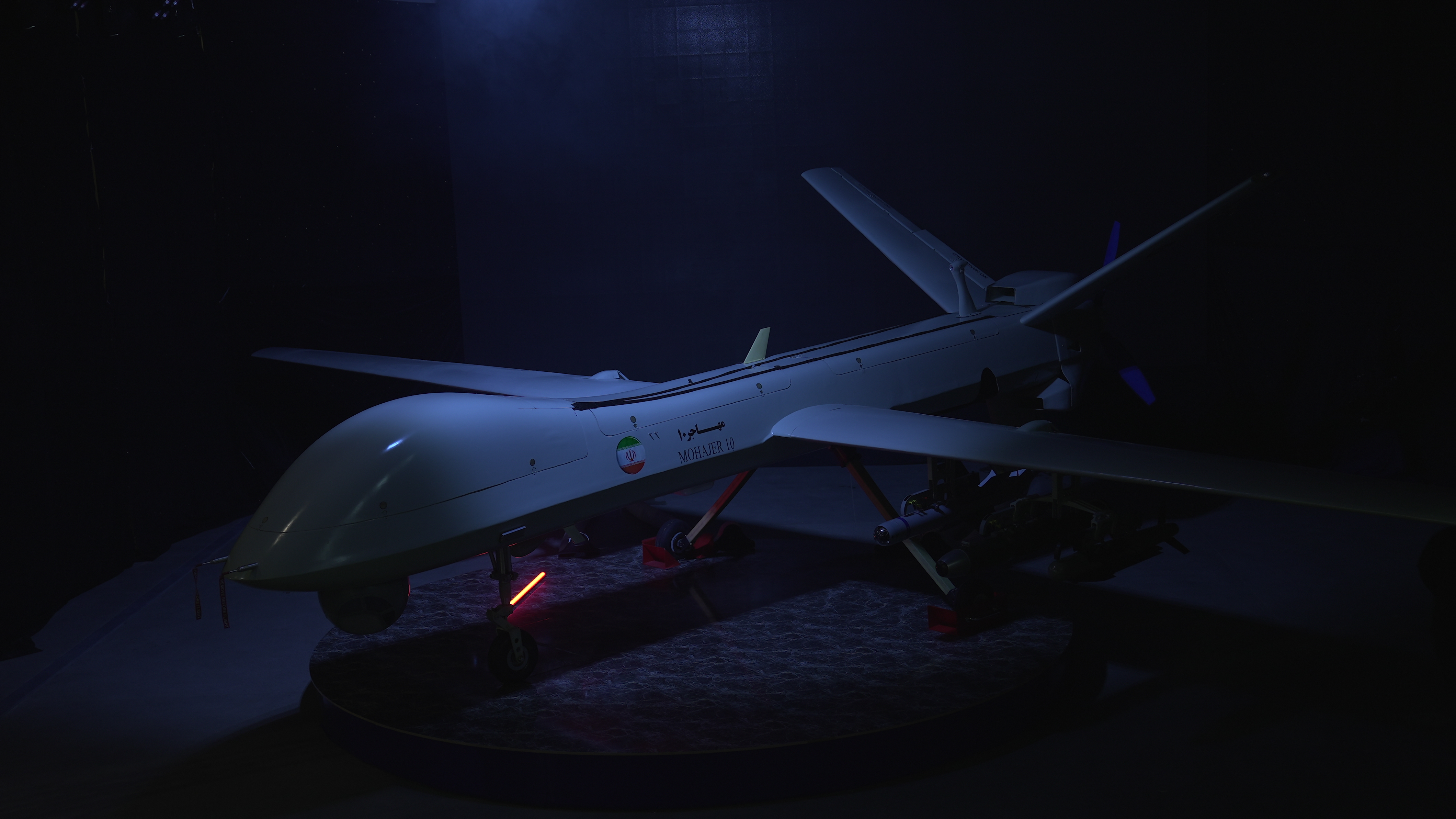
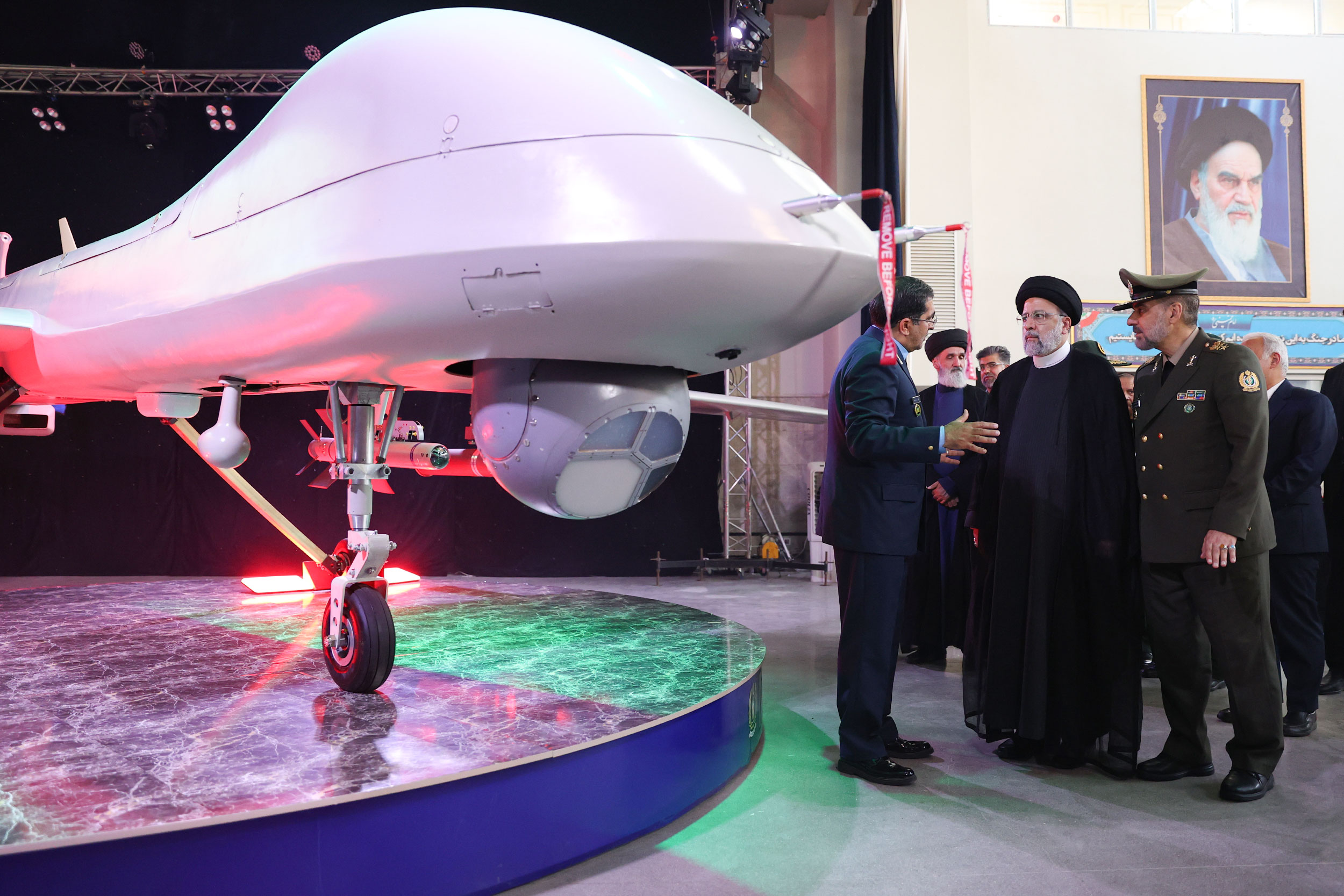
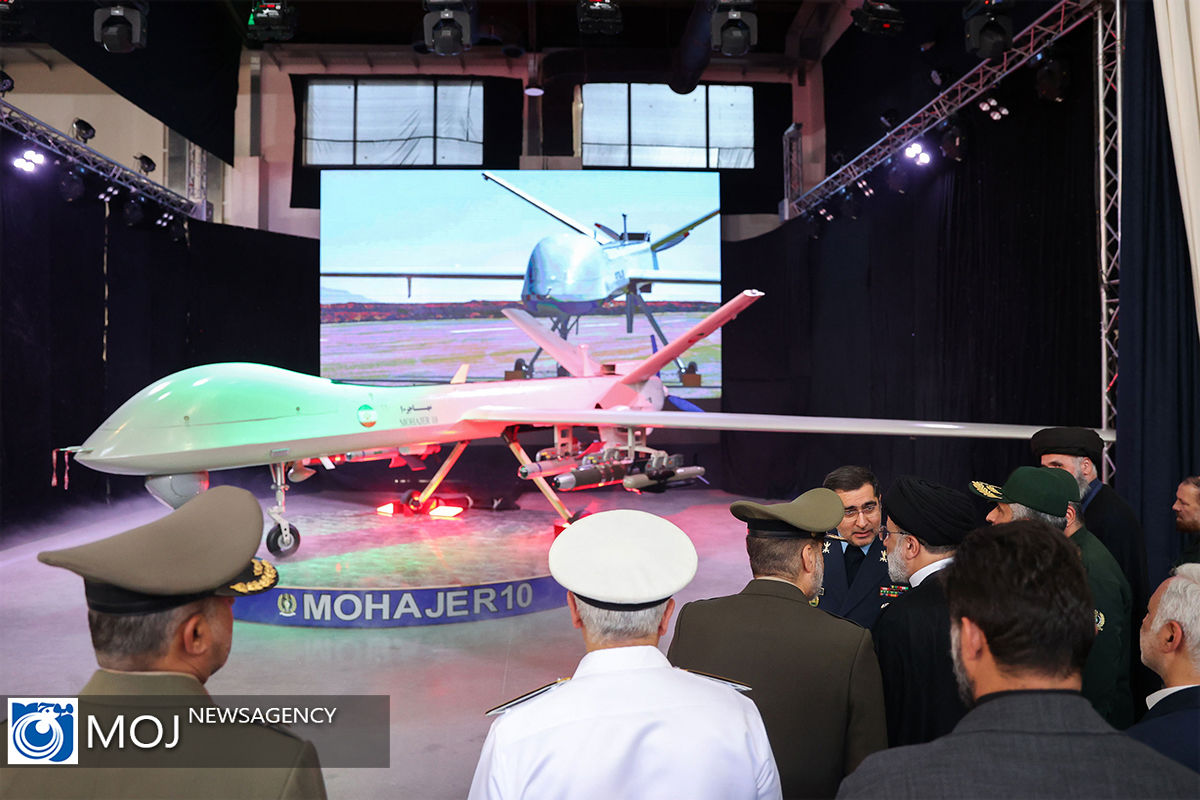
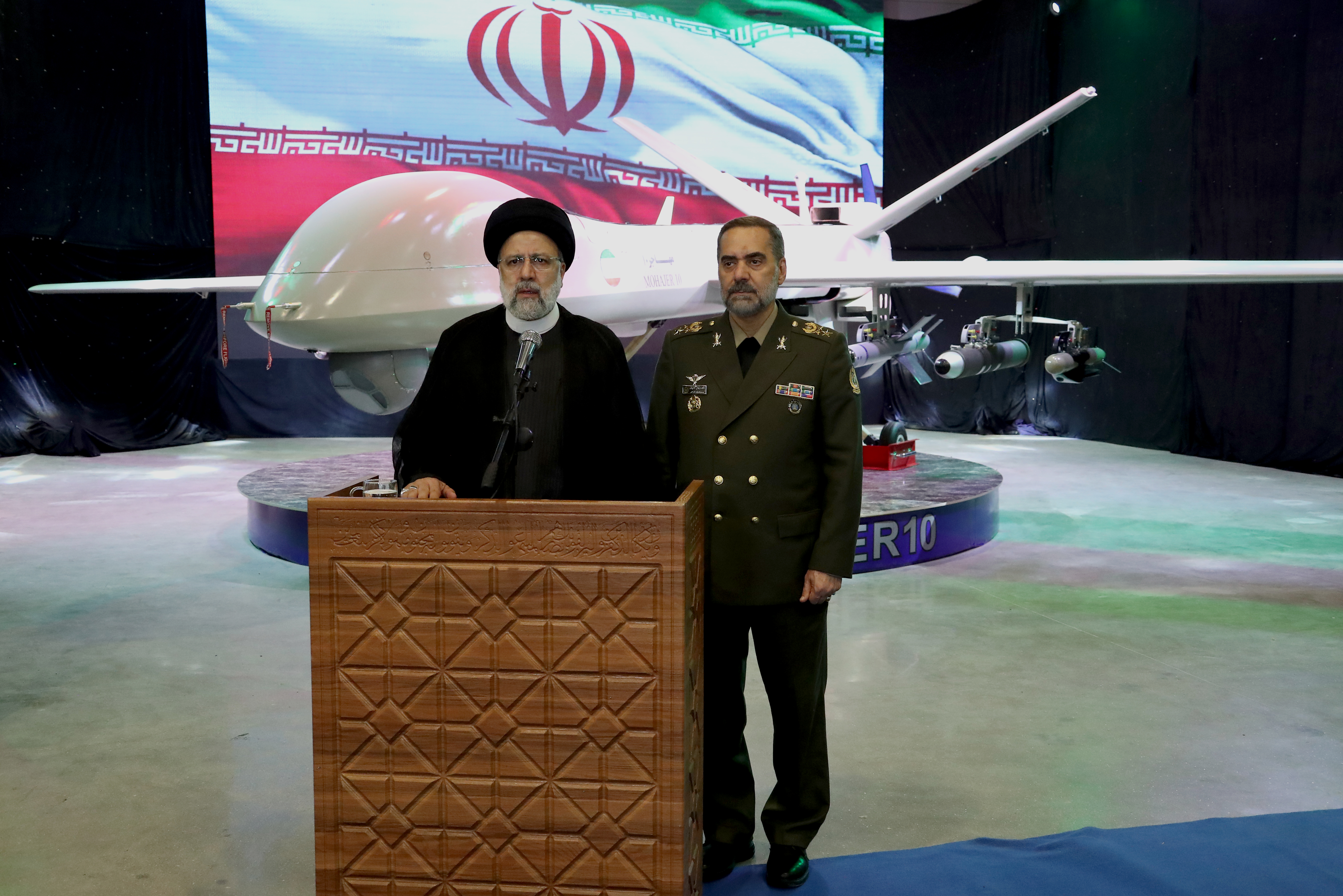
Following the unveiling of the Mohajer-10 drone, in addition to adding a new member to the Mohajer drone series, a new UAV has also been added to Iran’s 2000-kilometer drone series, which will increase the diversity of drone product baskets and consequently increase the combat power of Iran’s armed forces.
A video of the unveiling of the Mohajer-10 UAV and its flight test
Design: Various organizations, including the Islamic Republic of Iran Army, the Qods Aviation Industries, and Iran Aviation Industries Organization (IAIO) have participated in the manufacturing of Mohajer-10 drone. According to one of the officials of the Ministry of Defence and Armed Forces Logistics, this drone has been designed and developed based on the needs announced by the armed forces, especially the ground and naval forces of the Islamic Revolution Guards Corps (IRGC) and the Islamic Republic of Iran Army.
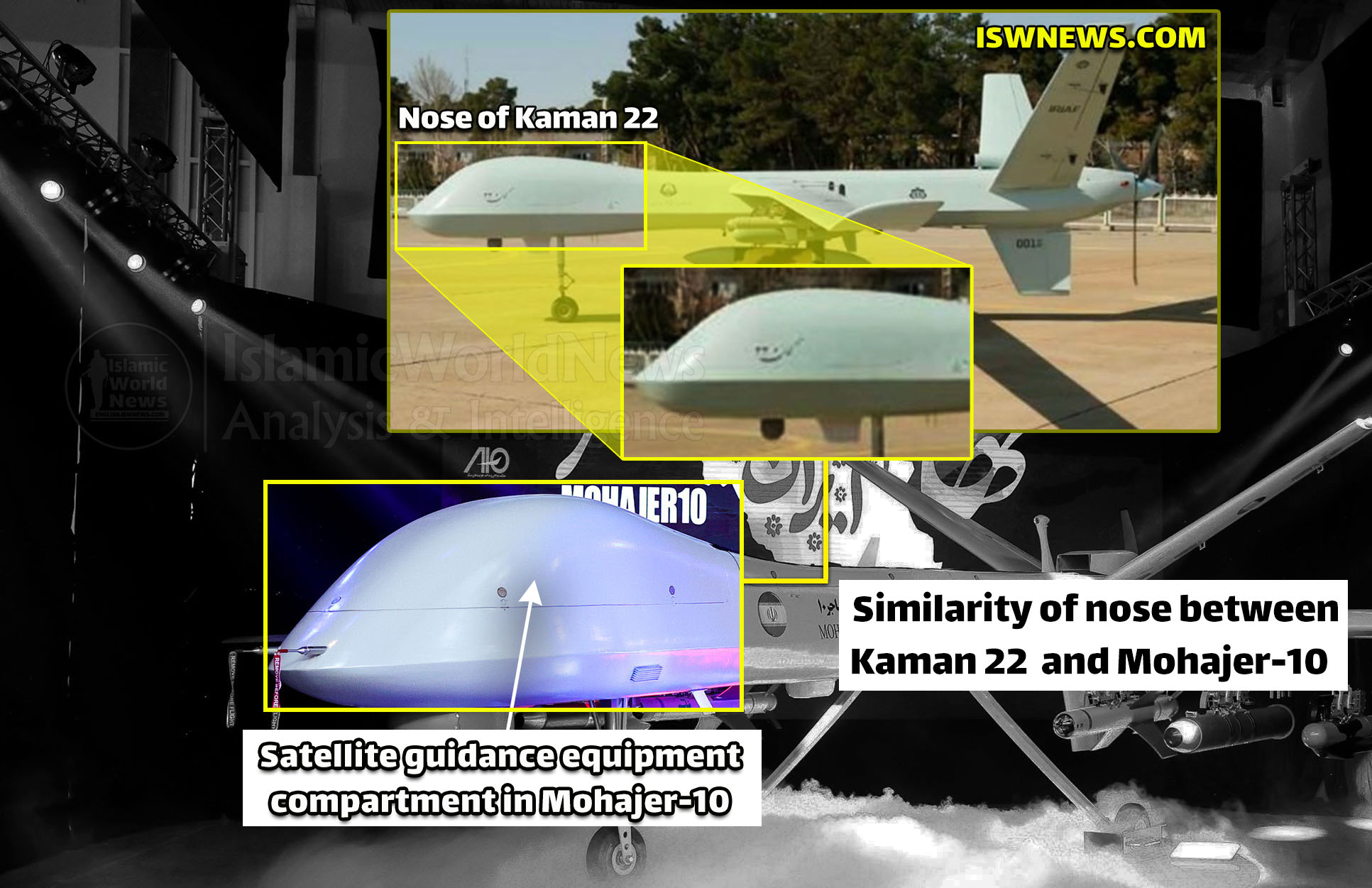
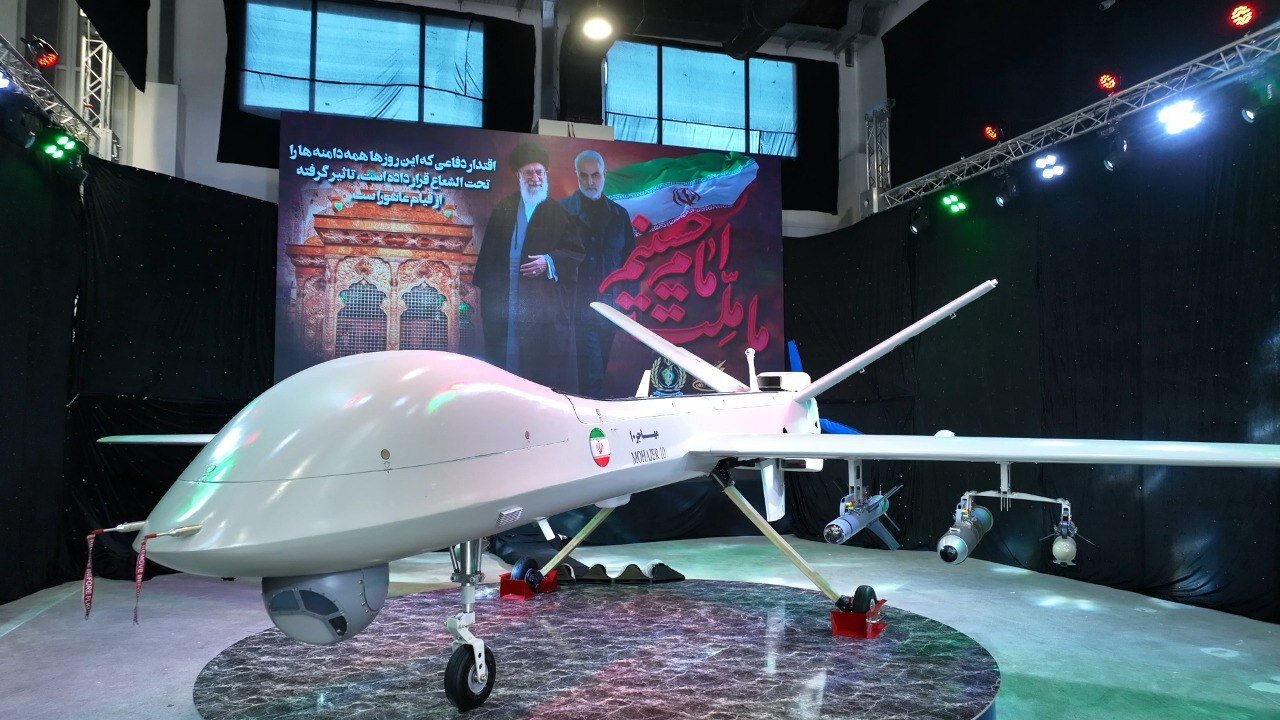
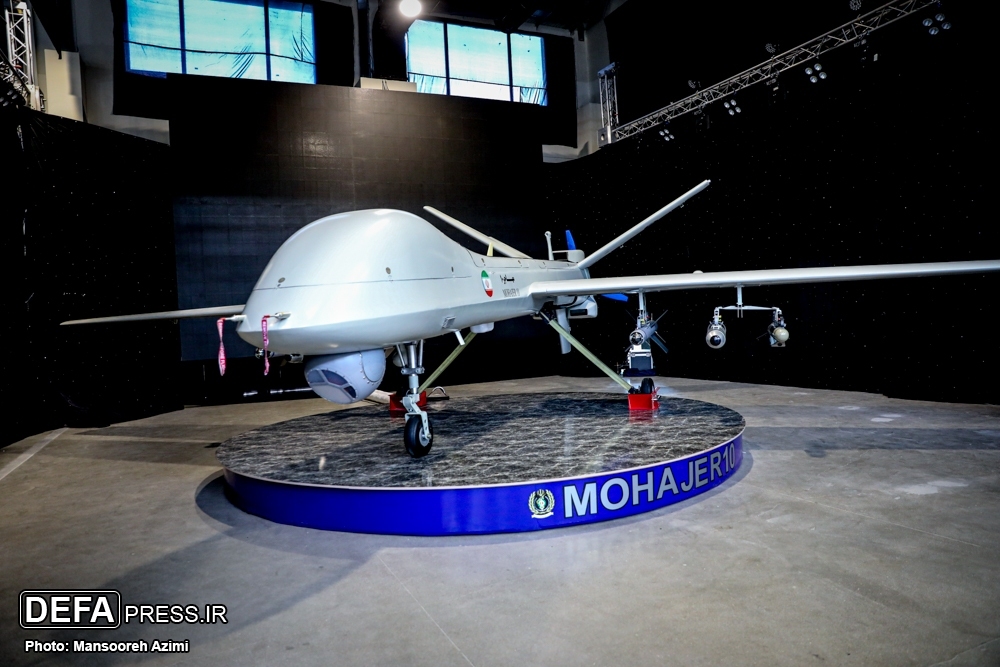
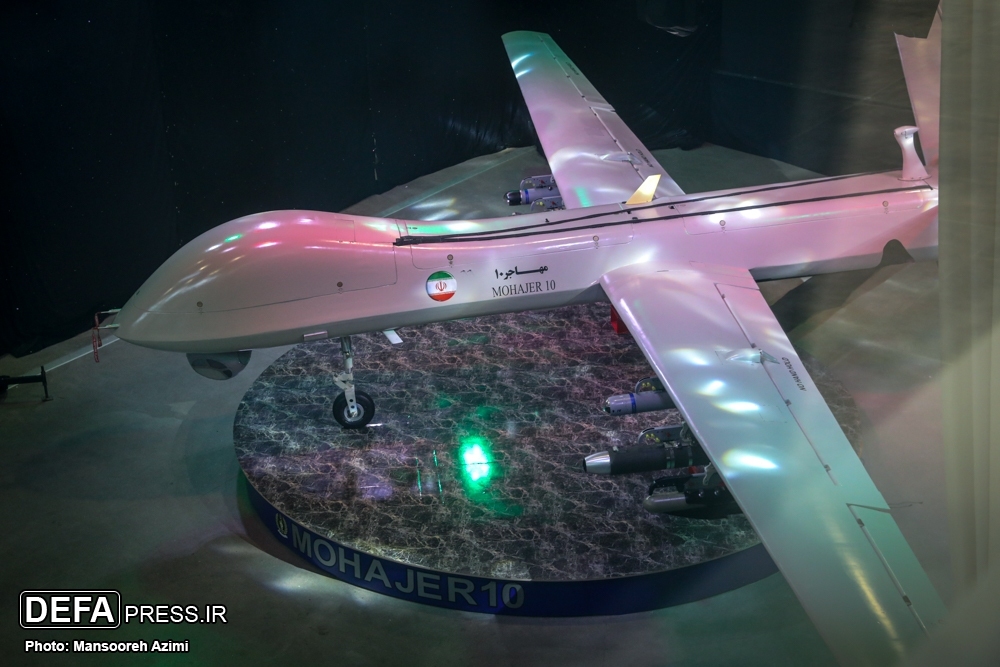
At the first glance, the fuselage of this drone has similarities to the United States’ MQ-9 Reaper fuselage. There are also similarities between the body of Mohajer-10 and Kaman 22 (UAV) of the Islamic Republic of Iran Army. The front part and the nose of Mohajer-10 drone is similar to Kaman 22, which is where satellite communication antenna is located.
Similarity of nose between Kaman 22 and Mohajer 10
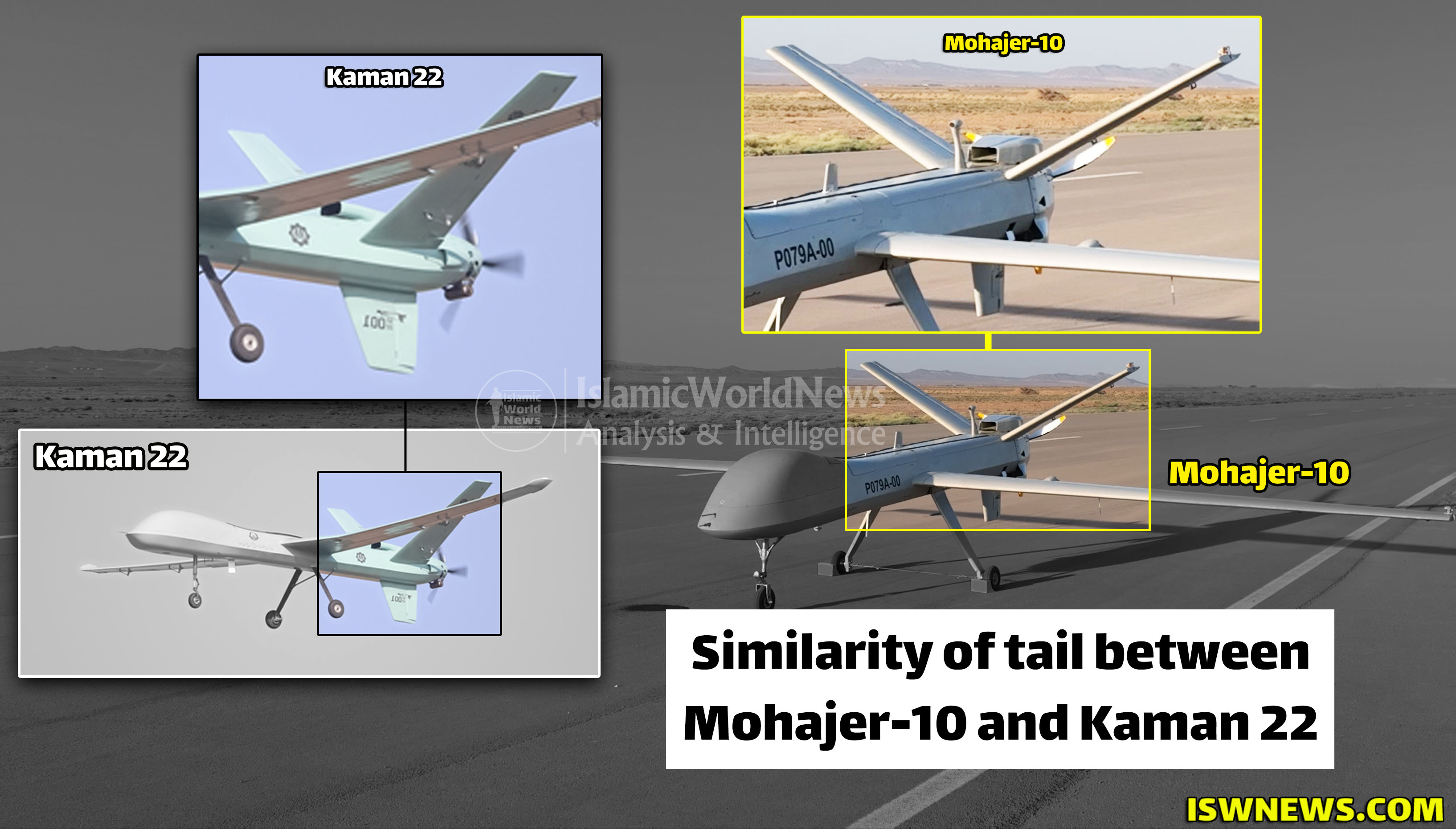
Mohajer-10 drone also has a similar tail to Kaman 22 and uses a combination of three wings. Two V-shaped wings are located on top of the fuselage near the engine and a smaller wing is located under the body.
Similarity of the tail between Kaman 22 and Mohajer 10
The main difference between Mohajer-10 and Kaman 22 is in the shape of their wings. In Kaman 22, wings have a special bend and twist in design but in Mohajer-10 wings have a simpler appearance and more stretch.
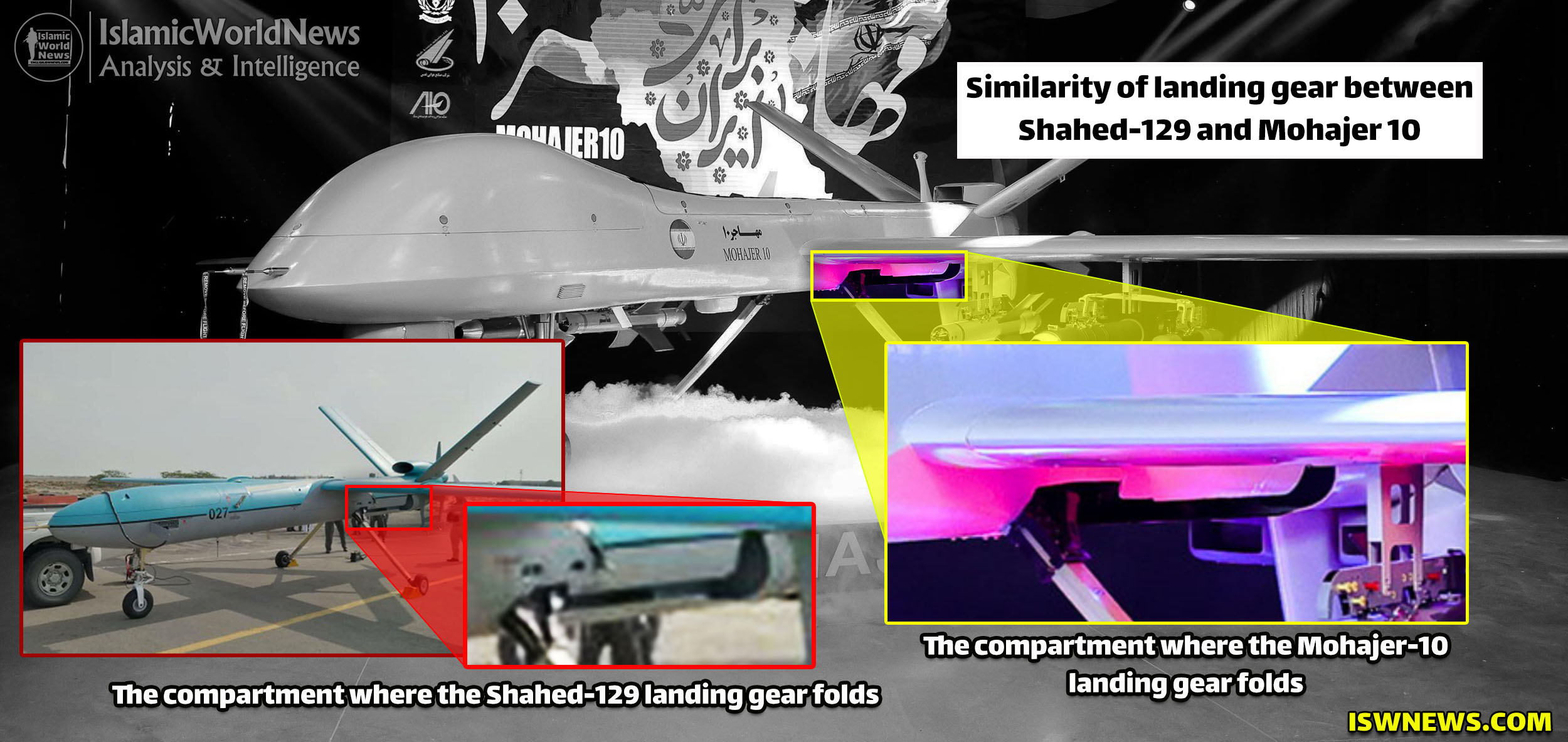
The main point about Mohajer-10 is its landing gear. The rear landing gear on Mohajer-10 drone in the unveiled version is foldable like Shahed-129 drone landing gear. The rear and front landing gear on Mohajer-10 are folded backward and are placed inside the fuselage during flight. The folding landing gear reduces drag during flight, and it reduces fuel consumption and increases flight range.
Similarity of the rear landing gear of Shahed-29 and Mohajer-10
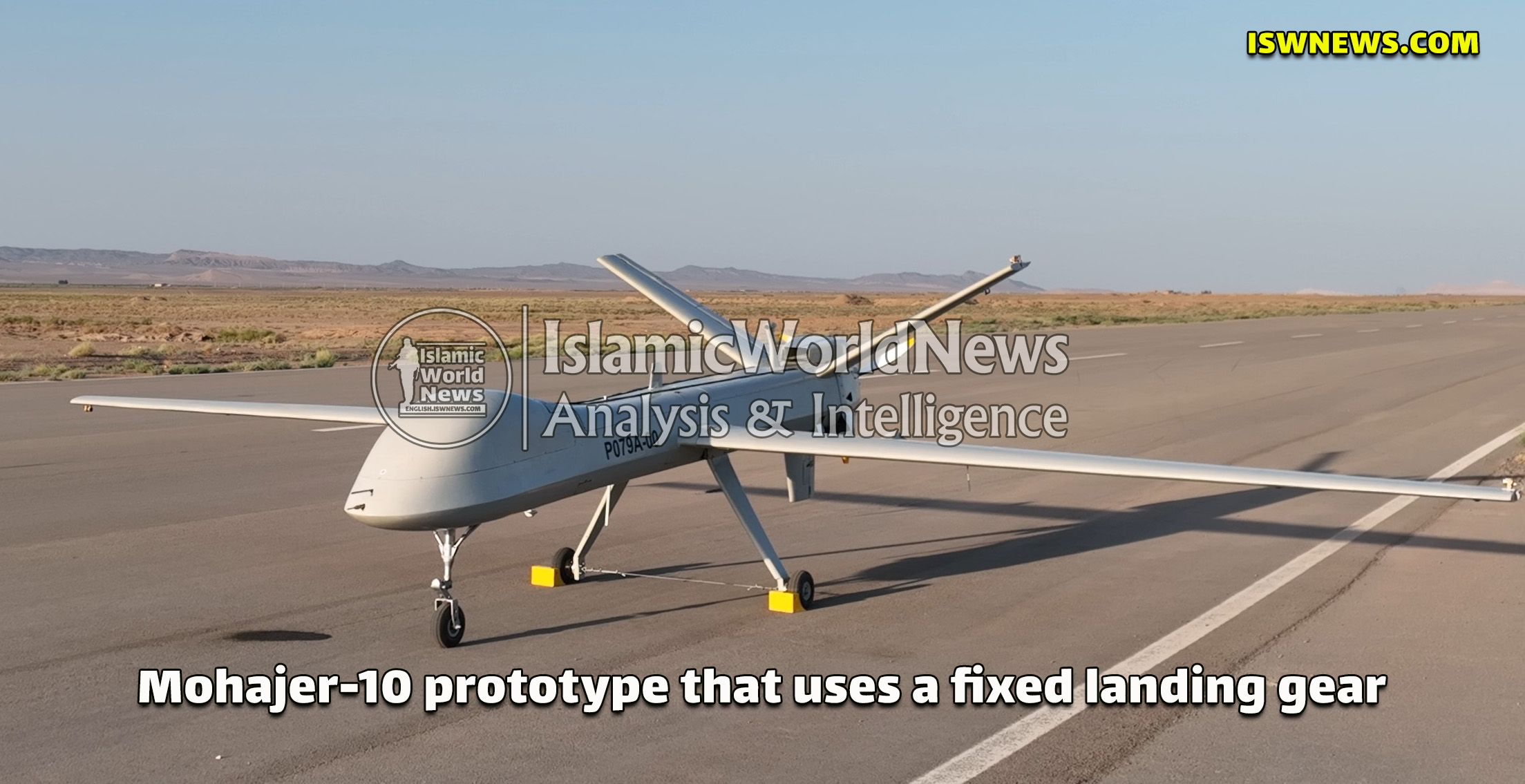
However, in a video released of test flight of Mohajer-10 drone, this drone uses fixed rear landing gear. This simple landing gear that was also used in Mohajer-6 drone consists of a metal wire buckle and a flexible holder. The way it works is that due to flexibility of landing gear, metal wire prevents excessive opening of landing gear and flexibility also reduces pressure on structure at the time of landing. Therefore, there are two possibilities: The first possibility is that the published video is related to the initial (prototype) and experimental version of Mohajer-10 and it has been completed later. And the second possibility is that the Mohajer-10 drone has two cheap and expensive versions. In the cheap version, it uses simple landing gear and weaker optics, and in the expensive version, it uses foldable landing gear and a stronger camera (the camera used in Shahed-149).
The prototype version of the Mohajer 10 UAV that uses a fixed landing gear
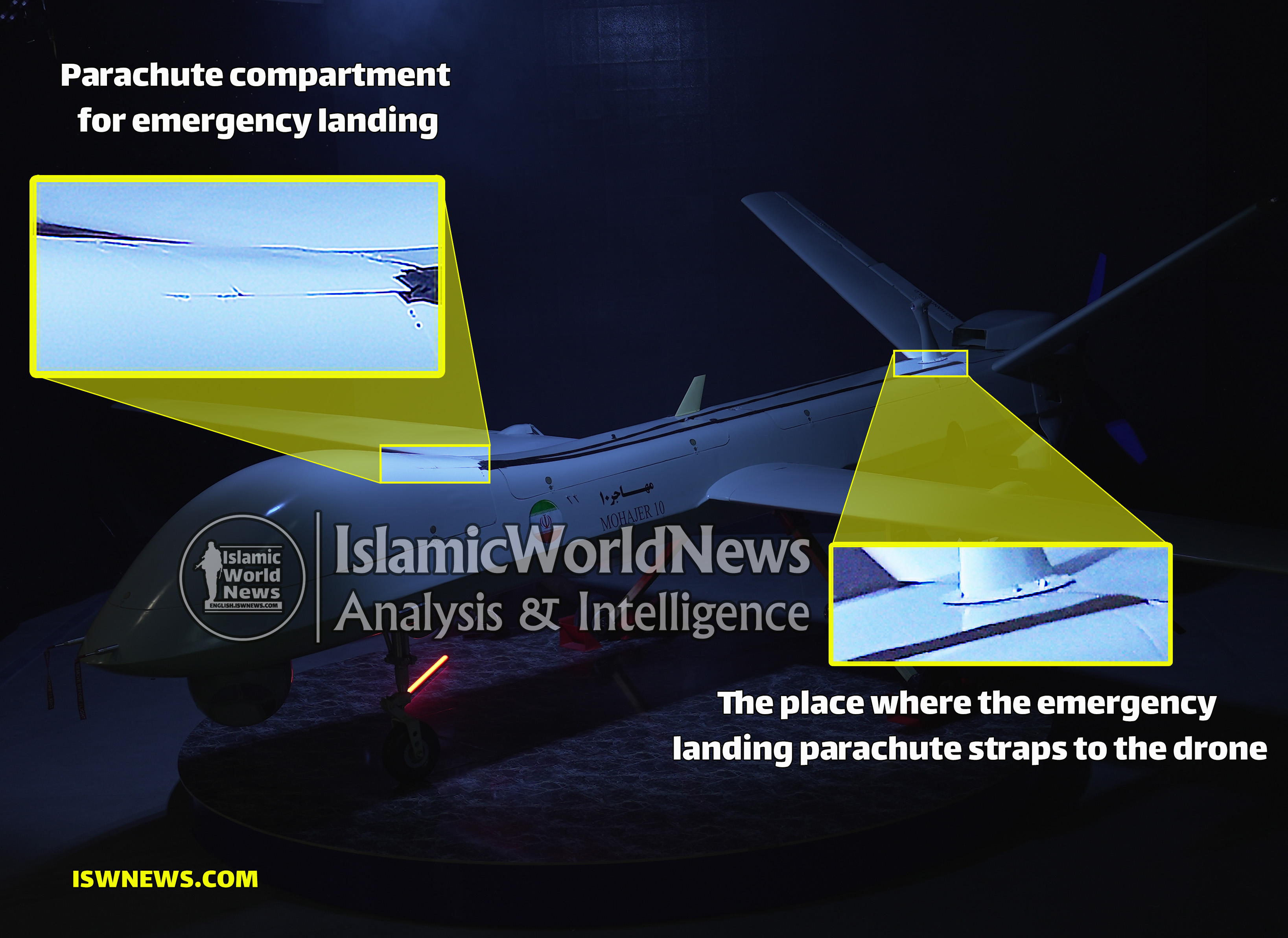
Mohajer-10 drone also has the ability to carry a parachute for emergency landing, which seems to have inherited this capability from Mohajer-6 drone. This emergency parachute is located in a separate location behind satellite equipment and its straps are tied in two sections at the tail of the drone and near the engine.
The parachute for emergency landing
Given the similarities among Mohajer-10 drone, Kaman 22 UAV and Shahed-129, as well as the participation of the Iranian army among the manufacturers and developers of Mohajer-10 drone, it seems that this drone has benefited from the experience of building capabilities of the IRGC and the Ministry of Defense; so, the cooperation provides Iran’s armed forces with a high-quality and affordable version of the drone series. Most likely, this drone will enter service in bulk in the IRGC and army by repeating the successful experience of Mohajer-6 drone, and it will replace Mohajer-6 and Shahed-129 drones.
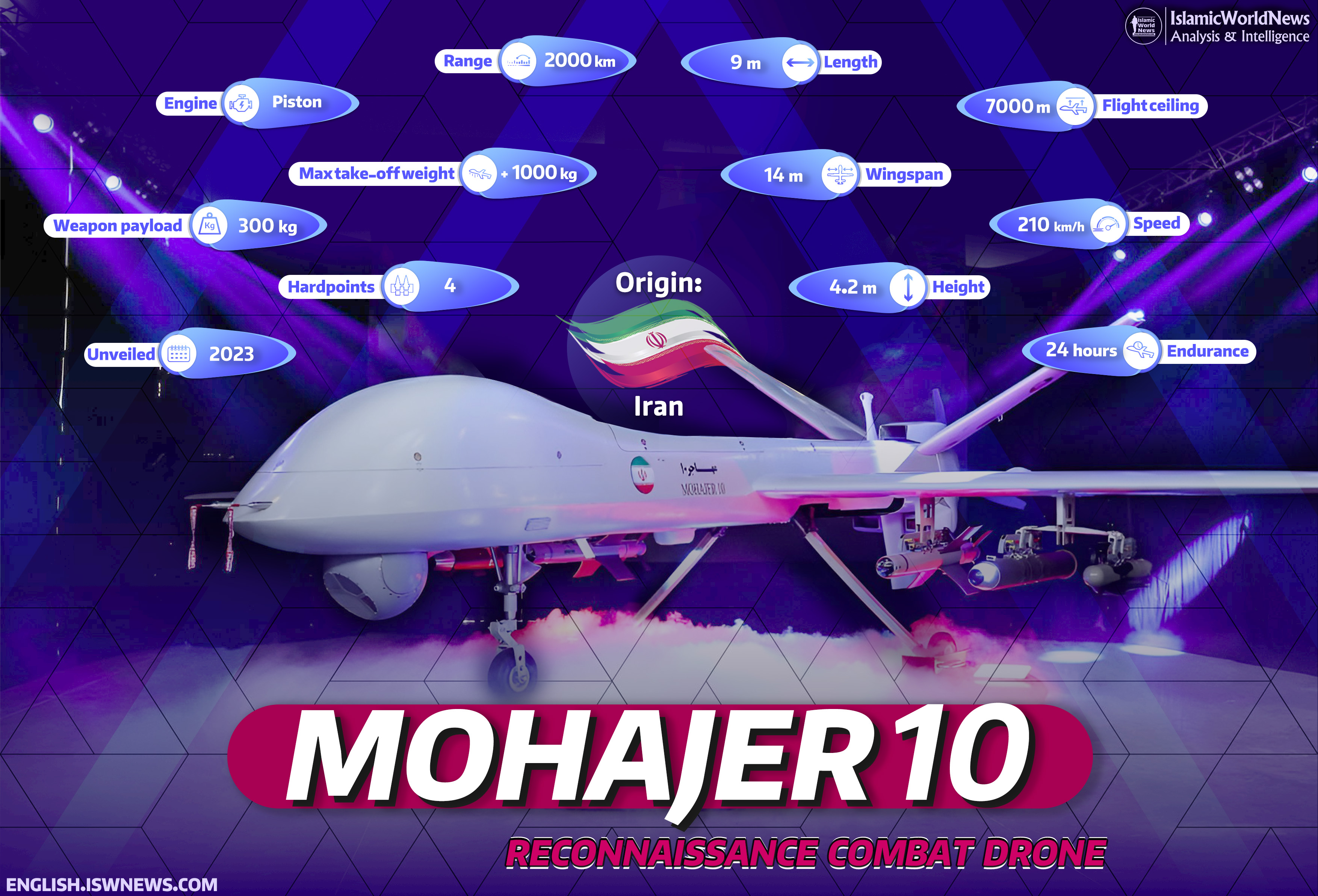
Dimensions: The dimensions and size of Mohajer-10 have not been officially announced, but based on available images, we can obtain the dimensions of Mohajer-10 drone. Based on images, which have been released so far, Mohajer-10 will have a length of 9 meters and a height of 2.4 meters, and its wing length will be 14 meters.
Camera and sensor system: Mohajer-10 drone uses a high-quality camera that was previously used on Shahed-149 (Gaza) drone. This system, which is one of Iran’s most advanced electro-optical systems, has a thermal imaging camera and laser rangefinder in addition to a day vision camera with a zoom power of at least 100 to 120 times as well. One of the highlights of this system is the use of catadioptric telescopic lens that multiplies magnification. Using this camera will significantly increase the quality of filming and photography of drones, which is considered a great advantage. In general, electro-optical systems are considered one of the main parts or perhaps the most important part of the drone.
The electro-optical systemsand ammunition used in Mohajer-10 drone
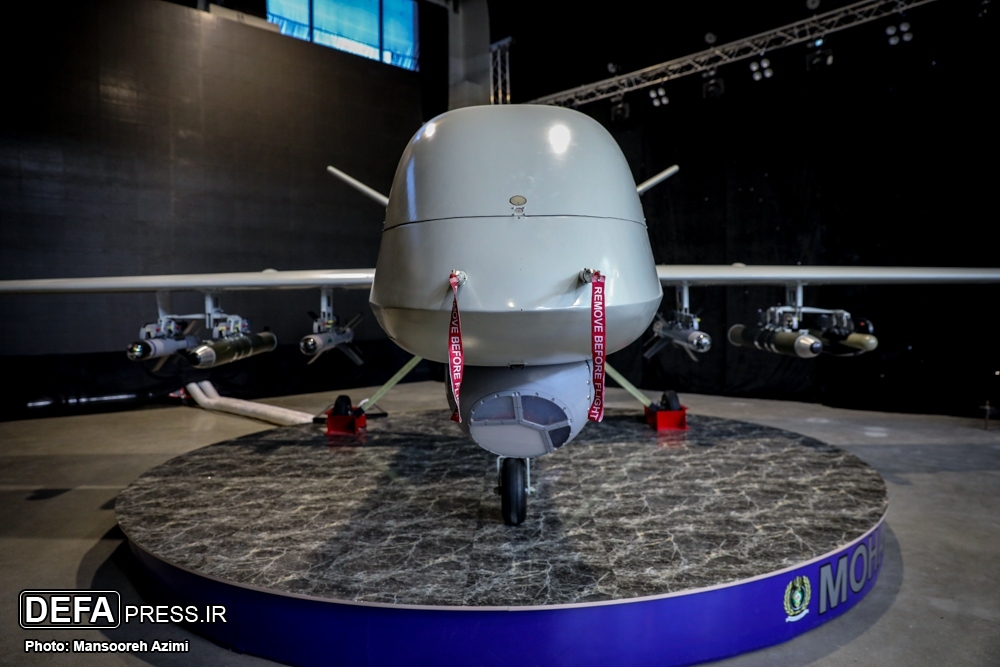
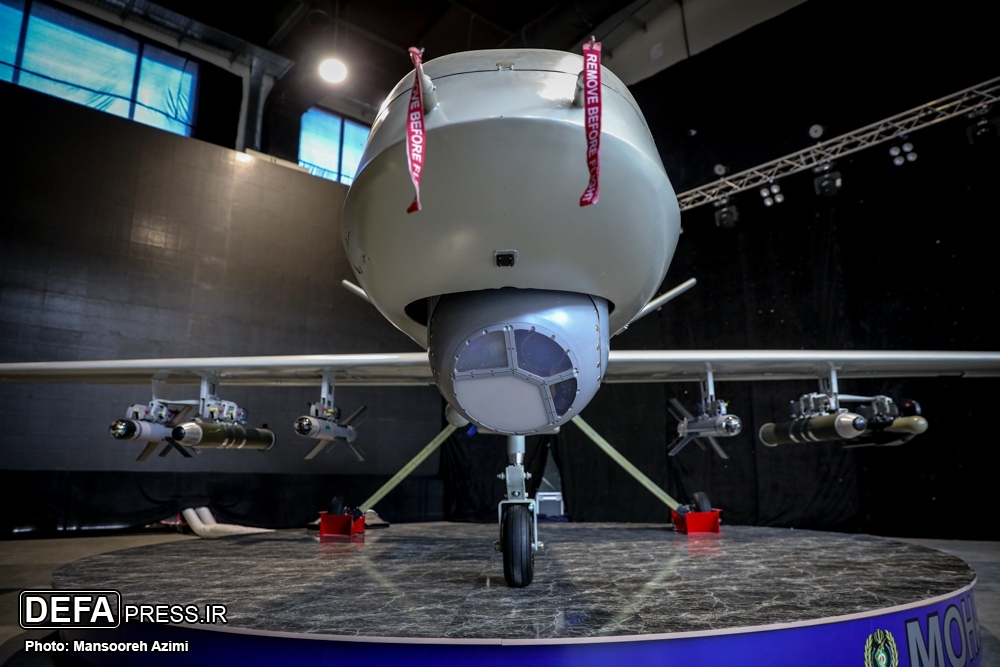
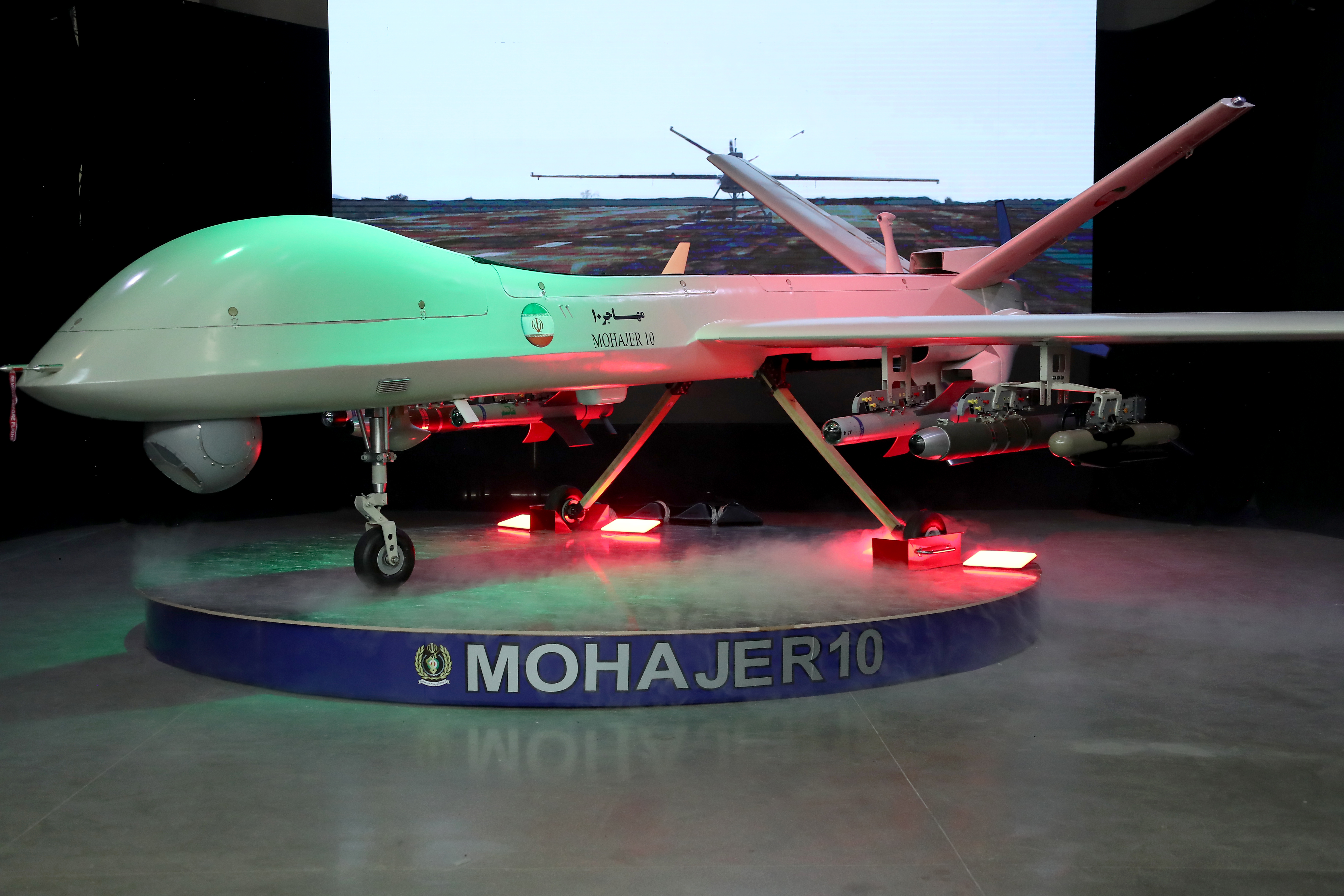
Armaments: Mohajer-10 drone has four hardpoints under its wings for carrying ammunition. This drone was carrying three Ghaem-5 precision-guided bombs with optical (TV) guidance, anti-armor Almas missile, and Arman guided air-launched bomb at the time of unveiling (image above). It seems that this drone can carry up to a maximum of eight bombs and missiles.
Mohajer-10 can carry various types of Ghaem series bombs, various types of Sadid series bombs, Almas anti-armor missile, Arman air-launched glider bombs, and so on.
Arman guided air-launched bombs are the latest type offered from this class of bombs that have been lightened and optimized for carrying by drones. Given the development of this drone on previous platforms such as Kaman-22 and Shahed-129, there is also a possibility to carry a wide range of weapons on Mohajer-10 such as: electronic warfare pods developed for Kaman-22 drone, Kaman-12 drone, Mohajer-6 drone, Sadid series bombs.
4 hardpoints under the wings to carry up to 8 missiles and bombs
Mohajer-10 drone has a flight endurance of 24 hours at an altitude of seven thousand meters and an operational radius of 2 thousand kilometers, and it benefits from a maximum speed of 210 kilometers per hour. The maximum fuel capacity of this drone is 450 liters and its maximum payload weight is 300 kilograms.
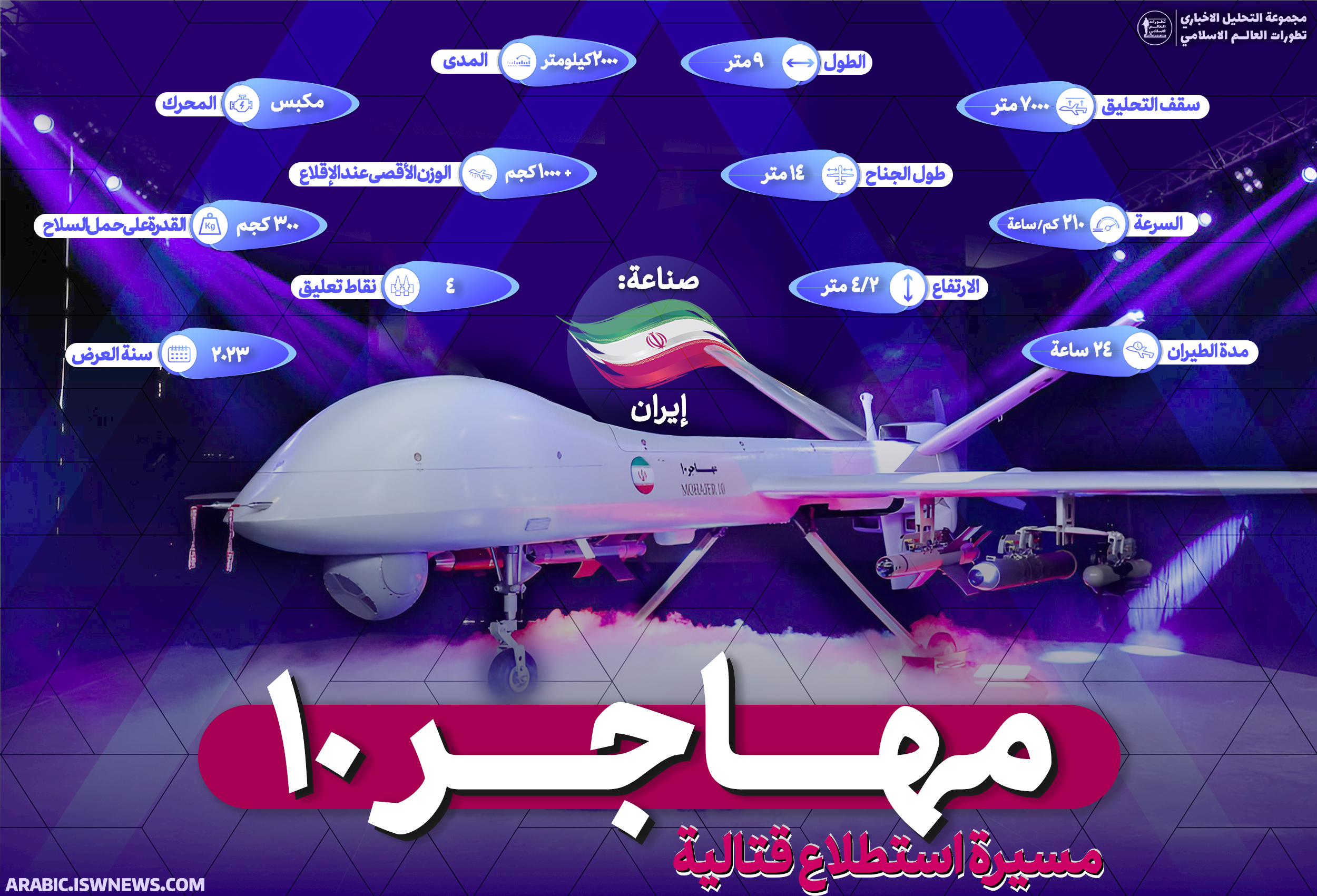
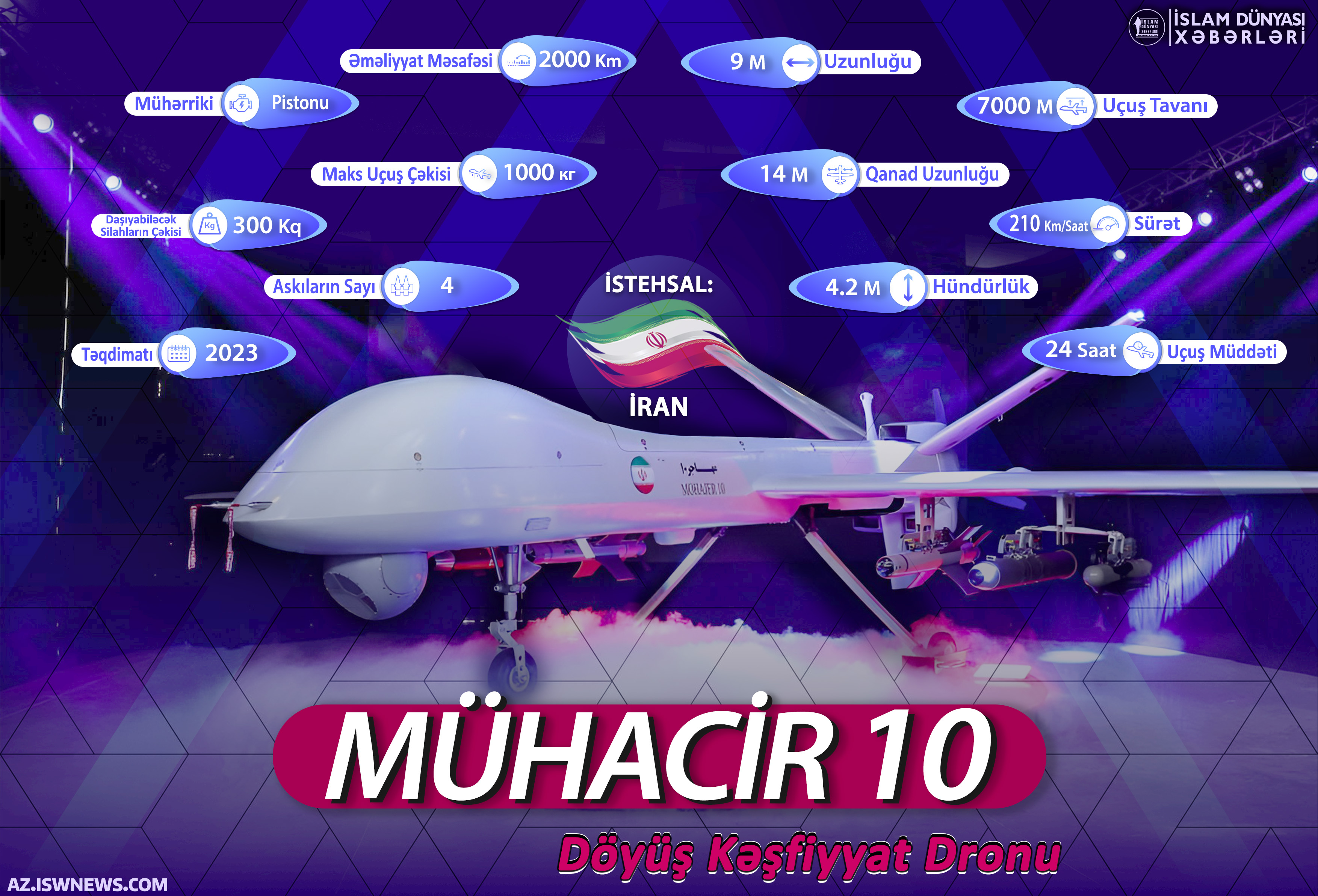
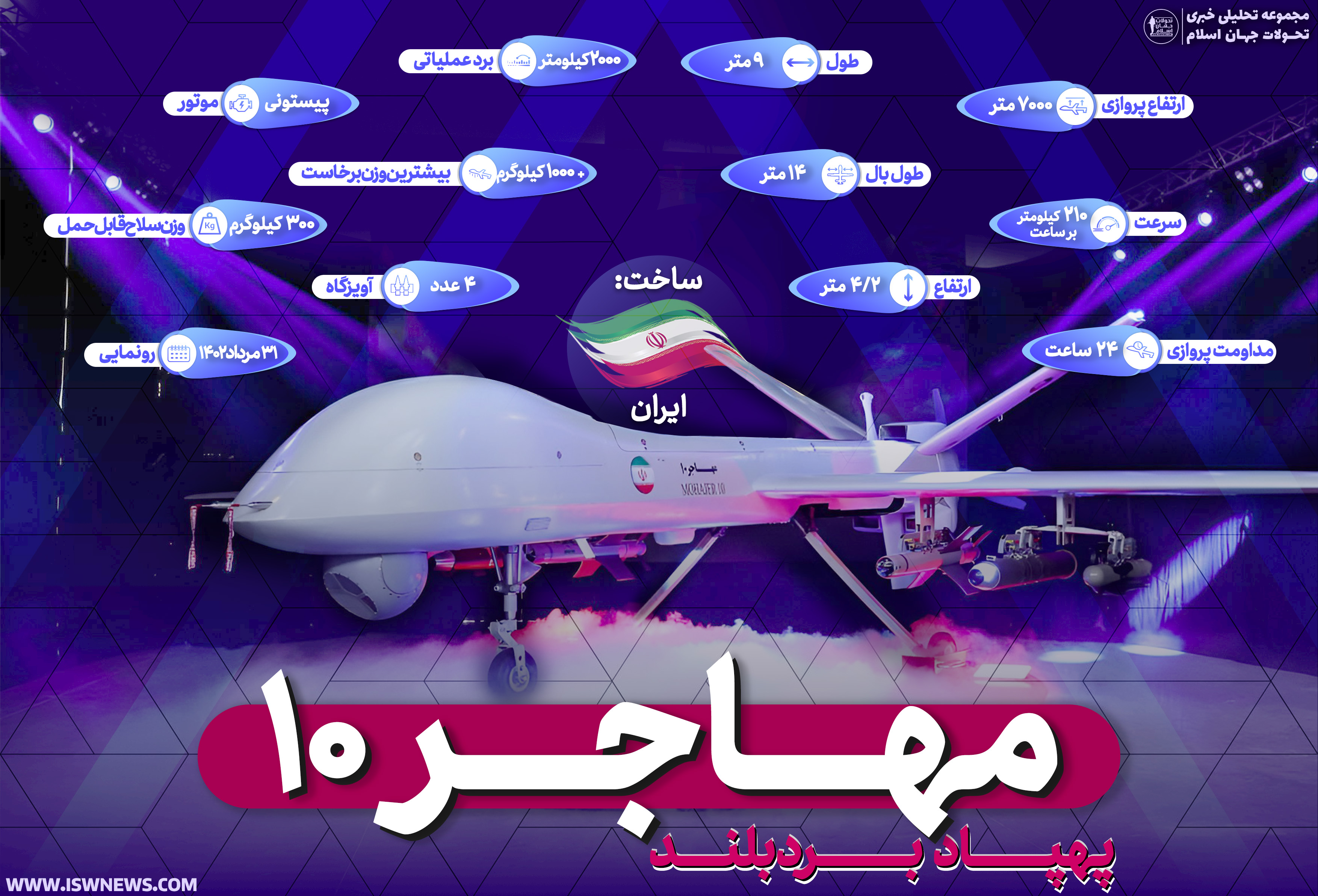
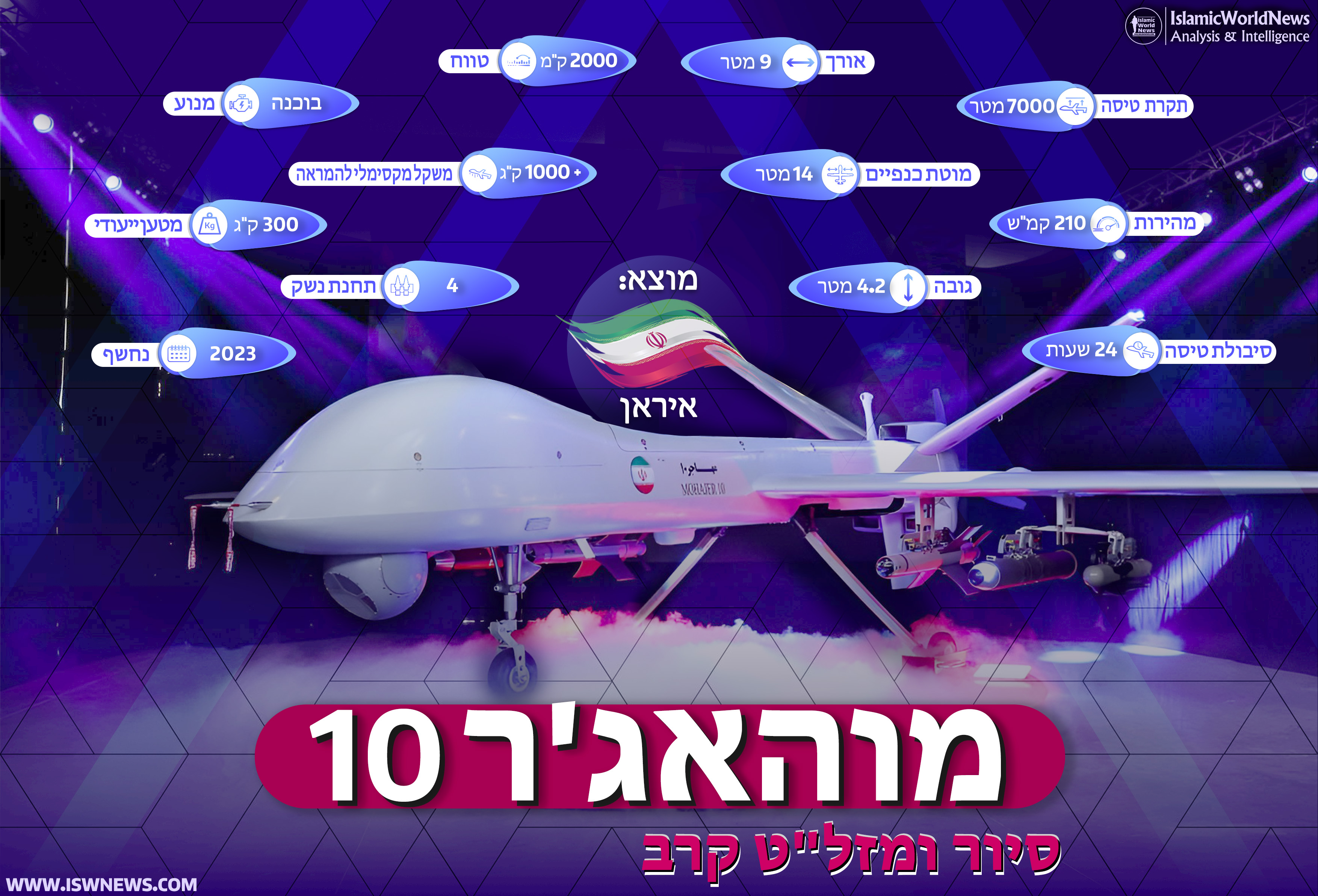
Specifications of Mohajer-10 drone: Role: Combat and reconnaissance drone Unveiled: 22 August 2023 Origin: Iran Producer: Qods Aviation Industries, and Iran Aviation Industries Organization (AIO) Length: 6.5 meters Height: 4.2 meters Wingspan: 18.2 meters Operational range: 2000 km Speed: 210 km/h Flight ceiling: 7000 meters Engine: Piston Maximum take-off weight: ~ 1000 kg Weapon payload: 300 kg Fuel weight: 450 kg Hardpoints: 4 under the wings, capable carrying up to 8 missiles and bombs Armament: Ghaem series bombs, Sadid series bombs, Almas anti-armor missile, Arman air-launched glider bombs, electronic warfare pods, etc.
Mohajer 10 long-range drone – click to view full size
More images of Mohajer 10 drone:
Click to view full size
Infographics of Mohajer 10 UAV in Russian(Мохаджир 10), Arabic(مهاجر 10), Farsi, Azeri(Mühacir 10) and Hebrew(מוהאג’יר 10):
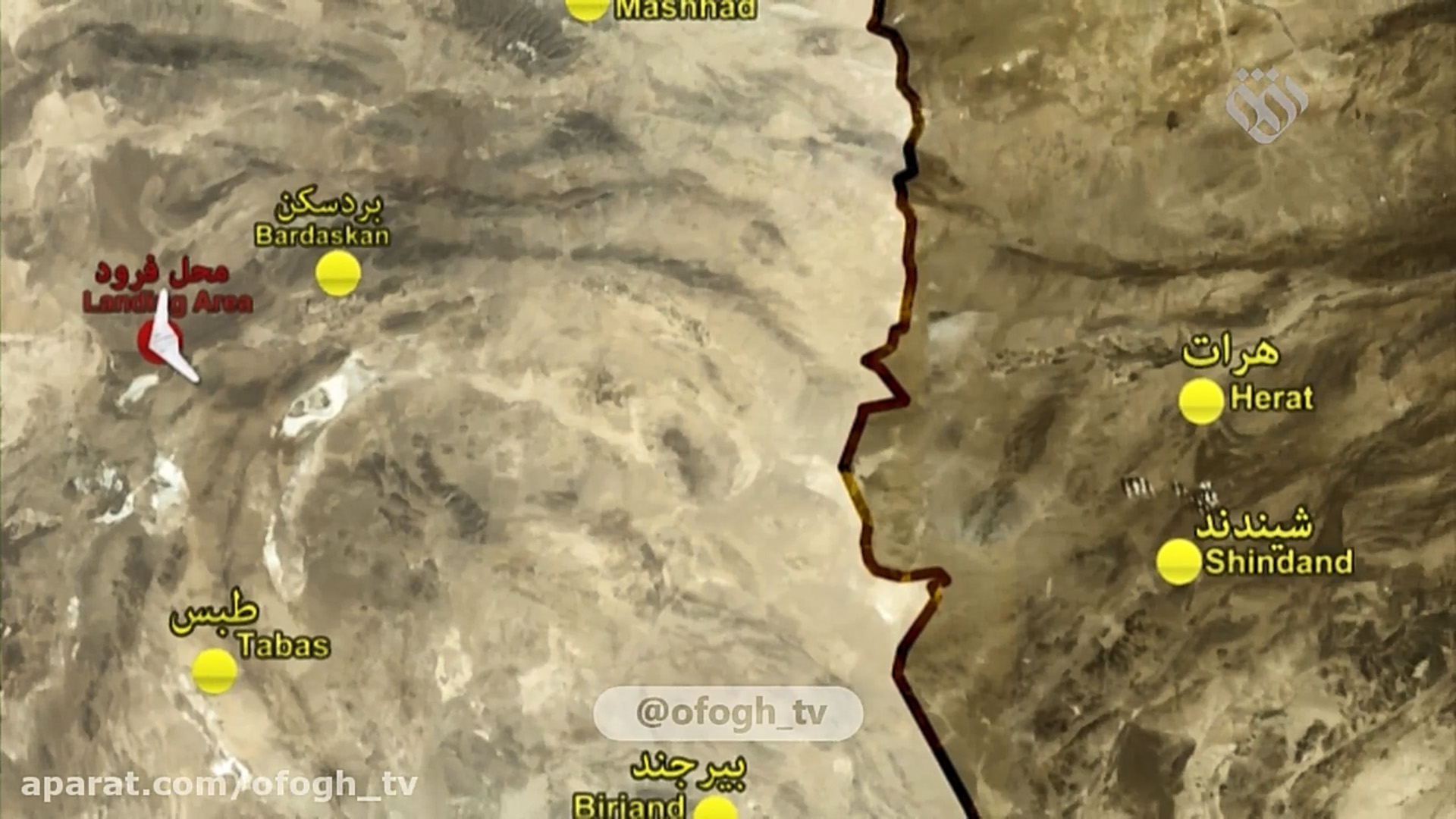
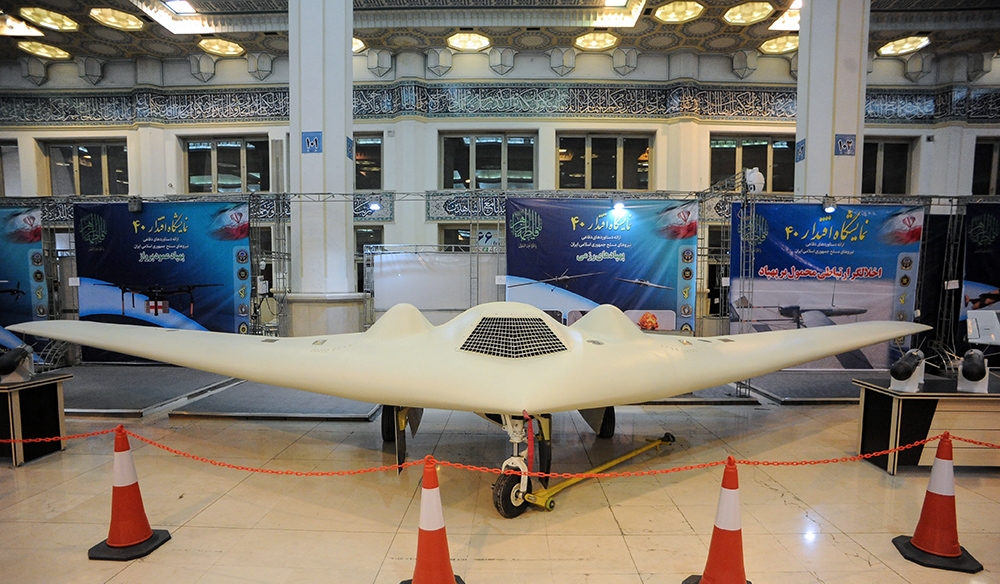
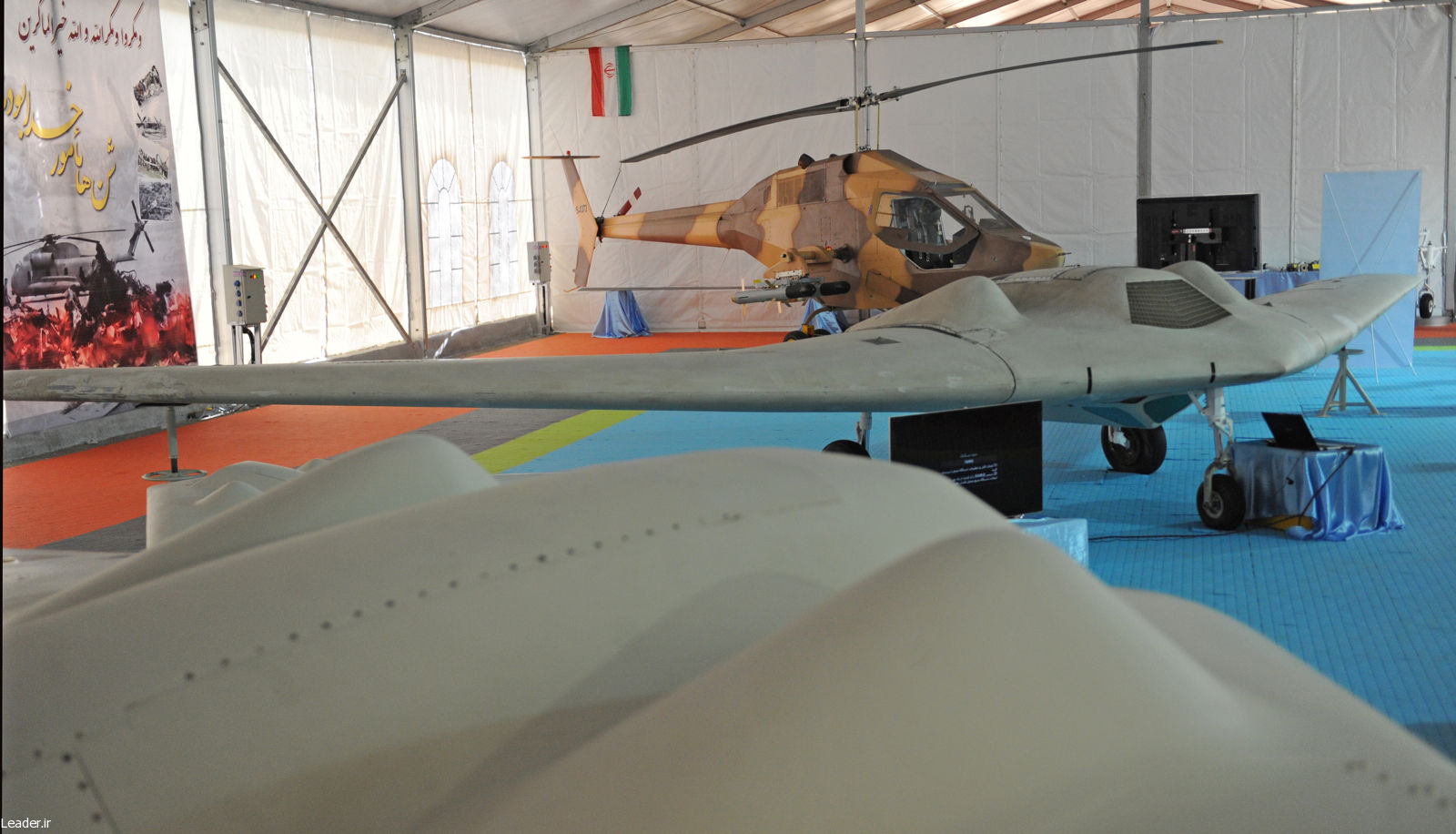
History The story of Iranian Simorgh family drones began with hunting “The Beast of Kandahar”. On December 4, 2011, the Iranian Islamic Revolutionary Guard Corps Aerospace Force managed to take control of an advanced US drone named Lockheed Martin RQ-170 Sentinel, known as The Beast of Kandahar. The stealth RQ-170 drone had entered Iran’s airspace to collect information and espionage, and finally, through processes, Iran managed to override its controls and landed it near the town of Bardaskan.
Iran force-landed RQ-170 near Bardaskan
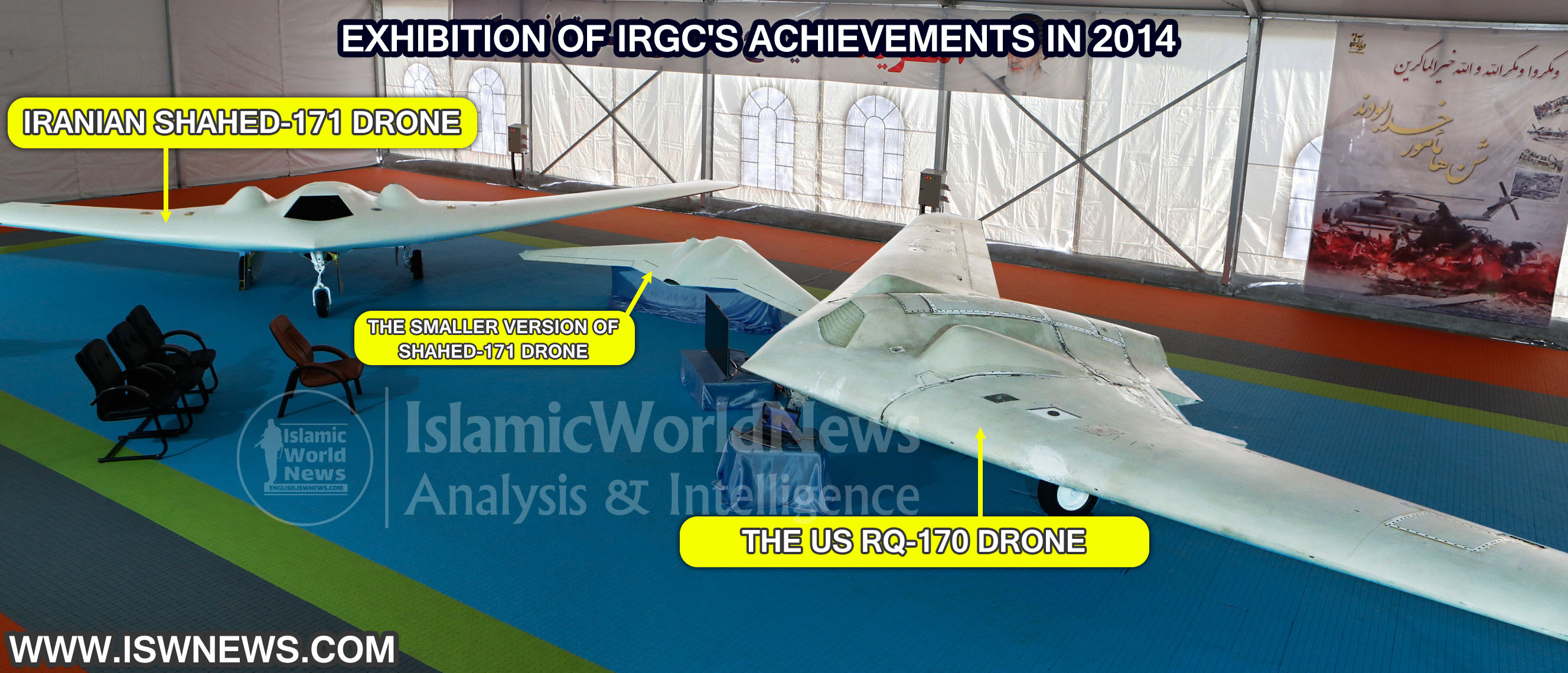
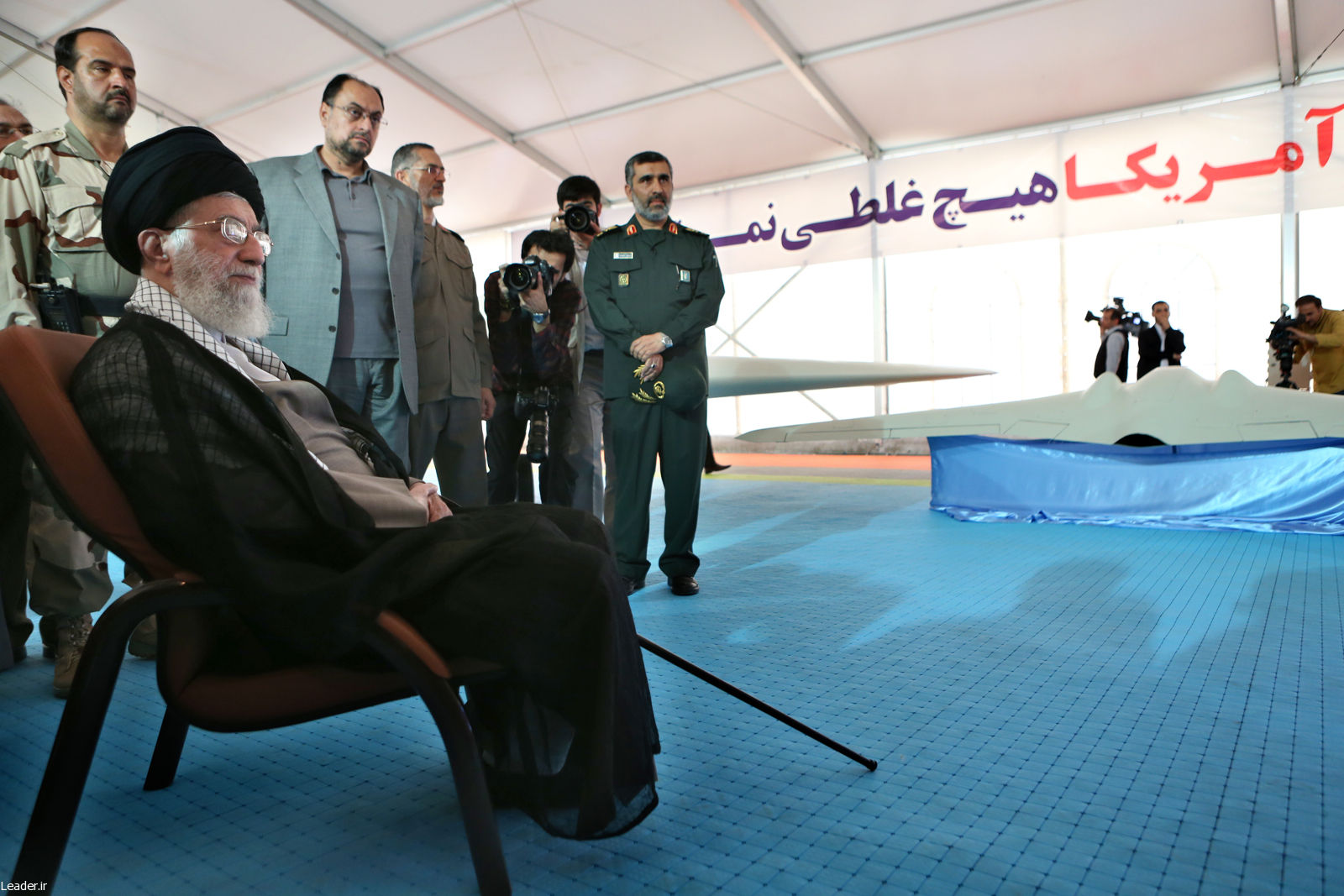
In May 12, 2014, during Iran’s Commander-in-Chief’s visit to the IRGC Aerospace Force’s Achievements Exhibition, it was stated that the Iranian Armed Forces had succeeded in obtaining all the software information of this bird and had obtained images from all the bases where this bird was present. During the same visit, it was also announced that a 15% scale version has flown successfully and two 40% and 100% scale versions will be flown in the same year. Also, General Hajizadeh the commander of IRGC Aerospace Force stated that this drone will also be armed with missiles. In November 2014, a video of the successful flight of this bird was published.
Three drones displayed in the IRGC achievements exhibition in 2014
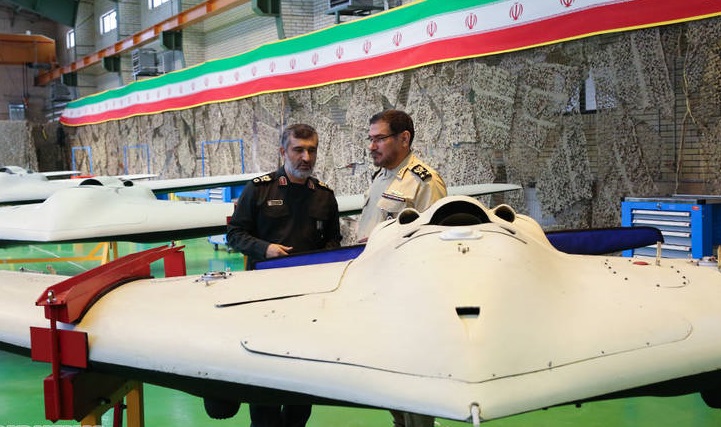
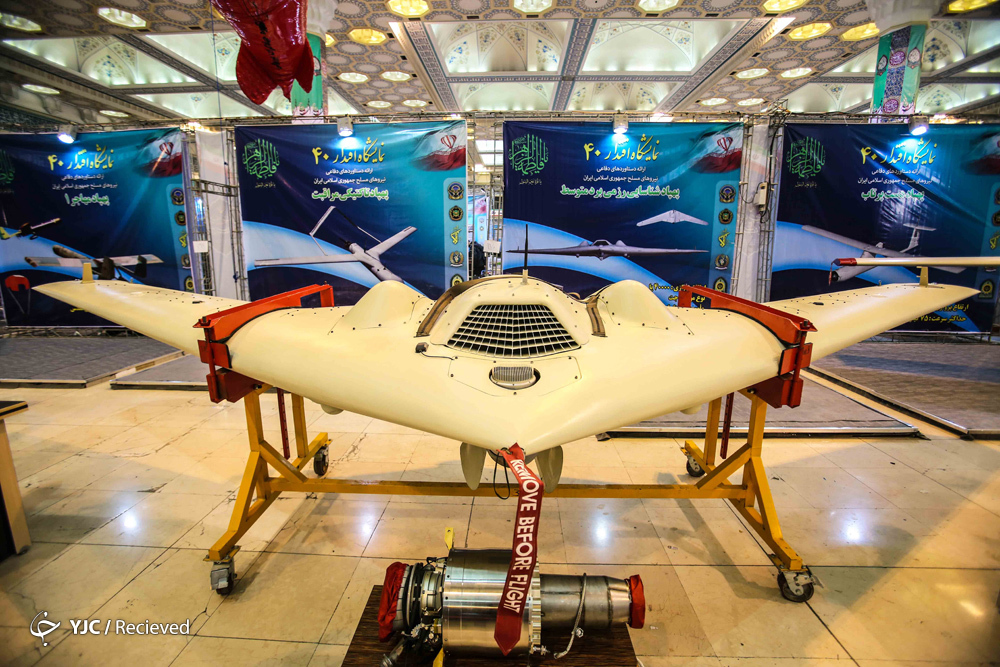
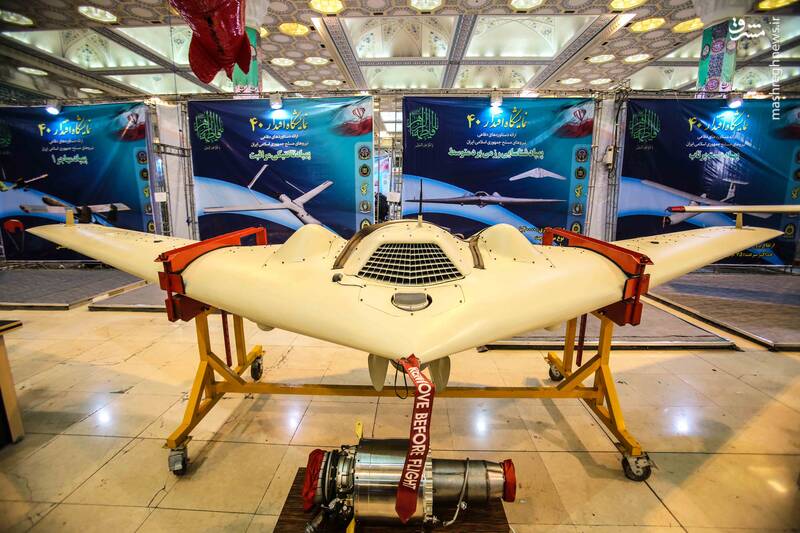
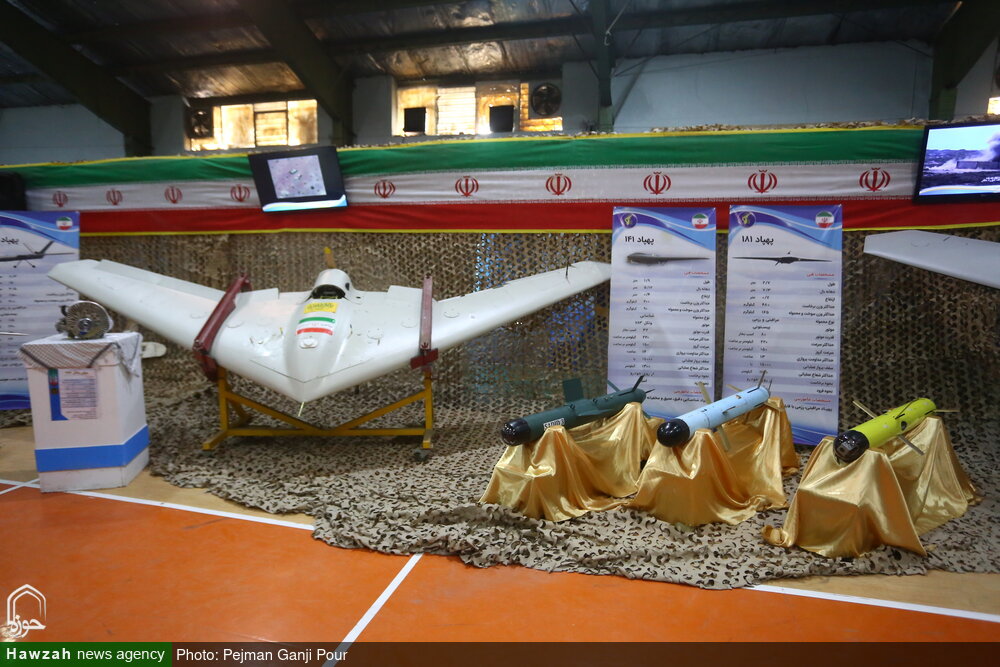
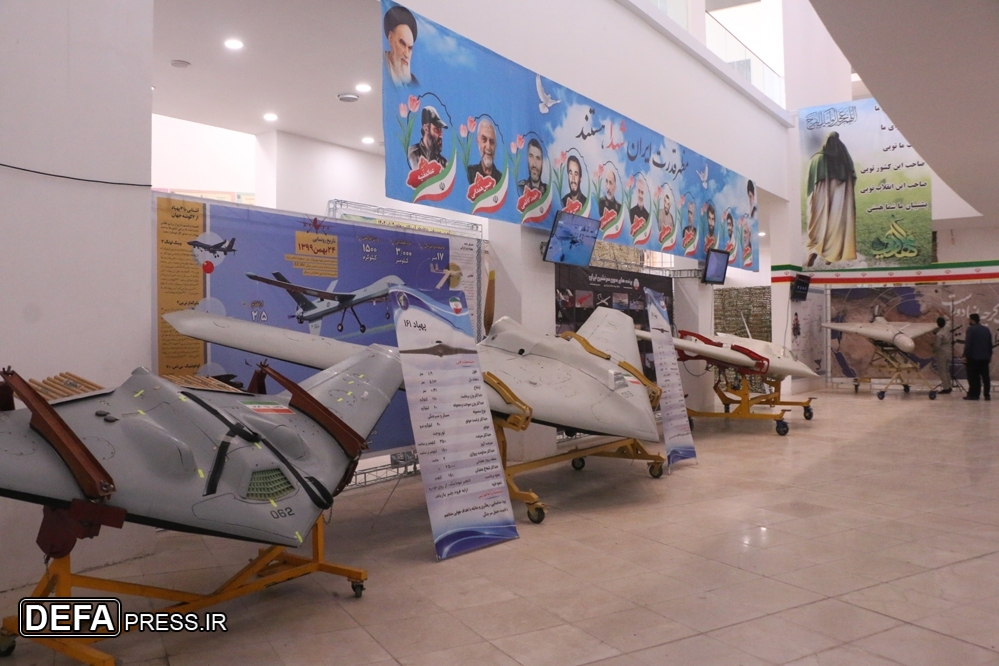
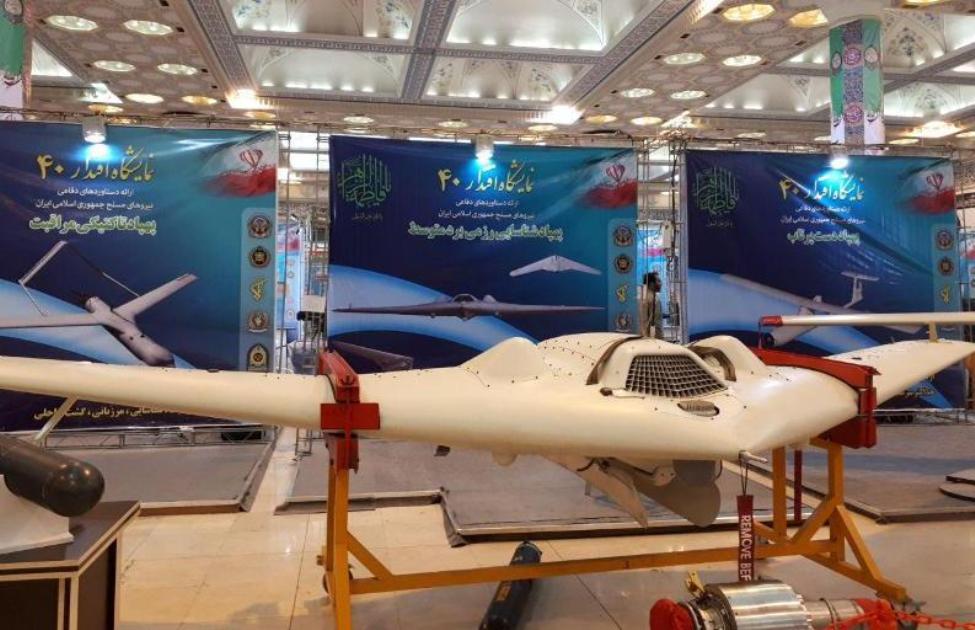
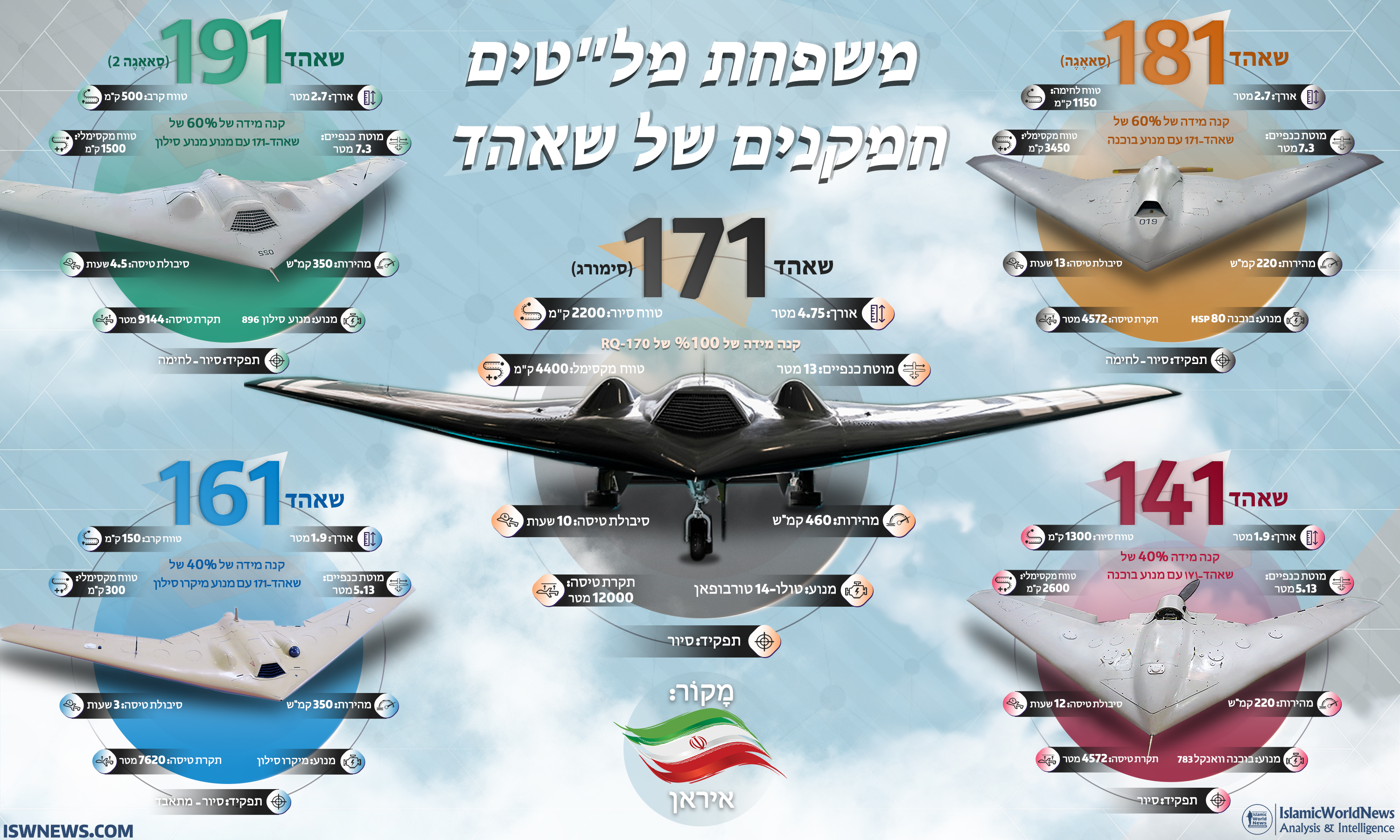
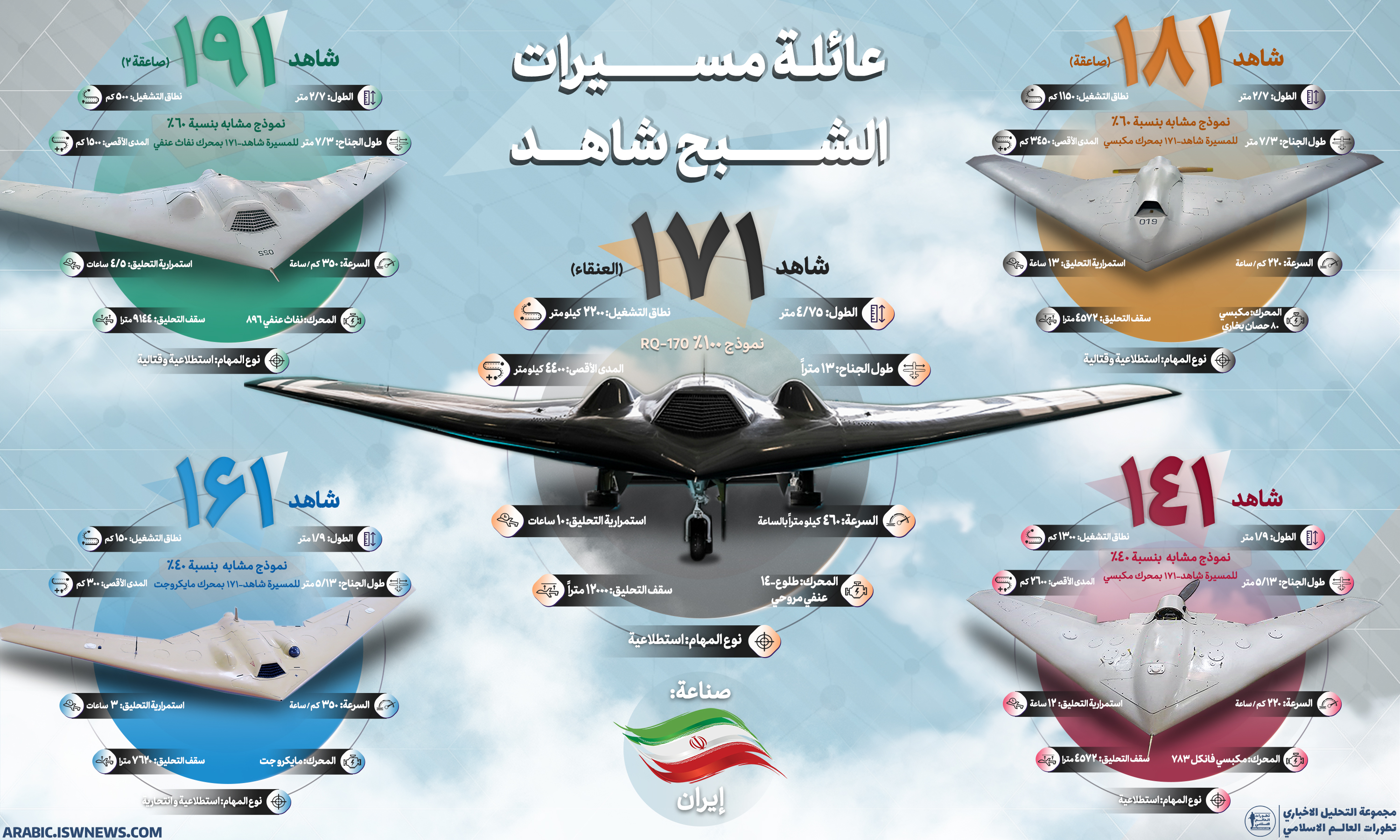
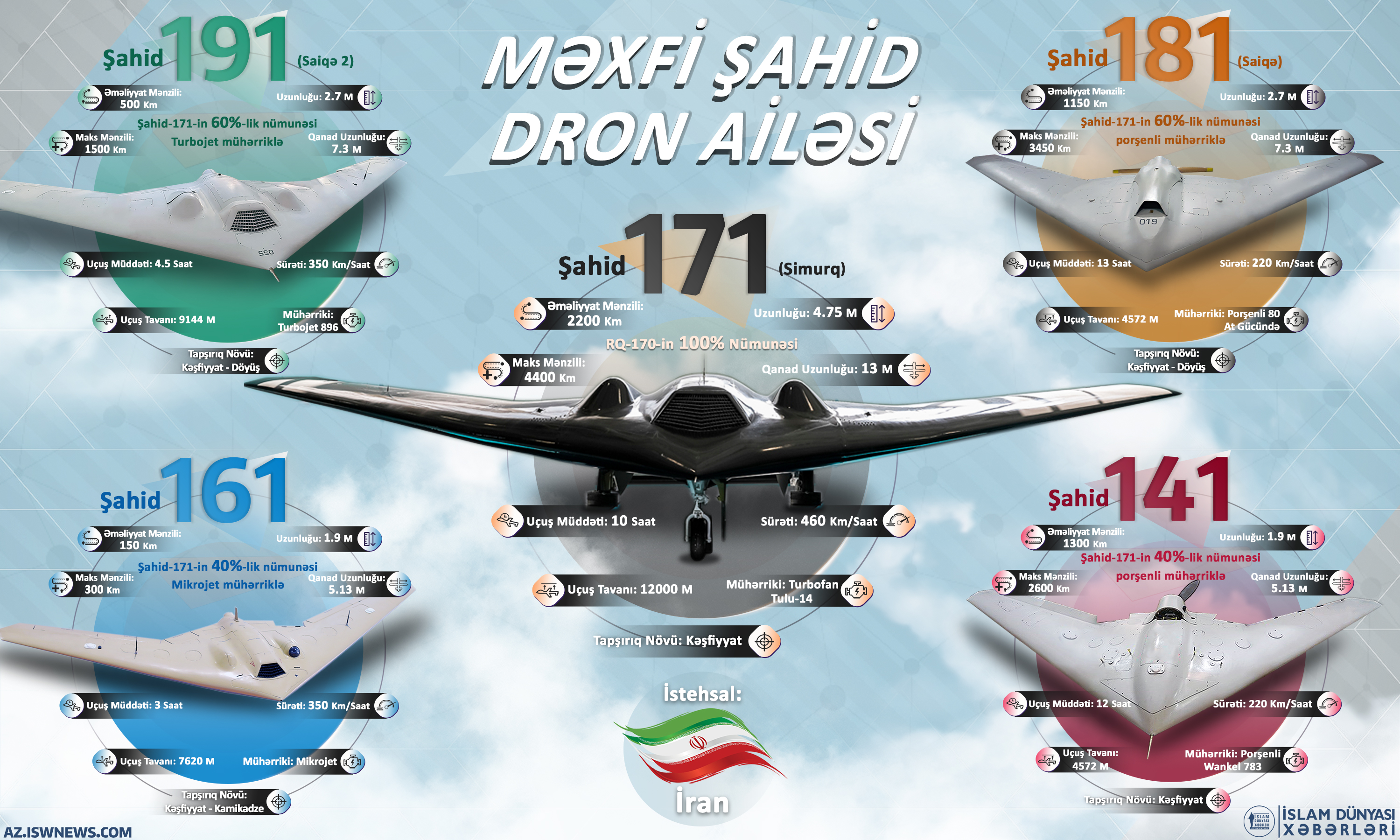
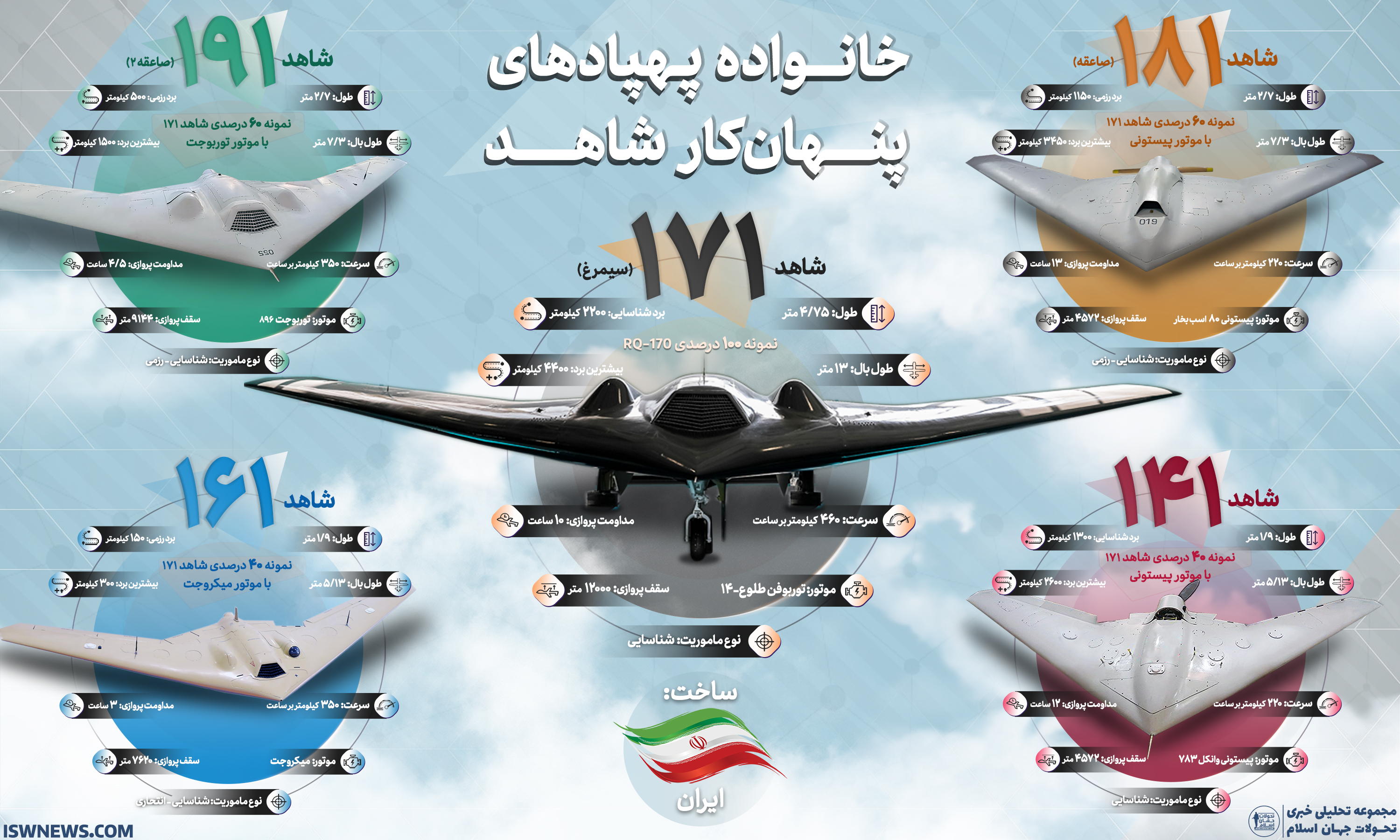
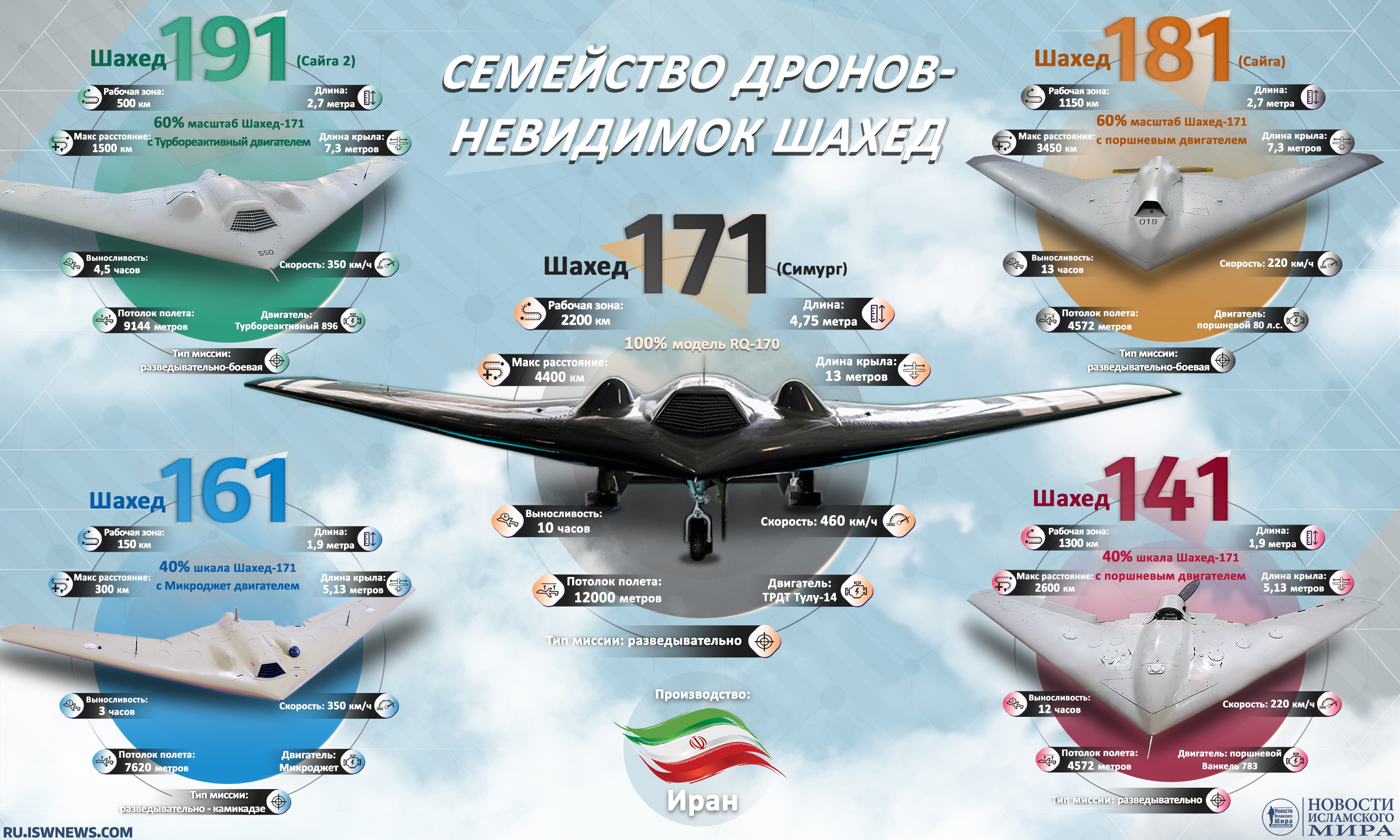
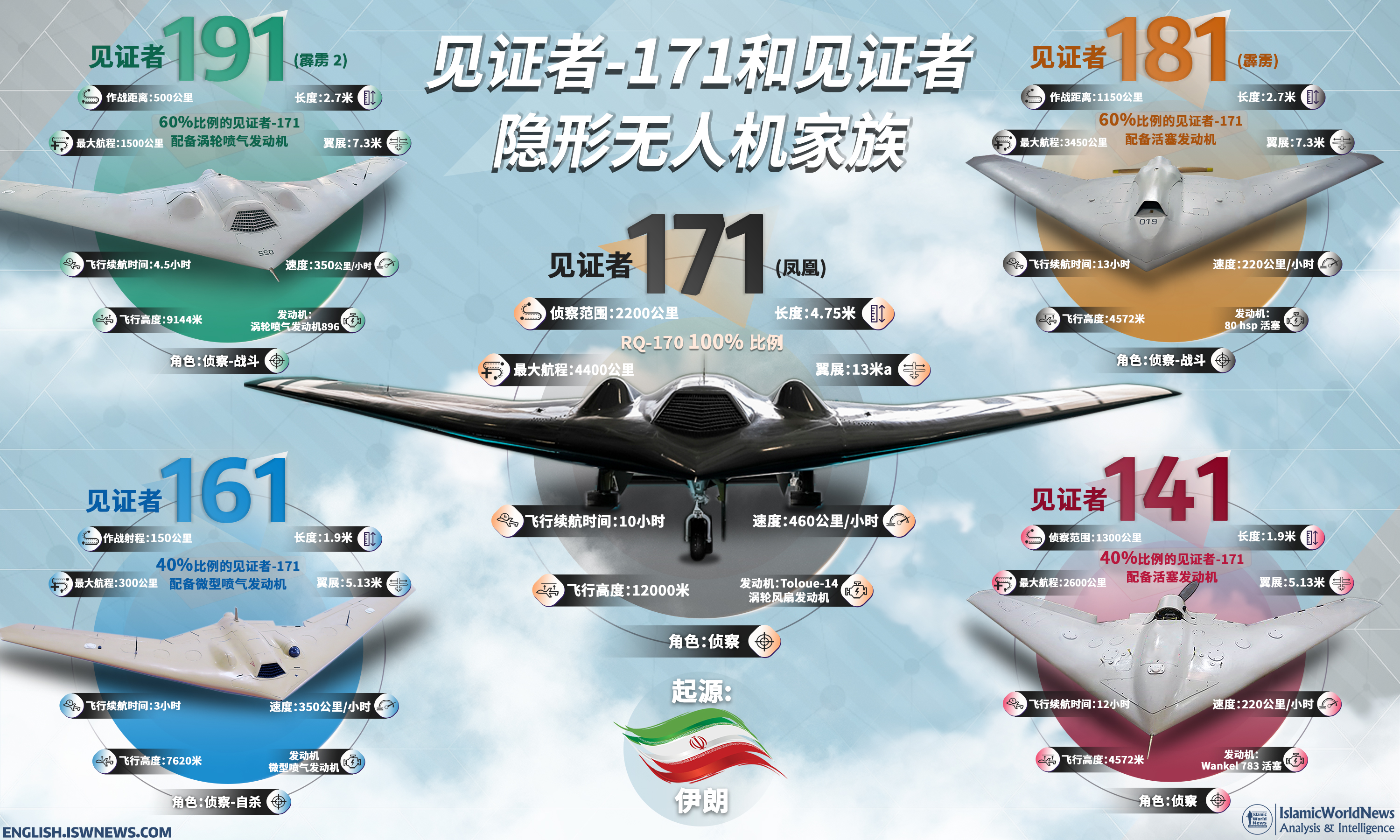
In 2016, during Admiral Shamkhani’s visit to the IRGC Aerospace Force achievements exhibition, new variants of this series of UAVs named Shahed 181 were unveiled. Two years later, Shahed 191 was unveiled during the Eghtedar 40 exhibition. It should be noted that both Shahed 181 and Shahed 191 drones are 60% scale version of Shahed 171 drone.
Shahed 181 in Admiral Shamkhani’s visit to the IRGC achievements exhibitionShahed 191 drone at the Eghtedar 40 exhibitionClick to view full size
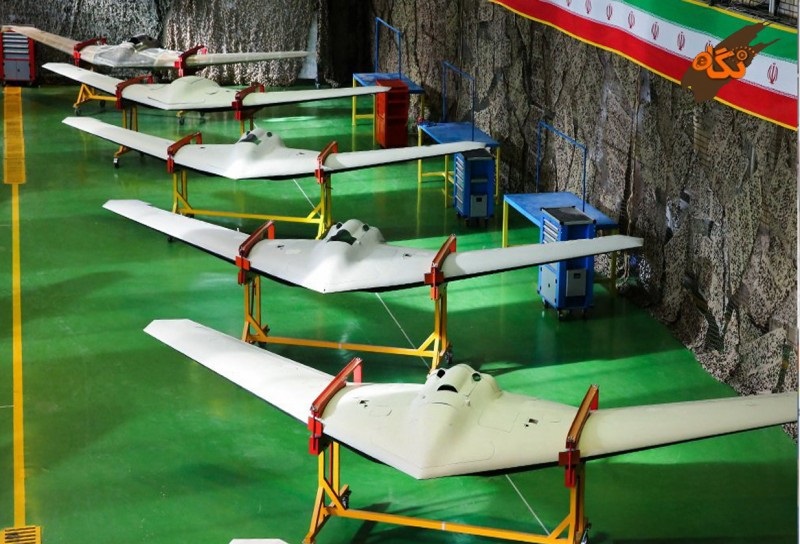
Different variants of Shahed stealth drones: The Shahed stealth drone family includes five combat and reconnaissance types, each of which is measured in terms of its size compared to the RQ-170 or Shahed-171 drone. In this way, the Shahed-171 drone, which is nicknamed Simorgh, is a 100% scale version and completely identical to the RQ-170 Sentinel, and the two Shahed-191 and 181 drones, which carry the nickname of Saegheh, are both 60% scale version of the Shahed 171. In addition to the previous three variants, there are two Shahed-141 and 161 drone, both of which are 40% scale version of Shahed 171 in terms of dimensions. It should be noted that there are also two civilian variants of this drone. The first variant is the initial 15% scale version used for flight testing and the second variant is a 60% scale version that is used for cloud seeding. In this way, the number of Shahed-171 stealth drones reaches seven.
The importance of downing of the RQ-170 was very high, so that after landing this drone, the Iranians realized how much modern technology was used in it at once. Advanced lightweight materials were used in the structure and body of this UAV, and there was a special coating and color on the body. The use of a very advanced engine, an advanced camera with high accuracy and range, and a very advanced synthetic-aperture radar (SAR) are among the other disclosed equipment of this extremely valuable American drone. These features, along with the use of flying wing design, made it one of the most advanced drones in the world. Therefore, this drone is considered the most important drone captured by Iran in the last few decades. It can even be considered one of the most important trophies obtained after World War II.
Shahed-171 (Simorgh): Shahed-171 also known as Simorgh, is a 100% scale version of RQ-170, and uses a Toloue-14 turbofan engine. Toloue-14 mini turbofan is the result of turning Toloue-4 mini turbojet engine into a turbofan. Thanks to its turbofan engine, Shahed-171 has reached a flight endurance of 10 hours and a maximum range of 4400 km. The flight ceiling of 40,000 feet (12,000 meters), the maximum take-off weight of 3070 kg and the maximum speed of 460 km/h are other specifications of this drone. Like the RQ-170 UAV, Shahed-171 uses a shield for its thermal camera, which reduces its radar cross section.
The similarity of camera cover in Shahed-171 and RQ-170
Shahed-171 specifications: Role: Reconnaissance Length: 4.75 meters Wingspan: 13 meters Height: 1.2 meters Reconnaissance range: 2200 km Maximum range: 4400 km Flight endurance: 10 hours Flight ceiling: 40,000 feet (12,000 meters) Engine: Turbofan Toloue-14 Thrust engine power: 6 kilonewtons Maximum speed: 460 km/h Cruise speed: Unknown Weight: Unknown Maximum take-off weight: 3070 kg
Shahed-171 (Simorgh)drone
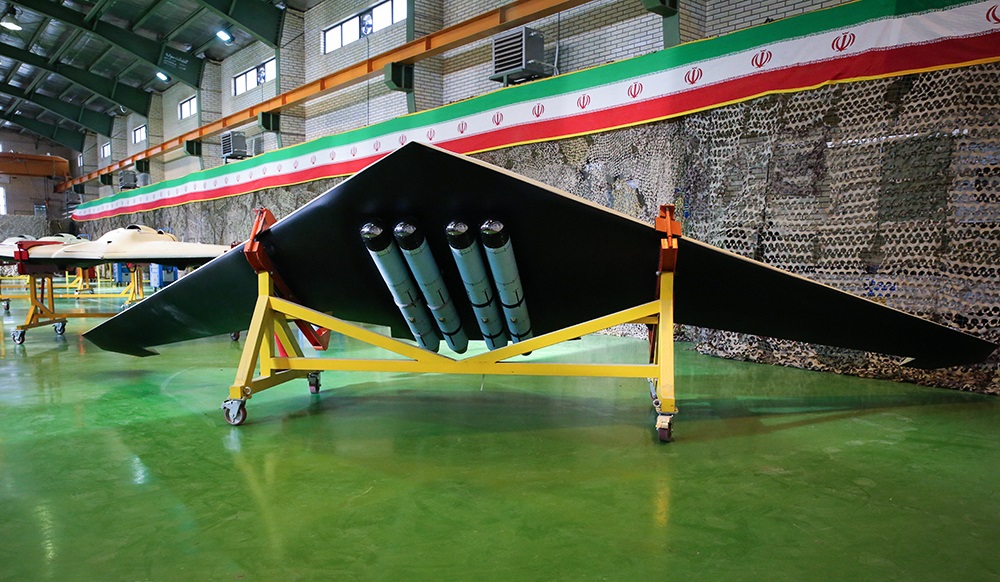
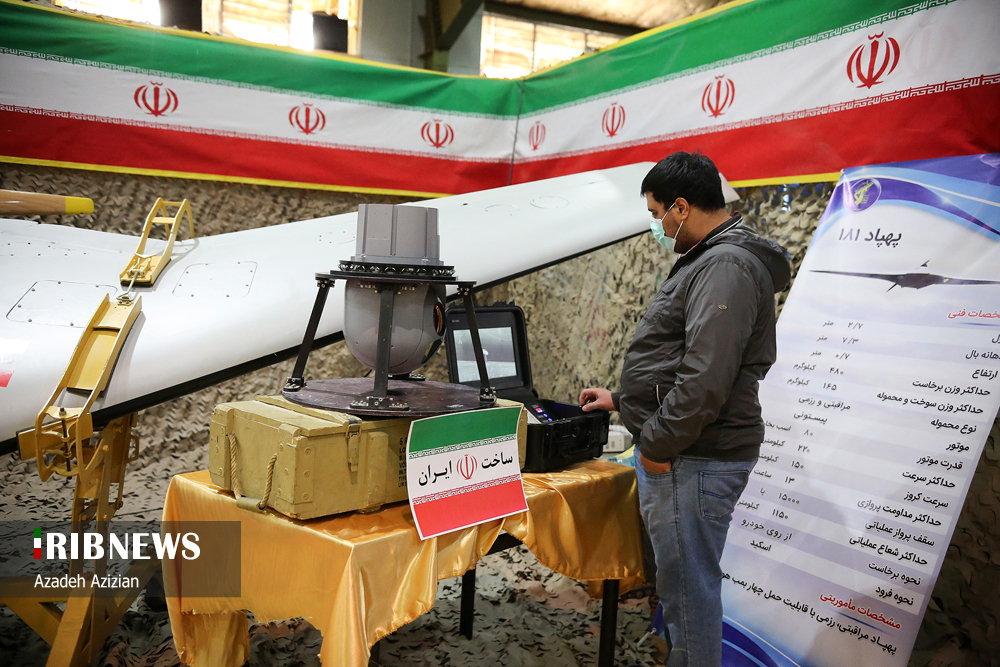
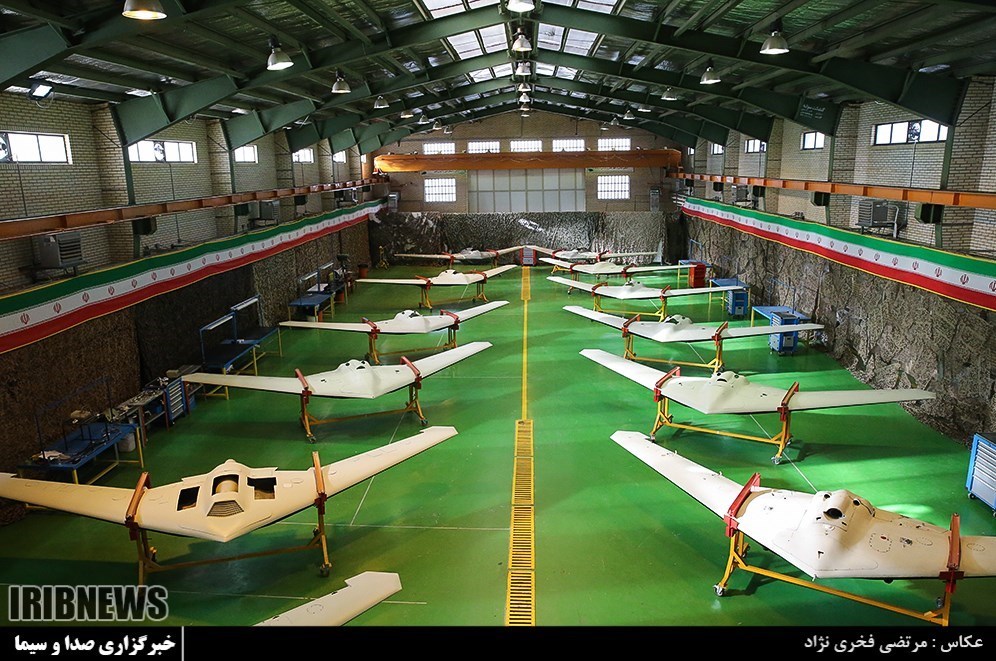
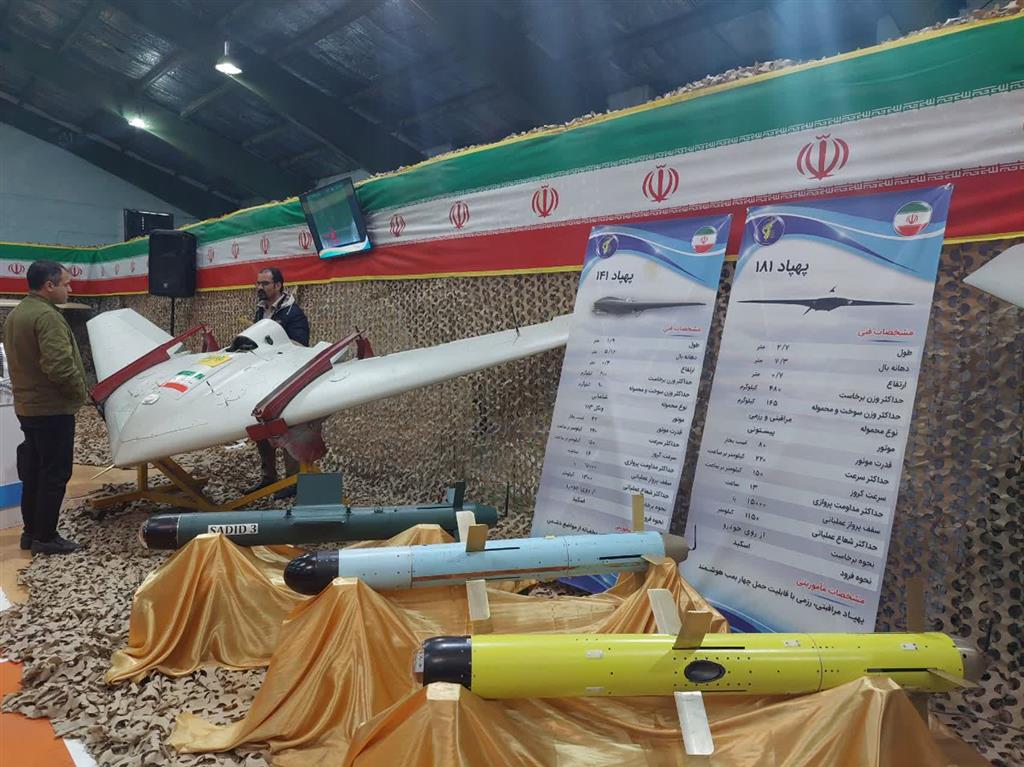
Shahed-181 (Saegheh): Shahed-181 drone also known as Saegheh (Lightning), is a 60% scale version of Shahed-171 drone and uses a two-stroke propeller engine. Due to the expensiveness of the Shahed-171 stealth drone, in order to reduce the production cost and also easy mass production, the Shahed 181 drone has been mass produced by removing the landing gear and using a piston engine. Shahed-181 has the capability of carrying four Sadid-342 bombs under the body between its skates. Due to having folding wings, Sadid-342 bomb occupies the least space and four of them are easily placed next to each other, and for this reason, it is the best option for use on this drone.
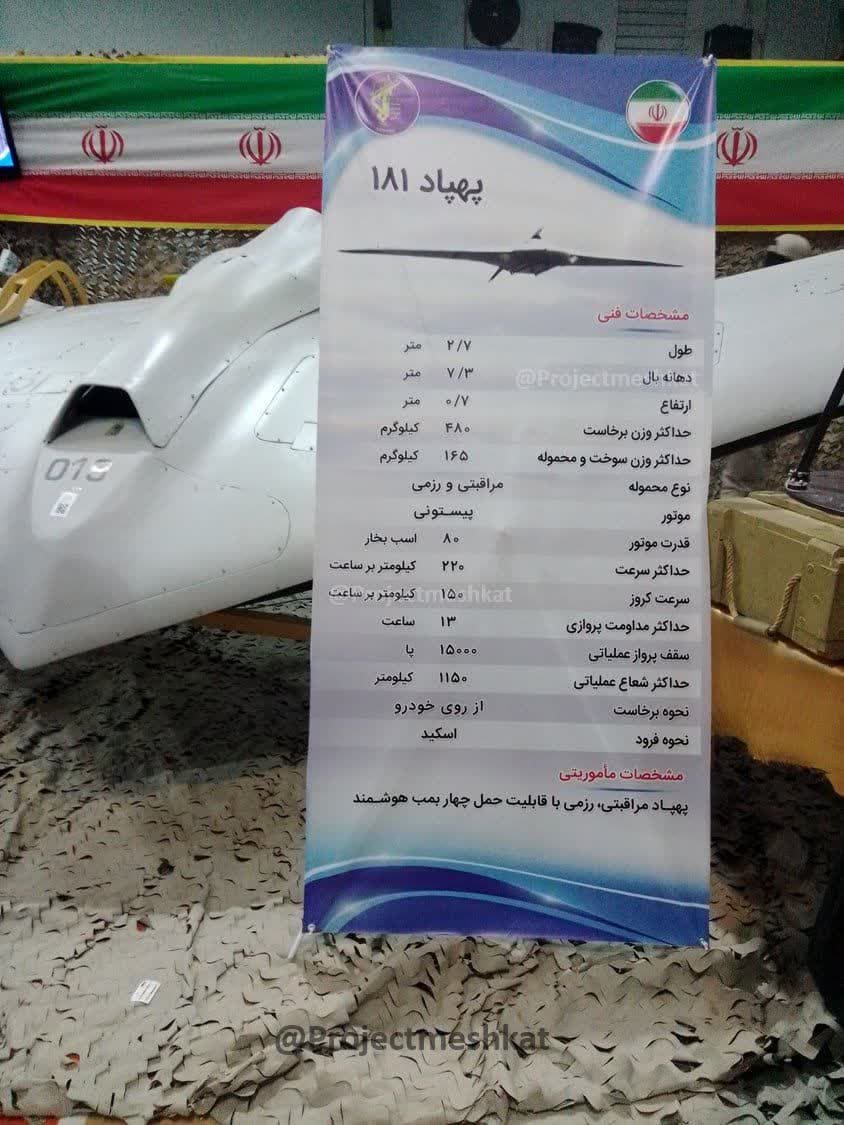
Shahed 181 drone with four Sadid 342 bombsA banner containing the specifications of Shahed 181 droneClick to view full size
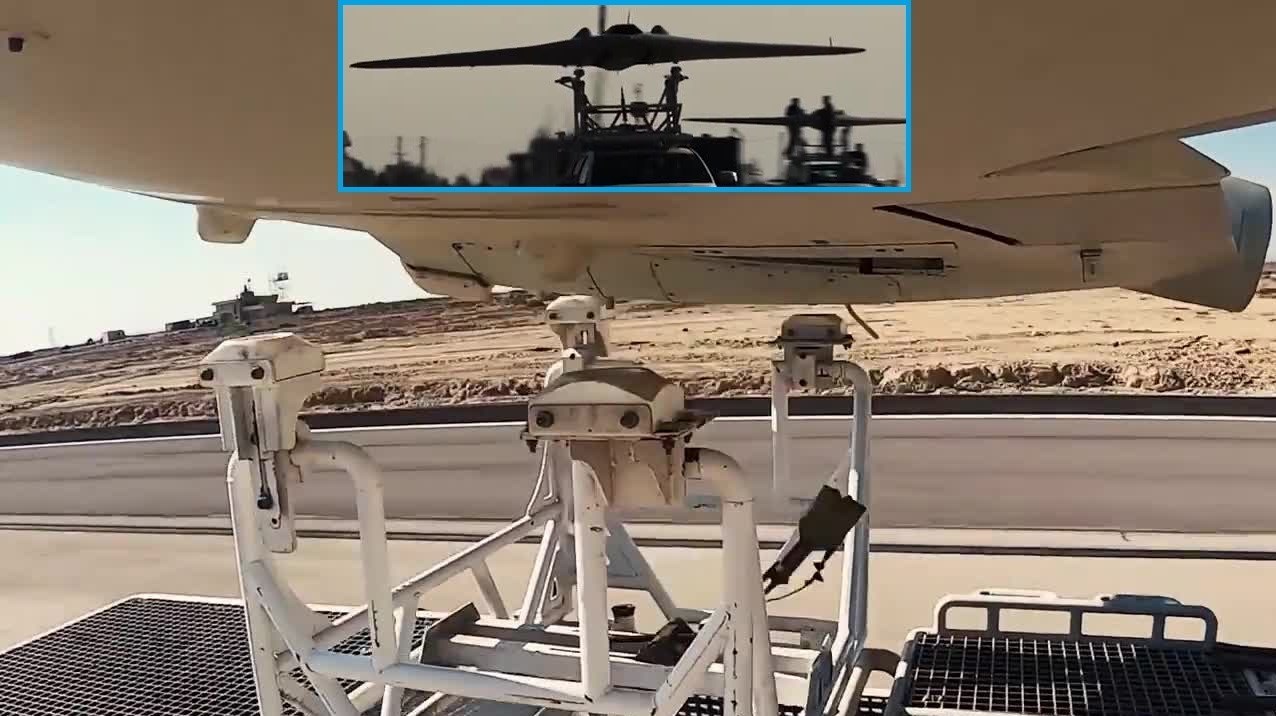
Shahed-181 takes help from a vehicle to take off. The drone is placed on a special pneumatic launcher on the vehicle. After the vehicle reaches the desired speed, the drone is launched and flies. For landing, Shahed-181 slides on the ground using his skates to stop.
Shahed-181 specifications: Role: Reconnaissance and combat Length: 2.7 meters Wing length: 7.3 meters Height: 0.7 meters Combat range: 1150 km Maximum range: 3450 km Flight endurance: 13 hours Flight ceiling: 15000 feet (4572 meters) Engine: 80 horsepower piston Maximum speed: 220 km/h Cruise speed: 150 km/h Weight: Unknown Maximum take-off weight: 480 kg Maximum weight of fuel and cargo: 165 kg Take off type: By vehicle Landing: By skate Armament: 4 smart bombs
Shahed-181 (Saegheh)drone
Shahid-191 (Saegheh 2): Shahed-191 drone also known as Saegheh 2, like the Shahed-181 is a 60% scale version of Shahed-171. But Shahed-191 uses a turbojet engine instead of a piston engine. The radar cross-section in Shahed-191 is smaller due to the use of a turbojet engine, and Sadid bombs are placed inside the body of the drone.
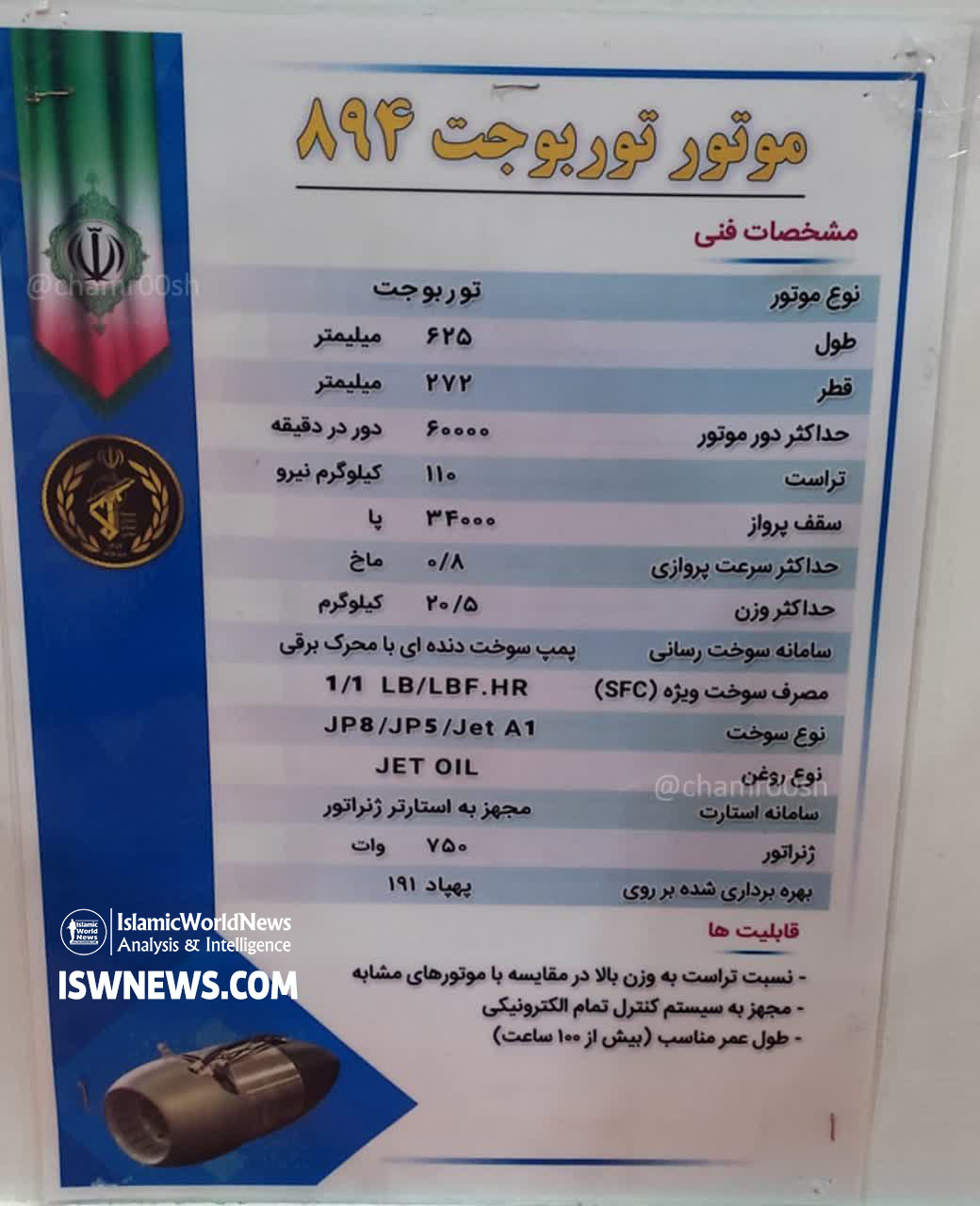
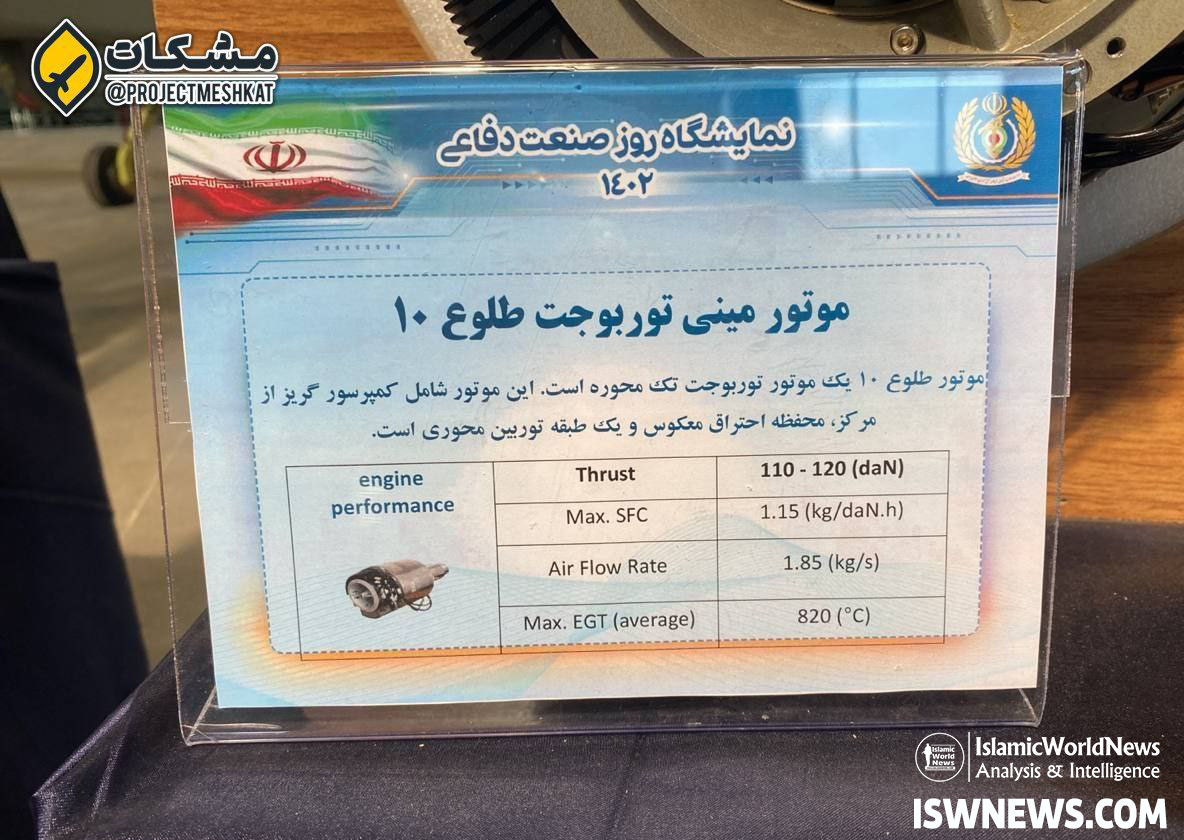
Shahed-191 uses a mini turbojet engine with a power of 1078.8 newtons, which is known as Turbojet 894, or a Toloue-10 turbojet engine with a power of 1100 to 1200 newtons. It is worth noting that the 894 turbojet engine was manufactured by the IRGC Aerospace Force and the Toloue-10 turbojet engine was manufactured by the Iran’s Ministry of Defense.
894 turbojet engine and Toloue-10 turbojet engine
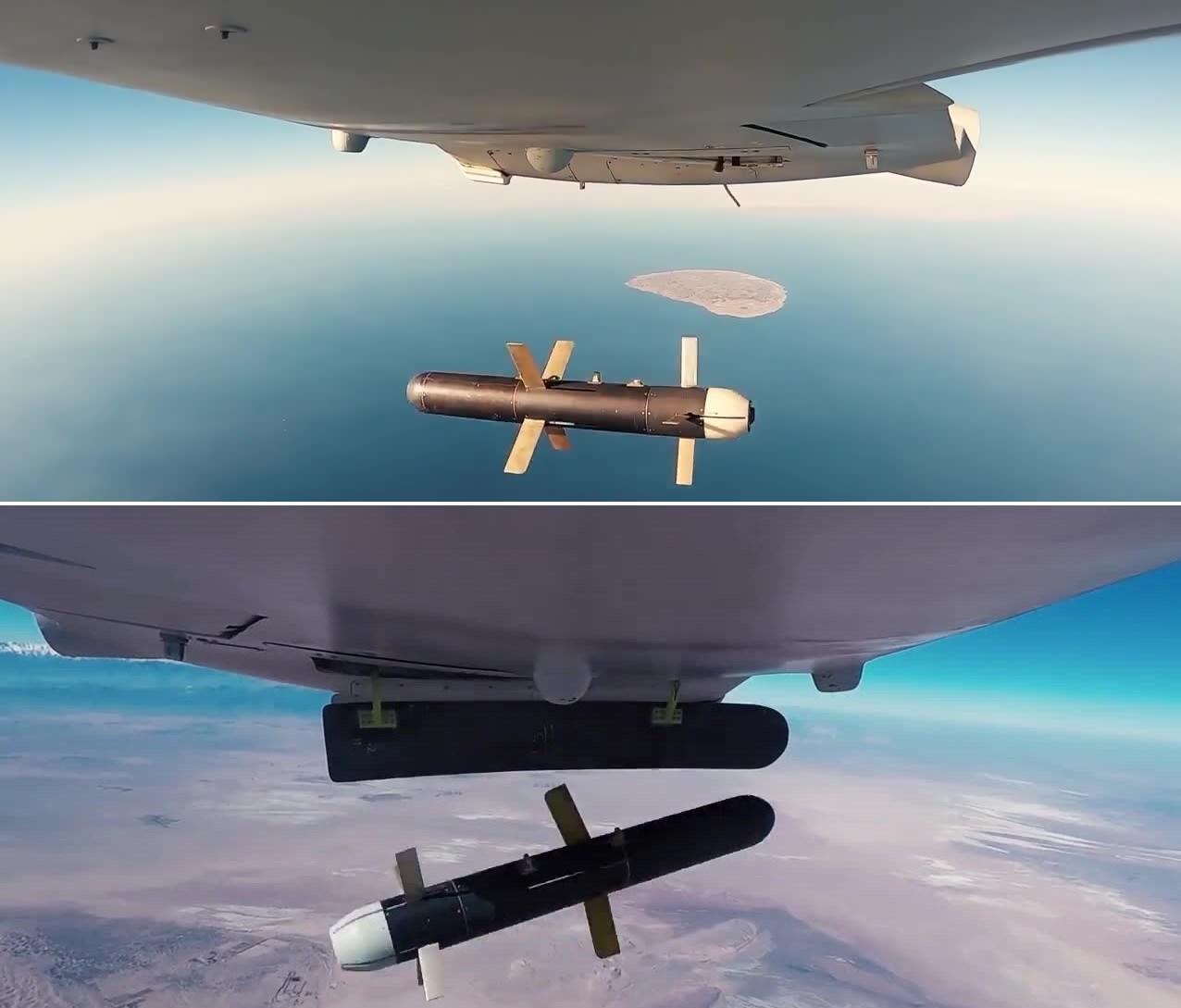
Shahed-191 has a higher flight ceiling as well as greater stealth profile, and for this reason, an internal place for carrying weapons has been designed to help the stealthy features of this drone during combat missions. Saegheh 2 has the ability to carry two Sadid-342 bombs in its internal weapons bay.
Based on the published images, it seems that this drone uses the Oghab 4 electro-optic system.
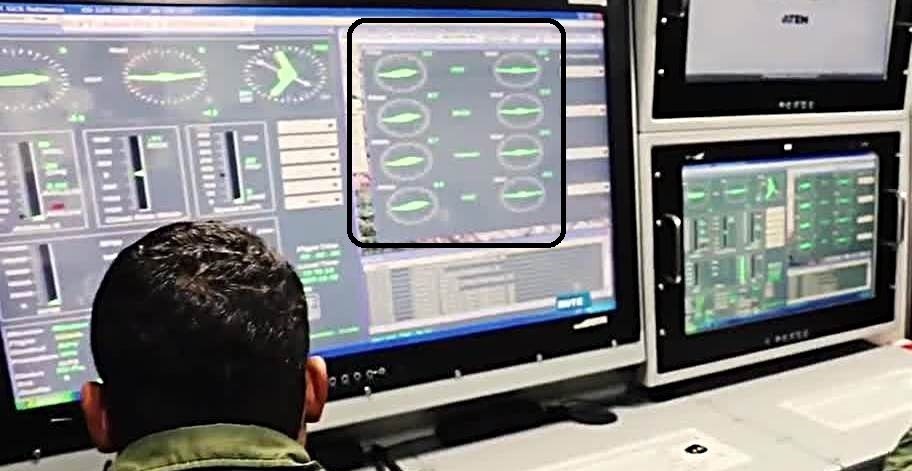
The moment of releasing the Sadid-342 bomb from the Shahed 191 droneThe moment of separation of Shahed 191 drone from the launcher vehicleA view of the Shahed drone control roomClick to view full size
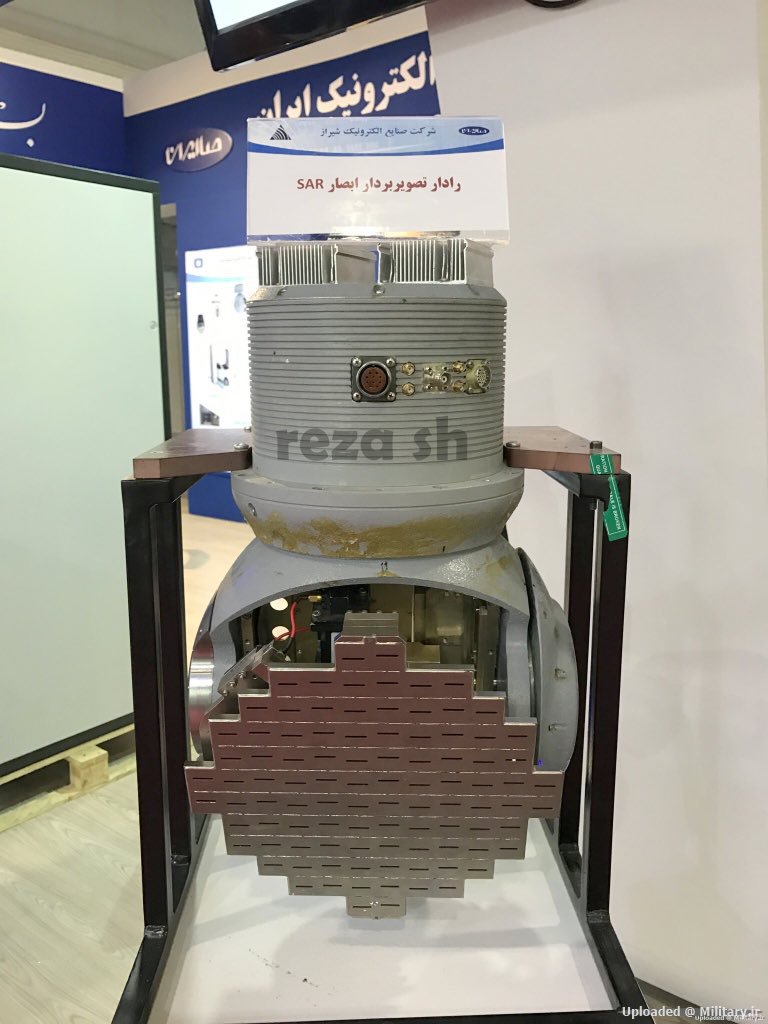
A type of SAR radar called Absar has been developed specifically for this drone, which is installed in camera place and provides the possibility of searching for objects in the form of 3D imaging.
Parts of Shahed 191 UAVABSAR SAR radarClick to view full size
Shahed-191 specifications: Role: Reconnaissance and combat Length: 2.7 meters Wing length: 7.3 meters Height: 0.7 meters Combat range: 500 km Maximum range: 1500 km Flight endurance: 4.5 hours Flight ceiling: 30000 feet (9144 meters) Engine: Turbojet 894 or Toloue-10 Thrust engine power: 110 kg of force (1078.8 newtons) Maximum speed: 350 km/h Cruise speed: 200 km/h Weight: Unknown Maximum take-off weight: 500 kg Maximum weight of fuel and cargo: 230 kg – 10 kg of optical cargo and 100 kg of weapons in weapon bay Take off type: By vehicle Landing: By skate Armament: 2 smart bombs
Shahed-191 (Saegheh 2)drone
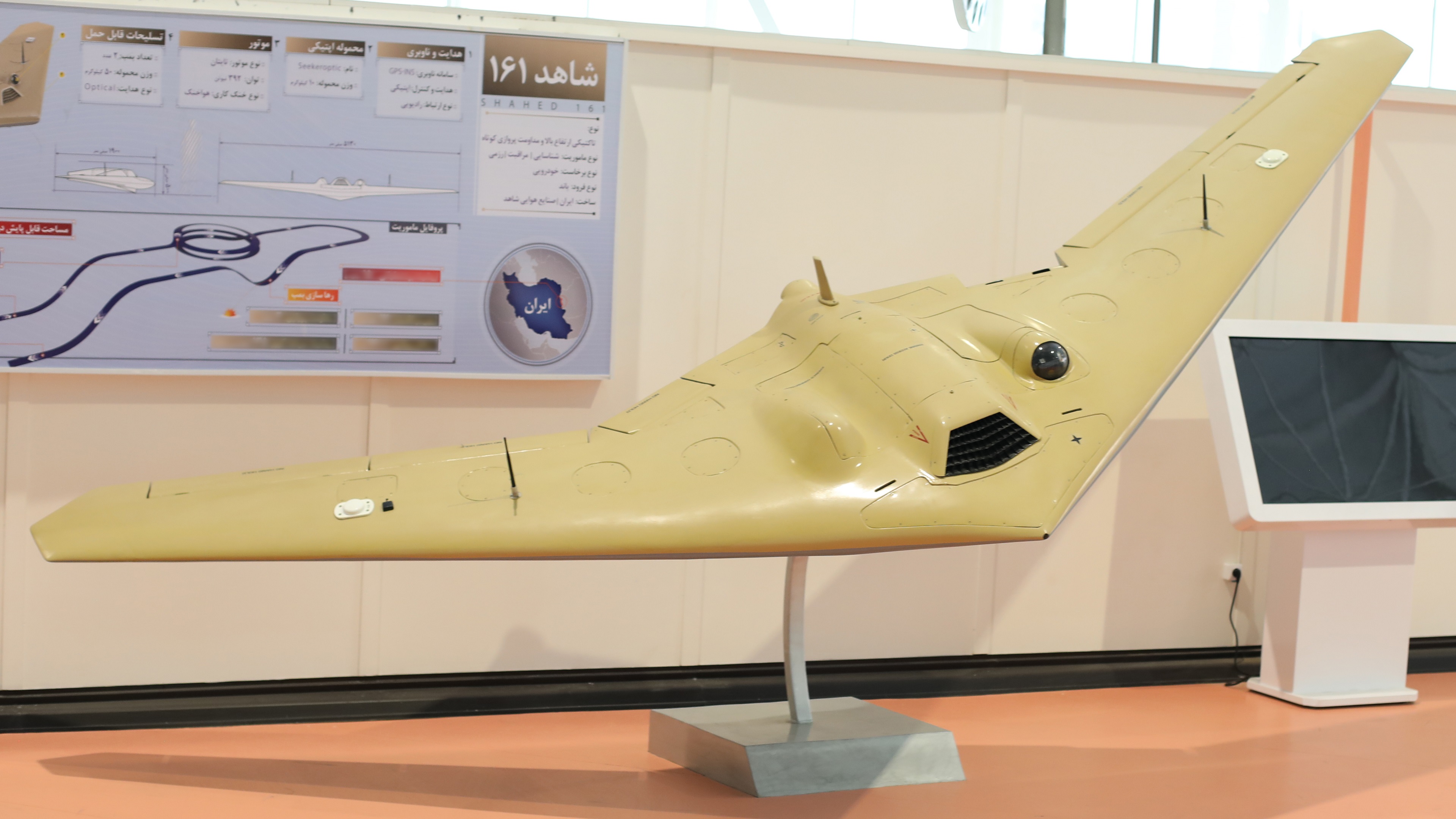
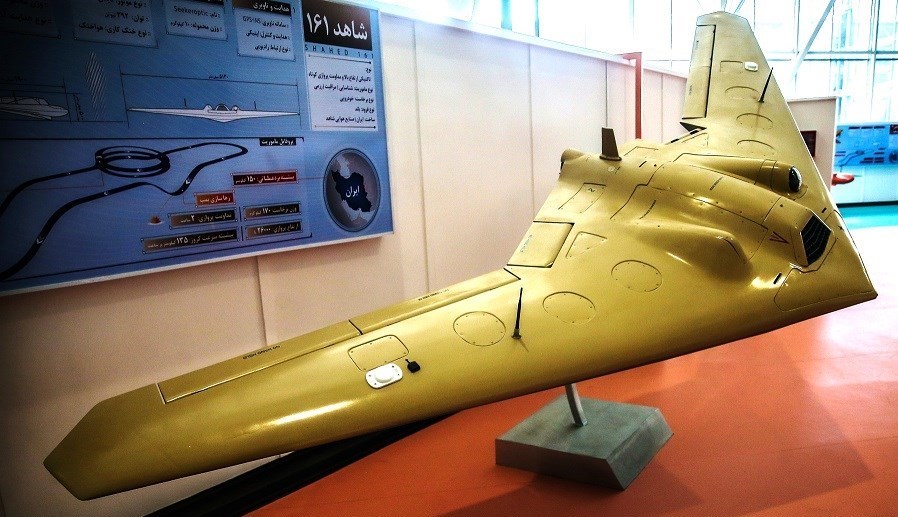
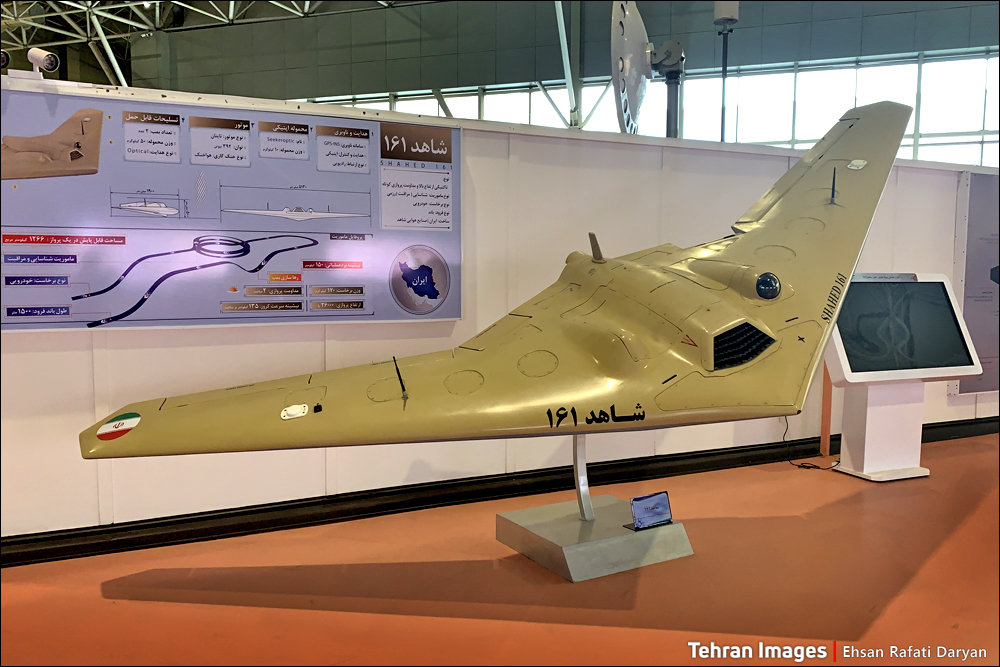
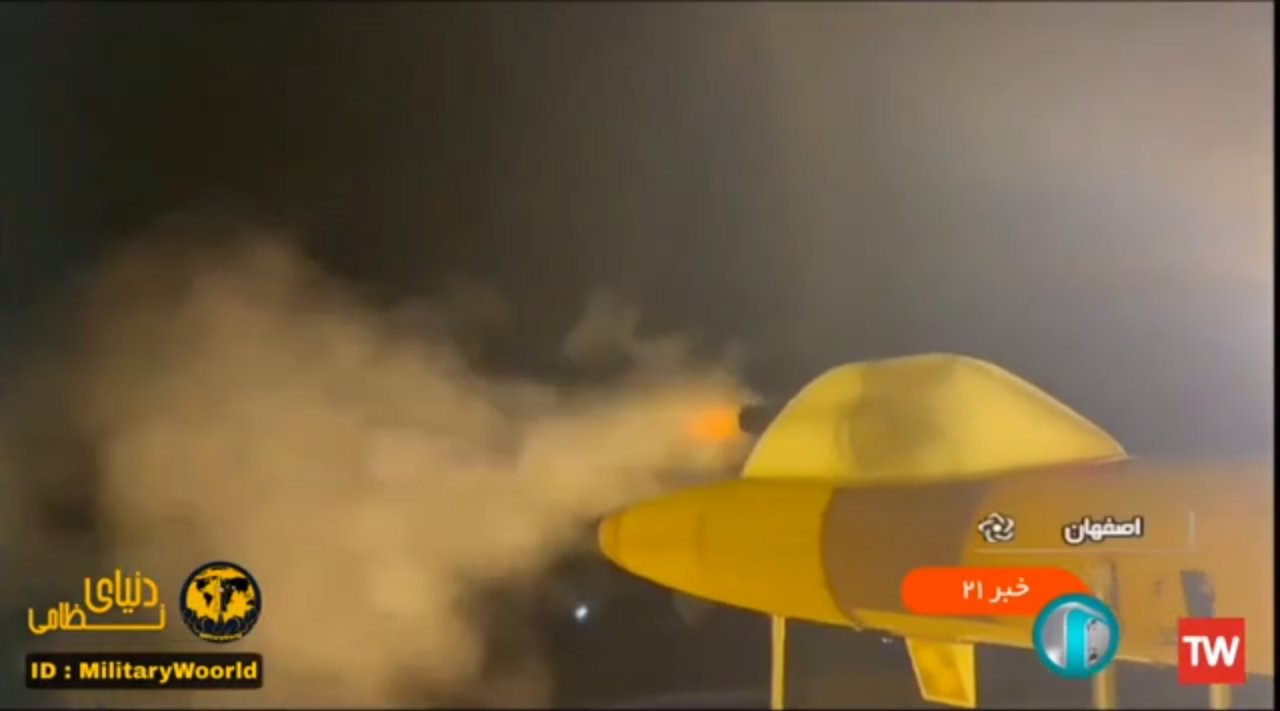
Shahed-161: Shahed-161 is a 40% scale version of Shahed-171 drone. This drone uses a small and unannounced micro-turbojet engine. In the description provided for Shahed-161, the type of cargo is announced a seeker and warhead. This information strengthens the possibility that this variant is a suicide drone. If Shahed-161 is a suicide type of the Simorgh family, it must be said that this suicide drone is very a expensive one and therefor will be used to hit special targets such as air defense systems. The thermal seeker of Shahed-161 is installed on the wing and the right side of the engine, and when the UAV dives, it gets a better view of the ground. One of the characteristics of Shahed-161 is the possibility of different launch. Due to the lightness of this drone compared to other types, a pneumatic launcher has been used, which makes it possible to launch this drone faster from the vehicle. It is also possible to use this technique on other members of the Simorgh family that fly from the vehicle. This drone can also land with the help of a recovery parachute or skates.
Shahed-161 specifications: Role: Reconnaissance and suicide Length: 1.9 meters Wingspan: 5.13 meters Height: 0.71 meters Combat range: 150 km Maximum range: 300 km Flight enduracne: 3 hours Flight ceiling: 25000 feet (7620 meters) Engine: HKS microjet Engine power: 40 kg of power Maximum speed: 350 km/h Cruise speed: 150 km/h Weight: Unknown Maximum take-off weight: 170 kg Maximum weight of fuel and cargo: 40 kg Cargo: Seeker and warhead Take off type: Pneumatic launcher Landing: By skate, recovery parachute
Shahed-161 drone
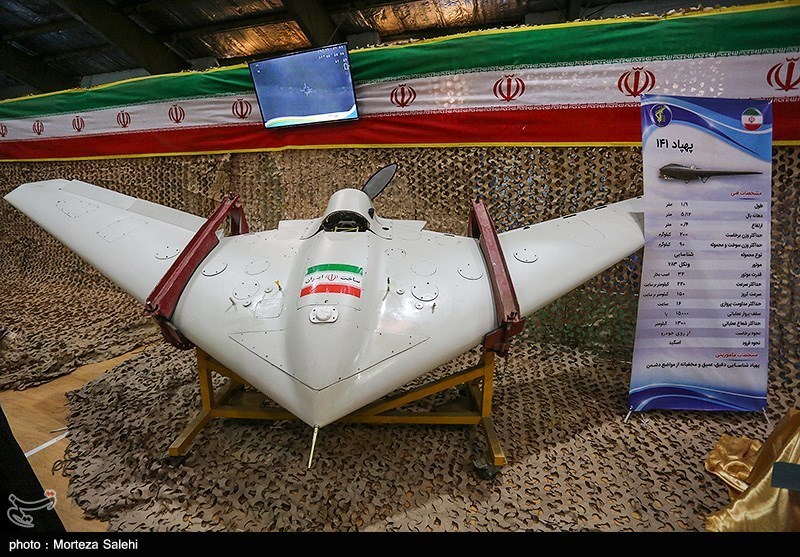
Shahed-141: Shahed-141 drone has not been officially unveiled yet. This drone is a 40% scale version of Shahed-171. According to the information provided at the IRGC achievements exhibition in Isfahan, Shahed-141 has a Wankel 783 engine with a power of 32 horsepower, and thanks to the capacity of carrying 90 kg of cargo, it can carry a high-quality camera and a 12-hour flight endurance for reconnaissance missions.
Shahed-141 specifications: Role: Reconnaissance Length: 1.9 meters Wingspan: 5.13 meters Height: 0.4 meters Reconnaissance range: 1300 km Maximum range: 2600 km Flight endurance: 12 hours Flight ceiling: 15000 feet (4572 meters) Engine: Wankel 783 piston 32 hsp Maximum speed: 220 km/h Cruise speed: 150 km/h Weight: Unknown Maximum take-off weight: 200 kg Maximum weight of fuel and cargo: 90 kg Take off type: Pneumatic launcher Landing: By skate, recovery parachute
Shahed-141 drone
15% scale versionof Shahed-171: Information and a picture of this variant are not available, but it can be pointed out that this variant is the first sample made during the reverse engineering of the RQ-170 UAV. Making a 15% scale version of RQ-170 has helped to better understand the flight structure of this drone, and this has accelerated the build process and use of the Shahed family of stealth drones.
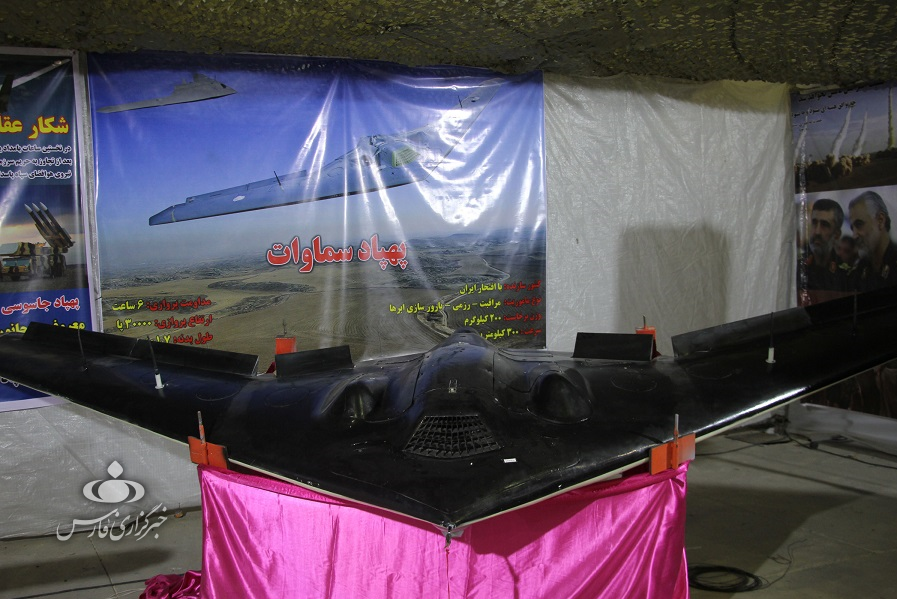
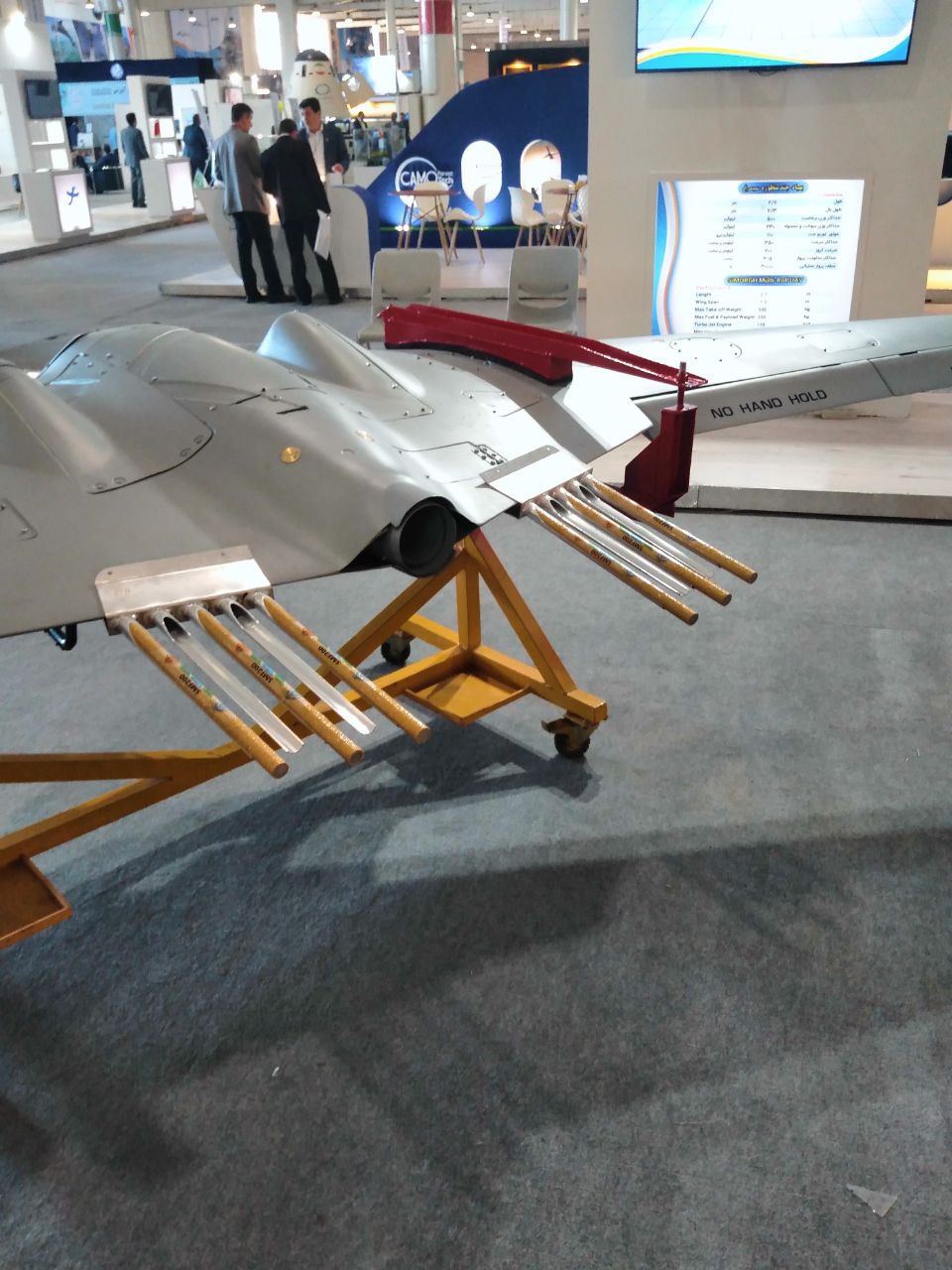
Samavat drone: The Samavat drone was showcased for the first time at the IRGC Achievements Exhibition in Birjand. This drone is equivalent to the Shahed-161 drone and is used for cloud seeding. According to published information, the Samavat drone can be used for surveillance and combat missions, and for this purpose, it is possible to separate the silver iodide holding rods from the drone. Except for the body length of 1.7 meters, which is given in the Samavat banner, the rest of the specifications are very similar to Shahed-161.
The banner and specifications of Samavat droneRods and holding tubes with silver iodide containers on Samavat droneClick to view full size
Combat history The Shahed family of stealth drones have been widely deployed in the IRGC Air Force and have carried out a large number of reconnaissance and combat operations so far. But the first combat operation that has been officially confirmed is related to the use of Shahed 181 and 191 drones on June 18, 2017 in Operation Laylat al-Qadr against ISIS in Syria. It should be noted that due to the confidentiality and sensitivity, most of the missions of this category of drones are not officially announced.
Shahed 171 And Shahed Stealth Drones Family – click to view full sizeClick to view full size
Posters of “Shahed 171 And Shahed Stealth Drones Family” in Russian (Шахед 171), Arabic, Kurdish, Azeri (Şahid 171), Hebrew (שאהד-171), Chinese (见证者-171) and Persian:
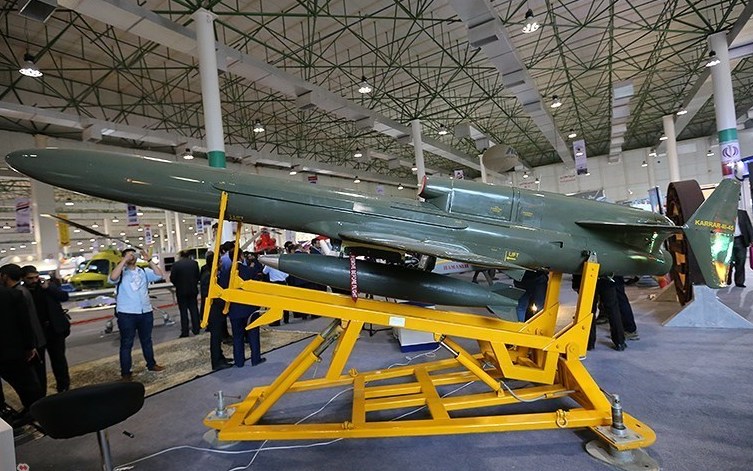
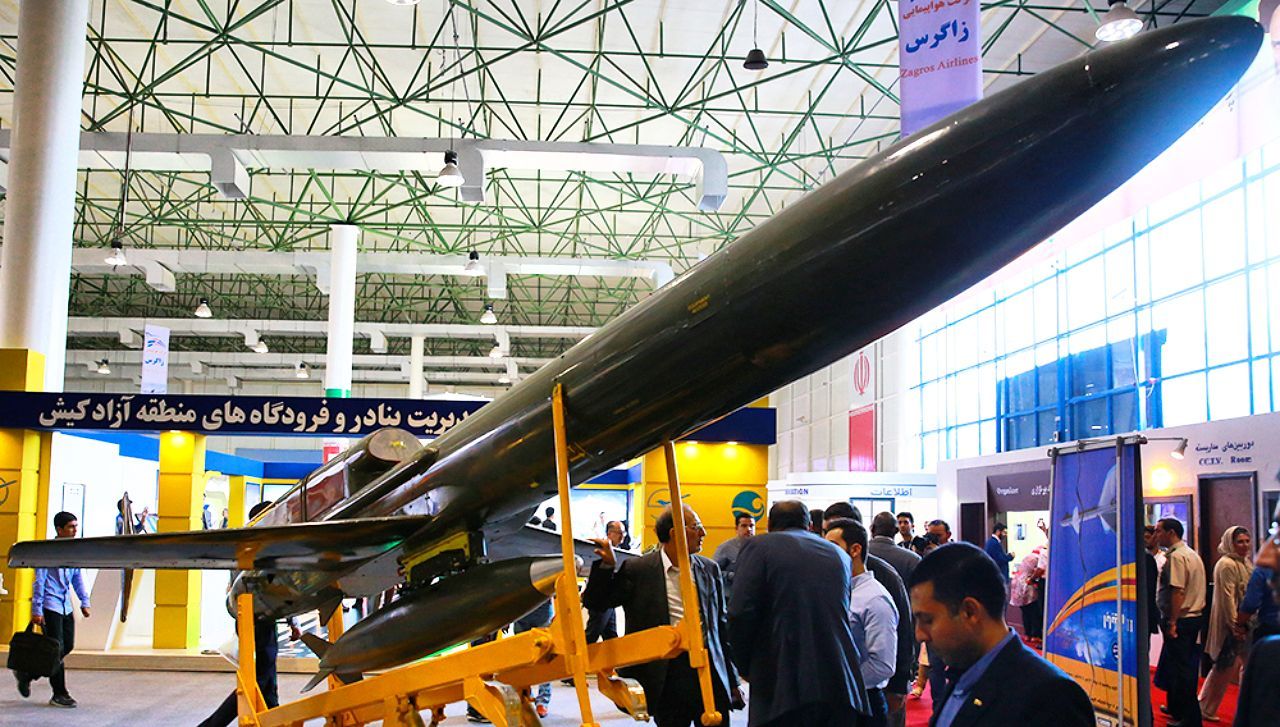
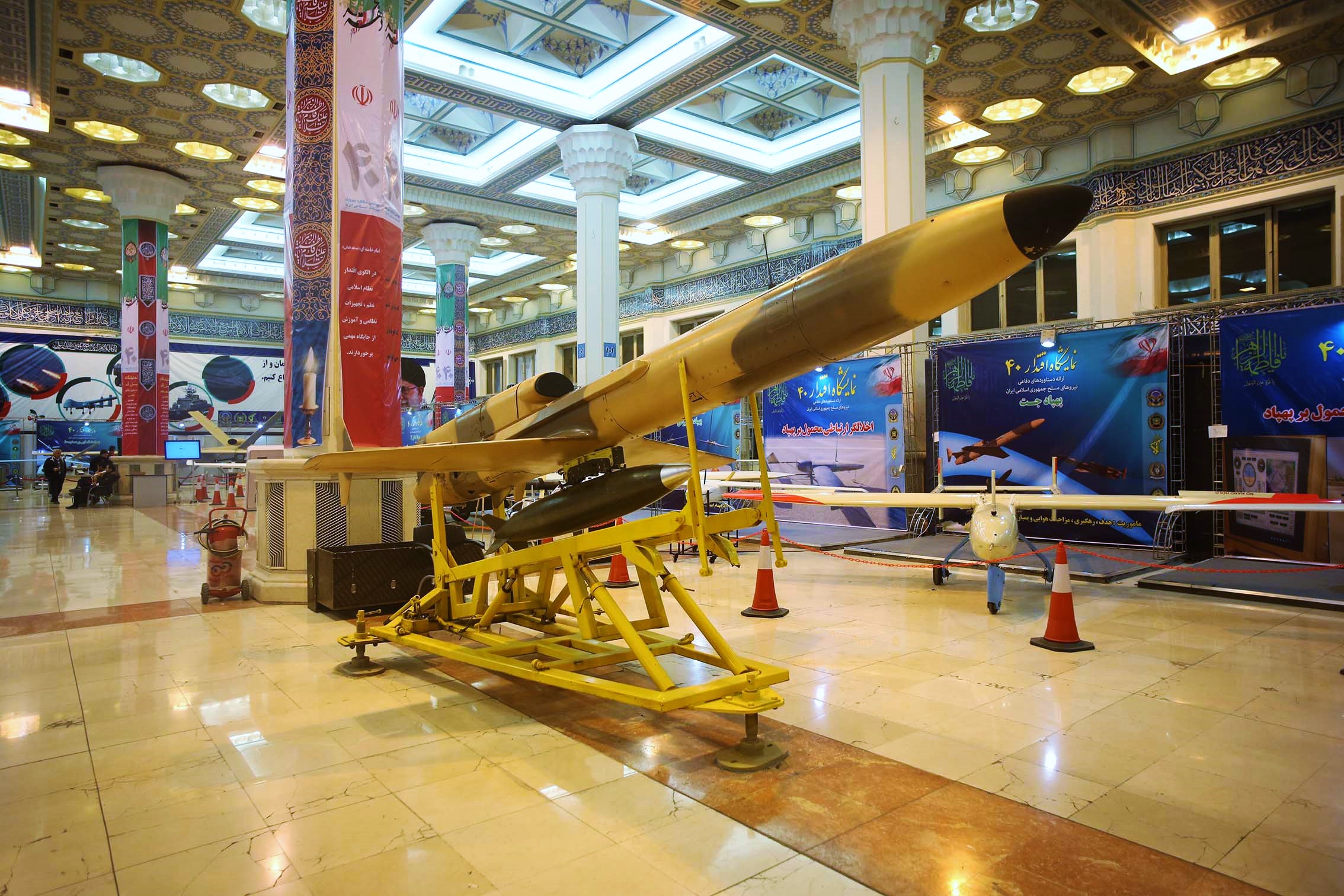
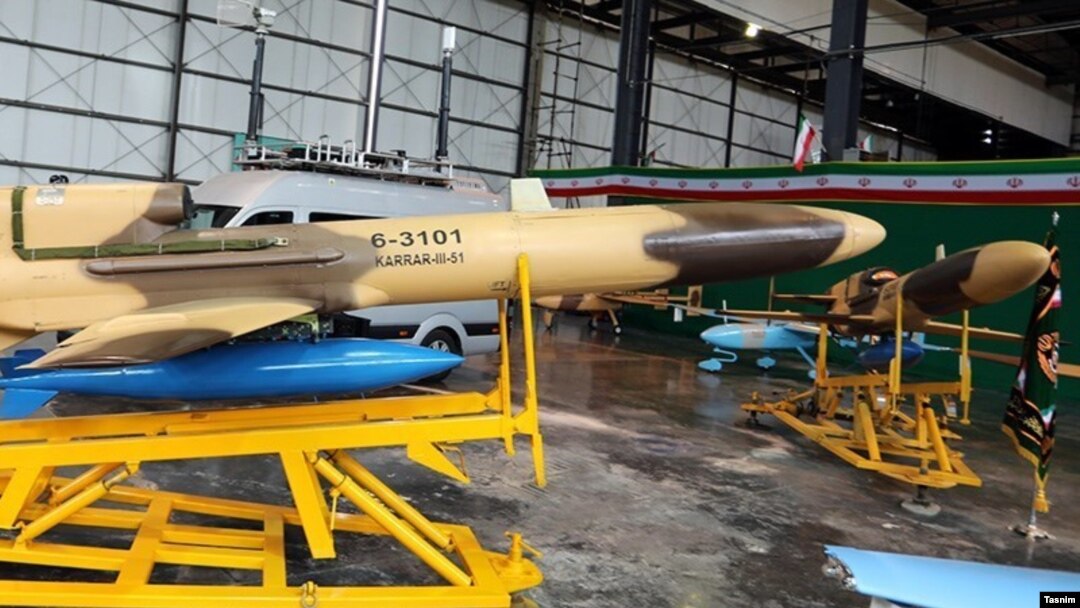
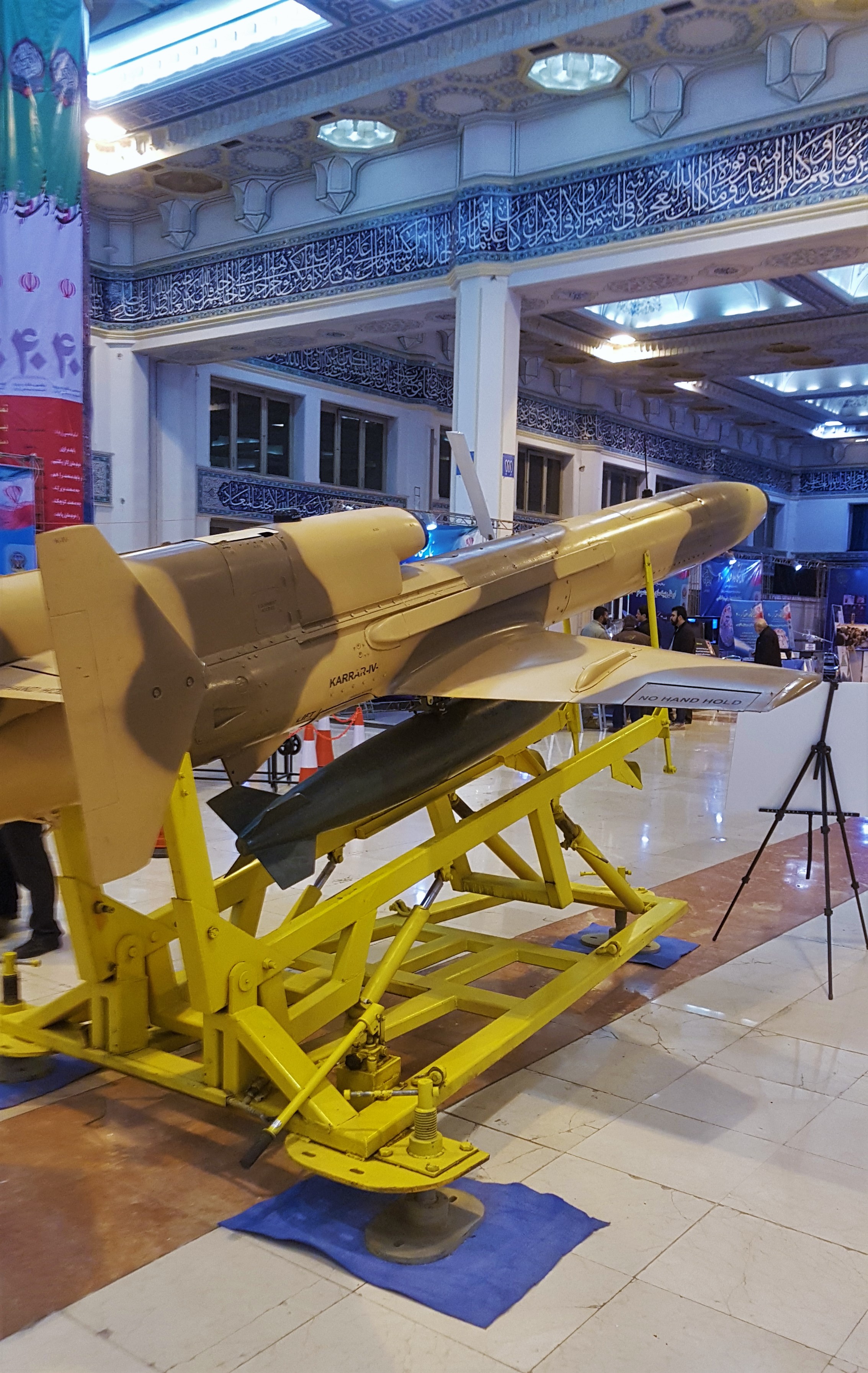
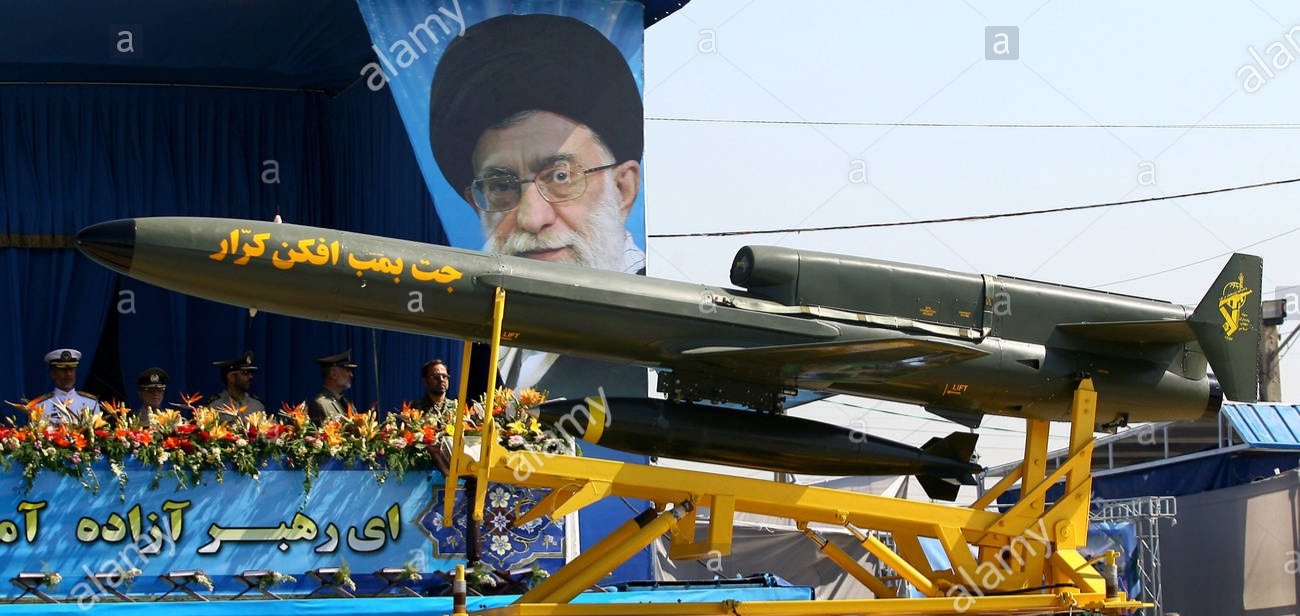
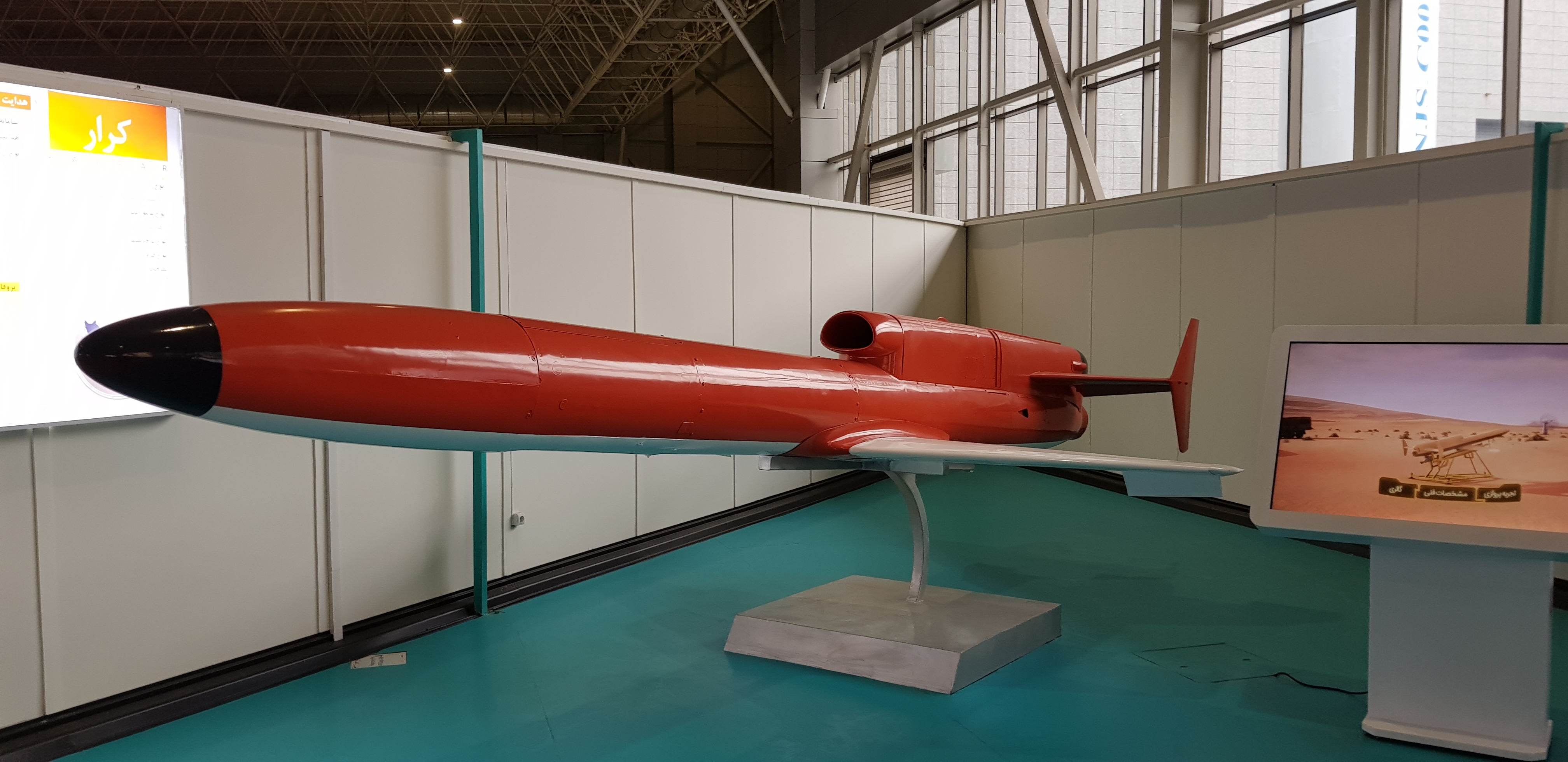
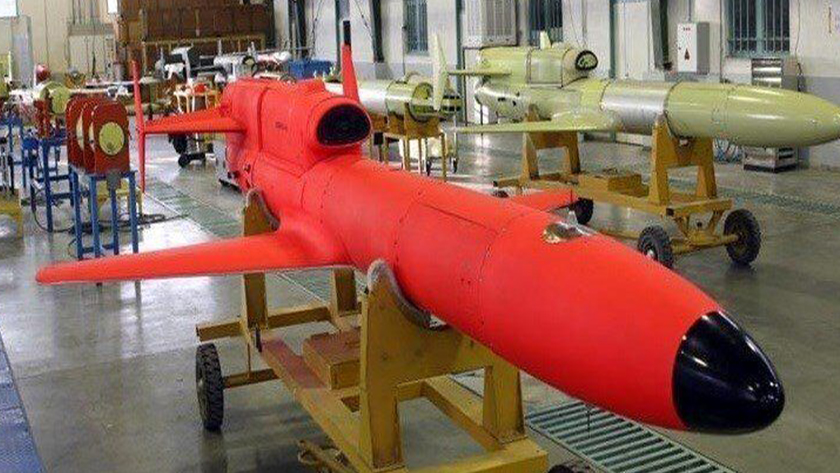
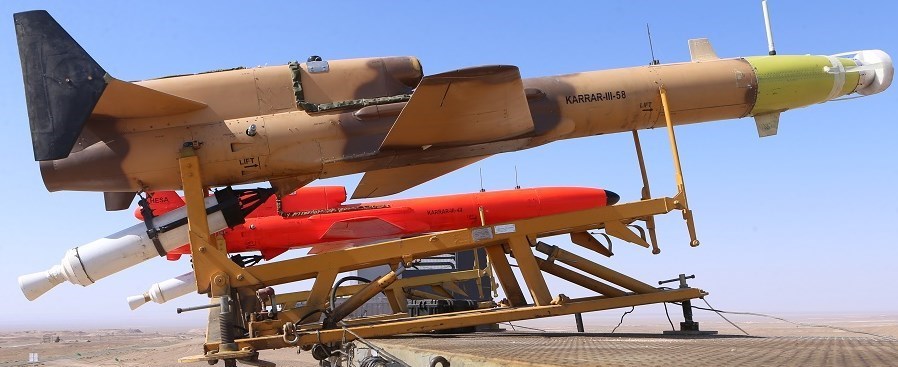
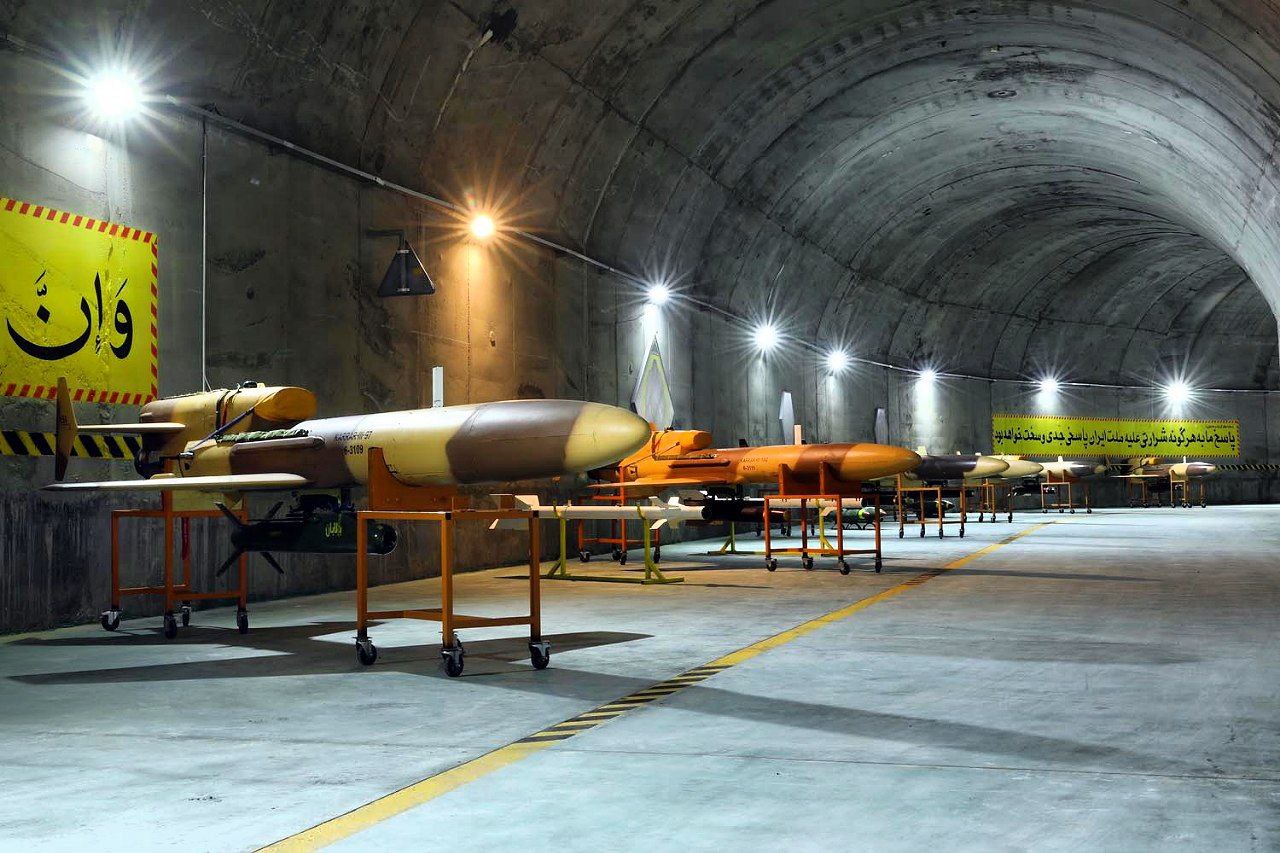
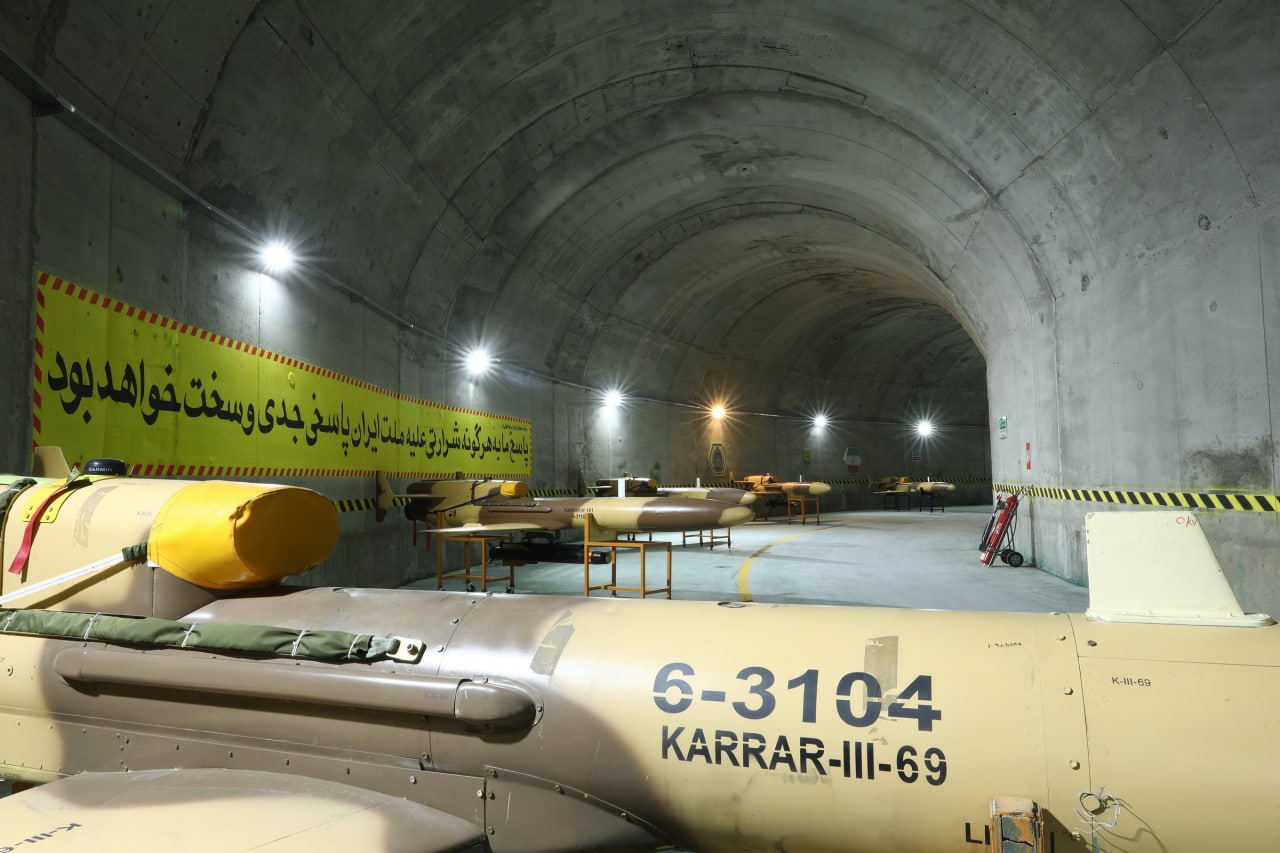
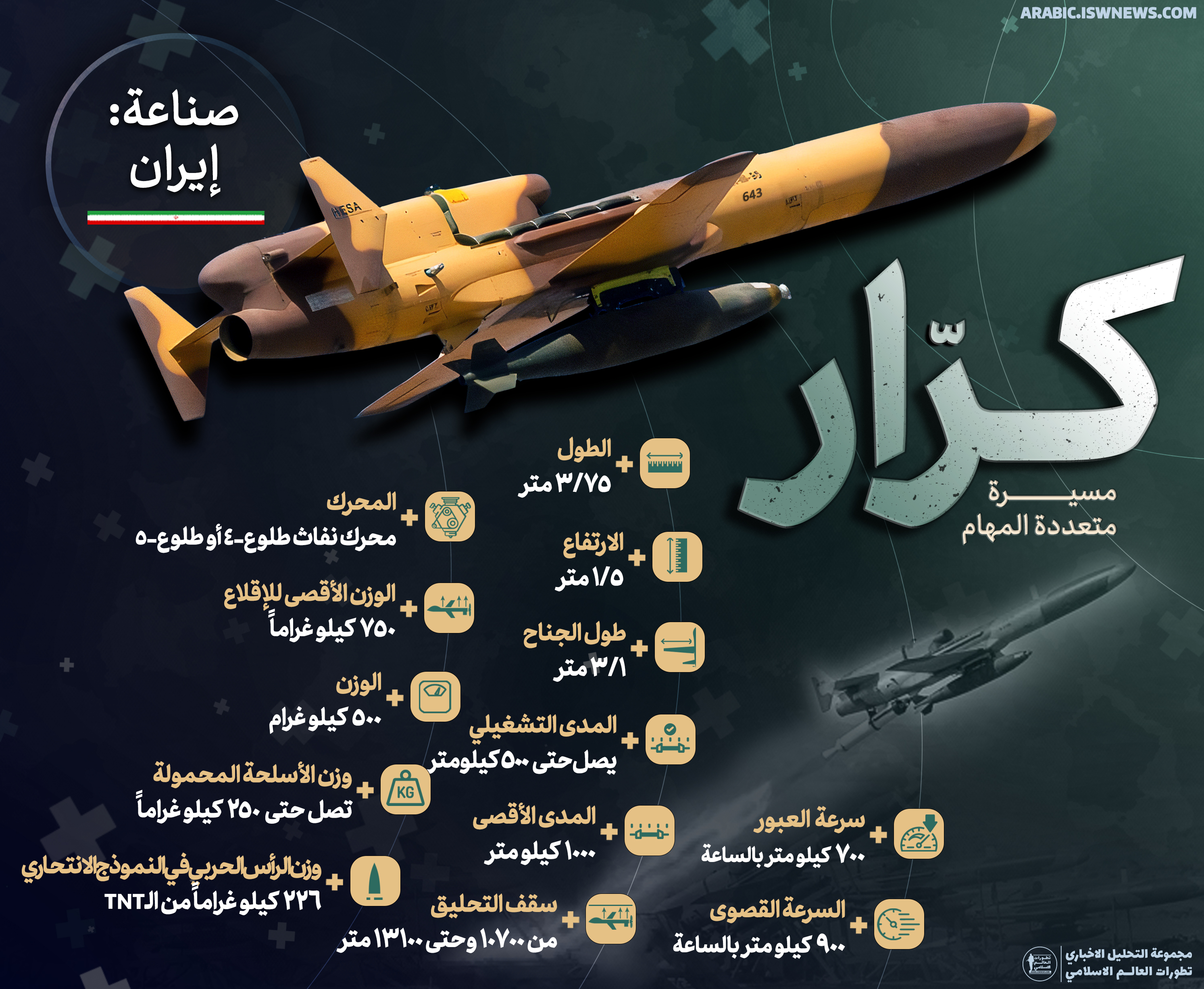
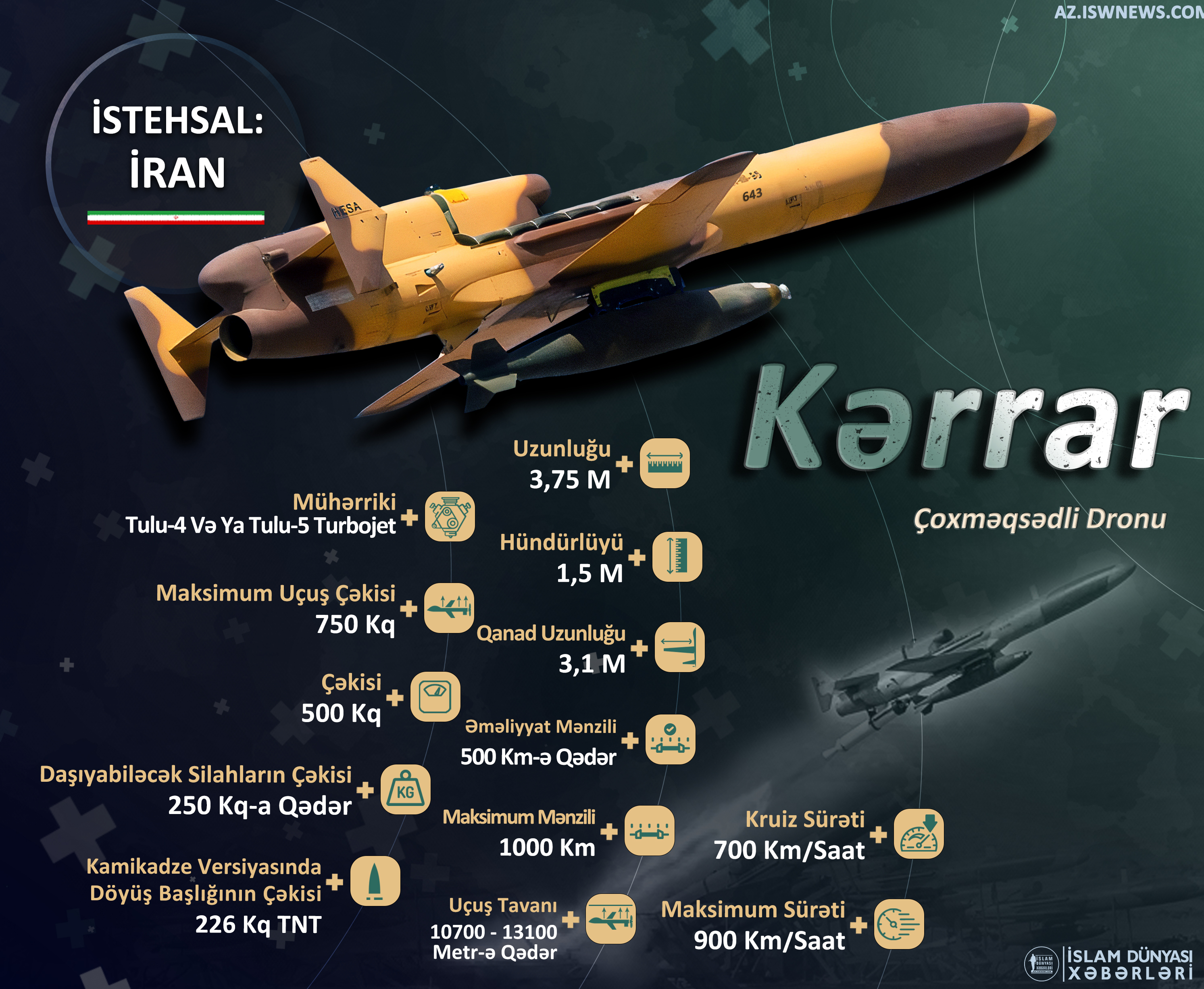
Karrar multirole drone is the first Iranian drone that can carry and use a wide range of weapons, including air-to-air and air-to-surface missiles, using a single platform. This UAV is produced by the Iran Aircraft Manufacturing Industrial Company (HESA), which is under the Ministry of Defense, and has been used by various departments of the Iranian Armed Forces.
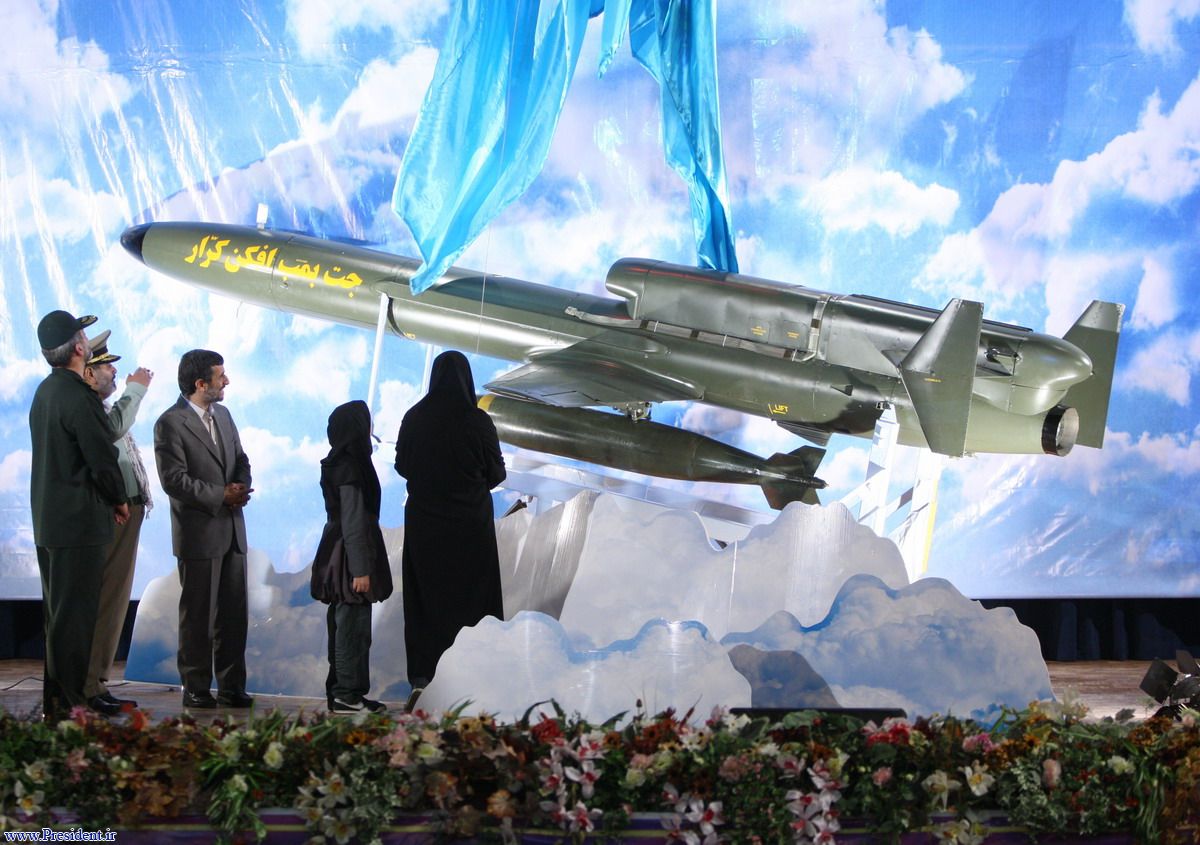
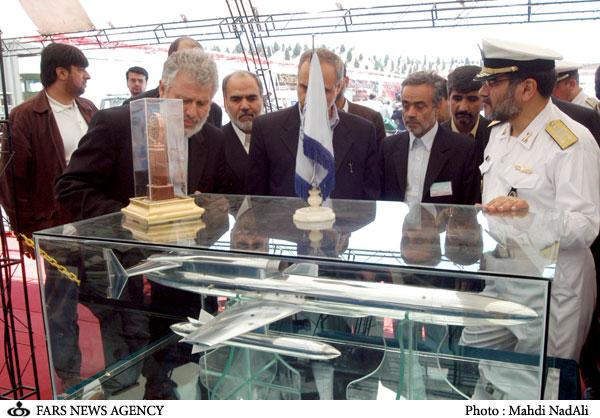
History: A maquette of Karrar UAV was first seen in 2004 at a military equipment exhibition, and later in 2010, it was unveiled under the name “Karrar Bomber Drone” during a ceremony attended by the then president of Iran. The exact date of the start of the production and use of the Karrar is not known and has not been officially announced, but the year 2010 can be considered as the year of its entry into service.
From the very beginning of its unveiling, the Karrar UAV carried a Mark 82 unguided bomb weighing 500 pounds (226.79 kg), and it was said that this UAV could also carry a cruise missile. In 2013, the news of using the Kosar cruise missile on the Karrar UAV was published, which increased the capabilities of the Karrar due to Kosar’s 100 kg weight and 25 km range.
In 2014, Mersad air defense system was tested using Karrar UAV. In this test, Karrar was used as a target drone for testing the air defense system and train the air-defense crews.
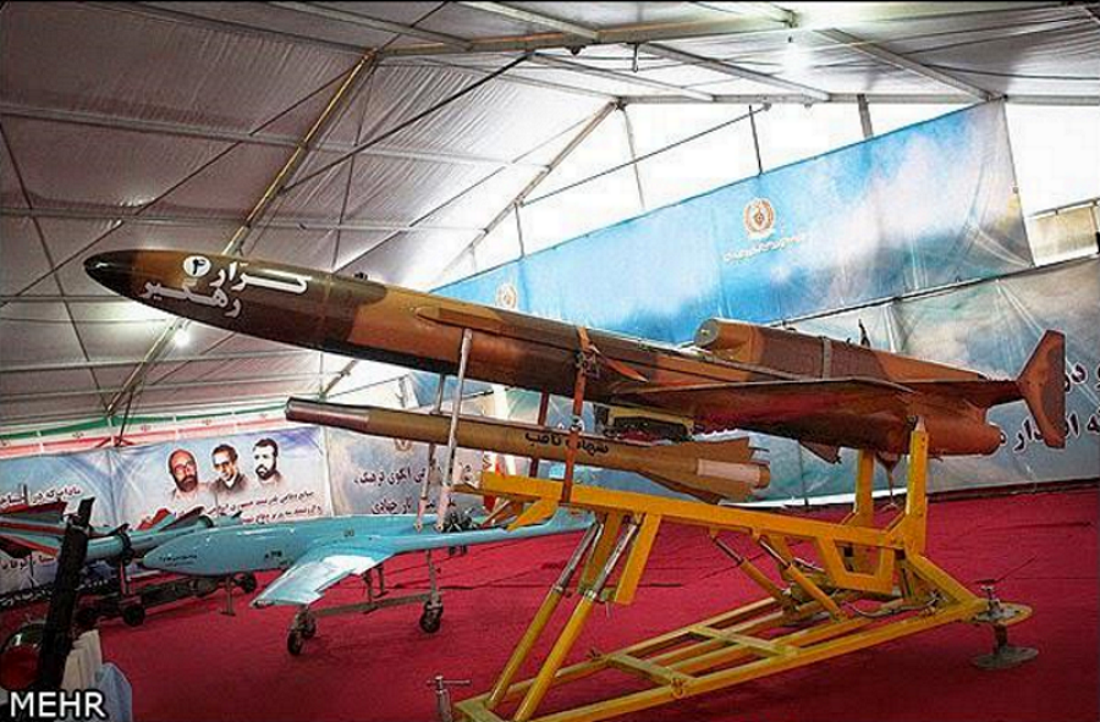
The different introduction of the Karrar UAV in 2018 with the name “Karrar-4 Interceptor” which carried the Shahab Thaqeb missile showed that this drone has generations and each of these generations is defined based on the type of mission; But this generation was never stated clearly.
At the unveiling ceremony of Yasin, Balaban and Qaem 1, 5 and 9 bombs in 2019, Amir Hatami, the then Minister of Defense, announced that the Yasin glide bomb can be released from the Karrar drone. Yasin glide bomb is the result of adding a wing and guidance kit to the Mark 82 bomb, which was previously used by the Karrar drone.
Introduction of Karrar 4 interceptor with Shahab Thaqeb missile in 2018The unveiling ceremony of the Karrar UAV in 2010 with the name of the Karrar Bomber Jet and the installation of a Mark 82 bomb under the bodyMaquette of Karrar in an exhibition in 2004 with the presence of Admiral ShamkhaniClick to view full size
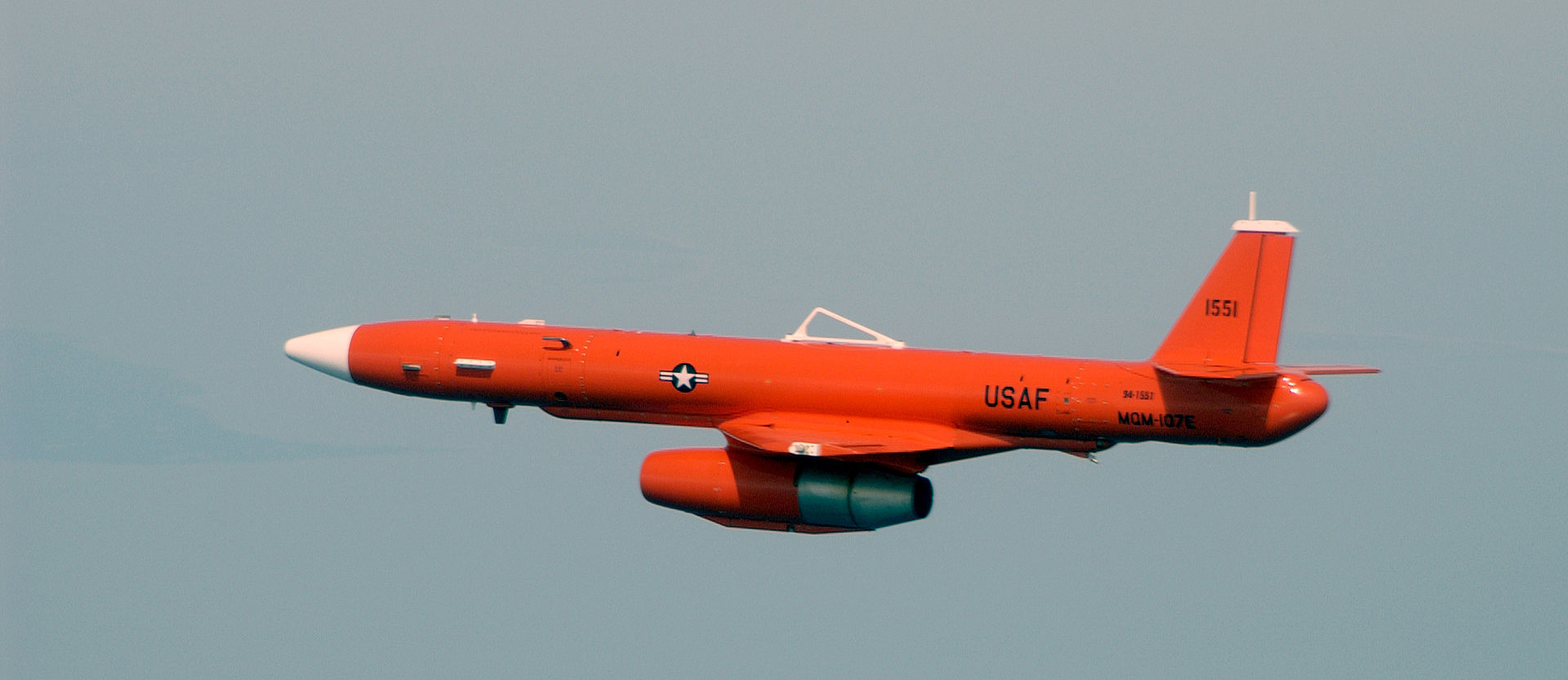
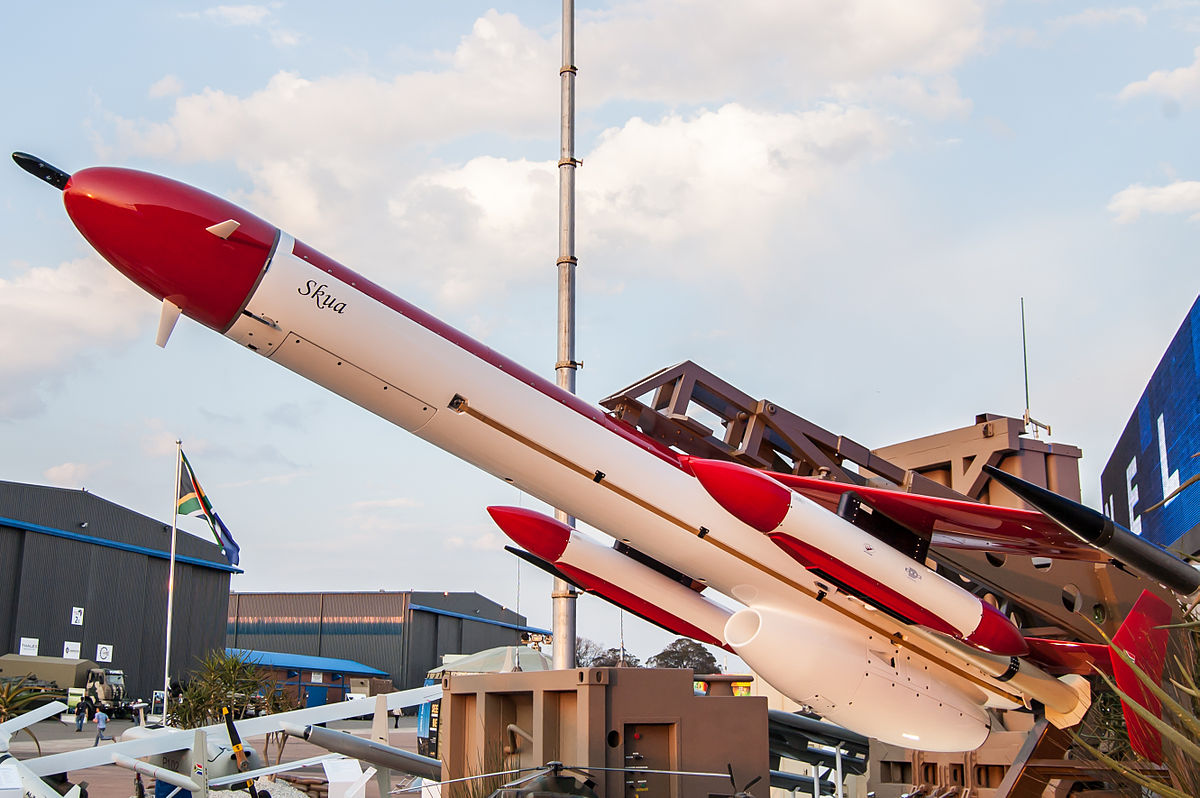
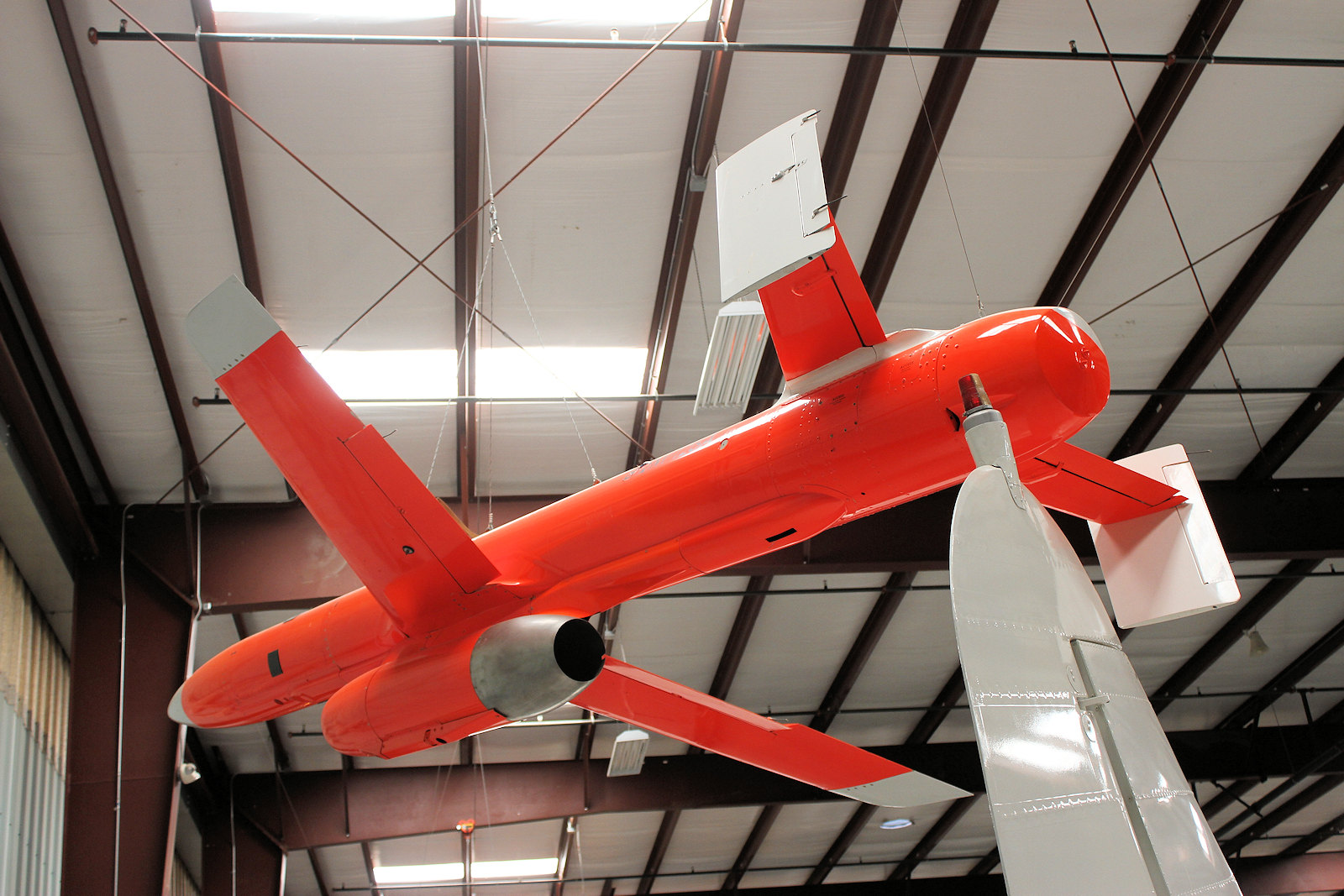
Design: The Karrar multirole drone is a derivative of the American 1970s-era Beechcraft MQM-107 Streaker target drone. The MQM-107A drone was purchased before the Iranian Islamic Revolution to be used as a target drone in defense exercises. In fact, in terms of appearance, the Karrar UAV is more similar to the Skua UAV made in South Africa. Nevertheless, in general, Karrar drone is very different from Skua and MQM-107 drones.
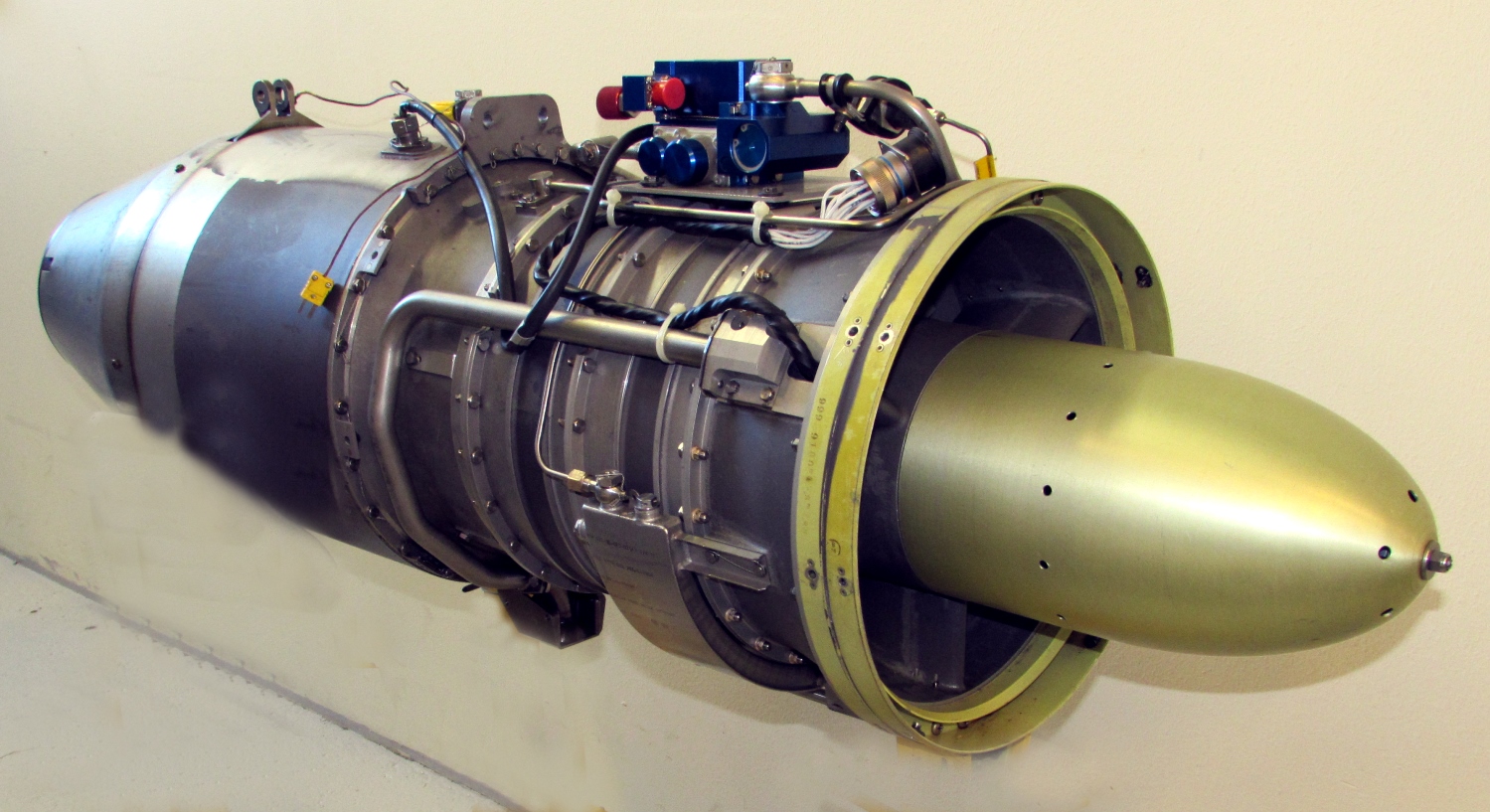
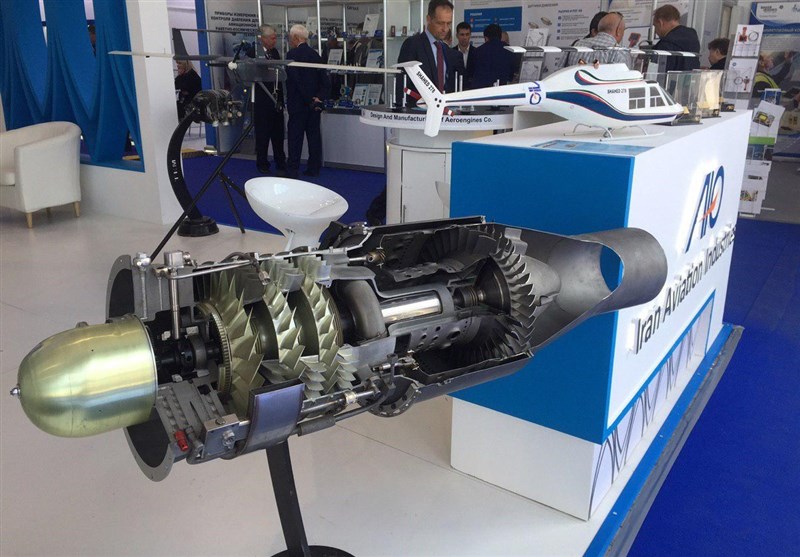
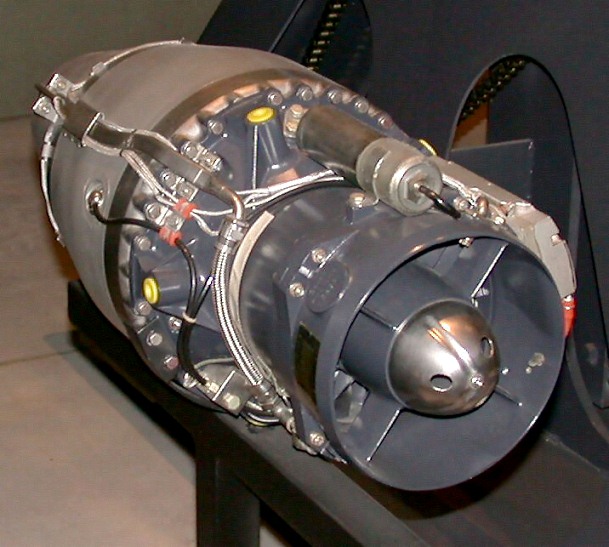
To produce Karrar drone, it was first necessary to redesign the engine used in the American version. The MQM-107A drone delivered to Iran used the Teledyne CAE J402 engine, which was considered an old engine and was no longer used in America. In another model of this UAV, which is known by the suffix B, that is, the MQM-107B model, the French microturbo TRI 60-2 074 turbojet engine is used. So, Iran designed and produced the Toloue-4 jet engine based on the same French TRI 60 engine that was used on MQM-107B model. The French TRI 60 engine has many variants, but the TRI 60-2 074 engine is most similar to the Toloue-4 turbojet engine. The TRI 60-2 074 engine is a triaxial microjet with three axial compressors, a combustion chamber and a turbine stage, which has a diameter of 33 cm, a length of 124 cm, and a weight of 61 kg, and produces a maximum force of 3.4 kilonewtons (KN). The Toloue-4 jet engine, which is the Iranian indigenously produced variant of this engine, is also a triaxial turbojet engine with three axial compressors, a combustion chamber and a turbine stage, and has a diameter of 33 cm, length of 130 cm, weight of 55 kg, and a maximum power of 3450 newtons (N). The Toloue-4 engine is slightly longer and weighs less than its French counterpart.
The Toloue-4 turbojet engine is also used in the Noor cruise missile and the Ya-Ali cruise missile.
The French TRI 60-2 074 turbojet engineIranian Toloue 4 turbojet engineTeledyne CAE J402 engine used in the American MQM-107A droneClick to view full size
Considering the repeated comparison of the Karrar drone with the American MQM-107 drone, we will discuss the differences in appearance between this design and its American model.
The first difference is in the tail fins, which are similar to the design of Skua drone made in South Africa and not similar to the American model. The BQM-126A UAV is another UAV that is similar to the Karrar in terms of its tail fins, but the wings and the tips of the tail fins in the BQM-126A and the Karrar are completely different, and in this sense, it is more similar to the South African model.
The second difference is the location of the drone engine, which is not similar to any of the mentioned drones. In the American and African variant, the engine is placed under its body, but in the Iranian variant, this engine is placed along the body and at its end. The reason for this special design is the use of a hardpoint under the belly to carry 250 kg of weapons.
The third difference and also a similarity is the location of the main wing. In the Iranian variant, the main wing is attached under the body. In the African variant, the wings are located on the body, and in the American variant also the wings are located under the body.
It cannot be denied that the Karrar is modeled after another drone, but the design of the American target drone and the Iranian Karrar drone are both derived from the idea of simplifying the manufacture of weapons and making them less expensive, which allows for mass and cheap production.
American target drone MQM-107ESkua UAV made in South AfricaKarrar multipurpose droneBQM-126A UAVClick to view full size
Variants: According to the way of introducing the Karrar multipurpose drone, it seems that this drone has four generations. Many sources stated that there have been changes in the dimensions, but due to the fact that not all the characteristics have been announced in each generation and the lack of sufficient documents, this issue cannot be denied or confirmed. First generation: Karrar bomber drone At the time of its unveiling in 2010, the Karrar drone carried the title of bomber. The reason for this name was the use of Karrar as a drone that carried and used unguided air-to-ground bombs such as Mark-82 bomb. The published test video of Karar drone show the high accuracy of this UAV when using a free fall bomb. Second generation: No reliable information has been published about the second generation of the Karrar UAV, but it seems that this variant was launched for a completely different mission, which pushed the generation to the sidelines at the time of unveiling. For this variant, it has a range of 1000 km and a maximum speed of 900 km/h with the possibility of carrying 226 kg of explosives. Third generation: This variant has a length of 3.75, a wingspan of 3.1 and a height of 1.5 meters, and a maximum take-off weight of 750 kg with the ability to carry a cargo of 250 kg. Other features of Karrar-3 UAV include a flight ceiling of 35,000 feet equivalent to 10,670 meters, max speed of 700 km/h, a cruising speed of 650 km/h, and a flight duration of 1 hour and 15 minutes. In this variant, Toloue 4 jet engine with JP-4 fuel is used and the body is mainly made of aluminum. Fourth generation: Karar interceptor drone This variant of drone was first seen carrying a Shahab Thaqeb missile in 2018, which was later named Karrar 4 Interceptor. This UAV is used as one of the complementary components in offensive and defensive systems, and due to the possibility of firing it from the back of the trailer, it can be launched from near the borders towards the hostile aircraft to engage with it. The interceptor variant has been a regular part of many Iranian military exercises. This drone was able to intercept a P-8 reconnaissance aircraft that was trying to collect information from a military exercise in 2022. The P-8 forced to retreat from the training area.
It should be noted that for all Karrar models, the ability to fly up to a height of 40,000 feet, equivalent to 12.2 km, and a final speed of 900 km/h have been stated. Karrar UAVs have a range of up to 200 km (Karar-3) when flying with direct communication with the ground station, and between 800 and 1000 km when flying automatically without the need for constant communication with the station.
A video of “Karrar Interceptor drone” that intercepts another Karrar drone
Engine: As we said earlier, the Karrar drone uses Toloue 4 turbojet engine in most of the variants. However, in 2022, a variant of Karrar equipped with Toloue-5 turbojet engine was used to test Sayyad 4B missile for the Bavar 373 air defense system. Karrar drone with Toloue 5 turbojet engine was able to reach a height of 43000 feet equivalent to 13.1 km and a speed of 733 km/h at that height.
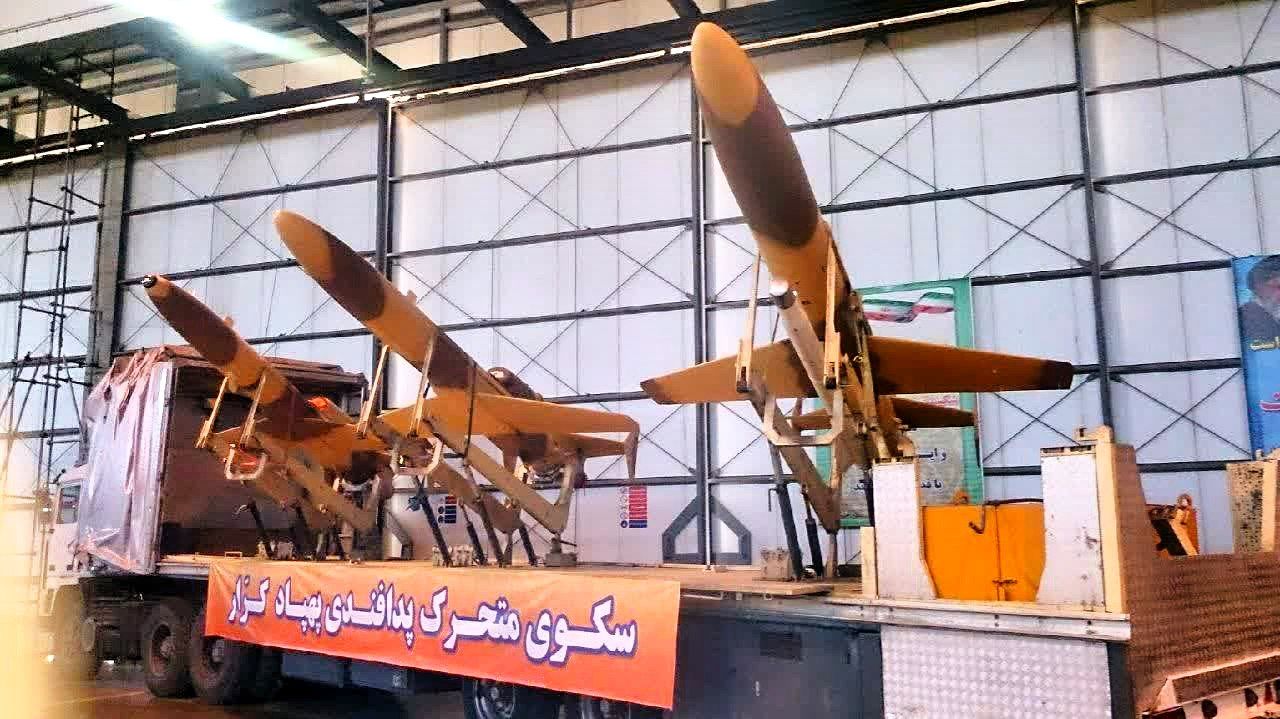
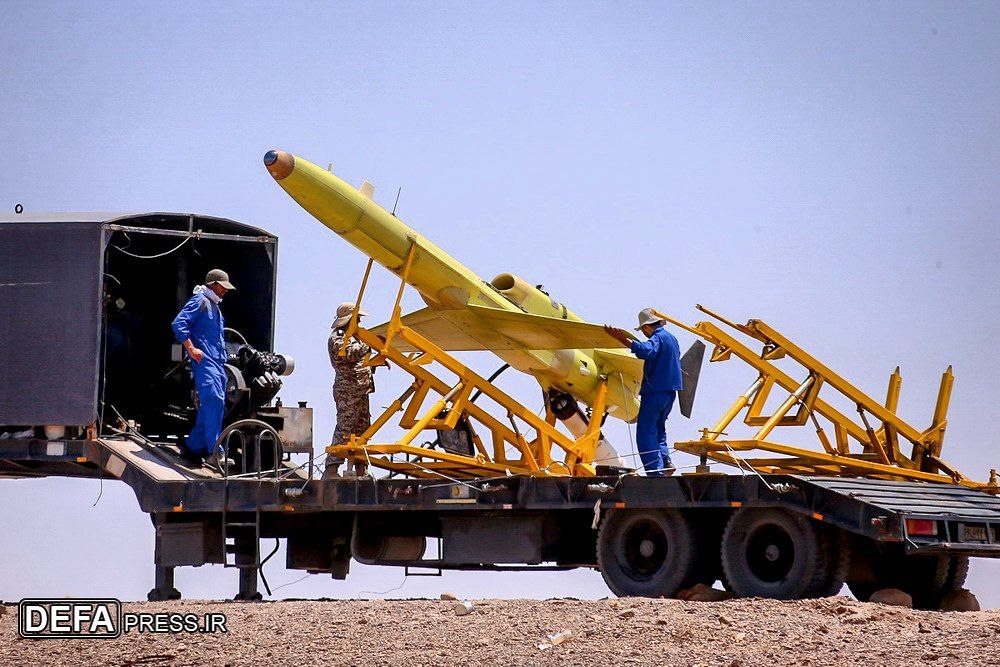
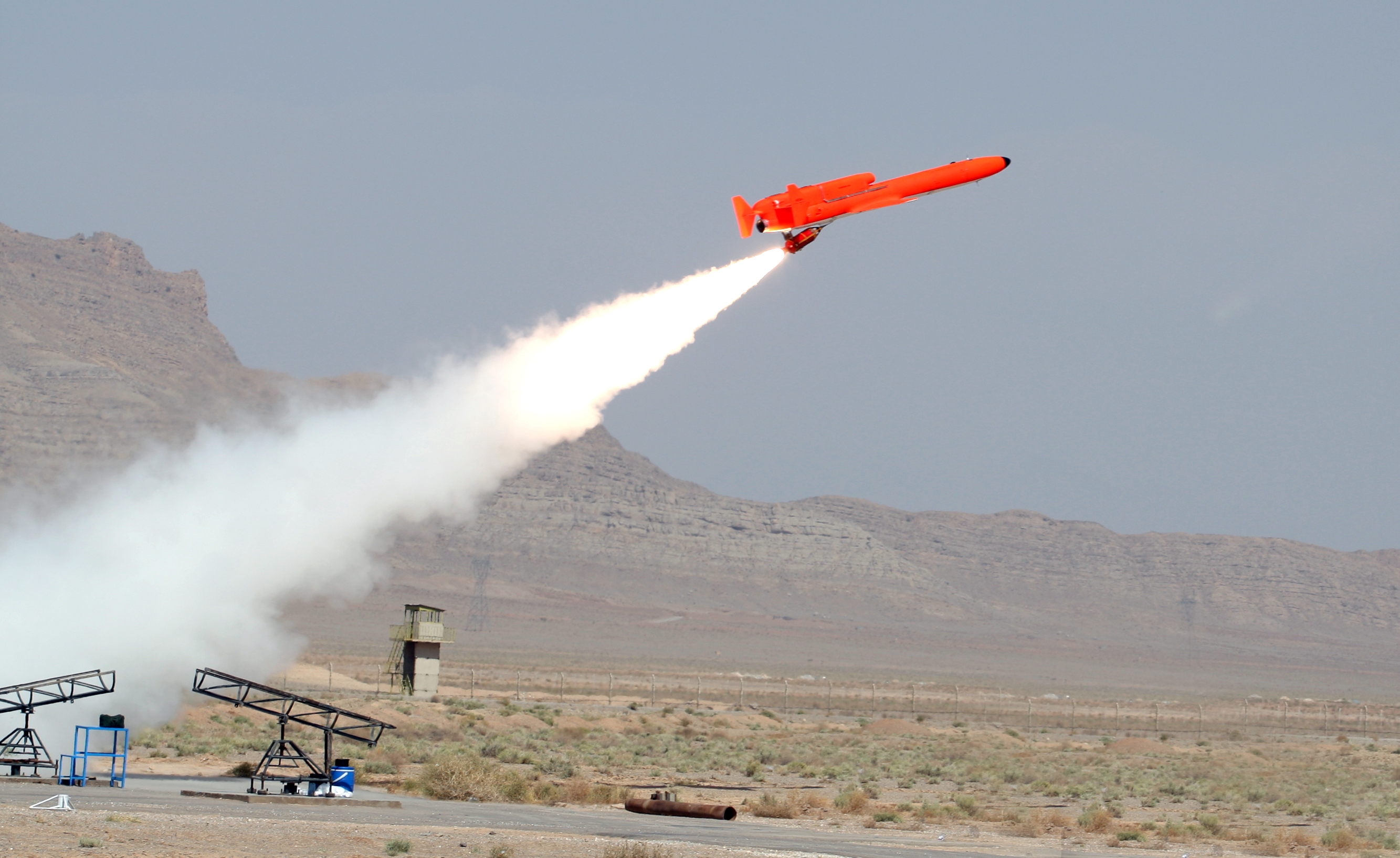
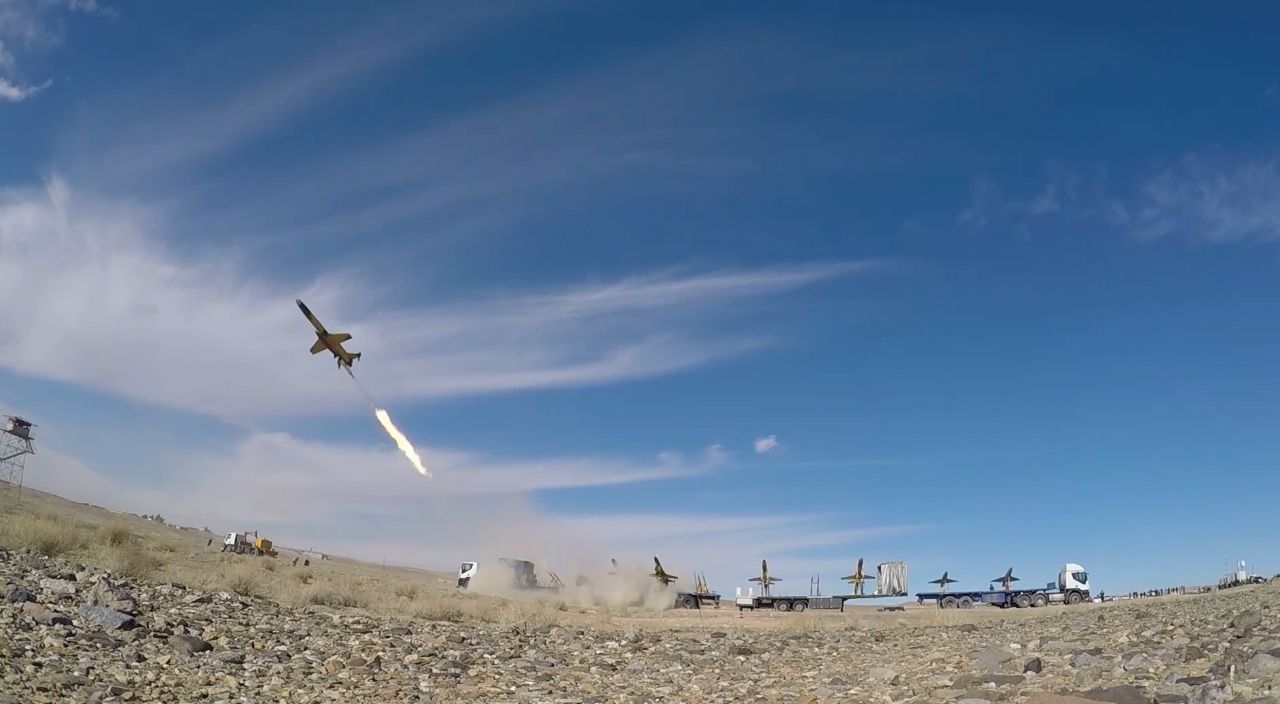
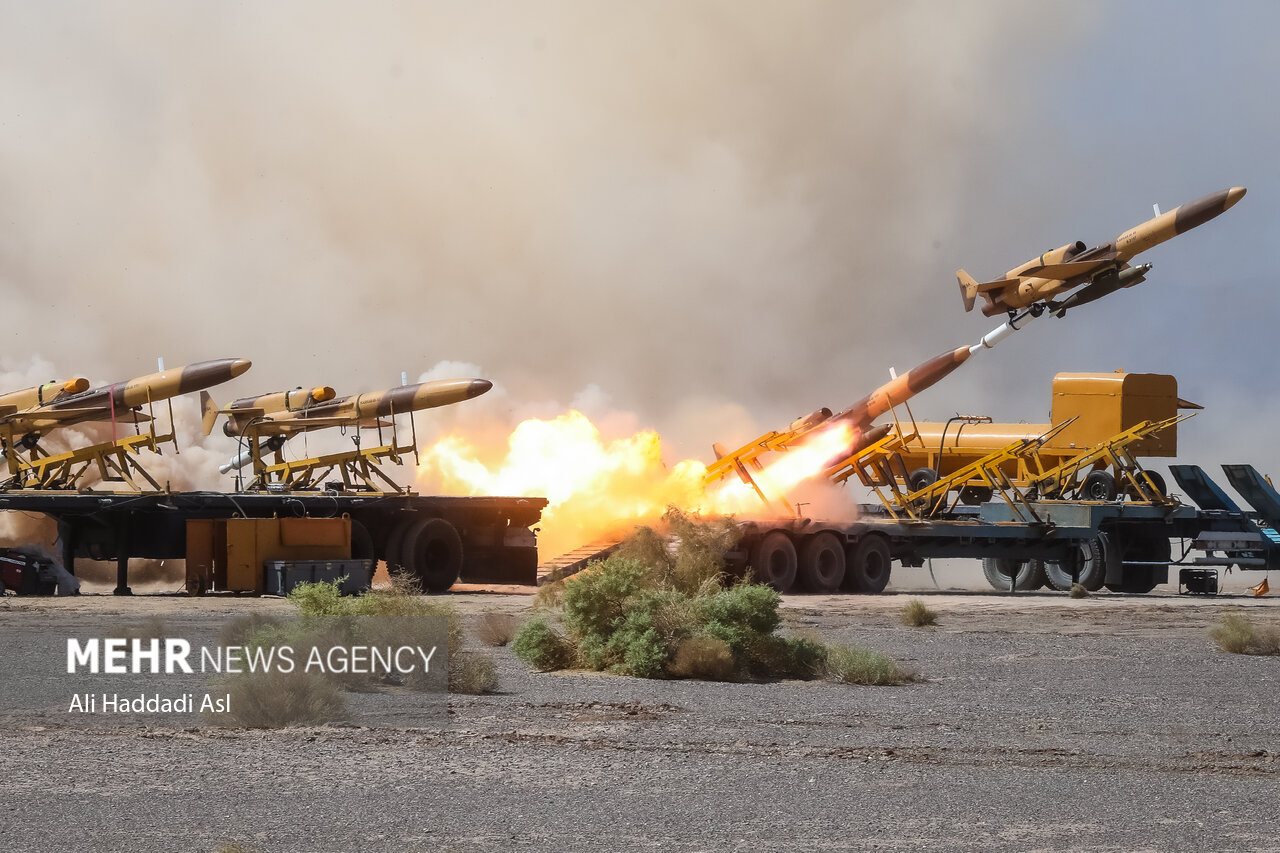
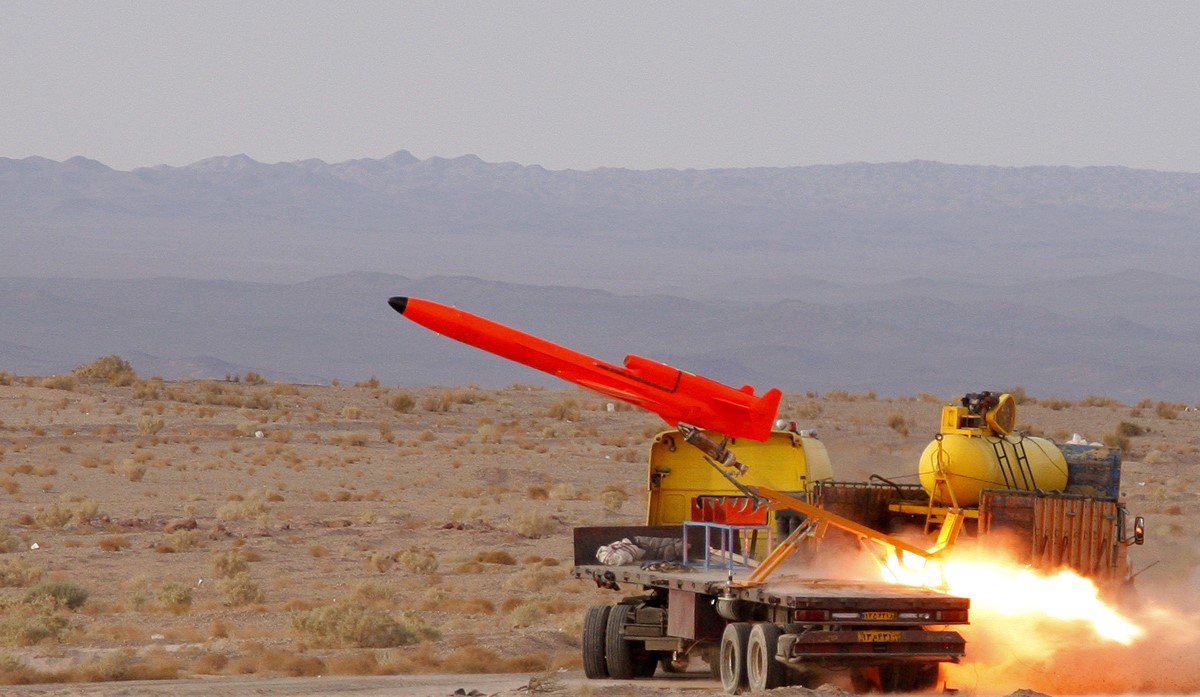
Launching method: The Karrar UAV is launched with the Rocket Assist Take-Off (RATO) mechanism and takes help from the booster to get the initial acceleration. With this booster and its engine, Karrar can fly with a maximum weight of 750 kg, of which 250 kg is weapons. In order to make it possible to use this drone tactically and more widely, a carrier vehicle was designed that carries three drones in ready-to-launch state. The carrier vehicle tent also folds up easily so that it is possible to quickly carry out the operation and then move away from the operation area. This combination greatly increases the survivability on the battlefield for Karrar and its carrier vehicle.
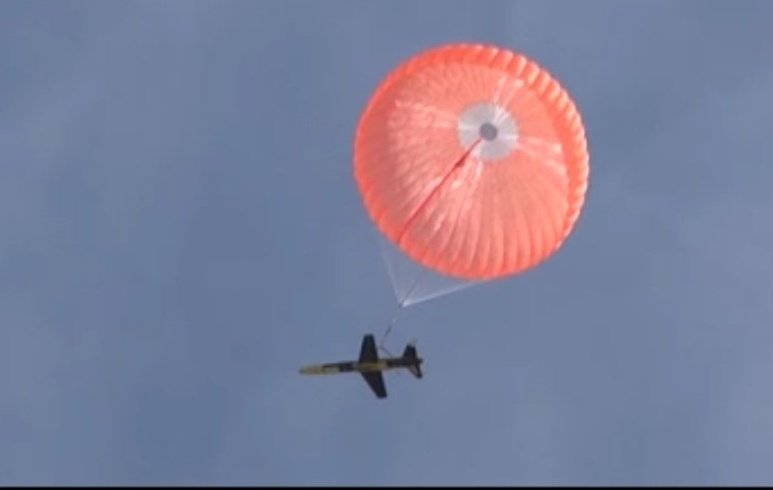
It should be noted that the Karrar does not need a runway for landing, and a parachute is used to recover it.
The truck carrying the Karrar UAV, its tent is easily folded, and it carries three Karrar UAVs, one version of which is armed with the Shahab Thaqeb missile.Landing of Karrar UAV using a parachuteClick to view full size
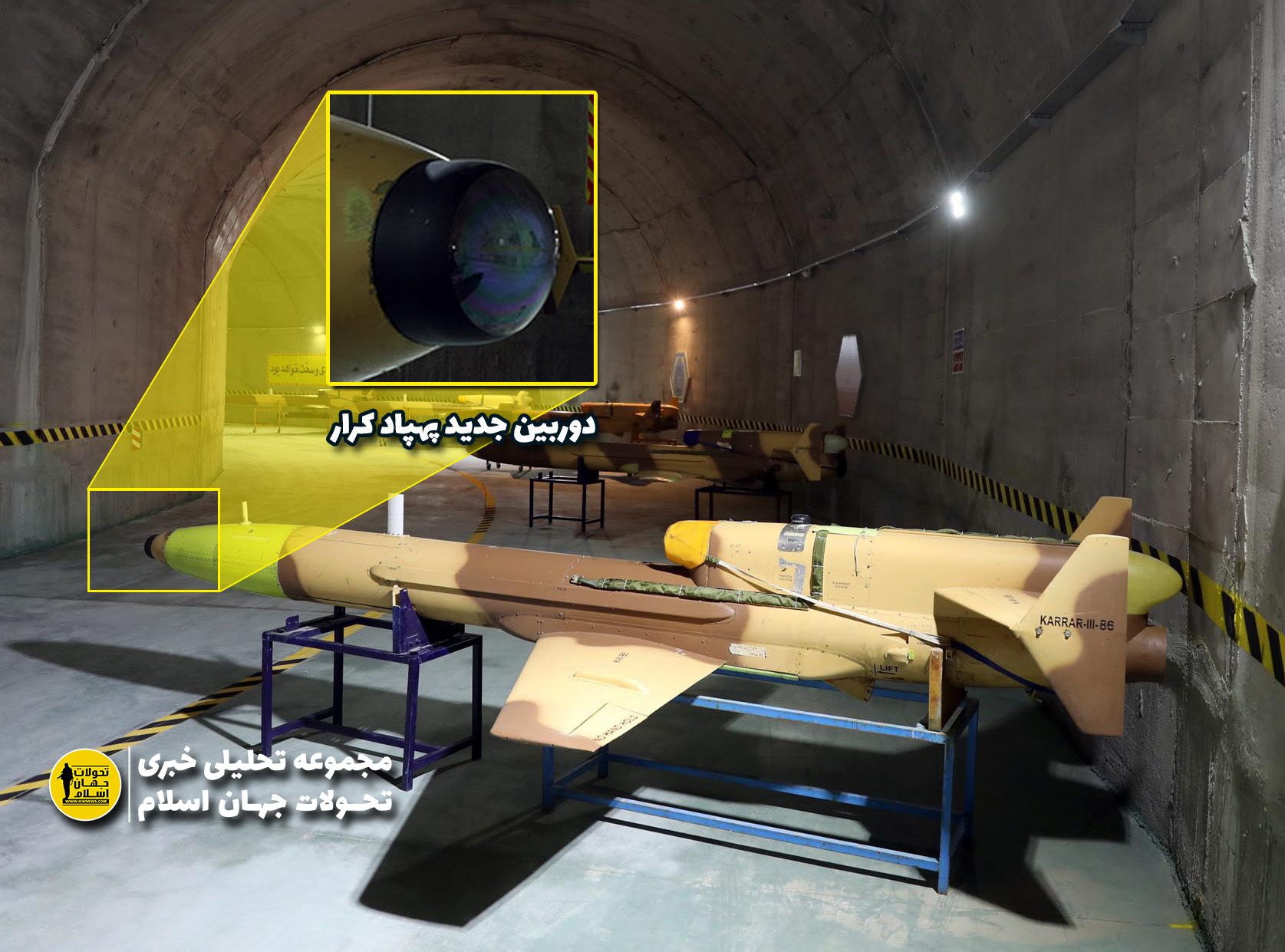
Sensors: It seems that Karrar did not have a front camera in its prototypes and used only one camera under the body that is fixed to see the ground and targets. Later, with the introduction of the “Karrar Interceptor”, it was revealed that this drone has a camera in its nose that can detect the target at a distance of 30 km and lock onto the target at a distance of 3 km. The Karrar Interceptor was actually an aid to the country’s air defense system to fill the void of an interceptor fighter jet and also to increase the response time by being constantly present at the border areas. The front camera of this UAV has 360-degree surveillance capabilities and increases the ability to detect both aerial and ground targets.
A new version of the Karrar was seen at the unveiling ceremony of the Army’s Eagle 44 underground base, which is equipped with a front camera and gives the UAV a wider field of vision.
The prototype of the Karrar interceptor with a front cameraThe prototype of Karrar UAV without a front cameraThe new camera of Karrar with a wider field of vision – At the Eagle 44 underground baseThe images of the underbelly camera of Karrar droneClick to view full size
Guidance system: Karrar’s guidance for accurate hitting of Mark 82 unguided free-fall bombs can be related to the existence of a type of guidance such as Constantly Computed Impact Point (CCIP). In this method, all factors such as wind, speed, target’s movement, gravity, projectile launch velocity, projectile drag and other factors that can affect targeting are calculated and provided to the main computer. The set of information and calculations is finally provided to the operator, which allows the drone to release the bomb accurately. So, the set of these factors, which is actually an inertial guidance, along with the presence of the underbelly camera and GPS, allows this drone to accurately hit the free fall bomb.
Launching of MK-82 unguided bomb by Karar UAV and accurate hitting of the bomb on the target
Radar equipment: In the first prototypes of Karrar and in its production workshop, a variant of the Karrar UAV was seen, which seemed to contain some kind of radar. Also, a type of Karrar carrying two Kosar bombs, each mounted on one wing, can be seen, but such a combat combination has never been seen after that. Another variant of Karrar has also been seen in the exercises, which seems to carry a special type of radar. It is not clear if this radar is for observing the environment or if it is a electronic warfare system to disrupt the enemy’s air defense systems.
An old image of the Karar varietyThe Karrar’s underbelly camera footageA type of radar used in the nose of a droneClick to view full size
The third-generation Karrar drone can be guided by the ground station up to 200 km. Probably, this number has increased to 300 km in the next generations. However, it is still not possible to guide the Karrar “suicide version”, at it’s maximum range which is 1000 km. But what is the solution for guiding the Karrar in a range of 1000 km? The only way to guide Karrar drone in a range of 1000 km is to guide it like a cruise missile. This variant most likely has some kind of terrain radar and TERCOM (terrain contour matching) system, which provides the possibility of automatic guidance similar to a cruise missile. It is also stated that there is a possibility of changing the target for the Karrar suicide drone, which seems logical considering the presence of GPS and the possibility of receiving GPS coordinates.
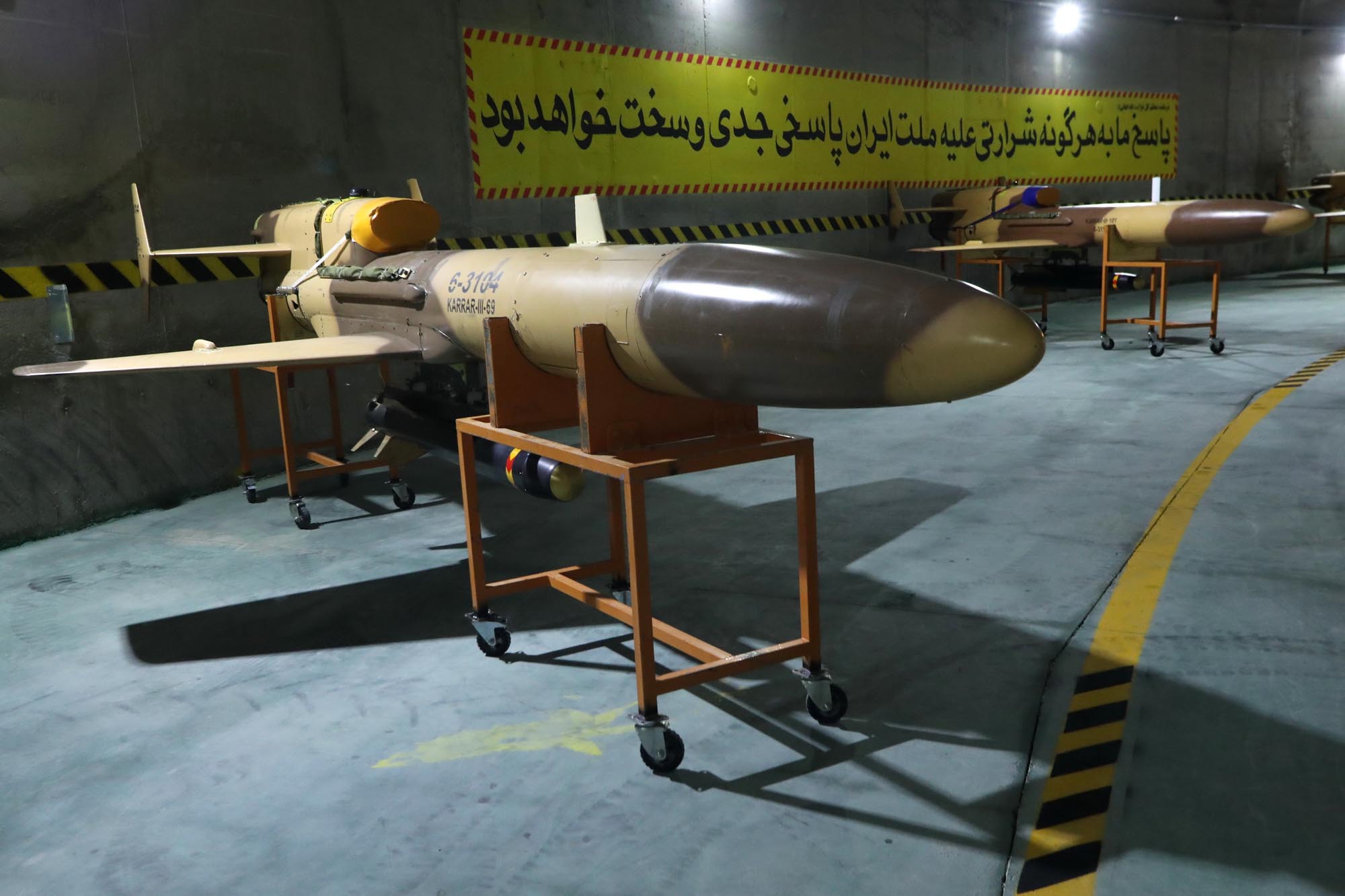
Karrar armament: From the first day of its introduction, the Karrar drone was seen with Mark 82 unguided bomb. In subsequent variants, this drone has been able to carry the Kosar anti-ship missile weighing 100 kg. In a video at an unveiling ceremony, it was revealed that this drone can carry weapons such as Simorgh cluster bomb, Yasin glide bomb (the same Mark 82 bomb with guidance kit), Balaban glide bomb, 500 pound laser guided bomb (similar to GBU-12B), Azarakhsh air-to-air and anti-tank missile and Shafagh (enhanced) missile. Of course, the Karrar drone has the capability of carrying bombs and other missiles weighing up to 250 kg, which may not be installed on it or may be installed on Karrar in the future.
A set of weapons that Karrar can carryAn image of the accuracy of a free fall bomb dropped by the Karrar droneA Karrar drone carrying Shafagh (enhanced) missileFiring the air-to-air version of the Azarakhsh missile from the Karrar droneClick to view full size
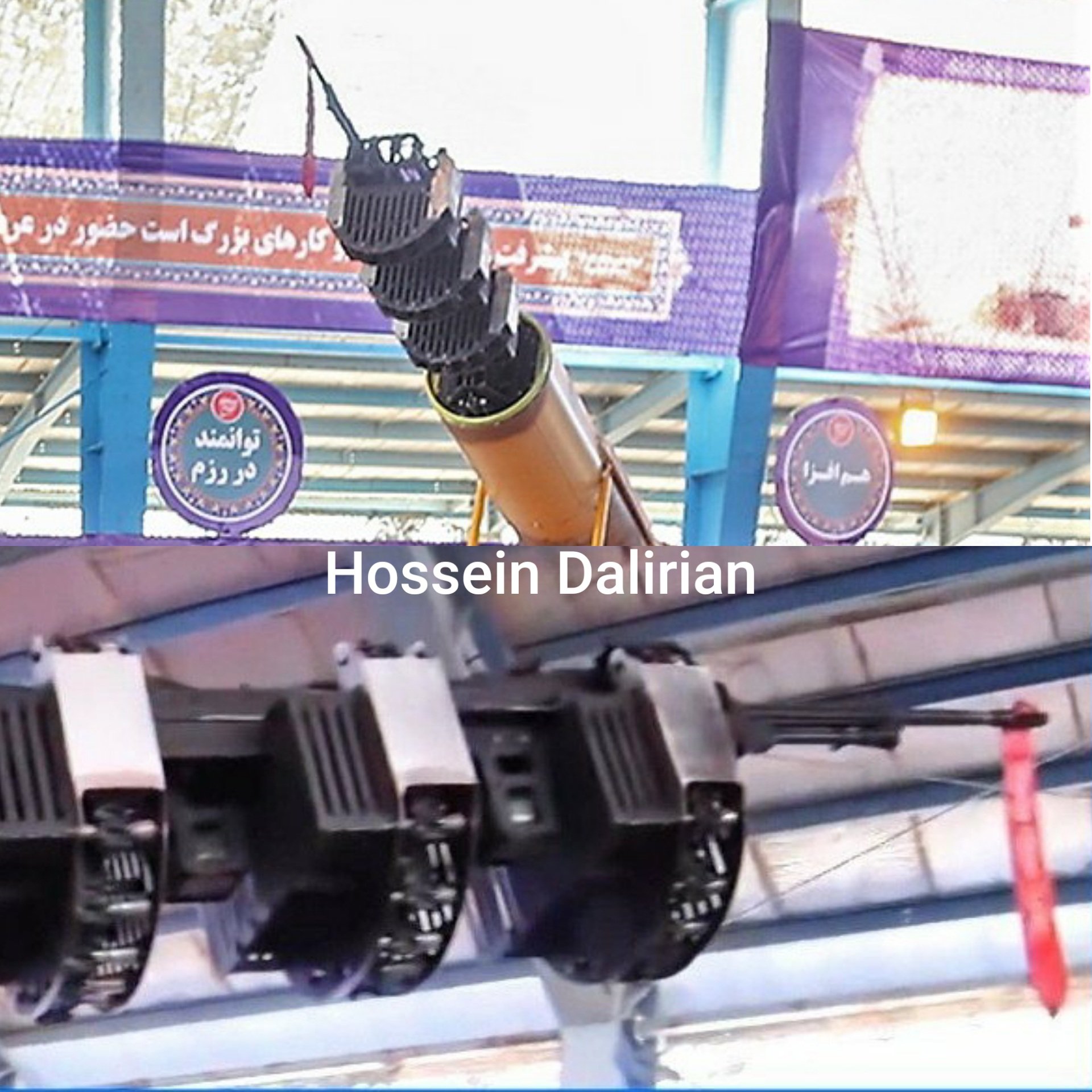
In addition to carrying all kinds of bombs and missiles, the Karrar drone can also carry rapid-firing guns, which have been offered in two types until now. The first gun is Akhgar; Akhgar gatling is a six-barreled gatling with 7.62 mm caliber and 45 kg weight, which was originally developed for helicopters. The second is the installation of three 7.62 mm light guns in one package and in the nose of Karrar drone. The operational level of these versions is not known, but it is possible to hunt drones or low-speed air targets with these guns.
Installation of the Akhgar gatling on Karrar droneInstallation of a machine gun and an empty place for two other machine guns on the nose of Karrar droneClick to view full size
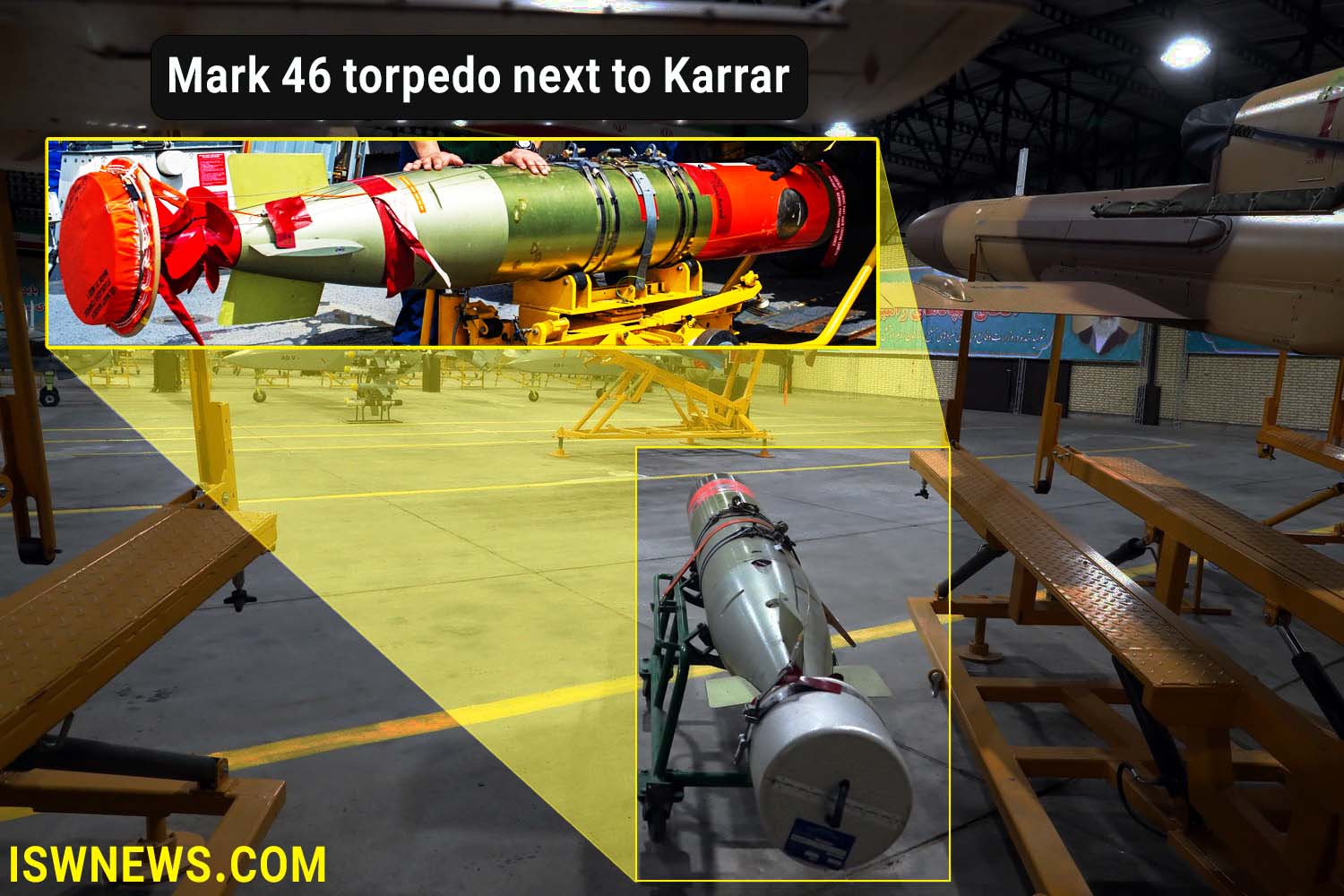
In addition to mentioned weapons, an air-launched torpedo has also been installed on the Karrar drone. The Mark 46 torpedo installed on the Karrar is a light air-launched torpedo with a weight of 230 kg, which can destroy all types of submarine targets with a 43.9 kg warhead and a range of 11 km.
Due to the use of wide range of weapons that Karrar can carry, it is capable of conducting a various range of missions; Therefore, the Karrar drone can be considered and named as the first multirole drone in the world!
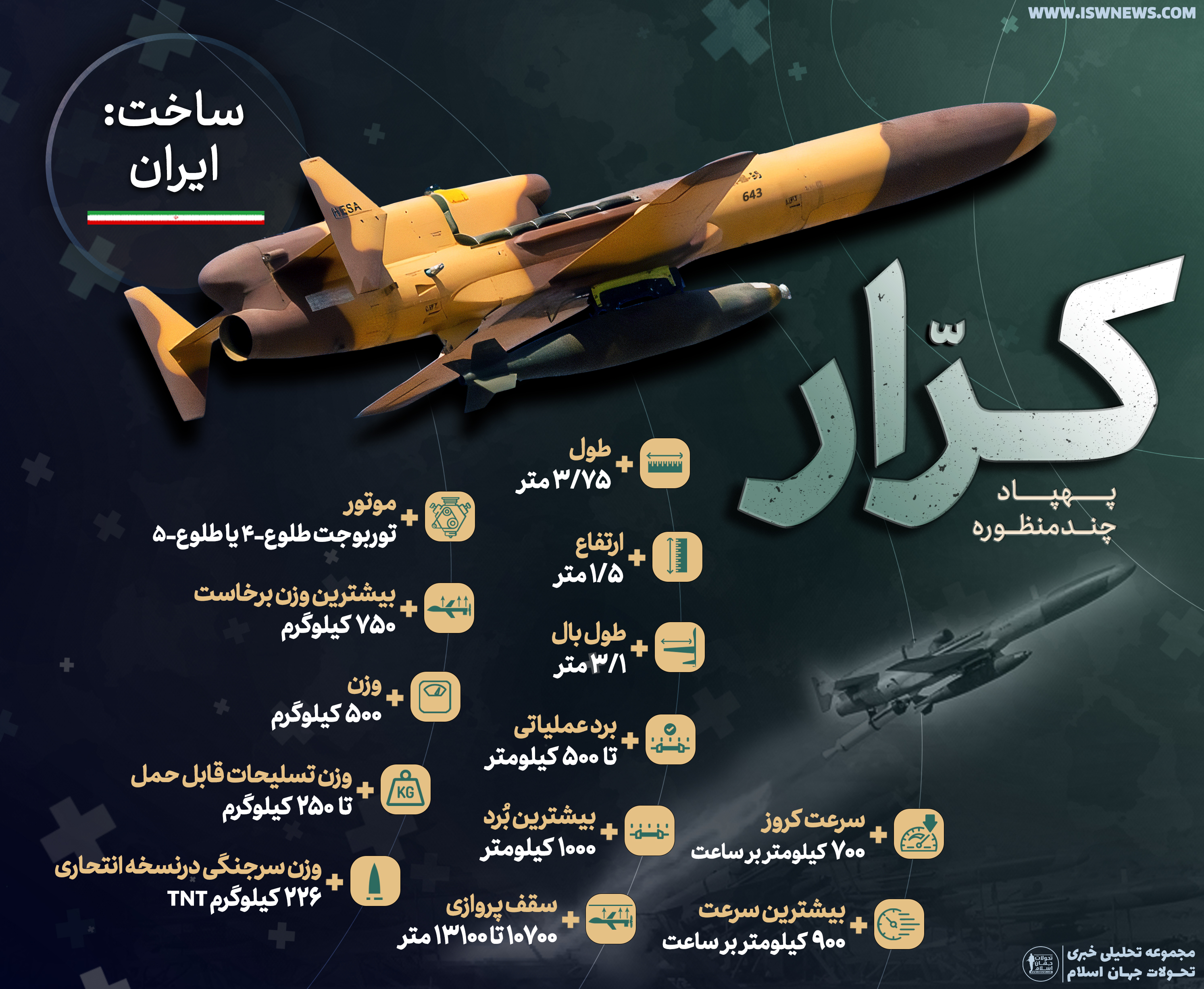
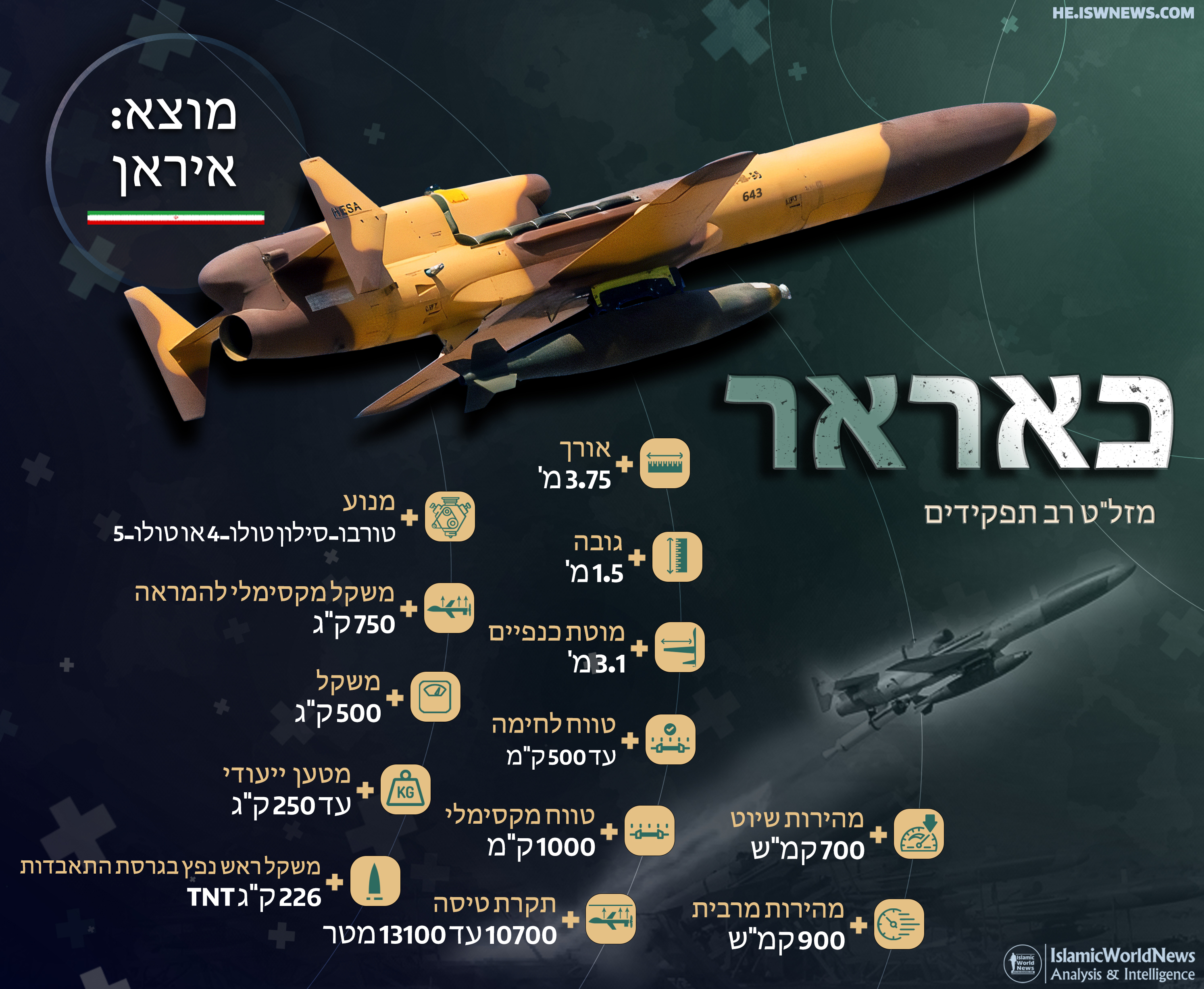
Karrar drone specifications: Role: multirole drone Length: 3.75 meters Wingspan: 3.1 meters Height: 1.5 meters Maximum take-off weight: 750 kg Weight: 500 kg Weapons payload: up to 250 kg Weight of warhead in the suicide version: 226 kg of TNT Engine: Toloue-4 or Toloue-5 turbojet Cruise speed: 700 km/h Maximum speed: 900 km/h Maximum range: 1000 km Combat range: up to 500 km Flight ceiling: 10700 to 13100 meters Origin: Iran
Karrar multirole drone – click to view full size
More images of Karrar drone:
Click to view full size
The collection of Karrar UAV posters in Russian, Hebrew, Arabic, Azeri, Kurdish Farsi:
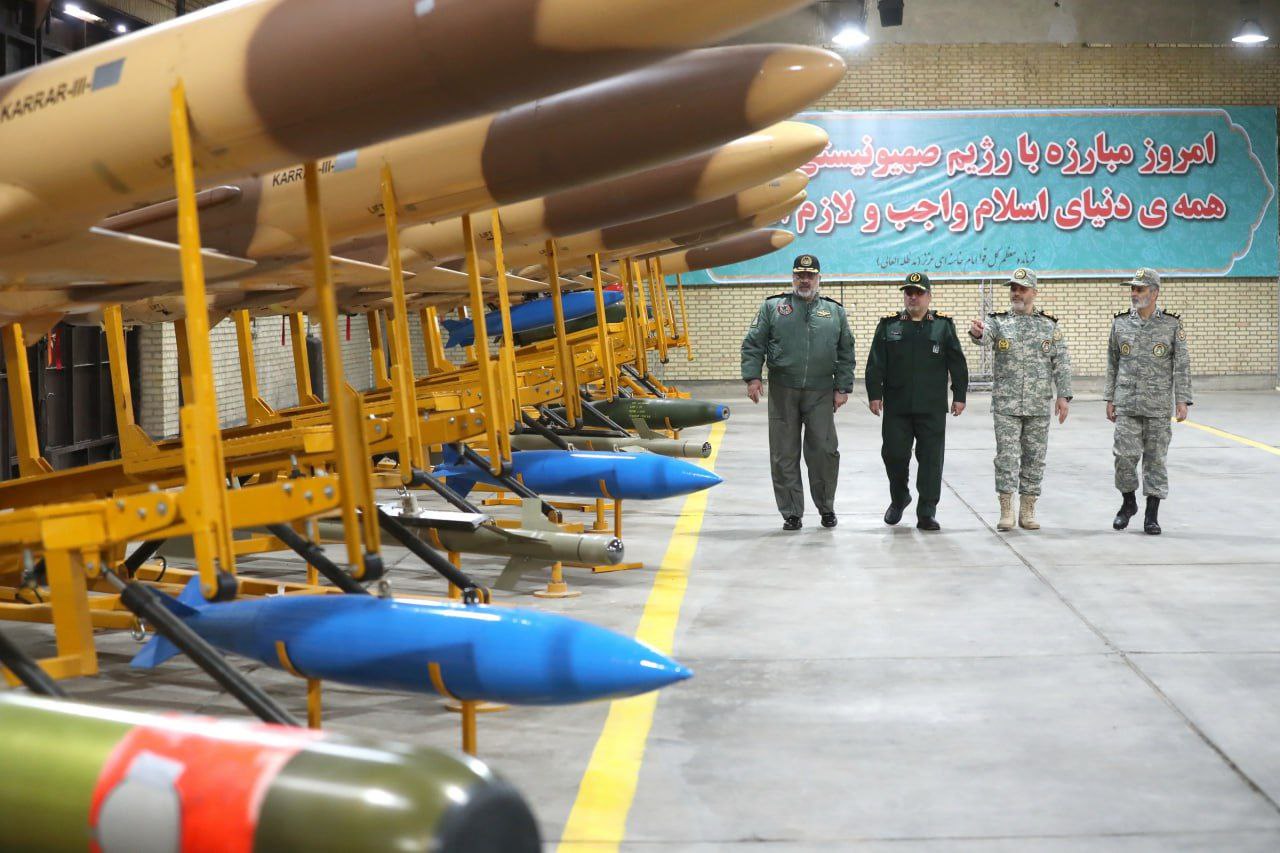
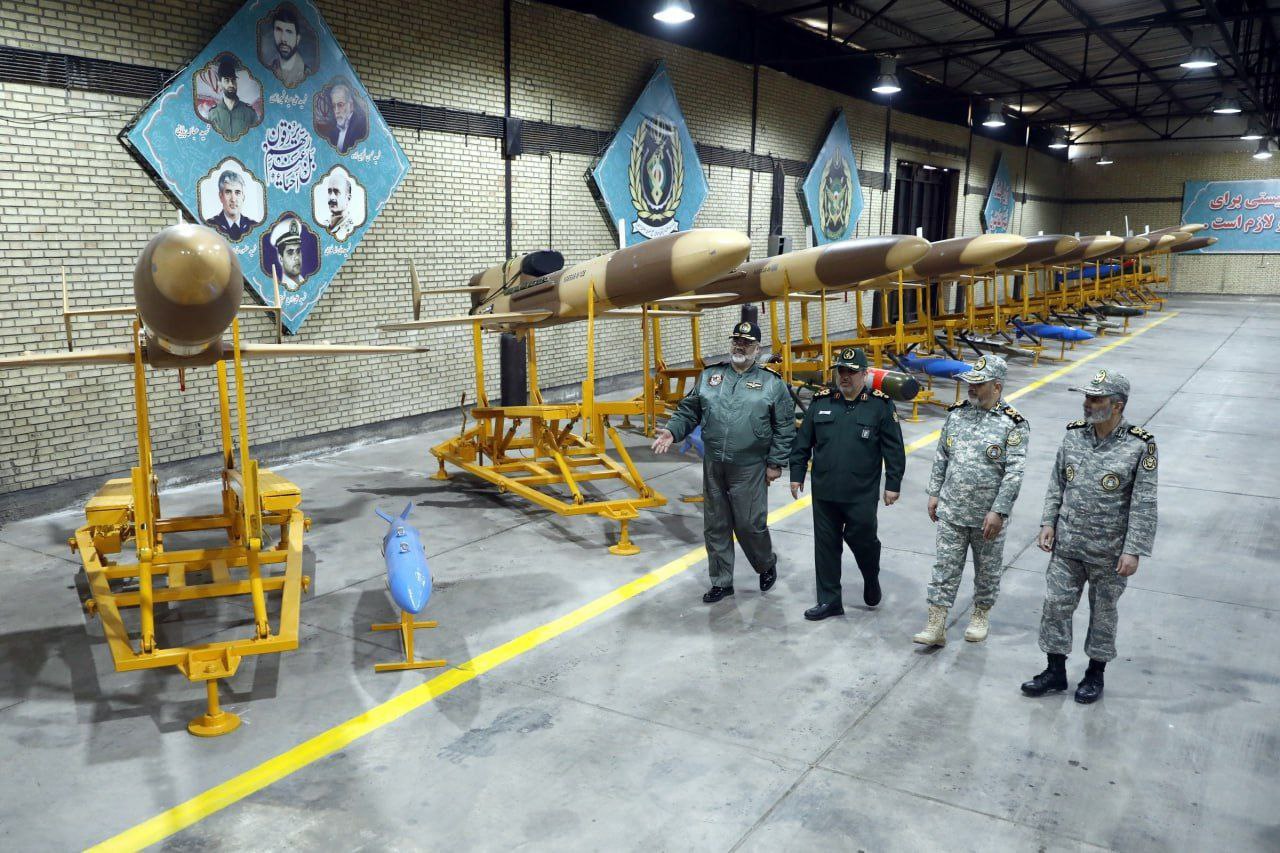
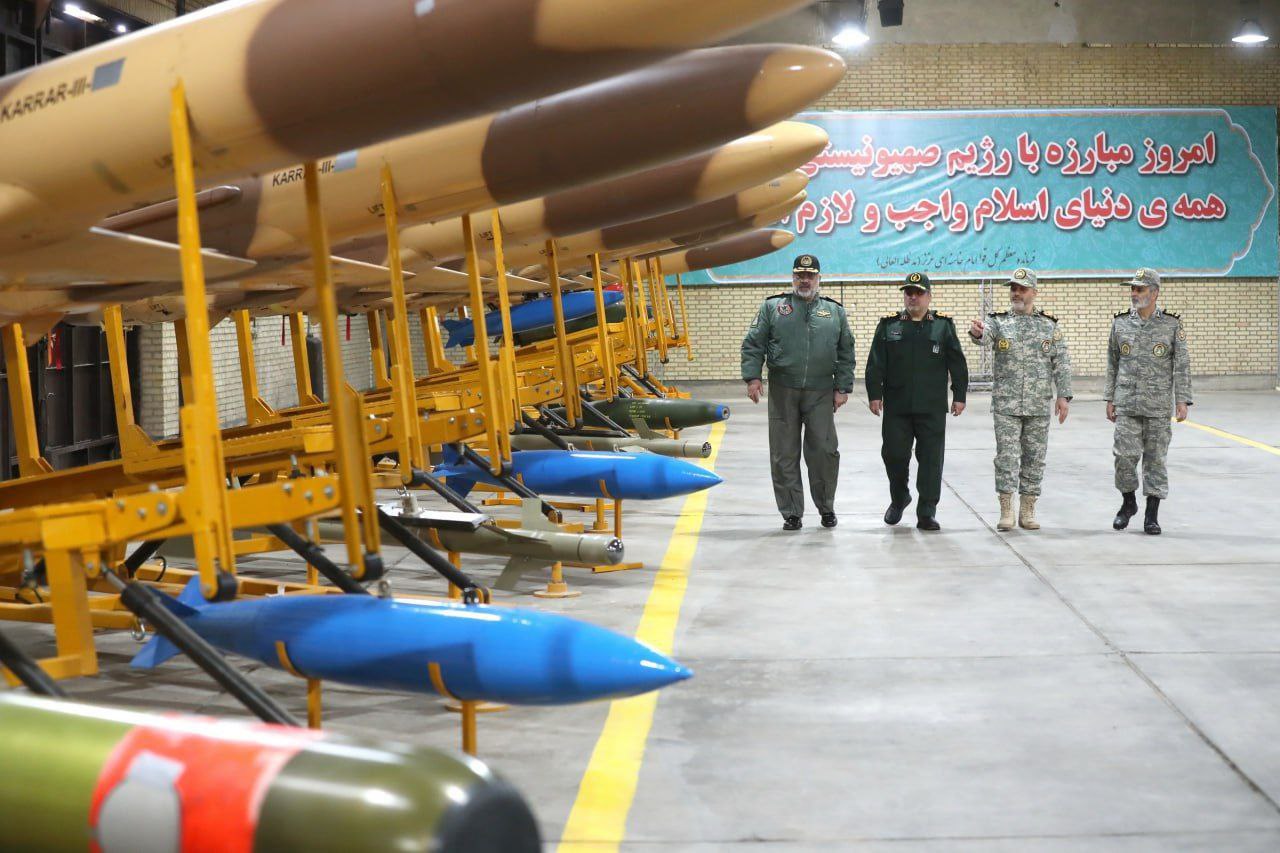
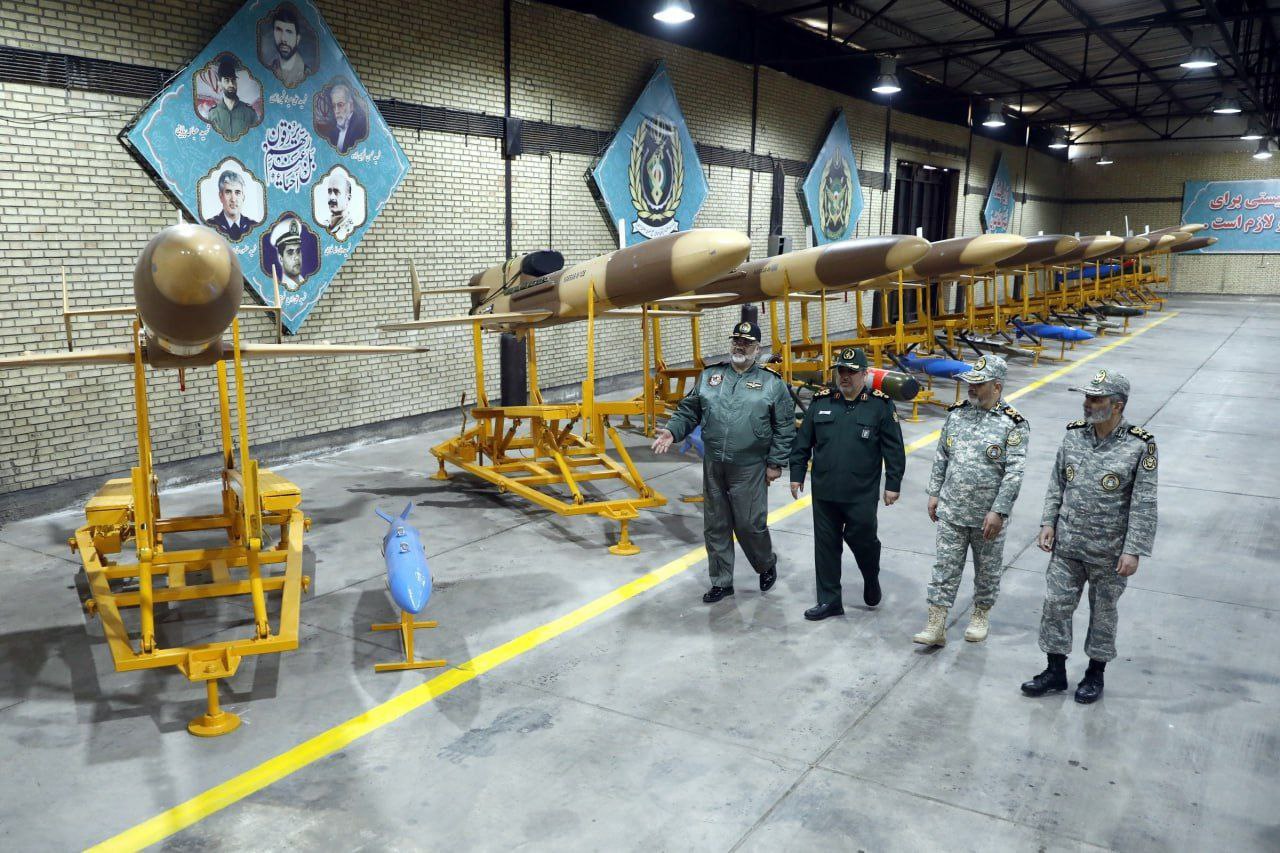
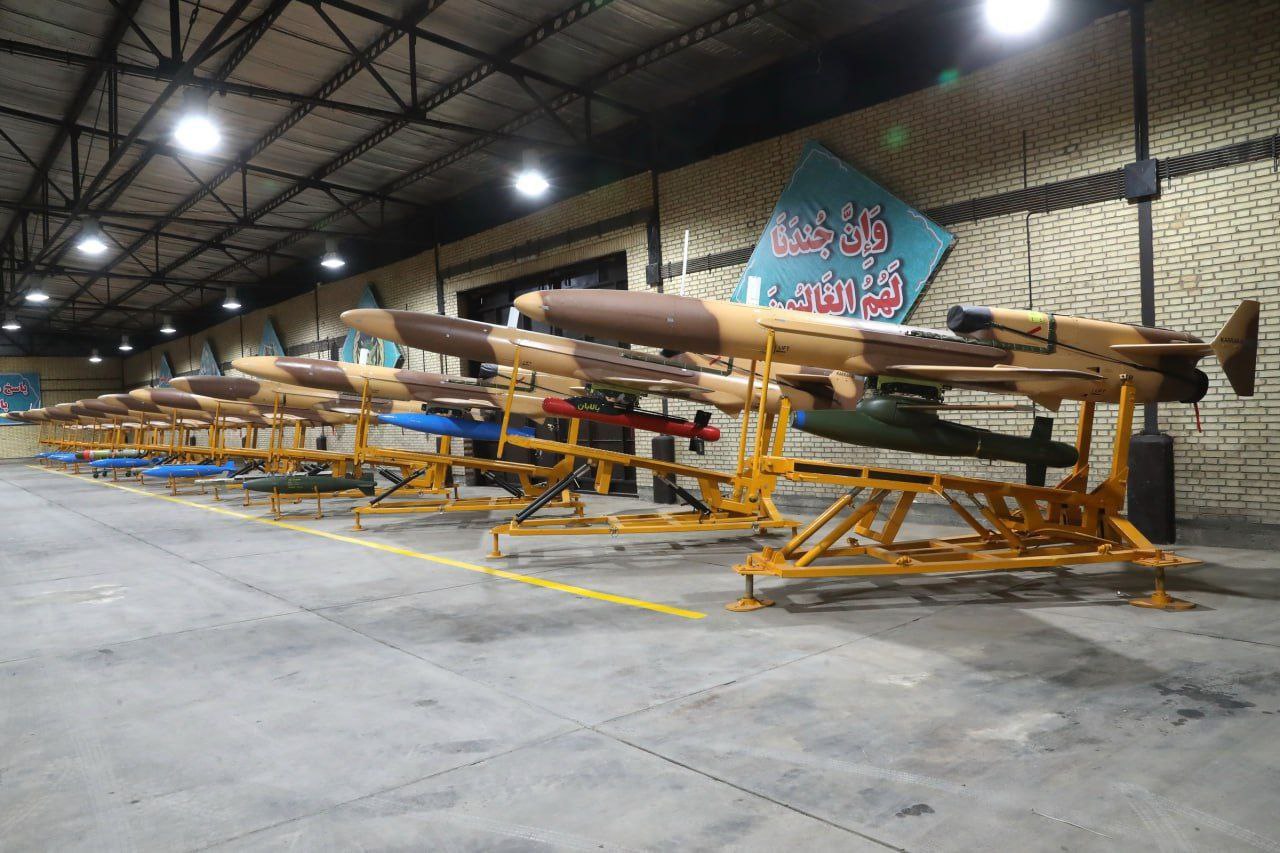
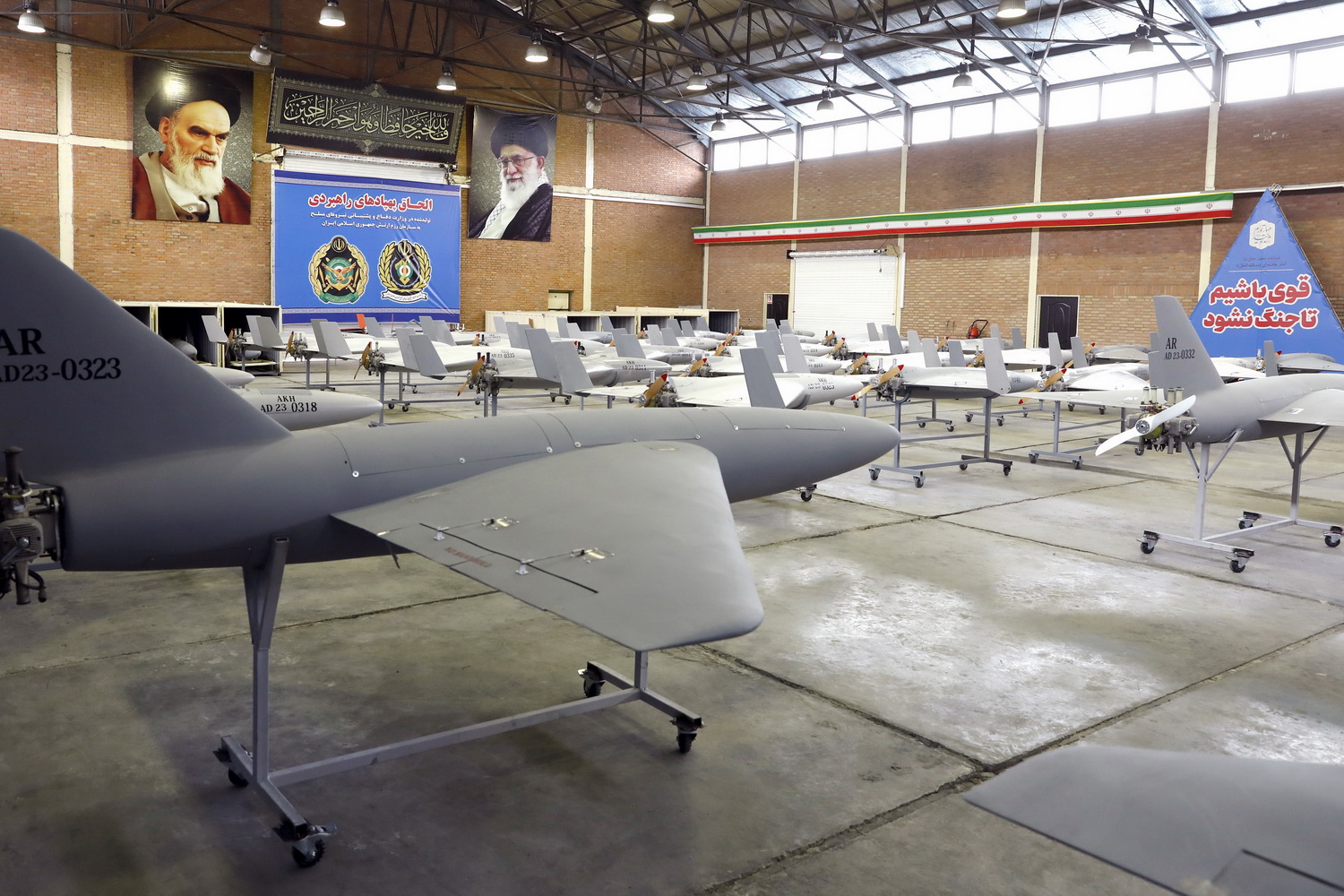
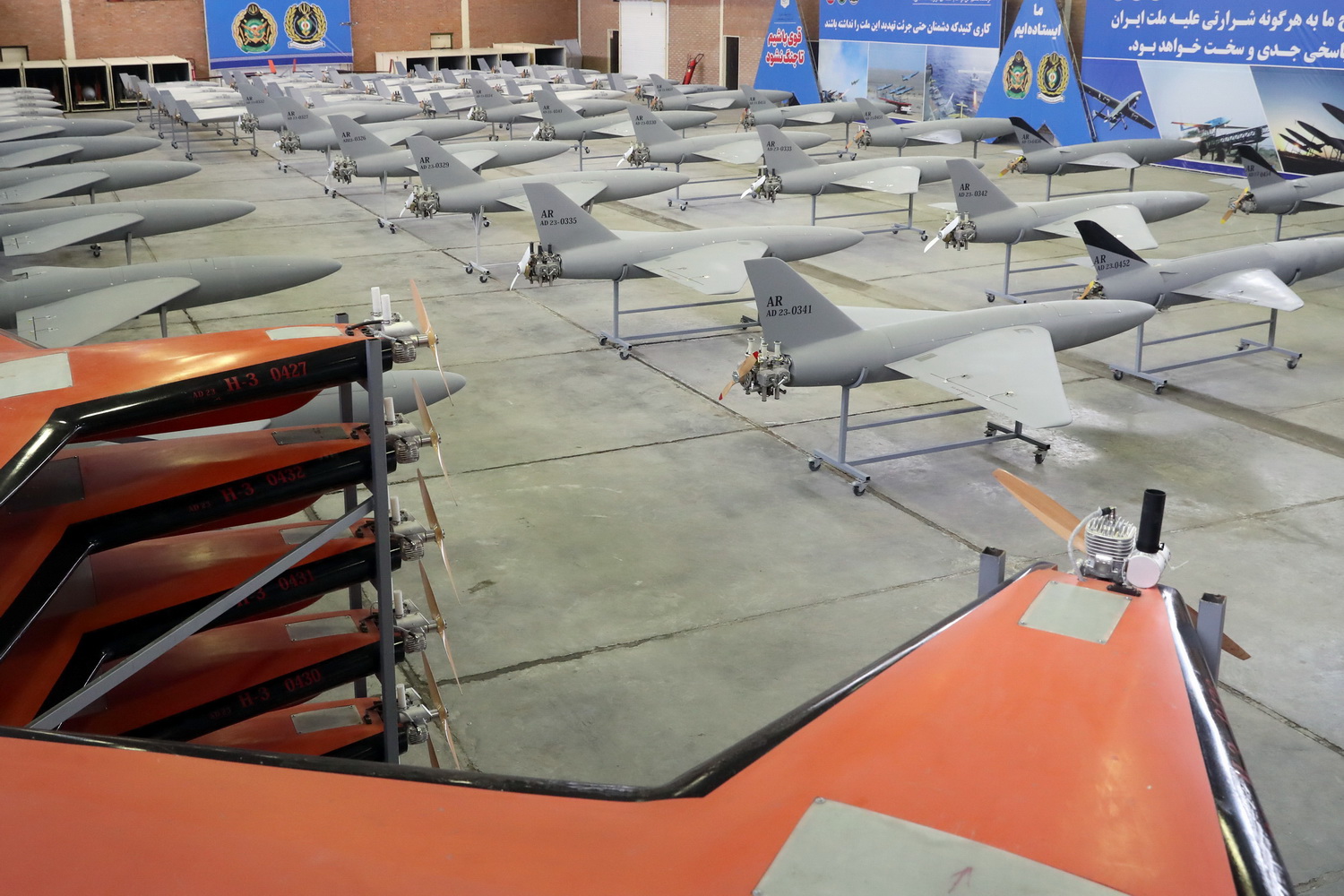
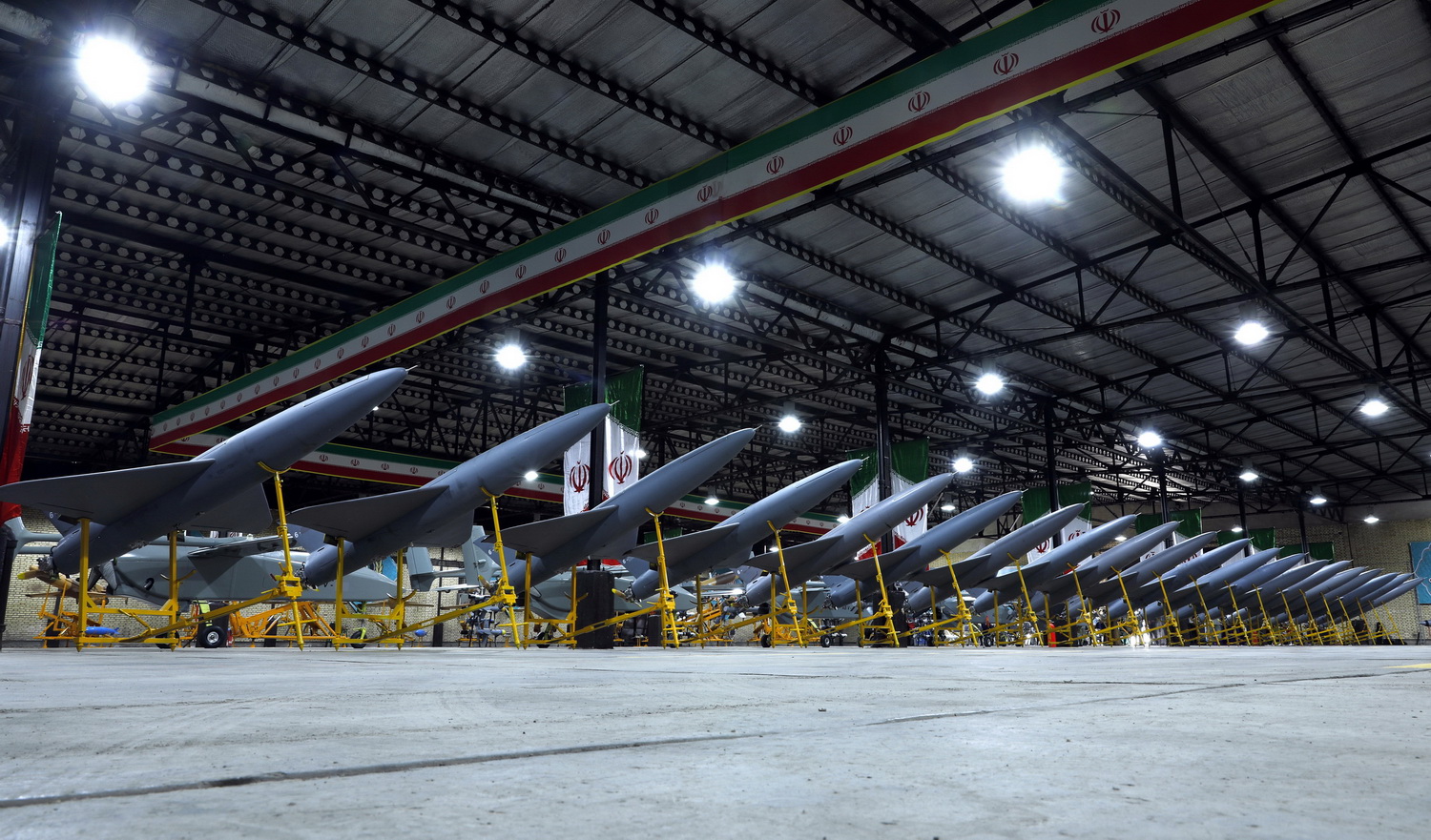
In the Thursday ceremony, over 200 strategic long-range UAVs were handed over to the Islamic Republic of Iran Army in the presence of Commander-in-Chief of the Iranian Armed Forces Major General Abdorrahim Mousavi, Defense Minister Brigadier General Mohammad Reza Gharaei Ashtiani and Deputy of Chief of Staff for the Armed Forces of the Islamic Republic of Iran Aziz Nasirzadeh as well as a number of other military and administrative authorities.
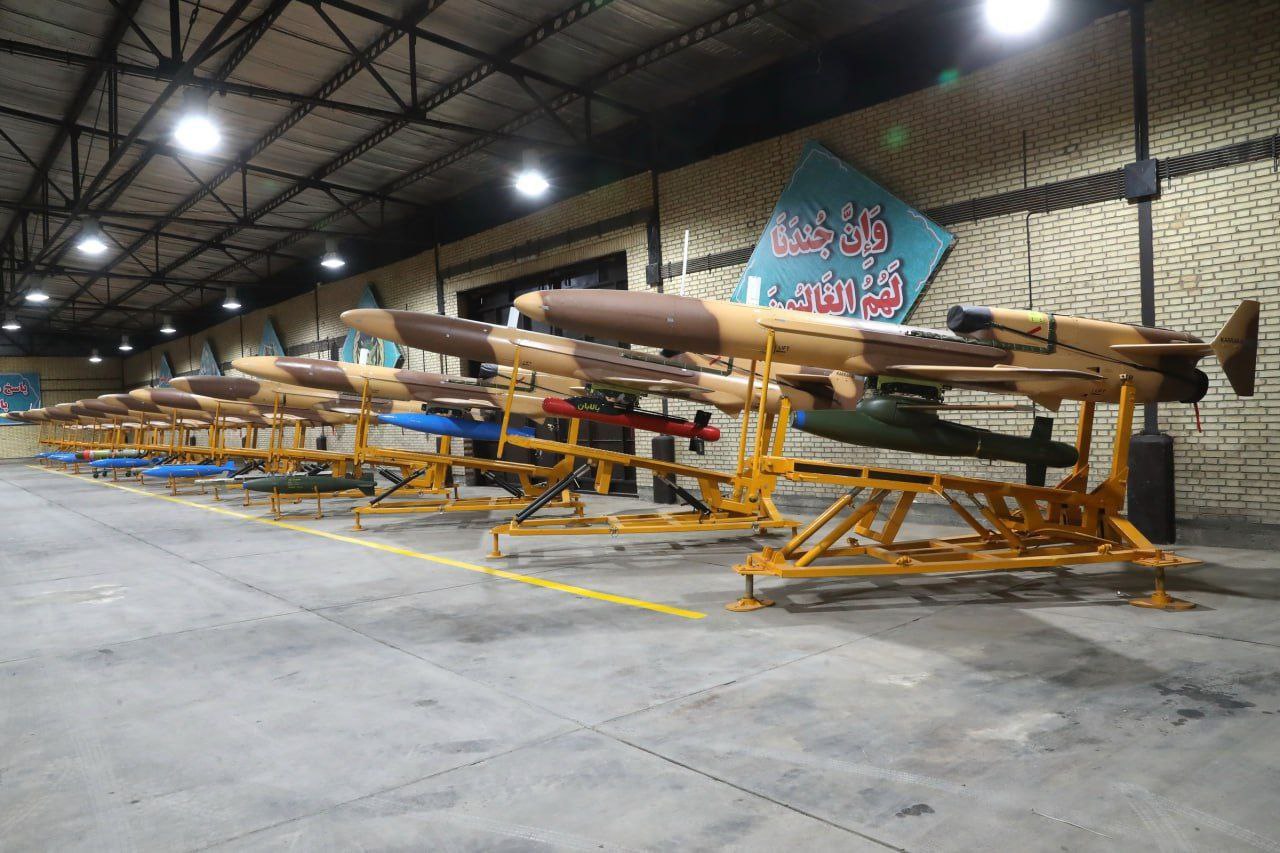
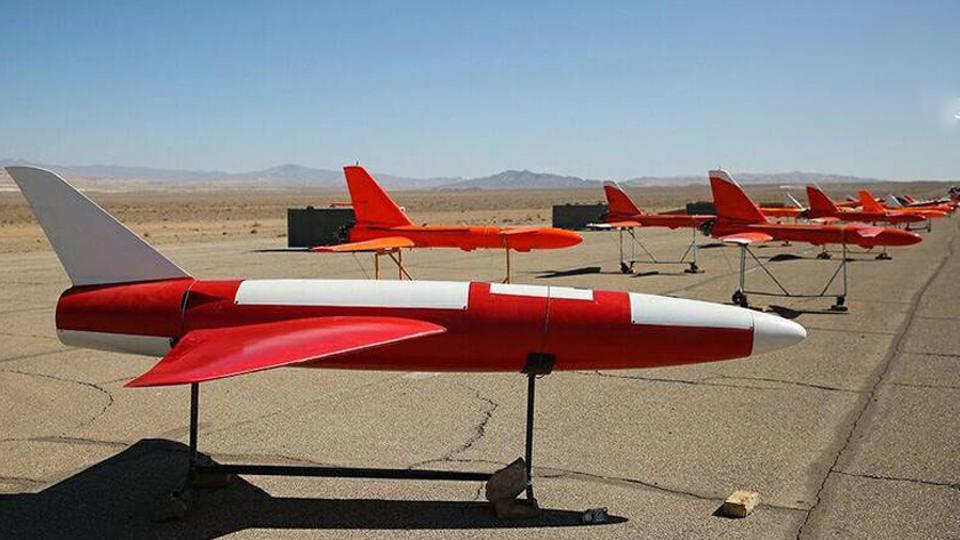
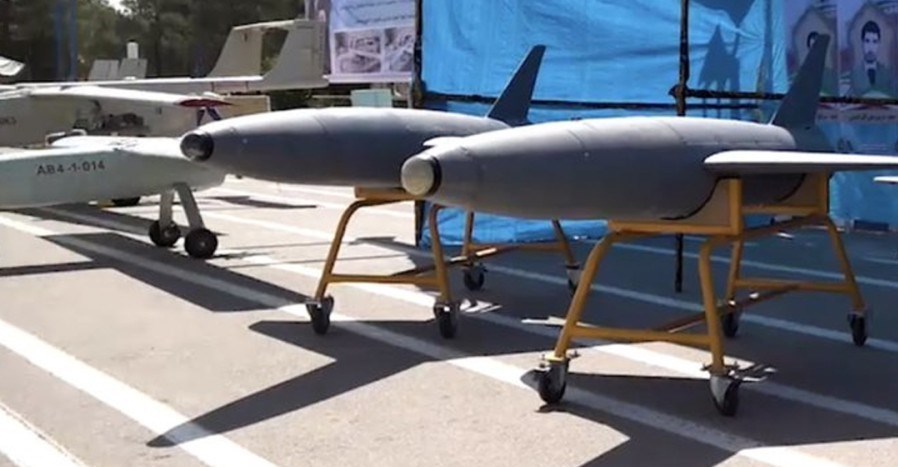
Different types of strategic drones, including Ababil 4 and 5, Arash 2, jet powered UAV Karrar, Shahrivar 10th UAV, Akhgar, a drone similar to the IRGC’s Meraj 521, Homa along with sea-based drones and vertical flying UAVs, were added to the Iranian Army with the aim of pursuing different missions such as reconnaissance, obliteration, combat reconnaissance, radar evasion, interception airborne to confront portable and stationary targets. The new drones, added to the Army, enjoy Low Radar Cross Section (RCS or σ).
Iran Equips Army Fleet With over 200 Strategic Drones
The drones have been designed and manufactured by the Ministry of Defence and Armed Forces Logistics in cooperation with the Islamic Republic of Iran Army. The UAVs have got modifications in propulsion, direction, control and navigation systems to be added to air-to-air and air-to-surface missiles, standoff and smart bombs, as well as electronic warfare systems; so, they are ready to carry out special missions with the use of features such as the stealth and range increase.
A strategic agreement for the development and upgrade of drone capability and installed equipment on the UAVs were signed by Commander-in-Chief of the Iranian Armed Forces Major General Abdorrahim Mousavi and former Defense Minister Brigadier General Amir Hatami on May 17, 2021.
In accordance to the agreement, the Ministry of Defence and Armed Forces Logistics was tasked to manufacture 1,000 drones and hand over them to the Islamic Republic of Iran Army in line with upgrading the combat power and destruction might of the drone fleet of the Army.
Ababil-4 and Arash-2 dronesA loitering drone similar to the IRGC’s Meraj-521
The use of Balaban and Yasin long-range guided bombs as well as Mark 86 torpedoes on Karrar drones to be used as anti-submarine dronesArash-2 and Akhgar (or Amin) suicide drones
Shahed-149 or Gaza drone is one of the most advanced and largest Iranian drones ever built by the Iranian Armed Forces, and the specifications and equipment used in it show the significant progress of Iran in increasing the country’s capabilities in the field of UAVs.
The Shahed-149 reconnaissance combat drone, capable of carrying 13 bombs and 500 kilograms of equipment, as well as a 35-hour flight duration up to a radius of 2,000 kilometers, and is capable of conducting a variety of combat and intelligence operations and greatly enhances and promotes Iran’s military capability in the region.
This drone is very similar to the US MQ-9 Reaper drone and is compared to this drone in terms of operational level. According to the published images, it seems that Iranian experts have succeeded in building such a drone by using past experiences and studies on American captured drones.
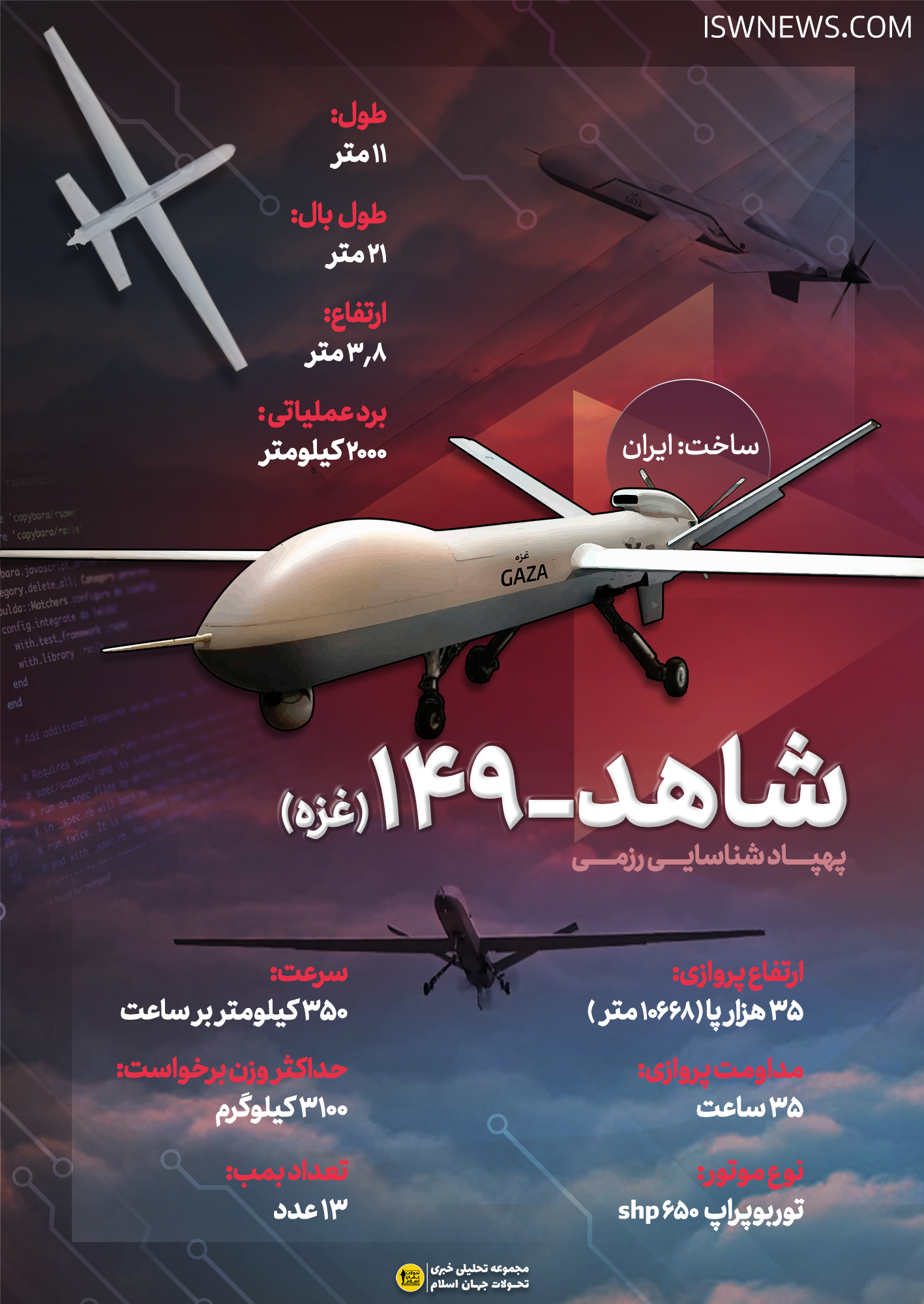
Shahed-149 (Gaza) drone with a wingspan of 21 meters and a length of 11 meters has a speed of about 350 kilometers per hour and its maximum takeoff weight is 3100 kg and is capable of carrying cargo weighing at least 500 kg and its flight altitude is about 35,000 feet. Therefore, due to the large size and heavy weight of this drone, a turboprop engine has been used. This is the first time that a turboprop engine with this power is used on an Iranian drone. Exact information about the power of this engine has not been published yet; But according to the published images and general information of the drone, it seems that the Shahed-149 drone uses a turboprop engine with a nearly 650 shaft horsepower.
Another noteworthy point in this drone is the use of a more advanced electro-optical system than previous drones. This system, which seems to be one of the most advanced Iranian electro-optical systems, in addition to a day-vision camera with a zoom power of at least 100 to 120 times, also has a infrared sensor system, laser designation and laser illumination capabilities. One of the highlights of this system is the use of a catadioptric lens that increase the magnification ability several times and this is the first time that it has been used in Iranian drones.
Shahed-149 Gaza drone electro-optical system
Amir Ali Hajizadeh, Commander of the IRGC Aerospace Force, regarding the weapons capability of the Gaza drone, stated that this drone is capable of carrying 13 bombs. In the published images, a device similar to the rotating bomb system used in bombers is seen. And given the space under the drone’s fuselage, the Gaza drones appears to be using a Rotary Bomb Launcher under its fuselage that can carry up to five bombs. If this is true, this is the first Iranian drone to use this mechanism. Due to this improvement, 5 bombs will be installed inside the bomb bay and 8 bombs will be installed under the wings, and in total, this drone is capable of carrying 13 bombs.
Possible Rotary Bomb Launcher mechanism in the Shahed-149 Gaza drone
Iranian Sadid “Fire-and-Forget” missiles weighing up to 34 kg, 13 of which weigh up to 442 kg, can be one of the types of missiles that can be used in the Gaza reconnaissance combat drone.
Shahed-149 (Gaza) drone specifications: Length: 11 m Wingspan: 21 m Height: 3.8 m Range: 2,000 km Service ceiling: 35,000 ft (10,668 m) Endurance: 35 hours Powerplant: Turboprop ~ 650 shp Speed: 350 km/h Gross weight: 3,100 kg Armament: Up to 13 missiles Origin: Iran
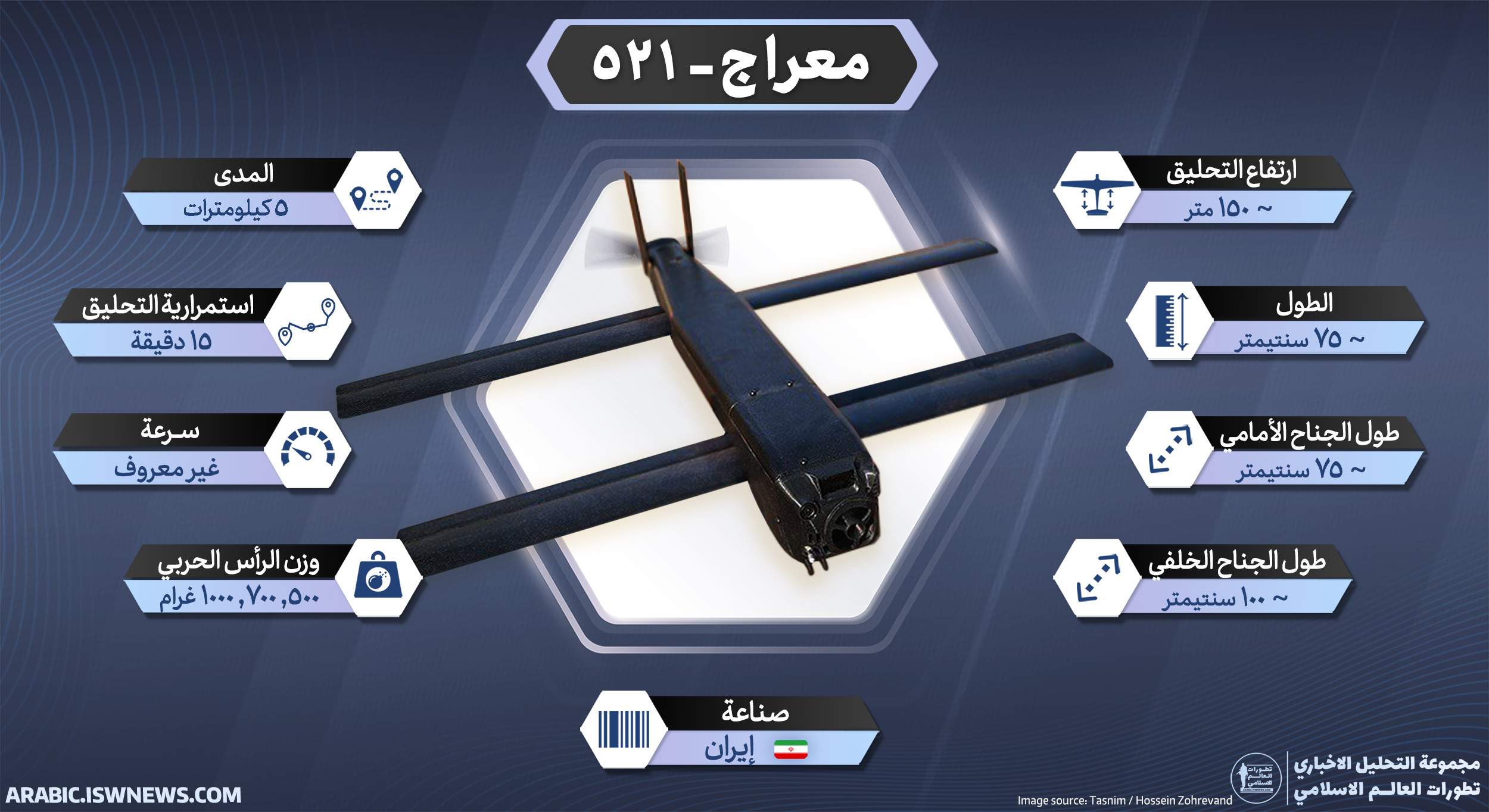
Meraj-521 loitering munition was unveiled and deployed on October 19, during the “Eghtedar ” drill of the Islamic Revolutionary Guard Corps forces in the northwest of Iran.
The Meraj-521 is a suicide drone that is used against infantry targets and enemy light vehicles. The dimensions of these drones are so small that it can be carried in a backpack. This drone is launched from a tubular launcher, and after launch, its wings are opened and it will roams over the desired areas. The operator directs the drone to the target with the screen it has, and the command to attack or change the target and roam around in the environment is available. If a situation causes a strike to be called off, the operator can call off the drone and re-target it
The main mission of the Meraj-521 is to attack light armored vehicles, trenches, personnel, etc.
The Meraj-521 suicide drone is similar in appearance to the US switchblade drone and has four folding wings, two in the front and two in the back, as well as two folding vertical rudders at the end of the drone.
During the exercise and unveiling, two examples of this drone were seen, one with the equal wingspan and the other with smaller front wings; But in the drone test video, the drones had smaller front wings. This brings to mind the speculation that the first model with equal wingspan was probably a replica of Meraj-521.
Meraj-521 has three different warhead weights of 500 grams, 700 grams, and 1000 grams and its flight endurance is between 5 and 15 minutes, and its maximum range is 5 kilometers.
Combining the use of the Meraj-521 suicide drone with hand-launched reconnaissance drones can make it possible to engage targets at longer ranges.
The total weight of the Meraj-521 drone has not been announced, but this drone can be carried by a person. The Meraj-521 drone is powered by an electric motor to fly and relies on a special solid fuel booster to exit the launch tube. Electric motors make very little noise and their radar cross-section is also small, and air defense systems are practically unable to intercept them.
Meraj-521 has the ability to be launched from various platforms such as tactical vehicles, helicopters, gyrocopters, etc. In the IRGC “Eghtedar” exercise, a video of various launches of this tactical and practical UAV was released, which can be seen in this video.
The launch of Meraj-521 from tactical vehicles, helicopters, small launchers, etc
Another strategic and important feature of this kind of drones is the swarm attack. In swarm attack, a large number of these drones are launched towards the target and saturate the target’s defense systems, making it impossible to prevent the attack.
Considering the experiences of the war in Ukraine as well as the experience of recent years in Syria and Iraq, the need to design and build these drones was felt in the combat organization of the Iranian Armed Forces. Due to the fact that Iran has a shortage of fighter jets and practically in battles outside Iran’s borders, close air coverage of the operating ground forces is very difficult and perhaps impossible. Also, if troops use anti-armor missile systems that are carried by pesron, it is very large, heavy and expensive; so using loitering munition such as Meraj-521 can solve this problem to a great extent.
The Meraj-521 drone is innovative, cheap, light, effective and highly efficient and meets the tactical needs of special forces of Iranian military.
Meraj-521 drone specifications: Range: 5 km Endurance: 15 minutes Warhead weight: 500-700-1000 grams Length: ~ 75 cm Front wingspan: ~ 75 cm Rear wingspan: ~ 100 cm Flight altitude: ~ 150 meters Speed: Unknown Origin: Iran
Click to view full size
Collection of posters of Meraj-521 Loitering Munition in Russian (Мерадж-521 Дрон), Persian (پهپاد معراج-۵۲۱), Chinese (Meraj-521 无人机), Hebrew (Meraj-521 מזלט), Arabic (مسيرة معراج-521), Azeri (Merac-521 Dronu) and Kurdish (درۆنی مێعراج-521):
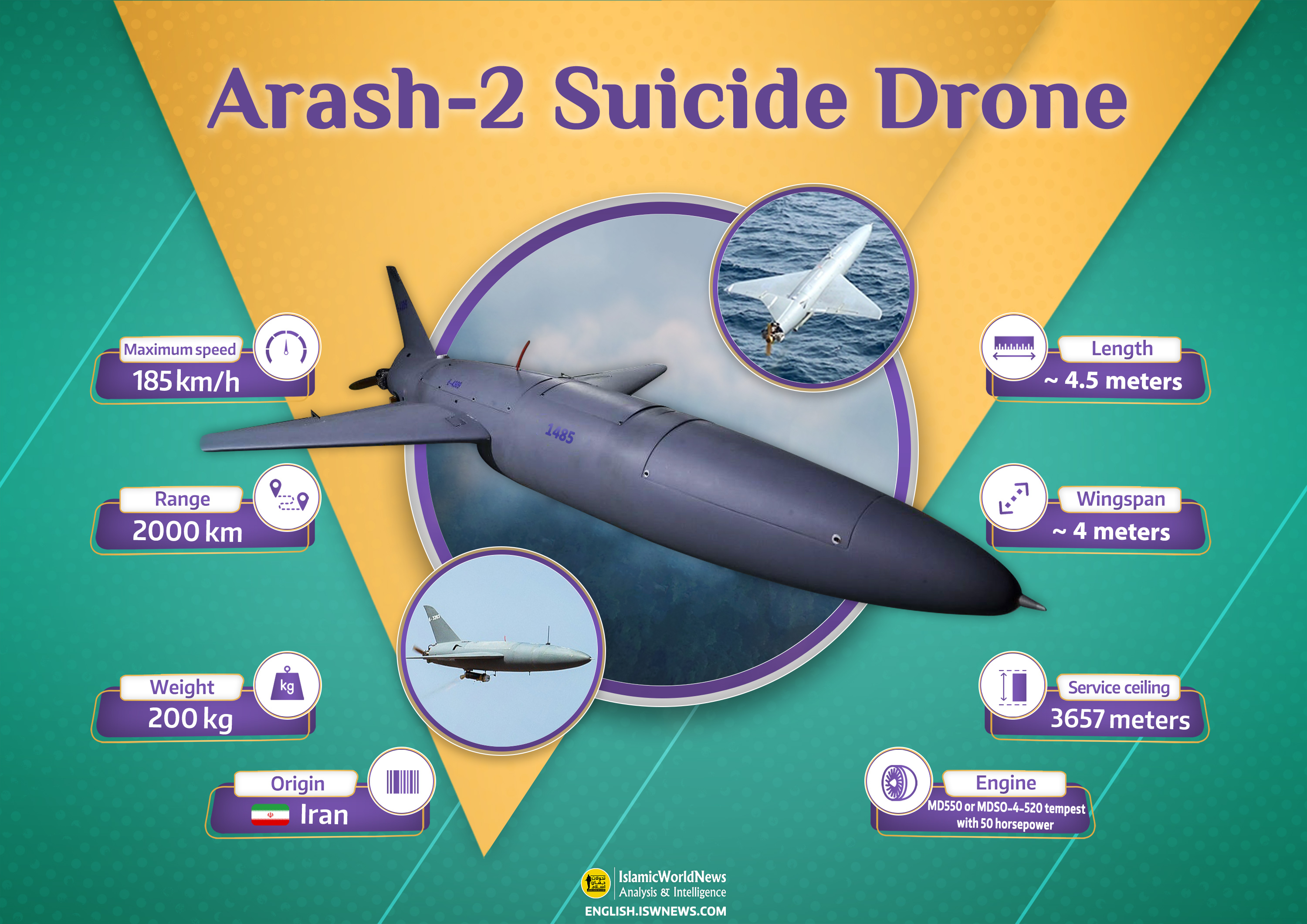
Arash-2 suicide drone with a range of 2000 km is considered the longest-range suicide drone in the world. There is a smaller version of this drone called Arash-1 with a range of 150 km, which is designed to attack nearby targets on the battlefield. In fact, Arash-2 suicide drone is an upgraded and improved version of Arash-1.
Arash-2 drone was unveiled and used for the first time in the Army drone exercise in January 7, 2021. In this exercise, this done was launched from the coast of Makran and after traveling a distance of about 1400 km, it hit its target in the general area of the exercise in Semnan province in the center of Iran.
Arash-2 looks identical to Kian-2 drone and has a triangular wing. The main difference between these two drones is their engine. Kian uses a jet engine and Arash uses a piston engine. This engine difference has also had a great impact on their range.
Kian-2 drone with jet engine
So far, Arash-2 has been launched in exercises by two types of launchers. The first type by a JATO launcher and the other by a box launcher that can be mounted on the back of a truck. The box launchers will make the drone more difficult to identify and along with the high mobility, it will increase survivability of truck and the crew.
Arash-2 long-range suicide drone launched from a box launcher with a rocket booster
Arash-2 suicide drone was seen on the army drone fleet in July 2022. Therefore, the ability to use anti-ships and also attack from the sea to the shore can be considered for Arash.
At the Army’s “1401 Achievements Exhibition”, the Arash-2 drone equipped with an infrared and electro-optical seeker was seen, which gives this bird additional capabilities. Arash-2 drone with infrared and electro-optical seeker will be able to destroy various targets with high accuracy. Therefore, with various seekers, in addition to fixed targets, this drone has the ability to target moving targets or targets that need to be accurately hit in the enemy’s area.
Arash-2 suicide drone equipped with infrared and electro-optical seeker
According to the published photos and the information of the permanent exhibition of the achievements of the Ministry of Defense, the Arash-2 drone engine is of the MD 550 or MDSO-4-520 tempest type with a power of 50 horsepower. Therefore, according to the type of engine, this drone will have a maximum speed of 185 km/h.
Arash-2 suicide drone specifications: Length: ~ 4.5 meters Wingspan: ~ 4 meters Service ceiling: 3657 meters Engine: MD550 or MDSO-4-520 tempest with 50 horsepower Maximum speed: 185 km/h Range: 2000 km Weight: ~ 200 kg Origin: Iran
Click to view full size
More pictures of Arash-2 suicide drone
Click to view full size
Collection of posters of Arash-2 suicide drone in Russian (Дрон-камикадзе Араш-2), Persian (پهپاد انتحاری آرش-۲), Chinese (Arash-2 自杀式无人机), Hebrew (מזלט התאבדות ארש-2), Arabic (المسيرة الانتحارية آرش-2), Azeri (Arəş-2 Kamikadze Dronu) and Kurdish (درۆنی خۆکوژی ئارەش-2):
Mohajer-6 combat reconnaissance drone is a medium-class drone manufactured by the Iran’s Ministry of Defense. This drone was first officially unveiled in April 2017 during the visit of the President of Iran to the Defense Achievements Exhibition of the Ministry of Defense.
Mohajer 6, as the newest member of the Mohajer drone family, has been deployed in the Ground and Naval Forces of the Islamic Revolutionary Guard Corps (IRGC), the Islamic Republic of Iran Army Ground Forces, and the FARAJA organization (the Law Enforcement Command of the Islamic Republic of Iran).
Iran started marketing for the sale of Mohajer-6 drone at the MAKS 2019 International Exhibition in Russia.
Mohajer-6 UAV replica at MAKS-2019 International Exhibition
This drone can be considered as Iran’s most successful export drone. Mohajer-6 has been exported to Iraq (Hashd al-Shaabi) and Ethiopia. Mohajer-6 and Qaem bomb series have performed very well in Ethiopia.
Mohajer 6 UAV in the service of Iraq’s Hashd al-ShaabiMohajer 6 UAV in the service of the Ethiopian army
In Venezuela, a replica of Mohajer-6 was first seen, and then a sample of it was produced in this country. There is no information available about the Venezuelan sample.
Mohajer 6 UAV replica with Qaem bomb series in Venezuela
Mohajer-6 drone uses a rectangular body with a wide and sharp tip. Its simple rectangular wings are located on the upper part of the body and its tail has a High Boom Tail configuration. This drone is powered by a 3-blade Rotax 912 piston engine. The Mohajer-6 drone has a forward-looking camera at its tip, which enables continuous monitoring of the drone’s path independently of the camera below the drone.
Camera in the nose of Mohajer-6
So far, Mohajer-6 with Oghab-4 electro-optical system has been seen in two versions, H and D, both of which are equipped with a day vision camera with 36x optical zoom, a laser rangefinder and a cooling thermal camera.
Oghab 4 optical systems in three types
The Oghab 4H electro-optic system has a focal distance of 15 to 300 mm and weighs 18 kg, and the Oghab 4D system has a focal distance of 60 to 120 mm and weighs 19 kg. As a result, the Oghab 4 system in the H version has a better field of vision and resolution.
Oghab 4H optic installed on Mohajer-6Oghab 4D camera installed on Mohajer-6
Also, images of a new camera with 60x zoom for this drone have been released, which shows Iran’s progress in making advanced electro-optic systems for drones.
Video of a new electro-opticwith 60x zoom that can be installed on Mohajer-6. In the footage, due to the visible landing gear, this optic is probably being tested on Ababil-4.
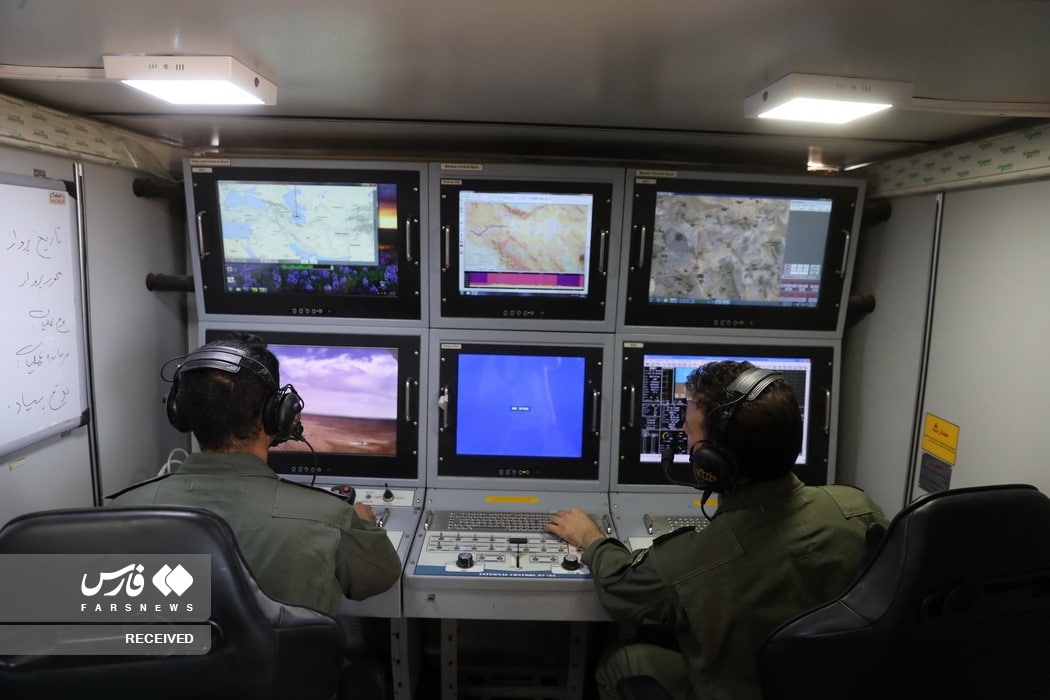
The guidance and control system of Mohajer-6 drone is placed on a truck, which allows it to be moved quickly.
The control room of Mohajer-6 droneInterior view of Mohajer-6 control room
Unfortunately, the weight information of Mohajer-6 has not been officially announced. In the early days of the introduction of this drone, due to the installation of two Qaem-5 bombs, its carrying capacity was stated by the media as 40 kg; But this number was not correct, because the weight of Qaem-5 has not been officially announced. Considering the similarity of dimensions and front wings of Qaem-5 bomb and Sadid-345 bomb, if the weight of its warhead has not changed, due to the presence of fixed rear wings, the weight of Qaem-5 bomb should be slightly heavier than Sadid-345 (34 kg).
However, a poster of Mohajer-6 has been published in the permanent exhibition of the defense achievements of the Islamic Revolutionary Guard Corps, which stated that the weapons payload was 100 kg and the gross weight was 600 kg.
Mohajer-6 poster in the permanent exhibition of the defense achievements of the Islamic Revolutionary Guard Corps
Also, at the ARMY 2022 exhibition, the Ministry of Defense of Iran published a catalog of its defense products, which published the specifications of Mohajer-6 under the title M6, and stated that the weapons payload is 100 kg, and the maximum gross weight is 670 kg.
Mohajer-6 catalog at the ARMY 2022 exhibition
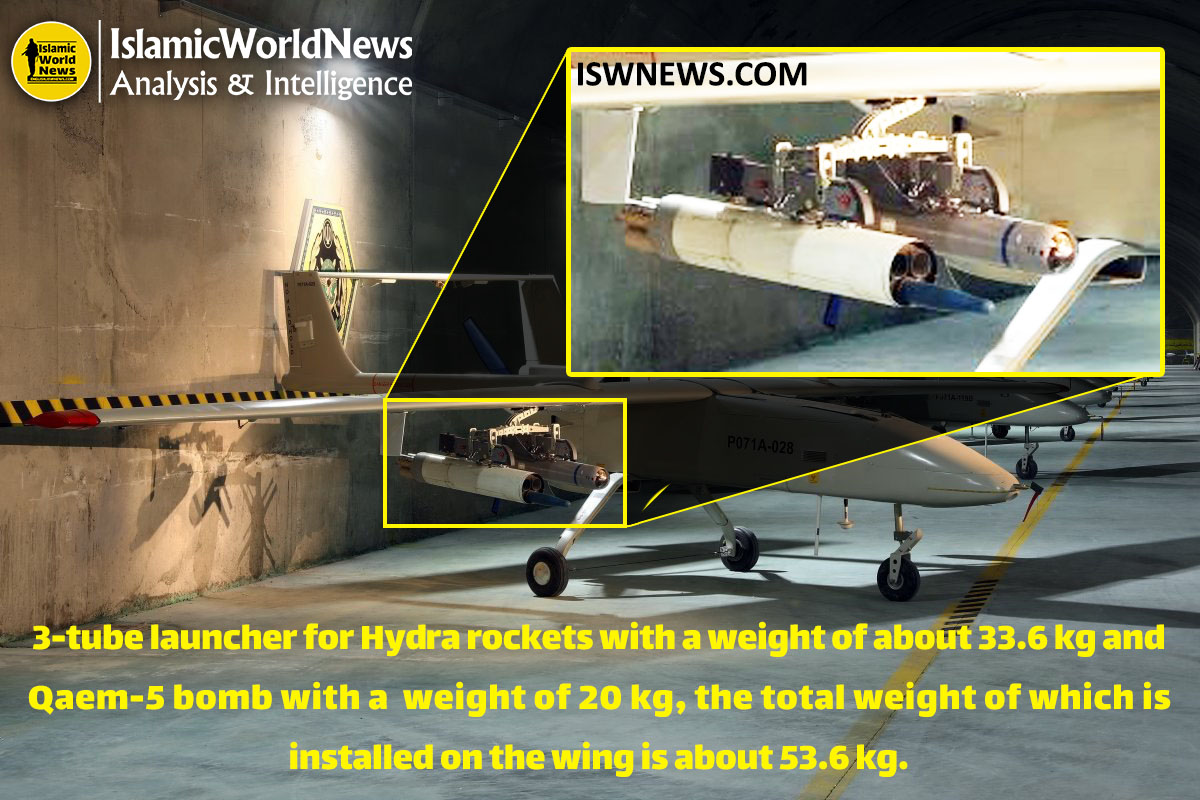
Therefore, according to the picture of Mohajer-6 with four Qaem-5 bombs, the weight of this bomb should not be more than 25 kg because the total weight of the bombs will be more than 100 kg. Also, a picture of Mohajer-6 drone has been seen in the Army’s 313 underground base (Strategic Drone Base 313) loading a Qaem-5 bomb along with a 3-tube launcher for Hydra rockets.
The picture of Mohajer 6 in the Army’s 313 underground base
The weight of each Hydra rocket is 6.2 kg, and if we assume that the rocket launcher is 15 kg (due to its small size and lightening), the weight of the whole package should be 33.6 kg. And if we consider the weight of Qaem-5 as 20 kg, it means a weight combination of 53.6 kg for one wing and 107.2 kg for both wings, which means a weight of more than 100 kg. Therefore, the maximum weapons payload for this drone is more than 100 kg, which has not been officially announced yet. So the maximum weapons payload can be considered 150 kg.
Considering that the announced numbers in two official events are different, we can conclude that we are dealing with two types of Mohajer-6 with different powers. In addition, Mohajer-6 has undergone changes in the front and rear landing gear. There may have been some changes to reduce the weight of Mohajer-6. There is also a possibility that the type that has been provided to the army has increased its carrying capacity.
Mohajer 6 front and rear landing gear
The Mohajer-6 combat reconnaissance drone can carry a wide range of indigenous weapons. This drone has the ability to carry Qaem bombs series, Sadid bombs and missiles family, Almas missile and the ability to carry Hydra rockets, which gives this drone high firepower.
Mohajer 6 drone has the ability of carrying Tiam 1400 systems with a weight of 5 kg and Taha 1400 systems with a weight of 6 kg. Tiam 1400 and Taha 1400 are detection and warning and electronic warfare systems. First, the Tiam 1400 radar detection and warning system performs detection and identification of the enemy’s radar waves, then the data about the radar is transferred to the Taha 1400 electronic warfare system so that the Taha 1400 acts to disrupt the enemy’s radar waves.
Mohajer 6 with the installation of two systems Tiam 1400 and Taha 1400 and banners related to these two systems
Also, an unknown pod has been spotted on Mohajer-6 drone at Army’s Strategic Drone Base 313, whose nature we do not know. This pod was also used in Kaman-12 drone.
Unknown pod installed on Mohajer-6 drone
The operational records of the Mohajer-6 drone are many, but only a few footage have been published in the media. As an example, we can refer to the operations against terrorists in the northwestern borders of Iran in July 2019.
The use of Mohajer 6 against terrorists in the northwestern borders of Iran – July 2019
The missions assigned to the Mohajar-6 combat reconnaissance drone include aerial reconnaissance and surveillance, destruction of fixed and mobile targets on land and sea and in all weather conditions day and night with high accuracy, monitoring and control of borders and coastal strip, and the possibility of carrying all kinds of Military cargo with the ability to land and take off conventionally from the runway and emergency recovery with a parachute.
Mohajer-6 and the use of Qaem-5 bombs and the explanation of the Iran’s Minister of Defense about this drone
Ammunition that Mohajer-6 can carry: Bombs: 4 Sadid-342 with a range of about 3 km, 2 Sadid-345 with a range of about 3 km, 4 Qaem-1 with a range of about 6 km, 4 Qaem 5 or 9 with a range of about 12 km
Missiles: 2 Sadid-1 with a range of about 7 km (not seen but possible to install), 4 Akhgar missiles with a range of about 30 km (not seen but possible to install), 4 Almas missiles with a range of about 6 km (from In terms of weight, it is possible to carry more, but there is no proper hardpoints), 2 Qaem-114 missiles with a range of 8 km (not seen but it is possible to install)
Rocket: 2x 3-tube rocket launchers for Hydra 70 mm rockets
Electronic warfare systems: “Tiam 1400” radar wave detection and warning system and “Taha 1400” radar wave jamming system
It is possible to use a combination of above weapons and systems.
Some of the mentioned weapons have not been seen on Mohajer-6. But due to the nature of the weapon design and use on other Iranian drones, it is also mentioned here. Other weapons such as Azarakhsh and some weapons related to helicopters can also be installed, but in order to use these weapons, changes are needed, such as creating a proper fuselage to install heavy weapons on the drone.
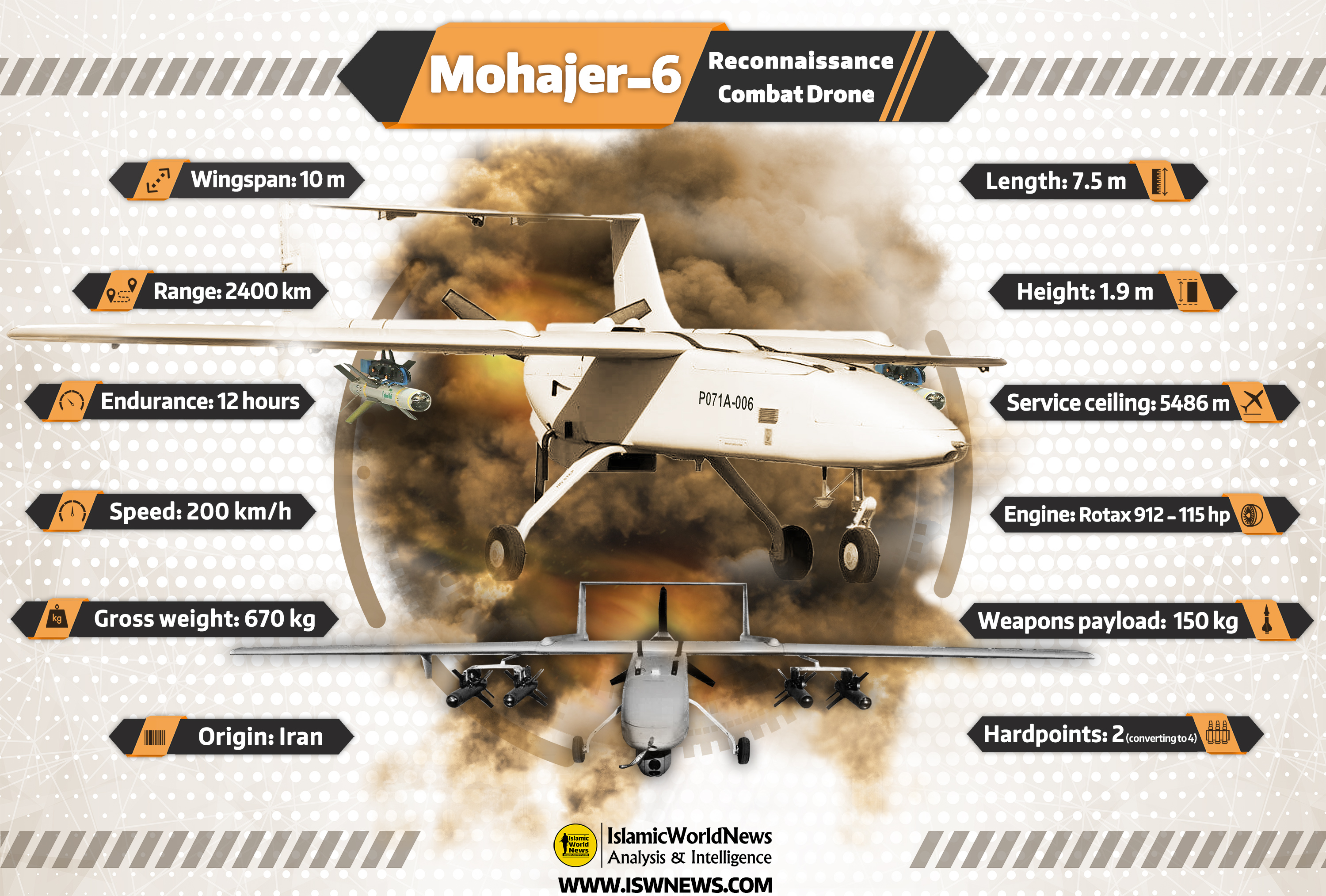
Mohajer-6 reconnaissance combat dronespecifications: Length: 7.5 meters Wingspan: 10 meters Height: 1.9 meters Operational range: 2400 km Service ceiling: 5486 meters Endurance: 12 hours Engine: Rotax 912 115 hp Speed: 200 km/h Hardpoints: 2, with the possibility of converting to 4 Gross weight: 670 kg Weapons payload: ~ 150 kg Origin: Iran
Click to view full size
Mohajar-6 combat reconnaissance drone posters in Russian, Chinese, Hebrew, Arabic, Azeri, Kurdish and Persian:
Click to view full size
More Images of Mohajer-6 combat reconnaissance drone:
On August 24, the 1401 joint drone exercise of the Islamic Republic of Iran Army began with the presence of the Army’s Ground Force, Navy, Air Force and Air Defense Force in the north, south, west and center of the country and with the participation of more than 150 drones.
On the first day of this exercise, the surveillance and reconnaissance drones successfully performed the operation of monitoring the country’s borders and identifying the desired targets in the general area of the exercise.
According to Rear Admiral Seyed Mahmoud Mousavi, the spokesman of the joint military drone exercise, the Yasir, Sadeq, Pelikan, Ababil 3, Yazdan and Mohajer 6 drones were sent to identify targets and also to monitor the desired areas on the borders and international waters.
Iran Army’s 1401 joint drone exercise
In the continuation of the main stage and on the second day of this exercise, Kaman, Mohajer and Ababil drones, using indigenous accurate and pinpoint weapons, including Qaem bombs, Almas missiles and MK-82 bombs, targeted the simulated positions of enemy like the command and control centers, fuel tanks, ammunition dumps, radar and missile systems and gathering places with high accuracy.
Iranian military experts and technicians have in recent years made substantial headways in manufacturing a broad range of indigenous equipment, making the armed forces self-sufficient in the arms sphere.
Iranian officials have repeatedly underscored that the country will not hesitate to strengthen its military capabilities, including its missile power, which are entirely meant for defense, and that Iran’s defense capabilities will be never subject to negotiations.
Images of the Iran Army’s 1401 joint drone exerciseIran Army’s 1401 joint drone exercise
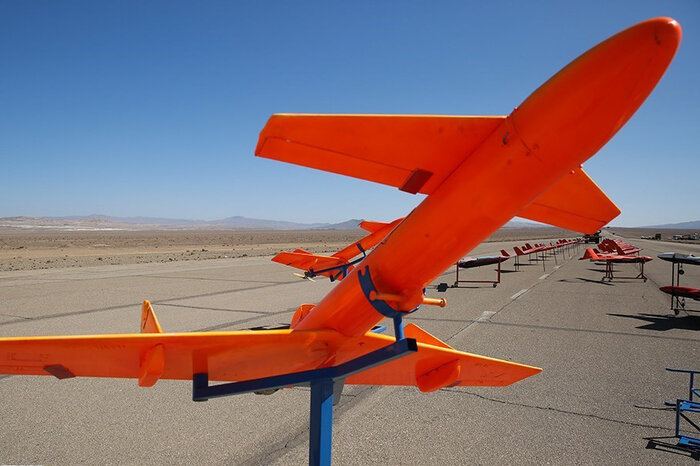
The Ababil-2 drone is a target, reconnaissance and suicide drone. Ababil-2, which was initially produced with a reconnaissance and target mission, was later defined as a suicide drone and is now at the disposal of the Iranian Armed Forces with this mission.
The Ababil series started operating in 1987. Ababil-1 was also used as a suicide drone during the Iraq-Iran war in 80s. Ababil-2 has been in mass production since 1991 by Iran Aircraft Manufacturing Industries (HESA) And since then entered the service of the Iranian Armed Forces.
The Ababil-2 drone does not need a runway to land and take off. The Ababil can be launched from a zero-length jet-assisted take-off platform or by a pneumatic catapult launcher with the help of a rocket attached to the end of the UAV. For landing and recovery, a parachute or skids can be used for conventional landings on a runway or field.
This drone with a high operating rate is a potential threat to a variety of enemy equipment from tanks, personnel and defense systems on the battlefield.
Ababil-2 has an operating range of 100 km, a flight duration of 75 to 120 minutes, a flight ceiling of 11,000 feet (3352.8 m) and a maximum cruising speed of 220 km/h and 370 km/h in dive mode.
Guidance and control of Ababil-2 is done by the ground control center. In this case, the images are transmitted online to the control and command center. The newer Ababil-2 models are equipped with 123 system (automatic stabilizer) and GPS. “123 System” is a new project in the electro avionics engineering department of HESA. This system provides features such as easy flight with more safety by non-professional pilots (in long and short range), automatic take-off and semi-automatic landing, planning and guidance on a desired route with the help of global navigation system, the possibility of disconnecting the control center from the drone and automatic operation of the drone, sending information from the UAV to control center in 17 separate channels, including information on engine speed, ascend and rotation angles, fuel quantity, battery voltage, altitude, and travel speed for Ababil-2.
Ababil-2 uses a cheap camera with 12 megapixel image quality.
Ababil-2 is responsible for tasks such as reconnaissance, battlefield surveillance, border patrol, aerial photography, artillery firing correction, as bait to luring air defenses, carrying out suicide missions and training drone personnel.
Two Ababil-2 models have been observed to date that also have different engines. The difference in appearance of these models is in the tail, the first model has a vertical tail attached to the main body and the second model has two identical vertical tails on the rear wing.
Left image: with two identical vertical tails – Right image: with one vertical tail
Ababil-2 specifications: Length: 2.88 m Wingspan(rear): 3.25 m Height: 0.91 m Empty weight: ~ 27 kg Maximum take-off weight: 83-128 kg Payload: 40 kg of cargo or explosives Internal fuel capacity: 16 liters Engine: W3 or MD series with 20-30 hp Maximum speed: 370 km/h Cruise speed: 250 km/h Combat range: 120 km Endurance: 75-120 minutes Service ceiling: 3352.8 m Origin: Iran
Click to view full size imageClick to view full size image
“Ababil-2 Drone” collection of posters in Arabic, Persian, Kurdish, Russian, Chinese, Azeri and Hebrew for social media:
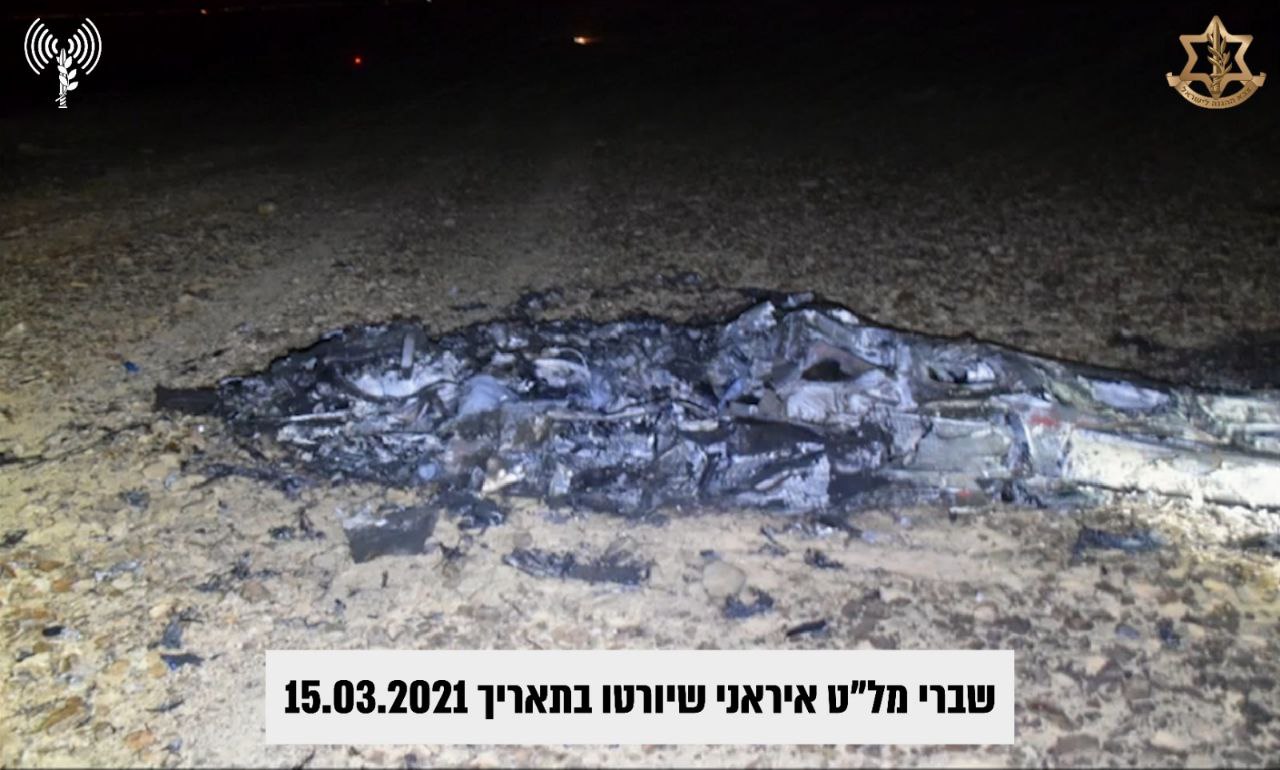
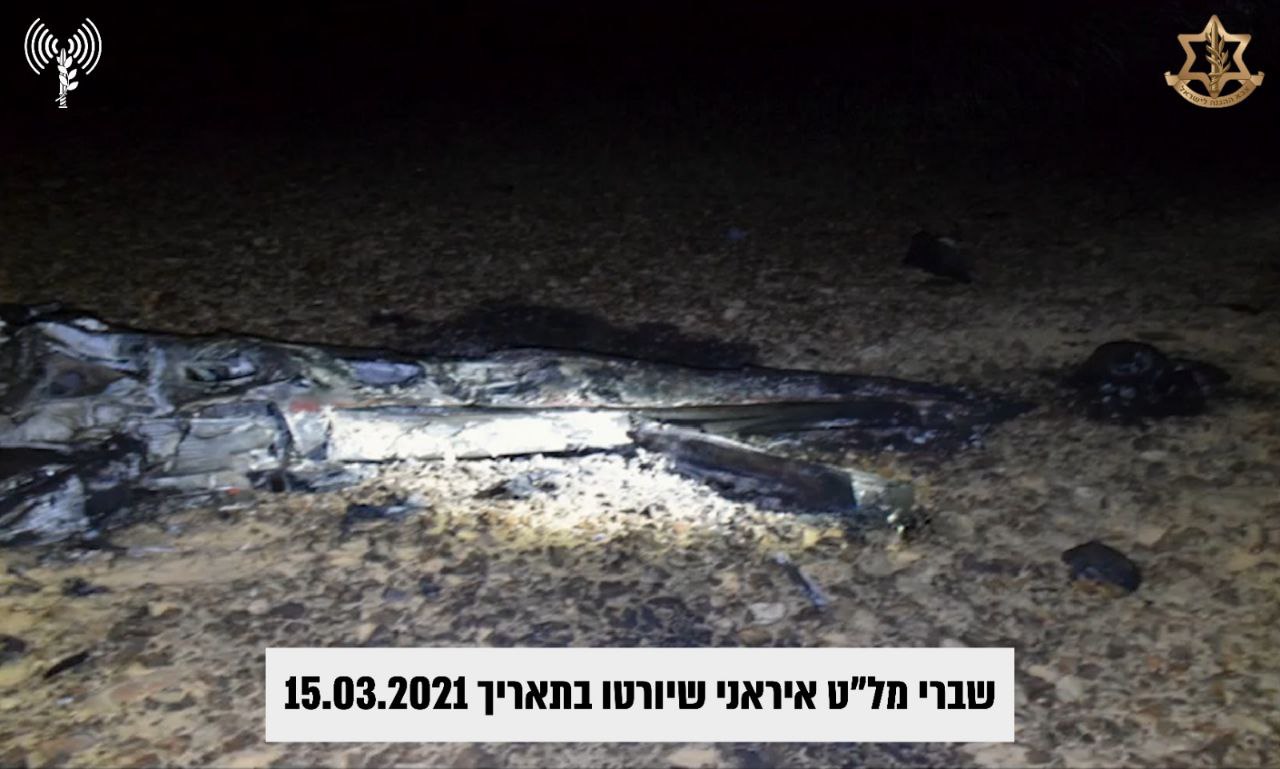
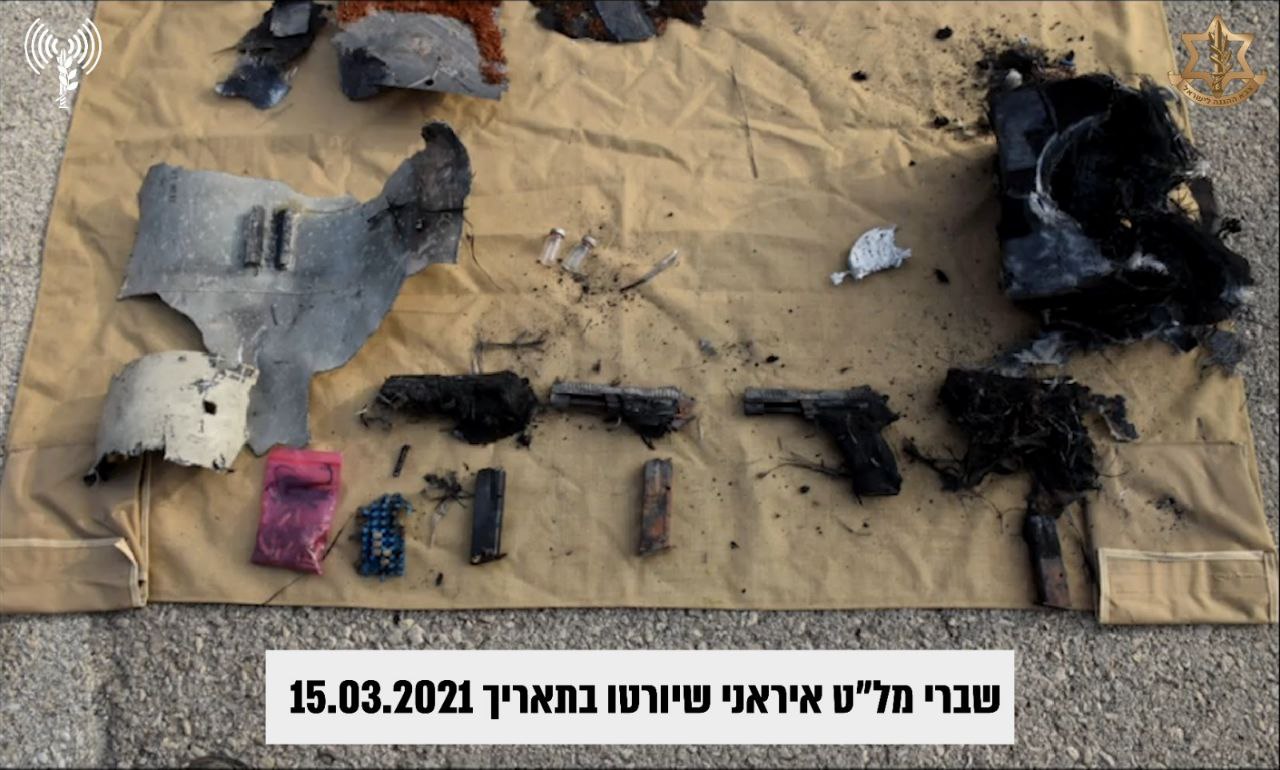
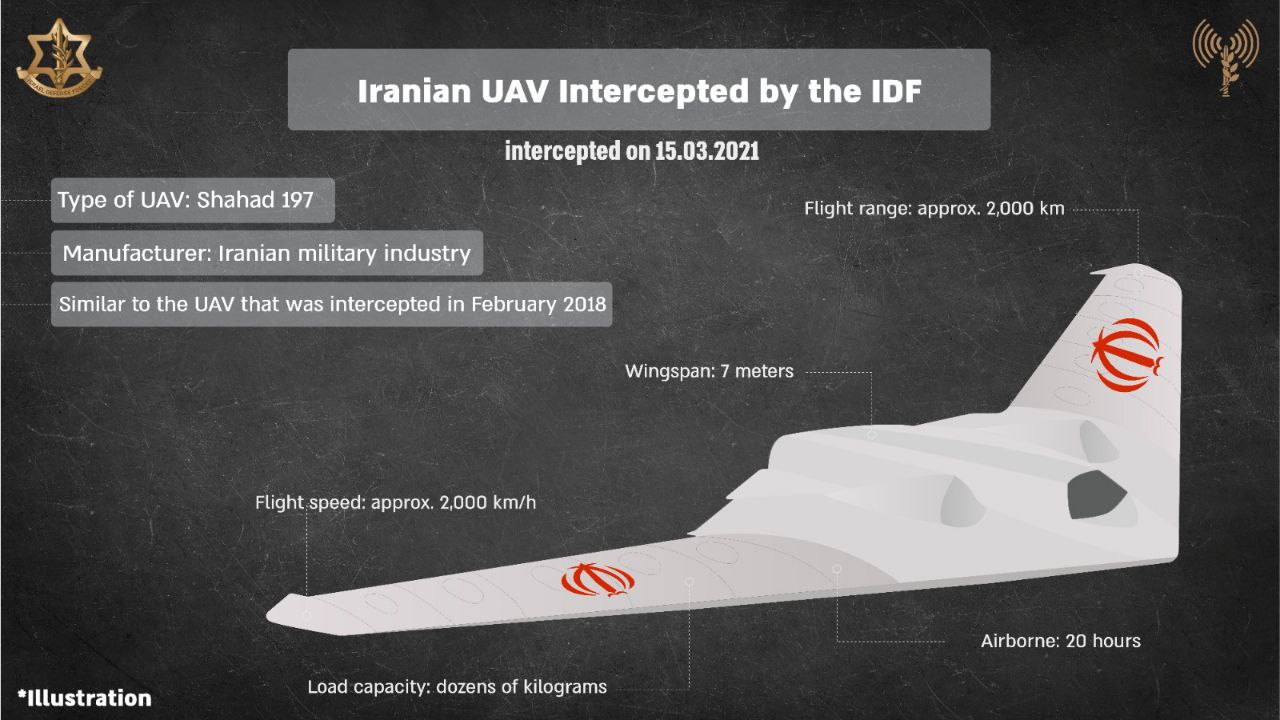
According to Israeli media, two Iranian Shahed-197 drones attempted to enter the airspace of occupied Palestine on March 15, 2021 and transfer weapons to the Gaza Strip, but were intercepted and destroyed by Israeli F-35 fighter jets.
Israel claims the drones were moving east and south toward occupied Palestine, and that their destruction was carried out in cooperation with countries in the region (possibly Jordan and Saudi Arabia).
Also, an Iranian drone (similar to AnsarAllah’s Samad drone) during the recent Israel-Gaza war on May 18, 2021, from Iraq, intended to conduct operations on the territory of occupied Palestine, which is destroyed by Israel. However, according to the infographic provided by Israel, the type of this drone matches the drone unveiled in the parade of the Iraqi Hashad al-Shaabi forces. Therefore, the drone does not belong to Iran and the operation was carried out by Hashad al-Shaabi.
ِDrone unveiled at Iraqi Hashad al-Shabaab parade, matched with Israeli claim
Iranian officials have not yet responded to the news. However, it is possible that these drones, were used by the resistance groups such as Hezbollah and AnsarAllah, with aim of reconnaissance operations in the occupied Palestinian territories.
It should be noted that the Israeli claim about the type of drone which they call it as Shahed-197 is wrong and basically such a model is not made in Shahed series. They probably meant the Shahed-181 or 191 drone. According to the video published by Israel, the Iranian drone has a propeller engine, so this drone is a Shahed-181 type. The Shahed-181 combat reconnaissance drone is similar to the Shahed-191 drone but with a propeller instead of turbojet engine, and can carry two bombs weighing 40 kilograms and has a range of 1,000 to 1,500 kilometers.
Video No. 1: Destruction of alleged Iranian drones (probably Shahed-181 drone) by an Israeli fighter jetVideo No. 2: The third drone that has invaded occupied Palestine from IraqWreckages of alleged drones