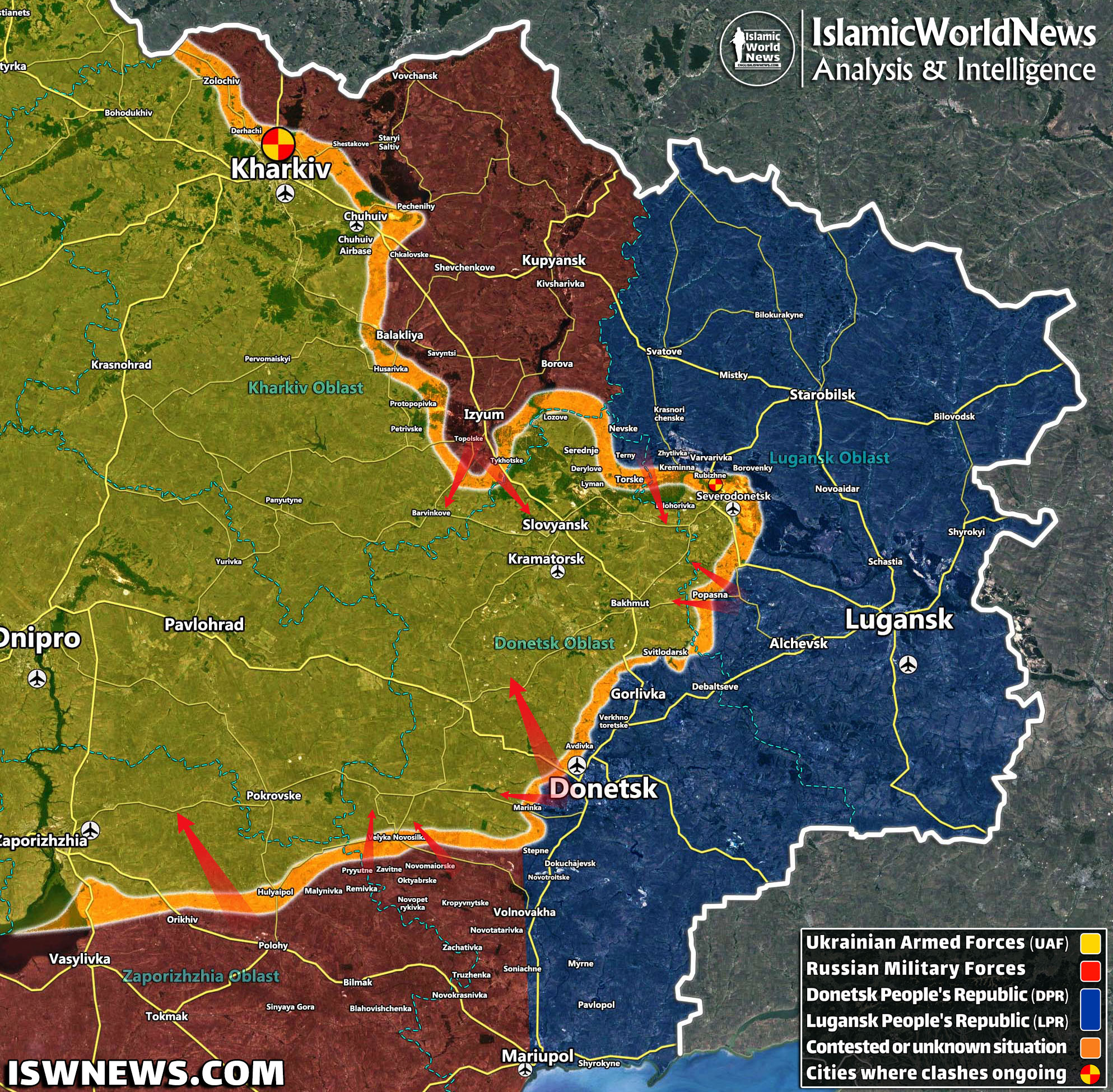
In the last week, the Ukrainian forces, crossing the Siversky Donets river, reached Lyman town from the north and south direction. In south of Lyman, the villages of Staryi Karavan and Brusivka have come under the control of Ukrainian forces. In north of Lyman, the regions of Lozove, Rubtsi, Korovii Iar, Oleksandrivka, and Yarova are under the control of Ukrainian forces.
Currently, heavy clashes continue in south of Lyman and in north in Drobysheve and Novoselivka between Russian and Ukrainian forces. Also, in recent days, Russian forces have repelled the attacks of Ukrainian forces in Karpivka and Ridkodub regions several times.
Due to the fact that the amount of conflicts is higher in the northern front of Lyman, it seems that the Ukrainian forces are trying to encircle the Russian forces from the north side and surround them in Lyman by breaking the defense lines in the mentioned areas.
Also, sporadic clashes continue in the Bilogorivka front. Based on the formation of forces in this area, Bilogorivka is almost not under the control of any of the parties.
Clashes between Russian and Ukrainian forces in other fronts of Donbas continue sporadically, and no specific changes have been made in the field map. The Soledar and South Bakhmut fronts are among the active areas in the last week. The fronts of the city of Donetsk has also remained unchanged in the last week.
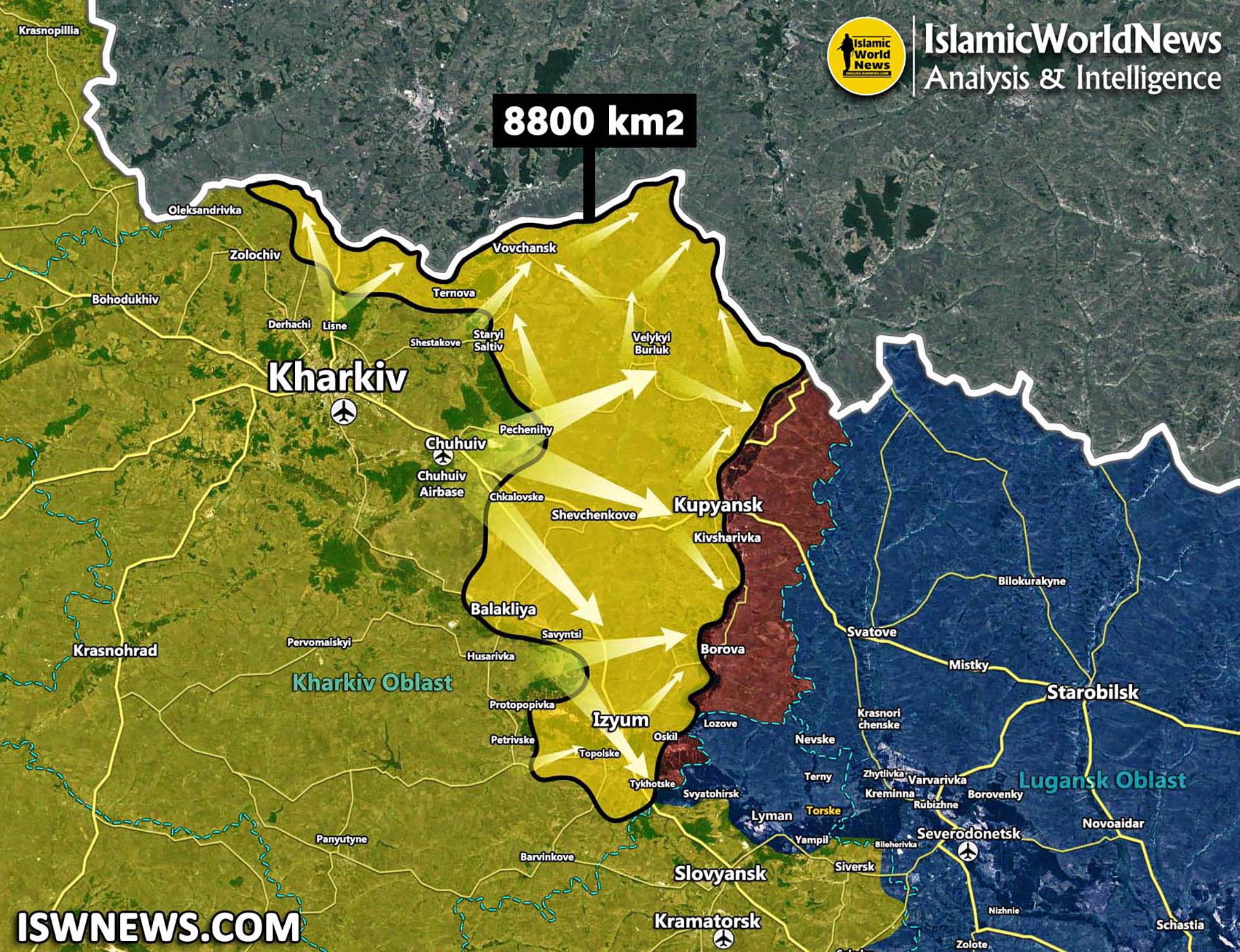
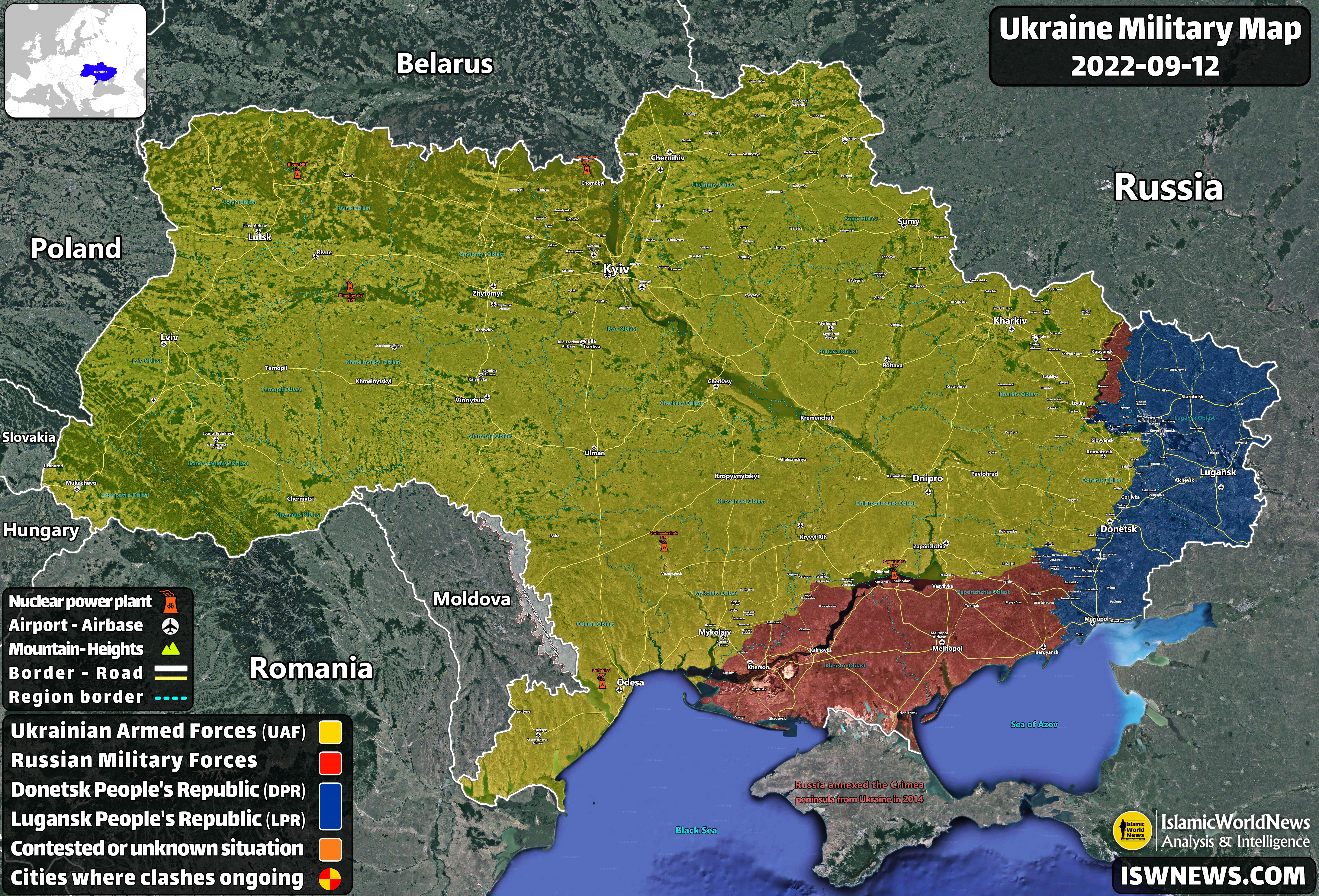
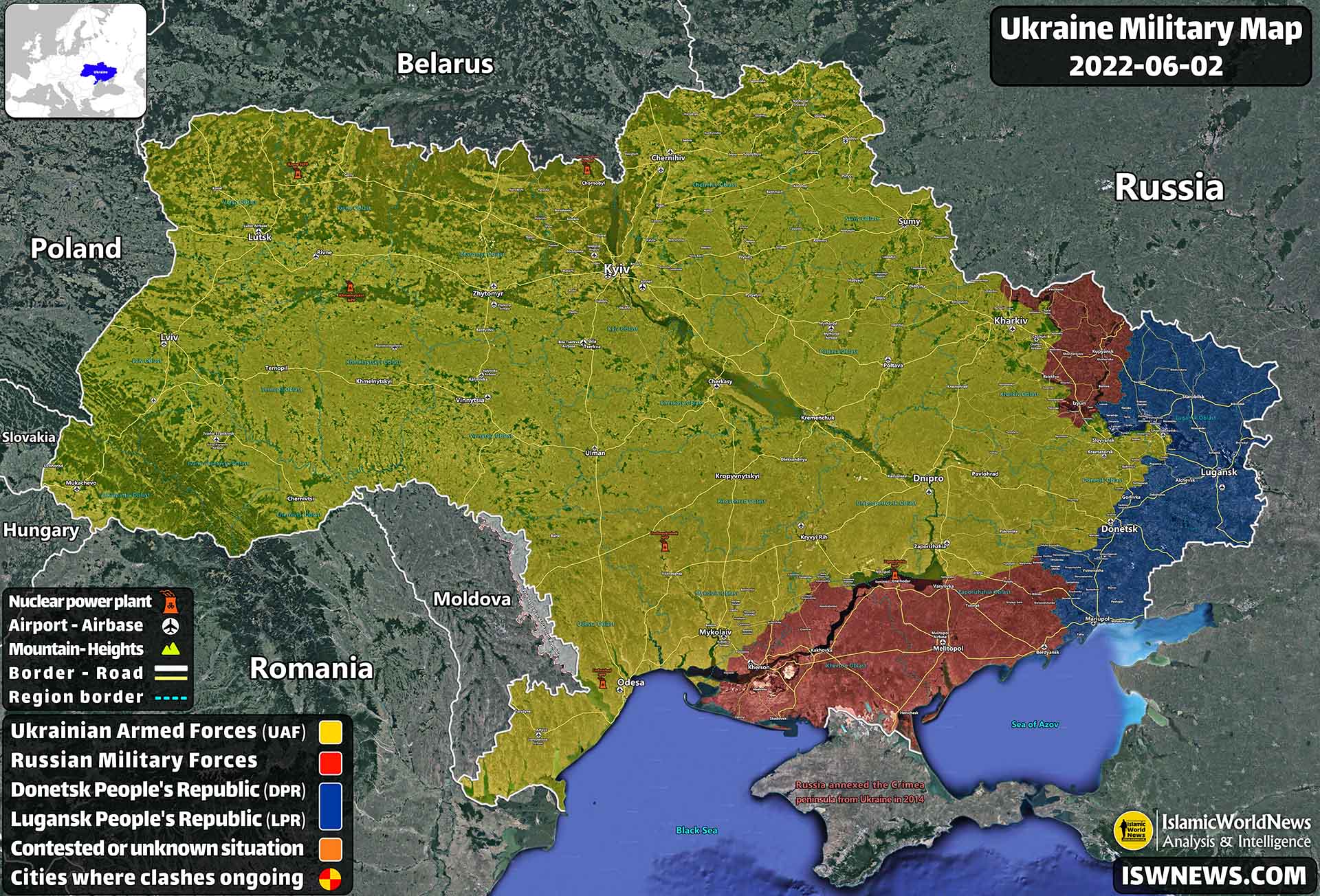
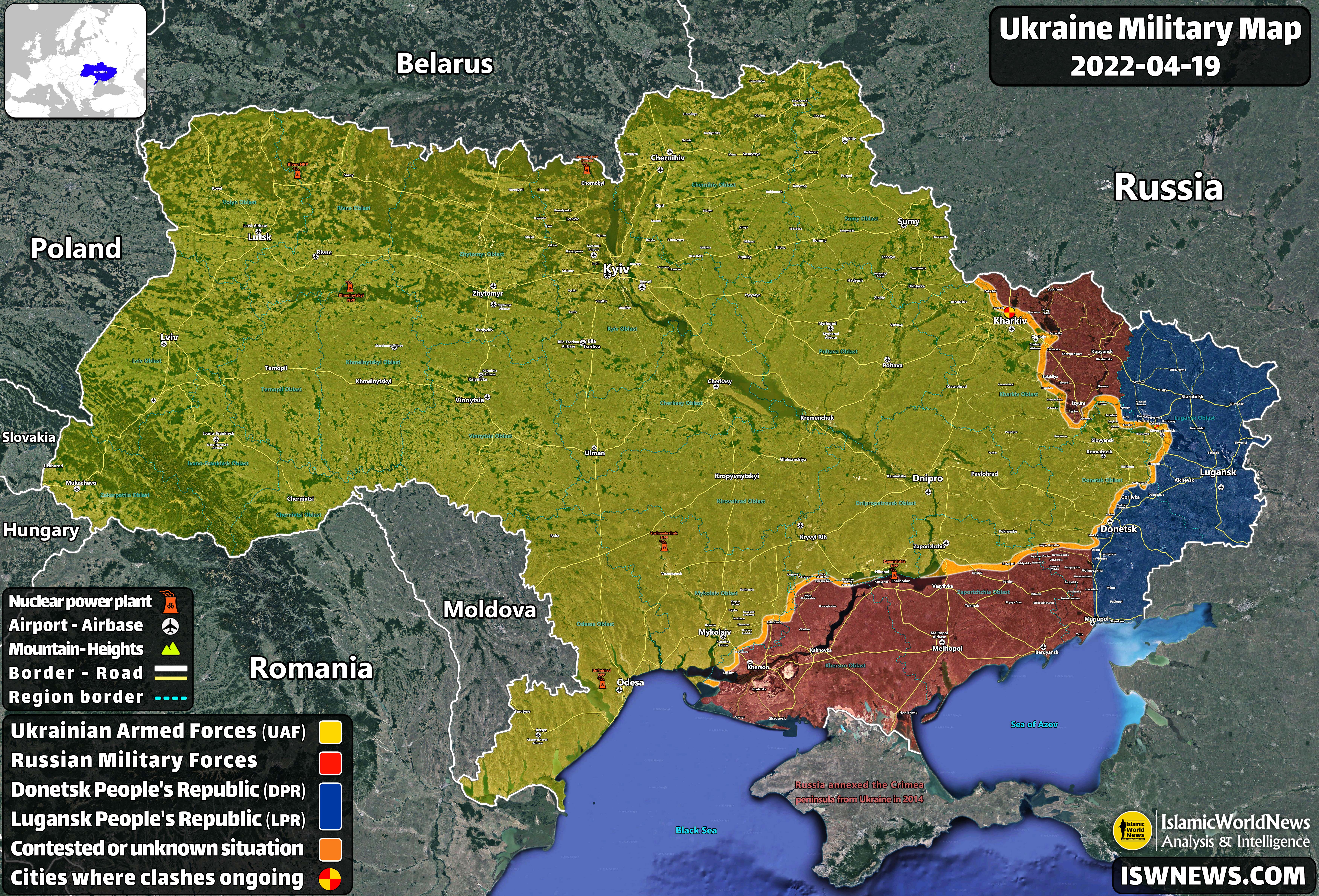
The Russian army completely withdrew from the northern and northeastern regions of Kharkiv oblast, and the Ukrainian army took control of these regions. As predicted, the Russian forces in the north of Kharkiv retreated to the international borders, and in the east of Kharkiv, the forces went behind the Oskil river, and the eastern areas of the Oskil river are the only areas of Kharkiv oblast that are currently under the control of Russian forces.
In this way and with the retreats, about 8800 square kilometers of Kharkiv oblast came back under the control of the Ukrainian government.
It is noteworthy to mention that during the withdrawal of the Russian army from these areas, many Russian descent people of these areas also fled to Russia for fear of genocide, being persecuted, etc.
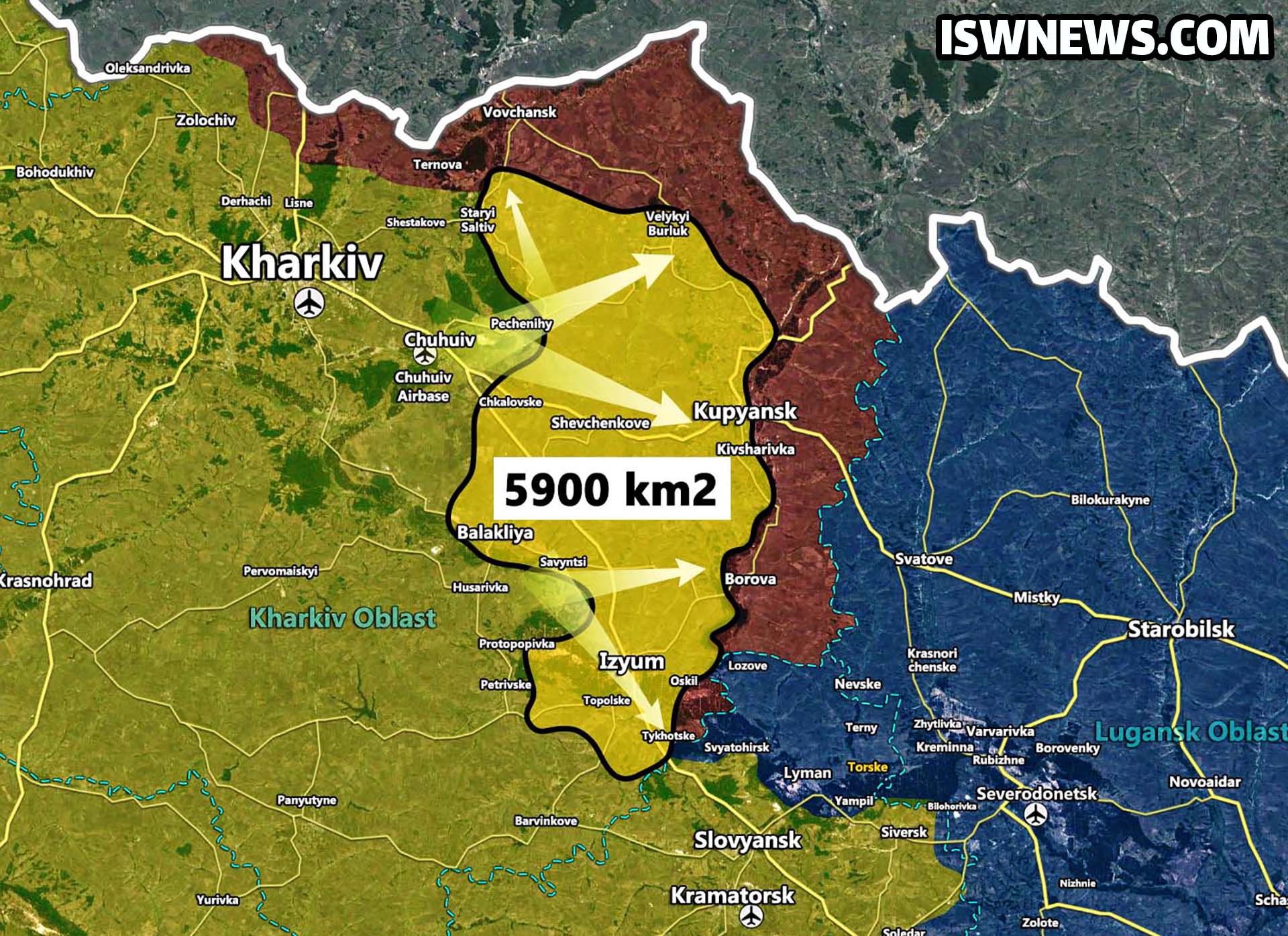
In recent days, Russian Army and its allies withdrew from large areas of the southeast and east of Kharkiv Oblast, and after that, the Ukrainian forces entered the areas almost without any particular conflict and dominated the villages and cities one after the other. During these retreats, important towns and areas such as Balakliya, Izyum, Kupyansk and Dvorichna came under the control of the Ukrainian army. It is safe to say that these retreats are considered to be Russia’s biggest defeat and retreat in the Ukraine war after Russia’s extensive retreats from the northern regions of Ukraine and the city of Kyiv in the early months of the war.
It should be noted that in the course of these retreats, an area of nearly 5900 square kilometers has been controlled by the Ukrainian army, and according to the developments in Kharkiv Oblast, it seems that this area will be increased and the Russian army will retreat to the border lines north-east of Kharkiv. According to the latest information, an order has been issued for the evacuation of the border town of Vovchansk, and the evacuation of this town means Russia’s return to the international borders in this region. During the battles of recent months, the town of Vovchansk was used as a logistic bridge of the Russian army towards the eastern regions of Kharkiv Oblast.
By carefully looking at the field map, it can be seen that the Russians’ purpose for these retreats is to move the forces behind the Oskil River and use this river as a natural defense barrier. A similar tactic that we saw earlier using the Siverskyi Donets River in the same region and parts of Donetsk Oblast in the Lyman axis or Luhansk Oblast at some point of the battles.
But what is the reason for this and why did the Russians withdraw from these areas?
There are many different reasons for the recent defeats of the Russians in Kharkiv Oblast. In the last two months, after Russia’s success in seizing the city of Severodonetsk and advancing towards the important towns of Slavyansk and Bakhmut, we witnessed a long-term stoppage and, in other words, “stagnation” in the eastern fronts of Ukraine. In addition to this issue, on the southern fronts in Kherson and Mykolaiv Oblasts, we have practically witnessed a confusion and stoppage of the Russians. The absence of a comprehensive operational plan by the Russian army and the lack of coordination of operations between the eastern front and the southern front and the failure to use all or most of Russia’s combat capacity in terms of manpower, logistics, ground forces and air fleet, failure to suppress the Ukrainian air force effectively, not suppressing the western military aid sent to Ukraine effectively, relying on old and outdated tactics in the war in Ukraine, etc. are among the reasons that can be clearly seen in the battles in Ukraine.
Despite the importance of the Ukraine war for Russia, in terms of logistics, the Russian army has practically used a small part of its manpower in this war, or has not used all its missile or air power in these battles. Or there are great uncertainties regarding the plan, the general picture and the ultimate goal of Russia’s operations in Ukraine; A subject that emerges in a strange way at every stage of the war. Failure to capture the entire city of Kyiv and its surrounding areas while this was possible, and then extensive retreats from the north, and then a complete focus on the eastern front and the entry of military power into this area, and again reducing or stopping operations in this axis for a period of Almost two months and the confusion between advancing or stabilizing areas in the southern front, practically shows the confusion of the Russian command. On the one hand, the Russians are looking for results, and on the other hand, they are not willing to spend more. If this war is important for Russia and the Russians want to achieve goals in this war, they must devote all or most of their combat power to this war, otherwise they will not have a chance against the Ukrainian army with high manpower; Or the goals will be achieved at a very high cost and in an unknown period of time.
On the other hand, maybe the Ukrainian forces have an easier task than the Russians, and that is to push the Russians back and take back the lost areas. A subject that does not have logistical difficulties and the difficulty of planning an attacker on several fronts. Considering the almost good logistic support of the western countries to Ukraine and the intelligence superiority of the Ukrainians and the use of human forces more than Russia in this war, only a little negligence on the part of the Russians is enough to change the tone of the war in favor of Ukraine. Ukrainian forces have shown that they are capable of resisting and inflicting heavy blows on the Russian army if they have proper support and sufficient logistics, and they have high combat power. Considering that more than six months have passed since the war, the Ukrainian forces have gradually found their combat organization and have come out of the confusion of the initial months. It seems that if the current trend of Russia does not change, in the coming weeks and months we will see more effective attacks and operations by Ukrainian forces to retake the eastern and southern regions.
News of other regions:
The military situation in Luhansk and Donetsk Oblasts has not changed significantly in the last two months, and sporadic clashes continue around Bakhmut, Soledar, North of Gorlivka, west of Donetsk in Mariinka and Pesky, and near Ugledar. In Mykolaiv and Kherson Oblasts, the clashes between the Russian and Ukrainian army forces continue in the Arkhanhelske and Sukhyi Stavok axes in the Ingulets axis. The conflicts in these areas are currently equal and neither side is able to make large advances.
Russian missile attacks were carried out last night and this morning with Tu-22M aircraft from the Caspian Sea against the positions of Ukrainian forces in the cities of Poltava, Vinnytsia, Dnipropetrovsk and Cherkasy. Also, 10 missiles were fired at the city of Mykolaiv in southern Ukraine, and several Iskander ballistic missiles were fired from Belgorod province in western Russia towards Kharkiv province.
Southern fronts of Ukraine: Russian aircraft have made about 200 sorties in the south and southeast of Ukraine. Ukrainian aircraft have been very active in the north of Kherson province in recent days. This issue, along with the recent Ukrainian attacks on Russian positions in Novakakhovka and Kherson airport, indicates the weakness of Russian air defense systems in this area. In Zaporizhzhia province, most of the attacks of the Ukrainian army on the south-eastern regions of this province were carried out by artillery, and despite the announcement of the readiness of the Ukrainian army to launch a new operation and recapture of the southern regions of Ukraine, no particular movement has been observed in this axis so far.
Eastern fronts of Ukraine: Russian artillery and rocket attacks on the Donbas fronts have decreased since yesterday, and most of these attacks are concentrated on the cities of Bakhmut and Slovyansk. The conflicts are focused on the Bohorodychne area and its surroundings, and Russian forces have made minor gains in this area. In the Bakhmut axis, ground battles continue from the southeast side of Bakhmut and along the Bakhmut-Lisichansk road.
The front of Kharkiv province witnessed several counterattacks by Ukrainian forces yesterday, but they did not achieve anything notable. The exchange of fire and artillery attacks continue in this axis. There are reports that the Russian army is preparing for a large-scale operation in Kharkiv province with the aim of securing the eastern areas of Kharkiv, which have yet to be confirmed.
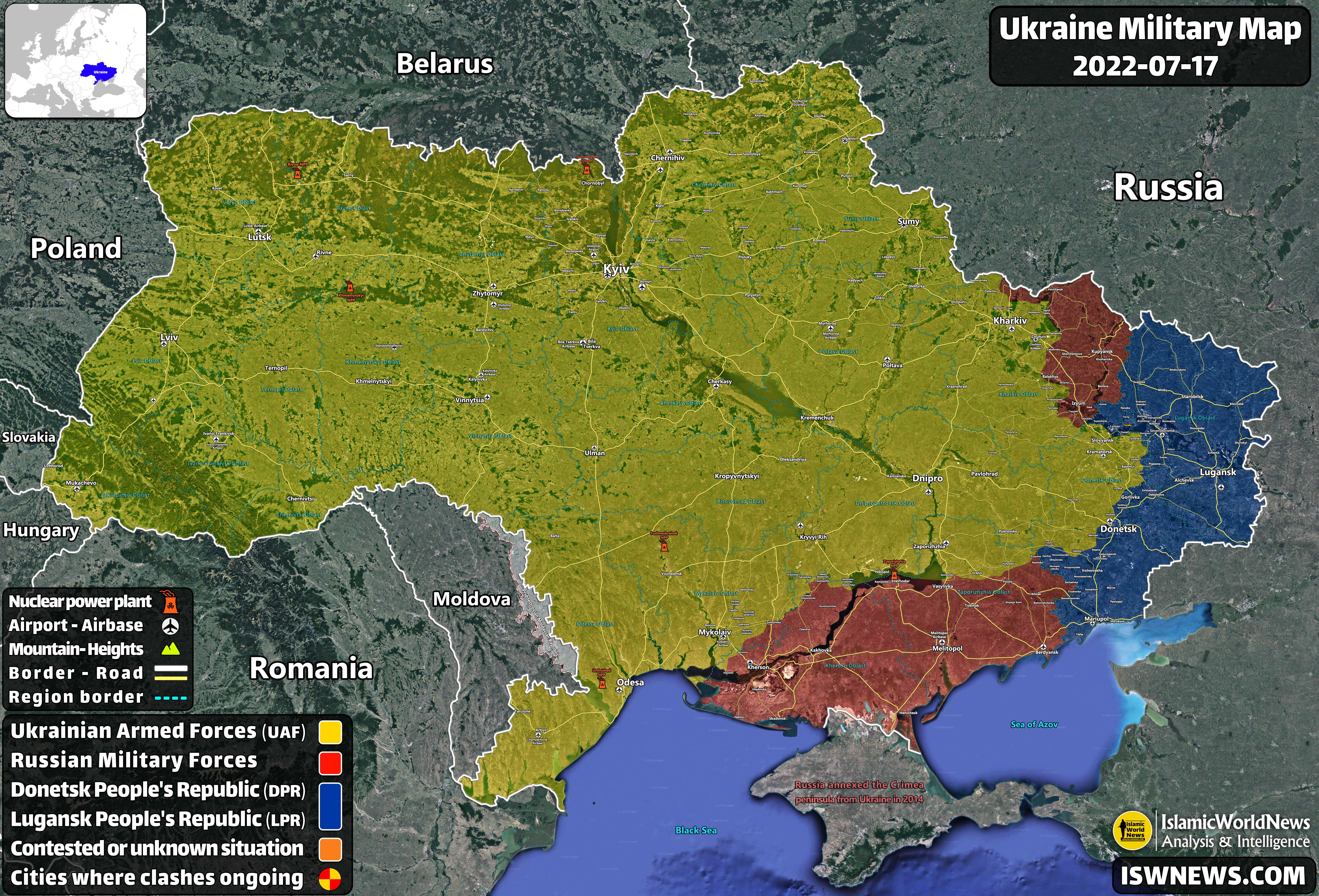
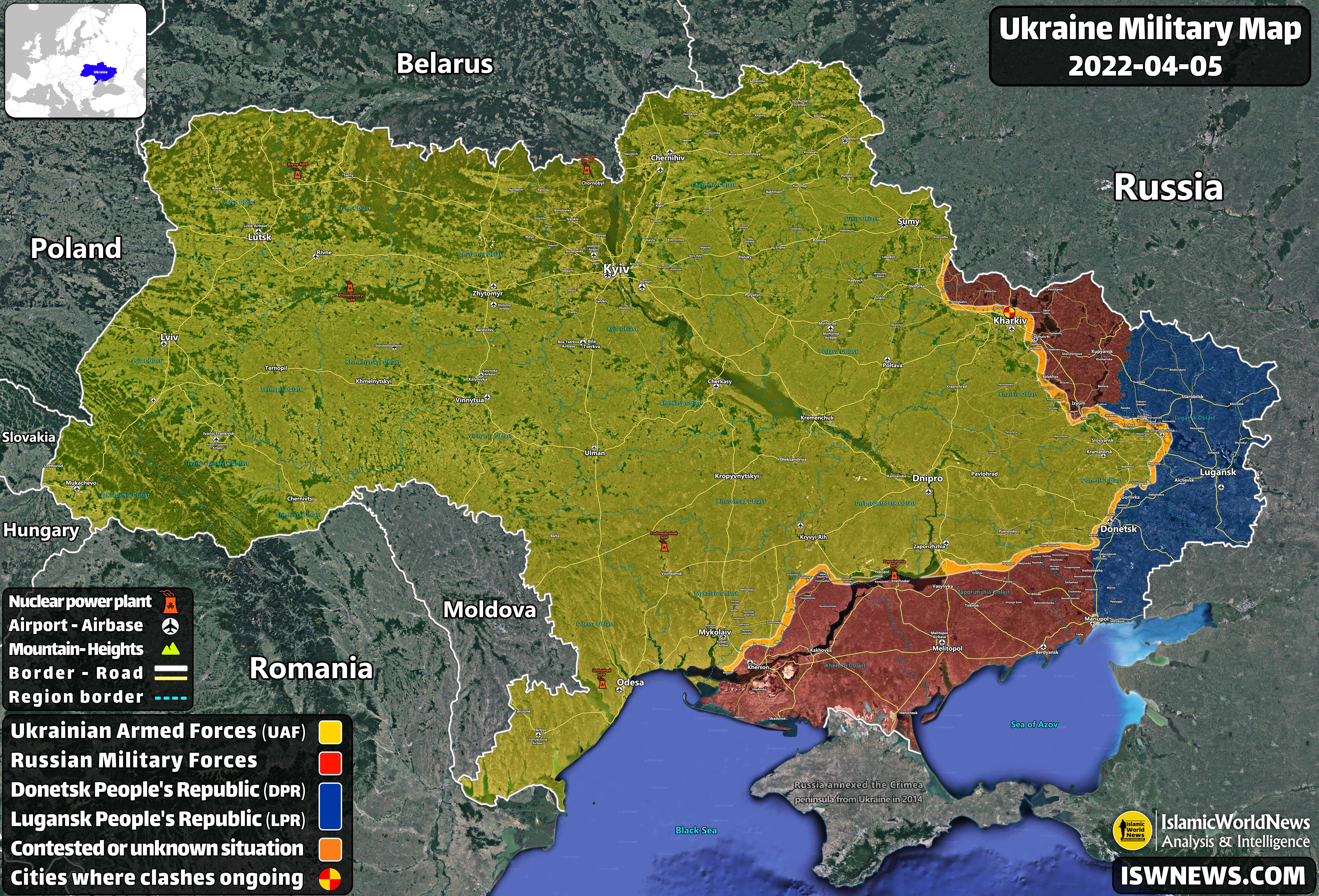
Currently, the Russian army has military presence in the oblasts of Luhansk, Donetsk, Kharkiv, Zaporizhzhia and Kherson and has succeeded in capturing amount areas in the following order: Luhansk Oblast: 99.8% Kherson Oblast: 88.9% Zaporizhzhia Oblast: 74.6% Donetsk Oblast: 59.2% Kharkiv Oblast: 32.4%
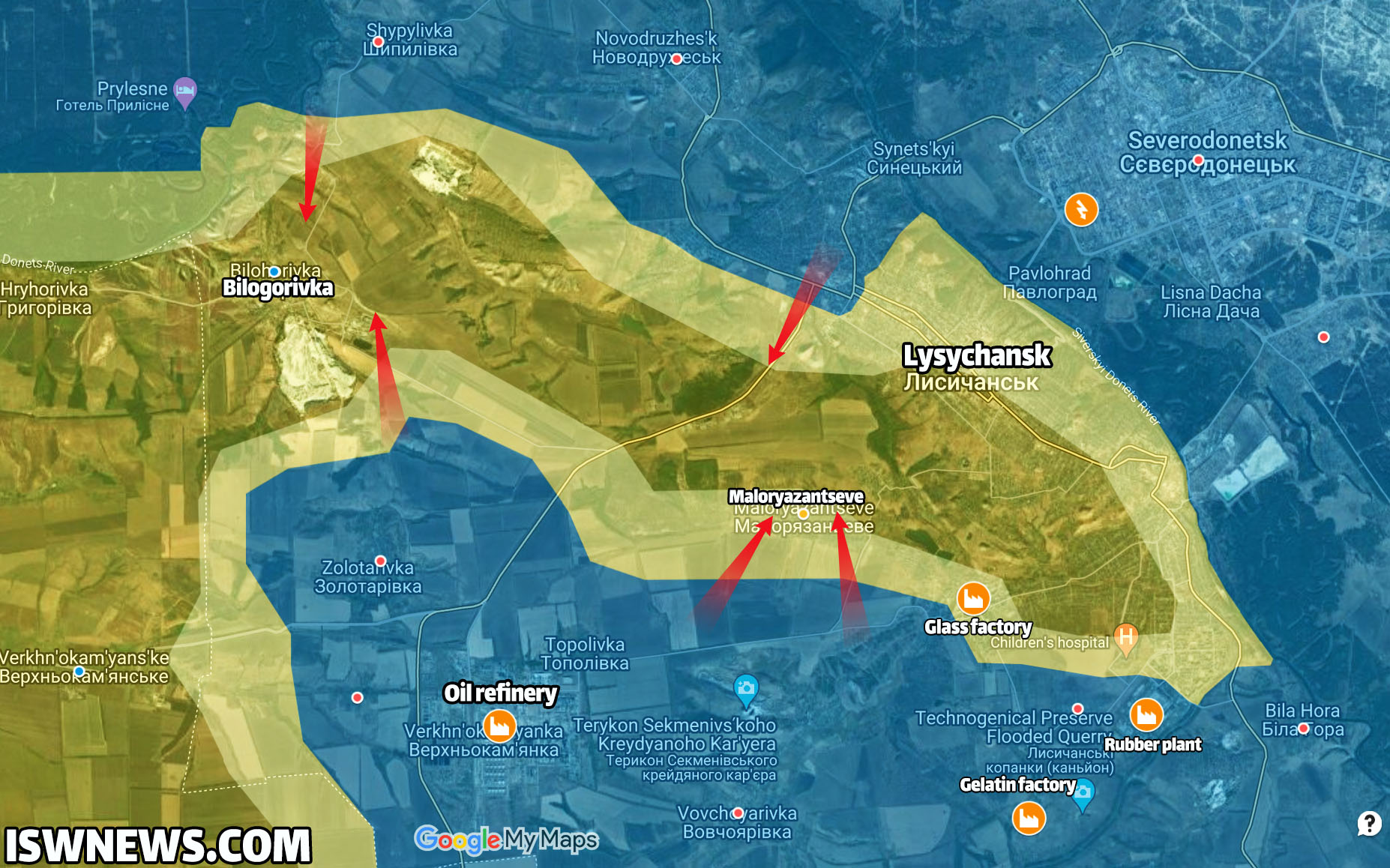
In south of Lysychansk, after the Russian forces gained full control of the Vovchoyarivka area and the Lysychansk refinery, the advances continued to the south of Bilogorivka. Also, gelatin and plastic factories were captured by Russia and the LPR. Therefore, due to the advances made, the remaining Ukrainian forces in the city of Lysichansk are practically under siege.
In north of Lysychansk, Russian forces succeeded in clearing Pryvillya, Shypylivka and Novodruzhesk and entered the city of Lysychansk from the northern districts, so that the Ukrainian forces would be under more pressure to retreat from this city. According to a video released by the LPR, the northern areas of the city up to the Kolosok nursery have come under Russian control.
Kolosok nursery in Lysychansk
Currently, the Russian forces are trying to complete the siege of Lysychansk from two main points on the front of Bilogorivka and Maloryazantseve. Although it seems that most of the Ukrainian forces have withdrawn from the city of Lysychansk, the Ukrainian forces in Maloryazantseve will hold out in this area until the withdrawal of the remaining forces from Lysychansk is completed.
The main axes to complete the siege of Lysychansk
As we said in the previous article, “with the capture of the city of Severodonetsk by Russia, the morale and motivation of the Ukrainian forces to maintain the remaining areas in the Luhansk Oblast will be practically destroyed and probably we will witness faster defeats and early retreats to the line of Bakhmut-Slavyansk-Kramatorsk”; Russia’s advances this week follow the same point. After the capture of Severodonetsk, the concentration of Ukrainian forces in this region was disintegrated, and subsequently, many other regions were captured by Russia. Therefore, it is expected that in the next few days, the city of Lysychansk will be captured by Russia and its allies, and the Ukrainian government will lose control of Luhansk Oblast completely.
Clashes have escalated in southern Ukraine over the past week on the Kherson and Mykolaiv borders, and some fronts have changed.
At the borders of the Kherson and Mykolaiv oblasts, Ukrainian troops have repeatedly attacked the Snihurivka area, but Russian forces have been able to repel the attacks. Interactive Map: Click here
In the Davydiv Brid area, according to Ukrainian sources, Ukrainian forces crossed the Inhulets River to take control of the villages of Bilohirka and Andriivka. Clashes in the area between Russian and Ukrainian forces continue. Interactive Map: Click here
In the north of Kherson oblast, Ukrainian forces have entered a number of villages. However, before this, the Russian army did not control these villages and the villages were empty. The villages of Ivanivka, Arkhanhelske, Vysokopilya, Myroliubivka, Petrivka and Zolota Balka in the north of Kherson oblast and these areas are considered as the front lines in this region. Interactive Map: Click here
In eastern Ukraine, on the Kharkiv axis, Russian troops captured a number of villages. In fact, Russian forces entered a number of villages from which they had retreated last month. Hence, the villages of TTernova, Peremoha, Shestakove, Fedorivka in northeast of Kharkiv, were recaptured by Russian forces. With the progress made, the Staryi Saltiv is under siege from three directions And if pressure continues, AFU forces may withdraw from the area. Interactive Map: Click here
The other three important fronts in eastern Ukraine are the Severodonetsk, Izyum and Popasnaya fronts, which complement each other. On the Severodonetsk axis, Russian troops have taken control of most of the city of Severodonetsk, and mop-up operation continues in the western part of the city. Interactive Map: Click here On the Izyum axis, Russian military forces have taken control of the important town of Lyman in recent days. Interactive Map: Click here On the Popasnaya axis, clashes continue sporadically. The Russian army and its allies have been able to expand the lines along this axis, advancing north, west and south of Popasnaya, but progress has been slow. Interactive Map: Click here There have been no significant changes on other fronts in southeastern Ukraine, and sporadic clashes continue along the front lines.
In general, Russia’s progress in eastern and southern Ukraine is slow, but the Russian army has the upper hand. Due to the urban conflict and the use of a huge amount of artillery and bombardment, the casualties on both sides are very high. So much so that Ukrainian President Volodymyr Zelenskyy has also admitted this. According to him, about 100 members of the Ukrainian army are killed daily on the eastern fronts and the number of wounded reaches 500 per day. These casualties are also on the opposite side, Russia, but given the superiority of the Russian army fire on this axis, the casualties of the Russians are logically less than the Ukrainian army.
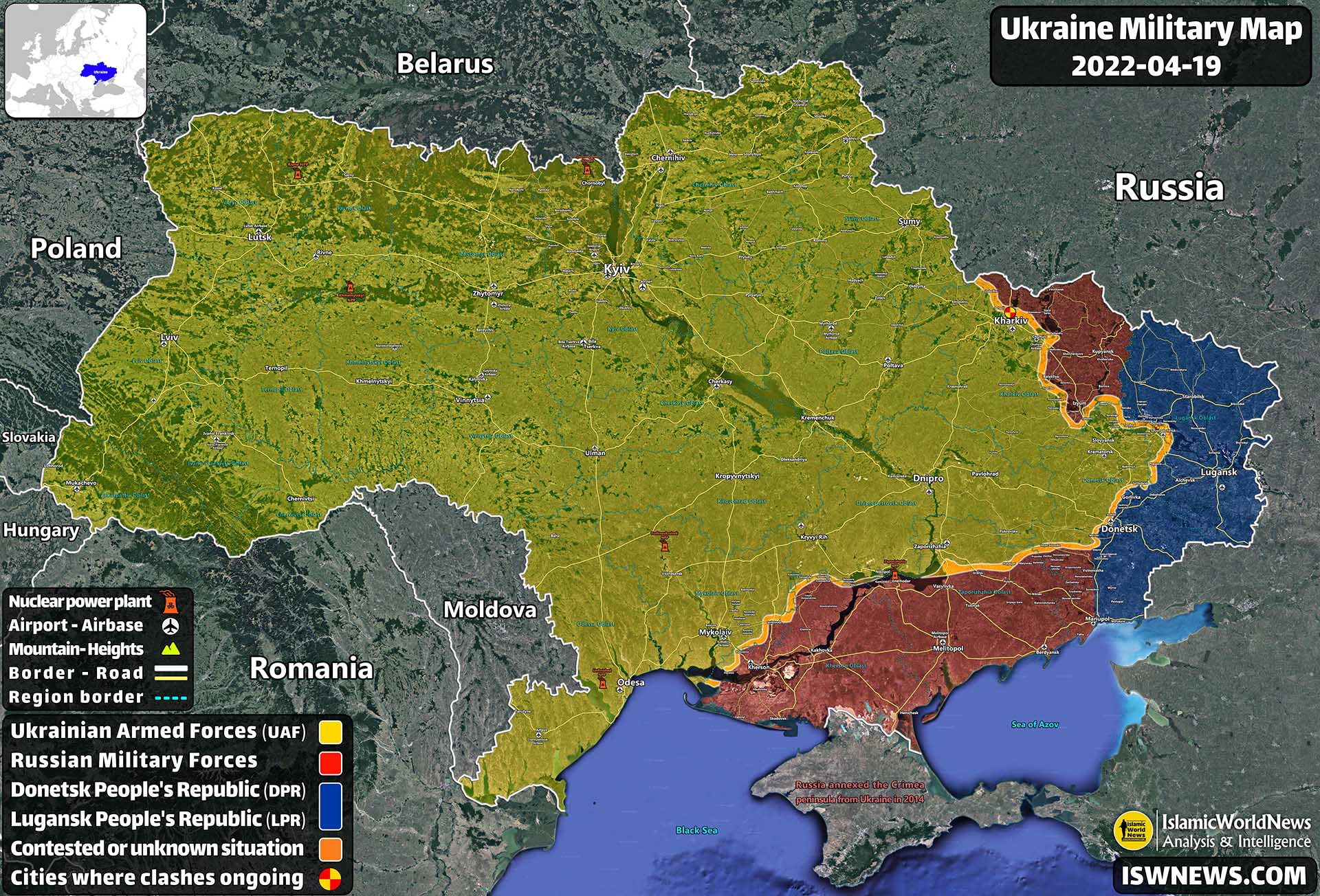
55 days have passed since the start of war in Ukraine, and this morning Sergey Lavrov announced the beginning of a new phase of the Russian army military operatio in Ukraine. The operation is aimed at the Donbas region in southeastern Ukraine. The process of preparation for the start of operations on this axis had begun 15 days ago. By the 40th day of the war, Russian troops withdrew completely from northern Ukraine by the 40th day of the war, and since then, operations to send more troops and military equipment to southeastern Ukraine had continued.
At this phase of the operation, the capture of the important cities of Severodonetsk, Slovyansk, Kramatorsk and gaining full control of the Donetsk and Luhansk oblasts is a priority for Russia. Simultaneously with this operation or in the next phase, the siege and control of the cities of Kharkiv and Zaporizhia will be on the agenda of the Russian army.
Click to view full size
It is noteworthy that the announcement of the start of a new phase of Russian operations coincided with the capture of most of the city of Mariupol. Ukrainian forces are present only in the Azovstal industrial zone. It seems that the Russian army was waiting for the situation in the city to be determined and to focus fully on the other fronts. With the end of the battles in Mariupol, the forces working on this front could be transferred to other lines of conflict in the Donbas area.
Since last night, frontlines in the Donbas region have witnessed heavy bombardment by the Russian army. Currently, most of the clashes continue in areas such as southern Izyum towards Slovyansk, in and around Rubizhne, Popasnaya, Avdiivka in north of Donetsk city, Marinka in west of Donetsk city, and on the Velyka Novosilka-Gulyaipole axis.
On April 12 and 13, about 1,300 Ukrainian soldiers and officers surrendered to the Russian army in Mariupol. It should be noted that before the siege of Mariupol, about 14,000 Ukrainian forces were present in the city, and it is now estimated that about 5,000 Ukrainian army personnel were besieged in the city of Mariupol.
Currently, the siege of Ukrainian forces in the city of Mariupol is almost divided into three pockets, east, north and west.
In recent days, the port of Mariupol in the southwest of the city came under the control of the Russian army; But the operation to clear mines and explosive traps continues in this port. In the western pocket, Ukrainian forces have lost most of their fortifications and have little chance of further resistance in the area.
In the eastern pocket, clashes continue around the Azovstal Industrial Zone. The Azovstal Industrial Zone is said to be well fortified, and beneath it is a network of long tunnels. To the north of the city and in the northern pocket, the Ilych plant is another stronghold of the Ukrainian forces resisting.
It should be noted that the city of Mariupol has been under siege for more than a month now.
In the east of the city, with the advances made, the district of Livoberezhnyi came under the complete control of the Russian forces. To the west of the city, the southern part of the Prymorskyi district came under Russian control. Russian forces also took control of the port of Mariupol. In the south of the city, the fishing port of Mariupol came under Russian control.
On the other hand, Russian military equipment continues to be sent to the southern regions and the Donbass region for several consecutive days. Soon the south and southeast of Ukraine will witness the most intense military clashes between Russian and Ukrainian forces.
Currently, the military situation in the southern and southeastern regions has not changed much from the previous days.
Clashes between Russian and Ukrainian forces continue on the Izyum and Rubizhne axis. The Russian army is advancing towards Slavyansk on this axis.
On the northern axis of Donetsk, the Russian army is trying to break through the defensive lines of Ukrainian forces in west of Gorlivka.
On the western axis of Donetsk, clashes continue in Marinka and north of Ugledar.
On the southern axis of Donetsk, clashes continue in the city of Mariupol. The siege of Ukrainian forces in the city has become tighter, and recently a large number of Ukrainian forces surrendered to Russian forces.
In the Kherson axis, clashes continue in the north and west of Kherson. In this axis, the Ukrainian forces are trying to force Russian army to withdraw from the mentioned areas.