Category: Russia

  • Ukrainian Army retook the town of Lyman

    Ukrainian Army retook the town of Lyman

    As we said in the previous articles and it was predictable, after the siege of Lyman, the Ukrainian forces forced the Russian army to retreat from this town, and finally Lyman came under the control of the Ukrainian army. Also, in the continuation of these advances, a number of settlements around Lyman also came under the control of the Ukrainian army.

    The town of Lyman was considered as the main base of the Russian army in the north of Donetsk oblast, and with its fall, practically all the achievements of the last few months of Russia in this axis were lost.

    Now, Ukrainian forces have once again reached the borders of Luhansk oblast, and operations are on the agenda of the Ukrainian army to advance further and even move towards Rubizhne and the city of Severodonetsk.

    Online map here

    Read more:
    Latest military situation in Donbas (Map Update)
    Russian Army Retreats From the Kharkiv Oblast (Map Update)

  • Latest military situation in Donbas (Map Update)

    Latest military situation in Donbas (Map Update)

    In the last week, the Ukrainian forces, crossing the Siversky Donets river, reached Lyman town from the north and south direction. In south of Lyman, the villages of Staryi Karavan and Brusivka have come under the control of Ukrainian forces. In north of Lyman, the regions of Lozove, Rubtsi, Korovii Iar, Oleksandrivka, and Yarova are under the control of Ukrainian forces.

    Currently, heavy clashes continue in south of Lyman and in north in Drobysheve and Novoselivka between Russian and Ukrainian forces. Also, in recent days, Russian forces have repelled the attacks of Ukrainian forces in Karpivka and Ridkodub regions several times.

    Due to the fact that the amount of conflicts is higher in the northern front of Lyman, it seems that the Ukrainian forces are trying to encircle the Russian forces from the north side and surround them in Lyman by breaking the defense lines in the mentioned areas.

    Also, sporadic clashes continue in the Bilogorivka front. Based on the formation of forces in this area, Bilogorivka is almost not under the control of any of the parties.

    Clashes between Russian and Ukrainian forces in other fronts of Donbas continue sporadically, and no specific changes have been made in the field map. The Soledar and South Bakhmut fronts are among the active areas in the last week. The fronts of the city of Donetsk has also remained unchanged in the last week.

    Read more: Russian Army Retreats From the Kharkiv Oblast (Map Update)

    Click to view full size
  • Russian Army Retreats From the Kharkiv Oblast (Map Update)

    Russian Army Retreats From the Kharkiv Oblast (Map Update)

    The Russian army completely withdrew from the northern and northeastern regions of Kharkiv oblast, and the Ukrainian army took control of these regions. As predicted, the Russian forces in the north of Kharkiv retreated to the international borders, and in the east of Kharkiv, the forces went behind the Oskil river, and the eastern areas of the Oskil river are the only areas of Kharkiv oblast that are currently under the control of Russian forces.

    In this way and with the retreats, about 8800 square kilometers of Kharkiv oblast came back under the control of the Ukrainian government.

    It is noteworthy to mention that during the withdrawal of the Russian army from these areas, many Russian descent people of these areas also fled to Russia for fear of genocide, being persecuted, etc.

    Read more: Latest military situation in Ukraine after 200 days of war (Map Update)

    Click to view full size
  • Latest military situation in Ukraine after 200 days of war (Map Update)

    Latest military situation in Ukraine after 200 days of war (Map Update)

    In recent days, Russian Army and its allies withdrew from large areas of the southeast and east of Kharkiv Oblast, and after that, the Ukrainian forces entered the areas almost without any particular conflict and dominated the villages and cities one after the other. During these retreats, important towns and areas such as Balakliya, Izyum, Kupyansk and Dvorichna came under the control of the Ukrainian army. It is safe to say that these retreats are considered to be Russia’s biggest defeat and retreat in the Ukraine war after Russia’s extensive retreats from the northern regions of Ukraine and the city of Kyiv in the early months of the war.

    It should be noted that in the course of these retreats, an area of nearly 5900 square kilometers has been controlled by the Ukrainian army, and according to the developments in Kharkiv Oblast, it seems that this area will be increased and the Russian army will retreat to the border lines north-east of Kharkiv. According to the latest information, an order has been issued for the evacuation of the border town of Vovchansk, and the evacuation of this town means Russia’s return to the international borders in this region. During the battles of recent months, the town of Vovchansk was used as a logistic bridge of the Russian army towards the eastern regions of Kharkiv Oblast.

    By carefully looking at the field map, it can be seen that the Russians’ purpose for these retreats is to move the forces behind the Oskil River and use this river as a natural defense barrier. A similar tactic that we saw earlier using the Siverskyi Donets River in the same region and parts of Donetsk Oblast in the Lyman axis or Luhansk Oblast at some point of the battles.

    But what is the reason for this and why did the Russians withdraw from these areas?

    There are many different reasons for the recent defeats of the Russians in Kharkiv Oblast. In the last two months, after Russia’s success in seizing the city of Severodonetsk and advancing towards the important towns of Slavyansk and Bakhmut, we witnessed a long-term stoppage and, in other words, “stagnation” in the eastern fronts of Ukraine. In addition to this issue, on the southern fronts in Kherson and Mykolaiv Oblasts, we have practically witnessed a confusion and stoppage of the Russians.
    The absence of a comprehensive operational plan by the Russian army and the lack of coordination of operations between the eastern front and the southern front and the failure to use all or most of Russia’s combat capacity in terms of manpower, logistics, ground forces and air fleet, failure to suppress the Ukrainian air force effectively, not suppressing the western military aid sent to Ukraine effectively, relying on old and outdated tactics in the war in Ukraine, etc. are among the reasons that can be clearly seen in the battles in Ukraine.

    Despite the importance of the Ukraine war for Russia, in terms of logistics, the Russian army has practically used a small part of its manpower in this war, or has not used all its missile or air power in these battles. Or there are great uncertainties regarding the plan, the general picture and the ultimate goal of Russia’s operations in Ukraine; A subject that emerges in a strange way at every stage of the war. Failure to capture the entire city of Kyiv and its surrounding areas while this was possible, and then extensive retreats from the north, and then a complete focus on the eastern front and the entry of military power into this area, and again reducing or stopping operations in this axis for a period of Almost two months and the confusion between advancing or stabilizing areas in the southern front, practically shows the confusion of the Russian command. On the one hand, the Russians are looking for results, and on the other hand, they are not willing to spend more. If this war is important for Russia and the Russians want to achieve goals in this war, they must devote all or most of their combat power to this war, otherwise they will not have a chance against the Ukrainian army with high manpower; Or the goals will be achieved at a very high cost and in an unknown period of time.

    On the other hand, maybe the Ukrainian forces have an easier task than the Russians, and that is to push the Russians back and take back the lost areas. A subject that does not have logistical difficulties and the difficulty of planning an attacker on several fronts. Considering the almost good logistic support of the western countries to Ukraine and the intelligence superiority of the Ukrainians and the use of human forces more than Russia in this war, only a little negligence on the part of the Russians is enough to change the tone of the war in favor of Ukraine. Ukrainian forces have shown that they are capable of resisting and inflicting heavy blows on the Russian army if they have proper support and sufficient logistics, and they have high combat power. Considering that more than six months have passed since the war, the Ukrainian forces have gradually found their combat organization and have come out of the confusion of the initial months. It seems that if the current trend of Russia does not change, in the coming weeks and months we will see more effective attacks and operations by Ukrainian forces to retake the eastern and southern regions.

    News of other regions:

    The military situation in Luhansk and Donetsk Oblasts has not changed significantly in the last two months, and sporadic clashes continue around Bakhmut, Soledar, North of Gorlivka, west of Donetsk in Mariinka and Pesky, and near Ugledar. In Mykolaiv and Kherson Oblasts, the clashes between the Russian and Ukrainian army forces continue in the Arkhanhelske and Sukhyi Stavok axes in the Ingulets axis. The conflicts in these areas are currently equal and neither side is able to make large advances.

    Read more:
    Latest Updates on Donbas Front, 15 August 2022 (Map Update)
    Latest military situation in Ukraine, 17 July 2022 (Map Update)

    Click to view full size
  • Suicide attack on the Russian embassy in Kabul left 25 dead and wounded

    Suicide attack on the Russian embassy in Kabul left 25 dead and wounded

    As a result of the attack of an unknown suicide bomber on the entrance of the Russian embassy located in the 7th district of Kabul at noon on the September 5th, 12 people including two Russian diplomats, seven civilians and three Taliban militants were killed and 13 others were injured.

    The Ministry of Foreign Affairs of Russia, the UNAMA mission and the Embassy of the Islamic Republic of Iran in Kabul, the Ministry of Foreign Affairs of the Taliban, Hamid Karzai, the former president, and Abdullah Abdullah, the head of the National Reconciliation Council in the previous government of Afghanistan, have condemned this attack. So far, no group has claimed responsibility for this terrorist attack.

    The terrorist attack on the Russian embassy in Afghanistan is one of the most important security events in Afghanistan. In addition to the weakness of the intelligence agencies of the Taliban, this action indicates the increase of power of the anti-Taliban groups and the concentration of their attacks on the interests of countries with influence in Afghanistan.

    Read more: An explosion in Herat kills the extremist cleric Mujibur Rahman Ansari!

  • Latest Updates on Donbas Front, 15 August 2022 (Map Update)

    Latest Updates on Donbas Front, 15 August 2022 (Map Update)

    According to the latest news from the frontlines, the Russian army has concentrated its attacks on the defense line of the Ukrainian army in the Seversk-Soledar-Bakhmut axis. These attacks in the last week have led to an advance in the east and south of the village of Soledar located on the Bakhmut-Lisychansk road. The ultimate goal of the Russian army in capturing Soledar is to cut off the logistic road and impose a quasi-siege on the cities of Seversk and Bakhmut.

    Currently, clashes continue inside Soledar and most of the village is under the control of the Russian army. In Bakhmut, cashes have extended to the eastern entrance of the city, and Bakhmut is under the Russian army artillery fire.

    In south of Bakhmut, heavy clashes are going on in Zaitseve and Kodema areas, and the Russians are trying to advance in this axis. It seems that one of the main goals of the Russian army in this axis is to completely capture the villages and areas south of Bakhmut and surround this city from the south.

    In the western axis of Donetsk city, the exchange of artillery fire between the sides is still going on. In the last week, Russian and the DPR forces took control of the village of Peski, west of the Donetsk airport. Also, clashes between the Russian and Ukrainian armies continue in the Mariinka area, and the Russian army has gained some ground there.

    It is important to mention that the purpose of the Russian forces’ operation in the west of Donetsk is to prevent the AFU ground attacks towards the city of Donetsk and to stop their artillery attacks on the city. And at the moment there is no serious intention by the Russians to advance deep into the west of Donetsk.

    In general, it seems that the Russian army is not in a hurry to clear the north of Donetsk Oblast. If the Russian army is successful at this stage on Bakhmut front, the next stage will be the advances towards the important cities of Slavyansk and Kramatorsk.

    There are no special activities in other fronts either, and most of the clashes are related to the exchange of artillery fire and airstrikes. The news about the large-scale operation of the Ukrainian army in the southern front or the preparation of the Russian army to launch an operation in the Kharkiv province have been more of a psychological warfare, and despite the claims of the Ukrainian and the Russian media, no specific activities has been observed from the parties in the mentioned areas.

    Click to view full size
  • Khayyam satellite, Iran’s important step towards the development of space power

    Khayyam satellite, Iran’s important step towards the development of space power

    Khayyam satellite was launched by a Russian Soyuz rocket from the Baikonur Cosmodrom in Kazakhstan on the morning of August 9 and successfully placed in a 500 km orbit. It should be noted that the Soyuz launcher has had the largest number of successful space missions among the launchers of different countries in the world.

    According to the officials of the Iranian Space Agency, the Khayyam satellite is a non-military satellite that is under the control and operation of the Islamic Republic of Iran. The order for the construction of this satellite was given in 2018 by the Iranian Space Agency (ISA). The name of its manufacturer or manufacturers has not been officially announced. The guidance and control of this satellite will be done through ground stations in Iran and its information and data will be sent to these stations. Khayyam satellite is capable of imaging with an accuracy of one meter. The imaging accuracy of one meter will make this satellite the highest quality Iranian satellite.

    Productivity improvement in the field of agriculture, accurate monitoring of water resources, managing natural risks, monitoring repurposing changes, unauthorized constructions and fighting deforestation, monitoring of environmental risks, monitoring of mines and mineral discoveries and monitoring borders, are among the applications of data received from Khayyam’s satellite.

    Iranian Zuljanah satellite carrier has the possibility of sending a satellite with a weight of 220 kg in an orbit of 500 km, but the weight of the Khayyam satellite is 600 kg (unofficially) and its injection height is more than 500 km. Therefore, the Zuljanah satellite carrier was not able to perform this mission and the Soyuz launcher was used. Zuljanah launcher has two successful injections of Noor 1 and Noor 2 military satellites in its portfolio.

    Read more: Iran successfully test launches Zuljanah satellite carrier + Video

    The first telemetry data of Khayyam satellite has been received at Mahdasht station after hours of launch. The operating height of the satellite is fixed at 500 km and its life will be about 5 years. This satellite operates in the Leo orbit (160 to 2000 km) and due to receiving the signal over Iran, the rumor of using this satellite in Ukraine is completely ruled out. According to the work schedule, the Khayyam satellite will make four passes over Iran every 24 hours.

    According to Iranian officials, Iranian Space Agency plans to develop domestic capabilities in the field of building and launching satellites needed by the country and develop the relevant ground stations, and continue to meet the current needs of the country in the field of providing satellite data through advanced scientific and technological cooperation with the leading countries in the space industry. In addition to meeting the needs of the country, by transferring knowledge and experience, accelerate the Indigenization of space technology in the country.

  • Russia designates the Islamic Renaissance Party of Tajikistan as terrorist organization!

    Russia designates the Islamic Renaissance Party of Tajikistan as terrorist organization!

    Russian Prosecutor General Igor Krasnov said in a meeting with Tajik President Imam Ali Rahman in the capital city of Dushanbe: “We have already sent a corresponding lawsuit against the Islamic Renaissance Party of Tajikistan (IRPT) to the Supreme Court of Russia.”

    Referring to Russia’s need for a political partnership with Tajikistan, Muhiddin Kabiri, the leader of the Islamic Renaissance Party of Tajikistan, said: “This will not pose a risk to us, because we do not have any activities in any of the former Soviet countries, and Russia, although it has not declared us as terrorists, but it has extradited some of our activists in Russia to Tajikistan, who are now in prison. This issue does not present us with a new danger, but the government of Tajikistan can consider it a great achievement and victory for itself and use this for propaganda.”

    Kabiri wrote in another message on his Twitter page: “The Prosecutor General of Russia has said that Moscow accepts Tajikistan’s request and recognizes the IRPT as a terrorist organization. For a long time, Russia ignored this request and now Rahmon believes that the Kremlin is now in a weak position and it is time to put pressure on them. This way will be used for propaganda and new repressions.”

    The Islamic Renaissance Party of Tajikistan (IRPT) is the main Islamist party in Tajikistan, which is currently led by Muhiddin Kabiri. During the Tajik civil war, this party was the leader of the opposition to Emomali Rahmon’s government and has been prosecuted for terrorist activities in Tajikistan since 2015. After that, the government of Emomali Rahmon repeatedly asked the former Soviet countries to include this party in their terrorist list, but this request has not met with a positive response from any of these countries.

  • Fierce competition between Russia and the West in the Caucasus

    Fierce competition between Russia and the West in the Caucasus

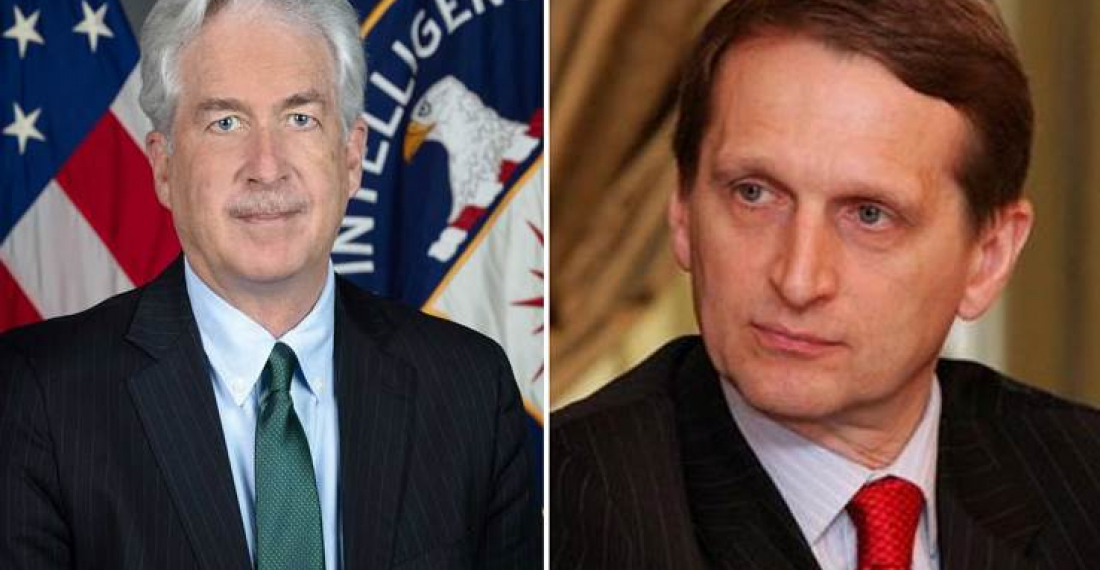
    The CIA chief’s visit to Armenia

    On July 15, William J. Burns, the head of the US Central Intelligence Agency (CIA), visited Armenia without prior notice. This news was published by the Russian Sputnik news agency. No information has been released about the details of Burns’s meetings with Prime Minister Nikol Pashinyan and high-ranking Armenian officials.

    Russia’s concern about the presence of the CIA chief in Yerevan

    Three days after the visit of the head of the American Central Intelligence Agency to Armenia, Sergey Naryshkin, the head of Russian Foreign Intelligence Service, visited Armenia. On Monday, July 18, Sergey Naryshkin held separate meetings with the Prime Minister and Armenian officials.
    The visit of the head of the Russian Foreign Intelligence Service to Yerevan, the capital of Armenia, is considered very important. The details of these meetings are not known. The media evaluates this meeting as Russia’s reaction and concern about the influence of US security serviced in Armenia.

    Meeting of foreign ministers of Azerbaijan and Armenia

    Ministers of Foreign Affairs of Azerbaijan, Jeyhun Bayramov and Ministers of Foreign Affairs of Armenia, Ararat Mirzoyan met and discussed with each other in Tbilisi, the capital of Georgia. A wide range of challenges of both sides have been discussed in this meeting. Demarcation, reopening of access routes from Azerbaijan to Nakhchivan, the date of withdrawal of the remaining Armenian army forces from Nagorno-Karabakh, the fate of Armenian prisoners of war in Azerbaijan and the fate of Armenians in this region were among the issues discussed by the two sides. The most important issue facing this negotiation is the Zangezur Corridor in the south of Armenia, which is the main demand of Azerbaijan from the Armenian side for the normalization of relations.

    This is the first meeting of foreign ministers after the second Karabakh war. US Secretary of State Antony Blinken evaluated this meeting positively in a tweet, which shows how valuable the compromise between the two countries is for the US.

    Announcing the date of withdrawal of the Armenian army from Nagorno-Karabakh

    The Secretary of the Security Council of Armenia, Armen Grigoryan, has announced that the remaining forces of the Armenian army and the Armenian militia will leave the areas under their authority in Nagorno-Karabakh (Nagorno-Karabakh/Dagliq-Karabagh/Artsakh) by the end of September this year.
    The announcement of the withdrawal date of the Armenian army has worried the officials of the de facto Armenian government and the people of this region.

    Great Return plan in Karabakh

    On July 19, the government of Azerbaijan has started the resettlement of 58 refugees from the Karabakh war in Zangilan district, which borders Iran. The government of Azerbaijan has promised that 41 families of two villages in this region will return to their homes and has named this project the Great Return. The place of residence of the returnees is also the smart villages that Israeli companies have reconstructed.

    Zangilan, with a population of about 30,000 people, borders Armenia and Iran and is located in the southwest of Nagorno-Karabakh. It is worth mentioning that this area was surrounded by the Armenian army and Armenian militia during the 1993 war after the support lines were completely cut off; Then, the Azeri defenders and the people survived for several months with the help of Iran. And finally after the collapse of the defensive positions, Azerbaijani civilians, militiamen and soldiers came into Iran with the support of the artillery of the Islamic Republic of Iran Army by crossing the Aras River.

    Azerbaijan’s energy shock to Russia

    Azerbaijan has signed its first energy contract with the European Union in the new year. Ms. Ursula von der Leyen, the German President of the European Commission, signed the gas contract during her visit to Baku, the capital of Azerbaijan. According to this agreement, Azerbaijan will increase gas exports to Europe to 20 billion cubic meters per year by 2027. The European Union will import 10 billion cubic meters of gas from Azerbaijan every year from 2020. Apart from this amount, Bulgaria is also a customer of one and a half billion cubic meters of Azerbaijan’s gas.
    The increase in Azerbaijan’s gas exports has sounded the alarm for the exports of the Russian Federation. Russia exports 60 billion cubic meters of gas to the European Union every year, and Azerbaijan’s action is considered to be the acquisition of a third of the Russians’ share in the European Union market.

  • Imam Khamenei in a meeting with Putin: Americans should leave the region east of the Euphrates in Syria

    Imam Khamenei in a meeting with Putin: Americans should leave the region east of the Euphrates in Syria

    Imam Khamenei, the Supreme Leader of the Islamic Revolution, in his meeting with Mr. Vladimir Putin, the President of Russia and the accompanying delegation, emphasized the necessity of operationalizing the understandings and contracts between the two countries and considered long-term cooperation to the benefit of both countries. In this meeting, Imam Khamenei pointed out the necessity of increasing and mutual cooperation between Iran and Russia in global events and confronting Western sanctions, and added: “There are many understandings and agreements between the two countries, including in the oil and gas sector, which must be operational and followed up to the end. Your Excellency and our president are both action-oriented and follow-up, so the cooperation between the two countries should reach its peak in this period.”

    After confirming the words of the President of Russia about the necessity of starting the Rasht-Astara railway line, he considered this work to complete the North-South transportation line and benefit both countries.

    Imam Khamenei said about the events in Ukraine: “War is a harsh and difficult category, and the Islamic Republic is not at all pleased that ordinary people suffer from it, but in the case of Ukraine, if you did not take the initiative, the other side would cause a war with its own initiative. Westerners are completely against a strong and independent Russia. NATO is a dangerous entity and knows no boundaries if the way is open to them, and if it was not stopped in Ukraine, they would have started the same war some time later under the pretext of Crimea. Of course, today America and the West have become weaker than before, and despite the great effort and expense, the success of their policies in our region, including in Syria, Iraq, Lebanon, and Palestine, has been greatly reduced.”

    He added: “It is necessary to be vigilant against the deception of the West. The Americans are both forceful and cunning, and one of the factors of the collapse of the former Soviet Union was being deceived in front of American policies, although Russia has maintained its independence during your highness’s period.”

    The Leader of the Islamic Revolution, Ayatollah Khamenei, condemned the interference of the Zionist regime in the affairs of the region, praised the recent positions of the Russian President against the Zionists, and emphasized the position of the Islamic Republic of opposing a military attack on Syria and the need to prevent it, saying: “Another important issue in Syria is the occupation of the fertile and oil-rich areas east of the Euphrates by the Americans, which should be resolved by expelling them from that area.”

    He further emphasized: “The Islamic Republic will never tolerate policies and programs that lead to the closing of the border between Iran and Armenia.”

    Imam Khamenei also approved the policy of replacing national currencies in the relations between the two countries and using other currencies instead of the dollar, saying: “The dollar should be gradually removed from the path of global transactions, and this is possible gradually.”

    In this meeting, Vladimir Putin also said about the war in Ukraine: “No one is in favor of war and the loss of lives of ordinary people is a great tragedy, but the behavior of the West made us have no choice but to react.”

    Enumerating the factors and roots of the differences between Russia and Ukraine, especially the provocative actions of the West and the United States in recent years, including the coup in Ukraine, as well as NATO’s expansion policy despite their previous commitments to avoid any advance towards Russia, Putin said: “Some European countries said that we were against Ukraine’s membership in NATO, but we agreed to it under American pressure, which shows their lack of sovereignty and independence.”

    The President of Russia considered the assassination of General Soleimani as another example of the evils of the Americans, and in another part of his speech, referring to Western sanctions against Russia, he said: “These sanctions are to the detriment of the West, and the result is problems such as the increase in oil prices and the food supply crisis. The US abuses the dollar tool to embargo and loot other countries, and this ultimately harms them and weakens global trust in this currency. Also, countries are going to use alternative currencies and we are designing new ways to use national currencies in the relations between the two countries.”

    Confirming the position of the Leader of the Revolution regarding the Caucasus region, the President of Russia called the positions of the two countries on the Syrian issue, including the opposition to the military attack on the north of this country, completely compatible with each other and said: “The region east of the Euphrates should be under the control of the Syrian military forces. Iran and Russia are jointly fighting terrorism in Syria, and in the military field, we are also trying to develop cooperation between the two countries, as well as trilateral cooperation and maneuvers with China.”

    Read more: Imam Khamenei in a meeting with Erdogan: Any military attack in northern Syria will definitely be detrimental to Turkey, Syria and the entire region

  • Latest military situation in Ukraine, 17 July 2022 (Map Update)

    Latest military situation in Ukraine, 17 July 2022 (Map Update)

    Russian missile attacks were carried out last night and this morning with Tu-22M aircraft from the Caspian Sea against the positions of Ukrainian forces in the cities of Poltava, Vinnytsia, Dnipropetrovsk and Cherkasy. Also, 10 missiles were fired at the city of Mykolaiv in southern Ukraine, and several Iskander ballistic missiles were fired from Belgorod province in western Russia towards Kharkiv province.

    Southern fronts of Ukraine:
    Russian aircraft have made about 200 sorties in the south and southeast of Ukraine. Ukrainian aircraft have been very active in the north of Kherson province in recent days. This issue, along with the recent Ukrainian attacks on Russian positions in Novakakhovka and Kherson airport, indicates the weakness of Russian air defense systems in this area.
    In Zaporizhzhia province, most of the attacks of the Ukrainian army on the south-eastern regions of this province were carried out by artillery, and despite the announcement of the readiness of the Ukrainian army to launch a new operation and recapture of the southern regions of Ukraine, no particular movement has been observed in this axis so far.

    Eastern fronts of Ukraine:
    Russian artillery and rocket attacks on the Donbas fronts have decreased since yesterday, and most of these attacks are concentrated on the cities of Bakhmut and Slovyansk. The conflicts are focused on the Bohorodychne area and its surroundings, and Russian forces have made minor gains in this area.
    In the Bakhmut axis, ground battles continue from the southeast side of Bakhmut and along the Bakhmut-Lisichansk road.

    The front of Kharkiv province witnessed several counterattacks by Ukrainian forces yesterday, but they did not achieve anything notable. The exchange of fire and artillery attacks continue in this axis.
    There are reports that the Russian army is preparing for a large-scale operation in Kharkiv province with the aim of securing the eastern areas of Kharkiv, which have yet to be confirmed.

    Read more:
    Latest Military Map of Ukraine after 131 Days of War (Map Update)
    Latest Military Situation in Ukraine After 99 Days of War (Map Update)
    Russia Captured the City of Lysychansk! (Map Update)

    Click to view full size
  • Opinion: The Battle of Technological Structures

    Opinion: The Battle of Technological Structures

    The war in Ukraine caused not just a crisis in international relations, it is a turning point for the whole history and those who claim that we are in the initial stage of the Third World War are right. The complexity of the situation lies in understanding the true sides of the conflict, since most experts in international law are supporters of the thesis of a conflict of interests between different alliances, and they are certainly right in this, but only when it comes to the confrontation of the West against China or the Islamic World.

    The situation with the Russian Federation is complicated by the fact that after 1991 the Kremlin is no longer an independent factor and voluntarily signed up as a member of the collective West. From that, many have problems in understanding what is happening in Ukraine.

    I will try to outline my point of view on the war in Eastern Europe. What is happening is certainly a “world war”, but this is not a battle of military-political blocs by analogy with the two previous world wars, now we are witnessing a clash between corporations located in the shadow of national sovereignty.

    The simplest explanation for the term “technological way” is this – it is “a set of related industries that have a single technical level and are developing synchronously.”

    The history of the term originates from the Soviet scientist Nikolai Kondratiev (1892-1938). In his works, the famous economist pointed to “periodic cycles of alternating ups and downs of the modern world economy lasting 45-60 years.” Based on Kondratiev’s cycles, Technoprom-2013 identified six technological orders.

    So, according to the cycle table, the current Russian Federation is the main core of the fourth technological order, as evidenced by the creation of Gazprom, Lukoil and Rosneft. While the United States is in full swing moving from the fifth to the sixth scientific and technological revolution.

    Biden is a “political symbol of green energy,“ which means that Americans are beginning to actively lobby for the transition from oil and gas directly through nuclear power in favor of nano and biotechnology. The turbulence of economic cycles always entails a series of wars that threaten to escalate into several global conflicts with the use of weapons of mass destruction.

    The struggle between technological orders under the cover of corporations explains any complexity of the plot of the theater of military operations and political confrontation. For example, the Americans are lifting sanctions against several Venezuelan oil companies, this happened as part of the “substitution of Russian oil” and “squeezing the Russian Federation out of the world market,” but the facts suggest that the same Venezuelan companies are associated with Rosneft. That is, we see that there are interested parties inside the United States, for whom it is extremely important to continue cooperation with the Russian Federation in terms of oil and gas.

    Moreover, the continued dependence of American society on oil and gas is a kind of subversive work of the global oil and gas lobby, the purpose of such work is to block any innovations in the field of energy resources and stake out a leading position for oil and gas for another 60 years. The same reason concerns the history of arms supplies from EU countries to the Russian Federation. The Americans groundlessly accused China of supporting the Kremlin’s “special operation,” but they themselves supplied chips for the tanks of the Russian army.

    What’s the matter? Why does the West, accusing Russia of aggression, supply weapons to the Kremlin itself? The answer is simple – information about the supply of advanced weapons and spare parts for military equipment from the West to the Russian Federation is a carefully planned operation of the global oil and gas lobby. Thus, the main component of the fourth technological order is trying to fight for a place in the sun against the background of the beginning of the era of nuclear energy and the total dictatorship of nano-technologies.

    The current events in Ukraine were preceded by a “guerrilla war” between corporations representing their own economic cycle. For example, the explosion of the Fukushima nuclear power plant became an “iron argument” for the then German Chancellor Angela Merkel to abandon nuclear energy for a long time. The anti—nuclear sentiment was preceded by a sabotage at the Soviet nuclear power plant in Chernobyl, after which European politicians paid for by the oil and gas lobby began to claim that supposedly “nuclear energy is a “transitional” technology, not the future, and no new commercial nuclear power plants were built after 1989.”

    Now we can say that oil and gas corporations have “unleashed” a war in Europe, but to be more precise, there was a “strike ahead”, this is what Putin said at the Valdai Forum in 2015. Ukraine is important for Gazprom from the point of view of regular oil and gas supplies to the EU, it has been so since the first days of Putin’s rule, and when the first Maidan took place in Kiev, it became clear to the EU that the region would soon burn (we must not forget about the hot spots in Moldova and the Balkans). After that, it was decided to preserve the corridor with Moscow by any means to continue the functioning of the oil and gas corporations of “Russia”, which in fact do not belong to it.

    This is the main secret of the Russian Federation after 1991, the collapse of the USSR gave birth to the Russian Federation, which became a “gas station” for the collective West and its satellites, such were the conditions of the heads of American and European corporations, who personified the oil and gas lobby. Gazprom is the backbone of the Russian state.

    This explains why the Americans (those who consider themselves Republicans) easily got rid of Yukos Khodorkovsky in favor of the “Putin’ corporation. Influential people from Berlin and Paris played their role. Therefore, behind the screen of “Putin’s patriotism” lies the striking force of the fourth technological order, the whole point of which is to protect the interests of Gazprom and its comrades (other holdings) in the post-Soviet space.

    If you analyze the entire board of directors of Gazprom, you will find about sixteen Western politicians of various ranks and status, Schroeder, Berlusconi and the late Chirac stand apart. I will also add here that Lukoil immediately after its official creation carried out its first delivery to Canada (the beginning of the 90s). The infamous American oil company Halliburton has been producing oil in Russia since 1991 and did not stop production even after the Crimean events in 2014.

    As for the “Eurocentricity” of Putin himself, then it should be recalled about the meeting with Macron in 2019, where at first the French president said – “I have said this many times… Russia is a European (country). And we deeply believe in this Europe, which stretches from Lisbon to Vladivostok.” Putin then replied: “Even General Charles de Gaulle “expressed this idea in essence when he spoke about Europe from Lisbon to the Urals.” He added that Russia “stretches to the Pacific Ocean,” and all this space is the space of European culture, which is important to understand.” It is hard to believe in the words of the head of the Kremlin, especially against the background of the current “anti-Western rhetoric”, but the idea of a “Greater Europe”[1] fully corresponds to the plan of the oil and gas lobby to create a huge military enclave with nuclear weapons and capable of staying afloat for about sixty more years.

    By the way, Putin has been talking about this every ten years. First, in 2010, the head of the Kremlin said that ”Unfortunately or fortunately, neither solar energy, nor firewood, nor dried manure will replace hydrocarbons for the next 15-20 years.” Then, in early February 2022, the President of the Russian Federation extended the period of dominance of oil and gas, indicating that “it is premature to abandon hydrocarbons. They will be actively used for maybe another 50 years.” As we can see, the “Tsar of the Russian Federation” defends the interests of the oil and gas lobby by faith and truth, even at the cost of using nuclear weapons.

    Since the time of the first technologies in the history of mankind, we have been witnessing the war of these very economic cycles with each other, where the most modern and creative always wins, the one who meets the needs of people, victory is expected for him, but always at the cost of huge human losses, the breakdown of political systems and global stress in the economy, which lasts for decades.

    ———————————————–

    1- By the way, the Nazis were one of the first in recent history to promote a plan to create a “Europe from Dublin to Vladivostok.”