Tag: Russia

  • Latest military situation in Ukraine after 200 days of war (Map Update)

    Latest military situation in Ukraine after 200 days of war (Map Update)

    In recent days, Russian Army and its allies withdrew from large areas of the southeast and east of Kharkiv Oblast, and after that, the Ukrainian forces entered the areas almost without any particular conflict and dominated the villages and cities one after the other. During these retreats, important towns and areas such as Balakliya, Izyum, Kupyansk and Dvorichna came under the control of the Ukrainian army. It is safe to say that these retreats are considered to be Russia’s biggest defeat and retreat in the Ukraine war after Russia’s extensive retreats from the northern regions of Ukraine and the city of Kyiv in the early months of the war.

    It should be noted that in the course of these retreats, an area of nearly 5900 square kilometers has been controlled by the Ukrainian army, and according to the developments in Kharkiv Oblast, it seems that this area will be increased and the Russian army will retreat to the border lines north-east of Kharkiv. According to the latest information, an order has been issued for the evacuation of the border town of Vovchansk, and the evacuation of this town means Russia’s return to the international borders in this region. During the battles of recent months, the town of Vovchansk was used as a logistic bridge of the Russian army towards the eastern regions of Kharkiv Oblast.

    By carefully looking at the field map, it can be seen that the Russians’ purpose for these retreats is to move the forces behind the Oskil River and use this river as a natural defense barrier. A similar tactic that we saw earlier using the Siverskyi Donets River in the same region and parts of Donetsk Oblast in the Lyman axis or Luhansk Oblast at some point of the battles.

    But what is the reason for this and why did the Russians withdraw from these areas?

    There are many different reasons for the recent defeats of the Russians in Kharkiv Oblast. In the last two months, after Russia’s success in seizing the city of Severodonetsk and advancing towards the important towns of Slavyansk and Bakhmut, we witnessed a long-term stoppage and, in other words, “stagnation” in the eastern fronts of Ukraine. In addition to this issue, on the southern fronts in Kherson and Mykolaiv Oblasts, we have practically witnessed a confusion and stoppage of the Russians.
    The absence of a comprehensive operational plan by the Russian army and the lack of coordination of operations between the eastern front and the southern front and the failure to use all or most of Russia’s combat capacity in terms of manpower, logistics, ground forces and air fleet, failure to suppress the Ukrainian air force effectively, not suppressing the western military aid sent to Ukraine effectively, relying on old and outdated tactics in the war in Ukraine, etc. are among the reasons that can be clearly seen in the battles in Ukraine.

    Despite the importance of the Ukraine war for Russia, in terms of logistics, the Russian army has practically used a small part of its manpower in this war, or has not used all its missile or air power in these battles. Or there are great uncertainties regarding the plan, the general picture and the ultimate goal of Russia’s operations in Ukraine; A subject that emerges in a strange way at every stage of the war. Failure to capture the entire city of Kyiv and its surrounding areas while this was possible, and then extensive retreats from the north, and then a complete focus on the eastern front and the entry of military power into this area, and again reducing or stopping operations in this axis for a period of Almost two months and the confusion between advancing or stabilizing areas in the southern front, practically shows the confusion of the Russian command. On the one hand, the Russians are looking for results, and on the other hand, they are not willing to spend more. If this war is important for Russia and the Russians want to achieve goals in this war, they must devote all or most of their combat power to this war, otherwise they will not have a chance against the Ukrainian army with high manpower; Or the goals will be achieved at a very high cost and in an unknown period of time.

    On the other hand, maybe the Ukrainian forces have an easier task than the Russians, and that is to push the Russians back and take back the lost areas. A subject that does not have logistical difficulties and the difficulty of planning an attacker on several fronts. Considering the almost good logistic support of the western countries to Ukraine and the intelligence superiority of the Ukrainians and the use of human forces more than Russia in this war, only a little negligence on the part of the Russians is enough to change the tone of the war in favor of Ukraine. Ukrainian forces have shown that they are capable of resisting and inflicting heavy blows on the Russian army if they have proper support and sufficient logistics, and they have high combat power. Considering that more than six months have passed since the war, the Ukrainian forces have gradually found their combat organization and have come out of the confusion of the initial months. It seems that if the current trend of Russia does not change, in the coming weeks and months we will see more effective attacks and operations by Ukrainian forces to retake the eastern and southern regions.

    News of other regions:

    The military situation in Luhansk and Donetsk Oblasts has not changed significantly in the last two months, and sporadic clashes continue around Bakhmut, Soledar, North of Gorlivka, west of Donetsk in Mariinka and Pesky, and near Ugledar. In Mykolaiv and Kherson Oblasts, the clashes between the Russian and Ukrainian army forces continue in the Arkhanhelske and Sukhyi Stavok axes in the Ingulets axis. The conflicts in these areas are currently equal and neither side is able to make large advances.

    Read more:
    Latest Updates on Donbas Front, 15 August 2022 (Map Update)
    Latest military situation in Ukraine, 17 July 2022 (Map Update)

    Click to view full size
  • Suicide attack on the Russian embassy in Kabul left 25 dead and wounded

    Suicide attack on the Russian embassy in Kabul left 25 dead and wounded

    As a result of the attack of an unknown suicide bomber on the entrance of the Russian embassy located in the 7th district of Kabul at noon on the September 5th, 12 people including two Russian diplomats, seven civilians and three Taliban militants were killed and 13 others were injured.

    The Ministry of Foreign Affairs of Russia, the UNAMA mission and the Embassy of the Islamic Republic of Iran in Kabul, the Ministry of Foreign Affairs of the Taliban, Hamid Karzai, the former president, and Abdullah Abdullah, the head of the National Reconciliation Council in the previous government of Afghanistan, have condemned this attack. So far, no group has claimed responsibility for this terrorist attack.

    The terrorist attack on the Russian embassy in Afghanistan is one of the most important security events in Afghanistan. In addition to the weakness of the intelligence agencies of the Taliban, this action indicates the increase of power of the anti-Taliban groups and the concentration of their attacks on the interests of countries with influence in Afghanistan.

    Read more: An explosion in Herat kills the extremist cleric Mujibur Rahman Ansari!

  • What is the main reasons for the success of Ukrainian air defense systems against Russia

    What is the main reasons for the success of Ukrainian air defense systems against Russia

    In the war between Ukraine and Russia, despite the suppression of the Ukrainian air defense systems by the Russians, the Ukraine air defense systems has achieved considerable success. Therefore, we examine the reasons for the success of Ukraine’s air defenses as follows. These reasons can be divided into three parts:

    1- Incomplete suppression of the Ukrainian air defense systems:
    At the beginning of the battle, the Russians tried to suppress enemy radars by firing anti-radar missiles such as KH-31. But this air defense suppression was done very quickly and hastily, and the Russians only suppressed the early warning radars and active systems, and without completing the defense suppression process, they abandoned the middle layers of the air defenses and sent their forces into Ukraine.
    The Russians, speculating that a medium-range and short-range air defense systems without early warning radars are very ineffective, completely abandoned this part of air defense suppression and began ground and air operations to speed up their offensive process. But contrary to the speculations, some air defense systems successfully engage hostile targets even without early warning radars. Most of these systems were short-range defense systems like the TOR-M1.

    The use of free-fall bombs for offensive operations on frontlines or deep operations in a situation where Ukraine’s short-range and medium-range air defenses had not been suppressed is considered a tactical mistake by the Russians. In such a situation, the Russians should either completely suppress the air defenses or use high-range smart ammunition in their operations to be completely away from the effective range of Ukrainian short-range air defense systems. In a situation where the suppression of Ukraine’s ADs were not complete, the use of helicopters had a very high risk, which the losses of the Russians prove this fact. Because short-range air defense systems such as TOR-M1 are well capable of countering Russian cruise missiles and helicopters, and in addition to this, some man-portable air-defense systems (MANPADS) also helped the Ukrainian army a lot in destroying aerial targets. Some anti-armor missiles and other MANPADS donated to Ukraine, such as the FIM-92 Stinger for hunting helicopters, caused the Russians to suffer numerous casualties in this field.

    Read more: Military Knowledge: FIM-92 Stinger MANPADS

    2- Ukrainian tactics for hunting aircraft:
    The Ukrainian air defense has a significant number of short-range systems of various types. These systems have succeeded in destroying several Russian cruise missiles and several fighter jets in the current war between Ukraine and Russia. Due to the geographical and forest conditions of Ukraine, short-range defense systems such as Buk-m1 can hide well and hunt targets such as fighter jets, cruise missiles, etc. On the other hand, soldiers can easily destroy targets such as helicopters or drones with the help of MANPADS by camouflage and sheltering among environmental covers such as trees. Ukraine’s forests have practically created an excellent natural camouflage for Ukrainian ADs to hide and to some extent escape the suppression of Russian forces.

    Air defense assets of Ukraine before the start of the war (without taking into account the systems donated after the start of the war) are:

    • SA-14 (Strela-3), SA-18 (Igla), FIM-92 Stinger MANPADS
    • SA-2 and 3 missile defense systems
    • Short-range and low-altitude mobile missile defense systems SA-6, SA-8 (Osa), SA-13 (Strela-10 as a MANPAD), SA-18 (TOR-M1), SA-9 (Gaskin)
    • SA-17 (Buk-m1) short-range and medium-altitude mobile missile defense systems
    • ZSU-23-4 Shilka mobile short-range anti-aircraft weapon system
    • S-300PM long-range, high-altitude fully mobile missile defense system
    • S-200 high-altitude long-range fixed missile defense system

    3- Foreign military aids to Ukraine:
    From the very beginning, when the possibility of a conflict between Ukraine and Russia increased, NATO member countries, especially the UK and the United States, began providing arms. These aids included individual equipment such as AR-15 rifles to various anti-armor missiles such as NLAW, Javelin, etc., and these weapons had a great effect in destroying Russian tanks on the battlefields. Military aids and better equipment is still being sent to Ukrainians day by day. Understanding the process of equipment training, the US and other allies started sending Russian defense systems such as SA-8/10/12/14 to Ukraine. It can definitely be said that the western aid has kept Ukraine afloat until today.

    Read more:
    What shoulder-launched systems are Ukrainian forces using to counter Russia?
    Military Knowledge: STARStreak Anti-Aircraft Missile
    Military Knowledge: Switchblade Loitering Munition

    According to the definition of short-range defense, it has a maximum height of 15 km and a maximum range of 50 km. With the development of air-launched weapons, short-range defense is extremely vulnerable. For example, the new generation Hellfire missiles with a range of 20 kilometers which can be launched by drones, makes it easy to destroy short-range air defenses.

    Most of the time, a short-range defense is effective when it operates under the cover of medium-range or long-range air defense systems. If there are early warning radars, the location of the target can be detected before reaching the target, and in this way, detection and attack operations can be carried out by short-range air defense and prevent the air defense from being hunted.
    Considering the anti-radar capabilities of the Russian army and the extensive use of KH-31 anti-radar missiles, along with the reports of Ukrainian radars being targeted, it can be concluded that there is practically no early warning radar left on Ukrainian soil.

    A report from the CNN television network showed that an Airborne Warning and Control System (AWACS) E-3 is continuously patrolling and intercepting Russian fighter jets over the border between Poland and Ukraine. In his press conference, the President of the United States spoke clearly about providing up-to-date information to the Ukrainian side as soon as possible.

    A report from the CNN television network showed that an Airborne Warning and Control System (AWACS) E-3 is continuously patrolling over the border between Poland and Ukraine and detecting and intercepting the information of Russian aircraft. In his press conference, the President of the United States also spoke clearly about providing up-to-date information to the Ukrainian side.

    The AN/APY-1 radar of the US E-3 AWACS has the ability to identify a fighter jet from a distance of 320 km (of course, it also depends on the cross section of the radar). Or another example is the AWACS E3-A, the radar of this aircraft at high altitude is capable of detecting high-altitude flying targets from a distance of 650 km. The distance from the Polish border to the city of Kyiv is less than 450 km. The distance between the Romanian border and Kyiv is about 400 km. Considering the distance between the borders and the characteristics of the E-3 AWACS, this AWACS creates a suitable air cover and provides the necessary information to the air defense of Ukraine. There have been various reports of eavesdropping and surveillance flights around Ukraine. All of these and other intelligence aids contributed greatly to the execution of ambushes around Kyiv, and most of the Russian Air Force casualties were related to this.

    The Ukrainian army used to ambush in different places with a high probability of attack or close to the front lines by turning off and hiding the short-range systems. In such a case, the possibility of discovering these systems by Russia was not possible. The Americans, by analyzing satellite images and eavesdropping systems, check the possibilities of attack in different places and with the help of AWACS, eavesdropping and GPS, which is used commercially by the Russians, they determine the position of Russian aircraft and at the right time and place, the air defense systems intercepts and destroys targets. And AD systems quickly turn off the radar and change their location after the operation. This makes it difficult to identify them after the operation. Satellites, electronic warfare systems and even AWACS which are capable of detecting active radars, will not have enough time to detect the short-range radar system with this method.

    Realizing this, Russia withdrew from the vicinity of Kyiv and focused on the areas where the West could provide the least intelligence assistance to Ukraine. This increased the effectiveness of the operation and reduced the losses of the Russians in the air force sector.

  • Russia designates the Islamic Renaissance Party of Tajikistan as terrorist organization!

    Russia designates the Islamic Renaissance Party of Tajikistan as terrorist organization!

    Russian Prosecutor General Igor Krasnov said in a meeting with Tajik President Imam Ali Rahman in the capital city of Dushanbe: “We have already sent a corresponding lawsuit against the Islamic Renaissance Party of Tajikistan (IRPT) to the Supreme Court of Russia.”

    Referring to Russia’s need for a political partnership with Tajikistan, Muhiddin Kabiri, the leader of the Islamic Renaissance Party of Tajikistan, said: “This will not pose a risk to us, because we do not have any activities in any of the former Soviet countries, and Russia, although it has not declared us as terrorists, but it has extradited some of our activists in Russia to Tajikistan, who are now in prison. This issue does not present us with a new danger, but the government of Tajikistan can consider it a great achievement and victory for itself and use this for propaganda.”

    Kabiri wrote in another message on his Twitter page: “The Prosecutor General of Russia has said that Moscow accepts Tajikistan’s request and recognizes the IRPT as a terrorist organization. For a long time, Russia ignored this request and now Rahmon believes that the Kremlin is now in a weak position and it is time to put pressure on them. This way will be used for propaganda and new repressions.”

    The Islamic Renaissance Party of Tajikistan (IRPT) is the main Islamist party in Tajikistan, which is currently led by Muhiddin Kabiri. During the Tajik civil war, this party was the leader of the opposition to Emomali Rahmon’s government and has been prosecuted for terrorist activities in Tajikistan since 2015. After that, the government of Emomali Rahmon repeatedly asked the former Soviet countries to include this party in their terrorist list, but this request has not met with a positive response from any of these countries.

  • Fierce competition between Russia and the West in the Caucasus

    Fierce competition between Russia and the West in the Caucasus

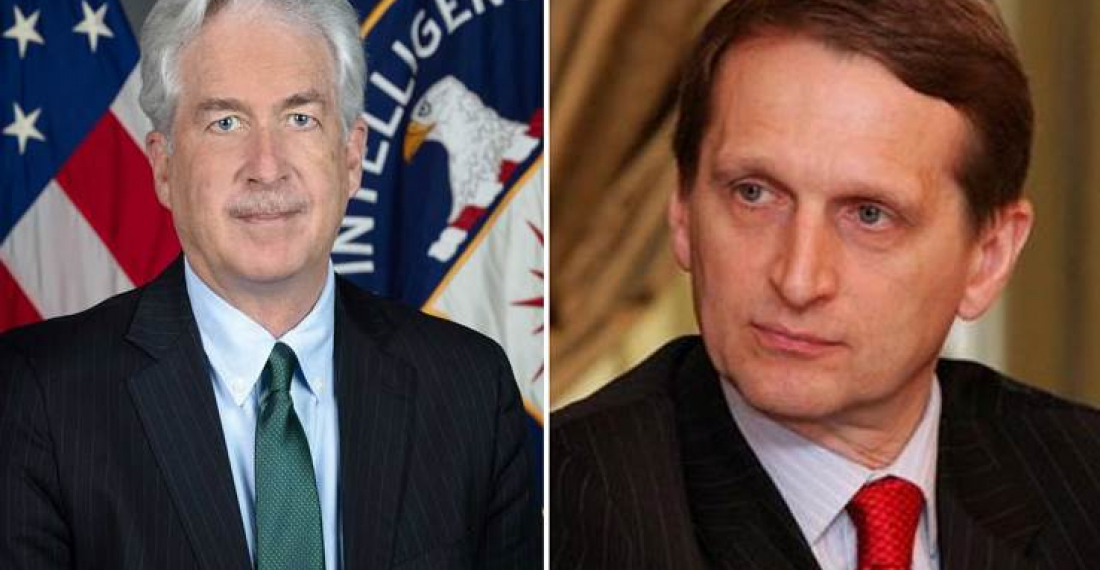
    The CIA chief’s visit to Armenia

    On July 15, William J. Burns, the head of the US Central Intelligence Agency (CIA), visited Armenia without prior notice. This news was published by the Russian Sputnik news agency. No information has been released about the details of Burns’s meetings with Prime Minister Nikol Pashinyan and high-ranking Armenian officials.

    Russia’s concern about the presence of the CIA chief in Yerevan

    Three days after the visit of the head of the American Central Intelligence Agency to Armenia, Sergey Naryshkin, the head of Russian Foreign Intelligence Service, visited Armenia. On Monday, July 18, Sergey Naryshkin held separate meetings with the Prime Minister and Armenian officials.
    The visit of the head of the Russian Foreign Intelligence Service to Yerevan, the capital of Armenia, is considered very important. The details of these meetings are not known. The media evaluates this meeting as Russia’s reaction and concern about the influence of US security serviced in Armenia.

    Meeting of foreign ministers of Azerbaijan and Armenia

    Ministers of Foreign Affairs of Azerbaijan, Jeyhun Bayramov and Ministers of Foreign Affairs of Armenia, Ararat Mirzoyan met and discussed with each other in Tbilisi, the capital of Georgia. A wide range of challenges of both sides have been discussed in this meeting. Demarcation, reopening of access routes from Azerbaijan to Nakhchivan, the date of withdrawal of the remaining Armenian army forces from Nagorno-Karabakh, the fate of Armenian prisoners of war in Azerbaijan and the fate of Armenians in this region were among the issues discussed by the two sides. The most important issue facing this negotiation is the Zangezur Corridor in the south of Armenia, which is the main demand of Azerbaijan from the Armenian side for the normalization of relations.

    This is the first meeting of foreign ministers after the second Karabakh war. US Secretary of State Antony Blinken evaluated this meeting positively in a tweet, which shows how valuable the compromise between the two countries is for the US.

    Announcing the date of withdrawal of the Armenian army from Nagorno-Karabakh

    The Secretary of the Security Council of Armenia, Armen Grigoryan, has announced that the remaining forces of the Armenian army and the Armenian militia will leave the areas under their authority in Nagorno-Karabakh (Nagorno-Karabakh/Dagliq-Karabagh/Artsakh) by the end of September this year.
    The announcement of the withdrawal date of the Armenian army has worried the officials of the de facto Armenian government and the people of this region.

    Great Return plan in Karabakh

    On July 19, the government of Azerbaijan has started the resettlement of 58 refugees from the Karabakh war in Zangilan district, which borders Iran. The government of Azerbaijan has promised that 41 families of two villages in this region will return to their homes and has named this project the Great Return. The place of residence of the returnees is also the smart villages that Israeli companies have reconstructed.

    Zangilan, with a population of about 30,000 people, borders Armenia and Iran and is located in the southwest of Nagorno-Karabakh. It is worth mentioning that this area was surrounded by the Armenian army and Armenian militia during the 1993 war after the support lines were completely cut off; Then, the Azeri defenders and the people survived for several months with the help of Iran. And finally after the collapse of the defensive positions, Azerbaijani civilians, militiamen and soldiers came into Iran with the support of the artillery of the Islamic Republic of Iran Army by crossing the Aras River.

    Azerbaijan’s energy shock to Russia

    Azerbaijan has signed its first energy contract with the European Union in the new year. Ms. Ursula von der Leyen, the German President of the European Commission, signed the gas contract during her visit to Baku, the capital of Azerbaijan. According to this agreement, Azerbaijan will increase gas exports to Europe to 20 billion cubic meters per year by 2027. The European Union will import 10 billion cubic meters of gas from Azerbaijan every year from 2020. Apart from this amount, Bulgaria is also a customer of one and a half billion cubic meters of Azerbaijan’s gas.
    The increase in Azerbaijan’s gas exports has sounded the alarm for the exports of the Russian Federation. Russia exports 60 billion cubic meters of gas to the European Union every year, and Azerbaijan’s action is considered to be the acquisition of a third of the Russians’ share in the European Union market.

  • Russian airstrikes on US positions in Syria!

    Russian airstrikes on US positions in Syria!

    U.S. military officials say Russian forces have launched a series of operations this month, including an airstrike on the al-Tanf base in southern Syria.

    US officials have expressed concern about Russia’s actions because they fear a miscalculation could turn into an unintended conflict between US and Russian forces in Syria. Given that tensions between the two countries have increased since the start of the war in Ukraine and the widespread US support for the Ukrainian army to counter Russian forces, it seems that the Russian side is trying to warn the United States that the consequences of the anti-Russian actions in Ukraine may affect the American troops stationed in Syria!

    On June 16, Russian fighter jets attacked Al-Tanf base. Following the attack, the US-backed Maghawir al-Thawra group released images announcing that their headquarters at al-Tanf base had been targeted by airstrikes.

    Read more: Drone attack on US base at Al-Tanf area in southern Syria + Images

    It is said that Russia informed the United States before the strike that it intended to launch an air strike in response to the attack on Syrian army forces, which could result in damage to troops and vehicles stationed at the base.

    “Shortly after the Russian message and before they attacked targets at Al-Tanf base, Russian fighters, including two Sukhoi-35s and one Sukhoi-24, flew over Al-Tanf base,” said a U.S. commander.

    This is not the first time that the Al-Tanf region has caused tensions between Russia and the United States. In 2016, Russian fighter jets bombed the Al-Tanf base. US troops were not stationed at the base at the time, and several US-backed militants were killed in that attack.

    In 2017, General Vladimir Zarodnitsky called on senior US military commanders to withdraw their troops from the Al-Tanf garrison within 48 hours. Gen. Stephen Townsend, the commander-in-chief of the US coalition, refused the Russian commander’s request, and after some tension, the Russian general withdrew his request.

    It is worth mentioning that according to the American media, about 900 American soldiers are present in different parts of Syria under the pretext of fighting terrorism, 200 of whom are stationed at Al-Tanf base, and even after the end of ISIS caliphate, these forces have not left the country.

    The Al-Tanf region in southeastern Syria has been occupied by US forces for years, and resistance forces are not allowed to approach within a 55-kilometer radius of the area. Al-Tanf base in the border triangle between Syria, Iraq and Jordan is a strategic base, and US officials do not intend to lose it easily.

    Read more:
    Drone and Rocket Attack on US Tanf Base
    Military exercises in Al-Tanf and CONOCO; There is no attack!
    Opinion: Al-Tanf Base; Joint Headquarters of Terrorists!

  • Russia begins 2nd phase of military operation in Ukraine

    Russia begins 2nd phase of military operation in Ukraine

    55 days have passed since the start of war in Ukraine, and this morning Sergey Lavrov announced the beginning of a new phase of the Russian army military operatio in Ukraine. The operation is aimed at the Donbas region in southeastern Ukraine. The process of preparation for the start of operations on this axis had begun 15 days ago. By the 40th day of the war, Russian troops withdrew completely from northern Ukraine by the 40th day of the war, and since then, operations to send more troops and military equipment to southeastern Ukraine had continued.

    At this phase of the operation, the capture of the important cities of Severodonetsk, Slovyansk, Kramatorsk and gaining full control of the Donetsk and Luhansk oblasts is a priority for Russia. Simultaneously with this operation or in the next phase, the siege and control of the cities of Kharkiv and Zaporizhia will be on the agenda of the Russian army.

    Click to view full size

    It is noteworthy that the announcement of the start of a new phase of Russian operations coincided with the capture of most of the city of Mariupol. Ukrainian forces are present only in the Azovstal industrial zone. It seems that the Russian army was waiting for the situation in the city to be determined and to focus fully on the other fronts. With the end of the battles in Mariupol, the forces working on this front could be transferred to other lines of conflict in the Donbas area.

    Since last night, frontlines in the Donbas region have witnessed heavy bombardment by the Russian army. Currently, most of the clashes continue in areas such as southern Izyum towards Slovyansk, in and around Rubizhne, Popasnaya, Avdiivka in north of Donetsk city, Marinka in west of Donetsk city, and on the Velyka Novosilka-Gulyaipole axis.

    Read more:
    Latest Military Situation in Ukraine After 41 Days of War (Map Update)
    Latest Military Situation in Ukraine After 38 Days of War (Map Update)
    Latest Military Situation in Ukraine, 1 April 2022 (Map Update)

    Click to view full size
  • Unilateral Ceasefire By Russia in Ukraine

    Unilateral Ceasefire By Russia in Ukraine

    On March 7, the Russian military has declared a unilateral ceasefire in Ukraine since 10 a.m. local time. The ceasefire was reached at the personal request of French President Emmanuel Macron to Russian President Vladimir Putin.

    Following the announcement of the ceasefire, four main routes were planned for the withdrawal of civilians from the northern, eastern and southern regions of Ukraine. These routes are announced from Kyiv, Sumy, Kharkiv and Mariupol.

    Russia has asked Ukraine to provide all the necessary conditions for the establishment of humanitarian corridors and the safe evacuation of civilians and foreign nationals from the conflict zone.

    It should be noted that in previous ceasefires, the Ukrainian side has prevented the complete evacuation of civilians in some areas or created problems in the evacuation process.

    Hours after the ceasefire was announced, a number of people managed to leave Ukraine, but according to field evidence, Ukrainian extremist forces prevented people from leaving most areas, and there were even reports of shootings on buses.

    A Russian Defense Ministry spokesman said that the Ukrainian side had not taken any steps to establish humanitarian corridors by 1 p.m. However, he said that so far more than 168,000 people have been evacuated from conflict zones in Ukraine, of which 43,469 are children. Russia has also delivered 882 tons of humanitarian cargo to Ukraine so far.

    The time of the end of this unilateral ceasefire has not been announced.

  • Latest Military Situation in Ukraine, 28 February 2022 (Map Update)

    Latest Military Situation in Ukraine, 28 February 2022 (Map Update)

    Southern front:
    On February 28, Russian forces reached the important town of Enerhodar. The importance of this town is due to the existence of a nuclear power plant in this region known as Zaporizhzhya NPP, which is considered to be the largest nuclear power plant in Europe.
    The Russian military claims full control over the Zaporizhzhya nuclear power plant, but the Ukrainian government has denied the claims. So far, neither side has released a video to prove their claim.

    On February 28, the Russian army took full control of the coastal city of Berdyansk. The next goal on this axis is to move towards the city of Mariupol and shake hands with the Russian and Donetsk People’s Republic (DPR) forces around Mariupol.

    Latest military situation in southern Ukraine

    Now, only the city of Mariupol on the shores of the Sea of Azov is under the control of Ukrainian forces, and the capturing of this city by Russia and the DPR forces will cut off Ukraine’s connection with the Sea of Azov. In recent days, the DPR forces have been able to advance and capture some settlements between Volnovakha and Mariupol. Clashes continue around the town of Mariupol and along its northern road.

    The situation in the city of Kherson and Mykolaiv is also unchanged.

    On the Luhansk front, clashes continue between the Luhansk People’s Republic (LPR) forces and Ukrainian forces north of Schastia and south of Severodonetsk. However, there is no change in the field map of this area.

    Latest military situation in northern Luhansk

    Northern front:
    On February 28, Russian forces crossed into Borodyanka and reached Makariv. The purpose of advancing on this axis is to cut off the Zhytomyr-Kyiv route. In general, there has been no significant change in the field map of the area, and sporadic clashes continue between forces on the western and northwestern axes of Kyiv.

    Latest military situation around Kyiv

    On February 28, the first round of talks between Russia and Ukraine took place in the Gomel region of southern Belarus. The talks lasted about five hours. Exact information is not available from the output of the negotiations; But it seems that more talks will take place in the near future.

    Another important piece of news on the northern front is the Russian missile attack on the Brovary area near Kyiv. Russia attacked a military radar communications center in the Brovary region, 30 km east of Kyiv. Mayor of Brovary is said to have been injured in the attack.

    Eastern front:
    On the eastern front, clashes continue between Russian and Ukrainian forces in and around the cities of Kharkiv, Sumy, and Okhtyrka. Currently, the most intense clashes are in the city of Kharkiv. Ukrainian forces are resisting well in this city.
    Kharkiv is the second largest city in Ukraine after Kyiv, and the keeping of this city is of great strategic importance to the Ukrainian army.

    Read more:
    Latest Military Situation in Ukraine, 27 February 2022 (Map Update)
    What is happening in Ukraine? What is the story of the Russian military invasion of Ukraine?

    Click to see the full size map
  • Latest Military Situation in Ukraine, 27 February 2022 (Map Update)

    Latest Military Situation in Ukraine, 27 February 2022 (Map Update)

    In the last four days and following heavy missile and air strikes against Ukraine’s military and strategic infrastructure, the Russian military operation in Ukraine has entered into a ground advances. Currently, the clashes are taking place in the three axes of east, north and south of the country. Details of the progress and changes in the lines of conflict are as follows:

    Northern front:
    In general, after four days of heavy fighting on the outskirts of Kiev and its environs, the situation in the regions has reached a relative stability. In the Chernihiv region (Oblast), Ukrainian troops repelled Russian attacks on the city of Chernihiv, and Russian forces are now stationed in northern areas of Chernihiv city.

    On the Kiev front, the Russian troops still control Gostomel (Antonov) Airport west of Kiev. The airport is considered the main base for Russian forces to attack the city of Kiev.
    On February 27, the southern areas of Gostomel Airport, including Bucha and Irpin, witnessed one of the heaviest battles in the past four days between Russian and Ukrainian forces. Russian forces trying to block the western entrances to the city of Kiev by advancing in this area.

    Military situation in Kiev

    There is no clear information about the situation of the forces on both sides inside the city of Kiev. In recent days, contradictory videos have been released of Russian troops inside Kiev and their battle with Ukrainian forces. Summarizing the available information, it can be concluded that there is still chaos in Kiev and the situation of the forces involved has not been fully stabilized. However, it should be noted that most of the clashes were reported in the northwestern and western parts of Kiev, and the presence of Russian forces in this part of the city is confirmed. On the other hand, the Russian Ministry of Defense has issued a statement announcing the control of the western axis of Kiev by Russian forces.

    In the Sumy region, Russian troops have captured the town of Konotop in the western part of the province. Progress in the western part of Sumy province is slow.

    Eastern front:
    After several days of fighting on the outskirts of Kharkiv, the clashes have reached to streets of Kharkiv city since this morning, and Russian troops have been able to advance into the city’s neighborhoods. Clashes between Russian and Ukrainian forces continue fiercely in the city of Kharkiv.

    In the Sumy region, clashes are taking place in the northern axis around the city of Sumy and in the southern axis around the city of Okhtyrka. Ukrainian army forces in the city of Sumy have shown fierce resistance. The Russian army is putting pressure on Sumy from three directions, and according to Russian sources, Russian forces have managed to complete the siege of the city.

    Military situation around the city of Kharkiv and Sumy in eastern Ukraine

    On the Donetsk front, the DPR advanced on the Volnovakha axis to a depth of 25 km. Over the past two days, the DPR forces have captured the areas of Oktyabrskaya, Trudovskoye, Vsilevka, Andriivka, Prokhorovka, Rybinsk, Chicherino, Pavlopol, Pishchevik, Nizhne, Granitne, and Gnutovo. Clashes between the two sides are currently ongoing in the suburbs of Mariupol.
    On the Luhansk front, according to sources affiliated with the Luhansk Republican Forces , the LPR forces advanced to a depth of 52 km and captured the towns of Schastie, Muratovo, Stanitsa Luhanskaya, Muratovo and other villages in north of Luhansk.

    Southern front:
    In the past four days, Russian troops have begun advancing from the Crimean peninsula to Kherson region. Hence, during the advance of the Russian army, the town of Henichesk and other southern villages of Kherson region came under Russian control. Subsequently, as Russian forces advanced into the northern part of Kherson province, they also advanced east and west of the province and entered the provinces of Zaporizhzhia and Mykolaiv.

    In Kherson region, the important cities of Kakhofka and Nova Kakhovka on the banks of the Dnieper River came under Russian control. The Russian army continued its advance in the western part of Kherson region and entered the city of Kherson by crossing the Dnieper River. Kherson Airport and much of the city are now under Russian control. But sporadic clashes are still reported in the city.

    Situation in Kherson Oblast and Russian Army advances in Zaporizhzhia and Mykolaiv Oblasts

    After Kherson, Russian troops entered Mykolaiv region, and now the fighting has reached to the south and west of Mykolaiv. The city of Mykolaiv is under the control of the Ukrainian army and Russian airstrikes have begun on the city.

    In the Zaporizhzhia region, the city of Melitopol was completely captured by Russian troops. After Melitopol, the cities of Tokmak and Berdyansk were attacked by Russian troops. According to the latest information, the city of Tokmak is under the control of Russian forces; However, there are reports of clashes in Tokmak.
    The important city of Berdyansk is in a similar situation. As of noon today (February 27), the city was under siege from the north and west, and Russian troops entered the city. Russian sources report full control over the city of Berdyansk.

    Another important news on the southern front is the capture of a number of Ukrainian forces on the Snakes island in the Black Sea. There is contradictory news about this story. The Ukrainian side claims that 13 Ukrainian soldiers were stationed on the small island, all of whom were killed by Russia navy after they refused to surrender. The Russian side also rejects the claim and stated that about 80 Ukrainian troops have surrendered to Russia after faced a warning by the Russian navy. Russia has released a video of food and water being distributed among the captives Ukrainian soldiers.

    Read more:
    Latest military situation in Eastern Ukraine, 26 February 2022 (Map Update)
    What is happening in Ukraine? What is the story of the Russian military invasion of Ukraine?

    Click to see the full size map
  • Latest military situation in Eastern Ukraine, 25 February 2022 (Map Update)

    Latest military situation in Eastern Ukraine, 25 February 2022 (Map Update)

    According to the latest news from the Donbas front, the DPR forces have advanced on the Volnovakha front in south of Donetsk. The LPR forces also captured the village of Trekhizbenka in north of Luhansk.

    DPR advances on Volnovakha front
    LPR advances in north of Luhansk

    The Ukrainian army has fired several Tochka missiles at Donetsk city since this morning. Russian media have not released details of the possible casualties.

    Despite heavy fighting on the Donbas fronts, the military map is almost like the previous day and the DPR and LPR advances have been minor.

    According to Russian officials, one of the goals of the Russian military operation in Ukraine is to revive the 2014 borders in the Luhansk and Donetsk regions.

    Read more: What is happening in Ukraine? What is the story of the Russian military invasion of Ukraine?

    Click to see the full size map
  • What is happening in Ukraine? What is the story of the Russian military invasion of Ukraine? + Military map of Ukraine

    What is happening in Ukraine? What is the story of the Russian military invasion of Ukraine? + Military map of Ukraine

    In the early hours of February 24, Russian President, Vladimir Putin announced that Russia had officially launched a special operation to bring peace to Ukraine! According to the Russian president, which was broadcast on official Russian television; The operation was aimed at protecting residents of the Donetsk and Luhansk regions, as well as demilitarizing Ukraine and denazification of the country.

    Putin emphasized that the goal of the operation is “is to protect people who have been subjected to abuse, genocide by the Kiev regime for eight years, and for this we will seek to demilitarize and deNazify Ukraine, as well as bring to justice those who committed numerous bloody crimes against peaceful residents, including citizens of the Russian Federation,” Putin said.

    Following this statement, the Russian military operation in Ukraine began from the early hours of February 24.

    But what is the root cause of this war?

    Two days ago, on February 22, following weeks of escalating tensions in eastern Ukraine, Russian President, Vladimir Putin finally recognized the independence of the two separatist republics of Donetsk and Luhansk in southeastern Ukraine, And for the last time demanded Kiev to halt military operations in the Donbas region and hand over all the subdivisions of Donetsk and Luhansk to the people of this region.

    Donbass is a historical, economic and cultural region in southeastern Ukraine that was separated from the Soviet Union during the Soviet dissolution with Ukraine. Russia considers the Donbas region, where many Russians live, to be part of its traditional territory.

    In the riots of 2014, pro-Russian Ukrainian President Viktor Yanukovych was overthrown and pro-European politicians came to power in the Ukrainian capital, Kiev. After this revolution (or coup), the people of the Crimean peninsula showed their desire to secede from Ukraine, and eventually, after a series of events, it led to the secession of Crimea and its annexation to Russia. The people of Luhansk and Donetsk subsequently demanded secession from Ukraine and accession to Russia. Thus, on May 11, 2014, Donetsk and Luhansk oblasts witnessed a referendum on independence from Ukraine. In Donetsk, more than 89 percent of voters and in Luhansk more than 96 percent of voters voted for autonomy and independence.

    But this time, the Ukrainian government, experiencing Crimean secession, cracked down on separatists with swift action and military operations. However, the Ukrainian military operation in the Donbas region did not completely suppress separatism; But it interrupted the process. In the same year, a ceasefire agreement called the “Minsk Agreement” was signed between Ukraine and Russia and the Donetsk and Luhansk separatists. Since then (until 2022) the Donbas region has witnessed daily clashes between the two sides and killing and displacement of the people of the region. Before the war in Donbas, Donbas was the most populated region of Ukraine after Kiev, the capital of the country.

    However, over the past eight years, the areas under the control of separatist forces in Donetsk and Luhansk in southeastern Ukraine have become an unresolved challenge between Russia and Ukraine and the site of political conflicts between Russia and the West. The Minsk 1 and 2 agreements also failed to bring about a lasting ceasefire, with each side accusing the other of not adhering to the terms of the agreement.

    Over the years, the Ukrainian government, hoping for financial and military assistance from the West and the United States, tried to reclaim its territories; An issue that never materialized, and on the contrary, with increasing US influence in Ukraine, ‌practically turned the country into a place for direct military threats by NATO and the United States against Russia. Recently, the rumors about Ukraine joining NATO and the deployment of NATO defense and missile systems as well as NATO bases in this country led the Russian Federation to conclude that the only way out of this problem is the demilitarization of Ukraine!

    And therefore, the Russian military operations began to capture its traditional territories in Donbas and perhaps all of Ukraine!

    Click to see the full size map