After the advances by pro-Saudi tribes in eastern Mudiyah, the STC militants embarked on pounding areas of the village. As a result of the attacks, some houses belonging to the Al-Baqtian tribe in Al-Jannan village were destroyed.
The Al-Baqtian tribe called on other tribes to assist it and urged militants of Abyan tribes to mobilize in a bid to expel the STC militants from the governorate.
The move caused great concern among the STC militants and their commanders dispatched four battalions from Aden city to Mudiyah. According to local sources, the STC is sending the forces to initiate an operation against al-Qaeda as well as pro-Saudi Arabia tribes in northern areas of Abyan Governorate.
Given the current developments in southern Yemen and the increase of tension between the STC and the Saudi-led forces, there would be perhaps heavy clashes between the two sides in southern Yemen especially in Abyan Governorate.
As a result of the UAE ambassador’s arrival to Aden and his attempt to mediate between the militants of Al-Dara Al-Watan and the Southern Transitional Council, the tension in the southern city has come to a halt for the time being. In spite of the cessation of the hostilities, the leaders of the Southern Transitional Council are still accumulating their military personnel and equipment in Aden. To this end, Mukhtar al-Nubi, one of the commanders of the Southern Transitional Council, has threatened that his militants will fight every force, who wants to enter the city from its eastern gates. Furthermore, the militants of the Southern Transitional Council are trying to enter the Crater district in a bid to surround Al-Maashiq Palace (the Presidential Palace).
Following the move by the STC, head of the presidential council of the resigned government Rashad Al Alimi as well as commander of the Amaliqah militants Abu Zar’ah al-Muharami, who are members of the presidential council of the resigned government, left Aden for Riyadh on February 11 with the aim of staying away from the tensions in the southern city.
On the contrary, one of the commanders of UAE-backed Hizam al-Amni called Ismail al-Sabihi joined the Al-Dara al-Watan militants, which led to weakening of the positions of the Southern Transitional Council in Al-Mansoura area. Moreover, four commanders of the Southern Transitional Council, who were stationed in Al Anad region along with some of their militants defected from the STC and joined the militants of Al-Dara Al-Watan. Some local sources said that the reason behind the defection of those militants from the Southern Transitional Council is that Saudi Arabia stopped paying their salaries, and they would be paid twice as much as they were paid, when they join the Al-Dara Al-Watan militants.
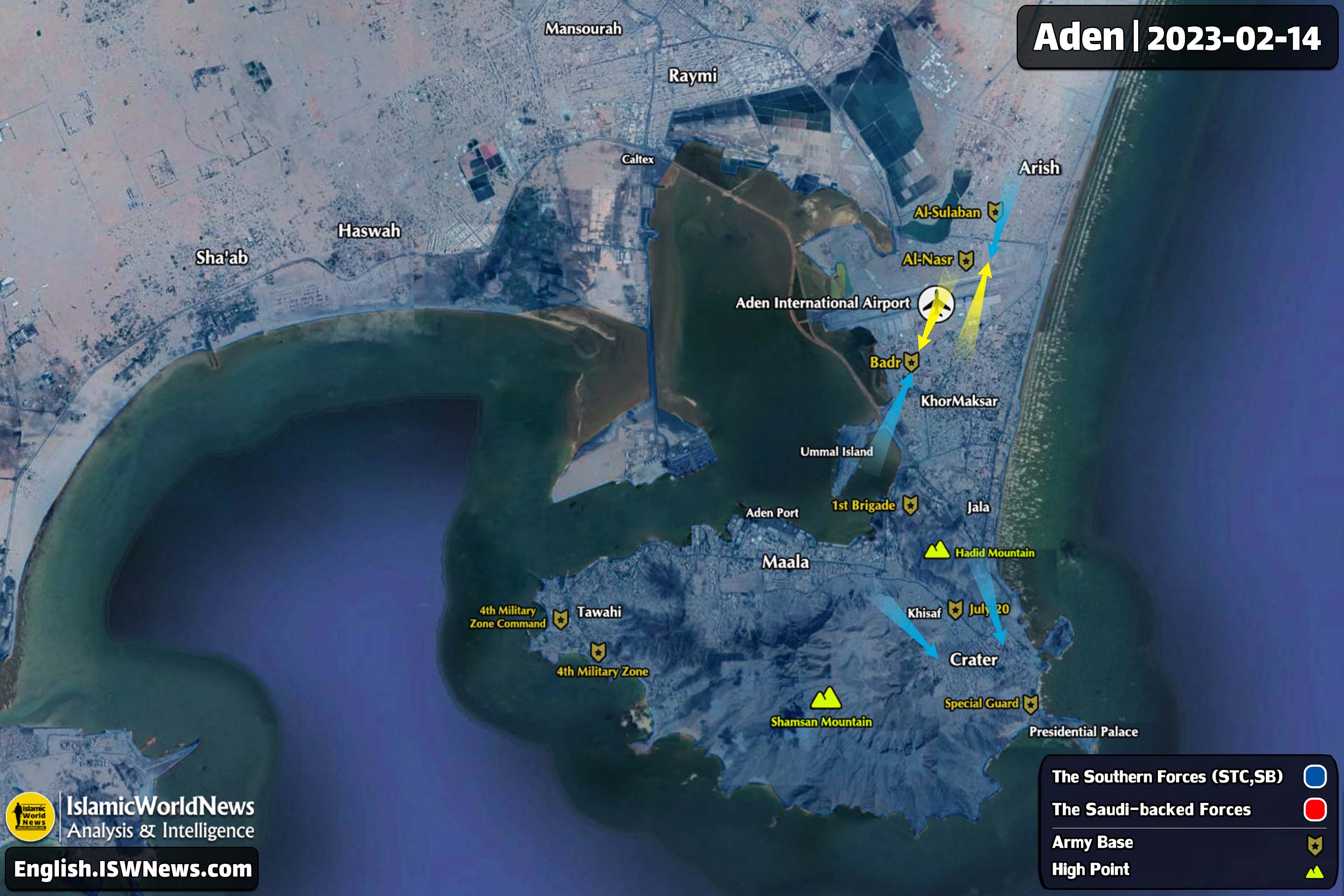
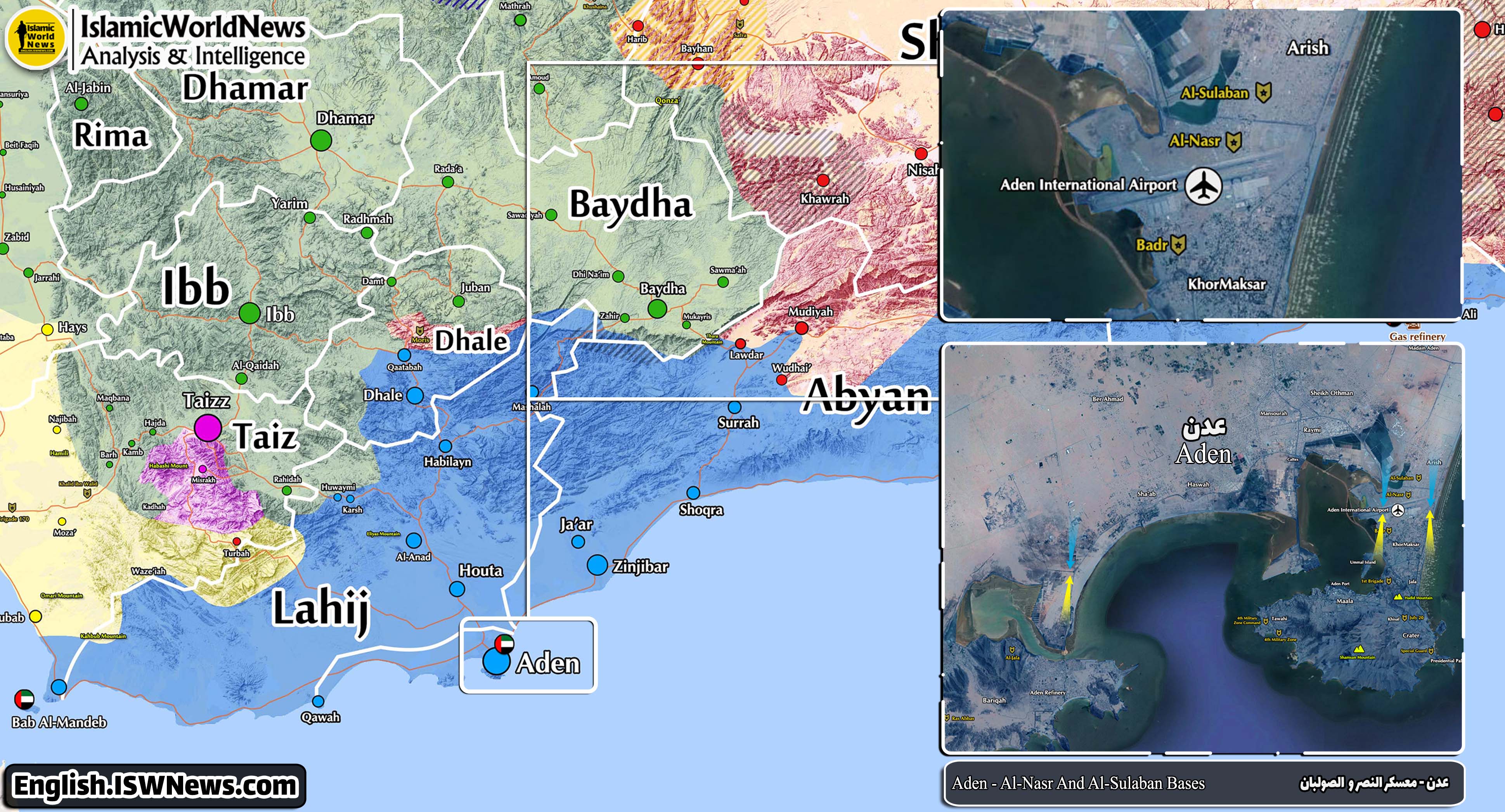
On February 12, the Al-Dara al-Watan militants moved to the Badr base in KhorMaksar district and asked Colonel Abdul Rahman Askar, commander of the Southern Transitional Council, to evacuate the base and hand it over to al-Dara al-Watan militants, but he rejected the demand. The Badr base is one of the important military garrisons of the Southern Transitional Council in KhorMaksar district, which is tasked to secure the Aden International Airport.
The resistance by the Southern Transitional Council to surrender the military bases in Aden forced Saudi Arabia to dispatch more forces to the city from the al-Wadiyah crossing in Hadhramaut Governorate. The command of the Saudi-led coalition ordered their affiliated tribes in Abyan Governorate to accelerate the formation process of Al-Dara al-Watan militants in the governorate.
Given the exacerbating trend of tensions in Aden, the chance of a confrontation between the militants of al-Dara al-Watan and the Southern Transitional Council is very likely. Saudi Arabia plans to take back the full control of Aden from the Southern Transitional Council, and the STC commanders also aim to dissuade the Saudis from the decision by demanding the United Arab Emirates (UAE) support and resorting to empty bluffs such as surrendering the strategic city of Aden and other fronts to the Ansar Allah movement, and issuing similar statements.
After the surge of the recent tensions in the region, new UAE Ambassador to Yemen Mohammad Hamad Al-Za’abi arrived in Aden and held unremitting meetings and negotiations with the officials of the Southern Transitional Council as well as the commander of the Saudi-led coalition in the city to resolve the differences Al-Dara Al-Watan and the Southern Transitional Council. Despite the fact that the UAE has succeeded in containing the clashes between the two groups, some local media outlets reported the dispatch of the reinforcements of the Al-Dara Al-Watan from Hadhramaut Governorate to the eastern entrance of the city of Aden.
Local sources in Aden have reported that Al-Dara Al-Watan militants are at present stationed in some positions such as in the vicinity of Al-Maashiq Palace, the Aden International Airport, the Badr base and the garrison of the Saudi-led coalition forces in the Al-Bariqa military base.
The STC militants have still refused to hand over the al-Sulaban and al-Nasr bases on the basis of an order by President of the Southern Transitional Council Aidarus al-Zoubaidi, and they are accumulating armed forces and military equipment to overpower the al-Dar al-Watan militants.
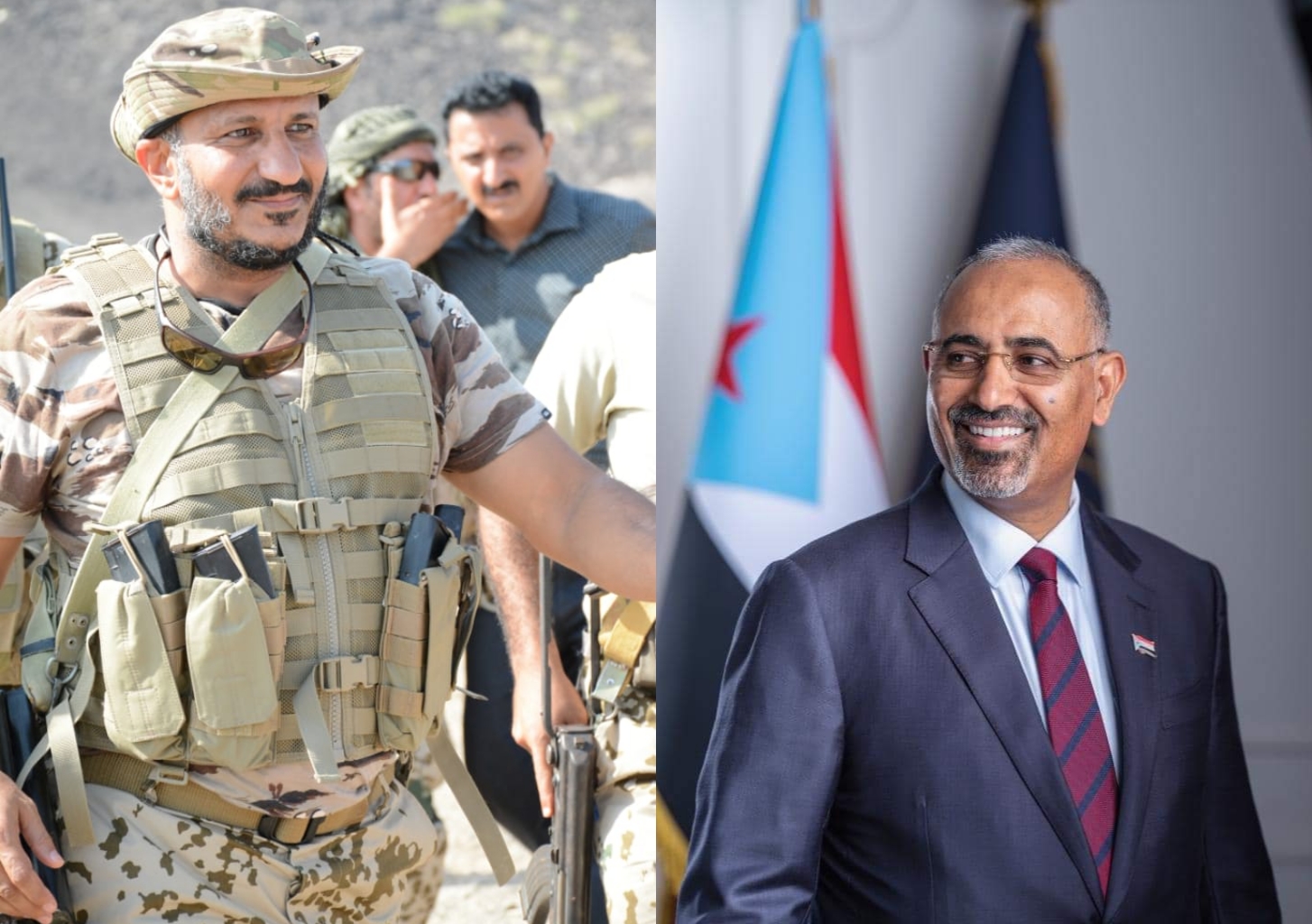
The confrontation between the militants of Al-Dara al-Watan and the Southern Transitional Council formally initiated following the evacuation of Al-Anad military base on December 25, 2022, and the conflict spread to the city of Aden, where the main stronghold of the Southern Transitional Council is located, on February 4, 2023. The major forces of Al-Dara al-Watan militants are made up of the elements loyal to Tareq Mohammed Abdullah Saleh (a Yemeni military commander and the nephew of the late President Ali Abdullah Saleh) as well as the militants of the northern tribes from Hadhramaut Governorate, but the reason behind their relative superiority over the Southern Transitional Council militants is that Saudi Arabia aided and abetted the Al-Dara al-Watan, because the Saudis plan to decrease the might of the Southern Transitional Council.
After the announcement of the mobilization by the Abyan Tribal Affairs Coordinating Committee and the gathering of the armed men of these tribes against the Southern Transitional Council in the Mudiyah district on January 28, the Abyan tribes demanded the withdrawal of the armed members of the Southern Transitional Council from this province. But STC rejected this request and increased its military activities to strengthen military positions in Abyan province. Therefore, finally, the attacks of the Abyan tribesmen on the positions of the southerners in the Wadi Omran region officially started on the evening of Monday, 6th of February.
It should be noted that the Abyan armed tribesmen are equipped with military vehicles and light rocket launchers with the support of Saudi Arabia. Also, Sheikh Hassan Al-Sheikh, one of the elders of the Mudiyah tribes, has been assigned to form a new brigade of Al-Dara al-Watan forces in this region.
Following the dispatch of a section of the Southern Transitional Council troops from Aden to Lahij Governorate, the Al-Dara’ Al-Watan (National Shield) militants attempted to take advantage of the proper opportunity and initiated new military pushes to take the control of positions and headquarters of the Southern Transitional Council’s forces in the city of Aden based on the order of the Saudi-led coalition command from Saturday on February 4.
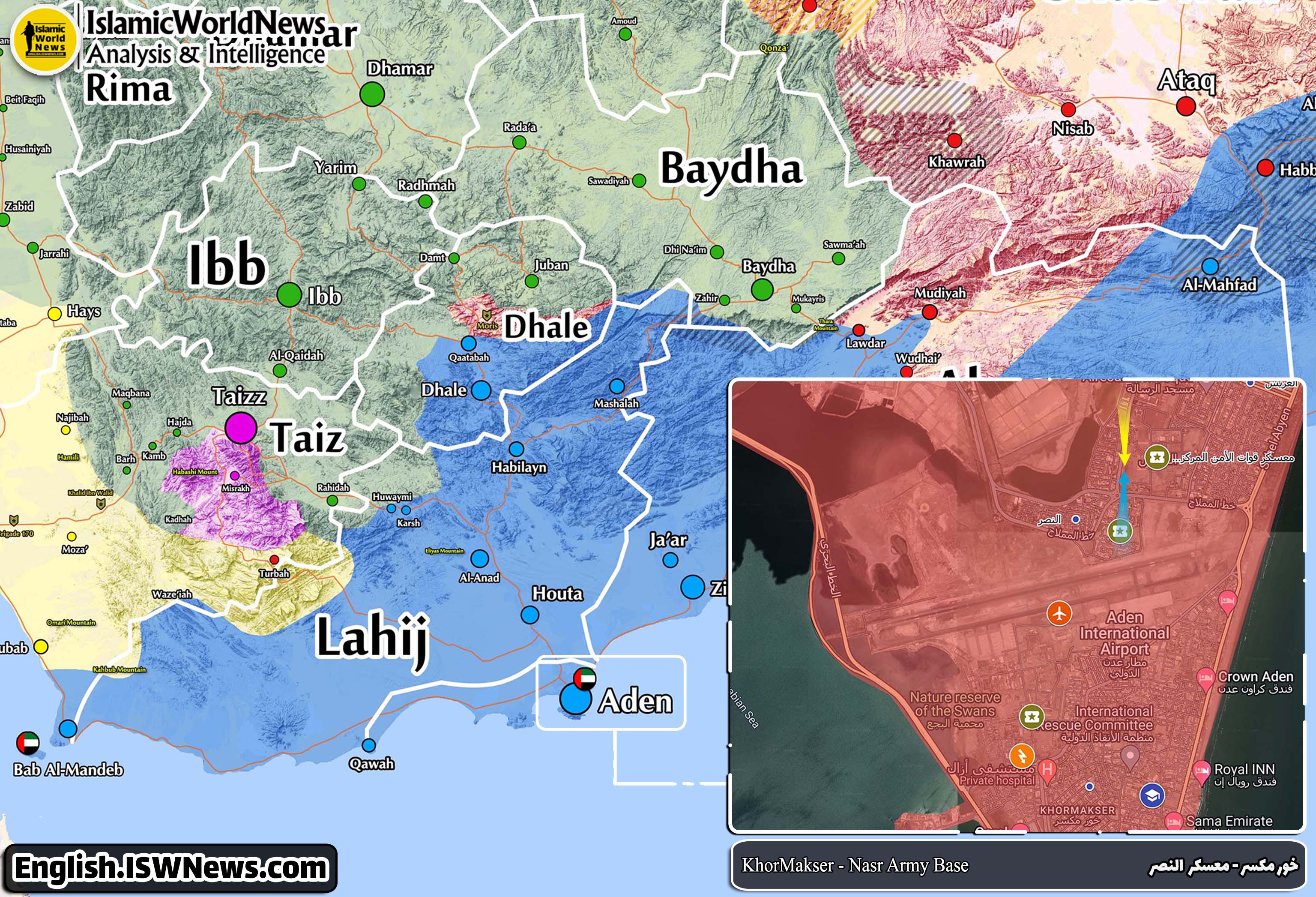
As a result of the military advances, the Al-Dara’ Al-Watan militants headed towards the military strongholds of the Southern Transitional Council in Aden, and an armed confrontation erupted between the forces and the Southern Transitional Council’s militants at the Al-Nasr base in Khormaksar District as well as some other areas. To this point, the militants of the Southern Transitional Council deterred the Al-Dar Al-Watan military forces from trespassing into the base and stopped their advance in that area.
The militants of Hizam al-Amni (affiliated to the Southern Transitional Council) have started accumulating forces to repel a potential raid by Al-Dara’ al-Watan forces on Sheikh Osman district.
The southern city of Aden has witnessed unprecedented tensions among the Saudi-led coalition militants over the last few days. The Saudi kingdom is trying to diminish the military might of the Southern Transitional Council through forming a new alliance under the name of Al-Dara’ Al-Watan; so, the Southern Transitional Council makes all-out efforts to defend its main stronghold in southern areas of the war-stricken Arab country.
It is noteworthy that Al-Dara’ Al-Watan (Nation Shield) forces are militias that formed in November 2022, with the support of Saudi Arabia and the key role of Sagheer bin Aziz and Tareq Saleh, from the pro-Saudi tribal armed forces in Hadhramaut province, the forces of Al-Yaman Al-Saeed (subordinate to Saghir bin Aziz) and part of Pro-Tareq Saleh forces in the west of Lahij province.
After several months of tension between the supporters of the Islah Party (Reform Party) and the Southern Transitional Council (STC) in the district of Lawdar in the Abyan province, the supporters and militants of the Southern Resistance affiliated with the Islah Party attacked the military base of Hizam al-Amini forces affiliated with the Southern Transitional Council in the area.
They looted the weapons warehouse along with its equipment. After the Hizam al-Amini forces escaped from Lawdar, the pro-Islah Party forces set fire to vehicles and the remaining military hardware.
Also, this fierce conflict has resulted in the death of at least 10 militia members from both sides and the injury of several others.
According to local sources, the STC is trying to take revenge on Southern Resistance and the tribes of al-Udhalah (supporter of Islah party) by sending artillery equipment to Lawdar. This attack can be considered as the starting point of new conflicts between Islah party and Southern Transitional Council in Abyan province.
On December 29, the Southern Transitional Council forces with the support of the Saudi coalition artillery, attacked positions of Ansar Allah in Al-Masharih and Habil Yahya areas located in the west of al-Dhale’ province. In these attacks, STC managed to advance first, but Ansar Allah’s counterattack led to the defeat of the southerners and finally their retreat.
During this conflict, several military vehicles belonging to the STC were destroyed by Ansar Allah and at least seven members of this group were killed and 13 others were injured. No information has been published about the amount of casualties and damages of Ansar Allah.
Southern Transitional Council had carried out another attack in al-Fakhir region on December 2, which was also defeated by Ansar Allah.
Pointless attacks and irrational actions of the Southern Transitional Council, in addition to weakening the ongoing negotiations between Ansar Allah and the Saudi coalition has reduced their influence in the southern provinces of Yemen.
Following the issuance of an order by the Saudi coalition command room for the withdrawal of Southern Transitional Council (STC) forces and Sudanese mercenaries from Al-And Airbase in Lahij province and the deployment of Al-Dara’ al-Watan (Nation Shield) forces in this important base, the tension between the South and Saudi Arabia increased. This tension increased when Al-Dara’s al-Watan forces prevented the 1st Brigade of Southern Transitional Council militants from entering Al-Anad base, and the armed forces of both sides went to the brink of battle.
Despite the increase of tensions, December 25, Sudanese forces have evacuated their positions in the Al-Anad base and handed over to the Dara Al-Watan forces. With this situation, the possibility of the southerners retreating from the suburbs of Al-Anad base also increases.
Al-Dara’ Al-Watan (Nation Nation) forces are militias that formed in November of this year with the support of Saudi Arabia and the key role of Sagheer bin Aziz and Tareq Saleh, from the pro-Saudi tribal armed forces in Hadhramaut province, the forces of Al-Yaman Al-Saeed (subordinate to Saghir bin Aziz) and part of Pro-Tareq Saleh forces in the west of Lahij province.
Undoubtedly, these developments are not unrelated to the house arrest of Aidarus al-Zoubaidi, the head of the Southern Transitional Council in Saudi Arabia, and indicate the implementation of the Saudi plan to limit the power of the southerners in the strategic points of southwest Yemen.
After the formation of the ceasefire agreement in Yemen on April 2, 2022 and three periods of extension and finally its expiration on October 3, 2022, the areas under the control of the Saudi coalition were affected by a forced change in the head of the presidency (Resignation of Abd Rabbu Mansour Hadi and formation of the Presidential Council). This issue caused a series of tensions between different factions, and finally a kind of political and military deadlock prevailed between different groups under the command of the Saudi coalition. Therefore, the control of each of the parties was established over the regions, and now it is possible to distinguish the regions under the control of the groups in Yemen with more precision.
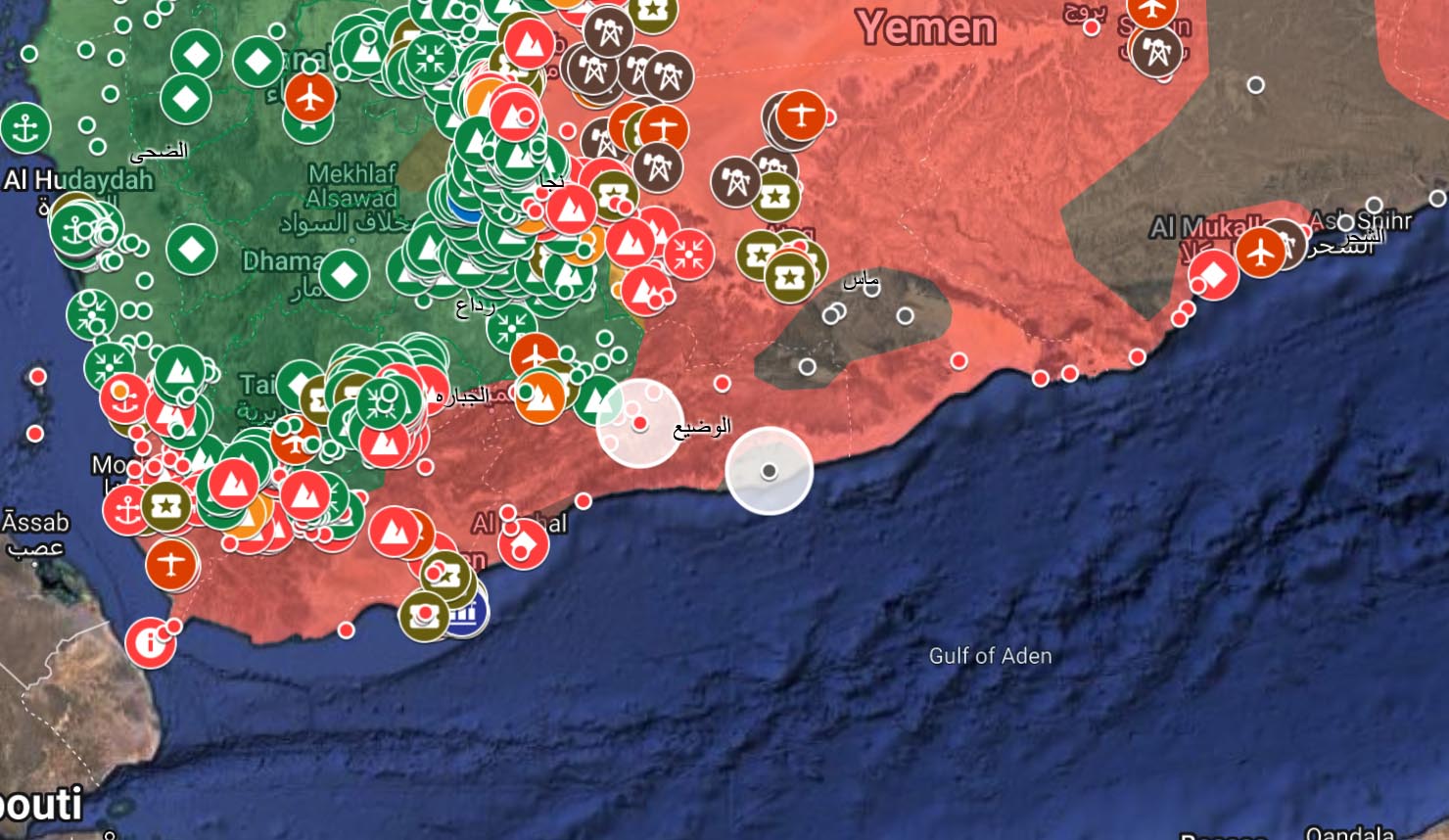
The map of Yemen war has been accurately edited in accordance with the latest field situation until December 16, 2022 and with the following categories and it is as follows:
1- Ansar Allah and popular committees: (green color) The areas under the control of Ansar Allah and popular committees include presence in 15 provinces in the west and center of Yemen, which include the capital, big cities and the majority of the country’s population. Despite the expiration of the cease-fire agreement with the mediation of the United Nations, there is no conflict in any of these fronts, and Ansar Allah is monitoring the fronts by carrying out various reconnaissance operations, as well as confronting the looting of Yemen’s oil resources by foreign tankers. Ansar Allah Movement and the National Salvation Government of Yemen are supported by the majority of the Yemeni people and the General People’s Congress and other Yemeni parties, as well as the foreign support of Iran and Islamic resistance groups.
2- The Saudi coalition and the Saudi-backed government of Yemen (ie the resigned government of Mansour Hadi): (red areas and all map colors except green) The areas under the control of the Saudi-led coalition forces include presence in 13 provinces of Yemen, which includes the largest area of this country. But the majority of these areas include desert and uninhabited areas. Despite this, the oil resources, the southern coast of Yemen and several strategic points are under the control of the Saudi coalition. The Saudi coalition uses these cases as tools to pressure Ansar Allah in negotiations. Nevertheless, despite the access of the Saudi coalition to all the areas under the control of the anti Ansar Allah groups, the factions under this coalition have competition and armed conflict with each other to control these areas. The structure of the resigned government of (Mansour Hadi) Yemen, like other countries involved in civil war, is a structure that divides positions and ministries between powerful factions in order to use the human power and military facilities of these factions against the main enemy. These factions include: Islah Party, Southern Transitional Council, Yemeni National Resistance under the command of Tareq Saleh, each of them have managed to influence and control parts of Yemen in recent years, especially after the resignation of Abd Rabbu Mansour Hadi and the formation of the Presidential Council. Which is explained as follows:
3- Southern Transitional Council: (blue color) The “Southern Transitional Council” (STC) is the name of a council consisting of the main currents of South Yemen, including Al-Hirak Al-Janoubi (Southern Movement), Southern Resistance and the South Arabian League Party, which was established on May 4, 2017, and their goal is to divide south Yemen. Currently, based on the Riyadh agreement in November 5, 2019, this movement holds the post of prime minister and half of the 24 ministries of the government. The geographical area under their control also includes: Aden province, most areas of Lahij and Abyan provinces and parts of Al-Dhale’, Hadhramaut and Taiz provinces.
It should be noted that the forces of Hizam al-Amni (Security Belt), Al-Haba Al-Hadhramiyah, Southern Resistance and other southern armed brigades are sub-groups of the Southern Transitional Council and are under the support of the United Arab Emirates.
4- Islah party: (purple color) The Islah Party (Reform Party) is one of the largest and oldest parties in Yemen, and it acts as the representative of the Muslim Brotherhood in Yemen. This party was formed on September 13, 1990 by Sheikh Abdullah ibn Husayn al-Ahmar, one of the elders of the Hashid tribe, and has been operating since 2007 under the chairmanship of Mohammed Abdullah al-Yadumi. After the start of the Saudi coalition’s invasion of Yemen, the Islah Party announced its support for this operation on April 3, 2015, and entered into a battle with Ansar Allah.
Currently, the cities of Marib, Taiz, Seiyun and the desert areas of Al-Jawf province and parts of Shabwah and Hajjah provinces are under the control of this party’s militants.
5- Forces loyal to Tareq Saleh (Yemeni National Resistance): (yellow color) “Yemeni National Resistance” is the name of a military group led by Tareq Saleh, the nephew of Ali Abdullah Saleh, the former president of Yemen, which was formed in December 2017. This organization has more than 10,000 members and consists of several factions, including former members of Ali Abdullah Saleh’s presidential guard, the former army soldiers and security forces separated from the Sana’a government, Al-Amaliqah and Al-Tihamah Resistance forces.
The areas under the control of Tareq Saleh forces are the southwestern region of Yemen, including the district of Hays in the south of Hudaydah province, the western areas of Taiz province, as well as the districts of Bayhan and Ain in Shabwah province. It is worth noting that this military group (Tareq Saleh forces) is under the support of the United Arab Emirates, the Amaliqah and Tihamah forces receive their orders from the command of the Saudi coalition, especially the UAE, instead of Tareq Saleh…
6- Al-Qaeda, Ansar al-Sharia and ISIS terrorist groups: (gray hachure) The activities of the Al-Qaeda terrorist group in Yemen under the name of “Al-Qaeda in the Arabian Peninsula” (AQAP) began in 2009 and continued under the name of Ansar al-Sharia group since 2011. After the resignation of Ali Abdullah Saleh and the presidency of Mansour Hadi, this group acted in a more organized manner and took full possession of some points; But the advance of Ansar Allah and the intelligence of the field commanders of this movement in taking control of the cities of Sana’a, Saada, etc., prevented Al-Qaeda from advancing. Therefore, in order to survive their activities, Al-Qaeda forces were stationed in the remote areas of Yemen, including the deserts of eastern Yemen, the north of Al-Baydha province, and several other places. Currently, this group does not have any city or region completely under their control, and their sphere of influence includes the desert areas of Hadhramaut, Shabwah and Abyan provinces. Also, after the Ansar Allah operation in the north of Al-Baydha province, Al-Qaeda members were transferred to the city of Marib and placed under the command of Islah Party.
The Islamic State Wilayat al-Yaman (Yemen province) group (IS-YP) also announced its formation in November 13, 2014, and apart from bombings, assassinations, etc., no special activity has been seen so far. ISIS members in Yemen are generally from extremist tribes in the east and south of Yemen and people separated from Ansar al-Sharia and al-Qaeda terrorists groups.
It should be noted that the formation of terrorist groups in Yemen is closely related to the actions of Mansour Hadi, the former president of the resigned government, Ali Mohsen Ahmar, the former vice president of the resigned government, and several other heads of parties and security institutions. In this regard, the criminal court of Yemen has convicted and prosecuted these people.
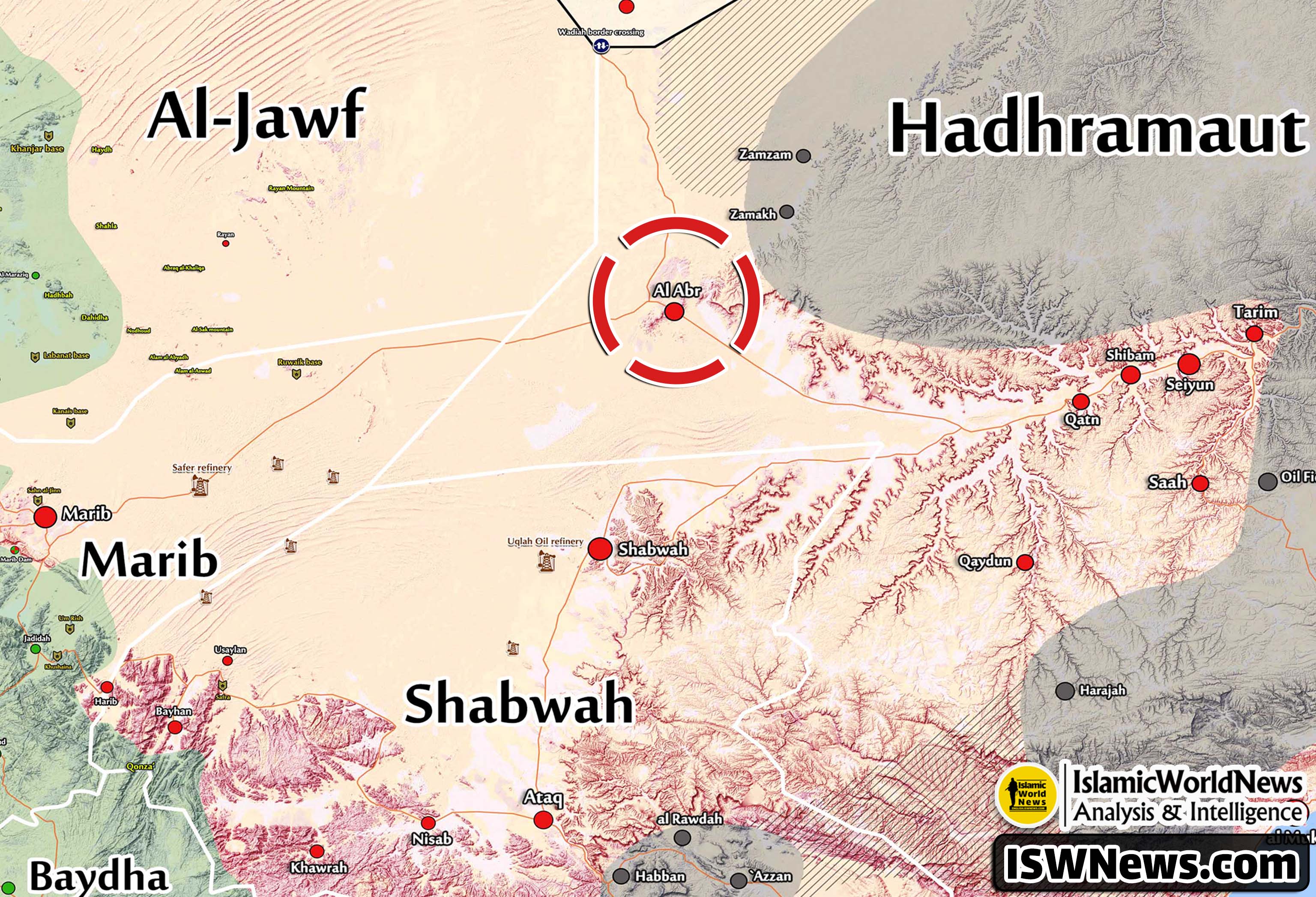
According to the latest news from the occupied areas of Yemen, the commanders of the Islah Party have sent new auxiliary forces to the Al-Abr region located in the west of Hadhramout province and have deployed their rocket launchers and artillery in the hills overlooking the desert of this region. Currently, no specific conflict has been reported in this axis, but the formation of the Islah party foces in Al-Abr raises the possibility of a serious conflict between this group and the UAE-backed forces.
On the other hand, the UAE, centered on the Southern Transitional Council, is creating a new military organization in Al-Mahrah province called “Al-Mahrah Elite and Al-Mahrah Defense” (دفاع المهرة والنخبة المهرية). Khaled Saeed Taha, the military commander of the Southern Transitional Council in Al-Mahrah province, considered this action to strengthen the security and stability of the south And referring to the statement of the recent meeting of the sheikhs and elders of the Al-Mahrah tribes, on their behalf, demanded the expulsion of the pro-Islah armed groups from Al-Mahrah province. Of course, the elders of the Al-Mahrah tribes in this meeting first emphasized the necessity of confronting foreign forces and then called for general mobilization against the Islah Pary, but the Southern Transitional Council, by changing these terms, demanded to stop the process of general mobilization and incite the people to take action against the Islah Pary and to control the oil areas in Al-Mahrah province.
In Abyan province, the Southern Transitional Council forces under the command of Mukhtar al-Nubi have entered the Lawdar district, and so far there has been no specific conflict between the tribes supporting Islah Party and the STC.
The situation in Shabwah province has not changed, and the Islah party media still claim to be preparing an attack to recapture the city of Ataq from Shabwah governor Awad bin Al-Wazir al-Awlaki.
Despite the reducing of the conflicts in the occupied areas of Yemen, the power of the Islah party is still declining and the power of the groups under the UAE is increasing. It seems the Islah Party, by not responding to the offer of alliance with Ansar Allah, in addition to guaranteeing its fall, increased the desire of the West and the Southern Transitional Council to implement the plan to divide Yemen.
Local sources in Abyan province announced the dispatch of a new convoy of STC militants from the eastern bases of Aden to the city of Shuqra on the coast of this province.
Despite the order of Rashad Al-Alimi, the head of the presidential council of the Saudi-backed government of Yemen, to stop any military operations in Abyan province, the southerners attacked the district of Ahwar and captured the al-Qashaa camp in the east of this district without any clashes. This base was captured by Islah party militants during last year’s clashes between the resigned government of Mansour Hadi and the southerners. The STC militants have also entered Al-Wudhay district and have deployed their military equipment in the outskirts of the center of this district. Al-Wudhay is the hometown of Abdrabbuh Mansur Hadi, the resigned president of Yemen, and is currently under the control of Islah Party militants.
In this regard, the Southern Transitional Council has also issued an order for military operations in Al-Mahrah province, and Ahmed Bin Brik, the head of the general assembly of the Southern Transitional Council, has announced the readiness of the armed forces of this group to carry out operations in Al-Mahrah and Hadramaut provinces.
The conflict and tension between the forces of the resigned government and Islah party started from the city of Ataq, the capital of Shabwa province, and continues in other provinces of the occupied regions of Yemen. The Islah Party has not shown any interest in the proposal of an alliance with Ansar Allah, and Tariq Saleh and the Southern Transitional Council are using this opportunity to expand their power.
Following the arrest of 20 members of the Presidential Guard by the forces of Southern Transitional Council (STC) in Aden, new tensions have begun between supporters of Tariq Saleh and Aidarus al-Zoubaidi in areas controlled by the Saudi coalition in Yemen. In response to the arrest of his troops, Tariq Saleh issued an order to confront the STC militants. With this order, the Al-Amaliqa forces, which are under the command of Tariq Saleh, in retaliation arrested five members of the STC in the city of Ataq, the capital of Shabwa province.
Following the resignation of Mansour Hadi, the power struggle between members of the Presidential Council of the resigned government, including Tariq Saleh and Aidarus al-Zoubaidi , has intensified. The rivalry began with tensions over control of the oil resources of Marib and Shabwa provinces on April 17, and has continued until recently, when the Southern Transitional Council threatened to arrest Tariq Saleh. Prior to the threat, the Southern Transitional Council protested the entry of Tariq Saleh’s forces into Aden and warned that he would be arrested if he continued to infiltrate Aden.
Simultaneously with the threat, one of the STC forces, Salem Seif al-Radfani, was assassinated in the city of Aden. News sources in STC believe that the assassination was carried out by agents affiliated with Tariq Saleh. There was also another clash in the city of Ataq between the forces of the Southern Transitional Council and Awad al-Awlaki, the governor of Shabwa, which left one dead and one wounded.
The weakening of Mansour Hadi’s supporters and the Islah Party has led to an increase in the power of other currents in the Yemeni opposition. This has led to a power struggle between the UAE-affiliated factions, including Tariq Saleh and Aidarus al-Zoubaidi, and each of these influential people in the southern regions is seeking more power to attract foreign support, especially from the UAE sheikhs.
It should be noted that the “Yemeni National Resistance” (YNR) is an armed organization in southwestern Yemen led by Tariq Saleh, which has more than 10,000 troops and includes several groups, including former members of the Republican Guard (of Ali Abdullah Saleh), army soldiers and security forces separated from the Sanaa government, al-Amaliqa and al-Tihama forces.