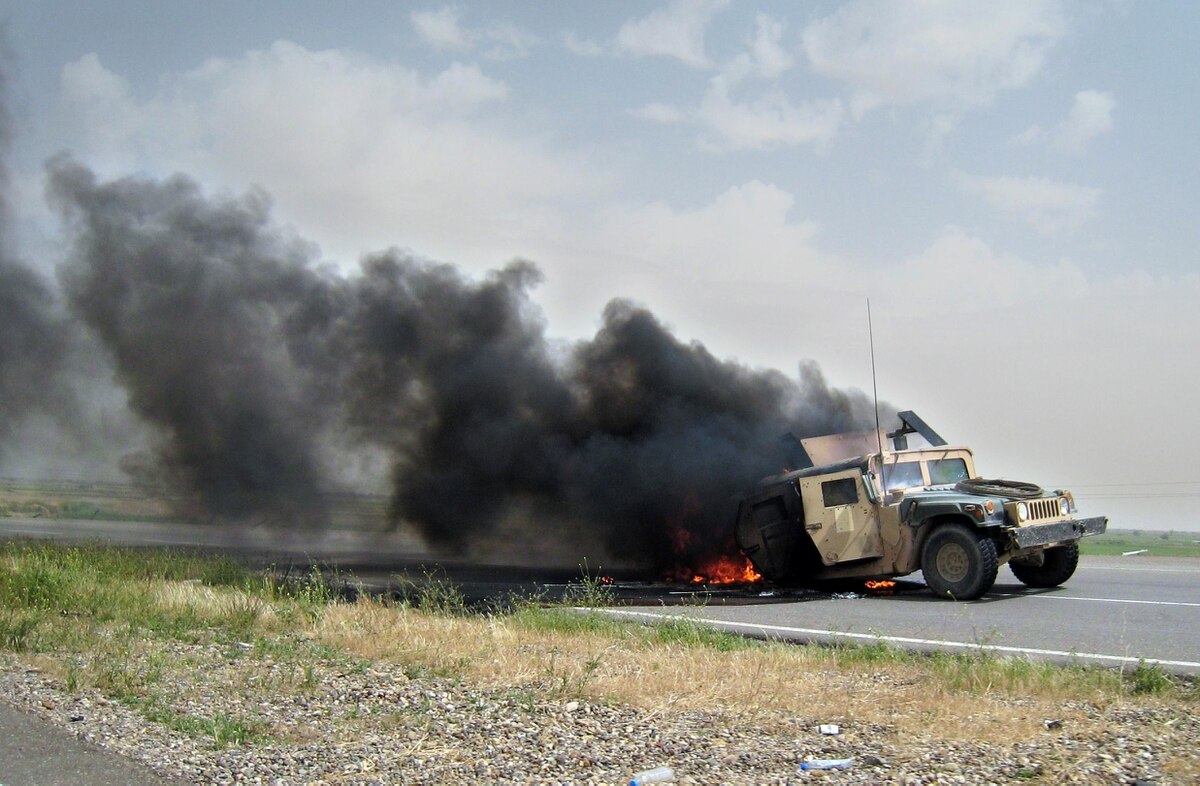
The Ashab al-Kahf group attacked a US logistical convoy in the Qadisiyah province and another one in the Babil province with roadside bombs.
The Katibat al-Sabequn group attacked a US logistical convoy in the Anbar province with a roadside bomb.
The Thar al-Muhandis group attacked a US logistical convoy in the Baghdad province.
The Kataib Abolfazl al-Abbas group attacked a US logistical convoy in the Yusifiyah area of Baghdad province.
The Qasim al-Jabbarin group attacked a US logistical convoy in the Babil province.
According to data obtained by ISWNews, this is the 200th attacks by Iraqi resistance groups on US logistical convoys since March 21. Of these, 30 attacks were carried out in Baghdad province, 50 attacks were carried out in Babil province, 22 attacks were carried out in Anbar province and 42 attacks were carried out in Qadisiyah province.
The Iraqi Resistance Coordination has given the American occupiers a deadline until 24:00 on December 31 to leave Iraq. If the United States refuses to leave Iraq, the Iraqi resistance has promised to start a full-scale war to expel the occupiers. So far, more than 49,000 people from various Iraqi provinces have registered to fight the American occupiers. Hence, it seems that as we get closer to the deadline, the number of attacks against American convoys will increase.
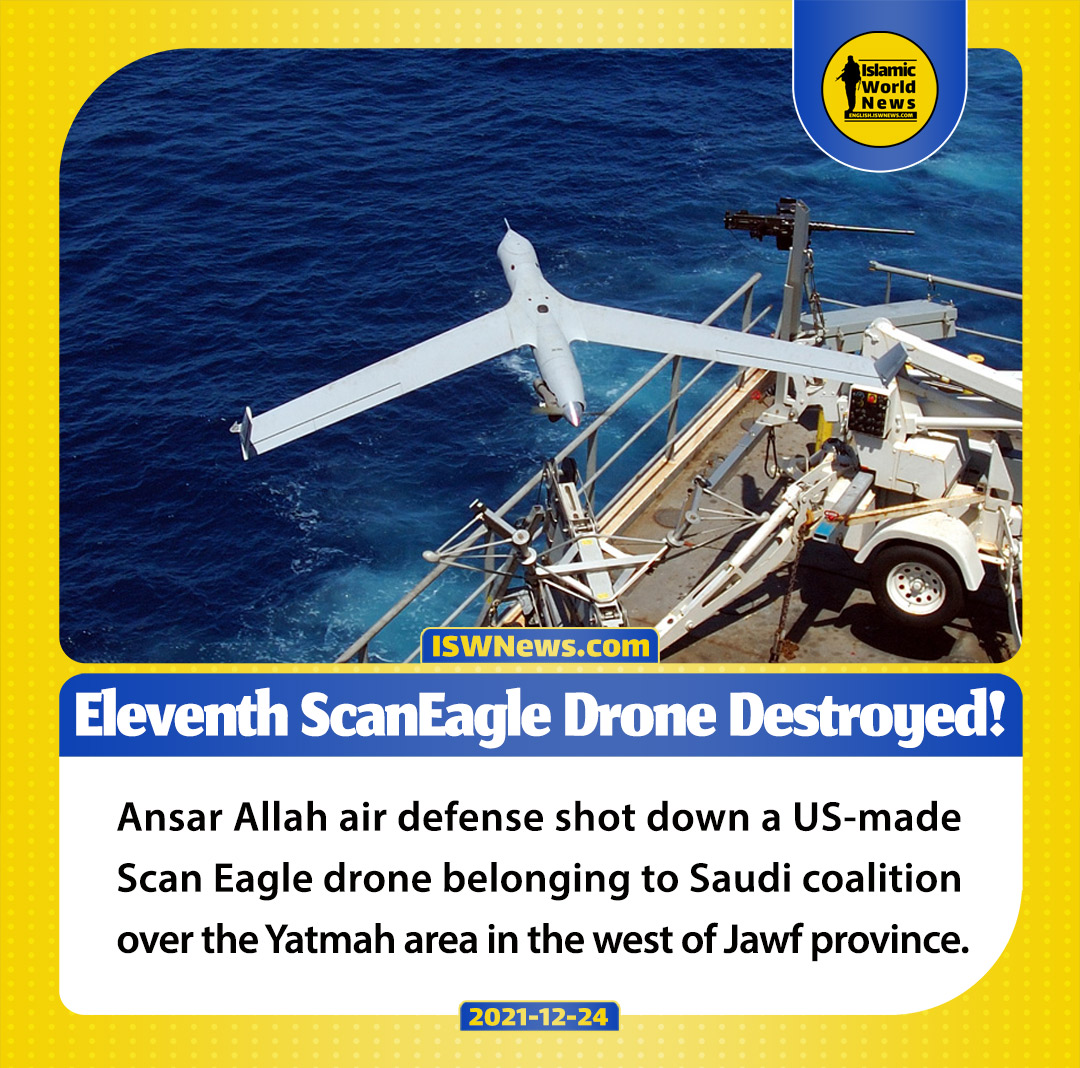
So far, this drone is the eleventh US Scan Eagle drone have been shot down by Ansar Allah during the Yemen war.
The first US Scan Eagle drone was shot down on June 19, 2021 over the al-Mashjah heights in the west of Marib province, the second on June 21, 2021 over al-Mashjah heights in the west of Marib province, the third on August 14, 2021 over the Madghal district in the west of Marib province, the fourth on September 27, 2021 over the Madghal district in the west of Marib province, the fifth on November 9, 2021 over the al-Jubah district in Marib province, the sixth on November 13, 2021 over the al-Jubah district in Marib province, seventh on December 4, 2021 over the al-Jubah district and the eighth on December 8, 2021 over the al-Jubah district in Marib province, the ninth on December 10, 2021 over the Sarwah district in the west of Marib province and the eleventh on December 16, 2021 over the Wadi district in east of Marib province.
The ScanEagle is a spy drone equipped with an electro-optical and infrared camera that does not require a runway to fly. The drone can fly for more than 20 hours for reconnaissance operations.
The drone plays an important role in gathering information and images of Ansar Allah positions on the outskirts of Marib. Thus, destroying and preventing their flight over the sky of Marib disrupts the planning of Saudi forces for operations against Ansar Allah and reduces the effectiveness of the Saudi warplanes bombing in the Marib region.
On December 24, Saudi coalition warplanes bombed residential areas in al-Mahwit province three times. As a result of these strikes, three people, including a woman and a child were killed and seven others including three children, were injured.
The names of the martyrs and wounded of this crime are as follows: 1- Hana Abdullah Al-Houri, 30 years old. 2- Ahmad Hashem Al-Houri, one and a half years old. 3- Ahmad Saif Ghalib Al-Humairi, 25 years old.
1- Hanan Yahya Al-Hazli, 35 years old. 2- Mansour Awad Al-Jalali, 50 years old. 3- Hashem Ahmad Al-Houri, 46 years old. 4- Khalil Ahmad Al-Jadi, 5 years old. 5- Shafa Ahmad Al-Jadi, 2 years old. 6- Ali Hashem Al-Houri, 2 years old. 7- Amina Yahya Al-Zalai, 60 years old.
The recent attacks by Saudi coalition warplanes are deliberately and clearly targeting Yemen’s residential areas and infrastructure, and unfortunately, international institutions and Islamic countries have so far not responded to this crimes as expected.
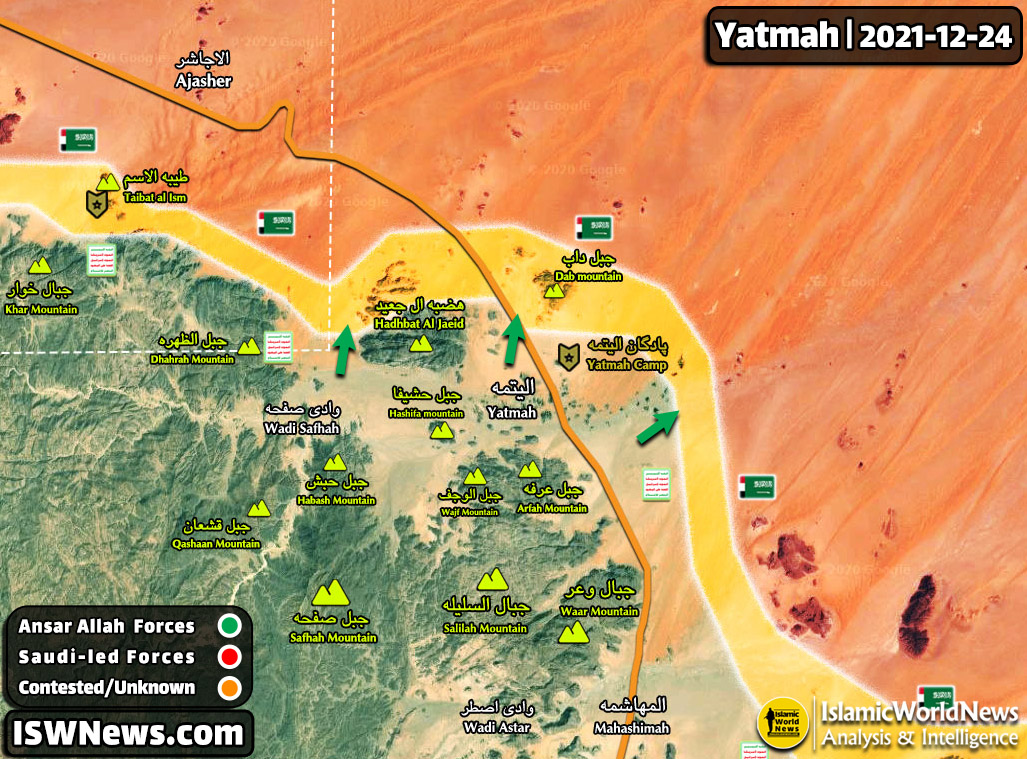
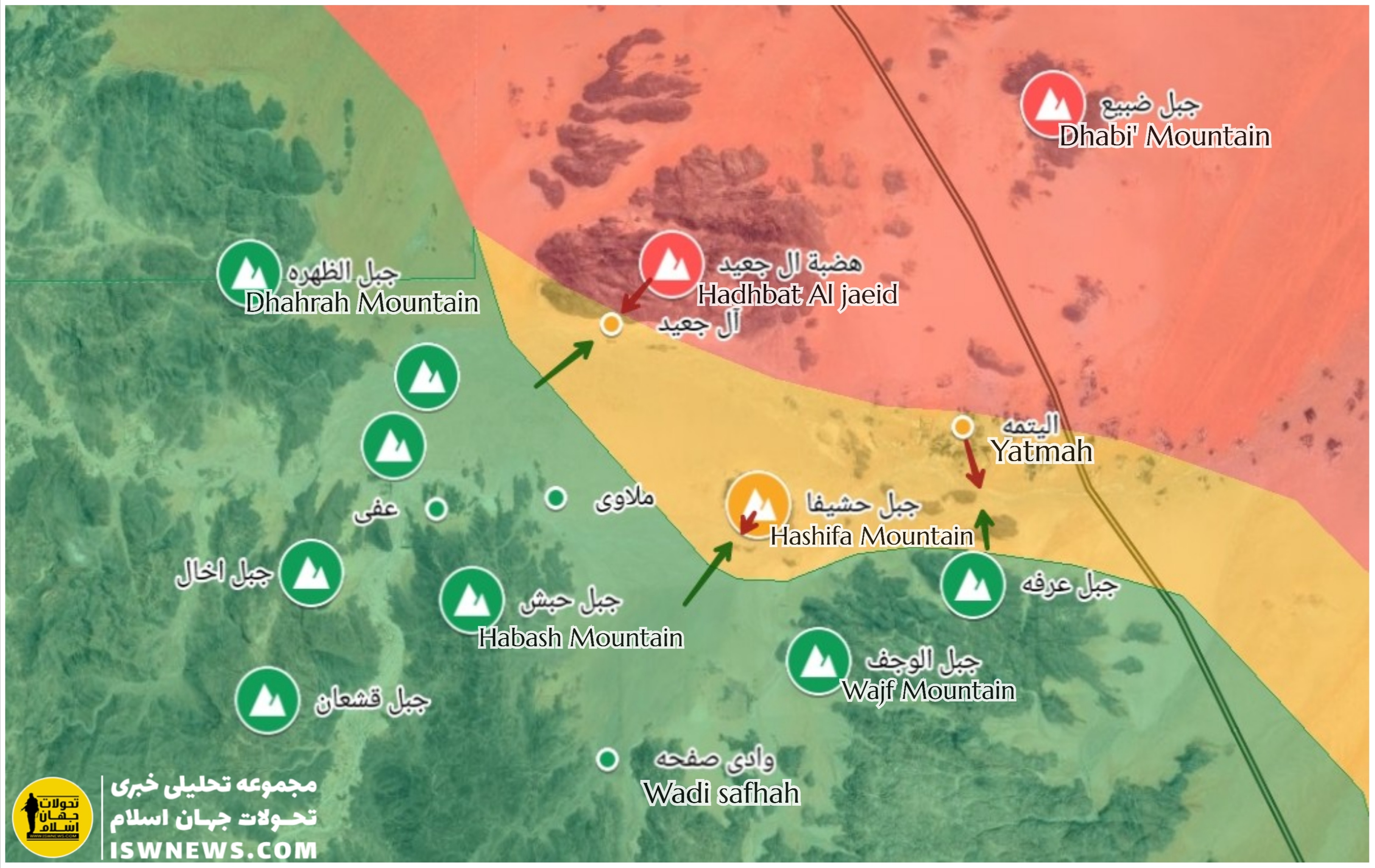
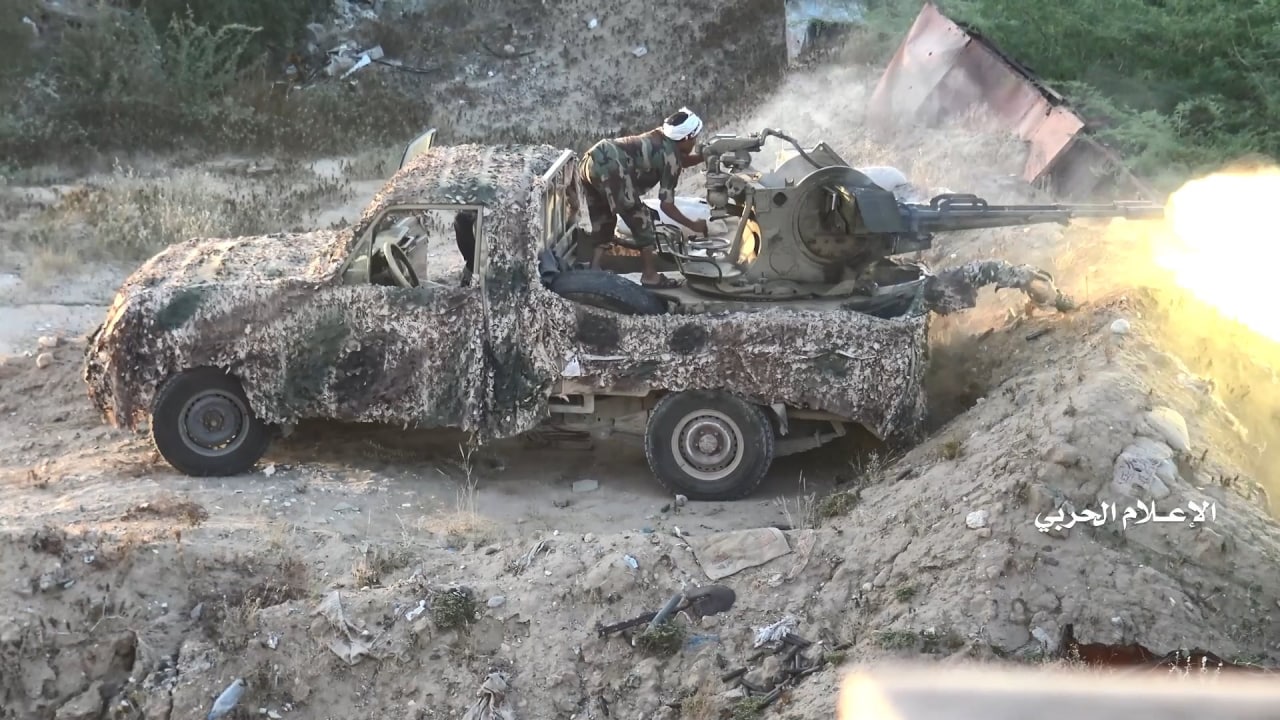
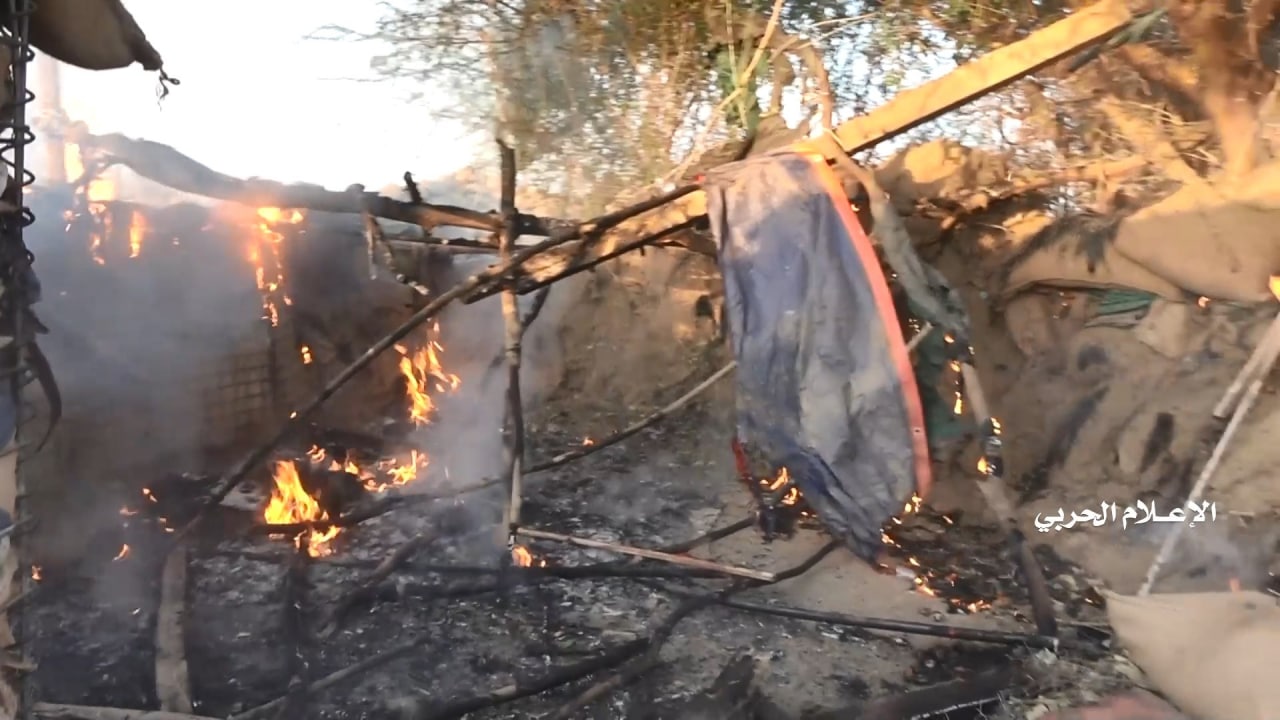
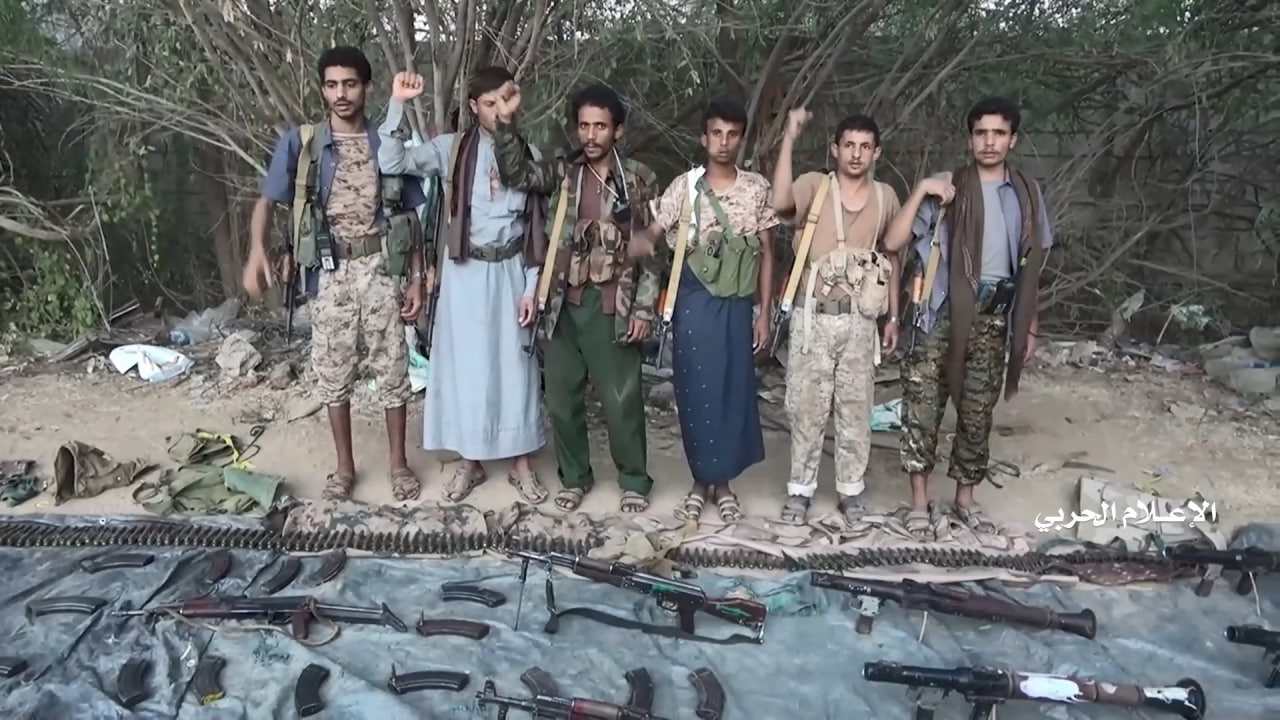
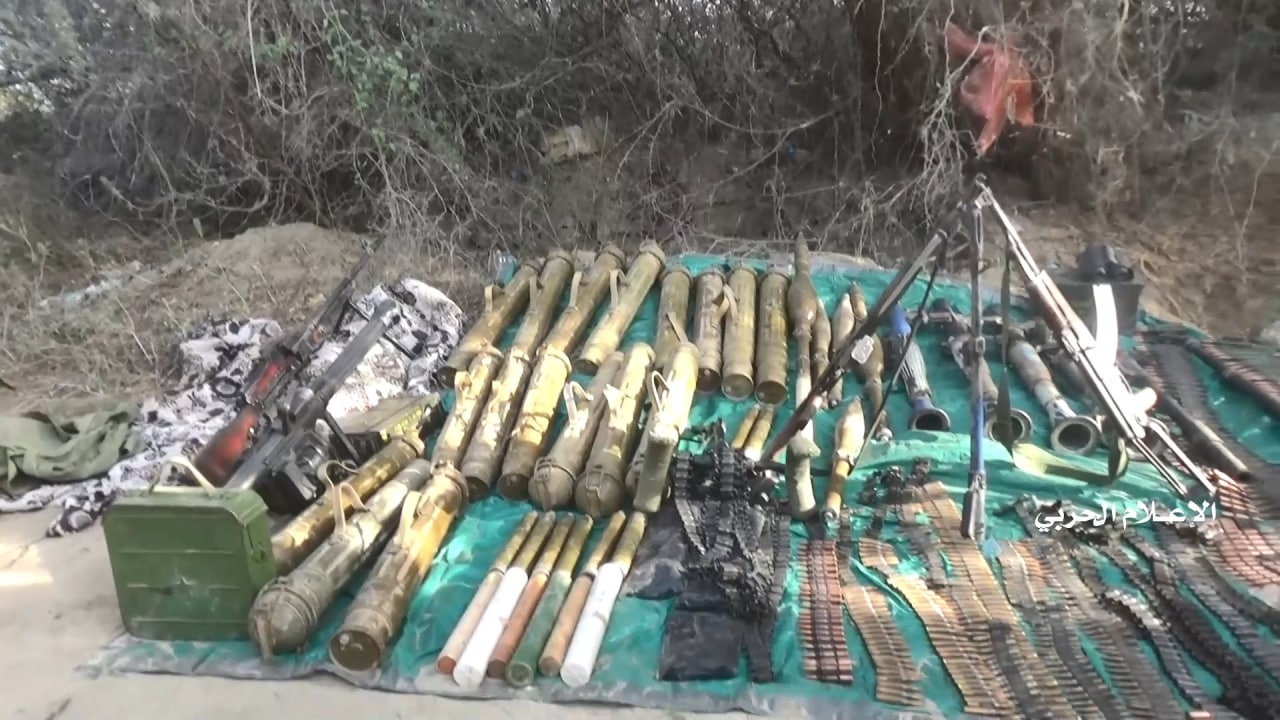
Clashes between Ansar Allah and Saudi-led forces in the north of al-Jawf province began on December 4th and intensified with airstrikes by coalition warplanes. Finally, on December 16th, Ansar Allah launched an operation to liberate the Yatmah area and its suburbs, And finally on December 24th, Ansar Allah succeeded in liberating the important Yatmah area in the north of al-Jawf province.
After the liberation of the town of Hazm during Operation Fa’amkan Minhom on March 1, 2020, Sheikh Amin al-Akimi, the governor of Mansour Hadi for the Jawf province, made the al-Yatmah area a center for preparing new attacks against Ansar Allah. So, the al-Yatmah area became one of the main targets of Ansar Allah in al-Jawf province.
Therefore, it can be said that with the liberation of Yatmah, in addition to controlling important points in the north of al-Jawf province, Ansar Allah has removed the Saudi coalition leverage on the Marib and Jawf fronts.
According to data obtained by ISWNews, this is the 194th attacks by Iraqi resistance groups on US logistical convoys since March 21. Of these, 12 attacks were carried out in Salah al-Din province.
According to the latest news, clashes on the southern front of the city of Marib are still going on around the al-Balaq al-Sharqi and Balaq al-Gharbi, without any change in the frontlines. It seems that Ansar Allah and the Popular committees need to adopt different tactics at this stage of the Marib war than in the past. Activating other fronts in western Marib and southeastern al-Jawf, in other words increasing pressure from several fronts against the Saudi coalition, are among the effective options that could lead to breaking coalition lines in Marib.
On the western front, some Ansar Allah officials and news sources have also claimed to have advanced on the al-Nakhla and al-Atif fronts. This news is not true and currently conflicts are taking place in these areas and neither side is in control of these two areas.
On the al-Jawf front, the agreement between Ansar Allah and the tribes of the Yatmah region has not been finalized and the clashes have resumed. Following this, the Saudi coalition has sent more manpower and military equipment to the region. Air strikes on the northern front have also increased. In this regard, the Saudi coalition warplanes have bombed the southern front of Marib 49 times, the western front of Marib 18 times and the Yatmah front 11 times.
This operation was carried out in al-Hathira area, located in the west of Haradh district, on December 17th. Local sources stated that dozens of Saudi-led forces were killed and wounded in the attack; But according to ISWNEWS sources, 10 Sudanese forces were killed and two others were captured in the attack.
Following the repeated retreat of Mansour Hadi forces from the border fronts in southern of Saudi Arabia and their occasional surrender to Ansar Allah, the Saudi coalition deployed 2,000 Sudanese forces on these fronts in late December 2020. According to Yemeni Armed Forces statistics, the Sudanese have suffered more than 3,700 dead and 4,200 wounded by the end of the fifth year of the Yemeni war, which has resulted in withdrawal of large numbers of Sudanese mercenaries from Yemen.
The Ashab al-Kahf group claimed responsibility for the two attacks in Baghdad and Muthanna provinces.
According to data obtained by ISWNews, this is the 193rd attacks by Iraqi resistance groups on US logistical convoys since March 21. Of these, 9 attacks were carried out in Muthanna province, 28 attacks were carried out in Baghdad province and 48 attacks were carried out in Babil province.
The Ashab al-Kahf group claimed responsibility for the IED attack in Babil province. Liwa al-Khaybar group also claimed responsibility for the IED attack in Basra province.
According to data obtained by ISWNews, this is the 189th attacks by Iraqi resistance groups on US logistical convoys since March 21. Of these, 46 attacks were carried out in Babil province, 41 attacks were carried out in Qadisiyah province and 12 attacks were carried out in Basra province.
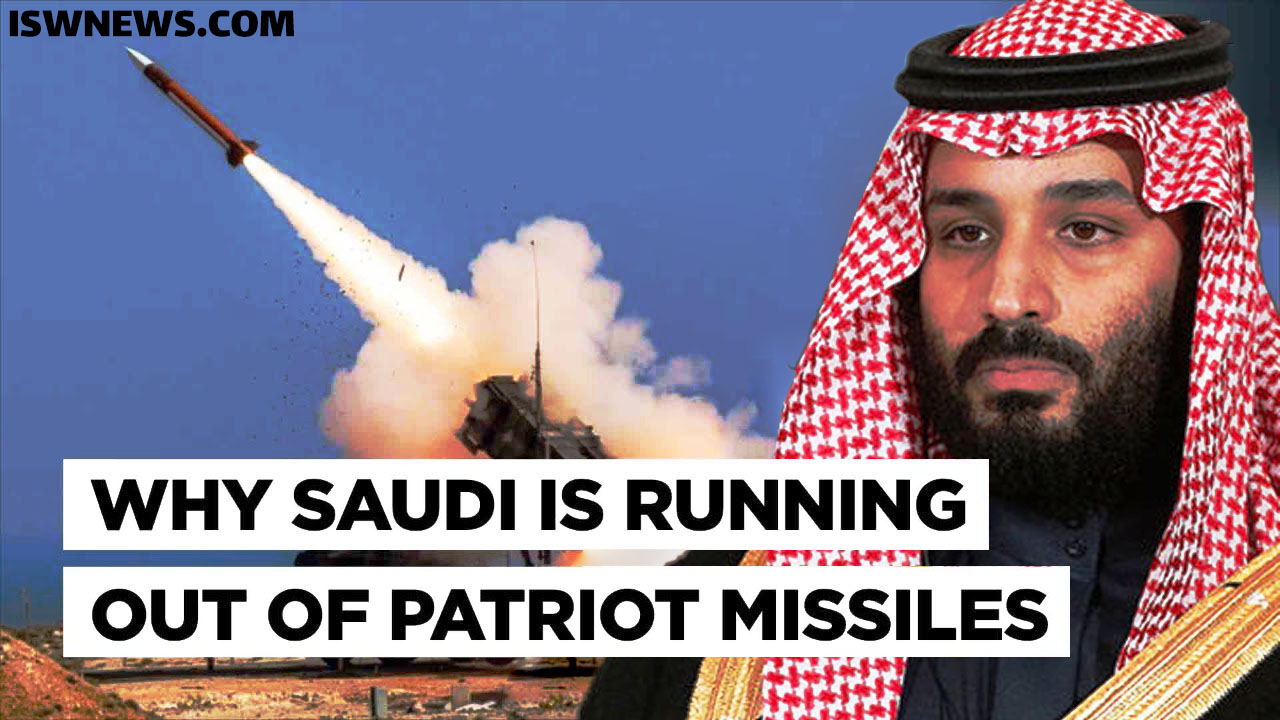
The Patriot system is a medium-range air defense system capable of meeting aerodynamic and ballistic targets. Saudi Arabia is one of the main users of this system and in recent years has widely purchased patriot systems and its missiles.
This system was designed and built by the American companies Raytheon and Lockheed Martin in the 70s and 90s. In addition to the US military, Saudi Arabia, Israel, Qatar, Kuwait, Egypt, Jordan, Germany, Greece, the Netherlands, Spain, Japan and Taiwan are also equipped with the system. Among these countries, Saudi Arabia is the second largest user of Patriot missile system after the United States.
In the years after the Islamic Revolution of Iran, Saudi Arabia has sharply increased the level of its military rivalry with Iran. With the start of the Saudi coalition invasion of Yemen and Ansar Allah’s reciprocal attacks on Saudi territory, the Saudis’ dependence on the Patriot system has greatly increased. To the extent that the country has leased more patriot systems from the United States and Greece.
The price of each Patriot missile is estimated at $ 1 to $ 6 million, depending on the type, and Saudi Arabia appears to have spent more than $ 10 billion to purchase Patriot missiles so far.
Data from the Stockholm International Peace Research Institute (SIPRI) show that Saudi Arabia has purchased Patriot missiles in several stages.
According to the statistics, it seems that Saudi Arabia has purchased more than 2,800 missiles for the Patriot systems
Details of these purchases are as follows: 1- In the years 1993-1995, 384 rounds of Patriot PAC-2 GEM missiles 2- In the years 1997-1995, 781 rounds of PAC-2 GEM missiles 3- In the years 1999-1998, a total of 629 PAC-2 GEM missiles 4- In the years 2019-2017, 320 PAC-3 MSE missiles 5- In the years 2020-2019, 130 PAC-3 MSE missiles 6- An unknown number of Patriot PAC-3 missiles have been ordered by Saudi Arabia in 2018 and are being delivered.
Information on the sale of Patriot missiles to Saudi Arabia
Examining other sources, such as database of US Defense Security Cooperation Agency, it appears that Saudi Arabia also ordered 600 Patriot PAC-3 missiles in 2015.
Timothy Lenderking, the U.S. special envoy for Yemen, said at a forum on December 3 that the Ansar Allah have conducted about 375 cross-border attacks into Saudi Arabia in 2021. This statistic comes at a time when most of Saudi Arabia’s defensive confrontations with Ansar Allah have taken place through the Patriot defense systems. Thus, the Saudi Patriot missile arsenal will face problems in the not-too-distant future, and the supply of those missiles will cost another billion dollars for the country.
Apart from this, the Patriot system has performed poorly in some Ansar Allah operations, such as Operation Second Deterrence Balance on September 14, 2019. In this attack, Buqayq and Khurais refineries were targeted by successful Ansar Allah drone and missile attacks, and Saudi oil exports were severely disrupted. The attack inflicted heavy losses on the country’s economy, and Western countries struggled to control rising oil price.
In general, the Saudis Patriot systems needs billions of dollars financial support to continue to deal with Ansar Allah drones and missiles, and this has been hampered by Biden’s cold approach to the Saudis. Ansar Allah is now increasingly attacking Saudi coalition positions deep inside Saudi Arabia by increasing the accuracy of its drones and missiles, and Saudi Arabia is forced to buy more to counter such attacks; Because without sufficient stockpiles of Patriot missiles, Ansar Allah continued attacks could lead to serious damage to important and vital infrastructure of Saudi Arabia.
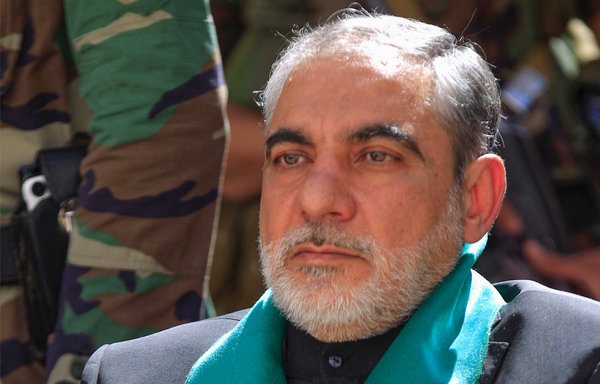
Some media outlets have spread rumors that Hassan Irloo was wounded in a bombing by Saudi coalition warplanes in Yemen and later killed in Tehran after being transferred to Iran. ISWNEWS deny this rumor. According to reliable information obtained from sources present at the hospital where he was hospitalized, ISWNEWS can confirm that he was not wounded in any way by the bombings of the Saudi coalition.
There are also other rumors circulating in social media claiming that Hassan Irloo is the same Abdulreza Shahlai, the commander and coordinator of the IRGC Quds Force in Yemen. This rumor is also denied by the ISWNEWS. General Shahlai or the person whom, known by the Western security services as Shahlai, is in perfect health and is still carrying out his mission in Yemen.
Liwa Khaybar resistance group claimed responsibility for the attack.
According to data obtained by ISWNews, this is the 187th attacks by Iraqi resistance groups on US logistical convoys since March 21. Of these, 12 attacks were carried out in Basrah province.