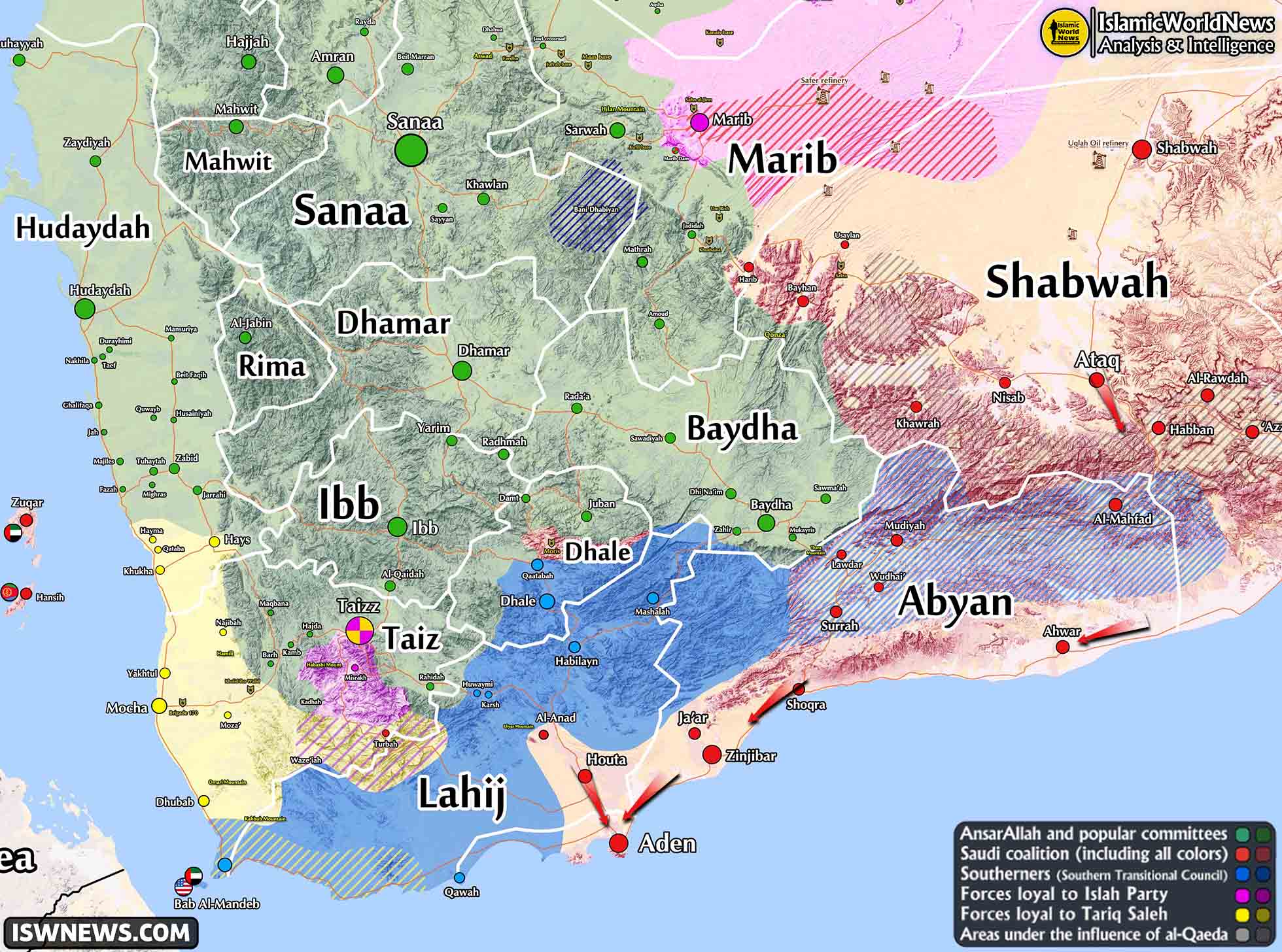
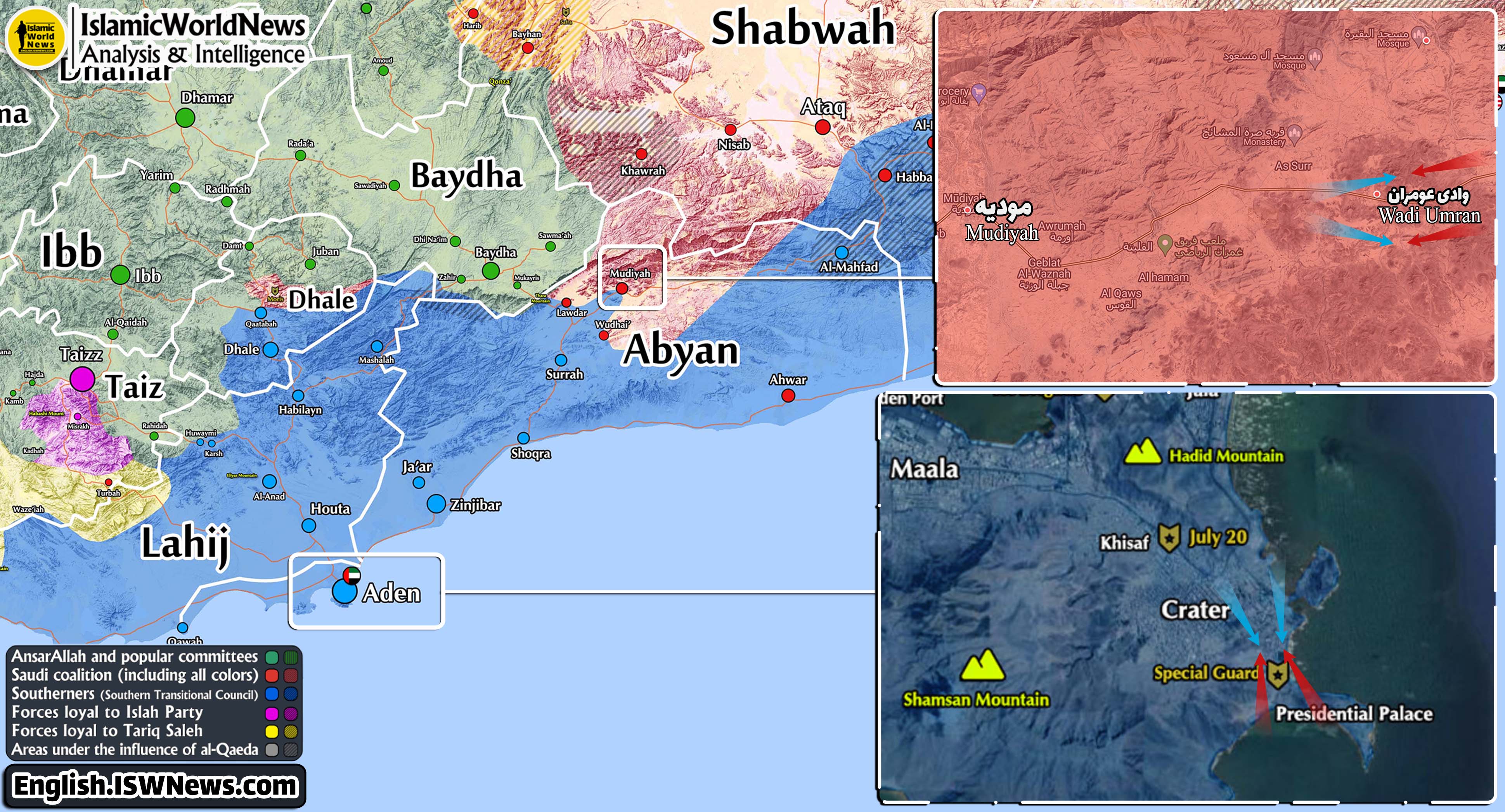
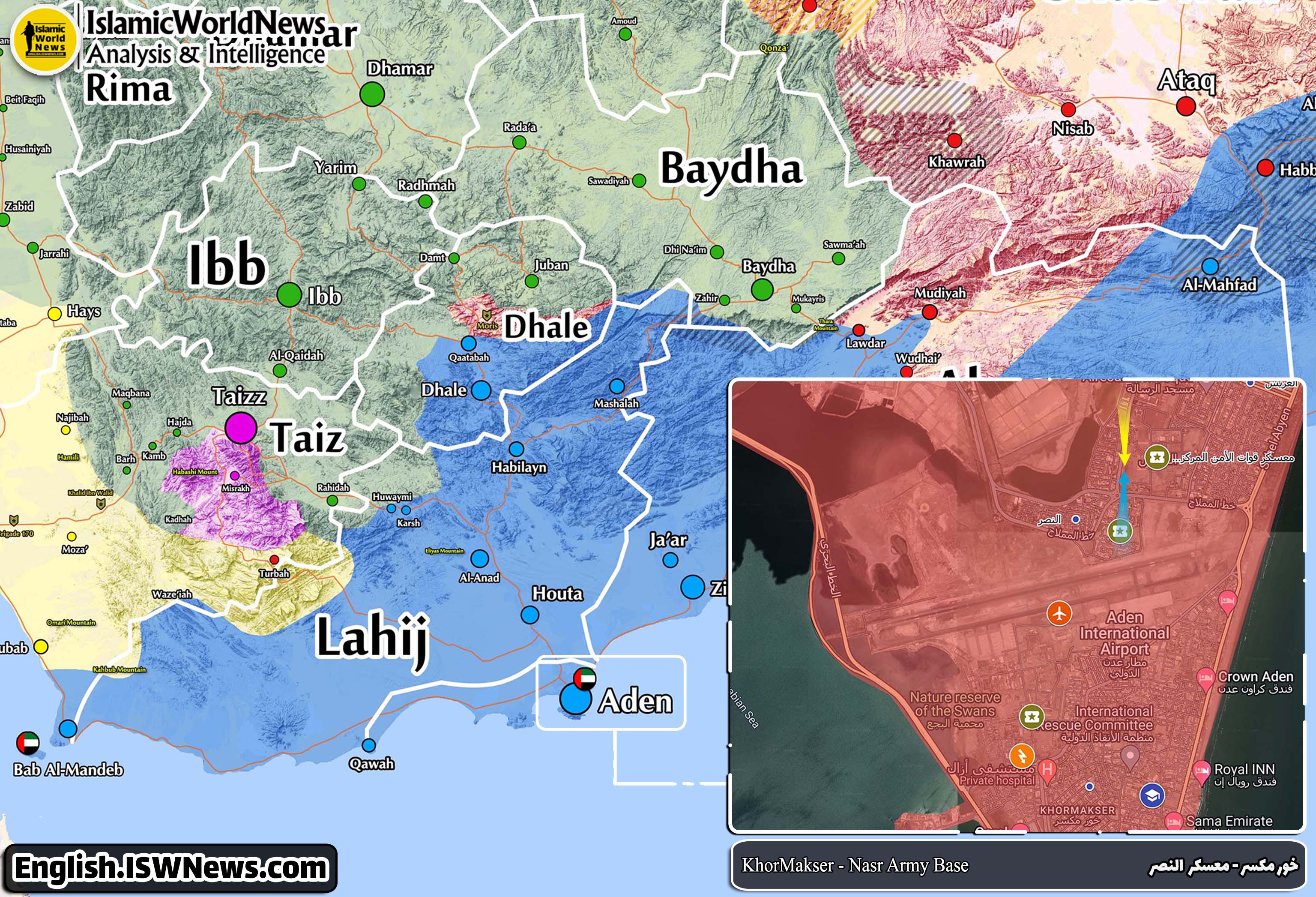
After consecutive defeats of the Southern Transitional Council (STC) in Hadhramaut and Al-Mahra — and their withdrawal without fighting from the Balhaf gas facility and the strategic Marra base in Shabwah — the focus of pro-government forces shifted to southern Yemen. In initial negotiations, local authorities in Abyan agreed to hand over their positions to Al-Dara’ Al-Watan forces. Southern militants and allied tribes have not yet surrendered their positions, but they also have not shown resistance.
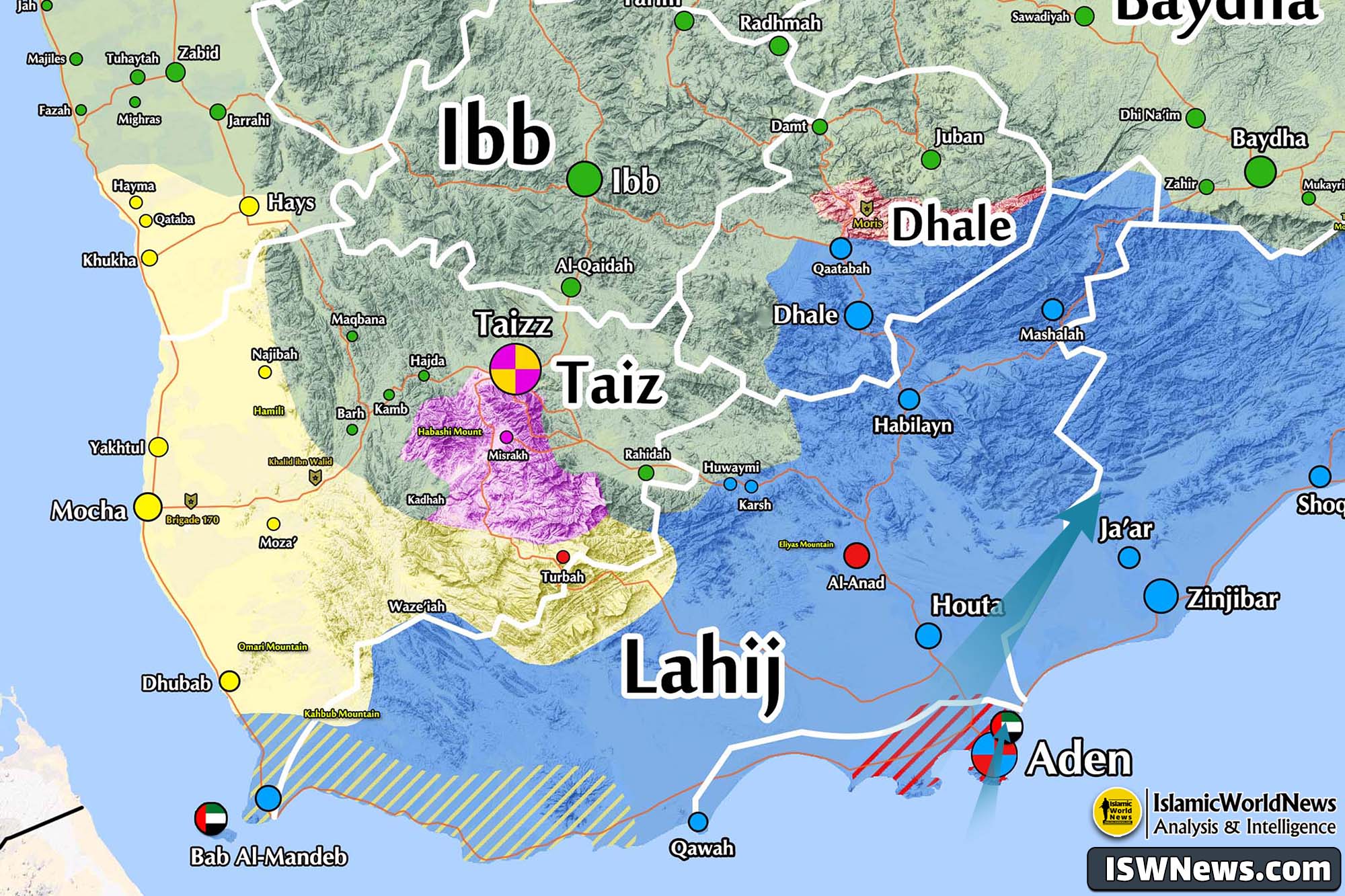
In Aden, government and service facilities — including the Presidential Palace (Al-Ma’ashiq) and Aden Airport — had already been evacuated by STC fighters and handed over to representatives of the government-in-exile. Early this morning, Al-Dara’ Al-Watan forces entered Aden via the coastal road and Al-Anad base, taking control of military and security sites. Elements of the Giants Brigades also assumed control of parts of Aden at the order of the Saudi-led coalition. Their commander, Abu Zarah Al-Muharrami, officially split from the STC yesterday and pledged allegiance to Saudi Defense Minister Khalid bin Salman.
The Saudi-backed forces captured Aden and Abyan provinces
The disappearance of Aidarus al-Zoubaidi — head of the Southern Transitional Council — at dawn today, and his failure to travel to Riyadh, has angered the Saudis and escalated tensions between the STC and the government-in-exile. Rashad Al-Alimi has revoked his membership in the Presidential Leadership Council. This situation suggests instability will continue in the occupied regions of Yemen — and it is likely that Al-Dhale and Lahij will soon witness Saudi attacks and further Southern capitulations.
ISWNews Analysis Group: After Major General Aidarous Qassem Abdulaziz Al-Zubaidi, who is head of the Southern Transitional Council, ordered his deputy Abd Al-Rahman Al-Mahrami, known as Abu Zaraa’a Al-Mahrami, to implement the plan to integrate the southern militants into the Yemeni resigned government’s ministry of defense; the forces of the first support brigade were transferred from Al-Buraiqeh district in Aden Governorate to Jabal al Barq al Ahmer in the area of Atafin in Kitaf as well as Ba Tays village area in Abyan Governorate.
Moreover, the forces of the Presidential Storm Brigade left the Presidential Palace and moved to Al-Sulban military base.
According to local sources, the third move by the Southern Transitional Council will be the transfer of the third Support and Reinforcement Brigades (SRB) forces under the command of Nabil Al-Mashoushi from Aden as well as the transfer of the first infantry forces from Jabal Hadid peak.
The transfer of the Southern Transitional Council militants from Aden is an action that leads to control of this city by a faction affiliated to Saudi Arabia and it is expected to strengthen the position of the resigned government of Yemen in establishing a government in occupied areas of Yemen.
Behind the scenes of this displacement is US ambassador to Yemen Stephen Fagin, and until his recent lobbies and trip to Aden, the STC leaders were not willing to execute Saudi Arabia’s orders.
The decline of the Southern Transitional Council power in Aden delays the implementation of a separation project in southern Yemen and if no other disagreement arises between the Saudi-led coalition factions, it will open up more opportunities for the resigned government of Yemen to restart war against the Ansar Allah movement.
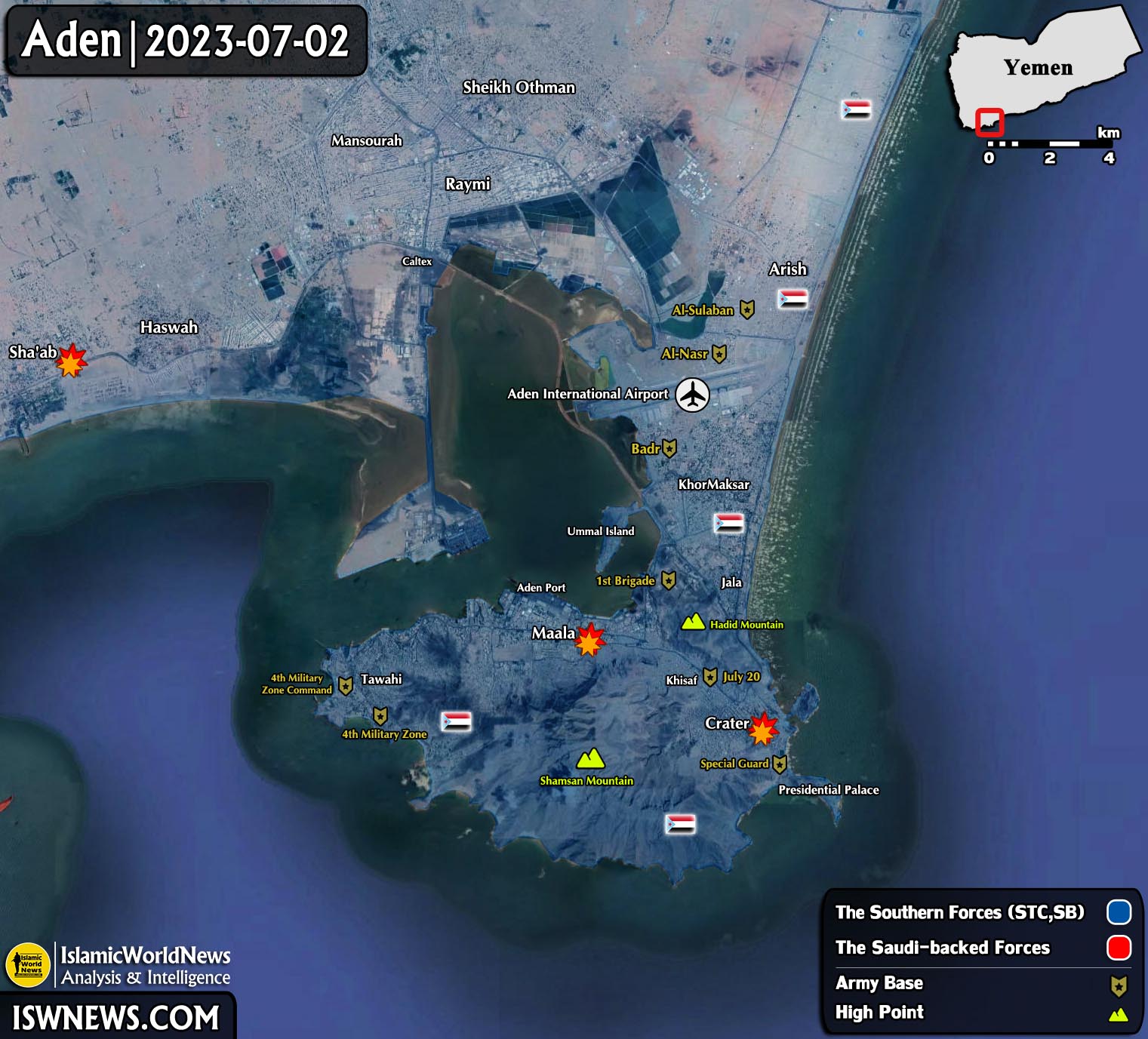
On July 30, after a woman complained to the police station in Al-Ma’ala district over being harassed by son of one of Aden’s security commanders, the Al-Hizam Amni security forces backed by the Southern Transitional Council (STC) went to this person’s house.
This move led to violence and clashes between the two sides, and one of the Al-Hizam Amni security forces was wounded by a bullet from the security commander, who later succumbed to injury after being transferred to the hospital.
Following the fatal incident, the Al-Hizam security forces went to the residence of the security commander to arrest and punish him, but this time the security commander was killed by the Al-Hizam Amni forces.
This incident has led to continued chaos in the city of Aden, and up to now an arms depot belonging to the Al-Hizam security forces has been exploded in the Al-Sha’ab neighborhood and a restaurant in the Crater district of the Aden Governorate has caught fire.
The city of Aden has witnessed violent clashes since Friday evening, which indicates that security chaos in occupied areas of Yemen has its roots in economic pressures and the inability of Yemen’s resigned government to resolve political and security woes.
Explosion of the weapons and ammunition warehouse of Hizam al-Amni forces in Sha’ab area
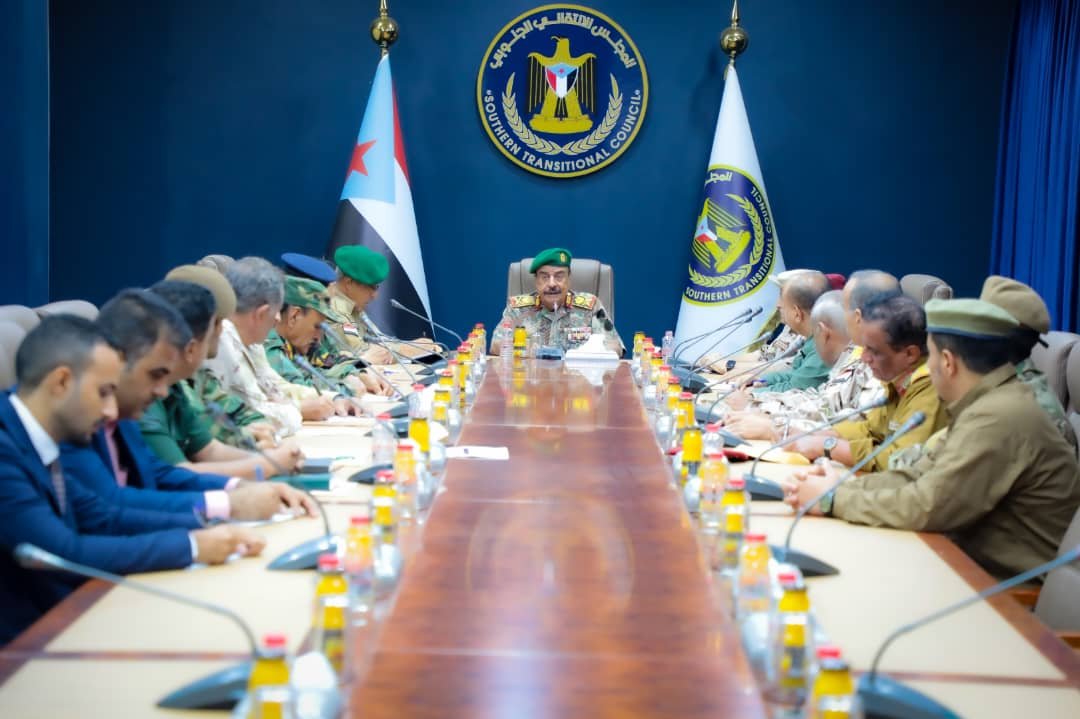
The senior military and security members of the Southern Transitional Council held an important meeting on June 15 with the Vice President of the Chairman of the Southern National Assembly Major General Ahmed Saeed bin Brik at its headquarters in Aden.
They discussed recent developments in Yemen and talked about the escalation of the crisis in Aden.
Bin Brik said that the political process is facing instability and there is not any prospect for continuation of the farce process in Aden.
He also candidly declared that the Southern Transitional Council will do everything possible to exit from the Presidential Leadership Council and the appointed government of Maeen Abdulmalik Saeed.
Bin Brik went on to say that the Presidential Leadership Council and the appointed government have failed to improve the economic situation and that they are on the verge of collapse. At the end of his remarks, the deputy head of the Southern Transitional Council emphasized that the STC forces will fight hard for their existence and that they will not retreat at any cost. The Southern Transitional Council asked all its military and security units to maintain full readiness and vigilance to confront any possible plans by the resigned government. In response to the threat, commander-in-chief of the armed forces of the resigned government Major General Saghir bin Aziz visited the Al-Rawik base in the north of Marib city and he also met with the second guard unit of the Presidency Council.
He emphasized his support for the Presidential Leadership Council of the resigned government of Yemen. The announcement of the existence of the Southern Transitional Council comes as developments in occupied areas of Yemen, especially in Aden, show that they are on the verge of a popular uprising against the appointed government of Abdul-Malik and the Presidential Leadership Council of the resigned government of the Arab country.
The economic revenues of the resigned government have sharply declined due to Ansar Allah movement’s efforts to hinder the illegal oil and gas exports, and the Saudi-led coalition’s financial support is only used for military competition between various factions, with no benefits for the people of the conflict zones.
Since September 2022 the Southern Transitional Council president has not been able to enter the city; although, the STC militants have refused to hand over their military bases in that area.
These developments could cause fierce skirmishes between the Southern Transitional Council and the Saudi-led coalition forces, but they refuted such a confrontation because of being scared of losing the conflict. Of course, the United Arab Emirates (UAE) played a role and due to the fact that the door of negotiations is still open, fierce fighting did not occur in the southern Yemen.
Meanwhile, the Yemeni Congregation for Reform, frequently called al-Islah Party welcomed a decision by Yemeni politician serving as the chairman of the Presidential Leadership Council Rashad Muhammad al-Alimi to remove members of the Southern Transitional Council from positions of the resigned government.
Simultaneous with the tensions between the Islah Party and the Southern Transitional Council, the Islah Party’s leader Salah Batis expressed readiness to take part in clashes erupting in southern city of Aden on February 26.
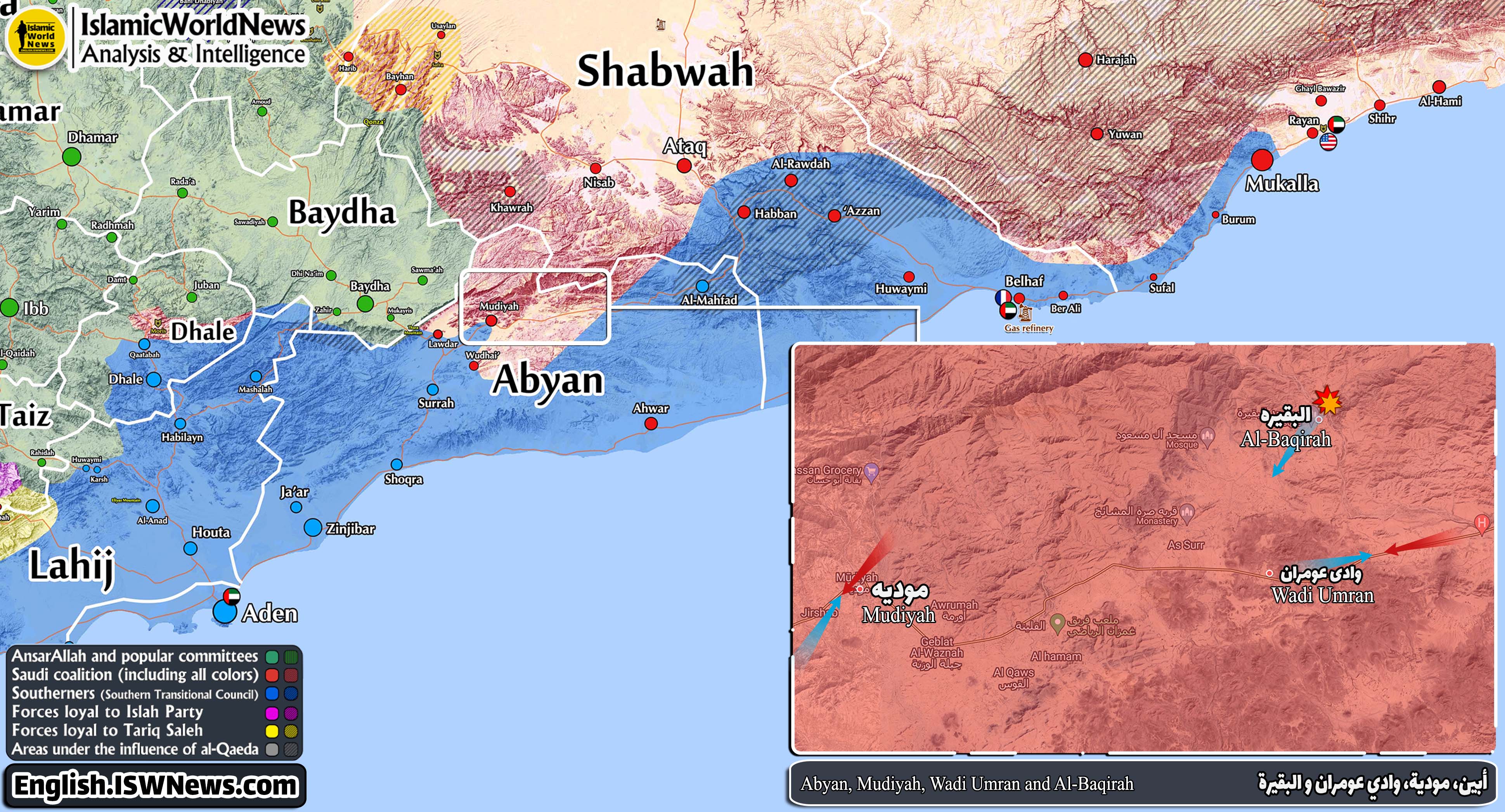
On February 22, the Southern Transitional Council recalled four brigades of its militants from Ahwar town in south central Yemen and dispatched them to Mudiyah village in northern Abyan Governorate as a result of tensions between the STC and the Saudi-led coalition.
Mudiyah tribes continued advancing in Umran Wadi region and captured some checkpoints on February 26.
In Aden, the Saudi-led forces and the Al-Dara Al-Watan militants reacted to the arbitrary withdrawal of Prime Minister of Yemen’s resigned government Maeen Abdulmalik Saeed from Aden to Cairo, Egyptian capital, they sealed his residence and avoided the entry of staff and ministers to Al-Maashiq Palace, and even issued unlimited time off for them. These acts by the Saudis can be seen as their reaction to the STC’s threats to sack and expel pro-Saudi forces from southern provinces of Yemen as well as hand over fronts in southern areas to the Ansar Allah movement.
The Southern Transitional Council militants gathered in streets of Crater district of the Aden Governorate and blocked the entrance of the area in response to the Saudi-led coalition’s measures. Furthermore, a convoy of vehicles carrying Governor of Aden Governorate Ahmed Hamed Lamlas, who is a member of the Southern Transitional Council, was raided by unknown armed people in Crater district on February 26. The governor of Aden survived the assassination attempt, while two of his security guards were injured.
The Abyan-based tribes resumed their progress in the Mudiyah village as part of their clashes with the Southern Transitional Council. Following the raids, which began on Wednesday (February 15), the STC militants were forced to retreat from a checkpoint in Wadi Omran in Abyan’s Mudiyah village. The explosions of two roadside bombs on the way of a convoy of the Southern Transitional Council militants in Al-Baqira region left at least a military vehicle demolished and four militants killed and injured.
Guerrilla strikes on the STC also exacerbated in Lawdar town. In the last strike on February 18, a car carrying the STC militants was raided by unknown armed forces on the western road of Lawdar, which left some casualties among the STC militants.
The security state in the city of Aden has been exacerbated after the assassination of Badr Abdul Latif al-Qobli (the son of the Sheikh) by one of the STC militants at a checkpoint of the Hizam al-Amni militants (affiliated to the Southern Transitional Council) in KhorMaksar district. Badr Abdul Latif was Sheikh Abdul Latif al-Qubali’s son (one of the sheikhs of the Murad tribe and Brigadier General Abdul Hadi Al-Qabali’s brother who is one of the commanders of the Amaliqah Brigade, which is backed by the UAE and Tareq Saleh, Vice President of Yemen.
The followers of Sheikh Abdul Latif in the Murad tribe vowed to punish the assassins of Badr and take revenge on the Hizam al-Amni militants.
The surge in guerrilla raids and bombardments on the STC militants would end up in their retreat from several positions in the southern governorates of Yemen; however, there is still a major question on the groups who would replace them in those regions. At present, along with the Islah Party, al-Dara al-Watan and al-Qaeda terrorists, some tribes from Abyan and Hadhramaut governorates are fighting the STC militants, which would pose a threat to the existence of the Southern Transitional Council sometime.
As a result of the UAE ambassador’s arrival to Aden and his attempt to mediate between the militants of Al-Dara Al-Watan and the Southern Transitional Council, the tension in the southern city has come to a halt for the time being. In spite of the cessation of the hostilities, the leaders of the Southern Transitional Council are still accumulating their military personnel and equipment in Aden. To this end, Mukhtar al-Nubi, one of the commanders of the Southern Transitional Council, has threatened that his militants will fight every force, who wants to enter the city from its eastern gates. Furthermore, the militants of the Southern Transitional Council are trying to enter the Crater district in a bid to surround Al-Maashiq Palace (the Presidential Palace).
Following the move by the STC, head of the presidential council of the resigned government Rashad Al Alimi as well as commander of the Amaliqah militants Abu Zar’ah al-Muharami, who are members of the presidential council of the resigned government, left Aden for Riyadh on February 11 with the aim of staying away from the tensions in the southern city.
On the contrary, one of the commanders of UAE-backed Hizam al-Amni called Ismail al-Sabihi joined the Al-Dara al-Watan militants, which led to weakening of the positions of the Southern Transitional Council in Al-Mansoura area. Moreover, four commanders of the Southern Transitional Council, who were stationed in Al Anad region along with some of their militants defected from the STC and joined the militants of Al-Dara Al-Watan. Some local sources said that the reason behind the defection of those militants from the Southern Transitional Council is that Saudi Arabia stopped paying their salaries, and they would be paid twice as much as they were paid, when they join the Al-Dara Al-Watan militants.
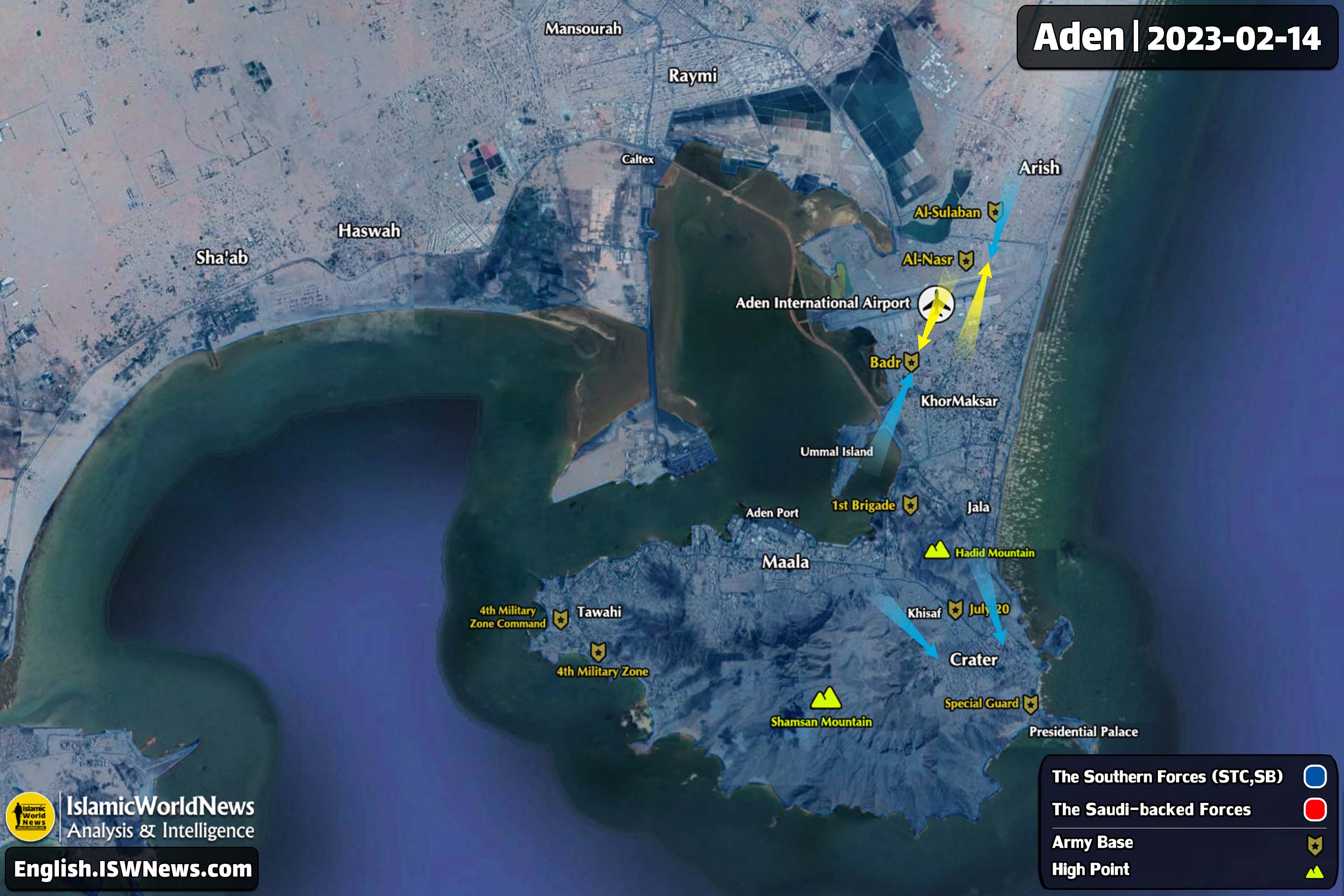
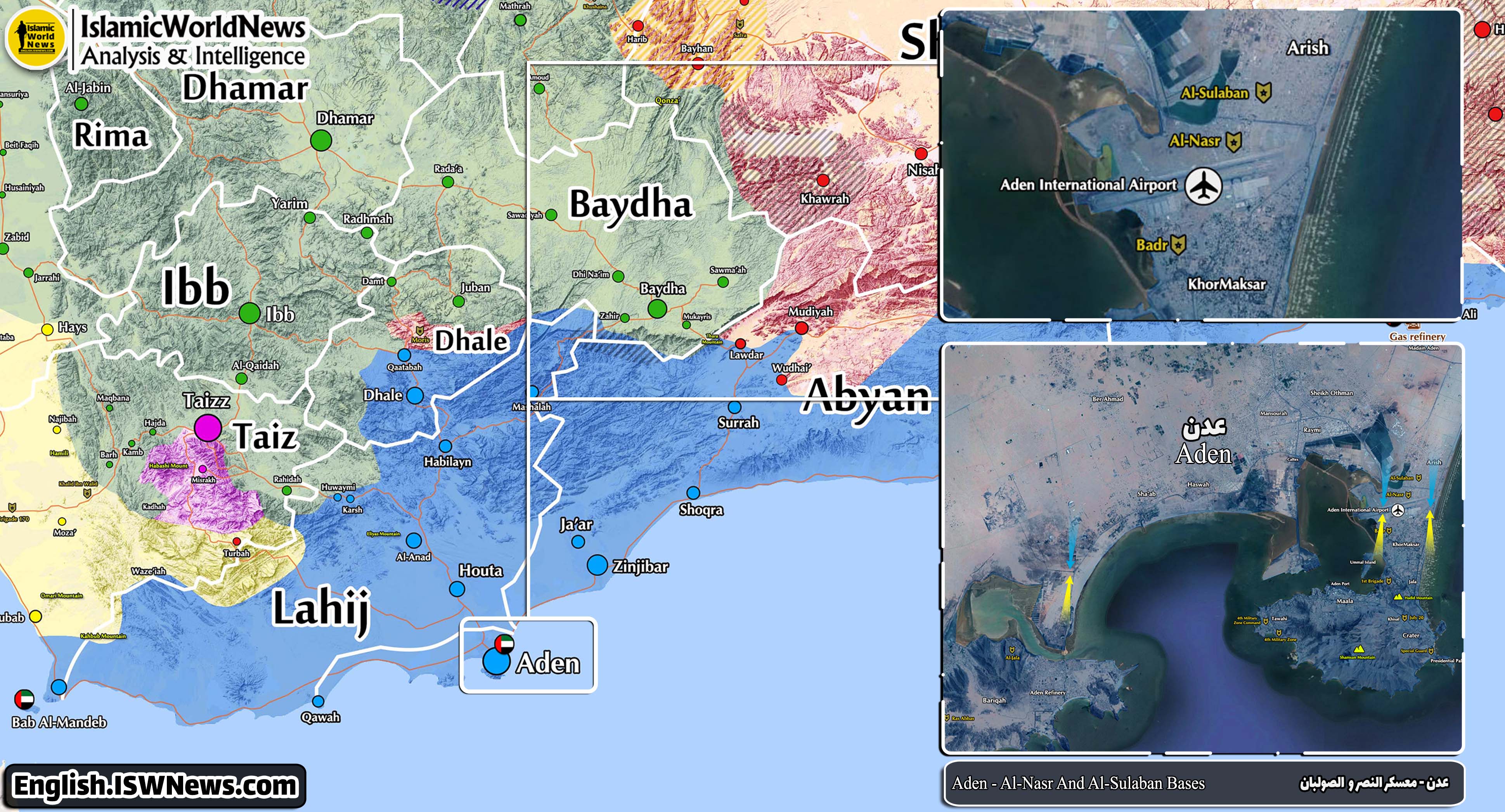
On February 12, the Al-Dara al-Watan militants moved to the Badr base in KhorMaksar district and asked Colonel Abdul Rahman Askar, commander of the Southern Transitional Council, to evacuate the base and hand it over to al-Dara al-Watan militants, but he rejected the demand. The Badr base is one of the important military garrisons of the Southern Transitional Council in KhorMaksar district, which is tasked to secure the Aden International Airport.
The resistance by the Southern Transitional Council to surrender the military bases in Aden forced Saudi Arabia to dispatch more forces to the city from the al-Wadiyah crossing in Hadhramaut Governorate. The command of the Saudi-led coalition ordered their affiliated tribes in Abyan Governorate to accelerate the formation process of Al-Dara al-Watan militants in the governorate.
Given the exacerbating trend of tensions in Aden, the chance of a confrontation between the militants of al-Dara al-Watan and the Southern Transitional Council is very likely. Saudi Arabia plans to take back the full control of Aden from the Southern Transitional Council, and the STC commanders also aim to dissuade the Saudis from the decision by demanding the United Arab Emirates (UAE) support and resorting to empty bluffs such as surrendering the strategic city of Aden and other fronts to the Ansar Allah movement, and issuing similar statements.
After the surge of the recent tensions in the region, new UAE Ambassador to Yemen Mohammad Hamad Al-Za’abi arrived in Aden and held unremitting meetings and negotiations with the officials of the Southern Transitional Council as well as the commander of the Saudi-led coalition in the city to resolve the differences Al-Dara Al-Watan and the Southern Transitional Council. Despite the fact that the UAE has succeeded in containing the clashes between the two groups, some local media outlets reported the dispatch of the reinforcements of the Al-Dara Al-Watan from Hadhramaut Governorate to the eastern entrance of the city of Aden.
Local sources in Aden have reported that Al-Dara Al-Watan militants are at present stationed in some positions such as in the vicinity of Al-Maashiq Palace, the Aden International Airport, the Badr base and the garrison of the Saudi-led coalition forces in the Al-Bariqa military base.
The STC militants have still refused to hand over the al-Sulaban and al-Nasr bases on the basis of an order by President of the Southern Transitional Council Aidarus al-Zoubaidi, and they are accumulating armed forces and military equipment to overpower the al-Dar al-Watan militants.
The confrontation between the militants of Al-Dara al-Watan and the Southern Transitional Council formally initiated following the evacuation of Al-Anad military base on December 25, 2022, and the conflict spread to the city of Aden, where the main stronghold of the Southern Transitional Council is located, on February 4, 2023. The major forces of Al-Dara al-Watan militants are made up of the elements loyal to Tareq Mohammed Abdullah Saleh (a Yemeni military commander and the nephew of the late President Ali Abdullah Saleh) as well as the militants of the northern tribes from Hadhramaut Governorate, but the reason behind their relative superiority over the Southern Transitional Council militants is that Saudi Arabia aided and abetted the Al-Dara al-Watan, because the Saudis plan to decrease the might of the Southern Transitional Council.
Following the dispatch of a section of the Southern Transitional Council troops from Aden to Lahij Governorate, the Al-Dara’ Al-Watan (National Shield) militants attempted to take advantage of the proper opportunity and initiated new military pushes to take the control of positions and headquarters of the Southern Transitional Council’s forces in the city of Aden based on the order of the Saudi-led coalition command from Saturday on February 4.
As a result of the military advances, the Al-Dara’ Al-Watan militants headed towards the military strongholds of the Southern Transitional Council in Aden, and an armed confrontation erupted between the forces and the Southern Transitional Council’s militants at the Al-Nasr base in Khormaksar District as well as some other areas. To this point, the militants of the Southern Transitional Council deterred the Al-Dar Al-Watan military forces from trespassing into the base and stopped their advance in that area.
The militants of Hizam al-Amni (affiliated to the Southern Transitional Council) have started accumulating forces to repel a potential raid by Al-Dara’ al-Watan forces on Sheikh Osman district.
The southern city of Aden has witnessed unprecedented tensions among the Saudi-led coalition militants over the last few days. The Saudi kingdom is trying to diminish the military might of the Southern Transitional Council through forming a new alliance under the name of Al-Dara’ Al-Watan; so, the Southern Transitional Council makes all-out efforts to defend its main stronghold in southern areas of the war-stricken Arab country.
It is noteworthy that Al-Dara’ Al-Watan (Nation Shield) forces are militias that formed in November 2022, with the support of Saudi Arabia and the key role of Sagheer bin Aziz and Tareq Saleh, from the pro-Saudi tribal armed forces in Hadhramaut province, the forces of Al-Yaman Al-Saeed (subordinate to Saghir bin Aziz) and part of Pro-Tareq Saleh forces in the west of Lahij province.
On March 3, this prominent commander was killed along with four others when a car bomb exploded at the parking lot of General Thabet Muthanna Naji Jawas’s car in the al-Khadhraa area north of Aden.
No group or individual has claimed responsibility for the attack.
At the time of his death, he was the commander of the 131st Infantry Brigade on the Anad axis.
Maj. Gen. Jawas was one of the senior commanders of the southern forces and he was from Radfan district in Lahij province. At the time of his death, he was the commander of the 131st Infantry Brigade on the Anad axis.
Thabet Muthanna Naji Jawas held various military positions at different times. During the presidency of Ali Abdullah Saleh, Jawas commanded the 15th Infantry Brigade of the Yemeni Army in Saada Province, and through this position he played an important role during the Six Wars of Ali Abdullah Saleh and Ansar Allah in Saada province. Hence, Jawas is considered as one of the factors in the suppression of the Shiites of Saada and the martyrdom of Sayyid Hussein Badruddin al-Houthi.
After Mansour Hadi came to power, General Jawas was appointed commander of the Aden Special Forces and the military leadership of the al-Anad front, and he fought Ansar Allah in recent years.
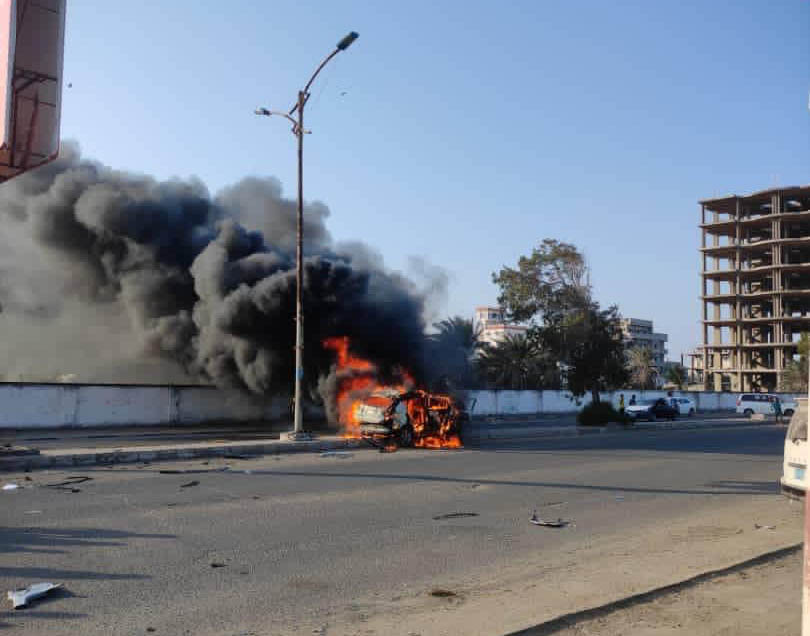
According to local media reports, a car bomb exploded near a gathering of network reporters in the Khormaskar area of Aden, killing four people, including a reporter named Rasha Abdullah (reporter for the UAE news agency Al-Sharq) and his husband Mahmoud al-Atami (UAE news media photographer) and their two children.
The female journalist and two children were killed in the blast, but al-Atami was injured and died of his injuries after being taken to hospital.
Car bomb explosion in Khormaskar
Some media outlets believe the blast was orchestrated by media opponents of the Southern Transitional Council.
The recent bombings and assassinations in Aden show the continuing conflict within the southern organization, as well as the escalation of their differences with Mansour Hadi’s forces in Aden.
The spread of insecurity and explosions in Aden continues as local sources have criticized Saudi Arabia’s destructive role in Yemen by publishing images of the departure and transfer of heavy military equipment by Saudi forces from the port of Aden.
Evacuation and transfer of Saudi equipment from the port of Aden to Saudi Arabia
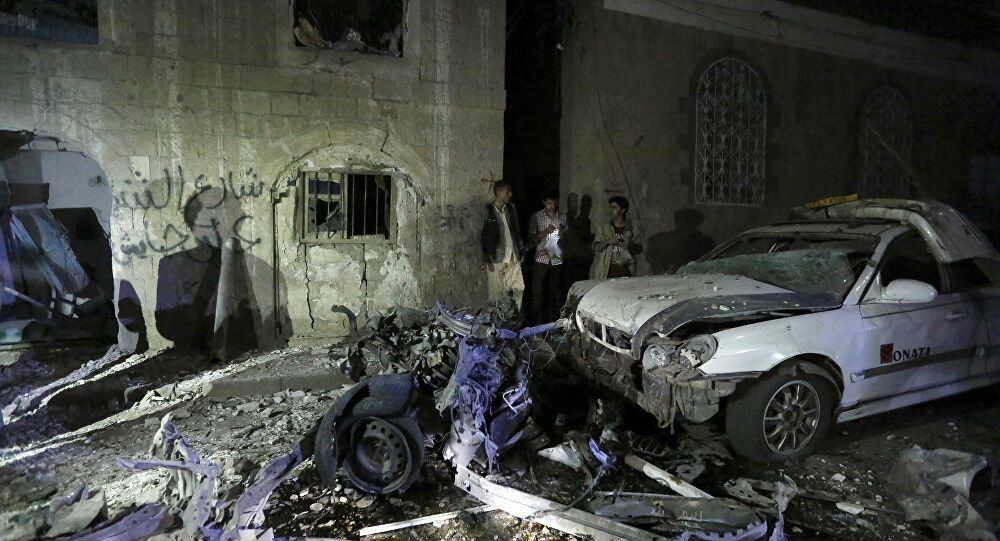
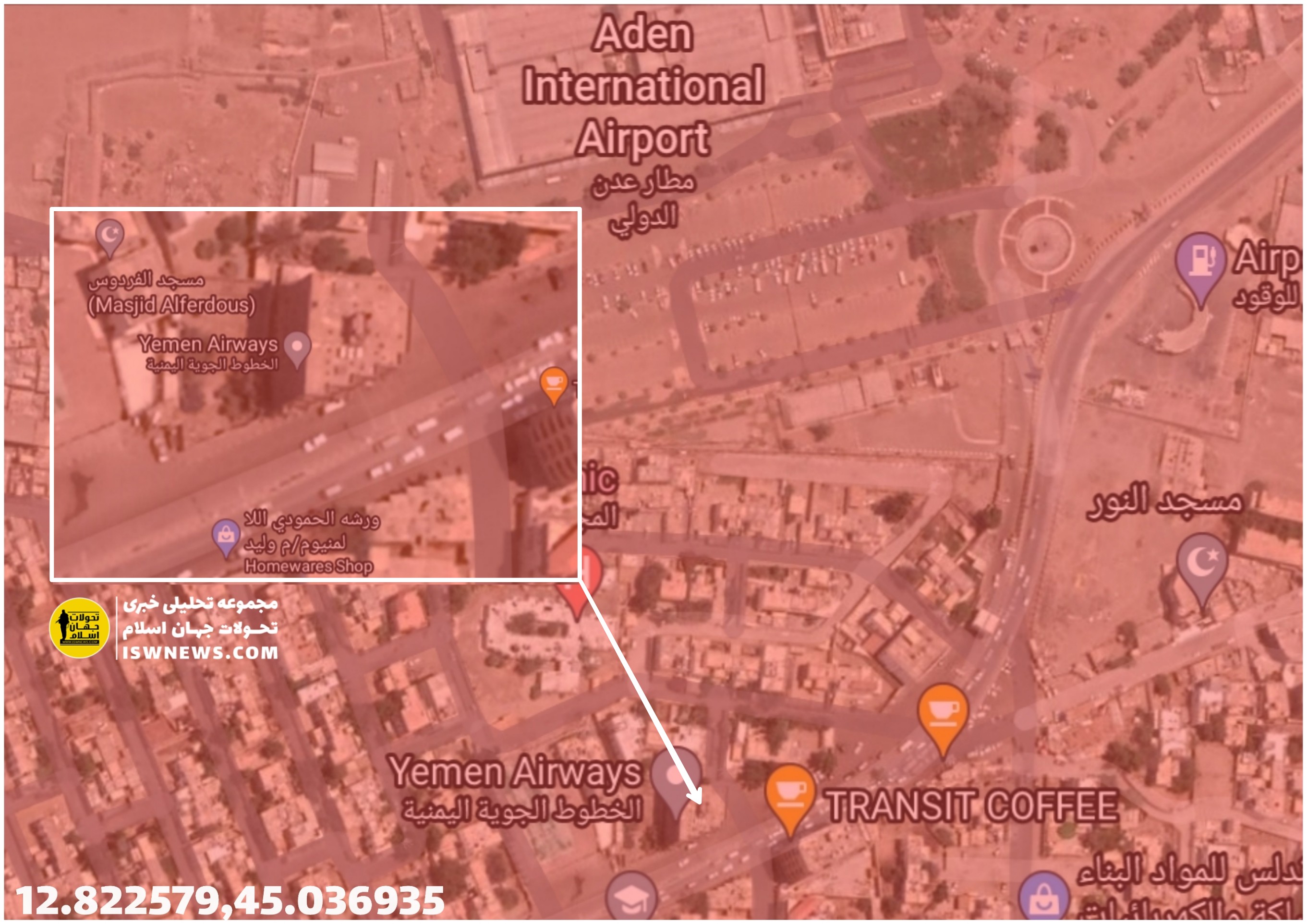
According to local reports, 16 people have been killed and 53 injured so far in the terrorist blast that took place last night at the entrance of Aden Airport in the Khurmaksar area in the south of Aden city. The blast was also so severe that the surrounding buildings were damaged.
So far, no group has claimed responsibility for the attack, but some Saudi-affiliated media outlets accused Ansar Allah for the attack!
The city of Aden can be considered the most insecure city in Yemen, given the scale of the clashes between Mansour Hadi’s forces and the Southern Transitional Council, as well as the terrorist attacks by ISIS and al-Qaeda in recent years. After Ansar Allah took complete control of Sanaa, the resigned government of Hadi chose Aden as its capital, but their conflicts with the southerners have made the city a hotbed of insecurity in Yemen.
Images of the terrorist explosion on the outskirts of Aden AirportTerrorist explosion on the outskirts of Aden AirportCoordinates of the site of the terrorist explosion in Aden: 12.822579 , 45.036935