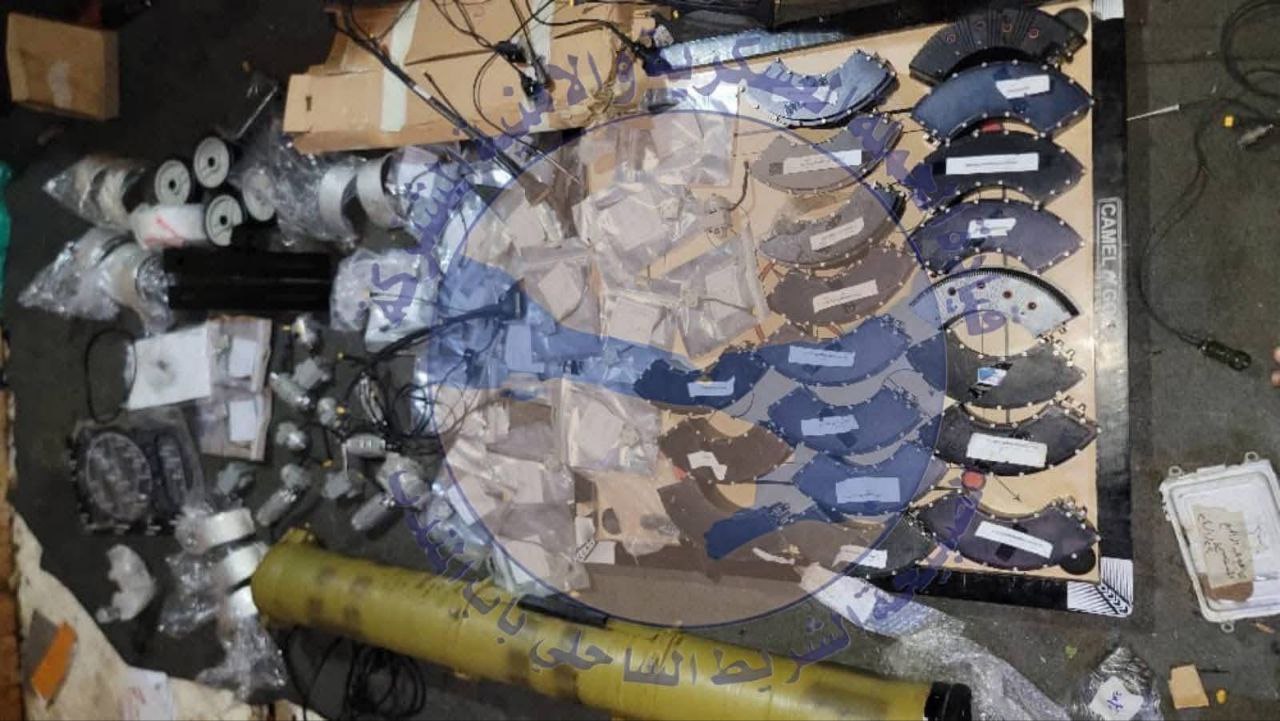
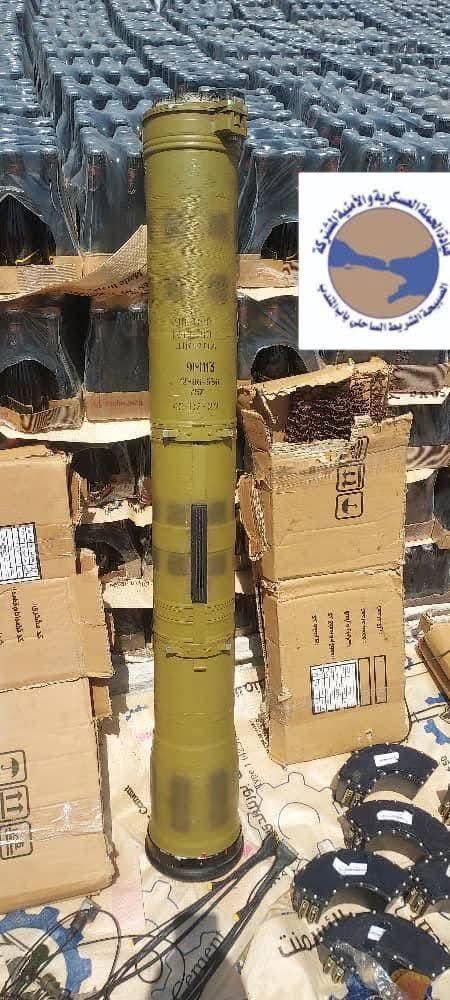
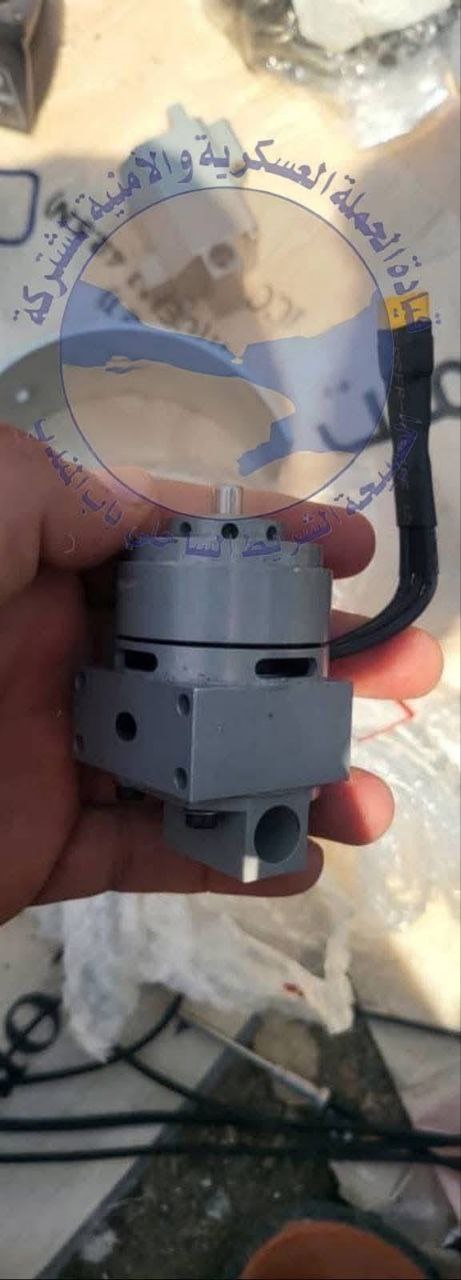
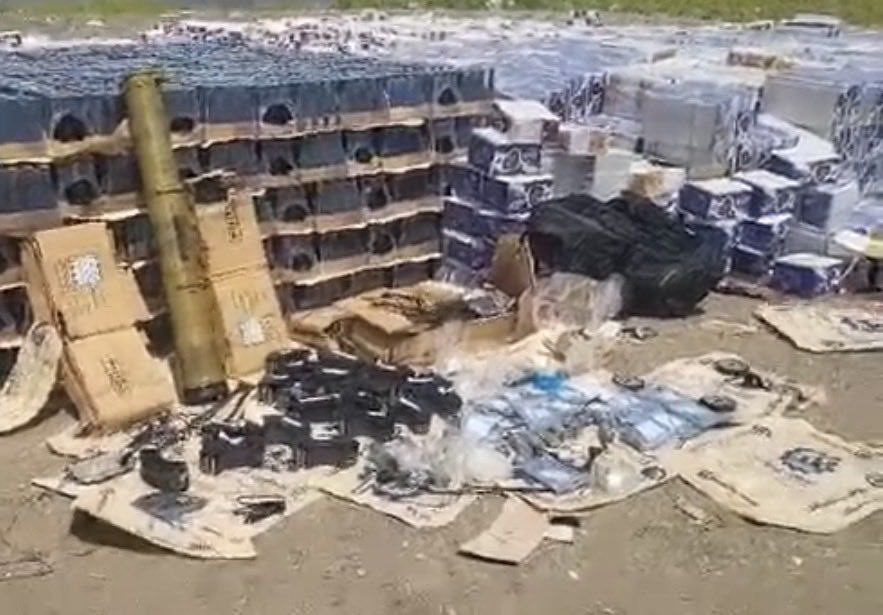
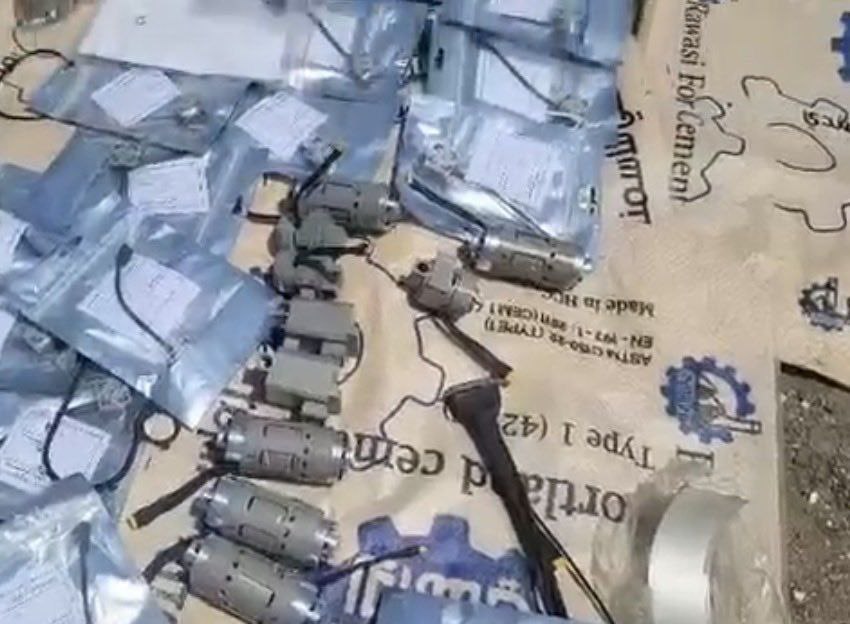
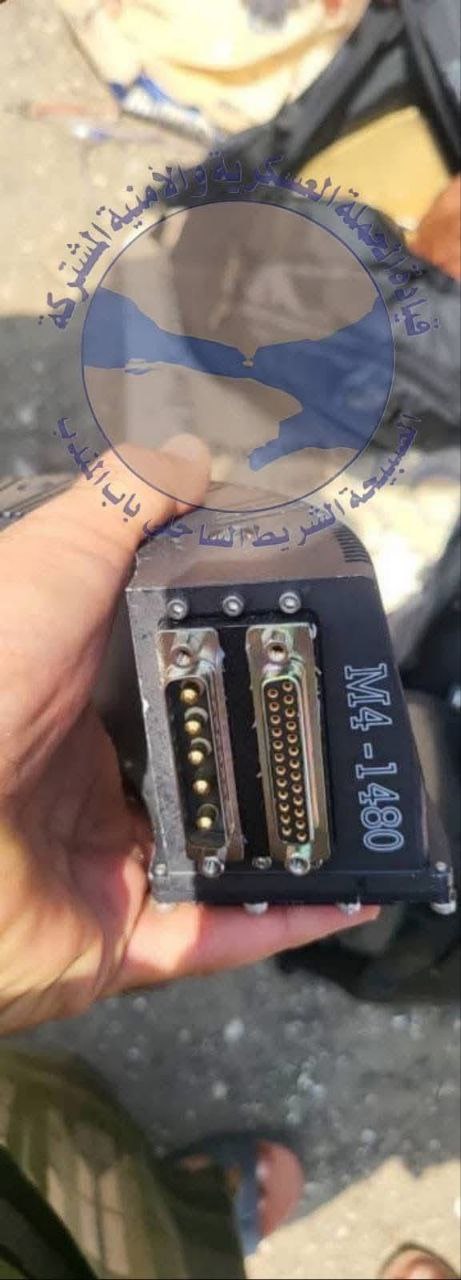
The ship was reportedly carrying Iranian weapons and goods and was seized near Ras al-Arah, west of Lahij province, close to the Bab al-Mandeb Strait. Eight crew members were arrested on suspicion of collaborating with a commander from Ansar Allah.
Another Alleged Iranian Shipment Seized off Southern Yemen’s Coast
According to Al-Amaliqa forces, the shipment originated from Bandar Abbas and included anti-armor Kornet missiles, spare drone parts, precision control cables and connectors, eight boxes of Iranian-made cancer treatment drugs from the company Sinagen, as well as various Iranian food and consumer goods.
This marks the ninth time in recent years that the U.S.-backed coalition and Saudi-backed government have claimed to intercept and confiscate Iranian arms shipments destined for Yemen.
The local sources went on to say that the unidentified offensive drones were belonged to the United States most likely.
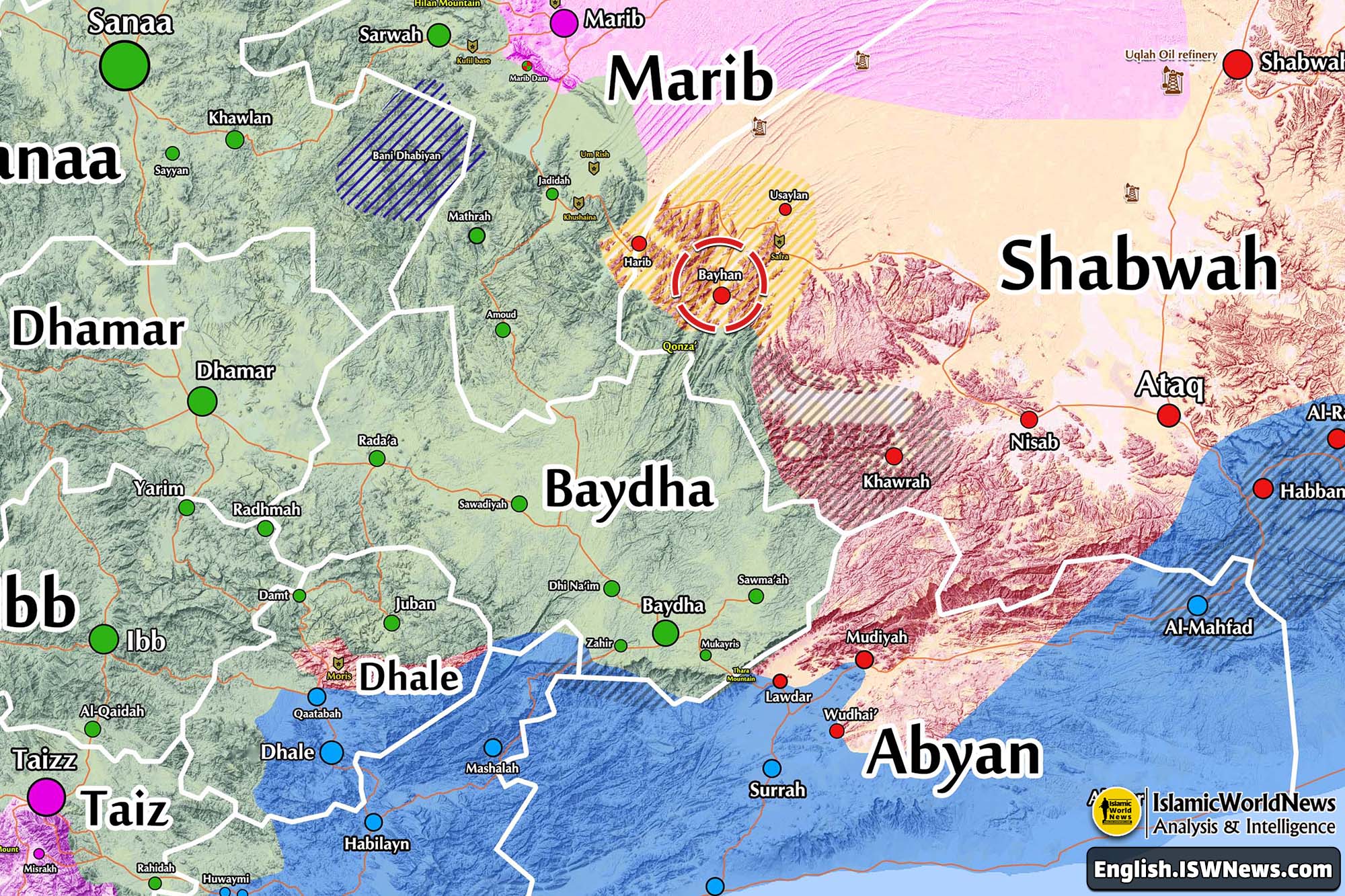
The Jaishan district is located near the Merkhah As Sufla District in the Shabwah Governorate, which is under the control of UAE-affiliated militant forces. And it is likely that the United States’ drones attacked Salafi elements of the Al Amaliqah forces, who have been stationed in the area.
The exact details of the air strike have not yet been determined, while a number of news sources affiliated to the Southern Transitional Council (STC) militant group described the nature of the attack as a rocket attack by al-Qaeda terrorists.
Prior to the Wednesday attack, the United States’ drones carried out three separate air raids on the hideouts of prominent elements of the al-Qaeda terrorist group on the outskirts of Marib city about 120 kilometers east of Yemen’s modern capital Sana’a, which ended up in the killing and wounding of several elements of the terrorist group, on December 1, 2022, January 30, 2023 and February 26, 2023.
On April 8, Al Amaliqah Brigades succeeded in taking control of Bayhan al Qisab, a town in western Yemen, after confrontation with militants of a son of Governor of resigned government in Shabwa Awad bin Al-Wazir Al-Awlaki.
The conflict was triggered by a dispute over collecting tolls in al-Alia market; then, the forces of the Shabwa Defense withdrew from Bayhan al Qisab.
Bayhan al Qisab town is one of the oil-rich regions in Shabwah Governorate, which has been under the control of militants affiliated to the Saudi-led coalition; so, its oil revenues and other incomes of the region are being paid to the Al Amaliqah Brigades and the Southern Transitional Council (STC).
Recent conflicts in the areas, which have been usurped by the Saudi-led coalition, have turned into a routine activity of different fractions affiliated to the coalition, and each of the forces make their all-out efforts to expand their control on towns in southern and eastern governorates of the war-hit Arab country.
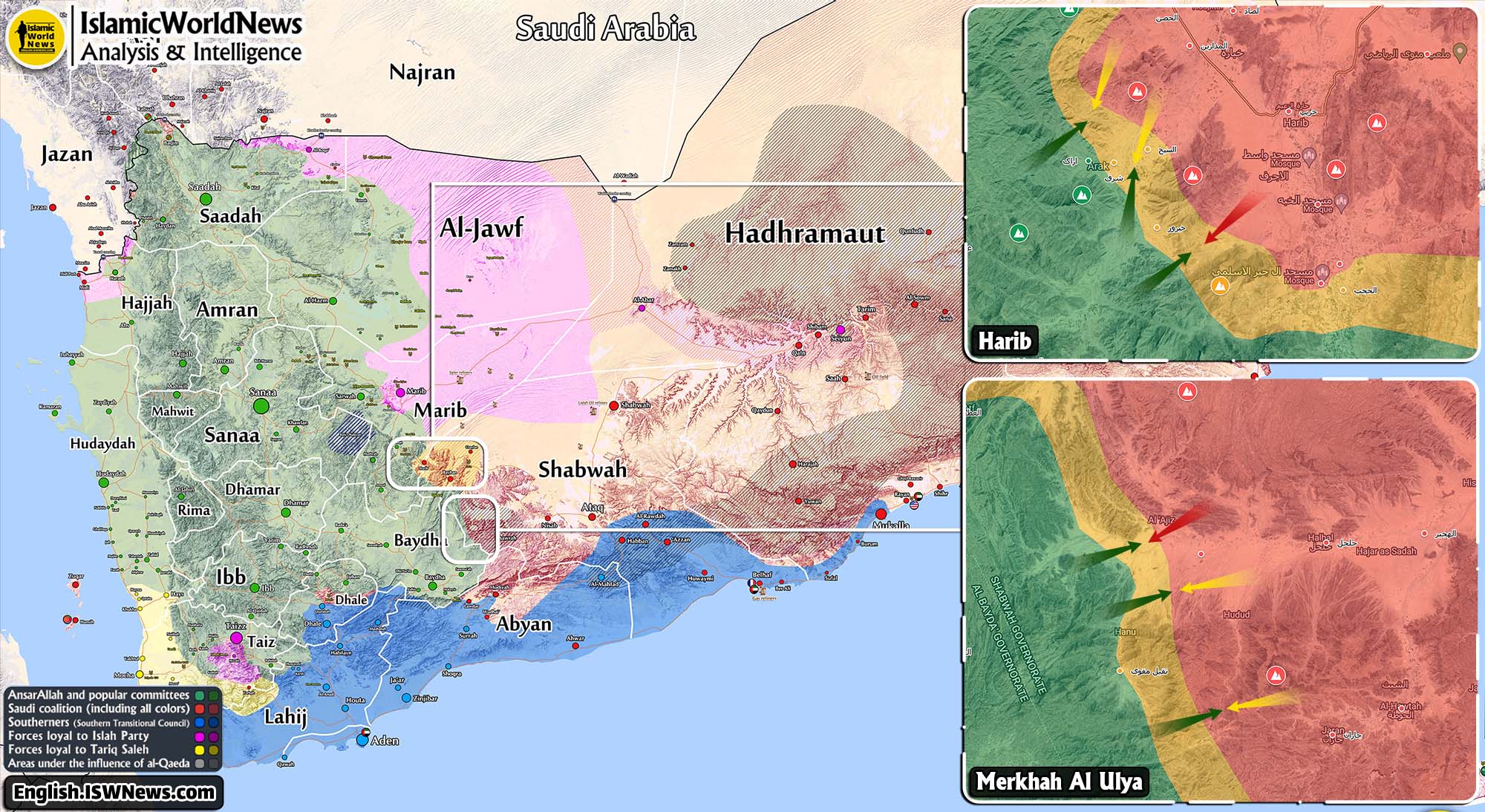
ISWNews Analysis Group – The recent strikes by the Saudi-led coalition forces to retake defense lines of Harib district in southern Marib Governorate as well as Markhah al-Oliya district in western Shabwah Governorate have faced strong resistance by Ansar Allah movement; so, the attacks doomed to failure.
After two weeks since the onset of clashes between Ansar Allah forces and the militants affiliated to the Saudi-led coalition in Harib front in southern Marib and Markhah al-Oliya front in western Shabwah, the attacks by the Amaliqah Forces and Shabwa Defense Forces came to an end without any progress; so, it can be said that Ansar Allah fighters’ advancement has been consolidated in these axes.
Harib Front
The confrontation in Harib front erupted after the Amaliqah Forces presumed that ceasefire has been on place in some fronts; so, they retreated from some areas, but the Ansar Allah took the opportunity and entered some regions such as Arak, Sharq, al-Sih, Jebel Ba’ra and Hiror. Then, the Amaliqah Forces began fighting Ansar Allah movement in order to retake its lost defense lines, but the confrontation has not yet borne any fruit and the Ansar Allah has still upper hand in this front.
According to sources on the ground, who are working with the Islamic World News, the Ansar Allah movement has consolidated its grip on western and southwestern heights of Harib region; so, fire control by the movement on this axis has led to the situation that the Amaliqah Forces and other units under the supervision of the Saudi-led coalition have lost their grip on these areas.
Markhah al-Oliya Front
Movements of the Amaliqah Forces and their affiliated forces towards the Harib front have prompted the Ansar Allah fighters to carry out some hit-and-run attacks with the aim of hindering potential military operation by these enemies.
Naturally, the confrontations have inflicted death tolls and material losses on both sides; however, the news stories published in recent two weeks show that the Saudi-led coalition forces particularly the Amaliqah Forces have suffered from heavy blows and they experienced more difficult condition in comparison to other Saudi-led forces.
Are the conflicts a sort of violating the existing ceasefire?
Undoubtedly, the clashes will affect the Yemen peace negotiations, but they have nothing to do with the ceasefire and even violation of the foreign-mediated truce. Given the fact that the Yemen ceasefire has not been renewed since September 2022, there is not any kind of accord or obligation to refrain confrontations in different fronts in the war-stricken country; thus, the recent advances by the Ansar Allah movement cannot be considered as a violation of any truce and agreement.
Would the advances lead to unity among the Saudi-led coalition groups?
The Saudi-led coalition forces are in a deep power struggle. Saudi Arabia has created Al-Dara’ Al-Watan and the Islah Party and dispatched them to southern governorates of Yemen in a bid to decrease the might of the Southern Transitional Council (STC). On the other hand, political tension between officials of the resigned government of Yemen and heads of the Islah Party still continues; so, there are some speculations that chairman of the Presidential Leadership Council Rashad al-Alimi may dispatch militants to Marib Governorate and other regions that are under the control of the Islah Party.
Therefore, the clashes between the Ansar Allah movement and the Amaliqah Forces or other militants affiliated to the resigned government of Yemen can decline the pressures imposed on the STC; then, it can maintain power balance among different Saudi-led groups.
In conclusion, the control of the resigned government on Shabwah and Marib governorates, which possess abundant resources of oil and gas, would not be in favor of the Ansar Allah. The population of areas under the control of Ansar Allah is much more than the number of inhabitants in the occupied territories, and the movement is in dire need of oil resources to meet demands of this part of Yemen in order to revitalize its economic power. Despite the fact that Ansar Allah tries to prevent looting of oil resources by the resigned government, the economic warfare is still looming, and the pressures by the US and the UK gets in the way of pursuing Saudi Arabia to give concessions in peace negotiations with Yemen.
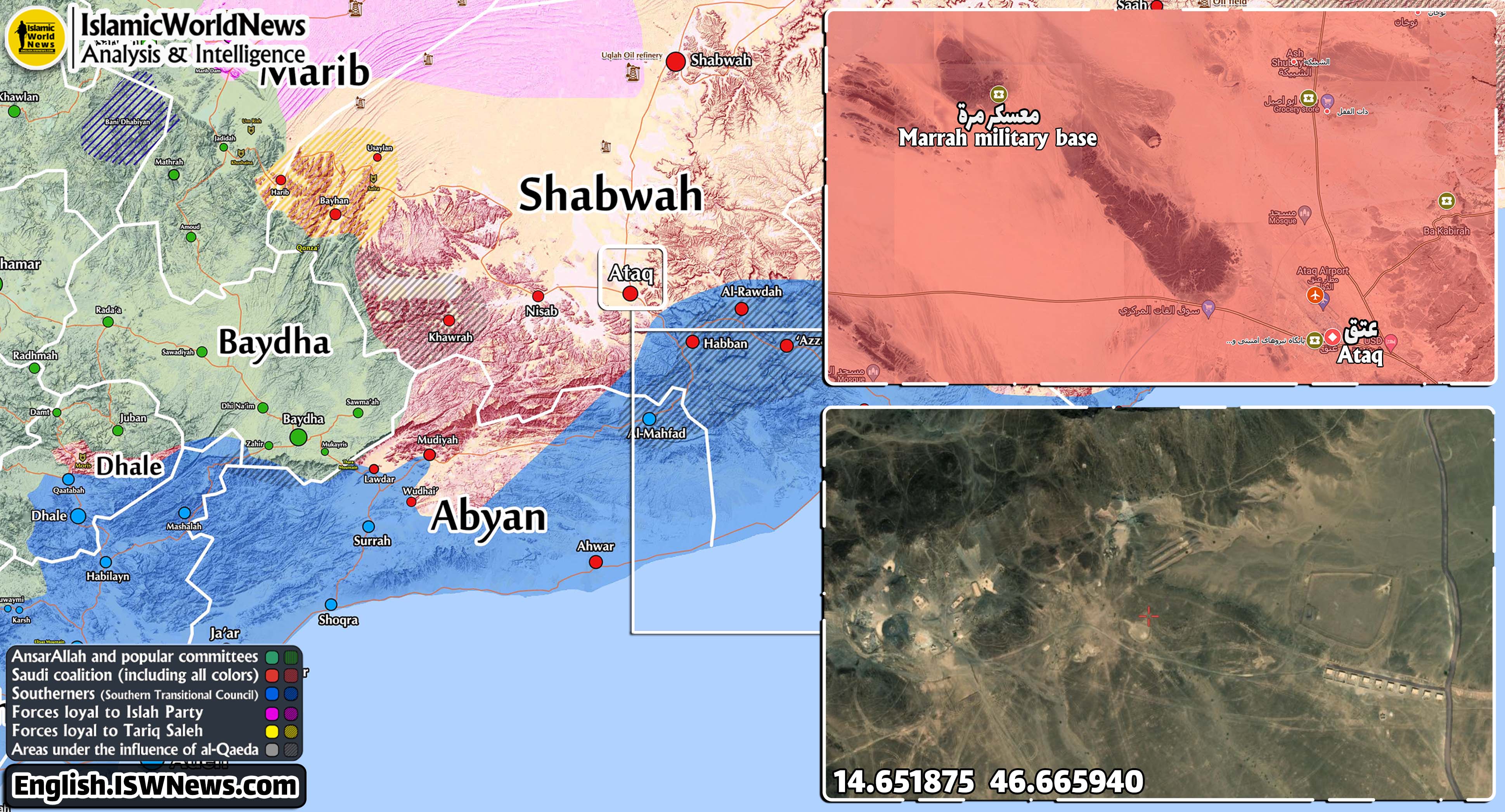
According to local sources in Shabwah province, an American serviceman was killed in the clashes after the verbal tension between the American and the Amaliqah forces at al-Marrah base located in the suburbs of Ataq city, the capital of Shabwah province. The conflict occurred after the Americans had a dispute with Salafi members of Amaliqah over the control of the audio system of the al-Marrah base prayer hall.
After this incident, the Saudi-backed government of Yemen has issued an order to arrest eight members of Amaliqa forces. Also, a helicopter has transferred the body of this American serviceman to a military ship in the Arabian Sea. However, the local authorities of Shabwah province have denied the occurrence of a conflict and the death of an American at the Marrah base.
Al-Marrah base is one of the military bases of the Yemeni army in Shabwah province, which is located in the northwest of Ataq city. This base is one of the places that was occupied by the American advisers after the expulsion of Islah Party militants from the city of Ataq, and it plays an important role in ensuring the security of this area.
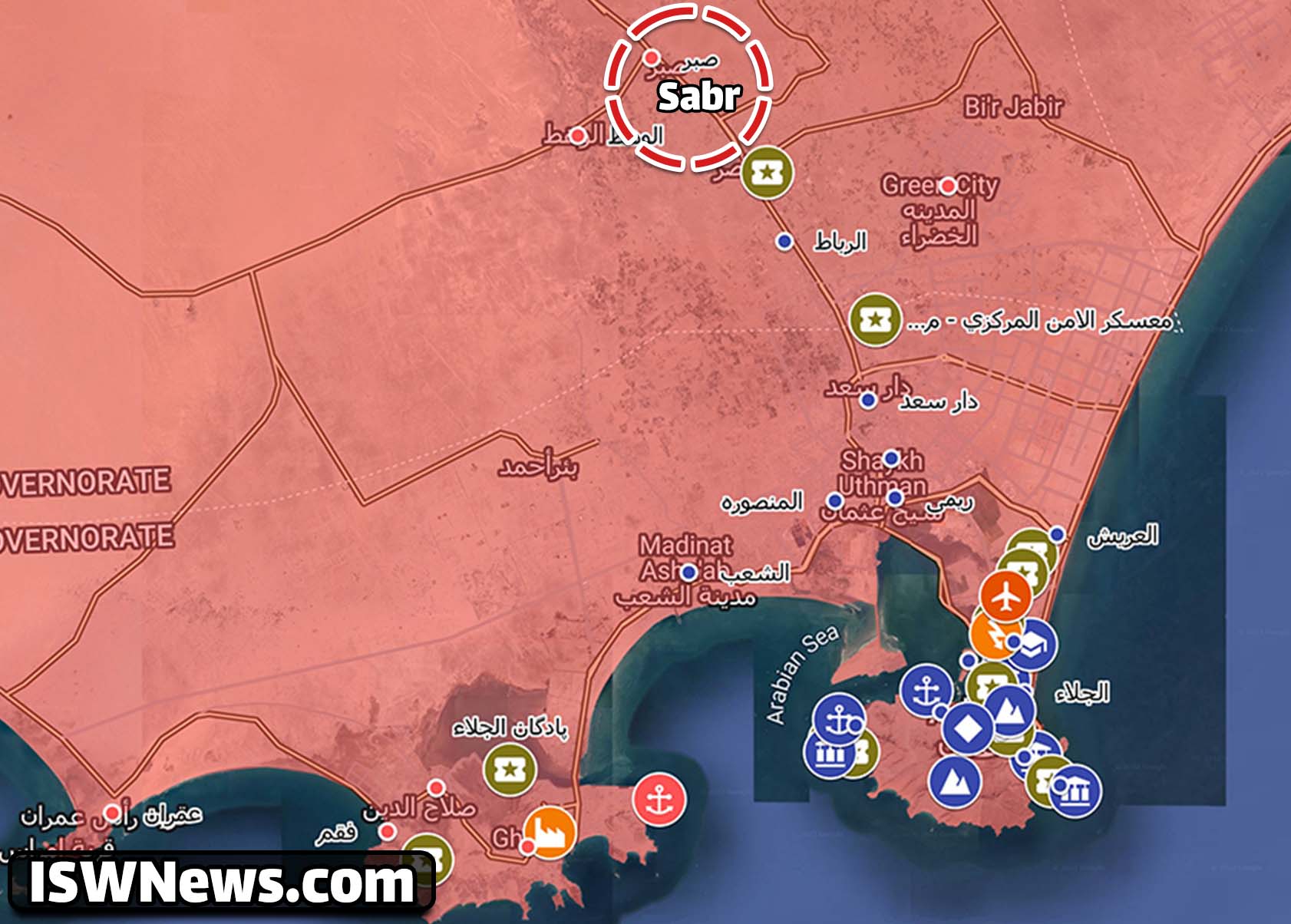
One person was killed and several others were injured when an unknown armed person threw an explosive device into Al-Saeed Mosque in Sabr town, located in Tabn district in Lahj province. This attack took place during sunset prayer and the presence of Major General Azzam al-Maghribi al-Sabihi, the commander of the second brigade of Amaliqah forces in this mosque.
Azzam al-Maghribi is one of the most prominent Salafi and radical leaders of the Saudi coalition, who is in charge of the second brigade of the Al-Amaliqah forces. After the increase of political competition and military conflict between the members of the presidential council of the resigned government of Yemen, Al-Maghribi plays an active role in the conflict with the armed members of the Southern Transitional Council. Therefore, it is possible that the attacker carried out this attack under the orders of the southerners…
According to pro-Saudi coalition media, the Amaliqa Forces Command recalled five brigades of its fighters from the southern fronts of Marib and transferred them to the city of Ataq.
It should be noted that the leaders of the Southern Transitional Council had announced their participation in the Saudi coalition operation until the recapture of the districts of Shabwa province from Ansar Allah. But they expanded their military operation into the Harib district in Marib province. However, the end of operation was announced today.
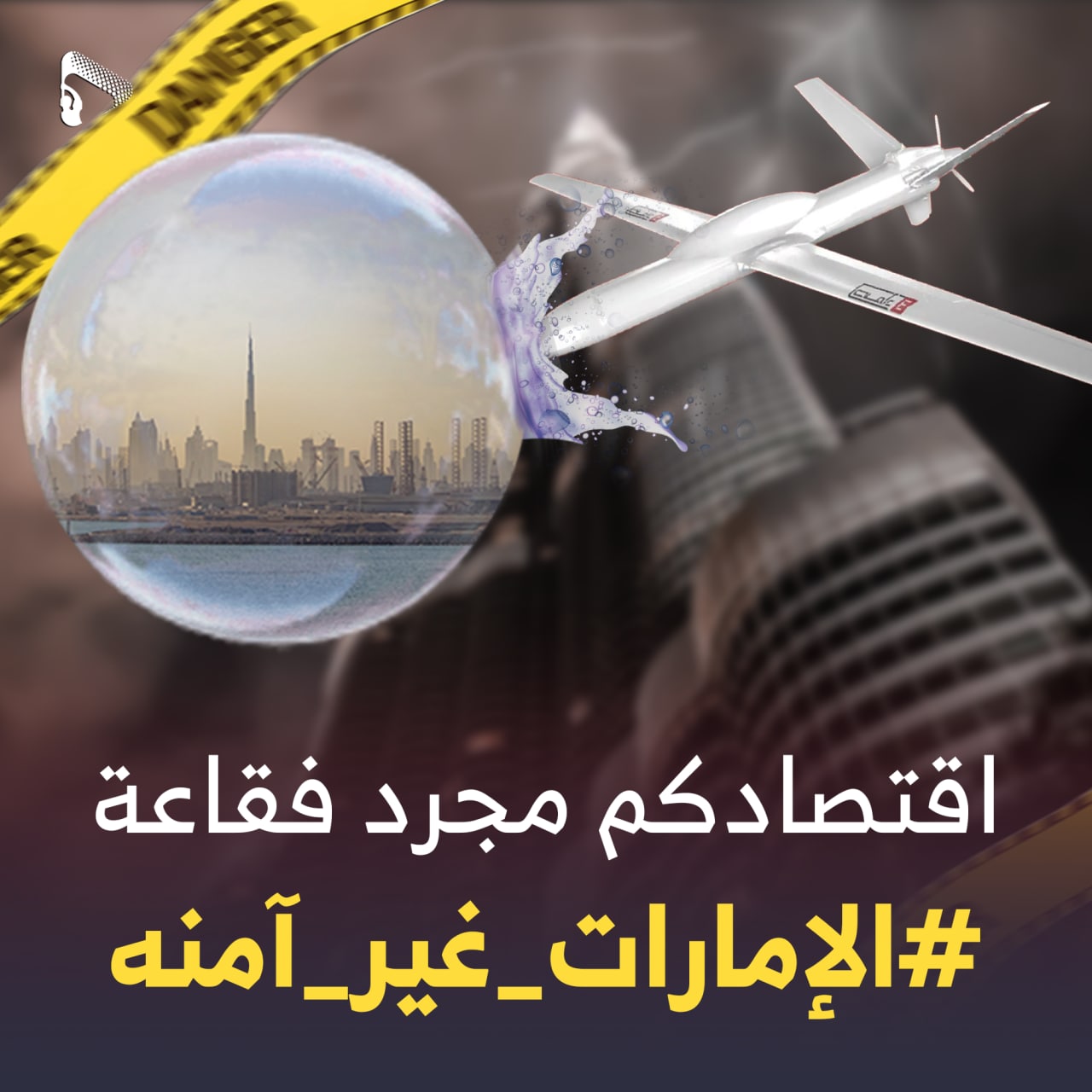
This unexpected decision to end the operation and withdrawal of Amaliqa forces could be the result of one or more of the following: 1- The losses and casualties of the Saudi coalition forces, especially the Amaliqa forces on the battlefield with Ansar Allah, were much higher than their calculations and level of expectations. 2- Ansar Allah’s security and economic blow to the UAE by carrying out Operation Hurricane Yemen in two stages. 3- US and UN pressure on the UAE and Saudi Arabia to stop airstrikes on Yemeni cities. 4- International mediations between Ansar Allah and the UAE. 5- Ending the agreement between the UAE and Saudi Arabia and achieving the goals of this agreement.
Also, some local analysts believe that in exchange for helping the Saudi coalition to fight Ansar Allah in Marib province, the UAE has taken control of some districts and oil areas in Shabwa province and the port of Belhaf on the southern coast of Yemen from the Saudis.
The word Al-Amaliqa or Amaliq in Arab culture means strong and large people. Throughout history, the Jews also called their enemies Amaliq and considered Amaliqa as an adjective for their enemies. The last time the word was used in a speech by Jewish leaders was in 2010 by Benjamin Netanyahu, who called the Iranians a new Amaliqah.
But in Yemen, the Al-Amaliqah Forces are a militant group formed in 1971 at the suggestion of Major General Hassan al-Omari during the presidency of Ibrahim al-Hamdi.
Al-Amaliqah forces fought with the Socialist separatists in the south during the 1994 civil war in support of the Northern Alliance. Al-Amaliqa clashes with the southerners in Abyan province led to the defeat of the southerners and the depletion of their power in other battles, and Yemen came under the complete control of Ali Abdullah Saleh. Al-Amaliqah forces were also used by Ali Abdullah Saleh during the Six Wars of Saada. They fought in various battles against the supporters of the martyr “Sayyed Hussein Badruddin al-Houthi” in Saada and northern Yemen. Al-Amaliqa forces were then distributed to other brigades of the Yemeni army and practically disbanded.
After the Yemeni revolution and the beginning of the battles between Ansar Allah and the supporters of Abdrabbuh Mansur Hadi, a number of former commanders of Al-Amaliqa, with the support of the Saudi coalition, reorganized their groups and took part in the battles in the southern regions of Yemen. The organization of the Al-Amaliqa forces expanded during the Saudi coalition attack on the west coast of Yemen, and the ground attack was carried out with their role.
The Giant Brigades is now largely organized by the UAE, and most of its forces are recruited by this country. Most of the body of this group consists of the Wahhabis of Dammaj, Kataib Abu al-Abbas in Taiz, the Salafis of southern Yemen from the areas of Yafi’ to Lahij.
The Saudi coalition media put the number of Al-Amaliqah (Giant) Brigades at about 30,000. However, depending on the deployment of these forces in Yemen, their number is estimated at 15,000 to 20,000.
The Giant Brigades has bases in Aden and Lahij, and until the last few months they were stationed in the fronts of al-Hudaydah and Taiz. But after three years of erosive fighting in al-Hudaydah, they withdrew from al-Hudaydah on the orders of the Saudi coalition and were sent to the Shabwa and Marib fronts.
Following the Saudi coalition operation centered on the Amaliqah forces (Giant Brigades) in the west of Shabwa province and the south of Marib province, last night, January 24, the town of Harib, the center of Harab district in the south of Marib province, came under the control of the Saudi coalition. Currently, clashes are taking place in the east of al-Hajab town, the center of district of Ain, Wadi Harib and the heights of Malaa.
In the past 48 hours, Saudi coalition fighters have bombed the southern part of Marb province 46 times and the Ansarullah positions in Shabwa province once.
The town of Harib came under the control of Ansar Allah during Operation Rabi al-Nasr on September 22, 2021 and this is the second time that the town of Harib has come under the control of the Saudi coalition.
Due to the developments in this area, there is a possibility that Ansar Allah will withdraw from al-Hajab town. If Ansar Allah fails to halt the Saudi coalition advances in the Malaa, al-Arf, and Haniah highlands, the siege of the city of Marib city on the southern axis will be weakened, and Ansar Allah will be forced to retreat from the al-Balaq al-Sharqi and al-Balaq al-Owsat heights.
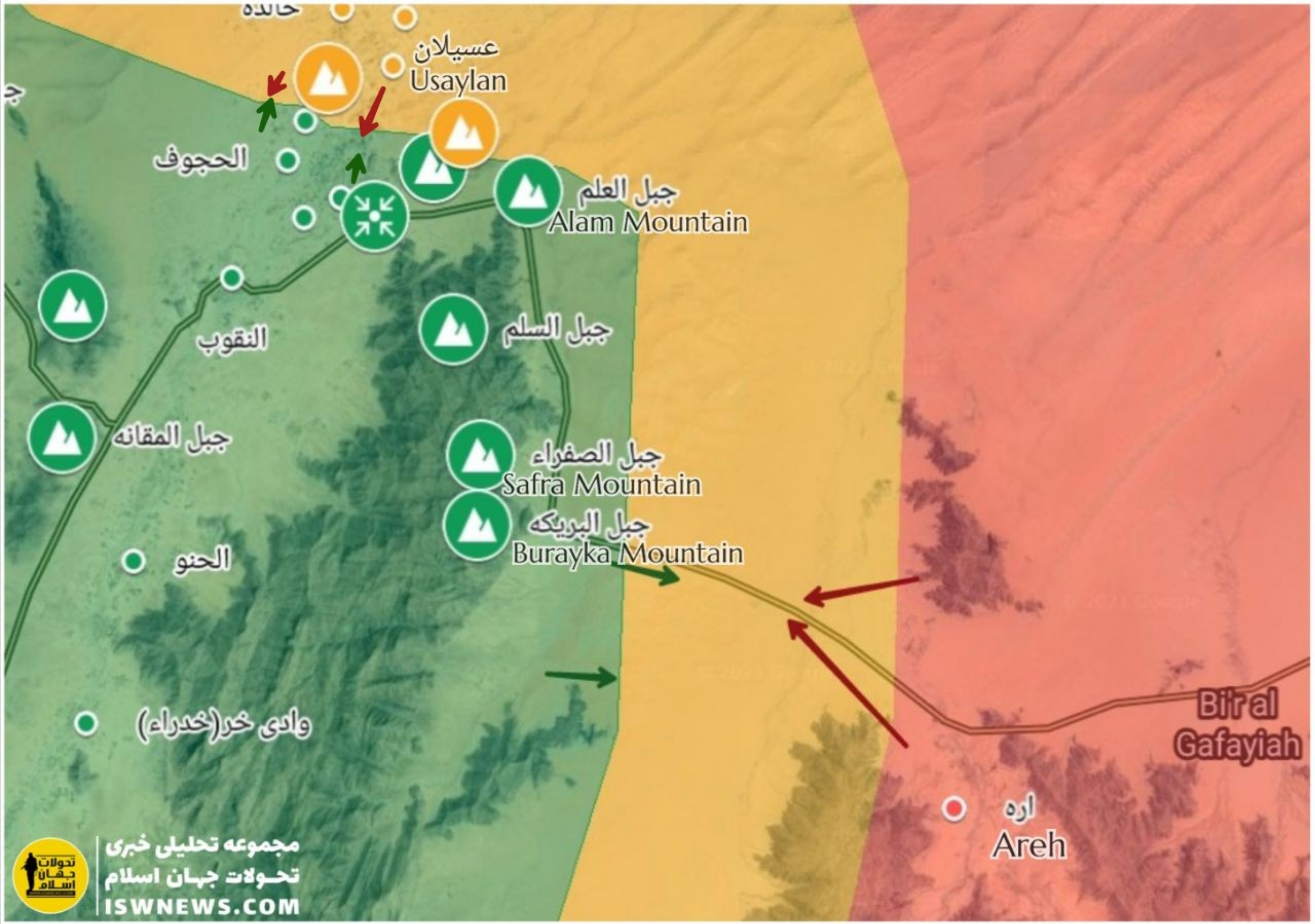
According to the ISWNews field source, the conflict between Ansar Allah and the Saudi-led forces is centered on the northern areas of al-Naqub, Selm mountain and al-Safra, located in the south of Usaylan.
In the past few hours, some pro-Saudi media claimed that the Saudi-led forces have captured the town of al-Naqub and the surrounding villages, which does not correspond to the field realities.
Currently, only the villages of Hid ibn Aqil and al-Hajar are completely under the control of the Saudi coalition, and the other villages are empty of the control of both sides. The Amaliqah forces intend to launch attacks on the town of Beyhan, and if Ansar Allah does not provide a special defense line on this front, the fall of these areas is possible.
In the past 48 hours, Saudi coalition warplanes bombed Shabwa fronts in times. One of these airstrikes led to massacre of five civilians. In this regard, the Saudi coalition claims 36 airstrikes on Ansar Allah positions in Shabwa and the destruction of 23 military vehicles and the deaths of 185 Ansar Allah fighter in the past 24 hours. Also in recent days, more than 40 members of the Amaliqah forces were killed and more than 50 others were wounded. Samih Jaradeh al-Sabihi, commander of the 2nd Brigade of Amaliqah, is among those killed in recent days.
According to the latest news from the western front of Shabwa province, the attack of the Amaliqah forces on the al-Safra, Areh and Wadi Markhah fronts has met with Ansar Allah resistance, and clashes continue in these areas.
Amaliqah forces also entered the city of Usaylan in an agreement with the Belharith tribes and attacked Ansar Allah positions in the villages south of Usaylan.
It should be noted that after the withdrawal of the Saudi coalition from the city of Usaylan on September 20, the control of this city fell into the hands of the Belharith tribes. Ansar Allah also handed over control of these areas to the Belharith tribes through an agreement with the elders of region. Therefore, the claim that Ansar Allah withdrew from Usaylan is not true, because Ansar Allah did not enter this city from the beginning.
According to local sources in Shabwa province, on the evening of Tuesday, December 28, a gathering of Saudi-led forces at the airport in the city of Ataq was targeted by unknown strikes. Details of the attack have not yet been released officially, but local sources believe the attack was carried out by Ansar Allah.
Ansar Allah reportedly used a missile (possibly Nikal or Sa’ir and Qasim 2) and a suicide drone (possibly Qasef 2K) to attack the gathering, killing 12 and wounding 14 Saudi-led forces. Some other sources also put the death toll at more than 46.
It should be noted that Amaliqah forces have recently entered the city of Ataq on the orders of the Saudi coalition command and to take part in the operation to retake districts of Usaylan, Bayhan, Ain, Markha Olia and Markha Sofla from Ansar Allah.