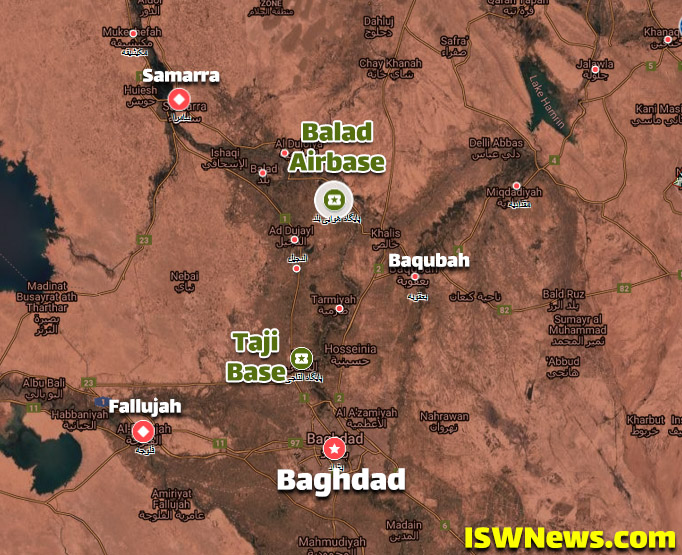
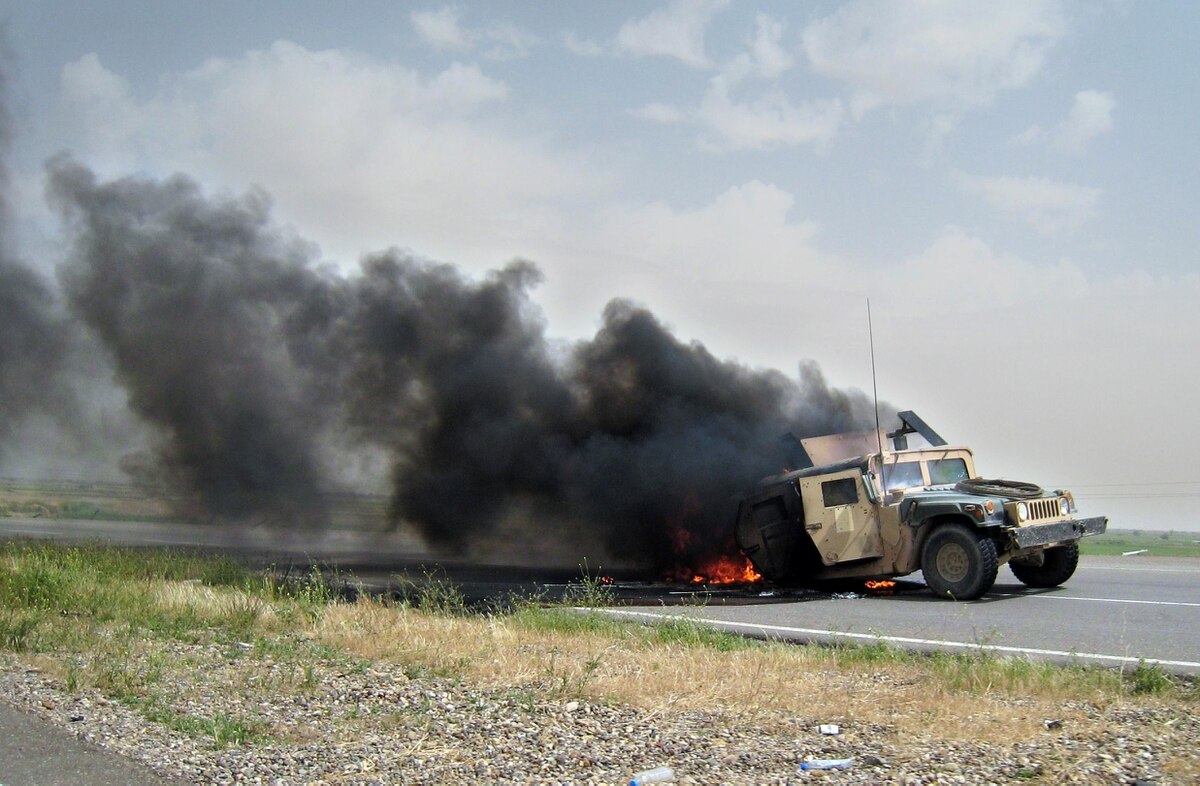
Balad Air Base has a long history of being targeted by resistance rockets and drones. The base was also targeted by a drone strike by Iraqi resistance groups on January 15.
After the collapse of the Soviet Union in December 1991, Ukraine became an independent state. Its geography included the deployment of a third of the Soviet nuclear missiles, which led to controversy in the West against Ukraine.
Ukraine’s nuclear arsenal was equipped with 130 intercontinental ballistic missiles with a range of 5,000 to 10,000 kilometers, each of which was equipped with 10 nuclear warheads. There were also about 1,700 nuclear warheads and 33 aircraft capable of carrying nuclear bombs stationed on Ukrainian soil, posing a serious threat to Eastern and Western powers. Of course, the nuclear bombs switches was under Russian control, and Ukraine had no control over the use of nuclear weapons.
Under such circumstances, the Budapest Agreement was signed on December 5, 1994 between the United States, Britain and Russia (permanent members of the UN Security Council) and the countries of Ukraine, Kazakhstan and Belarus. The agreement was in fact a UN Security Council guarantee to three countries, Ukraine, Kazakhstan and Belarus, in exchange for accepting the Non-Proliferation of Nuclear Weapons treaty (NPT) and handing over nuclear weapons to Russia.
Despite these guarantees being on paper and Russia, the United States and the United Kingdom never living up to their commitments, Ukraine was able to attract investment to develop nuclear power generation at its plants. These power plants include the following:
1- ZaporizhzhiaNuclear Power Plant: Zaporizhzhya NPP is located on the outskirts of the town of Enerhodar in the Zaporizhzhia oblast. It is the largest nuclear power plant in Europe and one of the top 10 power plants in the world. Zaporizhzhya NPP was commissioned in 1985 and has six light water nuclear reactors. The Zaporizhzhya power plant supplies one-fifth of Ukraine’s electricity. The capacity of this power plant is 5700 MW.
2- Rivne Nuclear Power Plant: Rivne NPP is located near Varash in Rivne oblast in northwestern Ukraine. The Rivne power plant was commissioned in 1981 and has four reactors. The capacity of this power plant is 2350 MW.
3- Khmelnitsky Nuclear Power Plant: Khmelnitsky NPP is located in the north of Khmelnitsky oblast. The Khmelnitsky power plant was commissioned in 1987 and has two reactors. The capacity of this power plant is 1900 MW.
4- Yuzhnoukrainsk Nuclear Power Plant: Yuzhnoukrainsk NPP (or South Ukraine NPP) is located near the city of Yuzhnoukrainsk in Mykolaiv oblast. The capacity of this power plant is 2850 MW.
5- Chernobyl Nuclear Power Plant: Chernobyl NPP was shut down after the Chernobyl nuclear disaster on April 26, 1986. The three other reactors remained operational after the accident but were eventually shut down by 2000, although the plant remains in the process of decommissioning as of 2021. Nuclear waste clean-up is scheduled for completion in 2065.
6- Odessa Nuclear Power Plant: Odessa NPP is an unfinished nuclear power plant, located near the town of Teplodar, west of Odessa. After the accident at the Chornobyl NPP, construction of the Odessa NPP has been stopped. National Nuclear Power Generating Company Energoatom (NNEGC) is holding discussions on the restoration of the construction. However, the construction and completion of this power plant has not started yet.
On March 16, US President Joseph Biden announced $ 800 million military aid to Ukraine. And with this decision, the total US military aid to Ukraine last week alone reached one billion dollars and since the inauguration of the Biden government to two billion dollars! The aid will go directly from the US Department of Defense to the Ukrainian army to help them fight the Russian army.
The new US $ 800 million aid package to Ukraine includes the following:
Over 20 million rounds of small arms ammunition and grenade launcher and mortar rounds;
25,000 sets of body armor; and
25,000 helmets.
“The American people are responding to the request of the President of Ukraine Zelensky to send more aid and weapons to this country to defend itself and fight against Russian aggression,” he said. Before the attack (last year) we sent $ 650 million worth of military aid to Ukraine, including anti-aircraft and anti-armor equipment, and at the beginning of the Ukraine-Russia war, $ 350 million worth of weapons, including anti-aircraft systems, anti-tank weapons, helicopters, systems We have allocated secure communications equipment, and satellite imagery to assist Ukraine.
The United States has so far sent the following equipment to Ukraine in the form of military aid:
Over 600 Stinger anti-aircraft systems;
Approximately 2,600 Javelin anti-armor systems;
Five Mi-17 helicopters;
Three patrol boats;
Four counter-artillery and counter-unmanned aerial system tracking radars;
Four counter-mortar radar systems;
200 grenade launchers and ammunition;
200 shotguns and 200 machine guns;
Nearly 40 million rounds of small arms ammunition and over 1 million grenade, mortar, and artillery rounds;
70 High Mobility Multipurpose Wheeled Vehicles (HMMWVs) and other vehicles;
Secure communications, electronic warfare detection systems, body armor, helmets, and other tactical gear;
Military medical equipment to support treatment and combat evacuation;
Explosive ordnance disposal and demining equipment; and
Satellite imagery and analysis capability.
In addition to the U.S.-produced short-range air defense systems the Ukrainians have been using to great effect, the United States has also identified and is helping the Ukrainians acquire additional, longer-range systems on which Ukraine’s forces are already trained, as well as additional munitions for those systems. The US Congress also recently approved sending $ 13 billion and $ 600 million in military aid to Ukraine.
In recent days, with the widespread distribution of weapons donated by Westerners to Ukrainian forces, we are witnessing a slowdown in the advance of the Russian army in various areas of the conflict. Published videos and pictures of battle scenes show that almost every Ukrainian soldier carries an anti-tank weapon! This has led to an increase in Russian military casualties. The Ukrainian military also uses satellite imagery and the use of drones to identify the location or gathering of Russian military forces and equipment, and inflicts heavy casualties on Russian troops. Increased Western arms supplies to Ukraine could make it even more difficult for Russian forces in Ukraine, and the Ukrainian military could ground the Russian military with the proper use of new weapons.
Before the start of Russian military operation in Ukraine, as well as in the last two weeks, the United States and European countries, including Germany, the Netherlands and Lithuania, etc. sent man-portable air-defense systems and Anti-tank missiles to Ukraine. These missiles have played an important role in preventing the advance of Russian Army armored columns in Ukraine, and have so far caused significant damage to Russian armored vehicles and equipment.
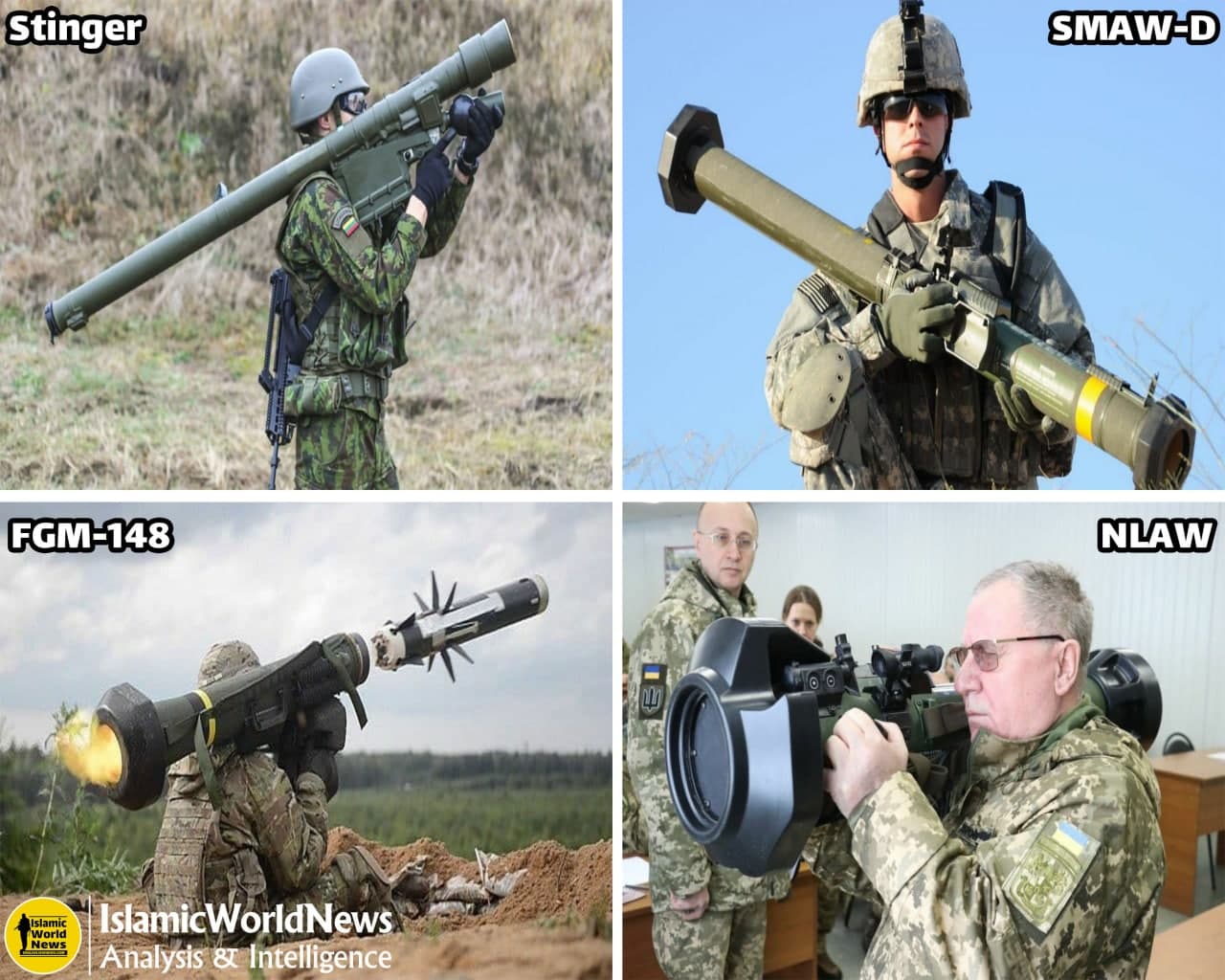
The most important systems donated by European countries to the Ukrainian army are the NLAW missile, the FGM-148 Javelin missile, the SMAW-D missile and the Stinger missile, the details of which are as follows:
1- NLAW missile: The NLAW is a top attack anti-tank, fire-and-forget missile system. Its penetration is not exactly known, but its effective firing range is between 20 and 600 meters and with maximum firing range of 1000 meters. The missile operates in such a way that it explodes on top of the target and its fragments penetrate the target. The ability to fire from inside buildings makes this missile suitable for urban warfare. The NLAW is a joint product of Sweden and Britain. According to European sources, Britain has sent more than 2,000 such missiles to Ukraine.
2- Javelin FGM-148 missile: The Javelin FGM-148 is a top attack anti-tank, fire-and-forget missile system made by United States. Its effective firing range is between 75 to 2500 meters. The penetration rate of this missile is between 600 to 800 mm on RHA. This missile also has the ability to fire from inside buildings and closed places. The United States and Lithuania have sent more than 2,000 such missiles to Ukraine.
3- SMAW-D missile: The SMAW-D (Disposable), or M141 Bunker Defeat Munition is a single-shot, shoulder-launched weapon designed to defeat hardened structures. The effective firing range of SMAW-D missile is between 15 to 1000 meters. SMAW-D is made by the United States exclusively for its Army to fill the void in the United States Army inventory of a bunker buster weapon. The United States has delivered 100 such missiles to the Ukrainian army so far.
4- FIM-92 Stinger missile: The FIM-92 Stinger is an originally US-made man-portable air-defense system that operates as an infrared homing surface-to-air missile. Its effective range is between 180 to 3800 meters with a maximum range of 4800 meters. Germany has sent more than 500 of these missiles and the Netherlands more than 200 of these missiles to Ukraine.
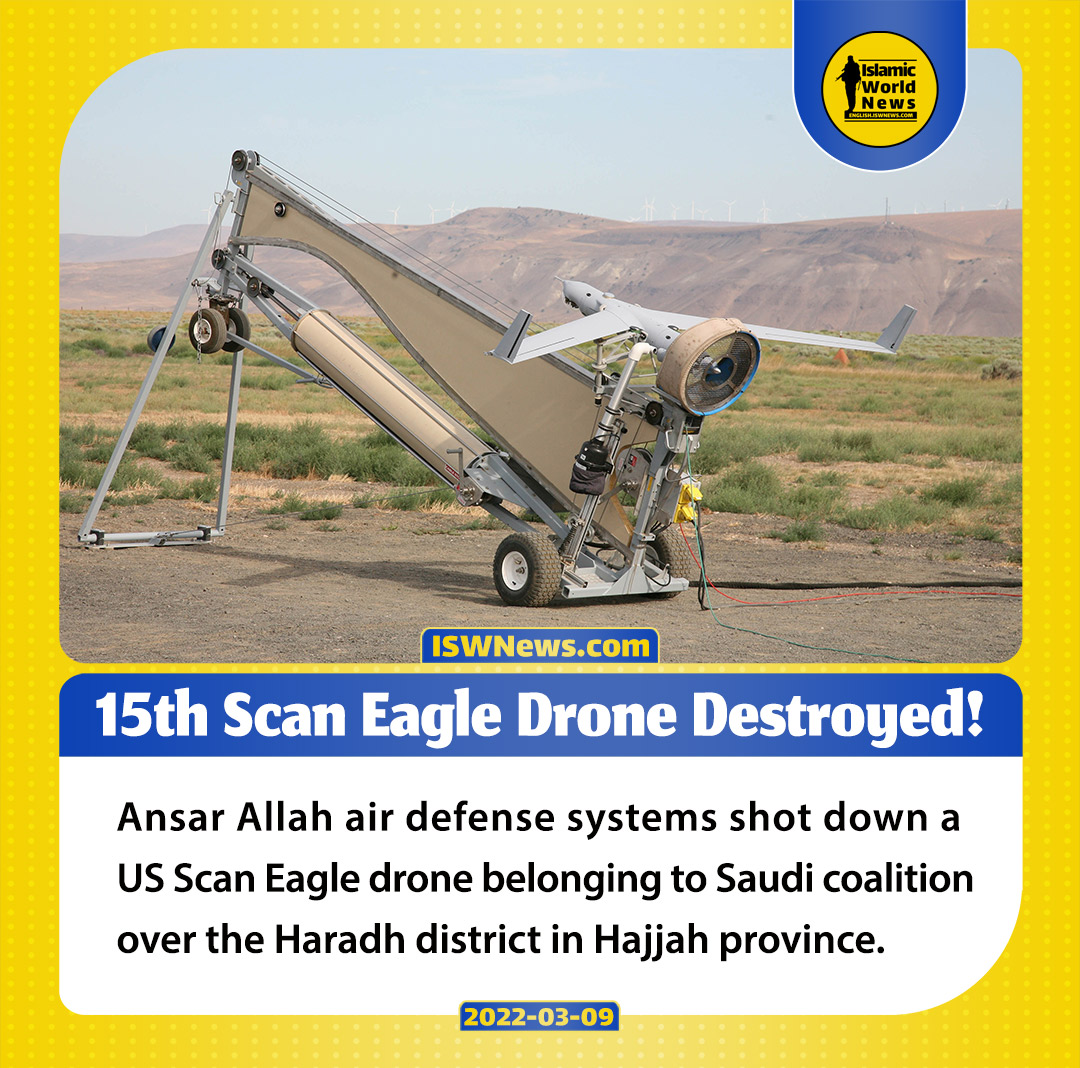
According to Brigadier General Yahya al-Sari’, a spokesman for the Yemeni Armed Forces, the drone was shot down on March 8, in the skies of Haradh district. The drone is the 15th US-made Scan Eagle drone to be shot down by Ansar Allah during the Yemeni war.
The first US Scan Eagle drone was shot down on June 19, 2021 over the al-Mashjah heights in the west of Marib province, the second on June 21, 2021 in the same area over the al-Mashjah heights, the third and fourth on August 14, 2021 and September 27, 2021 over the Madghal district in the west of Marib province, the fifth, sixth, seventh and eighth on November 9, 2021, November 13, 2021, December 4, 2021 and December 8, 2021 over the al-Jubah district in Marib province, the ninth on December 10, 2021 over the Sarwah district in the west of Marib province, the 10th on December 16, 2021 over the Wadi district in east of Marib province, the 11th on December 24, 2021 over the Yatmah area in the west of al-Jawf province, the 12th and 13th on February 25, 2022 and January 29, 2022 over the Jubah district in the Marib province and the 14th on February 28, 2022 over the Haradh district in Hajjah province.
Russia’s Foreign Intelligence Service confirmed in a statement that the Al-Tanf base in eastern Syria was a training ground for ISIS-linked terrorists and their transfer to Ukraine to fight Russia.
Russia’s foreign intelligence service said in a statement: “The United States has transferred dozens of Russian, Chechen and other ISIL terrorists to the US-British-controlled Al-Tanf base in eastern Syria by the end of 2021. Then, they were sent to the eastern regions of Ukraine, including the Donbas region, after undergoing special training on sabotage and terrorist acts. The CIA and the US Special Operations Command are building new ISIS units in West Asia and Africa. They are transferring these weapons to Ukraine via Poland in cooperation with NATO intelligence agencies.”
The alleged transfer of foreign troops from Syria to Ukraine comes as Ukrainian President Volodymyr Zelenskyy recently confirmed that 16,000 foreign mercenaries will arrive in Ukraine. He had previously ordered the release of prisoners with military backgrounds intending to join the Ukrainian army on February 28.
In addition, officials in the Republic of Donetsk also released pictures and documents claiming the presence of Turkish advisers in support of Ukrainian Army drone units.
These actions show the weakness of the Ukrainian army manpower in the battles against the Russian army. The transfer of terrorists and thugs to the battlefields also creates more chaos and will lead to prolongation of war in Ukraine.
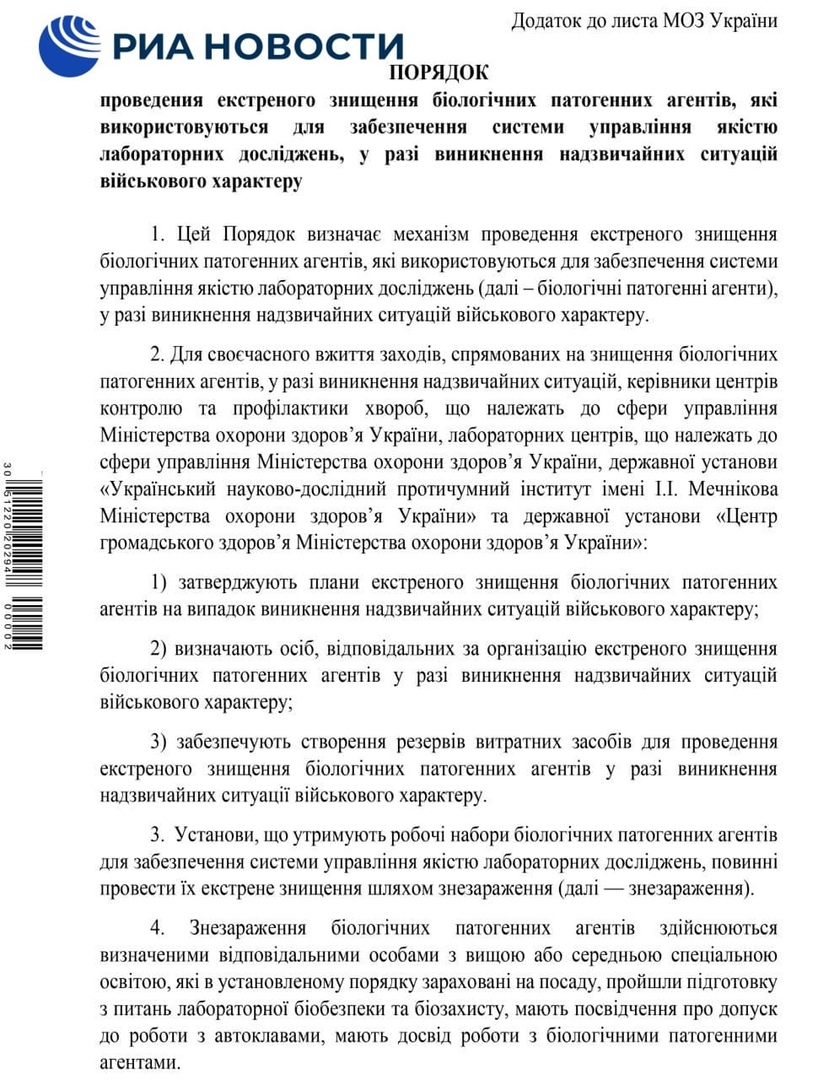
The documents proved that the components needed to make biological weapons were being built in US-funded biological laboratories in Ukraine near the Russian border.
Russian Defense Ministry: “Our documents confirm that the components of biological weapons are being developed in Ukrainian biological laboratories near Russia. These documents are currently being reviewed and analyzed by experts in the chemical, biological and radioactive protection forces.”
The Biosynergy Program is a $ 2.1 billion project supported by the Department of Defense that aims to establish biological laboratories outside the United States. As part of this project, the United States has established more than 200 biological laboratories in 25 countries and regions, including Ukraine, Georgia, etc.
On March 7, the Russian military has declared a unilateral ceasefire in Ukraine since 10 a.m. local time. The ceasefire was reached at the personal request of French President Emmanuel Macron to Russian President Vladimir Putin.
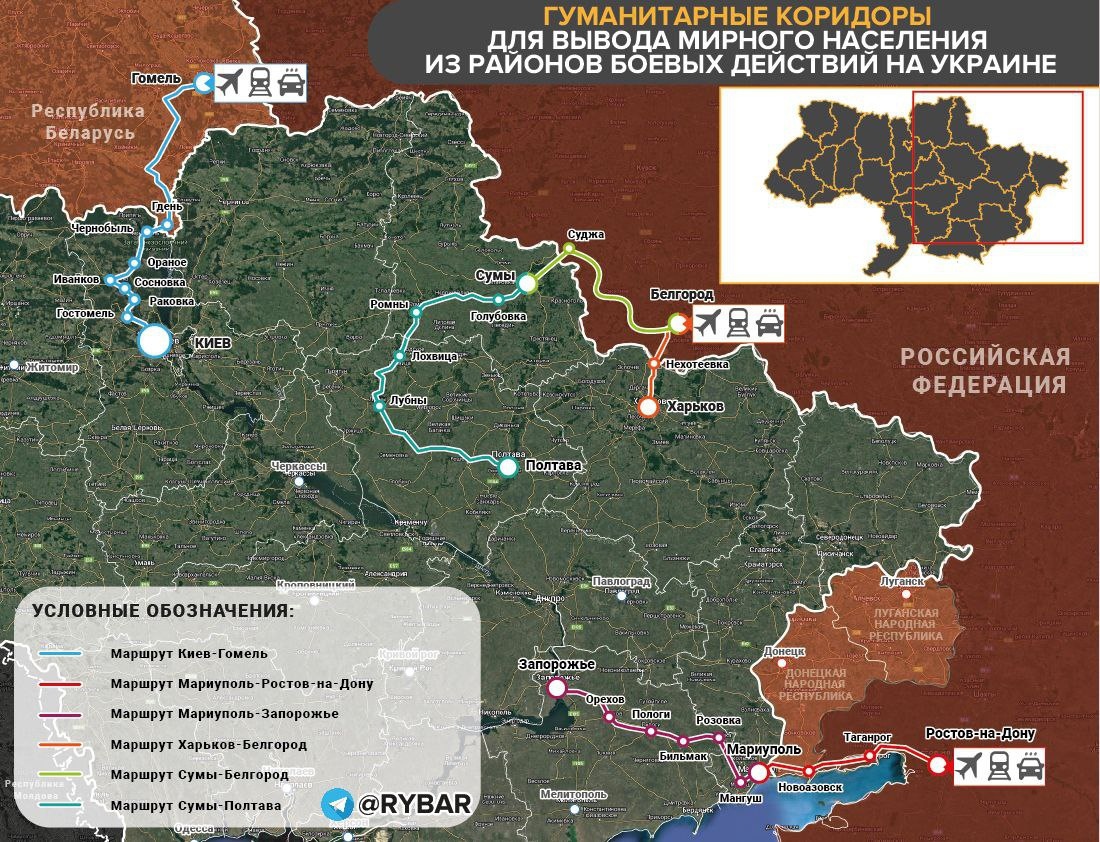
Following the announcement of the ceasefire, four main routes were planned for the withdrawal of civilians from the northern, eastern and southern regions of Ukraine. These routes are announced from Kyiv, Sumy, Kharkiv and Mariupol.
Russia has asked Ukraine to provide all the necessary conditions for the establishment of humanitarian corridors and the safe evacuation of civilians and foreign nationals from the conflict zone.
It should be noted that in previous ceasefires, the Ukrainian side has prevented the complete evacuation of civilians in some areas or created problems in the evacuation process.
Hours after the ceasefire was announced, a number of people managed to leave Ukraine, but according to field evidence, Ukrainian extremist forces prevented people from leaving most areas, and there were even reports of shootings on buses.
A Russian Defense Ministry spokesman said that the Ukrainian side had not taken any steps to establish humanitarian corridors by 1 p.m. However, he said that so far more than 168,000 people have been evacuated from conflict zones in Ukraine, of which 43,469 are children. Russia has also delivered 882 tons of humanitarian cargo to Ukraine so far.
The time of the end of this unilateral ceasefire has not been announced.
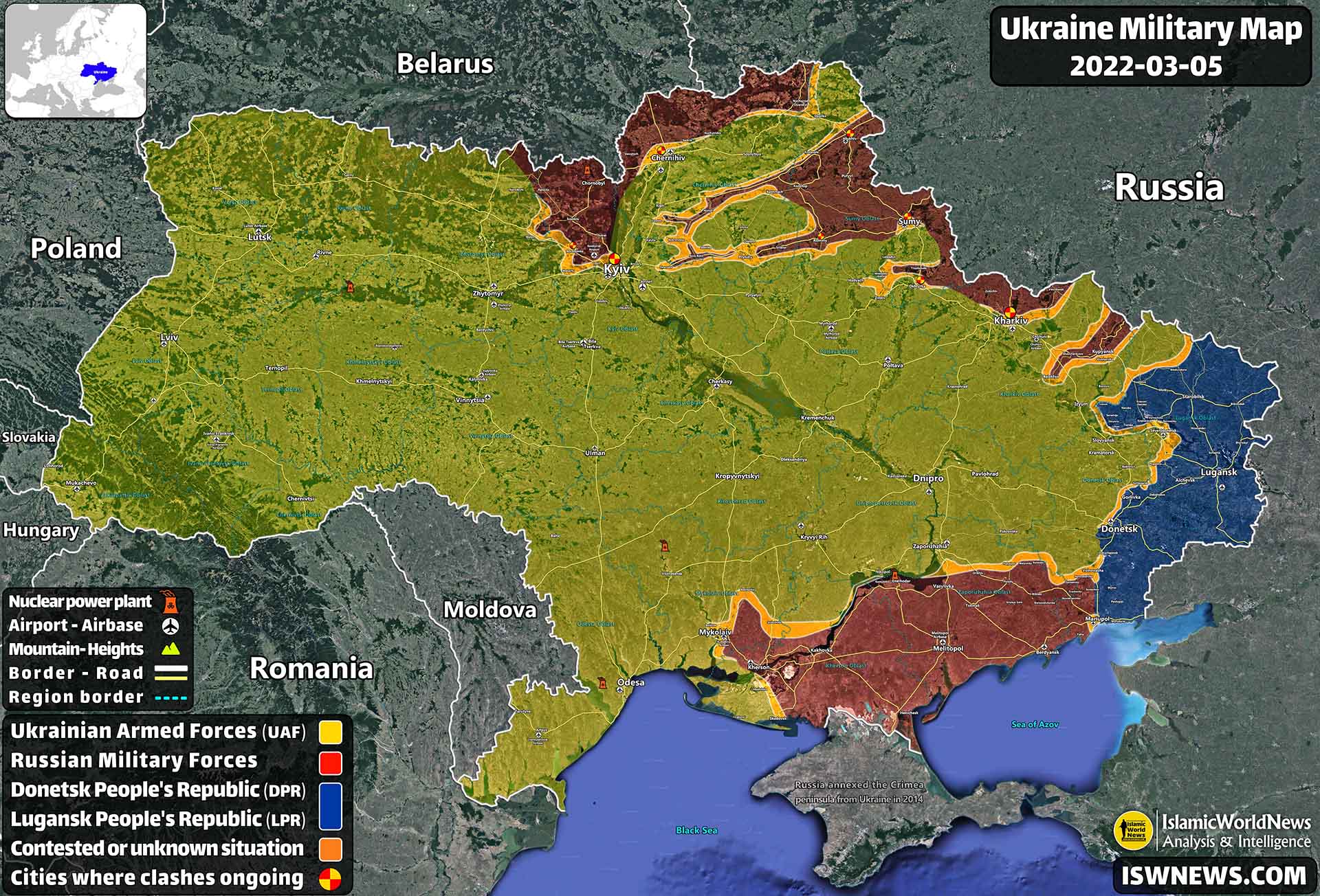
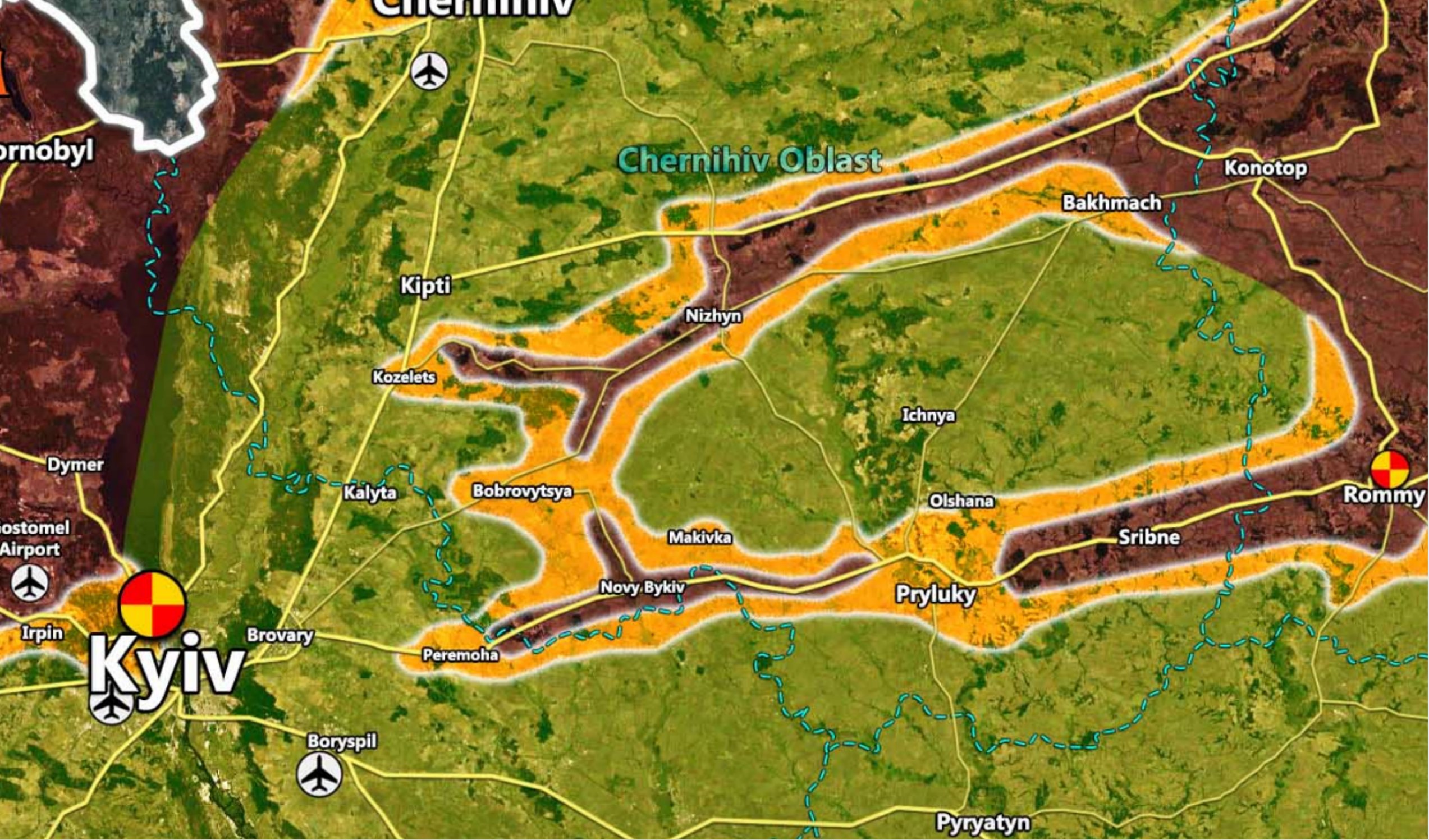
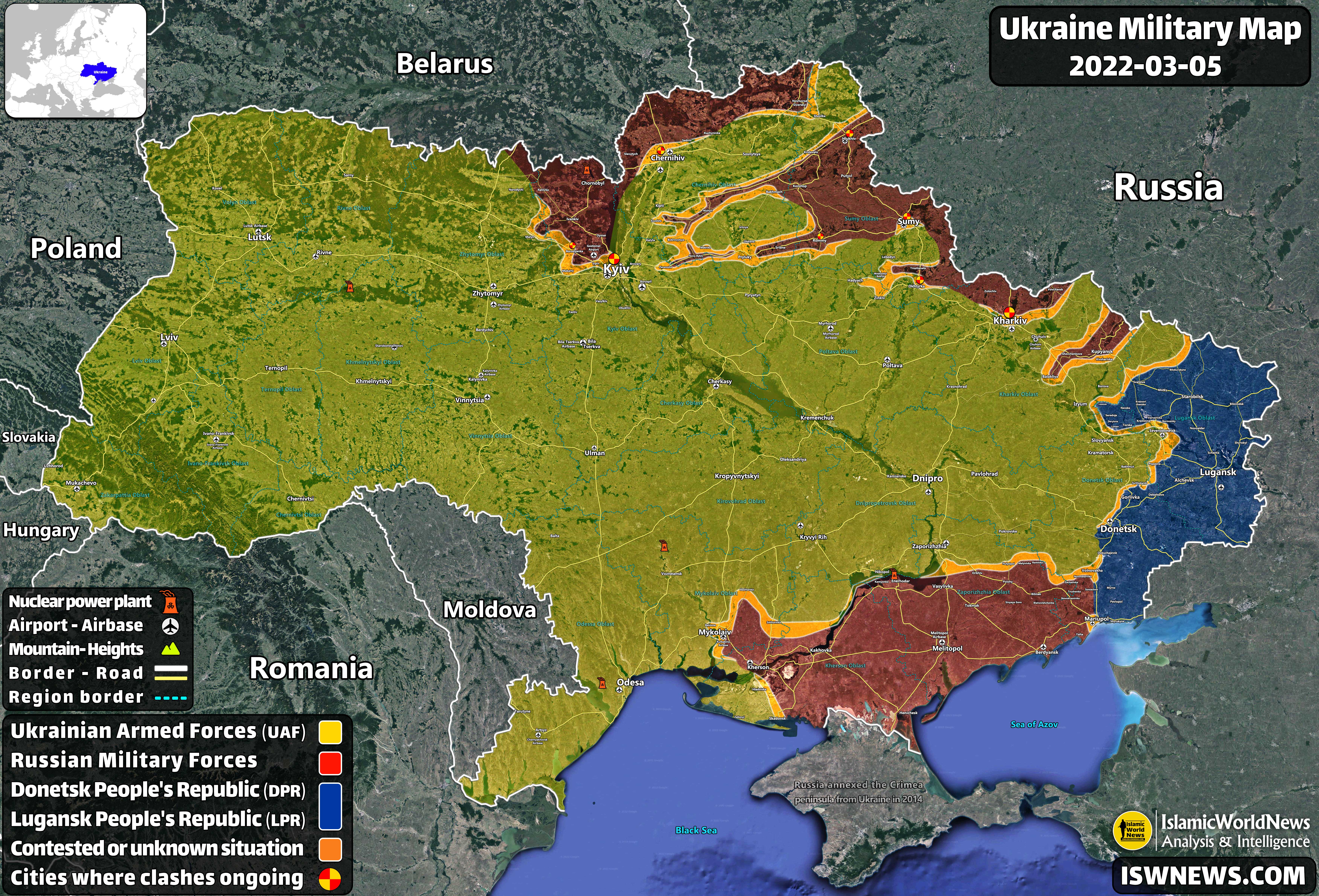
Ten days have passed since the war in Ukraine, and now the situation on the fronts is clearer than in previous days. The map, shows the latest status of the conflict lines and the arrangement of forces according to the latest confirmed news.
Most of the changes took place in the north of Luhansk oblast, the north of Mariupol in the south of Donetsk oblast and the east of Zaporizhzhia oblast. Also in the north, the map in the east of Kyiv and in the Chernihiv and Sumy have been updated.
In recent days, the presence of Russian forces in the areas of Kozelets, Bobrovytsya, Peremoha has been reported. The situation in Chernihiv oblast is quite vague, but by tracking the movement of Russian armor, the situation can be estimated in general.
Situation in Chernihiv oblast
Around Kyiv, Russian forces have re-entered Irpin in western Kyiv. Also, according to information provided by Ukrainian military sources, Russian forces are stationed at three points around the town of Malyn.
Situation around Kyiv
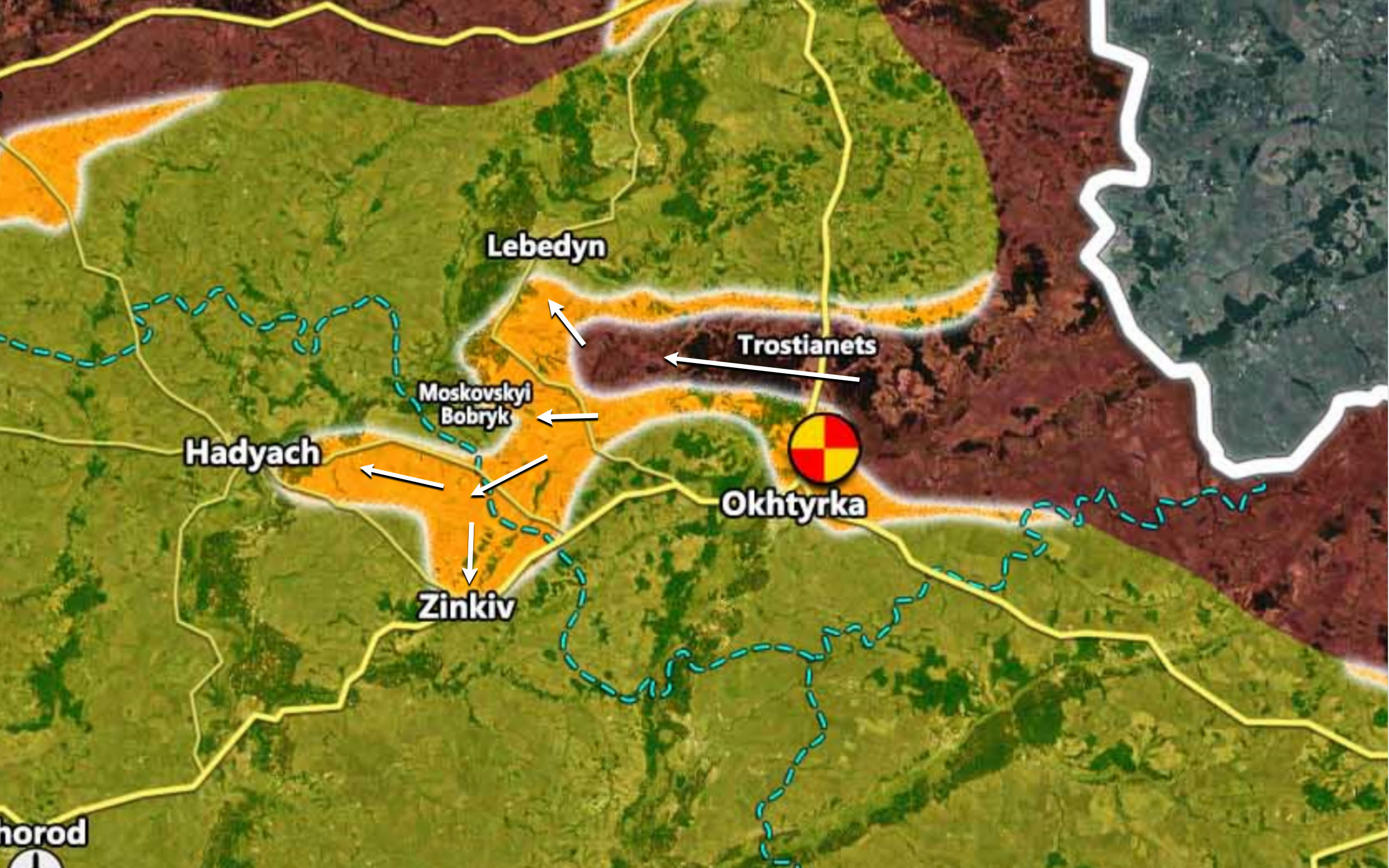
In the Sumy oblast, in southern Sumy, the town of Trostianets came under the control of the Russian army. Russian forces have advanced deep into the West. There have been reports of Russian forces failing to capture Lebedyn and Moskovskyi Bobrysk; However, the presence of Russian forces on the Hadyach and Zinkiv axes has been reported. Two days ago, a number of Russian troops were captured by Ukrainian forces in the Hadyach area. This indicates Russia’s presence in these areas.
Situation in the south of Sumy oblast
In the Luhansk oblast, over the past two days, a large number of settlements were captured by the joint forces of Luhansk and the Russian army. It can now be said that most of Luhansk oblast is under the control of Russia and its allies.
Situation in Luhansk oblast
In the Zaporizhzhia and Donetsk oblasts, over the past two days, large areas east of the Zaporizhzhia region and south of the Donetsk came under Russian and DPR control. With the advances made, the Zaporizhzhia-Mariupol road has been completely cut off. Also, after the end of the ceasefire, which was intended for the evacuation of civilians from Volnovakha and Mariupol, the clashes have resumed and the fall of Volnovakha and Mariupol in the coming days is inevitable.
Situation east of the Zaporizhzhia oblast and south of the Donetsk oblast
Based on the above information and the military map of Ukraine, it can be said that after 10 days of the war in Ukraine, about 20% of the territory of the country has come under the control of the Russian army and its allies.