Author: Mirza

  • Shooting in the heart of Tel Aviv; Three killed and 15 wounded!

    Shooting in the heart of Tel Aviv; Three killed and 15 wounded!

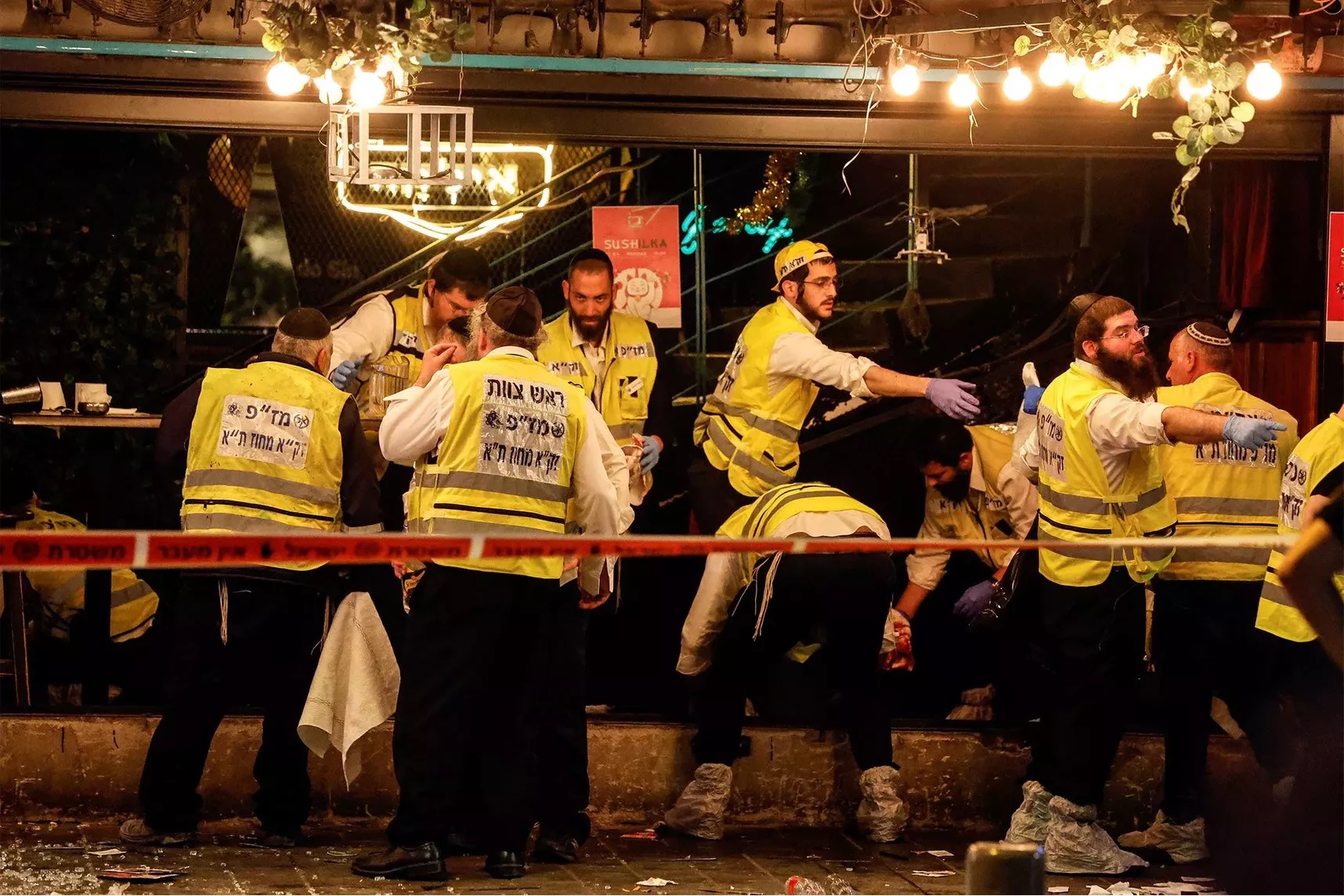
    On April 7, Hebrew media reported gunshots being heard on Tel Aviv’s Dizengoff Street. Minutes later, it was revealed that an unknown person had fired at the Israelis with a firearm and then fled the scene. As result of the attack, two Israelis were killed and 15 others were injured. Later, Hebrew sources stated that another Israeli succumbed to his injuries in the shooting attack in Dizengoff Street.

    After the incident, hundreds of soldiers and security forces took to the streets of Tel Aviv after Israeli police declared the incident a terrorist act. Israel officials said over 1,000 members of the Israeli police, army special forces and the Shin Bet intelligence service were involved in a search operation to find the perpetrator of the shooting.

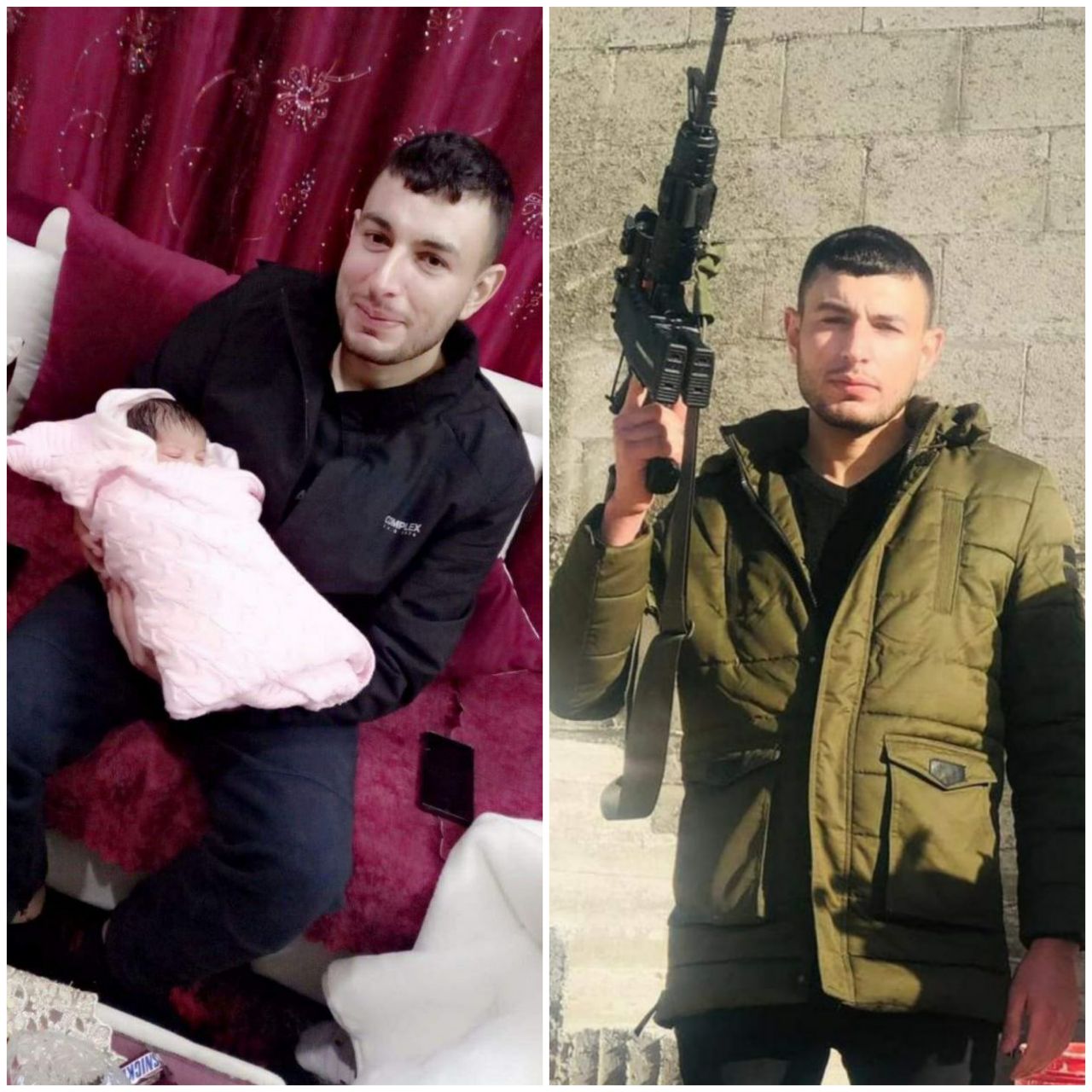
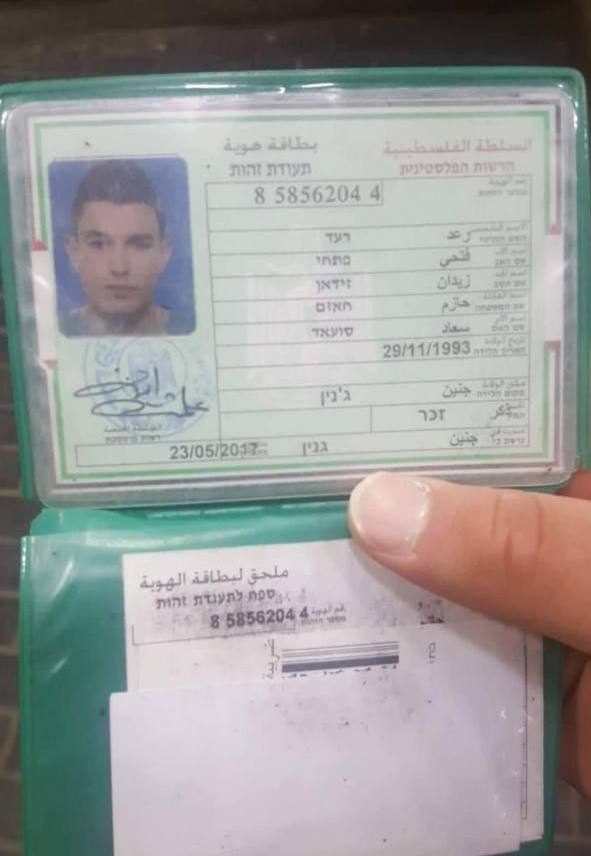
    The operation was carried out by a 29-year-old Palestinian named “Raad Fathi Hazem” from Jenin. After hours of pursuit, he escaped from Dizengoff to Jaffa and was shot dead by Israeli forces.


    The Hamas Islamic Resistance Movement, in a statement congratulating and condoling the martyrdom of Palestinian hero Raad Hazem, stressed that the resistance in Palestine will continue until the end of the occupation.
    Lebanese Hezbollah also congratulated the heroic operation in Tel Aviv in a statement: “We call on all the free people of the world and the Islamic and Arab Ummah to stand by the Palestinian people and support them.”

    The first moments of shooting operation in Tel Aviv

    CCTV footage showed people drinking then suddenly dashing away at the moment of the attack, overturning chairs in the scramble to escape. Video from Dizengoff Street showed people running away as emergency vehicles poured into the area, sirens wailing.

    The two people killed were named as Eytam Magini and Tomer Morad, both aged 27.

    Three Israeli who were killed in Tel Aviv shooting
    Raad Hazem was shot dead by Israeli forces in Jaffa

    The report says it’s believed that Hazem prayed at the mosque on Yefet Street in Jaffa before going on his mission. Hazem returned to the area of the mosque after the attack. After a massive manhunt, he was located hours later, hiding near a mosque and was killed in an exchange of fire with officers from the Yamam forces and Shin Bet security service.

    It should be noted that 14 Israelis have been killed in recent weeks by the Palestinian operations in the occupied territories. This is the deadliest period of attacks against the Israeli occupiers since 2006. The Palestinian operation is being carried out successfully while the Israeli regime is on full alert and has recently launched a special security operation to counter Palestinian attacks in the occupied territories. Thus, the failure of the Israeli regime to prevent such operations has created a severe wave of fear and anxiety in Tel Aviv and other occupied areas. A new chapter of operations against the Israeli occupiers seems to have begun, and with the approach of Eid al-Fitr and the Christian and Jewish holidays, we are witnessing an increase in operations and Israeli casualties.

    Read more:
    Four Israelis were killed in stabbing attack in Beersheba
    Two Israeli killed in Hadera shooting
    Five Israeli were killed in an armed attack in a Tel Aviv suburb
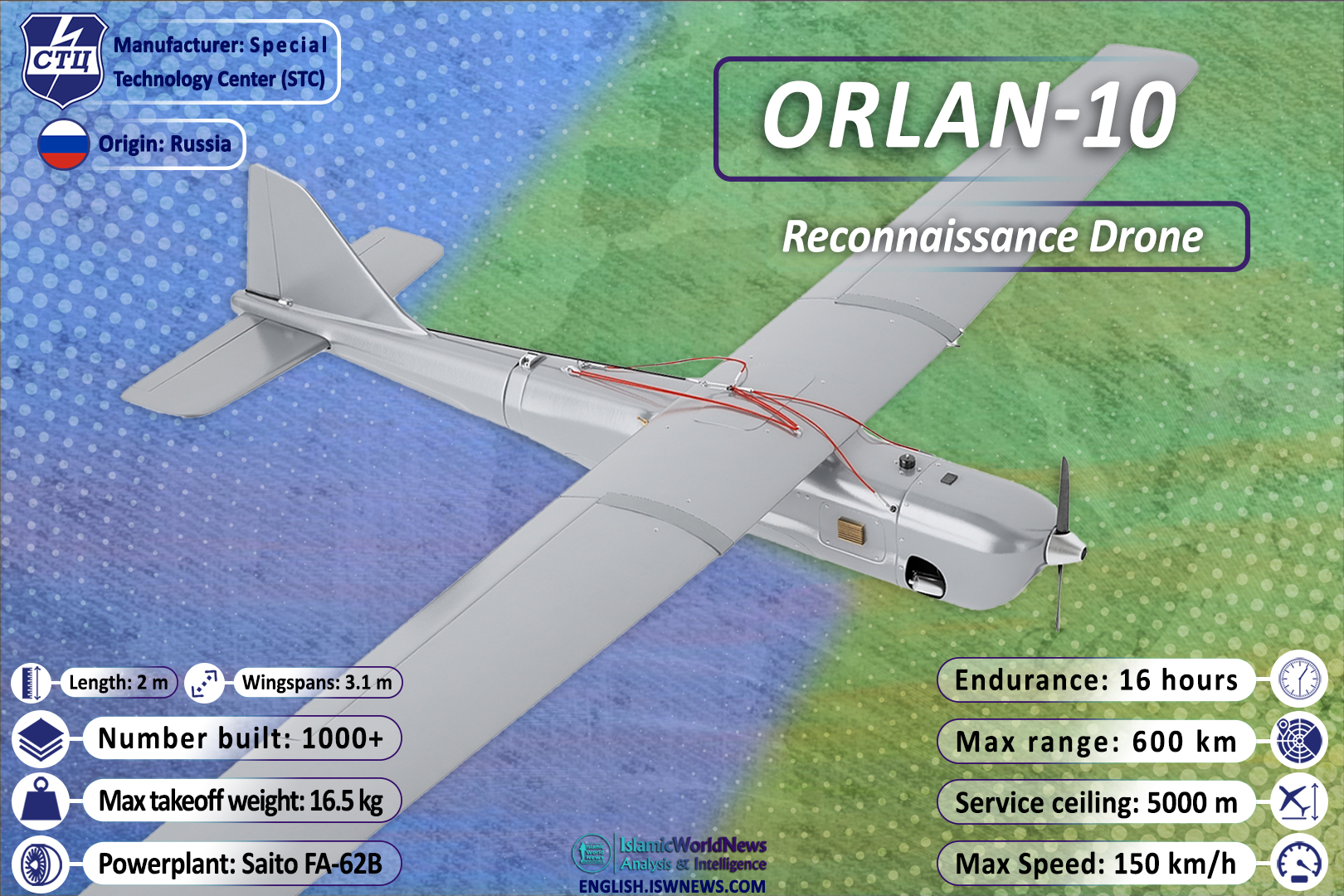
  • Military Knowledge: Orlan-10 Reconnaissance Drone

    Military Knowledge: Orlan-10 Reconnaissance Drone

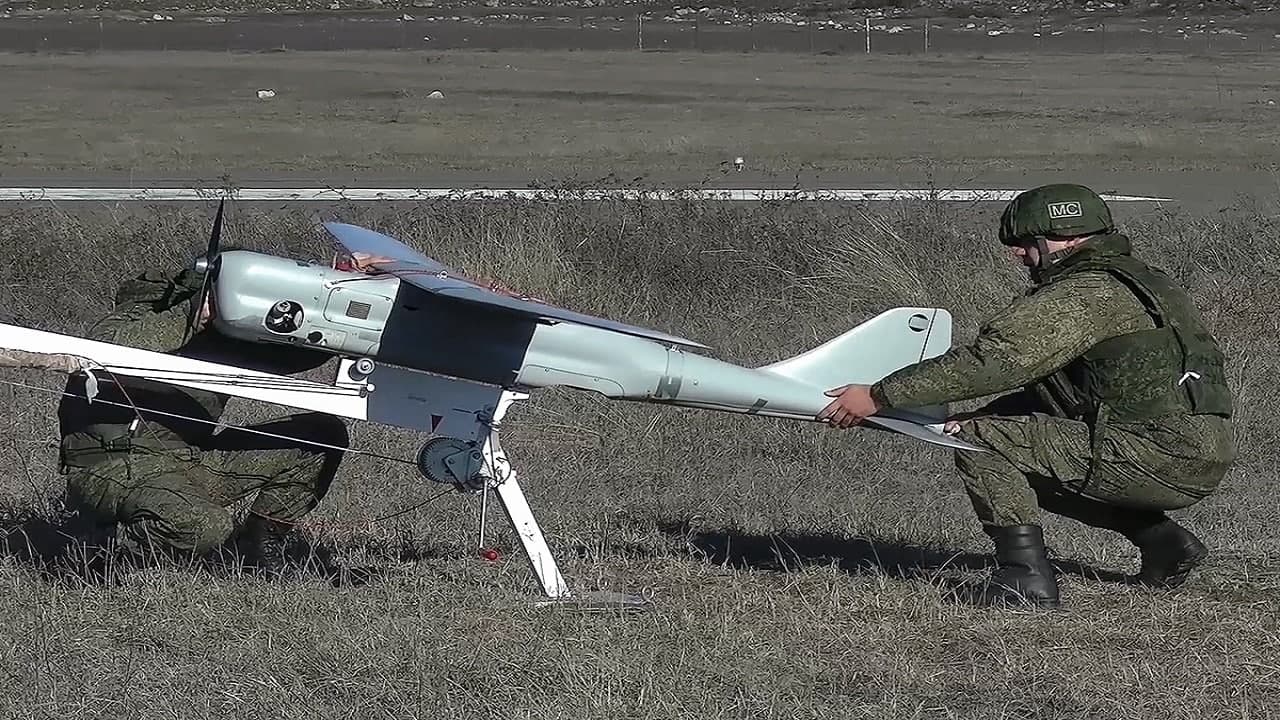
    The Orlan-10E, an export variant of the Orlan-10 drone, was unveiled at the 19th FIDAE International Exhibition in March 2016, and ROSOBORONEXPORT (the sole state intermediary agency for Russia’s exports/imports of defense-related and dual use products, technologies and services) also announced plans to export the Orlan-10E drone.

    The drone is used for a variety of missions, including reconnaissance, surveillance, electronic warfare, search and rescue, combat training, radio signal detection and target tracking on difficult terrain.

    Orlan-10 specifications:
    Length: 2 meters
    Wingspans: 3.1 meters
    Max takeoff weight: 16.5 kg
    Empty weight: 12.5 kg
    Endurance: 16 hours
    Combat range: 140 km
    Maximum(ferry) range: 600 km
    Service ceiling: 5000 meters
    Speed: 150 km
    Engine: Saito FA-62B single cylinder four stroke gasoline piston engine, 0.75 kW (1 hp)

    Click to view full size

    “Orlan-10 Reconnaissance Drone” collection of posters in Persian, Arabic, Kurdish, Azeri, Russian for Social Media:

  • Two IED attacks on US convoys in Iraq

    Two IED attacks on US convoys in Iraq

    Ashab al-Kahf group claimed responsibility for attacks.

    According to data obtained by ISWNews, this is the 62nd attack by Iraqi resistance groups on US assets in Iraq in 2022.

    Read more:
    Infographic: Iraqi Resistance Groups Operations Against the US in 2021
    Infographic: Iraqi Resistance Groups

  • Yemen: Mansour Hadi resigned for the last time!

    Yemen: Mansour Hadi resigned for the last time!

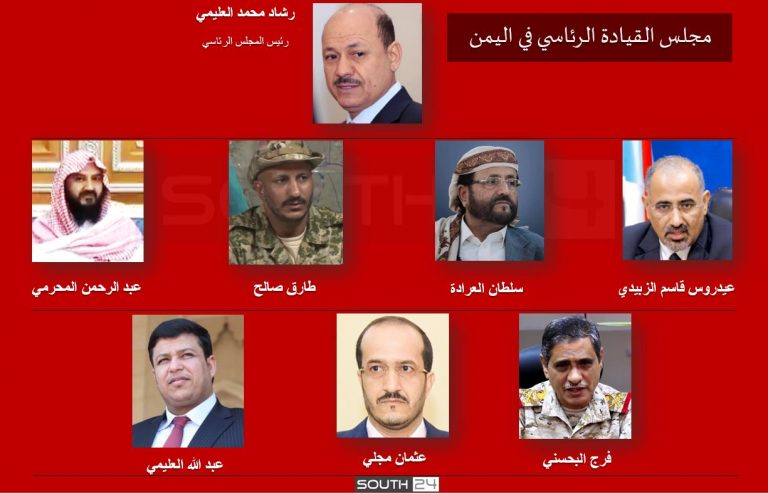
    This morning, April 7, Mansour Hadi, after a decade in charge of the Yemeni government and opposition movements, announced the transfer of his powers to the Presidential Council headed by Rashad Al-Alimi.

    The members of this council are:
    1- Aidarus al-Zoubaidi (Chairman of the Southern Transitional Council)
    2- Sultan Al-Aradeh (Governor of Marib)
    3- Tariq Saleh (nephew of Ali Abdullah Saleh and commander of the Patriotic Resistance Forces)
    4- Abdul Rahman Abu Zara’a Al-Muharrami (Commander of Al-Amaliqa Forces)
    5- Abdullah Al-Alimi (Head of President Mansour Hadi’s Office)
    6- Osman Hussein Majli (member of the People’s Congress Party and Minister of Agriculture of the resigned Yemeni government)
    7- Faraj Salmin Al-Bahsani (Governor of Hadramaut)

    According to this action, the Presidential Council, having the powers of the President and the First Vice President, is responsible for carrying out the duties of the transitional period according to the initiative of the Persian Gulf Cooperation Council.

    Mansour Hadi had previously fired his first deputy, Ali Mohsen al-Ahmar. Al-Ahmar is wanted by Ansar Allah on charges of suppressing the Yemeni revolution and collaborating with the Saudi intelligence service in establishing al-Qaeda, Ansar al-Sharia and ISIS terrorist groups in Yemen.

    In his recent speeches, Mansour Hadi stressed the need to rely on the results of the National Dialogue Conference in 2013 and 2014, the Persian Gulf Cooperation Council initiative and the UN Security Council resolution in 2015. These plans have been among the points of contention in previous years’ negotiations with Ansar Allah.

    Read more:
    Details of temporary ceasefire in Yemen
    Saudi Arabia accepted the temporary ceasefire

    The reaction of “Mohammed Al-Bukhaiti”, the governor of Dhamar and one of the field commanders of Ansar Allah, to the resignation of Mansour Hadi and the formation of the presidential council:
    “Before the start of the war, we proposed the formation of a presidential council, agreeing on all the political components to implement the main components (of the government). Were it not for the aggression announced under the pretext of restoring the legitimacy of the Hadi government, we would have almost reached an agreement and they would not have refused to form a presidential council. Now, after eight years of war, the United States has overthrown Hadi, formed a presidential council and put its first agent in Yemen at the helm.”

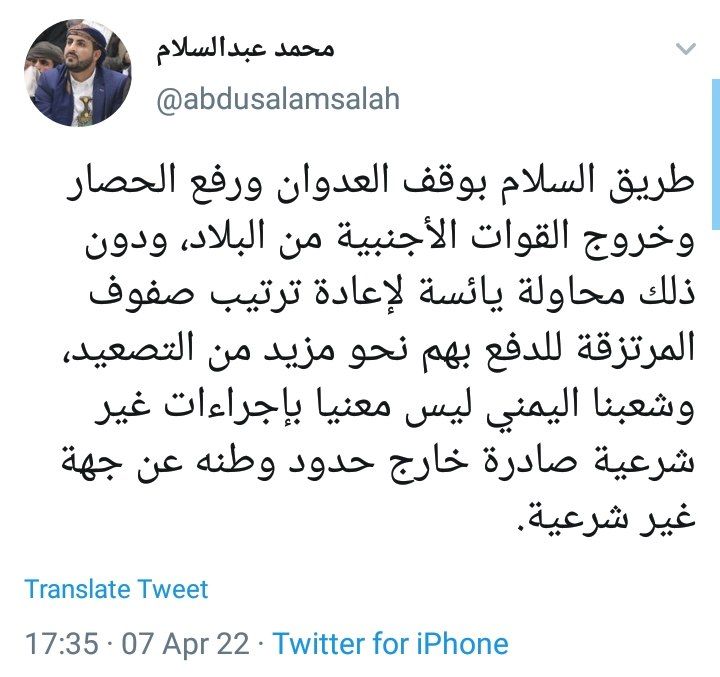
    Ansar Allah spokesman and head of negotiations for the Yemeni Salvation Government, Mohammed AbdulSalam, in response to the resignation of Mansour Hadi and the formation of the Presidential Council:
    “The present and the future of Yemen are determined inside Yemen, and any activity outside its borders is a ridiculous show and entertainment for the aggressor countries. The way to peace is to stop the aggression, remove the siege and withdraw the foreign forces, and without it there is a futile attempt to reorganize the mercenaries to lead them to more tension and war. The Yemeni people have no worries about illegal actions outside the borders of their country by an illegal party (Saudi Arabia).”

  • Rocket attack on Al-Omar oil field; Two American soldiers were wounded

    Rocket attack on Al-Omar oil field; Two American soldiers were wounded

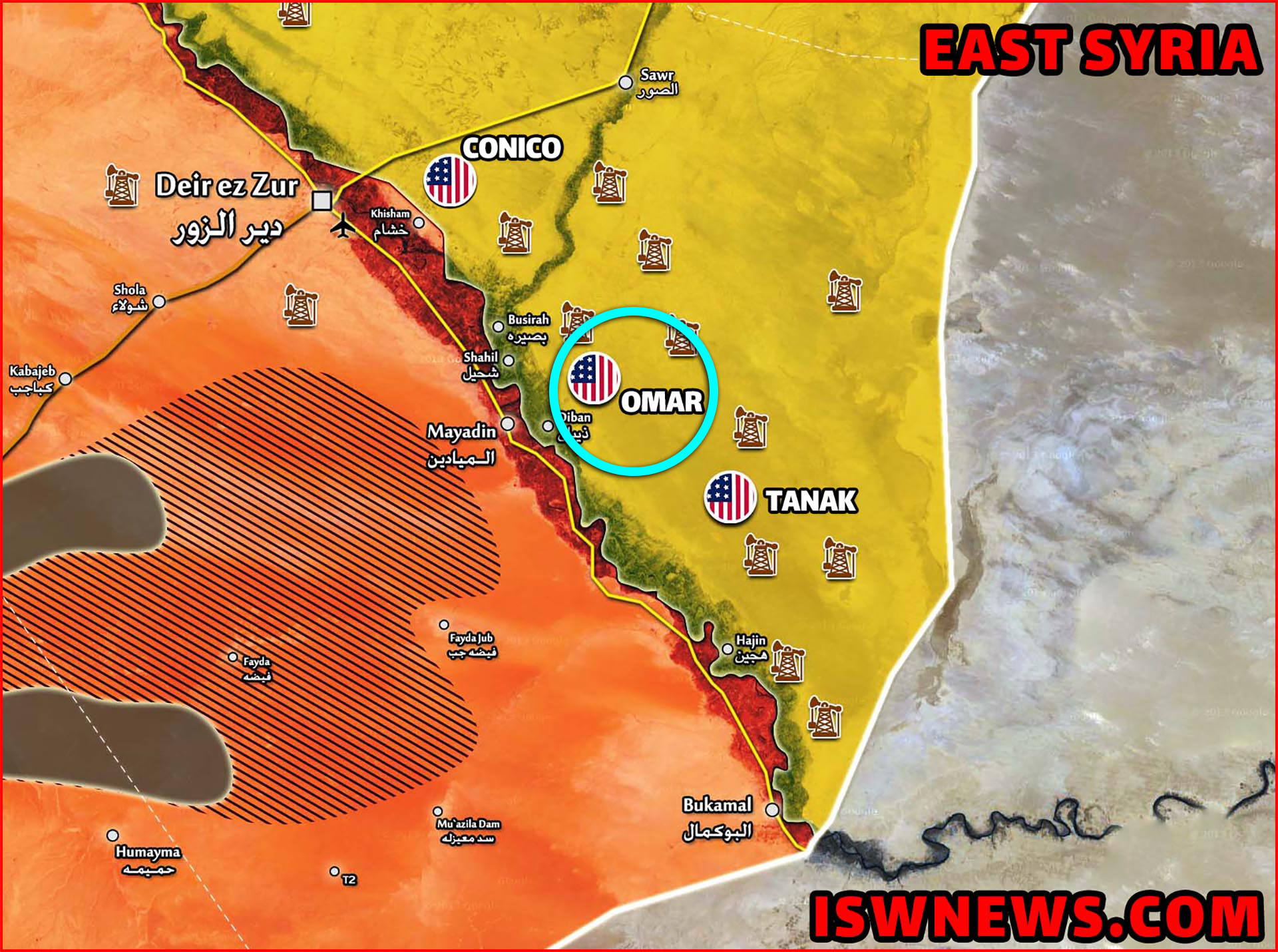
    This morning, a US coalition military base in the Omar oil field in eastern Deir Ezzor province was targeted by three Katyusha rockets.

    The Syrian Democratic Forces (SDF) claimed that Syrian Army forces and their allies targeted the US coalition base at the Omar oil field. So far, no group has claimed responsibility for the attack.

    The rocket attack came after more than 40 armored vehicles, ten personnel carriers and ten tanks escorted by four American helicopters entered the base yesterday.
    This is the first time that the American coalition is transporting such a convoy with this number of vehicles and equipment to its military base in the Omar oil field.

  • Military Knowledge: FIM-92 Stinger MANPADS

    Military Knowledge: FIM-92 Stinger MANPADS

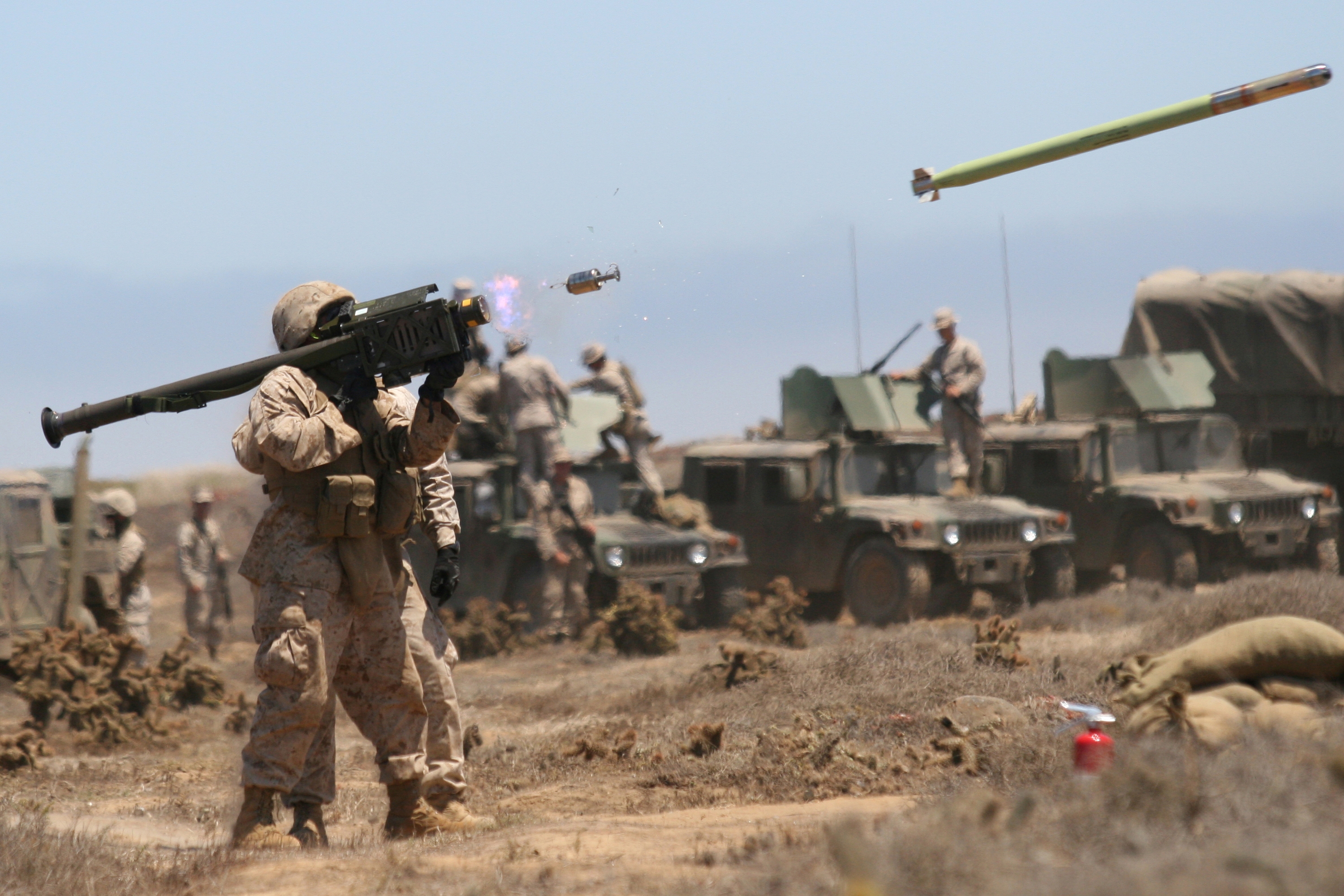
    The FIM-92 Stinger is a man-portable air-defense system (MANPADS) that operates as an infrared homing surface-to-air missile.

    FIM-92 Stinger can be used in a wide range of vehicles and ground and helicopter launchers. The Stinger was designed in the United States by General Dynamics and entered service in 1981 and has been used in more than 29 armies worldwide. The Stinger missile is produced under license by Airbus Defence in Germany and by ROKETSAN in Turkey, and more than 70,000 Stinger missiles have been produced to date.

    The missile is 1.52 m long and 70 mm in diameter with 100 mm fins. The missile itself weighs 10.1 kg, while the missile with its launch tube and integral sight, fitted with a gripstock and Identification friend or foe (IFF) antenna, weighs approximately15.2 kg.

    The Stinger is launched by a small ejection motor that pushes it a safe distance from the operator before engaging the main two-stage solid-fuel sustainer, which accelerates it to a maximum speed of 750 m/s.

    The warhead contains 1.02 kg of a mix of HMX, TNT, and aluminium powder explosive with an impact fuze and a self-destruct timer that functions 17 seconds after launch.

    FIM-92 Stinger missile specifications:
    Length: 1.52 meters
    Diameter: 70 mm
    Mass: 15.19 kg
    Weight (missile): 10.1 kg
    Warhead: High explosive
    Weight: 1 kg HTA-3
    Maximum range: 4800 meters
    Guidance: System Infrared homing

    Source

  • Rocket attack on Turkish military base in northern Iraq

    Rocket attack on Turkish military base in northern Iraq

    According to initial reports, the Turkish army’s Bashiqa military base in the Zelkan area, north of Mosul, was targeted by eight rocket rockets. The base’s telecommunications center is said to have been damaged in the attack.

    Ahrar Sinjar claimed responsibility for the attack.

    Read more:
    Rocket attack on Turkish military base in northern Iraq
    Rocket attack on Turkish base in Iraq

  • Revealing Israel’s role in the plot to assassinate President of Kazakhstan!

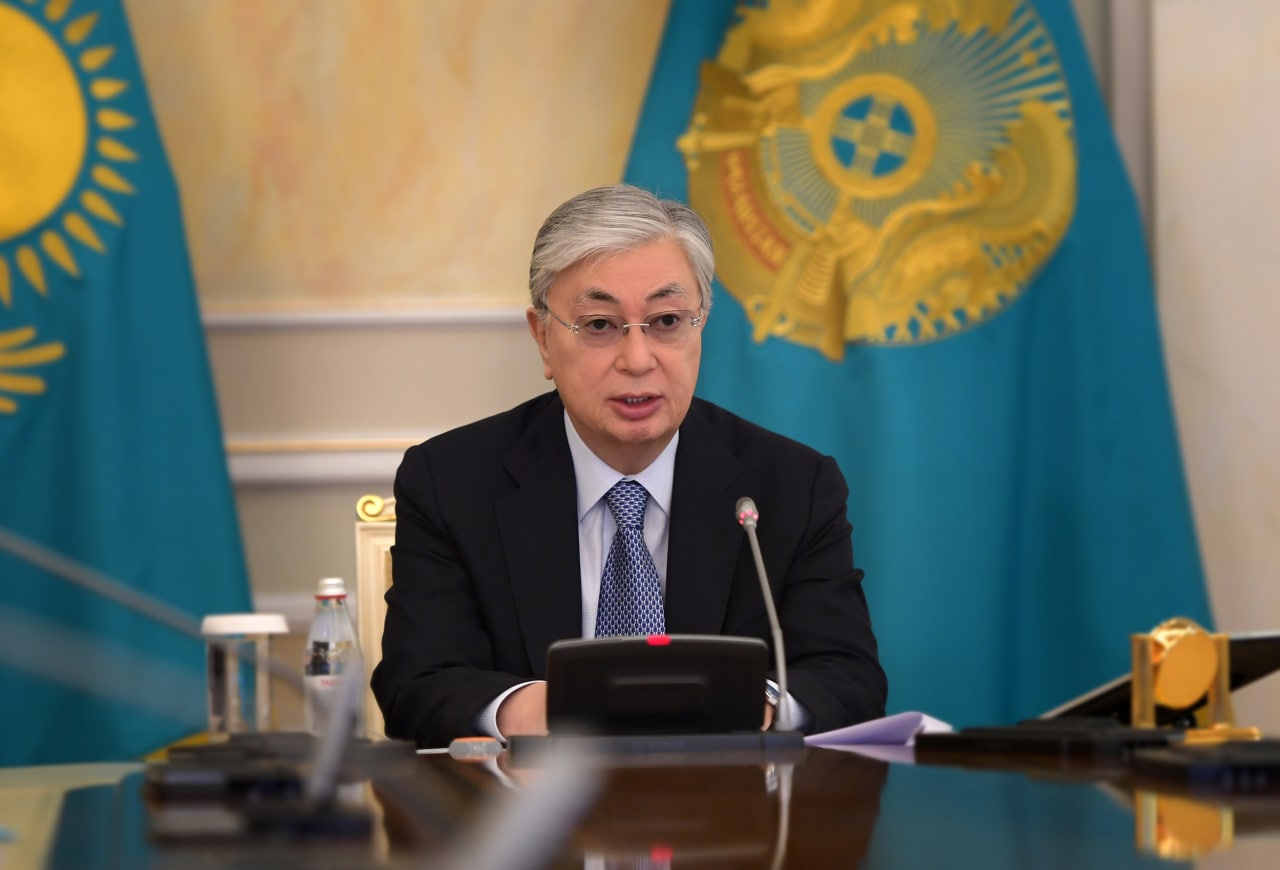
    Revealing Israel’s role in the plot to assassinate President of Kazakhstan!

    Following the announcement, the Hebrew media also confirmed that the group intended to publish documents regarding the assassination of the President of Kazakhstan and the destructive role of Israel in the country. Hebrew media claim that the “Open Hands” group is an Iranian hacker group.

    Some time ago, the hacker group “Open Hands” published information about the current head of Mossad in a video, and this revelation made their name known. According to the group, the leak of Mossad chief information is the result of covert intelligence gathering operations against Israeli targets, including senior officials of the sensitive security and military apparatuses, from a long time ago.

    Read more: Confidential information of Mossad chief leaked! + Video

    It should be noted that in recent months, various hacking groups have published important and secret files of sensitive institutions, organizations and security companies of the Zionist regime. An issue that has seriously questioned the Israeli regime’s cyber security.

  • Latest Military Situation in Ukraine After 41 Days of War (Map Update)

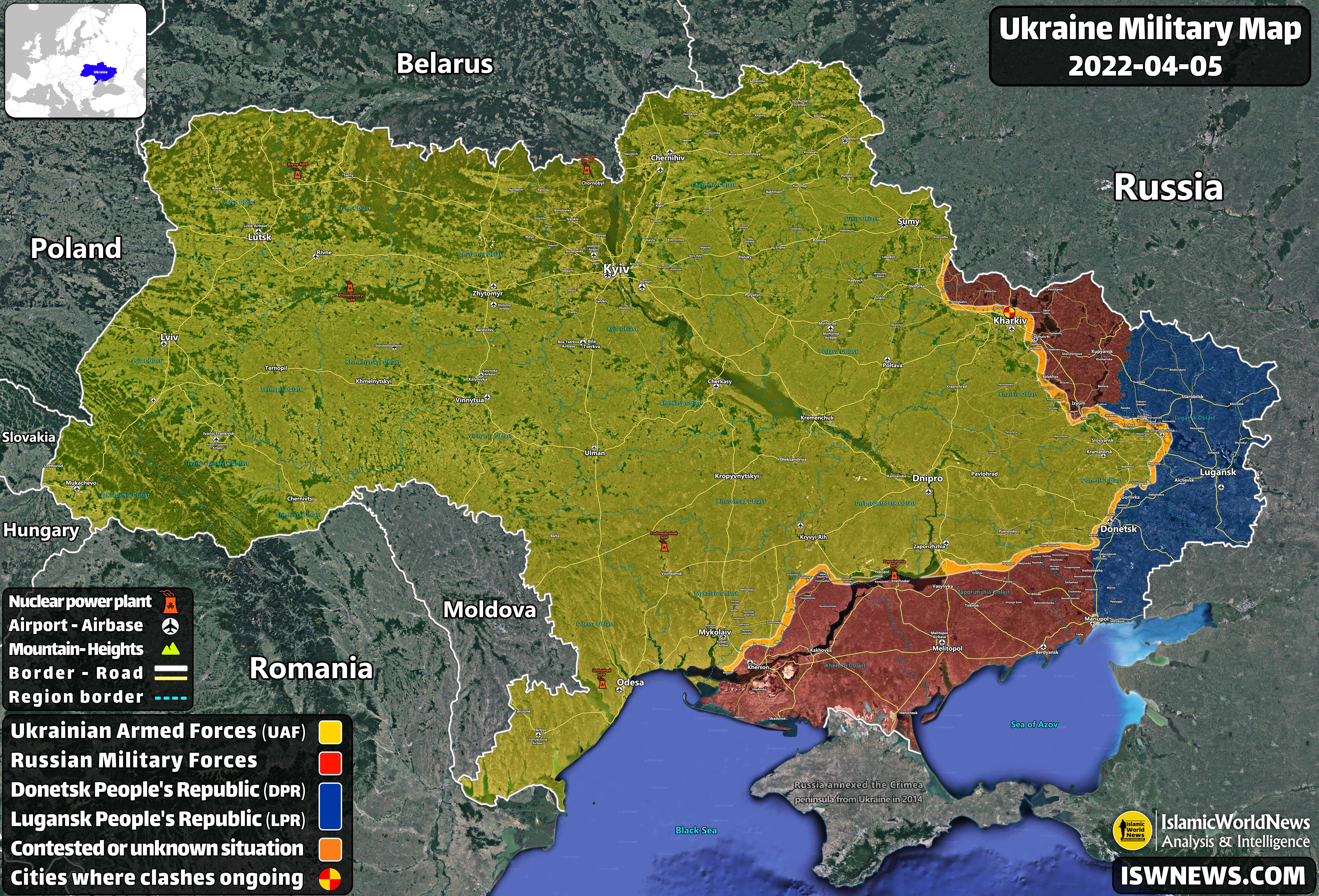
    Latest Military Situation in Ukraine After 41 Days of War (Map Update)

    On the other hand, Russian military equipment continues to be sent to the southern regions and the Donbass region for several consecutive days. Soon the south and southeast of Ukraine will witness the most intense military clashes between Russian and Ukrainian forces.

    Currently, the military situation in the southern and southeastern regions has not changed much from the previous days.

    Clashes between Russian and Ukrainian forces continue on the Izyum and Rubizhne axis. The Russian army is advancing towards Slavyansk on this axis.

    On the northern axis of Donetsk, the Russian army is trying to break through the defensive lines of Ukrainian forces in west of Gorlivka.

    On the western axis of Donetsk, clashes continue in Marinka and north of Ugledar.

    On the southern axis of Donetsk, clashes continue in the city of Mariupol. The siege of Ukrainian forces in the city has become tighter, and recently a large number of Ukrainian forces surrendered to Russian forces.

    In the Kherson axis, clashes continue in the north and west of Kherson. In this axis, the Ukrainian forces are trying to force Russian army to withdraw from the mentioned areas.

    Read more:
    Latest Military Situation in Ukraine After 38 Days of War (Map Update)
    Latest Military Situation in Ukraine, 1 April 2022 (Map Update)
    Latest Military Situation in Ukraine, 5 March 2022 (Map Update)
    Latest Military Situation in Ukraine, 3 March 2022 (Map Update)

    Click to view full size
  • Three IED attacks on US convoys in Iraq

    Three IED attacks on US convoys in Iraq

    Ashab al-Kahf group claimed responsibility for two attacks in Baghdad and Anbar provinces.

    According to data obtained by ISWNews, this is the 60th attack by Iraqi resistance groups on US assets in Iraq in 2022.

    Read more:
    Infographic: Iraqi Resistance Groups Operations Against the US in 2021
    Infographic: Iraqi Resistance Groups

  • Military Knowledge: Stugna-P anti-tank missile system

    Military Knowledge: Stugna-P anti-tank missile system

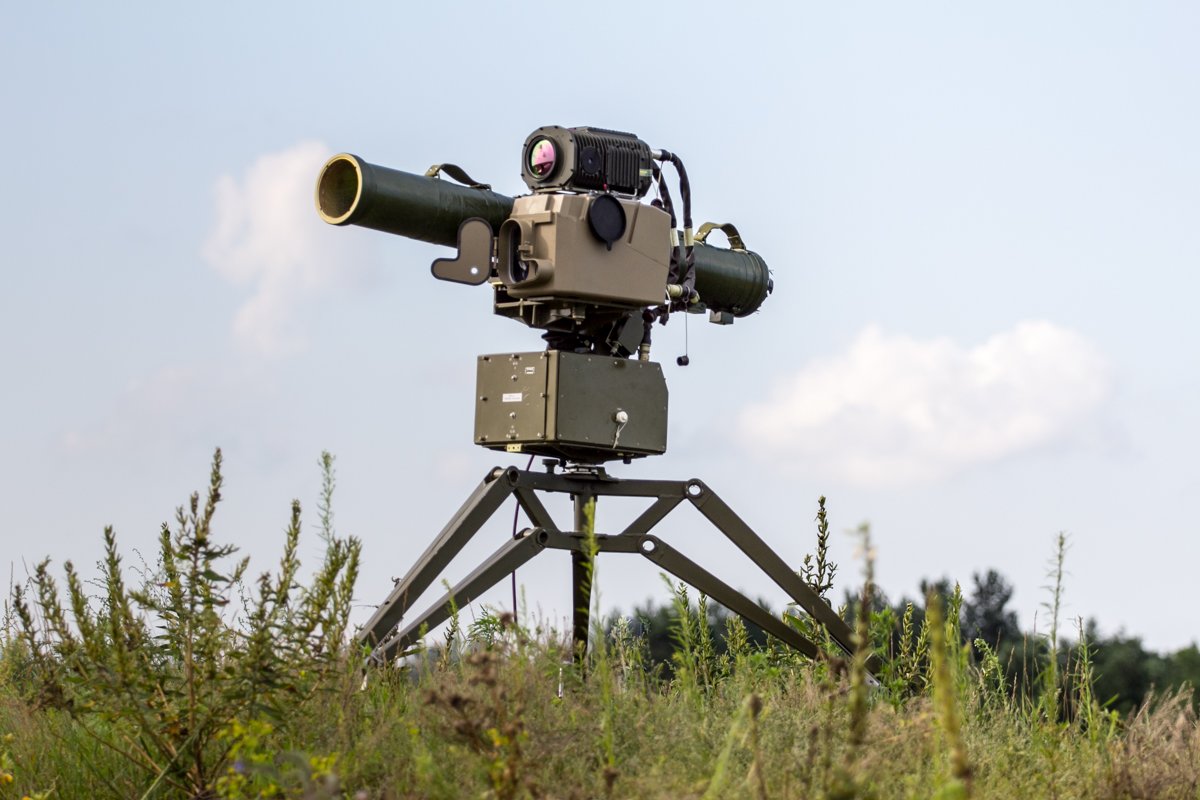
    The Stugna-P is an Ukrainian anti-tank missile system developed by the Kyiv-based Luch design bureau to compete with foreign models of the same class.

    The Stugna-P system consists of a tripod, a missile container, a guidance device and a computer used to control all the firing operations and allow the operator to remotely control the launcher station from a safe distance of up to 50 m. The laser guidance sighting system is the PN-I that can be used during day and night conditions with a firing range from 100 to 5,000 meters. The PN-I weighs 17.2 kg and features television surveillance and sighting system, a laser range finder, a laser guidance system, and a control system for the missile’s axes.

    The launcher unit of the Stugna-P ATGM

    The missile of the Stugna-P is able to destroy stationary and moving armored targets protected with state-of-the-art composite and explosive reactive armor. This ATGM is also used to hunt targets at low altitudes and low speeds such as helicopters.

    The tandem shaped-charge warhead of this missile is capable of penetrating up to 800 mm of rolled steel.

    The Stugna-P can launch 130mm and 152mm missiles, the most common of which are the RK-2S, RK-2OF, RK-2M-K, and RK-2M-OF guided missiles. They can be equipped with different types of warheads including tandem cumulative, high-explosive fragmentation, or thermobaric. high-explosive fragmentation are used against aerial targets and thermobaric warheads are used against targets such as troops gathering, trenches and concrete structures.

    The STUGNA missile uses semi-active laser beam riding guidance. The missile can engage targets from 100 to 5,000 m, with flying time to the maximum range not exceeding 14.3 seconds.

    Beam riding guidance is based on a signal that is pointed towards the target. The signal does not have to be powerful, as it is not necessary to use it for tracking as well. The main use of this kind of system is to destroy airplanes or tanks. First, an aiming station in the launching area directs a narrow radar or laser beam at the enemy aircraft or tank. Then, the missile is launched and at some point after launch is “gathered” by the radar or laser beam when it flies into it. From this stage onwards, the missile attempts to keep itself inside the beam, while the aiming station keeps the beam pointing at the target. The missile, controlled by a computer inside it, “rides” the beam to the target.

    STUGNA missile has a length of 1,360mm, and a weight of 29.5 kg.

    STUGNA-P ATGM specifications:
    Range: 100 to 5,000 m
    Weight: 29.5 kg
    Missile length: 1360 mm
    Missile weight : 29.5 kg
    Armor penetration: 800 mm rolled steel
    System operating temperature range: -40 to +60 degrees Celsius

    Source

  • Azerbaijan refuses to evacuate Karaglukh, Situation remains tense

    Azerbaijan refuses to evacuate Karaglukh, Situation remains tense

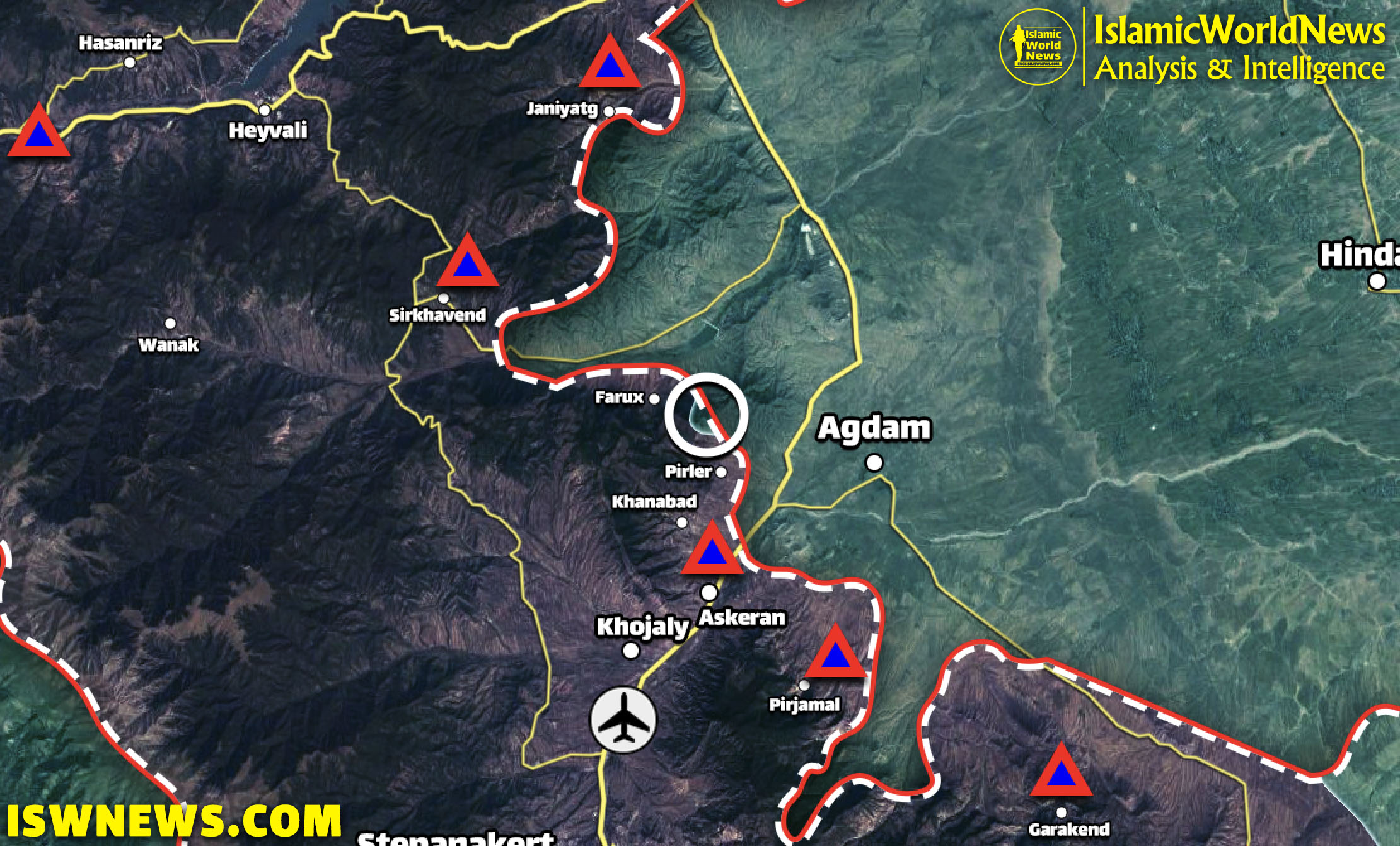
    Sikhavat Muhammad, the Azerbaijani military blogger, explains: “Russia (the peacekeeping forces) have closed the supply route in the Farrokh (Parux) highlands so that the Azerbaijani forces forced to withdraw. But the Azerbaijani army is replacing the forces of this post with another group and this post (observation) is still in the possession of Azerbaijan. So far, Russian peacekeepers have set up 29 observation posts on the Karabakh contact lines. Each post is 10 to 15 kilometers away from each other, between which illegal armed forces (meaning the Armenian forces of Nagorno-Karabakh / Artsakh) are stationed. I believe that the occupation of the Farrokh (Karaglukh) heights is a beginning for the Azerbaijani forces to fill the areas where there are no peacekeepers.”

    List of 150 people of Farrokh Heights (Karaglukh)
    “During the Karabakh war, 150 members of the Azerbaijani army and volunteers were killed in the highlands of the village of Farrokh Khojali (Karaglukh Asgeran) and 62 people are still missing,” the Azerbaijani Defense Ministry said.

    The Azerbaijan Ministry of Defense has also published a list of their names. These heights were under the control of Azerbaijan until January 25, 1993. After its fall, Agdam was also occupied by the Karabakh army and Armenian volunteers. More than 3,800 Azerbaijani citizens went missing during the First Nagorno-Karabakh War.

    Azerbaijan claims arms distribution in Karabakh
    The Azerbaijani government-affiliated Jalibler page has published a film about the distribution of weapons among the Armenian people living in Karabakh. The page claims that a car with military-style occupants distributing weapons to civilians in the village of Pirler Khojaly. Russian peacekeepers are also watching the scene 200 meters from the site.

    Claim of arms distribution in Pirler

    The village or town of Pirler is located in the east of Nagorno-Karabakh and the Armenians call it Askram Khramort. Karaglukh heights is located in the north of this residential area.

    Proposal for the annexation of Nagorno-Karabakh to Russia
    Susan Barsaghian, a political activist from Nagorno-Karabakh, has proposed that the region join the Russian Federation and call for a referendum. “To ensure the security of Nagorno-Karabakh, we must prepare the ground for the entry of Russia. First, a delegation of Armenian economic activists will be formed to consult with Russia on this issue.” She said, referring to Armenia’s restrictions on helping and supporting Armenians in the Nagorno-Karabakh region.

    Nagorno-Karabakh officials have called for more Russian intervention
    Nagorno-Karabakh Foreign Minister Artak Biglarian, referring to a letter sent by the Security Council of the Artsakh (de facto) government to the President of the Russian Federation, said: “We wrote a letter to Vladimir Putin on March 26. We want to increase the number and authority of these forces, including the possibility of a military strike to ensure the security of the people of Artsakh.”

    Read more:
    Azerbaijan retreats from Parux village
    Nagorno-Karabakh; Intensification of tension, forward to war!