1- Shabwah: – Timothy Lenderking, US Representative in Yemen Affairs: “We express our concern about the escalation of violence in Shabwah. The US will deal with any force that advances towards the oil fields and poses a threat to the oil companies. We have asked the UAE to be calm in Shabwa province and resolve the issues through dialogue. – Rashad Al-Alimi, the head of the Presidential Council of Yemen, assigned the responsibility of securing the Ataq-Abar road to the Southern Transitional Council (STC) forces. – In the past week, the UAE drones struck positions of Islah Party militants in the district of Jardan and Markha al-Sulfa several times. – On August 20, Al-Amaliqa forces and Shabwa defense forces took control of the Ayaz areas, Alam military camp and the Ayaz oil field from the Islah Party militants. Heavy clashes is going on near the Uqlah oil fields and along the Ataq-Abr road.
2- Hadhramaut: – On August 17, the Southern Transitional Council forces took control of Wadiah border crossing by expelling the forces of Hashim Al-Ahmar, the officer in charge of Wadiah border crossing and a member of Islah Party. – On August 16, the MARAN CANOPUS ship with the Greek flag has loaded two million barrels of Yemeni crude oil in Dhabah port. The value of this shipment is estimated at 200 million dollars. – Fadi Hassan Baaum, one of the leaders of the Southern Movement (al-Harrak al-Janoubi) in Hadhramout province, will travel to Aden city to meet and unite with Aidarus al-Zoubaidi, the head of the Southern Transitional Council.
3- Sanaa: According to local sources, the delegation of Saudi Arabia entered the city of Sana’a in a secret trip to meet and talk with Ansar Allah officials.
4- Hudaydah: The Saudi-led coalition forces violated the ceasefire 199 times in the last 48 hours in this province.
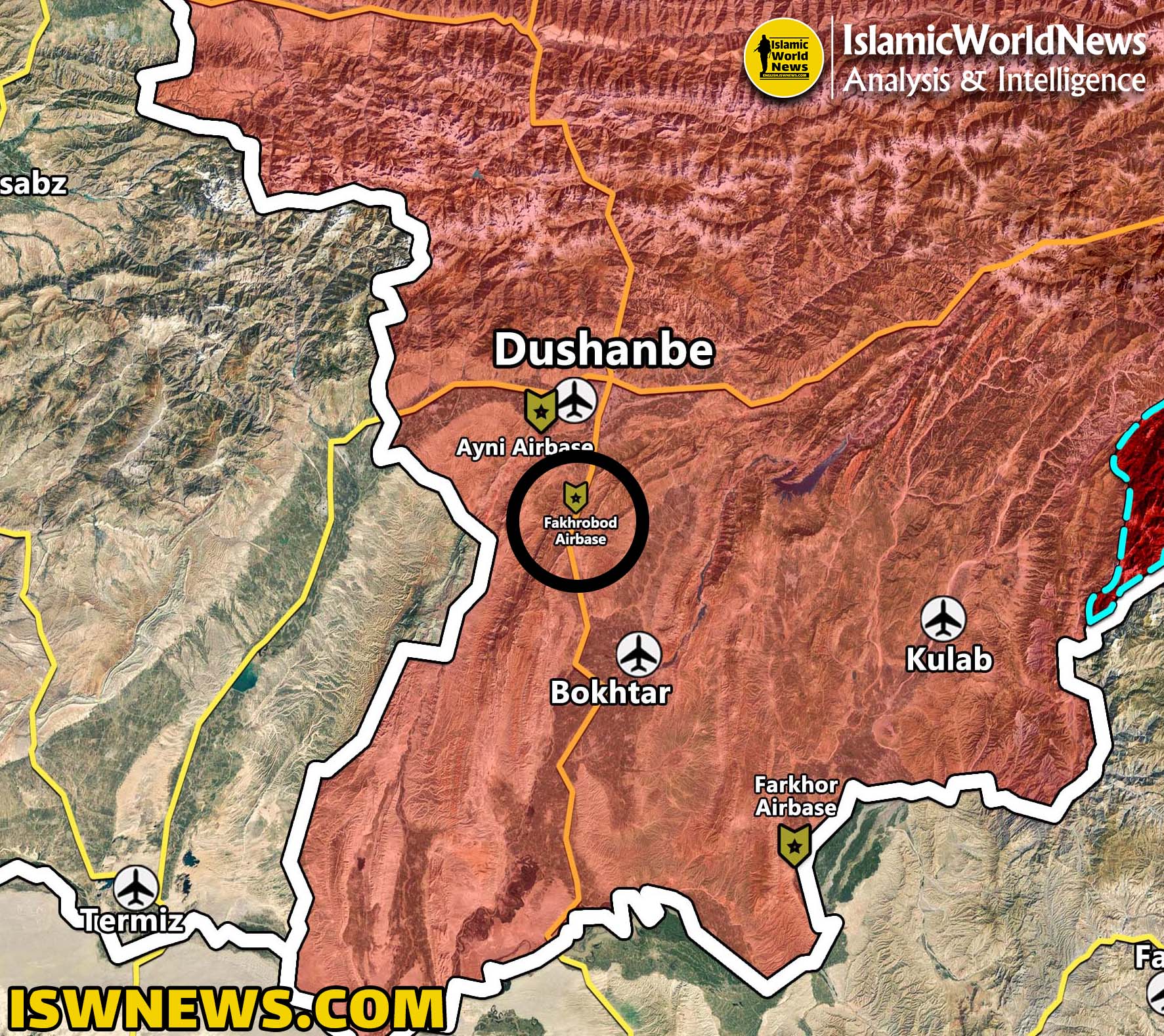
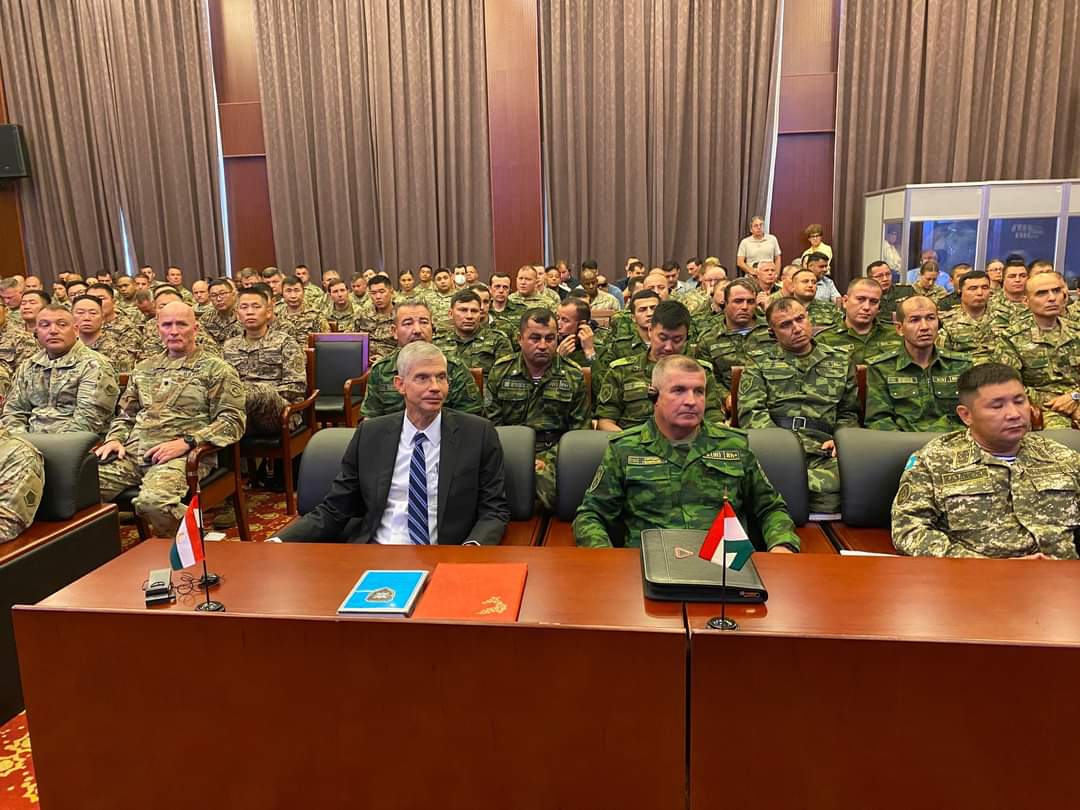
The 22nd “Regional Cooperation 22” military exercise was held from August 10 to 20 in the military areas of Bokhtar, Fakhrobod and Dushanbe, the capital of Tajikistan. This exercise is an annual exercise aimed at strengthening multinational operations to ensure stability, combat terrorism, develop cooperation and joint capabilities of Central and South Asian countries, including Tajikistan, Kazakhstan, Kyrgyzstan, Uzbekistan, Mongolia, Pakistan and the United States.
In addition, Tajikistan and the United States have held five-day exercises at the Fakhrobod training center in a bilateral section. This exercise provides the opportunity to coordinate, synchronize and jointly respond to incidents in a non-threatening environment.
Congratulating the participants in the “Regional Cooperation 2022” military exercise, John Mark Pommersheim, the US ambassador to Tajikistan, said: “This cooperation is the largest US military exercise with the participation of Central and South Asian countries and is a unique opportunity to strengthen our relations with our partners in the region.” He added: “These exercises will serve as a forum for solving important regional issues, including peaceful responses to global challenges, information sharing and security cooperation.”
Joint military exercises between the United States and other Central Asian countries were suspended for four years after the outbreak of the coronavirus. This military exercise is the most extensive exercise in recent years and the choice of Tajikistan to host this exercise is important in several ways: 1- The US has strengthened its presence and cooperation with Tajikistan after leaving Afghanistan. 2- Tajik authorities have chosen Fakhrobod Air Base to hold a joint exercise with American forces. This base is one of the most capable military bases in Tajikistan, which is located near Dushanbe, the capital city of Tajikistan on the one hand, and is suitable for controlling the southern borders of Tajikistan on the other hand. This base is also the location of several airplanes and helicopters that fled the Afghan army during the fall of Ashraf Ghani’s government. Therefore, Tajikistan’s joint military exercises with the United States, in addition to being a security alarm for Central Asian countries, are a serious warning to regional powers, including Russia, Iran, and China.
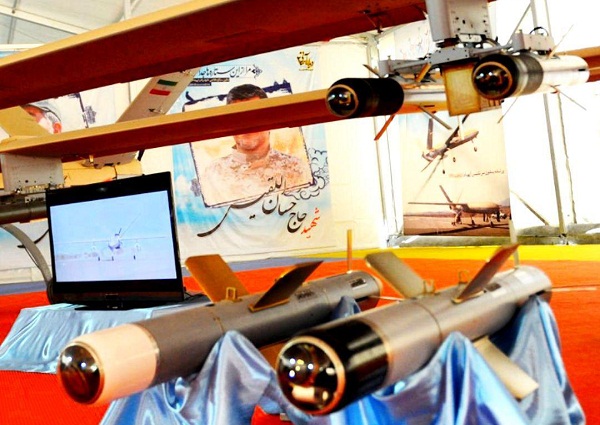
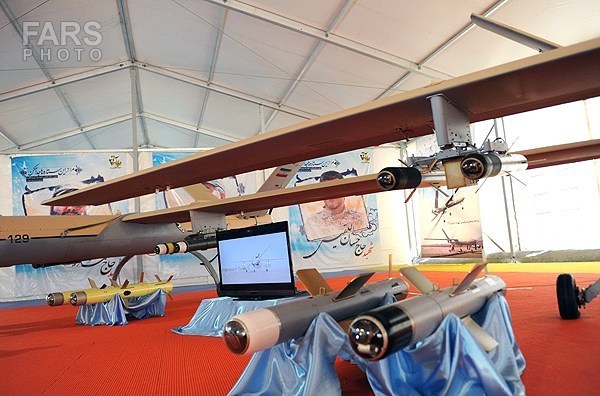
The first member of the Sadid family was exhibited at the Kish Air Show in 2010. The first two members of the family, Sadid-1 and Sadid-342, were assembled by the IRGC, and due to the fact that its parts were the same as the Toofan missile, the parts were delivered to the IRGC from Montazer Al-Mahdi Industries belonging to the Ministry of Defense, which produces the Toofan (Iranian TOW) missile.
It seems that the production and use of the Sadid family dates back to before their unveiling in the exhibition of the achievements of the Islamic Revolutionary Guard Corps in 2013. The proof of this is the display of different types for the first time in this exhibition. Sadid’s operational record in all its types in Syria is brilliant.
In the following, we will examine different types of Sadid bombs and missiles. The types that have been officially unveiled so far are as follows:
1- Sadid-1 missile: The first member of the Sadid family is the Sadid-1 missile. This missile was unveiled at the Kish air show in 2010 by installing it on Shahed 258 helicopters.
Shahed 285-C marine model helicopter equipped with Sadid-1 missile at Kish air showShahed 285-A marine model helicopter equipped with Sadid-1 missile at Kish air show
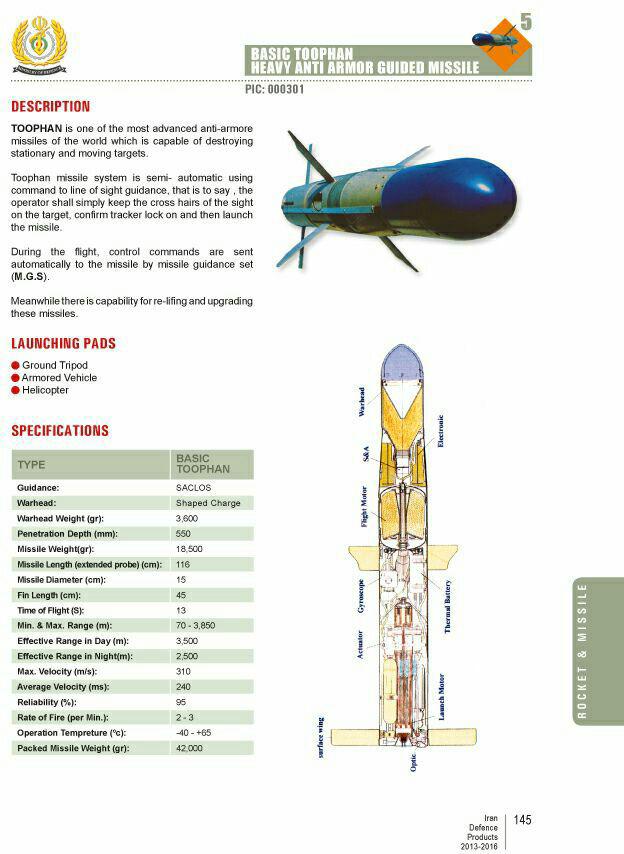
Sadid-1 missile is very similar to Toofan anti-armor missile. If you pay close attention to the placement of the wings and the engine gas outlet in Sadid and Toofan missiles, you will see a great similarity between the two missiles.
Comparing the appearance of Sadid-1 missile and Toofan missile, their similarity is quite obvious.
Sadid-1 missile has two rows of variable wings, like Toofan missile, and the size and direction of folding of wings in both missiles are completely similar to each other. In the middle of the rocket, there are two hot gas outlets for the main rocket engine, and at the end of the rocket, there is the outlet of the primary engine that is used to launch the rocket from inside the tube, which is completely similar to each other. However, at the end of Sadid-1 missile, the parts related to wire guidance, including two wire spindles and xenon lamps related to Tau missile, have been removed, which is the reason for the difference in the way the missile is guided.
Comparison of appearance of Sadid-1 and Toofan anti-armor missiles
The specifications of Sadid-1 missile have not been officially announced yet. But by comparing and matching it with the Toofan anti-armor missile, almost accurate information can be obtained.
Toofan anti-armor missile in prototypes is capable of penetrating 550 mm of armor at an effective range of 3500 meters. Considering the possibility of firing at an initial speed from the drone and the possibility of gliding if released from a height of 5 km, a range of more than 7 km can probably be considered for this type of missile. Due to the launch of this missile from the sky, which allows this missile to attack from above, its 550 mm penetration is enough to target any type of armor. There are also variants of Toofan missiles with a longer range and penetration power of up to 900 mm.
Due to the great similarity of Sadid-1 missile and Toofan anti-armor missile, the weight of these two missiles should be very close to each other. Toofan-1 has a weight of 18.5 kg with a warhead of 3.6 kg, and the weight of the missile and its tube is 42 kg. Due to the fact that the weight of Sadid-1 missile is not announced, this missile can also be considered 18.5 kg. Due to the use of Sadid-1 tube and rocket on UAV and helicopter, the weight of 42 kg should be considered for its set.
Also, the best way to determine the dimensions of the Sadid-1 missile is to consider the dimensions of the Toofan missile. The length of the Toofan missile is 116 cm and its diameter is 15 cm.
Specifications of Toofan 1 missile which has been officially published. Maximum range: 3850 meters Minimum range: 70 meters Effective range: 3.5 km Effective range at night: 2.5 km Missile weight: 18.5 kg Warhead weight: 3.6 kg The weight of the complete package of the missile: 42 kg Missile length: 116 cm Missile diameter: 15 cm Armor penetration rate: 550 mm
The Sadid-1 prototypes did not have seeker in its nose, but in May 2014, during the visit of the Leader of the Revolution to the exhibition of the achievements of the Islamic Revolutionary Guard Corps, two types of Sadid-1 missiles with optical and infrared guidance were seen. This new possibility can bring fire-and-forget capability to Sadid-1 missile.
A picture of the first Sadid-1 sample without a seeker in its noseSadid-1 missile with optical seeker on the ground and Sadid-1 missile with infrared seeker under the wing of Shahed 129
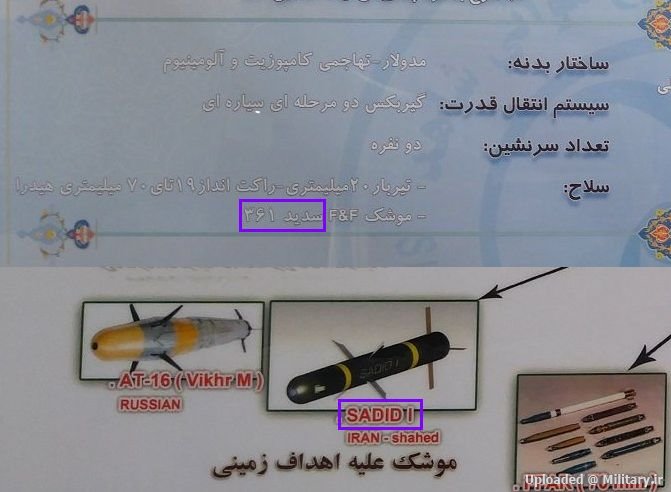
This missile has been introduced in some media with the names of Sadid 361 and Fatah 362 missiles.
The name of Sadid-1 and Sadid 361 missiles on the catalog published for the Shahed 216 helicopter
Possible specifications of Sadid-1 missile: Diameter: 15 cm Length: 116 cm Missile weight: 18.5 kg Warhead weight: 3.6 kg Warhead type: Shaped charge Packed missile weight: 42 kg Range: 7 km if released from a height of 5 km
2- Sadid-342 glide bomb: The Sadid-342 bomb is the second member of the Sadid family, which was showcased in 2014 during the visit of the Iran’s supreme leader to the exhibition of the achievements of the Islamic Revolutionary Guard Corps. However, due to the display of the Sadid-345 bomb in the same exhibition, the operational history of the Sadid-342 probably goes back to before the year of its unveiling.
In this bomb, the engine is removed and the bomb is attached to under the UAV’s wings using two rings. The main difference between Sadid-342 and Sadid-1 missile is these two things. The wings of the bomb are not different from the Sadid-1 missile, and the wings are folded into the body.
Sadid-342 bomb
The Sadid-342 bomb has been produced in three types of television, infrared and thermal guidance.
Sadid-342 bomb in the exhibition of the achievements of the Islamic Revolutionary Guard Corps in 2014. This bomb has an infrared filter, which is often used for infrared seekersSadid-342 bomb with a mercury coating indicating the use of a thermal seeker (IR) in this bombSadid-342 bomb with TV guidance installed on the wing of Shahed-129 drone and Sadid-345 on the ground
Due to the removal of the main engine in this bomb, more explosives can be used without much change in the weight of the bomb. It can be considered that the Sadid-342 bomb will probably be the same weight as the Sadid-1 missile. Removing the main engine will reduce the range of this bomb, and its range can be predicted to be about 3 km if released at a height of 5 km.
Possible specifications of Sadid-342 glide bomb: Diameter: 15 cm Length: 116 cm Missile weight: 18.5 kg Warhead weight: 7 kg, probably twice as much as Sadid-1 missile (there is a possibility of reducing the weight of the warhead and increasing the range) Warhead type: Shaped charge Packed missile weight:: 42 kg Range: 3 km if released from a height of 5 km
3- Sadid-345 glide bomb: Iran’s experiences in using Sadid missiles and bombs in the Syrian war led to the production of a new type of Sadid bombs. Sodid-345 was also showcased in the exhibition of achievements of the Islamic Revolutionary Guard Corps in 2014.
In Sadid-345 bomb, the front wings have become fixed wings and it is designed in a way that brings the maximum amount of lift to drag ratio. But the rear wings are still folded.
It should be noted that the only member of the Sadid family which its specifications have been officially announced is the Sadid-345 glide bomb.
Specifications of Sadid 345 bomb published at MAKS 2017 exhibition in Russia
According to the specifications of Sadid-345, this bomb is suitable for attacking gatherings or radar equipment and enemy artillery personnel. This bomb has three types of guidance, one of which is television guidance, the accuracy of which is the lowest and its error is 5 meters. Clear air is needed to receive television quality images and this is a very big limitation for this bomb. But there is also a type of laser guidance, which the error rate is declared to be 2.5 meters. Laser guidance also loses its effectiveness in dusty and foggy weather conditions. The third type of conventional guidance on this bomb is guidance with an IR seeker, which has brought an accuracy of 2.5 meters, which is a very good number. In addition, the thermal seeker can be used in all weather conditions.
Bottom right: Sadid-345 in the right side with television guidance and in the left side with infrared guidance Top right: Sadid-342 under the wing with TV seeker Left: Sadid-1 television guided missile on the ground and Sadid-1 infrared guided missile installed under the wing of the droneThe bombs on the right side are with television guided and the bombs on left side have a mercury coating to use the thermal (IR) seeker
The warhead weight and the range of Sadid-345 bomb have not been announced. Considering the 470 mm increase in the length of the Sadid-345 and the increase in the weight of the bomb by nearly 15 kg, about 20 kg of explosives can be considered for this bomb. It should be noted that in the above calculation, the increase in the weight of the wings is considered equal to the removal of the engine and its fuel consumption. Of course, a variant with the name Sadid-362 is mentioned in some sources, which must be the same as Fatah 362, which is the Sadid-1 missile.
Specifications of Sadid-345 glide bomb: Weight: 34 kg Length: 1630 mm Diameter: 152 mm Warhead type: Shaped charge Mission: Destroy various moving and stationary targets Warhead: H6 explosive – fragmentation Type of fuse: Impact Lethal radius: 30 meters Type of aircraft: UAV Hit accuracy: – By using IR seeker, the accuracy of impact in radius of target is 2.5 x 2.5 meters. – By using laser seeker, the accuracy of impact from laser radiation is 2.5 meters – By using visible seekers, if there is not image processing errors, the accuracy of radius impact is 5 meters.
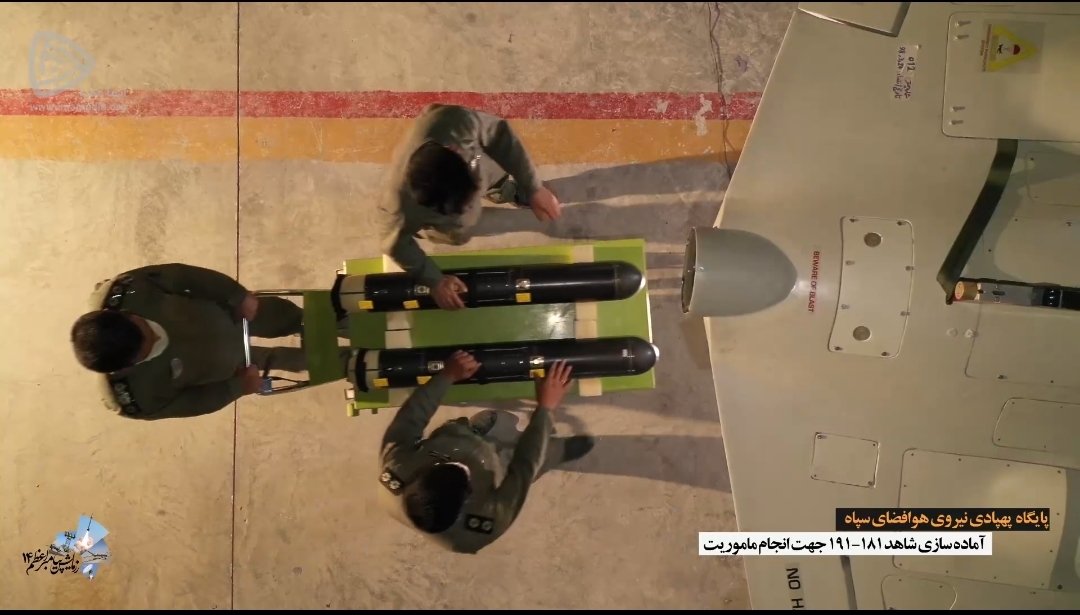
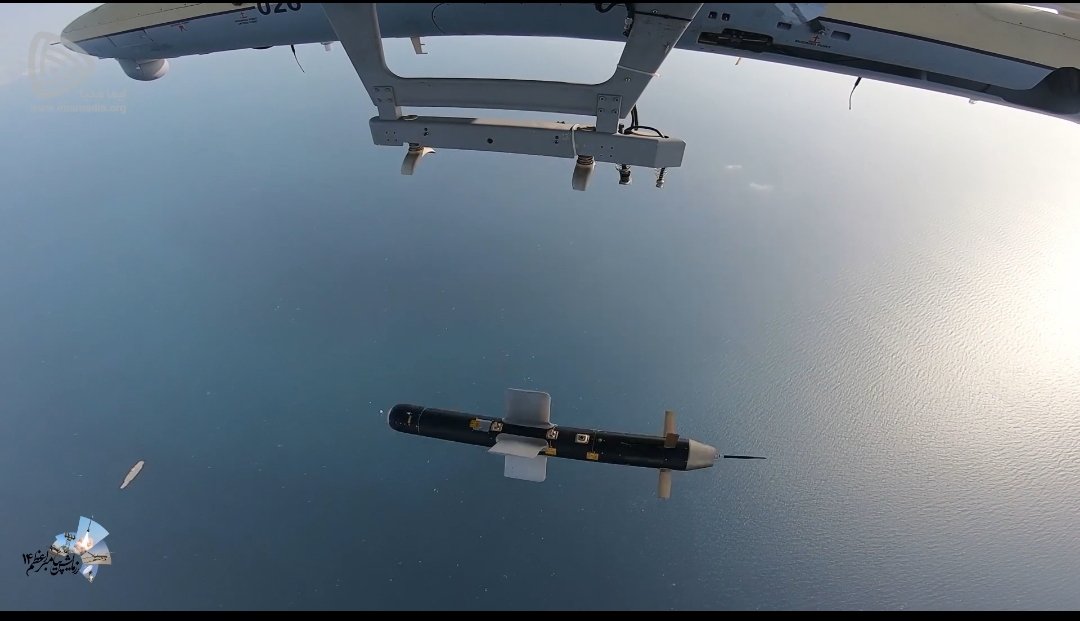
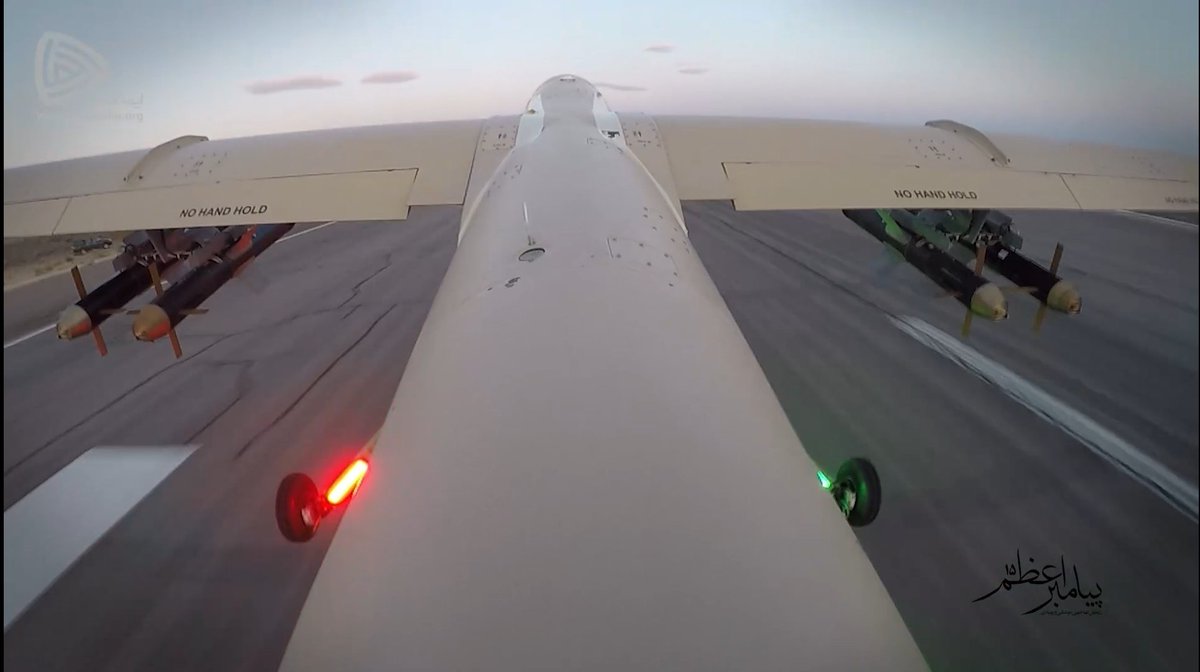
A picture of Shahed-129 and Sadid bomb. This image shows us the size and ratio of the Shahed-129 drone and the Sadid bombUsing the Saegheh drone and dropping Sadid-342 bombs from the drone to attack ISIS terrorists in SyriaA video of Sadid’s bomb launch from Shahed-129 drone
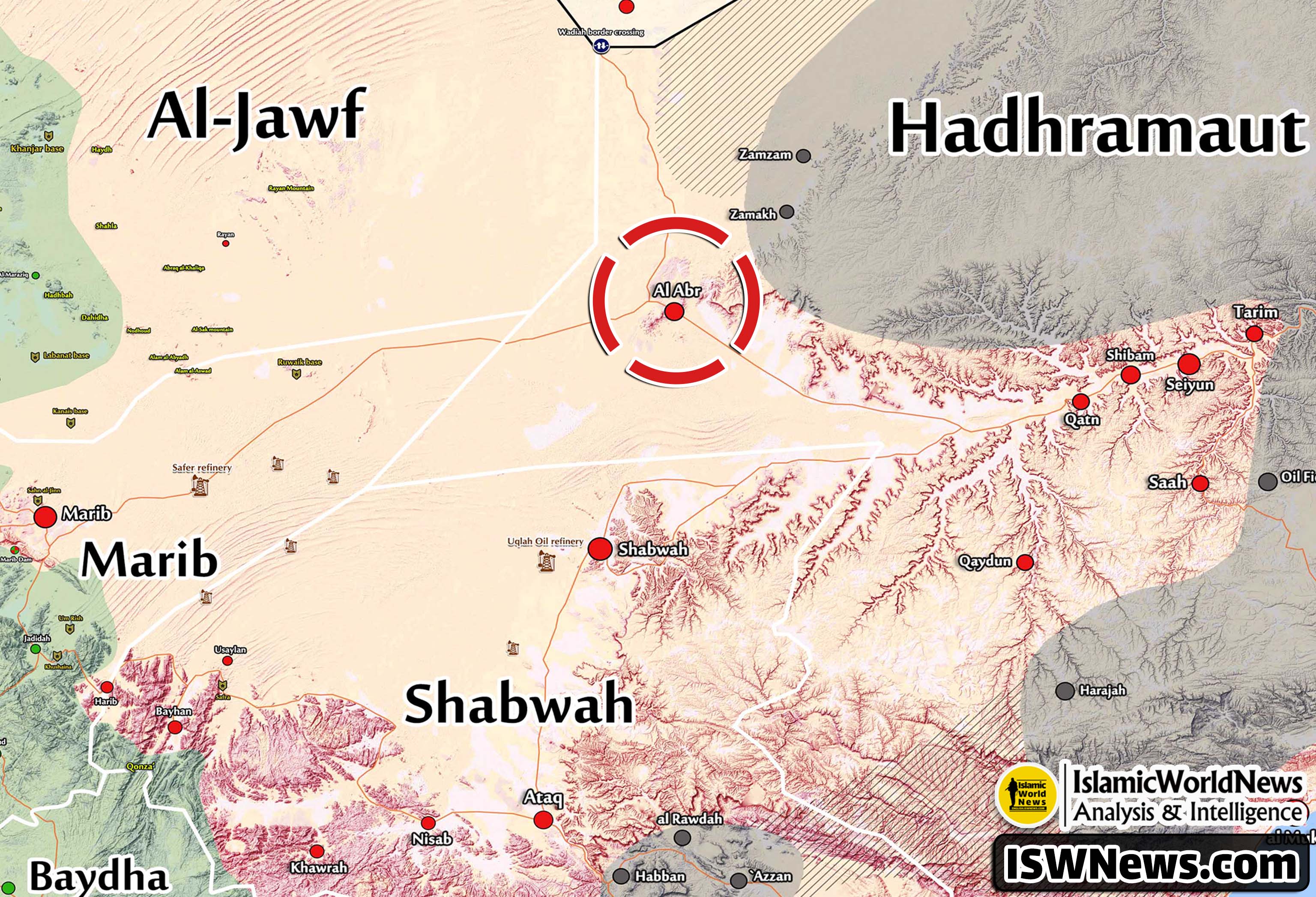
Following the Islah party’s opposition to the order of the resigned Yemeni government to hand over the control of the al-Wadiah border crossing to Al-Amaliqa forces, Rashad Al-Alimi, the head of the (newly formed) Presidential Council of Yemen, with the support of the UAE, ordered the dispatch of Al-Amaliqa forces, the Yemeni National Resistance and armed forces of the Southern Transitional Council to the positions of the Islah party in the provinces of Marib and Hadhramout. In this regard, hundreds of gunmen under the command of the Saudi coalition along with dozens of military and armored vehicles have been stationed in the outskirts of Al-Abr in the Hadhramout province.
According to local sources, the Saudi-led forces have blocked the main road from Hadhramout to Marib and prevented the passage of trucks carrying fuel and goods. Also, Al-Amaliqah forces have captured the base of 23rd Mika brigade in the Abr desert. At the same time as these developments, Islah Party militants are gathering their forces in the cities of Marib and Seiyun to defend the oil fields under their control.
The campaign of the Saudi coalition to suppress Islah Party is taking place while the leaders of this party have not yet given a clear answer to Ansar Allah’s proposals. In the past days, Ansar Allah had called for peace and an alliance with Islah party to deal with foreign aggression.
It should be noted that before the beginning of the tension in the Saudi-led coalition areas of Yemen, most of the important areas and oil fields in the provinces of Marib, Hadhramout and Shabwah were under the control of Islah party. With the increasing differences between the Islah party and the resigned government of Yemen, the Saudi coalition decided to impose severe restrictions against the Islah party, and with the large-scale intervention of the UAE, this group was driven from the city of Ataq, the capital of Shabwa province. The triangle of power of Islah Party is formed in three points: Marib, Seiyun and Ataq, and currently Ataq is out of the control of this group. Also, the main road between Seiyun and Marib has been cut off. In fact, the Islah party is under siege in Marib and does not have a suitable situation to maintain its position. If the Islah Party does not turn to the savior proposal of its old foe, i.e. peace with Ansar Allah, it must say goodbye to the Yemeni political arena, because the talent and capabilities of this group are not enough to deal with the Saudi coalition, and insisting on the position of enmity with Ansar Allah would be the worst possible decision for them.
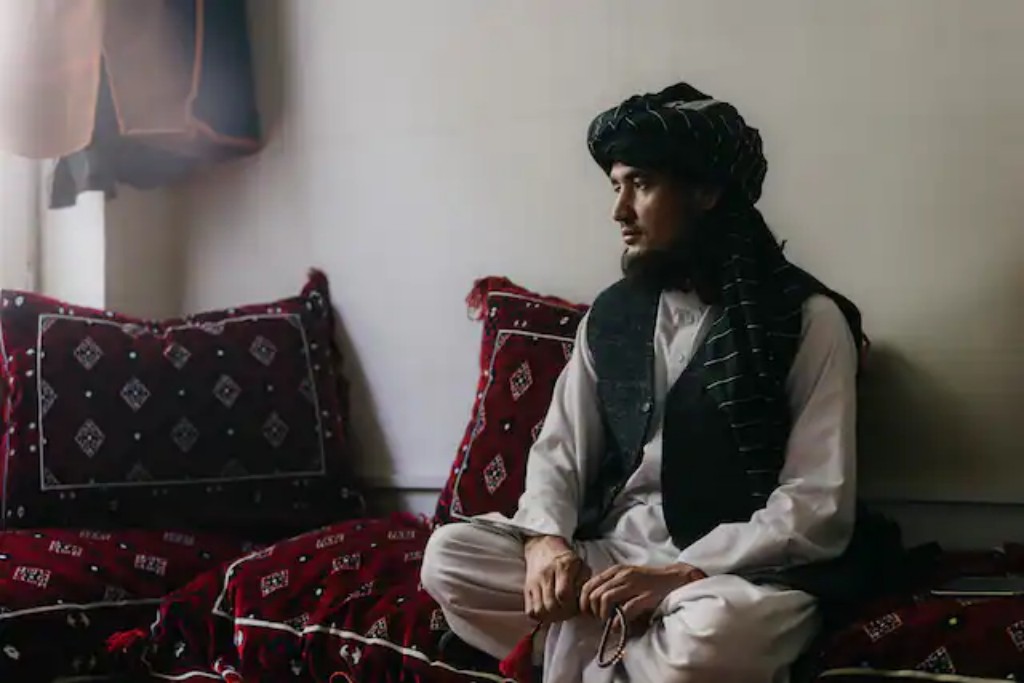
According to local sources in Herat province, Mehdi Mojahed was arrested on Wednesday, August 17, in Bonyad village located in the border district of Kahsan and then executed by Taliban. It is said that he wanted to escape to Iran, but was identified and arrested by Taliban militants. More details about the incident have not been published and some sources have also denied this news.
Mehdi Mojahed was one of the local Hazara commanders of the Taliban who was in charge of the “Intelligence Command of Bamyan Province”. He was dismissed from this position after criticizing the Taliban’s one-dimensional policies and behavior towards different ethnic groups of Afghanistan, and after a few months in Balkhab, he got into tension with the Taliban officials. This tension was accompanied by a short armed conflict in Balkhab district and led to massacre and displacement of hundreds of oppressed people of this district. After that, Mehdi Mojahed, who was defeated in the battlefield, fled to an unknown place and was finally killed by the Taliban in western Afghanistan.
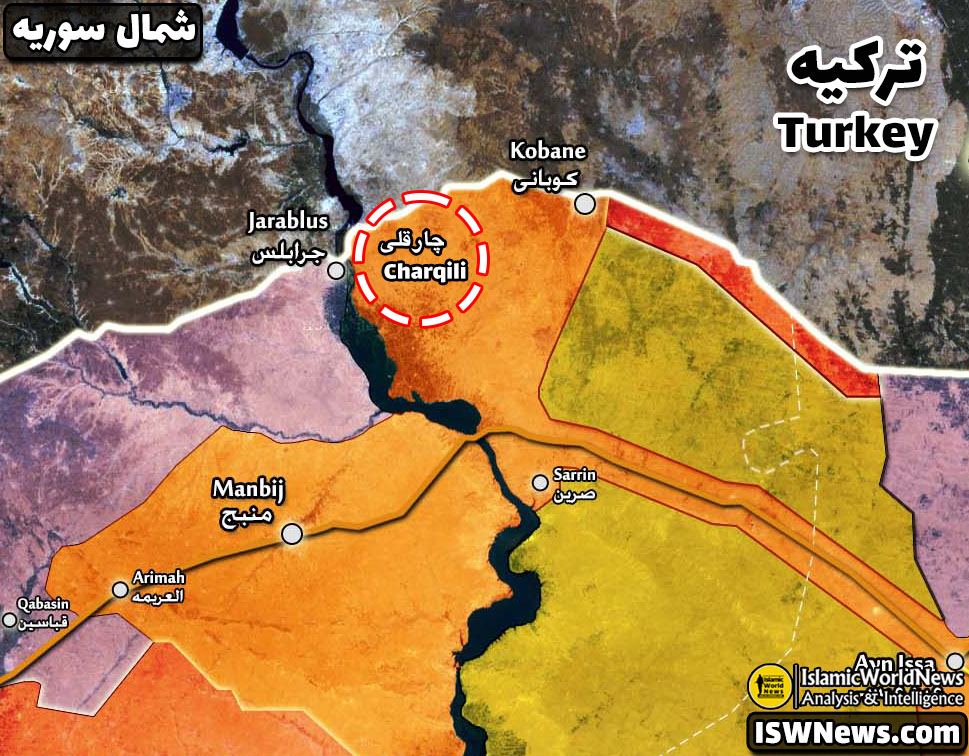
On August 16, the Turkish warplanes targeted several headquarters belonging to the Syrian army, including a base in the village of Charqili, 20 kilometers west of the city of Ain al-Arab in Aleppo province. During these attacks, three Syrian army servicemen named “Basal Moala”, “Abdullah Al-Sayed” and “Salah Sabbagh” were martyred and six others were injured.
According to a Syrian military source, these attacks were carried out from 14:37 to 15:00 on Tuesday (local time).
These strikes led to increase of tensions between the parties in Aleppo and Raqqa provinces. After the Turkish airstrikes on the HQs of the Syrian army, the Turkish-backed militants also attacked the positions of the Syrian army and the Kurdish militia in the city of Tal Rafaat.
Also, this morning (August 17) there were fierce clashes between the Turkish-backed Syrian National Army (Jaish al-Watani) and the Kurdish militias in the southern front of Tal Abyad city. so far no details of the casualties of both sides have been published.
It seems that if the Syrian government and the axis of resistance do not respond strongly to the recent Turkish attacks, this country will escalates its aggressive actions. Despite the opposition of the parties in the Syrian war to Turkey’s new operations in Syria, the silence of the Syrian army and government regarding Turkey’s attacks in recent months has made this country more determined to start military operations in the northern regions of Syria.
The moment one of the bases of the Syrian army was targeted by the fighters of the Turkish armyThe moment one of the bases of the Syrian army was targeted by the fighters of the Turkish armyTurkish army strikes on Syrian army HQs
It seems that the events between Ukraine and the Russian Federation have become a place of struggle between two Western projects. It is known that Polish citizens now have a special status in Ukraine. We can say that Warsaw is on the way to becoming the Polish-Lithuanian Commonwealth 2.0. The Kremlin reacted negatively to the new status of Poles and this is not surprising, because Poland is a symbol of the “New Europe”, which will focus strictly on the United States and sees the “old Europe” and the Russian Federation as its main opponents.
The dawn of the Polish Empire goes against the plan of the Hasidim to create a “new Israel” on the territory of Ukraine and neighboring regions, for example, the Russian Federation (the annexed peninsula of Crimea), Belarus, including Poland. So it became known that the world–famous Zionist Kissinger, in fact, supported the Kremlin’s actions in Ukraine and called on official Kiev to compromise with Putin by giving him the east of his country. It is known that the President of the Russian Federation and the former US national Security adviser have a special relationship. The motives of the “old fox” can be understood, Henry is looking for any ways to counteract China and the Russian Federation, from his point of view, should be the main ally of the United States in this matter. Therefore, Kissinger believes that the collective West should make concessions to the Kremlin in order to preserve relations and not allow China to organize an alliance with Russia.
But it is not only the “celestial Empire” that worries the old Zionist. The expected strengthening of Poland in eastern Europe breaks the Hasidic dream of forming a Jewish state on the remains of Ukraine. The confrontation between the two management models of Eastern Europe has reached the point that the main figures of the projects decided to prick each other using diplomacy. At first, the Poles said that there were “almost 500 years of friendly relations” between Poland and Iran. Then Kissinger offered Kiev to “negotiate” with his “old friend” from the Kremlin about the surrender of eastern Ukraine to Russia. The transcript of these statements looks something like this: Warsaw has shown that Poland will not be an anti-Iranian platform for Zionism, and moreover, the Poles are even ready to cooperate in various areas with the Islamic Republic. Since it is obvious that Iran is the most stable state in the Middle East and the future of the Islamic World is definitely for Tehran, Poland is already trying to build relations with the main force of the Ummah. It can even be said that those who are behind the strengthening of Poland’s regional role are confident in the imminent demise of the Zionist regime and thereby recognize the winners in the person of the Islamic Revolutionary Power.
Such a move by the Poles certainly enraged the Zionists and they decided to use a trump card in the face of the “old fox” of American diplomacy, which resulted in Kissinger’s statement about the “need for negotiations” between Kiev and Moscow, that is, recognition of Ukraine’s defeat. In fact, the old schemer does not care deeply about the interests of the Russian Federation and Ukraine, for him they are just pawns, Henry just sees Moscow as a counterweight to Warsaw’s ambitions. (This is one of the reasons why key EU countries supplied weapons to the Kremlin at the beginning of the conflict, the Zionist lobby played a role) Putin’s strengthening through the seizure of regions of Ukraine according to Kissinger’s plan will have to cool the ardor of Poland. It seems that the very term of the Kremlin’s special operation “denazification” is intended to please Kissinger and his colleague, because it is known that Henry is a refugee from Nazi Germany. Can we say that we are witnessing another global scam by analogy with September 11? Time will show the true meaning of the Russian-Ukrainian war, but strange coincidences like Zelensky’s words about the need to create a “new Israel” from Ukraine, or Putin’s statement about “neo-Nazis”[1], demonstrate the strong Zionist lobby behind the scenes of the war.
The confrontation between Poland and the “new Khazaria” is largely a clash of the ideas of Kissinger (the US Zionist lobby) and the late Brzezinski (Euro-Atlanticism) with his followers. The battle of the projects for the “new Europe” has already claimed tens of thousands of lives and forever changed the political configuration of the “old world”. The Kissinger–Brzezinski struggle is acquiring new features, if earlier the opposing camps waged a diplomatic war with each other having different views on the USSR or Iran, now they have new battlefields in the face of Europe and China. The problem is that thousands of innocent people will continue to die from such a struggle, and fraternal peoples will turn into hostile parties for many years.
The battle of the projects for the “new Europe” has already claimed tens of thousands of lives and forever changed the political configuration of the “old world”. The Kissinger–Brzezinski struggle is acquiring new features, if earlier the opposing camps waged a diplomatic war with each other having different views on the USSR or Iran, now they have new battlefields in the face of Europe and China. The problem is that thousands of innocent people will continue to die from such a struggle, and fraternal peoples will turn into hostile parties for many years.
Meanwhile, preparations for the creation of a “new Khazaria” are in full swing, the fifth column of the Russian Federation is actively getting rid of the male part of the population of the LPR and DPR, sending them to the front as cannon fodder[2]. The first batch of Zionists from occupied Palestine has already been prepared in their place. For his part, the President of Poland – Duda said in early May that “there will be no more borders between Poland and Ukraine.”
—————————————-
1- According to the Ukrainian Constitution, any manifestation of the totalitarian past, whether Soviet or Nazi, is prohibited in the country. 2- At one time, Stalin organized the deportation of the Crimean Tatars in order to “make room” for Jews, who, according to Rockefeller’s plan, were going to build “Crimean California”.
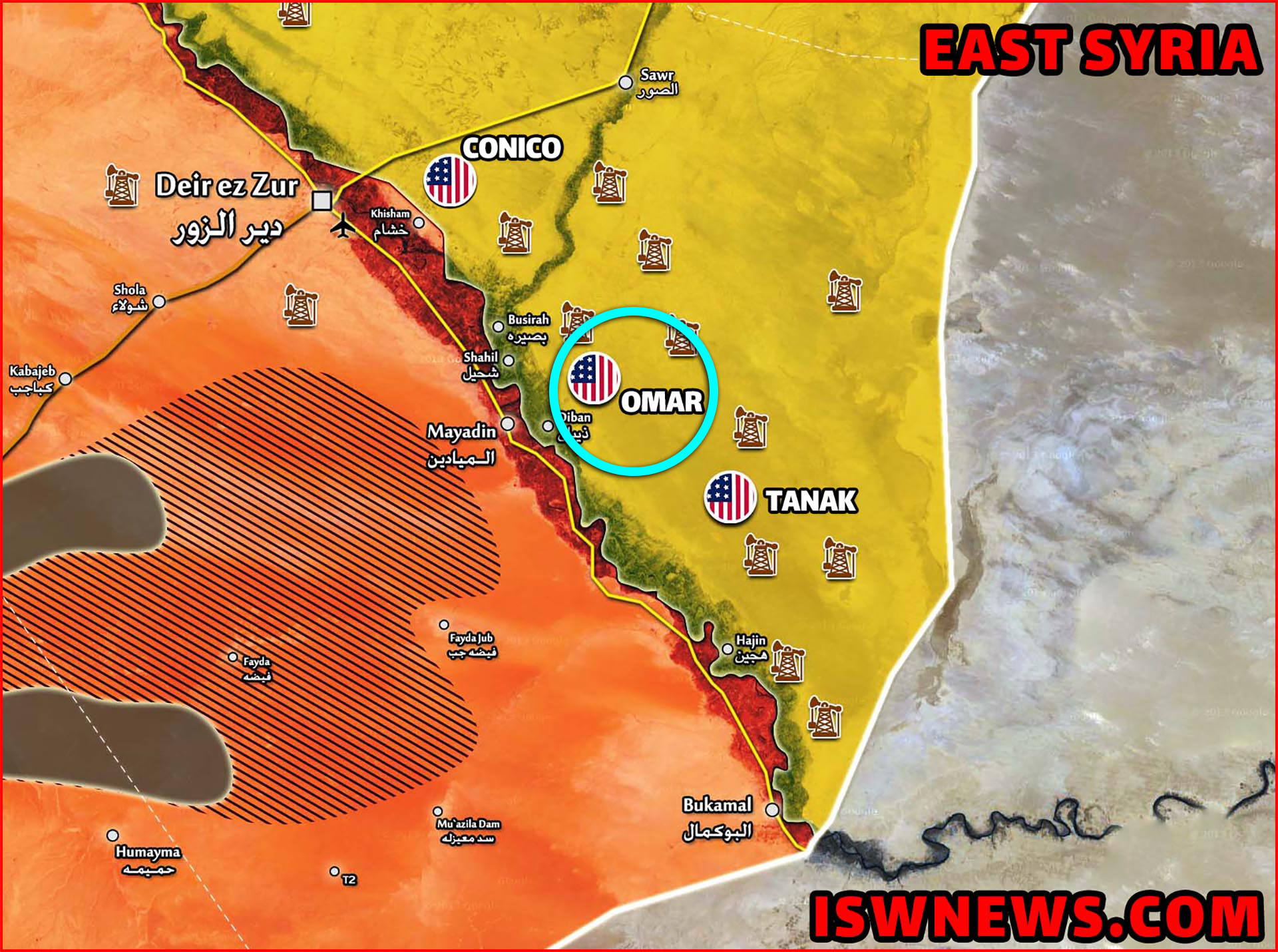
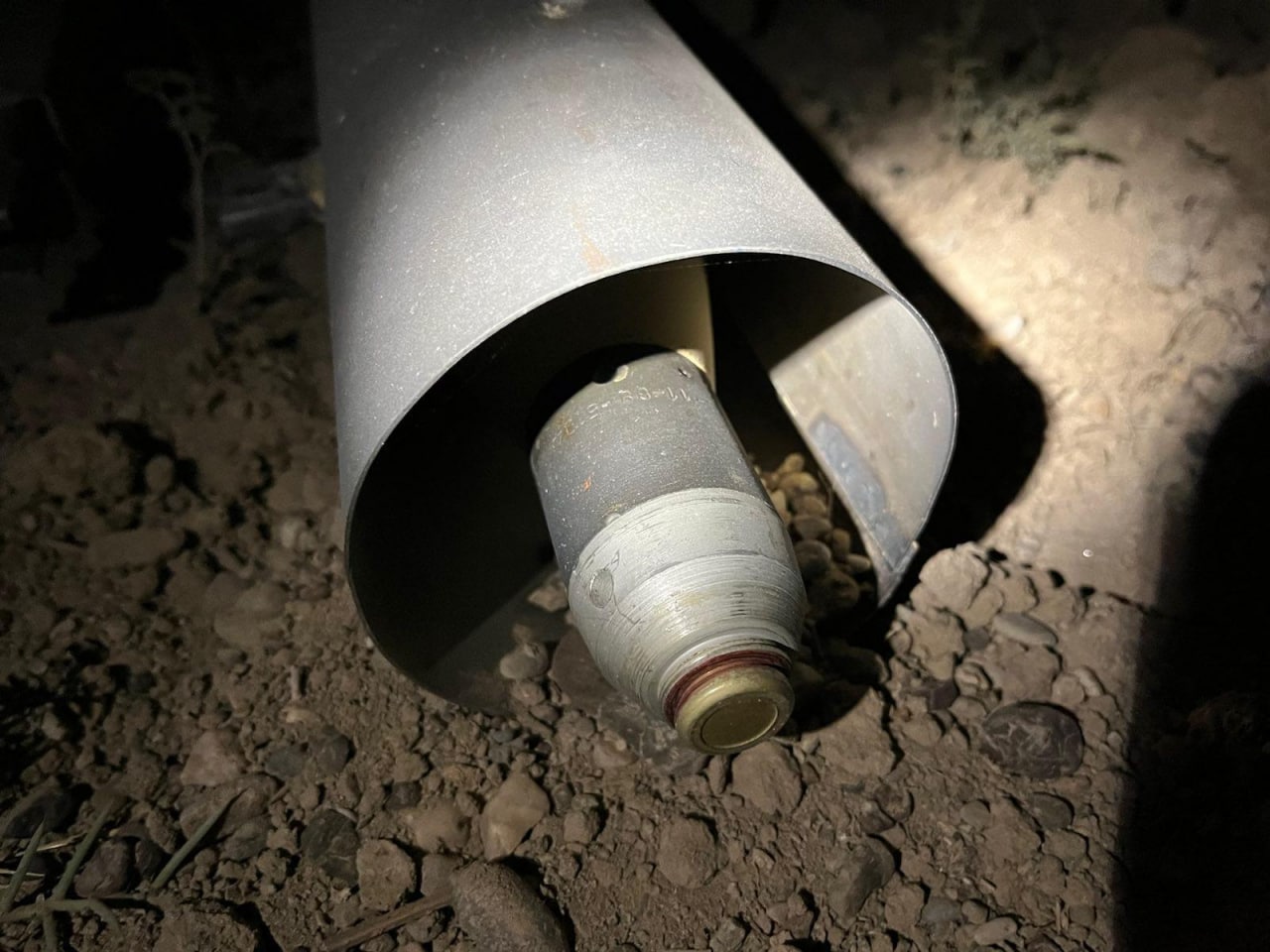
On August 15, the positions of the US coalition located in the Omar oil field were targeted by a rocket attack. So far, no group has claimed responsibility for this attack. The rockets reportedly fell in the vicinity of Green Village inside the al-Omar oil field.
In this regard, the US coalition issued a statement confirming the rocket attack and announced that at 21:00 (August 15) local time, several rockets hit the area around Green Village in Al-Omar oil field.
Also, this attack did not cause any casualties.
It is worth mentioning that on May 29 of this year, the American military base in the Omar oil field was also targeted by several rockets.
Following the clashes between the Islah party and the resigned government of Yemen in Shabwah province, local sources in Mocha port city confirmed the order of Tariq Saleh to assemble the national resistance forces and transfer military equipment in order to carry out military operations against the positions of the Islah party in Marib province.
On the other hand, Mohammad Al-Bukhaiti, the governor of Dhamar and one of the field commanders of Ansar Allah, in a message to the leaders of the Islah Party, requested that this party join the Yemeni Salvation Government and receive the full support of Ansar Allah against the enemy, but the leaders of the Islah Party have not yet provided a clear answer to this proposal.
The conflict between the Islah Party and the resigned government escalated with the dismissal of the Islah party commanders in the city of Ateq, and until today, it has reached to force handover of government positions in Shabwah, Marib, and Hadhramout. It should be mentioned that in the past days, the Saudi coalition, through Muhammad Al-Jaber, the ambassador of Saudi Arabia in Yemen, demanded the removal of Sultan al-Arada, the governor of Marib, and the leaders of the reformed party, but he refused this request.
Deployment of Russian peacekeepers on the border road
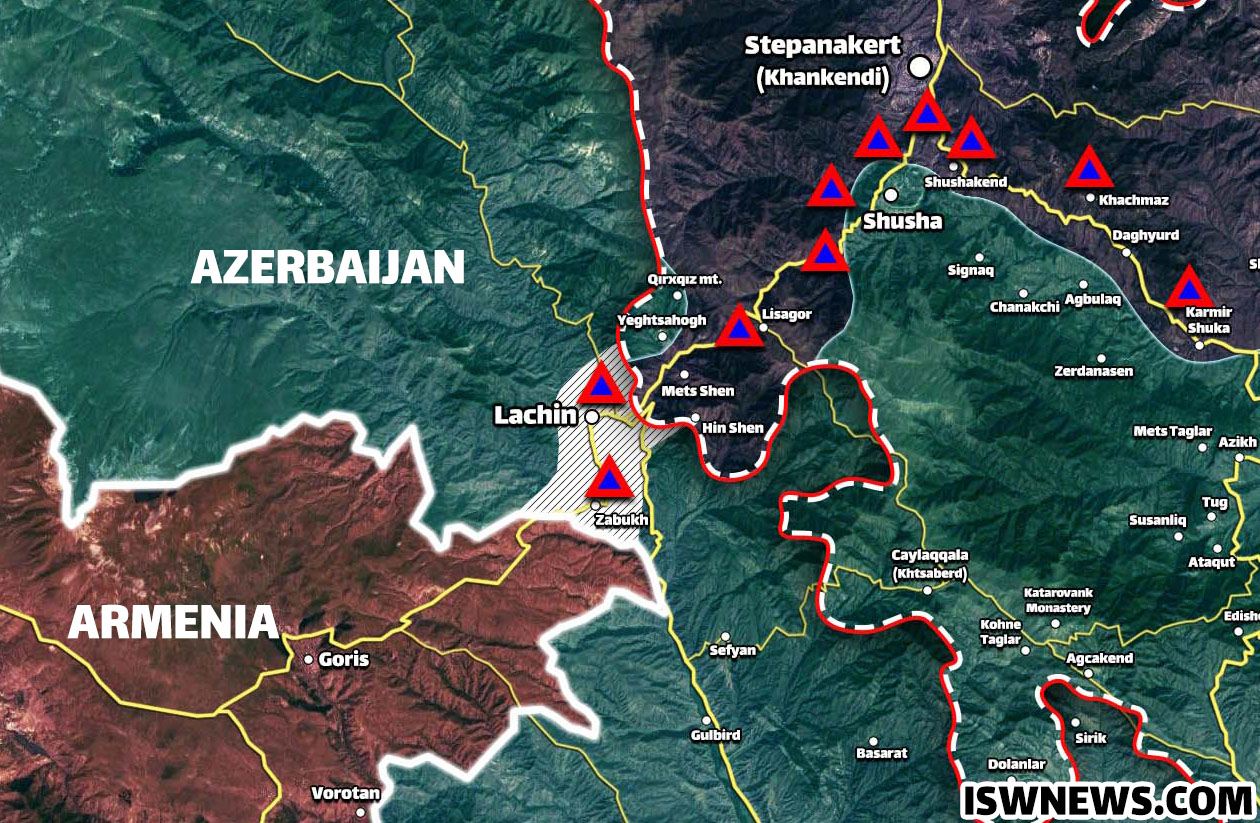
Armenian press and Azerbaijan TV have reported that Russian peacekeeping forces have been deployed on the border of Armenia’s Kapan province and Azerbaijan’s Lachin to monitor the passing vehicles of Armenian citizens on the road from Agarak town to Kapan city. A large part of this road was built by Armenia in Azerbaijan during the years of occupation.
After the withdrawal of Armenia from the occupied territories of Azerbaijan in Karabakh, the city and airport of Kapan, the towns and villages around it have become border areas and are in the sight of the neighboring country. Now, Azerbaijani army and border police forces have been stationed at this point, and Russian forces are inspecting vehicles passing through this road to prevent possible conflicts.
Also, according to the Armenian press, the forces of the National Security Organization of Armenia have advised the citizens to drive fast on this road so as not to be captured by the Azerbaijani forces.
After Shurnukh village and five kilometers from Goris highway to Kapan, this is the third road that becomes a problem between the two countries.
At the end of this month, the heads of Azerbaijan and Armenia will hold talks on the final determination of the border lines during a tripartite meeting with the mediation of Russia in Moscow. There is a high possibility of exchanging the disputed points between the two countries. According to Armenian Ministry of Defense, 42 square kilometers of the border lands of this country are under the occupation of Azerbaijan, but Azerbaijan says that it has not invaded the territory of Armenia and has only returned to the international borders.
Evacuation of Lachin, source of tensions in Armenia
According to an Armenian website, Artur Ghazinyan, a former MP and an opponent of Pashinyan’s government, protested the evacuation of Lachin city and called it ethnic cleansing. In this regard, he says: “According to the second part of the sixth clause of the November 2020 Moscow agreement, the Armenian government is responsible for the implementation of the clauses of this agreement. But every time, it asks the Armenian government based in Nagorno-Karabakh called Artsakh, which is not mentioned in this agreement, to implement these cases.”
Armenian sources believes the evacuation of residential areas in Berdzor (Lachin) should be done by November 9, 2023, but Azerbaijan built the road in one year and six months, and early evacuation of residents is not possible.
According to the announcement of the President of Nagorno-Karabakh, Araik Harutunyan, the people of Lachin and surrounding areas must evacuate this city and villages and towns under the control of Russian peacekeepers by August 25. But some people are still resisting this issue and most of them are not willing to evacuate due to the fear of displacement and inappropriate accommodation. According to the Armenian officials, apart from evacuating the families, the graves will also be moved and the families can go to Armenia or stay in Nagorno-Karabakh.
Azerbaijani media have reacted to the failure to evacuate Lachin by August 25. Azerbaijan’s political analyst Saber Hemmatov said in an interview with Baku TV: “If the Armenians are not evacuated, Azerbaijan will launch military and anti-terror operations, and the iron fist is ready.”
Fight over names in Karabakh
The Ministry of Economy of the Republic of Azerbaijan is preparing a map of the liberated areas of Karabakh. According to the understanding with the Mapping Institute of Science and Technology Institute Formps, located in Somqait Industrial City, the preparation of a 3D map of the region and the updating of the map of cities, villages, towns and other places is being done.
The government of Azerbaijan wants to display the names of these regions with Azeri names on Google maps. The exact cost of this project has not yet been announced. During the 28 years of occupation of the Karabakh region by Armenia, Google used to display the names of existing places in Armenian and English, which was always objected to by the Azerbaijani government.
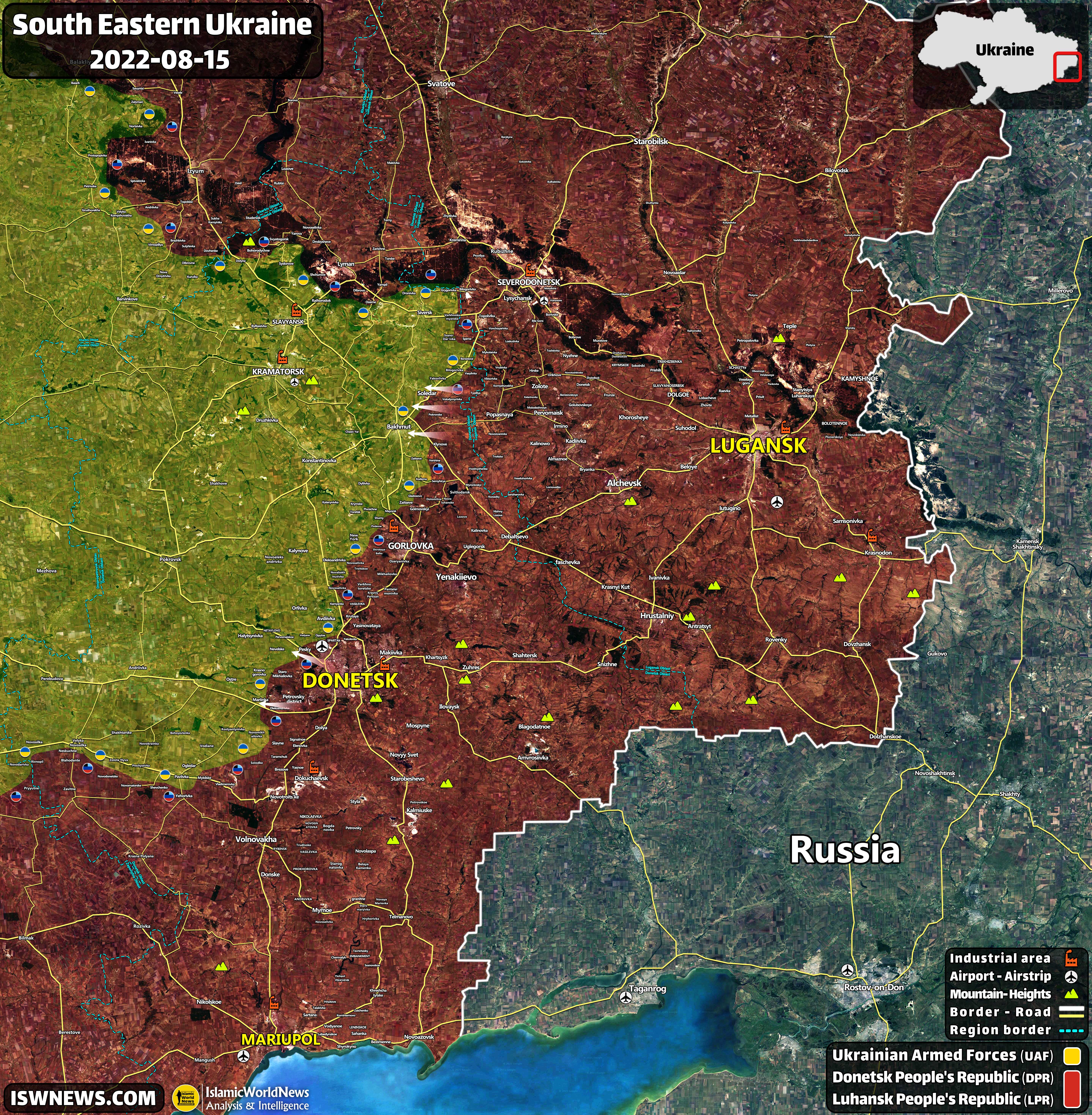
According to the latest news from the frontlines, the Russian army has concentrated its attacks on the defense line of the Ukrainian army in the Seversk-Soledar-Bakhmut axis. These attacks in the last week have led to an advance in the east and south of the village of Soledar located on the Bakhmut-Lisychansk road. The ultimate goal of the Russian army in capturing Soledar is to cut off the logistic road and impose a quasi-siege on the cities of Seversk and Bakhmut.
Currently, clashes continue inside Soledar and most of the village is under the control of the Russian army. In Bakhmut, cashes have extended to the eastern entrance of the city, and Bakhmut is under the Russian army artillery fire.
In south of Bakhmut, heavy clashes are going on in Zaitseve and Kodema areas, and the Russians are trying to advance in this axis. It seems that one of the main goals of the Russian army in this axis is to completely capture the villages and areas south of Bakhmut and surround this city from the south.
In the western axis of Donetsk city, the exchange of artillery fire between the sides is still going on. In the last week, Russian and the DPR forces took control of the village of Peski, west of the Donetsk airport. Also, clashes between the Russian and Ukrainian armies continue in the Mariinka area, and the Russian army has gained some ground there.
It is important to mention that the purpose of the Russian forces’ operation in the west of Donetsk is to prevent the AFU ground attacks towards the city of Donetsk and to stop their artillery attacks on the city. And at the moment there is no serious intention by the Russians to advance deep into the west of Donetsk.
In general, it seems that the Russian army is not in a hurry to clear the north of Donetsk Oblast. If the Russian army is successful at this stage on Bakhmut front, the next stage will be the advances towards the important cities of Slavyansk and Kramatorsk.
There are no special activities in other fronts either, and most of the clashes are related to the exchange of artillery fire and airstrikes. The news about the large-scale operation of the Ukrainian army in the southern front or the preparation of the Russian army to launch an operation in the Kharkiv province have been more of a psychological warfare, and despite the claims of the Ukrainian and the Russian media, no specific activities has been observed from the parties in the mentioned areas.