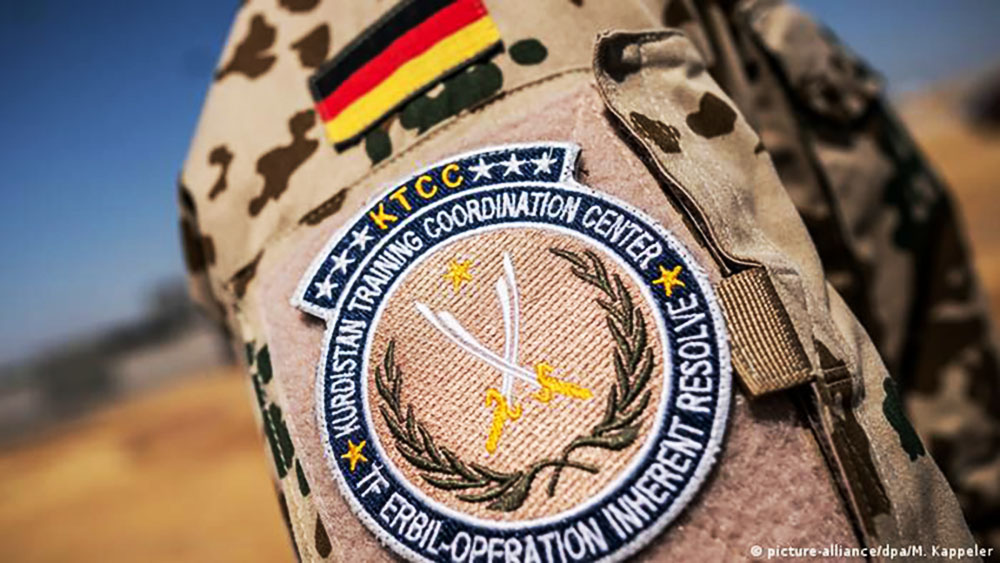
On Friday (January 28th), the German parliament, known as the Bundestag, approved by 553 votes to 110 against the proposal of the federal government to extend the mission of the German army in Iraq until October 2022. Accordingly, the German army will continue to participate in anti-ISIS missions in Iraq for nine months.
The German parliament said in a statement that Germany’s cooperation and presence is only to strengthen and rebuild the Iraqi army and provide related support services as part of NATO’s missions and the International Coalition against ISIS in Iraq.
The German government believes that the efforts of various parties to implement structural reforms in the Iraqi military institutions as well as the integration of the forces of the Hashad al-Shaabi organization in the Iraqi security structures with the aim of effective and direct control of its forces by the Iraqi government should be supported! These words of the German government show that the Westerners are seeking the dissolution of the Hashad al-Shaabi organization and will certainly implement plans to strike at the organization in the near future.
It is noteworthy that the estimated budget for the plan to extend the presence of German forces in Iraq from February 1 to October 30 is about 73 million euros!
This came at a time when Iraqi Prime Minister Mustafa al-Kadhimi had announced at the end of 2021 that the US (international) coalition’s combat mission in Iraq had ended and that the withdrawal of all foreign troops from Iraq had begun. He also said in a speech that in the near future we will all see the withdrawal of US coalition forces from Iraq within the framework of the recent strategic agreement with the US, and from now on the US coalition will play an advisory role.
Therefore, with the extension of the German army mission in Iraq, al-Kadhimi’s words and promises did not come true!
Brigadier General Yahya al-Sari’ stated in this press conference:
– In 2021, our forces repelled 223 offensive attacks and 166 infiltration attacks of the enemy.
– During 2021, enemy warplanes performed 7100, which resulted in civilian casualties and damage to infrastructure. Most of these attacks have targeted different areas of Marib province.
– In 2021, our forces carried out 194 offensive operations and 382 hit-and-run operations. In 2021, our forces carried out operations such as Operation Al-Nasr Al-Mubin in three stages and Operation Rabi Al-Nasr in two stages. Our ground operations have resulted in the liberation of large areas of 12,250 square kilometers in the provinces of Marib, Al-Jawf, Al-Bayda, Shabwa and Al-Hudaydah.
– In 5010 operations, the engineering unit targeted enemy elements, military equipment and their barracks.
– The total operations of the artillery unit amounted to 21925 operations, including: targeting the enemy fortifications, gatherings and military equipment.
– The number of operations of the sniper unit in 2021 has reached 13191.
– The air defense has carried out 1025 operations, which has led to confrontation and forcing the enemy aircraft to leave the field.
– 22 Saudi aircraft including: 6 CH-4 UAVs, 12 ScanEagle, one MQ-9, two RQ-20 and one Karael were shot down. Also, two UAE Wing Loong 2 drones and 64 small spy drones were shot down in 2021.
– The missile force has carried out 440 operations, 340 of which targeted enemy forces inside and 100 operations of enemy gatherings and facilities outside Yemen.
– Our Air Force (UAV) has conducted 4497 reconnaissance and offensive operations against enemy targets inside and outside Yemen.
– In 2021, 394 Saudi soldiers and officers and 745 Sudanese were killed and wounded. The casualties of local mercenaries have risen to more than 24,000 killed and injured.
– In 2021, 1749 armored and personnel carriers and 253 artillery pieces were destroyed or damaged and 39 warehouses were burned.
We will continue to carry out our duties until we achieve freedom, independence and the liberation of the entire territory of the Republic of Yemen.
The first IED attack took place in thr Nasiriyah area of Dhi Qar province and the second IED attack took place in the Samawah area of Muthanna province.
According to data obtained by ISWNews, this is the 33rd attack by Iraqi resistance groups on US logistical convoys in 2022.
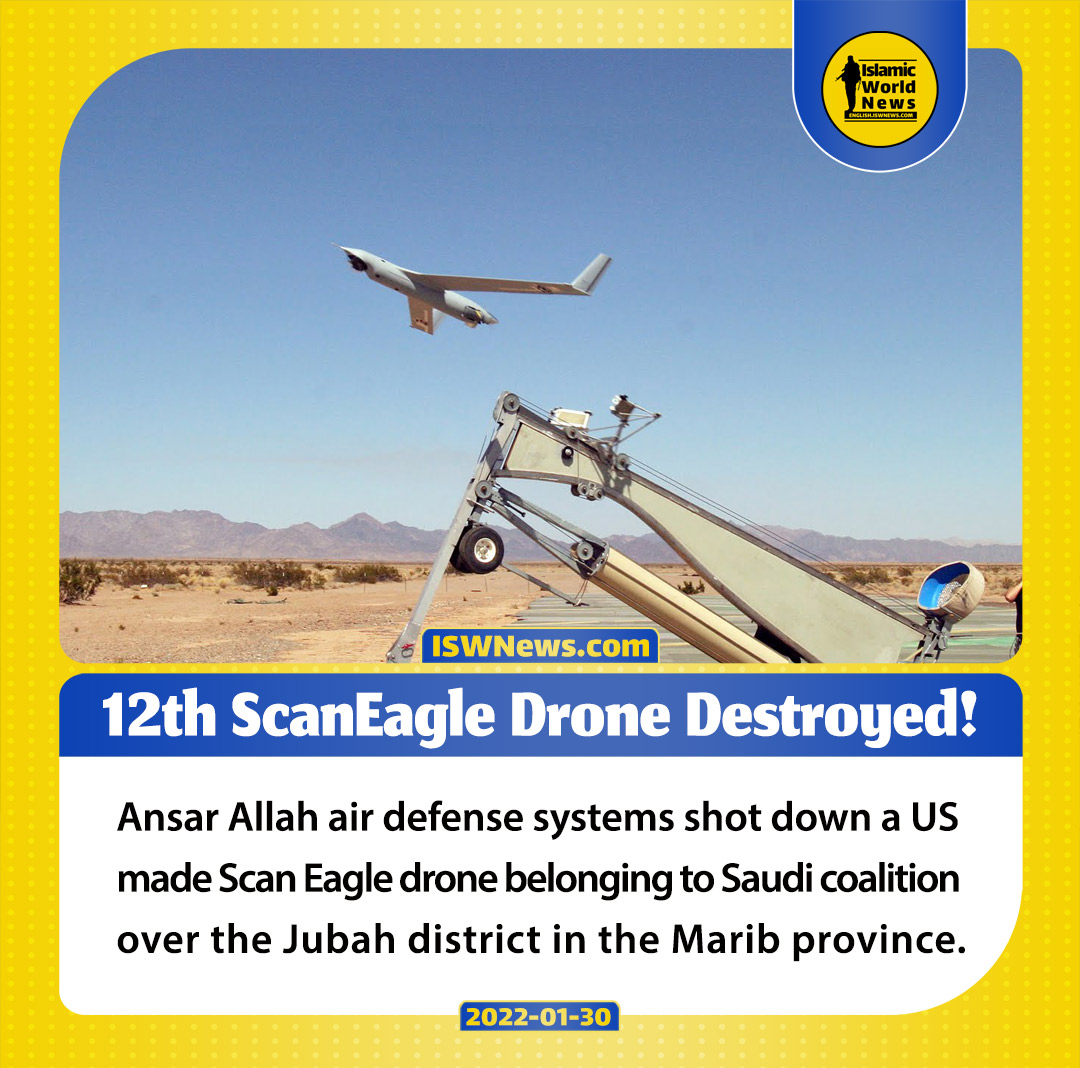
According to Brigadier General Yahya al-Sari’, a spokesman for the Yemeni Armed Forces, the drone was spotted and shot down by Ansar Allah air defense yesterday evening in the skies of al-Juba district.
So far, this drone is the 12th US Scan Eagle drone have been shot down by Ansar Allah during the Yemen war.
The first US Scan Eagle drone was shot down on June 19, 2021 over the al-Mashjah heights in the west of Marib province, the second on June 21, 2021 over al-Mashjah heights in the west of Marib province, the third on August 14, 2021 over the Madghal district in the west of Marib province, the fourth on September 27, 2021 over the Madghal district in the west of Marib province, the fifth on November 9, 2021 over the al-Jubah district in Marib province, the sixth on November 13, 2021 over the al-Jubah district in Marib province, seventh on December 4, 2021 over the al-Jubah district and the eighth on December 8, 2021 over the al-Jubah district in Marib province, the ninth on December 10, 2021 over the Sarwah district in the west of Marib province and the eleventh on December 16, 2021 over the Wadi district in east of Marib province.
In this operation, Ansar Allah has succeeded in liberating more than 160 square kilometers from the eastern desert areas of Saada province, including: Taibat al-Esm camp, Qadhamil heights, Qahira, al-Rabaa, al-Ramla al-Sawda and al-Mahour. During these attacks, more than ten tanks, military vehicles and armored vehicles were destroyed and set on fire by Ansar Allah, and the weapons of the Saudi coalition in the Taibat al-Esm camp were looted by Ansar Allah.
Ansar Allah had previously liberated the town of Yatmah in the north of al-Jawf province and the heights overlooking the Taibat al-Esm camp and the al-Ajasher desert during Operation Fajr al-Sahra on December 24, 2021.
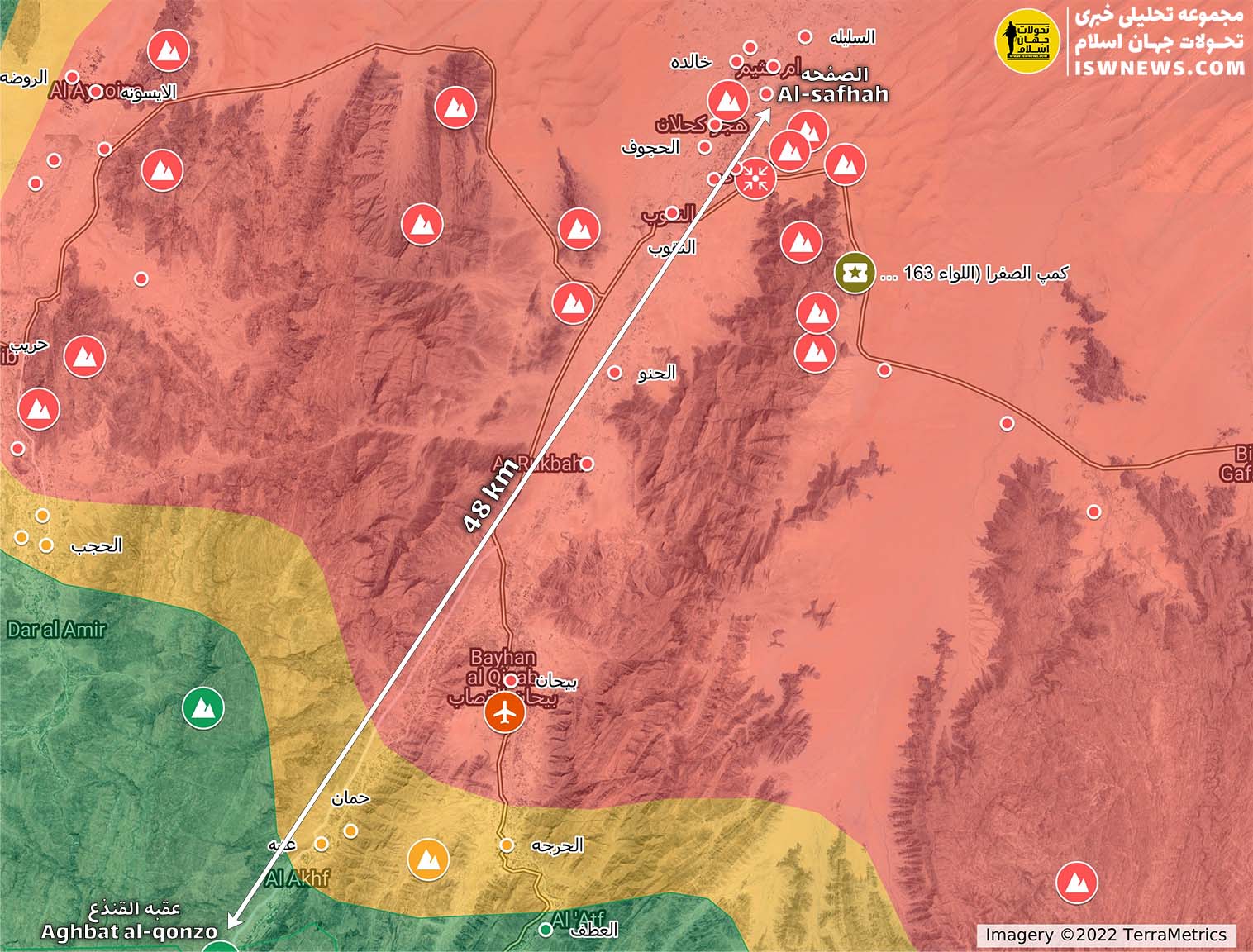
The missile attack was carried out in the last hours of last night, January 28, against a gathering of Amaliqa forces (Giant Brigades) in the al-Safhah area of Usaylan.
According to Brigadier General Yahya al-Sari’, a spokesman for the Yemeni Armed Forces, several military and armored vehicles were destroyed and at least 40 militants and commanders of the Amalqa forces were killed and wounded during the attack.
Considering the distance of Ansar Allah positions to al-Safhah area (48 km) and also the history of Ansar Allah missile attacks, the type of missile used in this attack was probably the Badr P-1 missile.
On November 12, 2021, an order was issued by the Saudi coalition command, which surprised many analysts and the media. In an unexpected move, they ordered the withdrawal of coalition forces from most parts of al-Hudaydah and the west coast of Yemen. According to this order, all the forces of the “National Resistance”, including the forces under the command of Tariq Saleh, Tihamah, Amaliqa and joint forces, evacuated the northern and eastern areas of al-Hudaydah and the western areas of al-Durayhimi, al-Jah and al-Tuhaita.
The most reasonable theory was assumed the fact that this retreat is done to strengthen the Shabwa and Marib fronts, and these retreats will continue until the Hays-Khukhah region in Hudaydah province.
Ansar Allah rapid advance on the Marib and Shabwa fronts had confused and weakened the Saudi coalition ground forces, and the coalition had not been able to stop Ansar Allah by sending al-Qaeda and ISIS militants. They needed trained and experienced forces to protect the city of Marib and keep Ansar Allah away from the city of Ataq, the capital of Shabwa province. With the Sudanese fleeing and the killing of mercenaries and elements of al-Qaeda and ISIS, there was no choice left for the coalition except al-Amaliqa (Giant Brigades) and Tariq Saleh forces.
According to the latest estimates from the Yemeni fronts, the Saudi coalition divided its forces on the west coast as follows: Tariq Saleh forces remained south of al-Hudaydah province to prevent possible Ansar Allah attacks, and some of them moved to the northern and western fronts of Marib.
The Tihamah forces, along with Tariq Saleh forces, carried out an operation called the “Golden Arc” around the town of Hays, which did not yield any specific results. The joint forces and the Amaliqa forces also entered the city of Ataq to retake western areas of Shabwa province.
This transfer of forces was the result of a secret agreement between the Saudis and the UAE. The UAE appears to have achieved the keys of Shabwa province in exchange for helping the Saudis to keep the Marib city. Of course, this issue will be protested by the tribes loyal to “Mansour Hadi”, and there is a possibility of a clash between Mansour Hadi supporters and the southerners in Shabwa province.
In any case, Amaliqa and joint forces under the command of Saudi Arabia and with the special support of the UAE entered the battles of Shabwa. In the first step, the UAE enticed the sheikhs of the tribes of Usayilan and Bayhan, and this led to the cancellation of peace agreements between Ansar Allah and tribes of Belharith. Thus, Ansar Allah set up a defensive line in the southern highlands of Beyhan and Ain district and prepared itself to counter a large-scale military operation by the Saudi coalition in the area.
From January 11, the conflict was transferred to the north of the Harib district, and finally the Harib district center came under the control of Saudi coalition on January 24.
According to the latest news from the Shabwa and Marib fronts, Ansar Allah’s first defensive line in the south of Beyhan remains stable. But the situation in the district of Ain is in favor of Saudi coalition.
The Saudi coalition in the south of Marib seeks to break Ansar Allah’s second line of defense from the al-Ma’laa heights to Haniyeh mountain, as well as advancing on the axis of Abdiyah district. If this line is also broken, Ansar Allah’s positions in al-Juba district will be weakened and the way will be opened for the coalition to move forward. The fall of these areas will eventually force Ansar Allah to retreat from the al-Balaq heights and the southern areas of the city of Marib. Because they will be under a quasi-siege from the north, east and south.
Simultaneously with the transfer of most of the Amaliqa forces to the central regions of Yemen, other forces under the control of the Saudi coalition, such as the Joint Forces and Mansour Hadi forces, have been deployed on the southern fronts of Marib. On the other hand, the Minister of Defense of Hadi government, Mohammad Al-Maqdashi, has visited the southern fronts of Marib, which marks the imminent operation of Mansour Hadi’s forces to retake the al-Balaq al-Sharqi heights, and Ansar Allah must prepare for a heavy battle on this front.
In general, for Ansar Allah, the future is not very pleasant for the battles of the Marib and Shabwa fronts. Ansar Allah’s delay on the western and southern fronts of Marib, for a variety of reasons, provided an opportunity for coalition forces to regroup And the Saudis brought the UAE back on the battlefield with impressive concessions. The unification of the UAE and Saudi Arabia and the use of Amaliqa forces, etc. will turn the Marib war to an erosive one. This will save the Saudis from being removed from the Yemen equation in the short term, and will increase the UAE influence in the central regions of Yemen. But Ansar Allah also has effective leverages that can thwart the Saudi coalition plans as in the past. Time will prove everything.
It is the “new ones”, since the Palestinians themselves do not hide that until today the main reason for arming was self-defense. The enmity between supporters of Hamas and Fatah, the danger of infiltration by representatives of Jabhat Nusra or ISIS, difficult relations with some Lebanese parties, mutual distrust with the Lebanese army, all these reasons forced the Palestinians to seek a way of self-defense. However, a lot has changed today.
The murder of the legendary Sardar Soleimani changed a lot in the IRGC’s strategy to destroy imperialism in the region. Now the bright representatives of the Axis of Resistance will have to take on more functions and capabilities. For example, one of the plans of the IRGC strategists is to create a “front of camps”* – that is, the formation of an anti-Zionist bridgehead in Lebanon and Syria, where the main striking force will be the Palestinians under the command of the IRGC quartet – Hezbollah – Palestinian Jihad – Hamas.
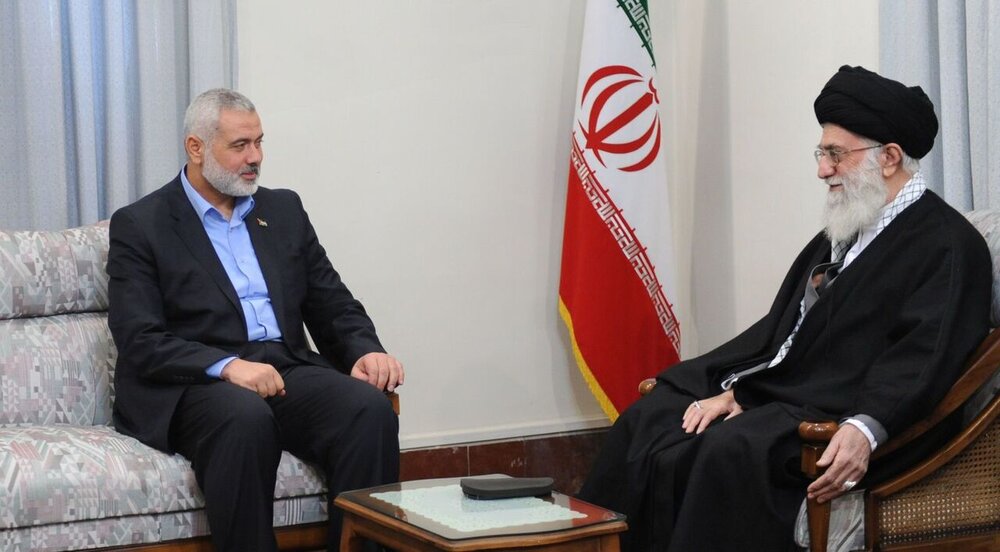
The role of Hamas is to facilitate the conditions of mobilization, because due to the high rating of the Islamic Movement among millions of Palestinians, Hamas has an advantage over a number of other Palestinian organizations, therefore they are assigned to play a leading role in the future campaign for the liberation of al-Aqsa.
That is why Hamas is making detailed preparations for future battles with the occupiers. Weapons depots are just one of the well-known facts, the time is not far off when Hamas will conduct tests using various types of weapons by analogy with the exercises in the Yarmouk camp in Syria at the turn of 2008-2009.
It should be added that despite the still existing problems between Assad and Hamas, the pro- Western government of Lebanon and disagreements within Hamas (there is still a group of politicians rejecting efforts to create a resistance front in refugee camps), it is worth pointing out that these minor nuances are not able to hinder the implementation of the strategy for the liberation of Palestine.
Moreover, the murder of the legendary Soleimani and Muhandis only pushed the various political forces within the Axis of Resistance to a broader coordination. The Islamic Republic of Iran has promised a number of surprises for the Zionists and it will keep its word. The described scenario of events is just one of the many options during the campaign to liberate al-Quds, and there are about thirty such scenarios!
* This plan has always been relevant, for example, back in 2015, the representative of Hamas, Mahmoud Zahar, known for his close ties with Iran, called on the Palestinian camps of Lebanon and Syria to open a new front against Zionism.
According to pro-Saudi coalition media, the Amaliqa Forces Command recalled five brigades of its fighters from the southern fronts of Marib and transferred them to the city of Ataq.
It should be noted that the leaders of the Southern Transitional Council had announced their participation in the Saudi coalition operation until the recapture of the districts of Shabwa province from Ansar Allah. But they expanded their military operation into the Harib district in Marib province. However, the end of operation was announced today.
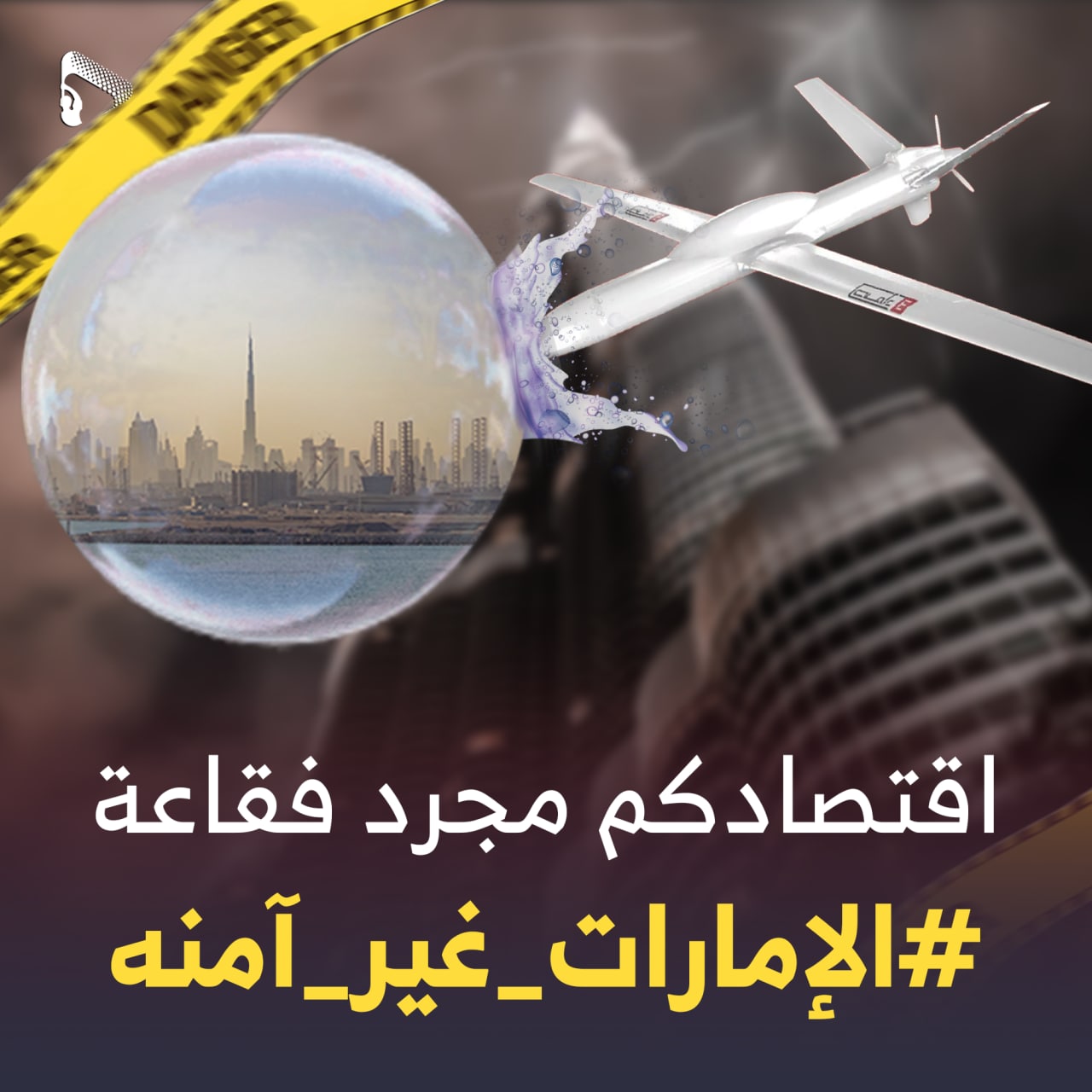
This unexpected decision to end the operation and withdrawal of Amaliqa forces could be the result of one or more of the following: 1- The losses and casualties of the Saudi coalition forces, especially the Amaliqa forces on the battlefield with Ansar Allah, were much higher than their calculations and level of expectations. 2- Ansar Allah’s security and economic blow to the UAE by carrying out Operation Hurricane Yemen in two stages. 3- US and UN pressure on the UAE and Saudi Arabia to stop airstrikes on Yemeni cities. 4- International mediations between Ansar Allah and the UAE. 5- Ending the agreement between the UAE and Saudi Arabia and achieving the goals of this agreement.
Also, some local analysts believe that in exchange for helping the Saudi coalition to fight Ansar Allah in Marib province, the UAE has taken control of some districts and oil areas in Shabwa province and the port of Belhaf on the southern coast of Yemen from the Saudis.
According to preliminary information, the attack was carried out using at least six 107 mm rockets. An obsolete civilian plane parked in Airport was also damaged.
According to data obtained by ISWNews, this is the 31st attack by Iraqi resistance groups on US logistical convoys in 2022.
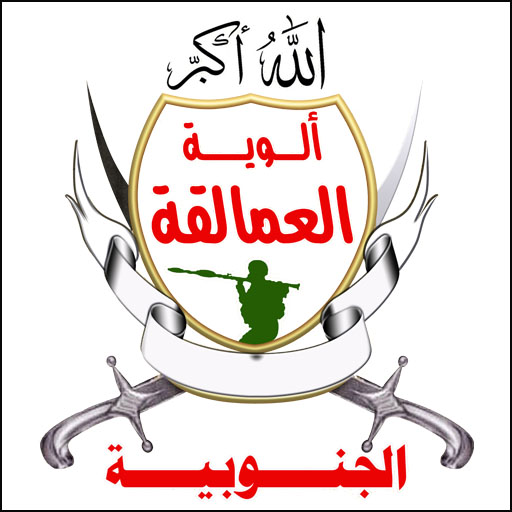
The word Al-Amaliqa or Amaliq in Arab culture means strong and large people. Throughout history, the Jews also called their enemies Amaliq and considered Amaliqa as an adjective for their enemies. The last time the word was used in a speech by Jewish leaders was in 2010 by Benjamin Netanyahu, who called the Iranians a new Amaliqah.
But in Yemen, the Al-Amaliqah Forces are a militant group formed in 1971 at the suggestion of Major General Hassan al-Omari during the presidency of Ibrahim al-Hamdi.
Al-Amaliqah forces fought with the Socialist separatists in the south during the 1994 civil war in support of the Northern Alliance. Al-Amaliqa clashes with the southerners in Abyan province led to the defeat of the southerners and the depletion of their power in other battles, and Yemen came under the complete control of Ali Abdullah Saleh. Al-Amaliqah forces were also used by Ali Abdullah Saleh during the Six Wars of Saada. They fought in various battles against the supporters of the martyr “Sayyed Hussein Badruddin al-Houthi” in Saada and northern Yemen. Al-Amaliqa forces were then distributed to other brigades of the Yemeni army and practically disbanded.
After the Yemeni revolution and the beginning of the battles between Ansar Allah and the supporters of Abdrabbuh Mansur Hadi, a number of former commanders of Al-Amaliqa, with the support of the Saudi coalition, reorganized their groups and took part in the battles in the southern regions of Yemen. The organization of the Al-Amaliqa forces expanded during the Saudi coalition attack on the west coast of Yemen, and the ground attack was carried out with their role.
The Giant Brigades is now largely organized by the UAE, and most of its forces are recruited by this country. Most of the body of this group consists of the Wahhabis of Dammaj, Kataib Abu al-Abbas in Taiz, the Salafis of southern Yemen from the areas of Yafi’ to Lahij.
The Saudi coalition media put the number of Al-Amaliqah (Giant) Brigades at about 30,000. However, depending on the deployment of these forces in Yemen, their number is estimated at 15,000 to 20,000.
The Giant Brigades has bases in Aden and Lahij, and until the last few months they were stationed in the fronts of al-Hudaydah and Taiz. But after three years of erosive fighting in al-Hudaydah, they withdrew from al-Hudaydah on the orders of the Saudi coalition and were sent to the Shabwa and Marib fronts.
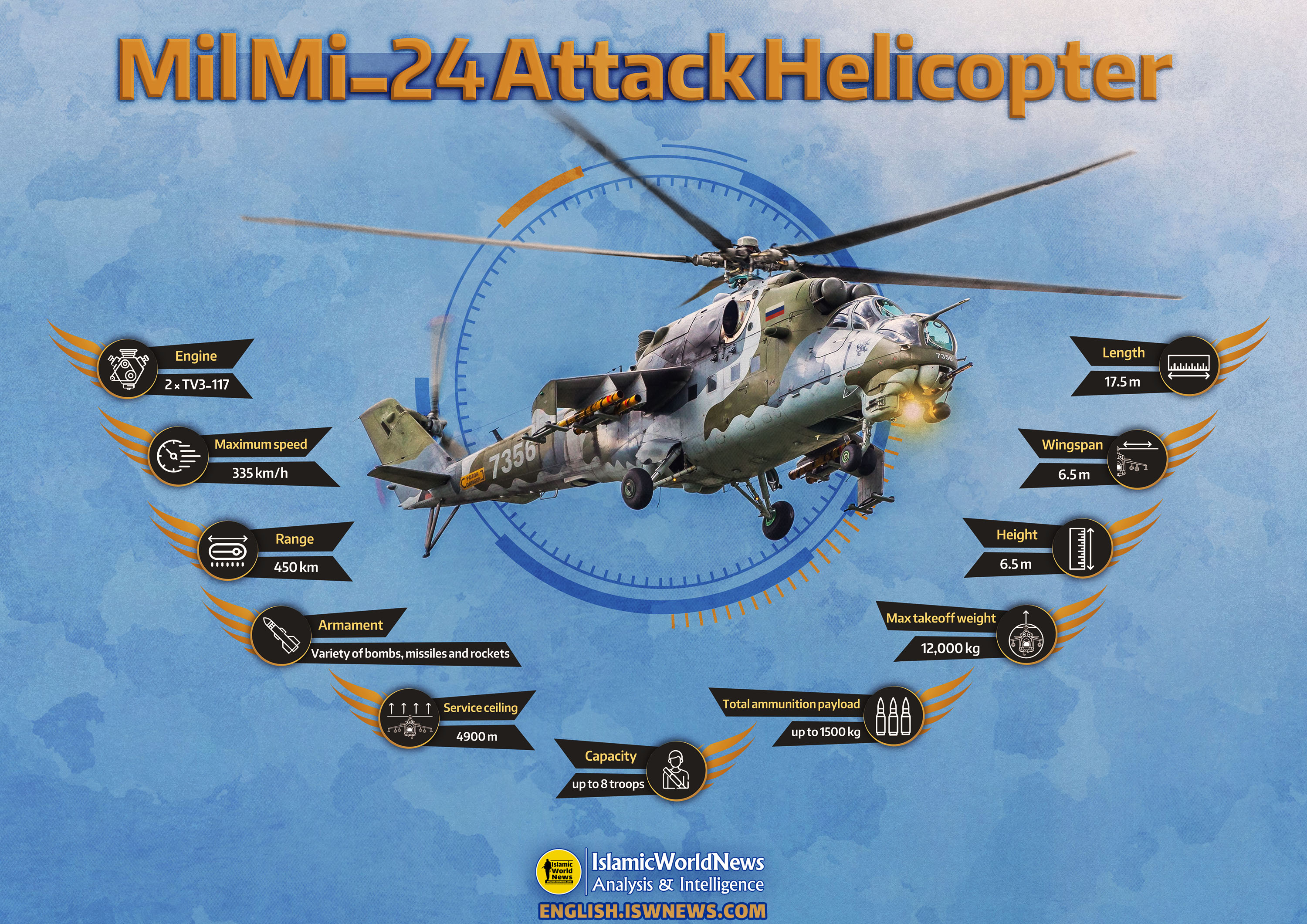
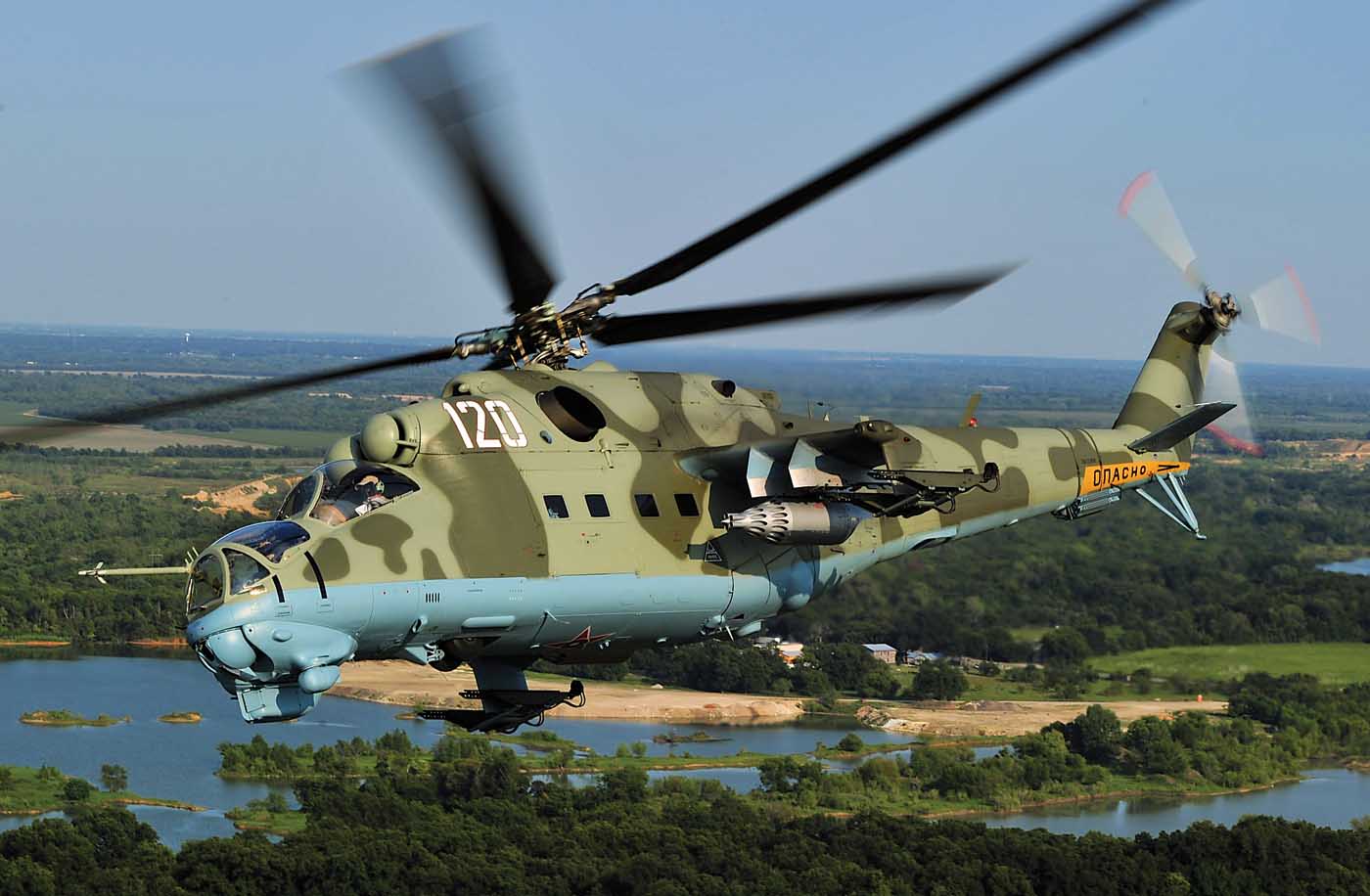
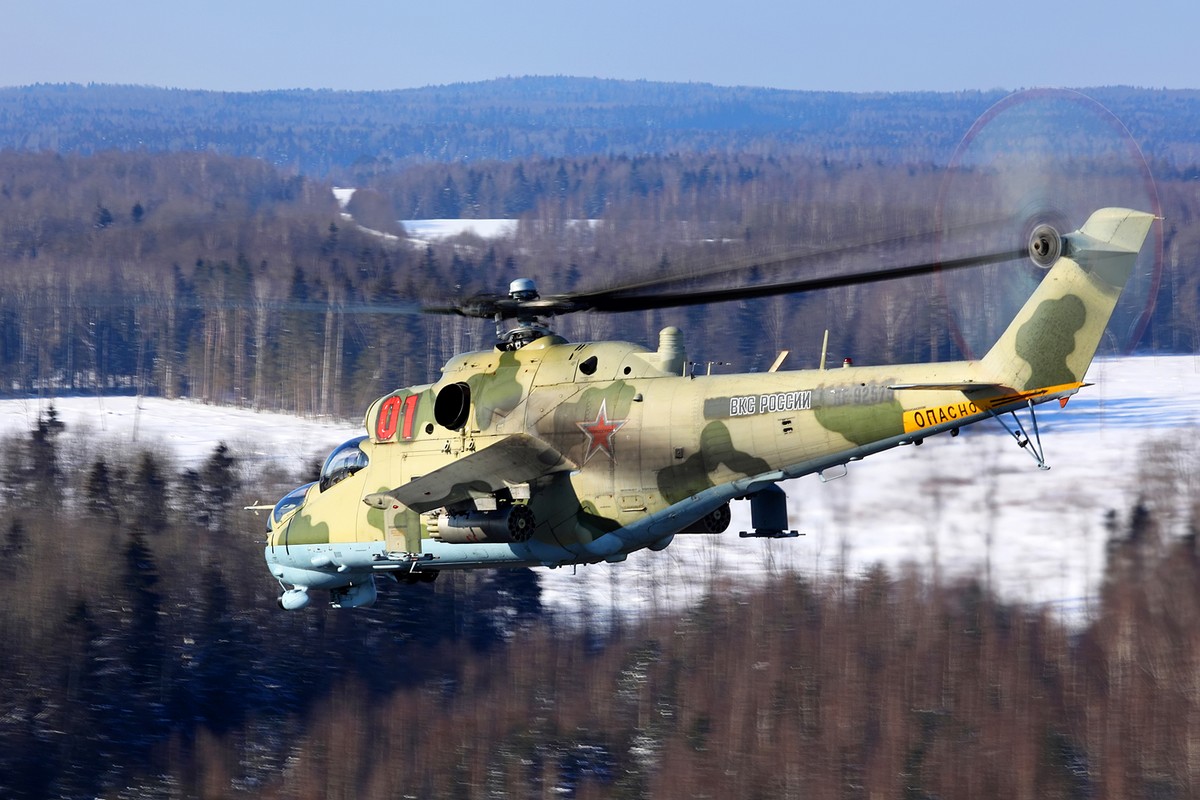
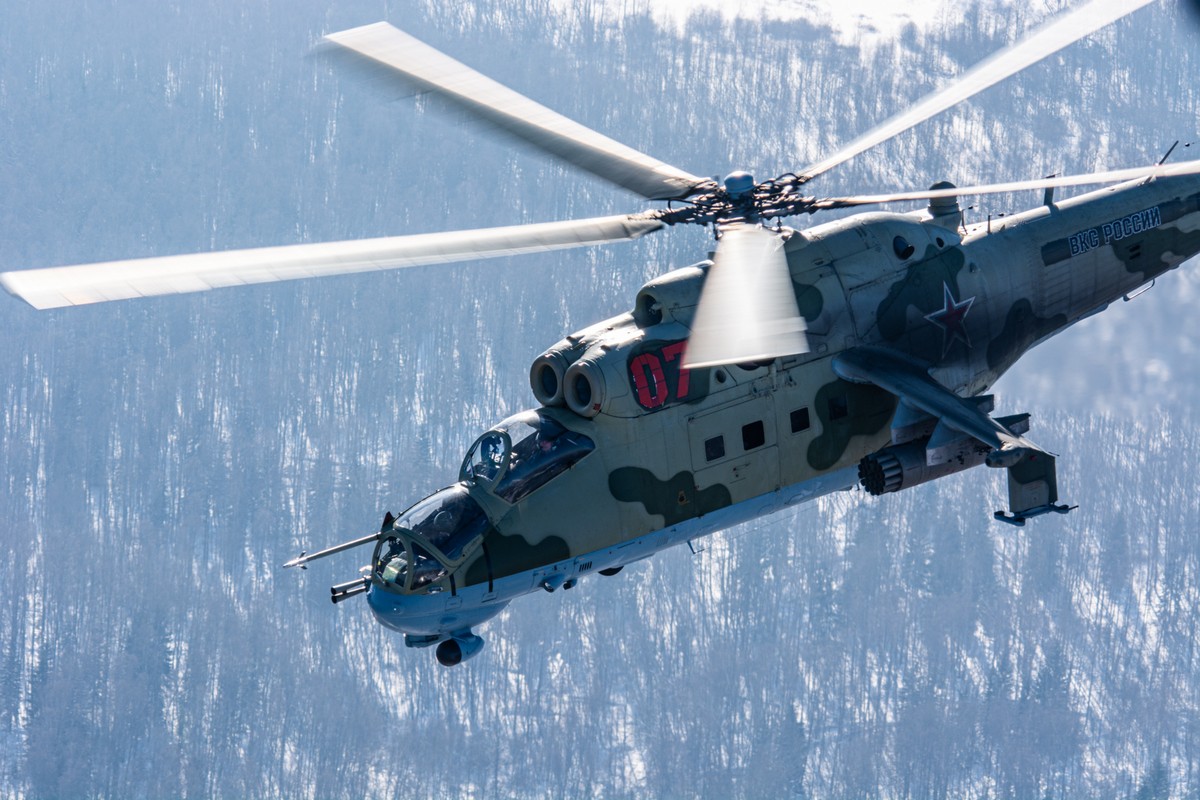
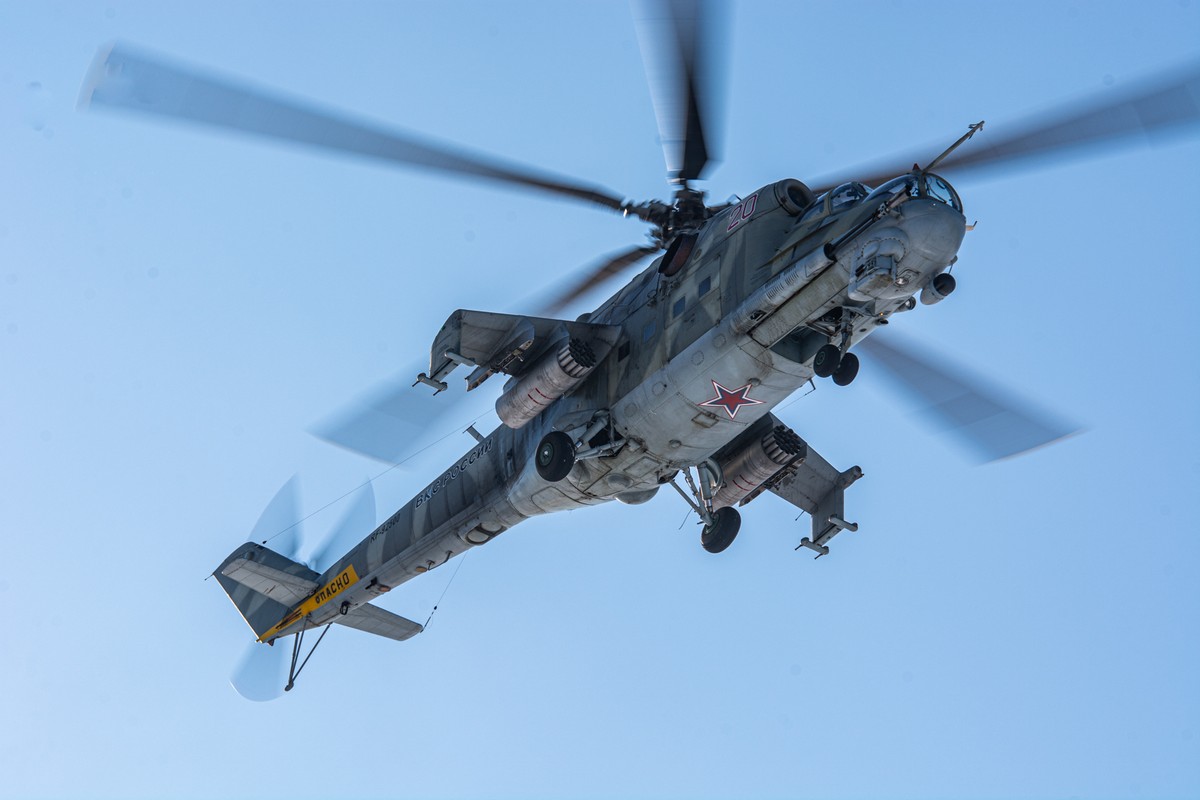
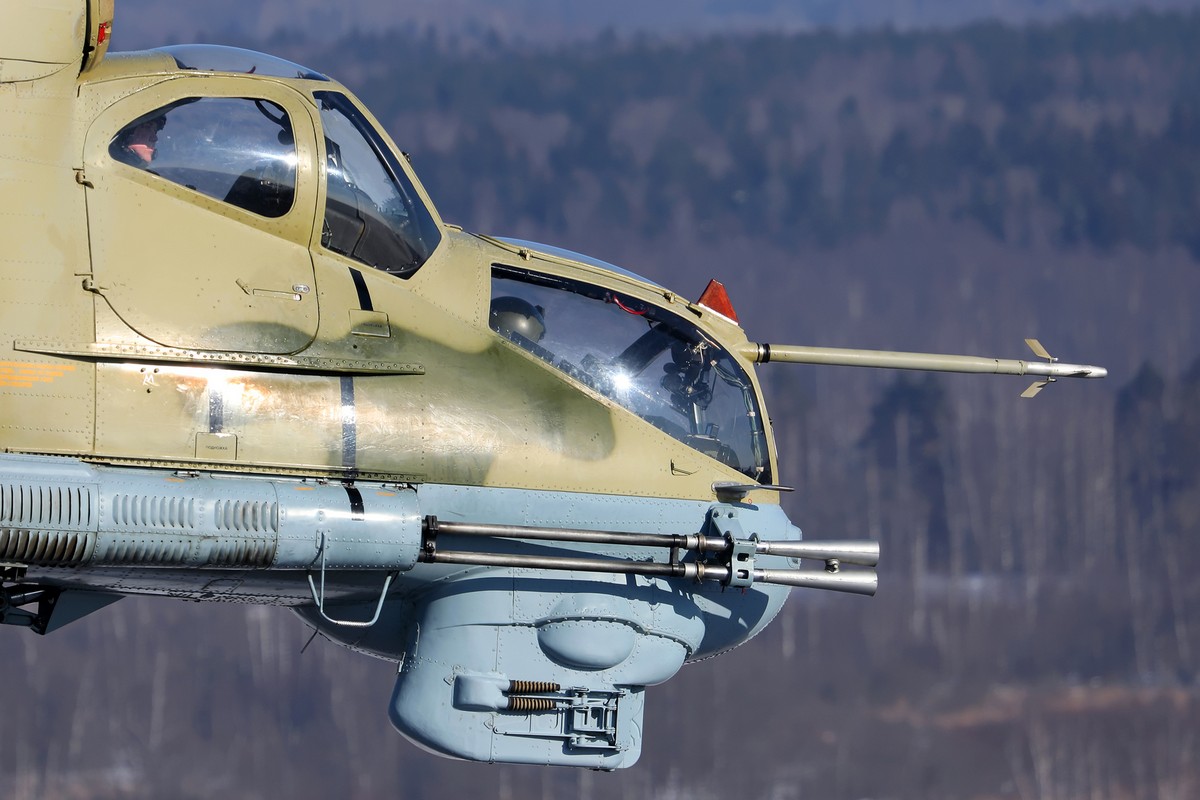
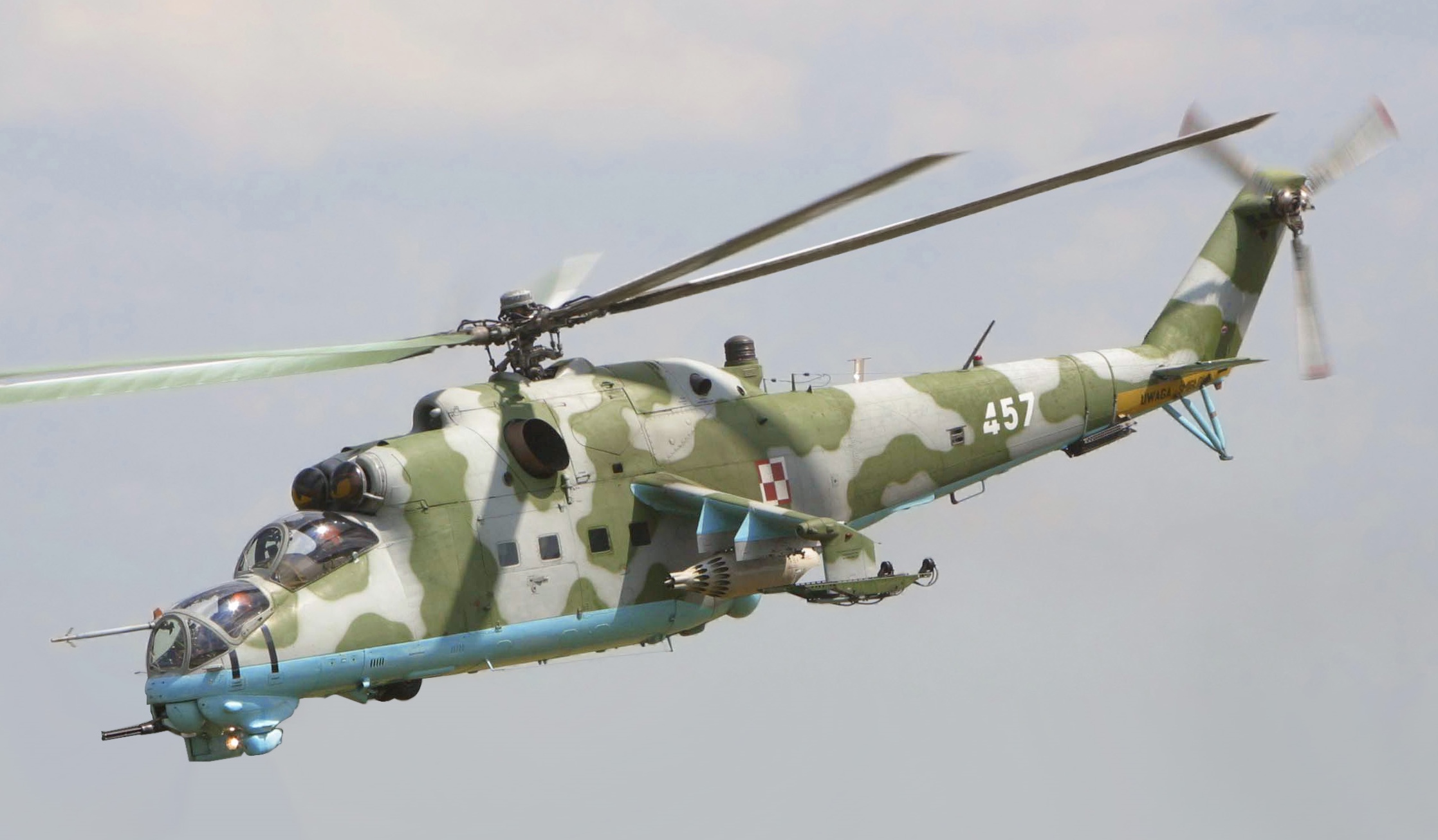
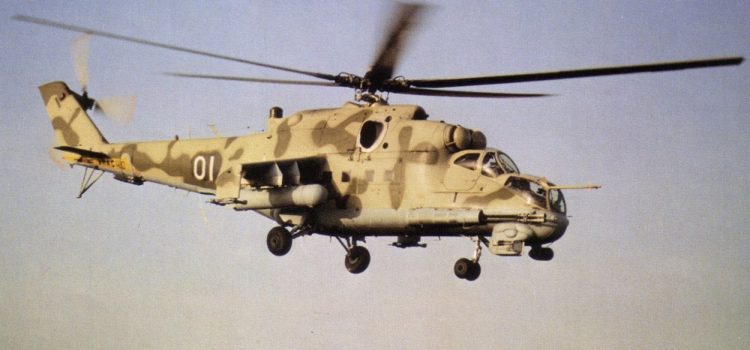
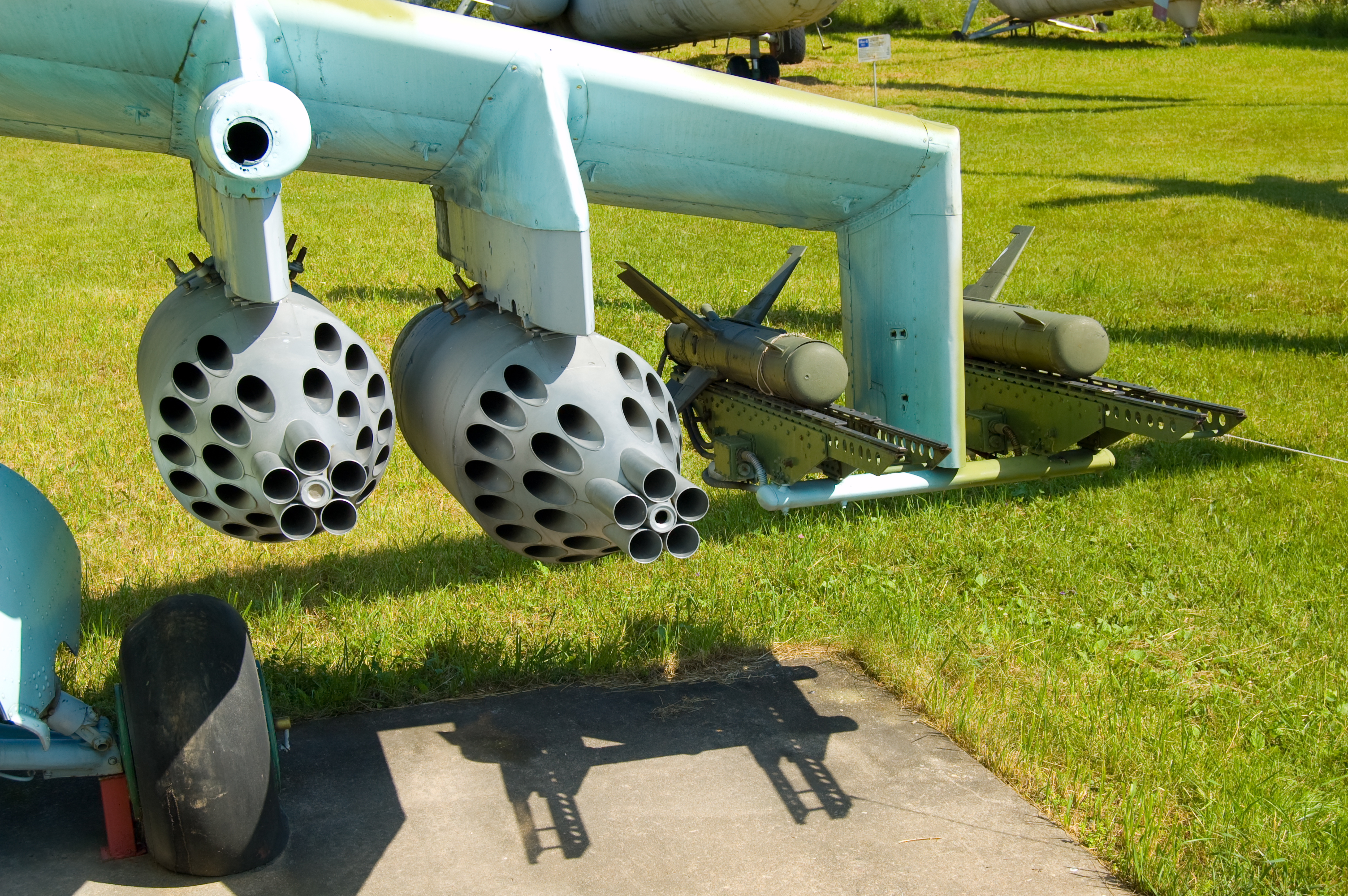
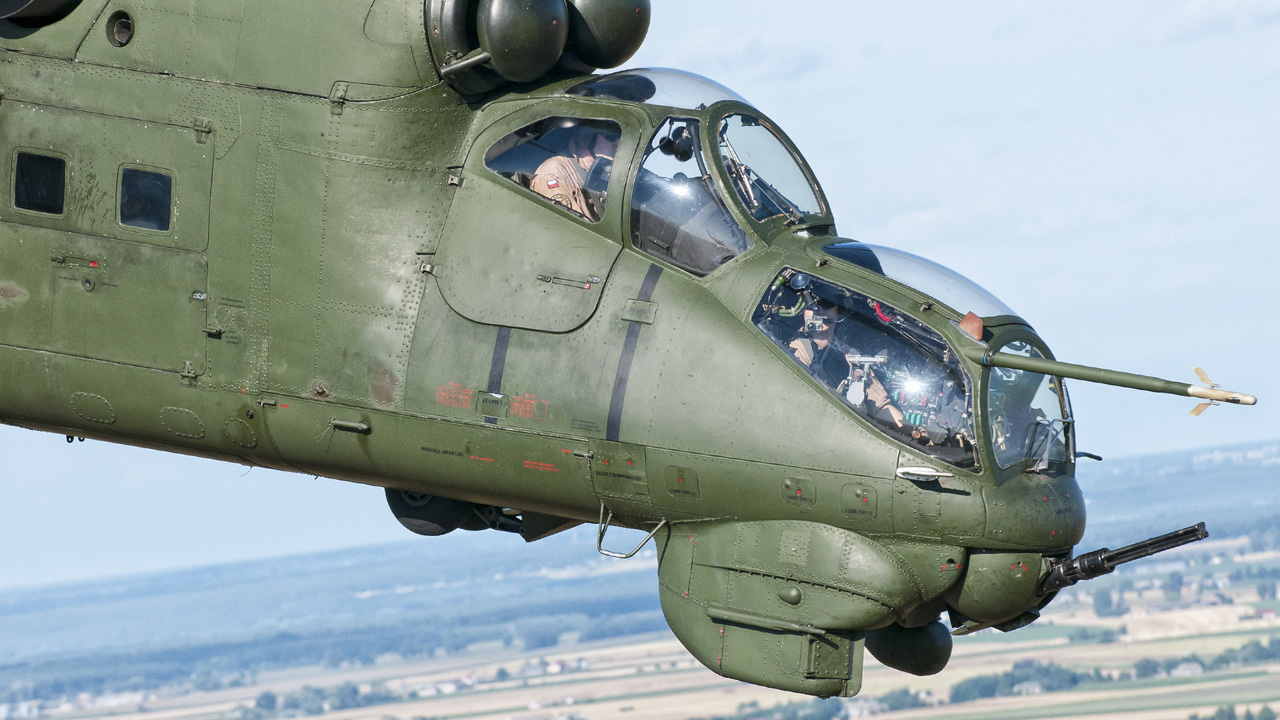
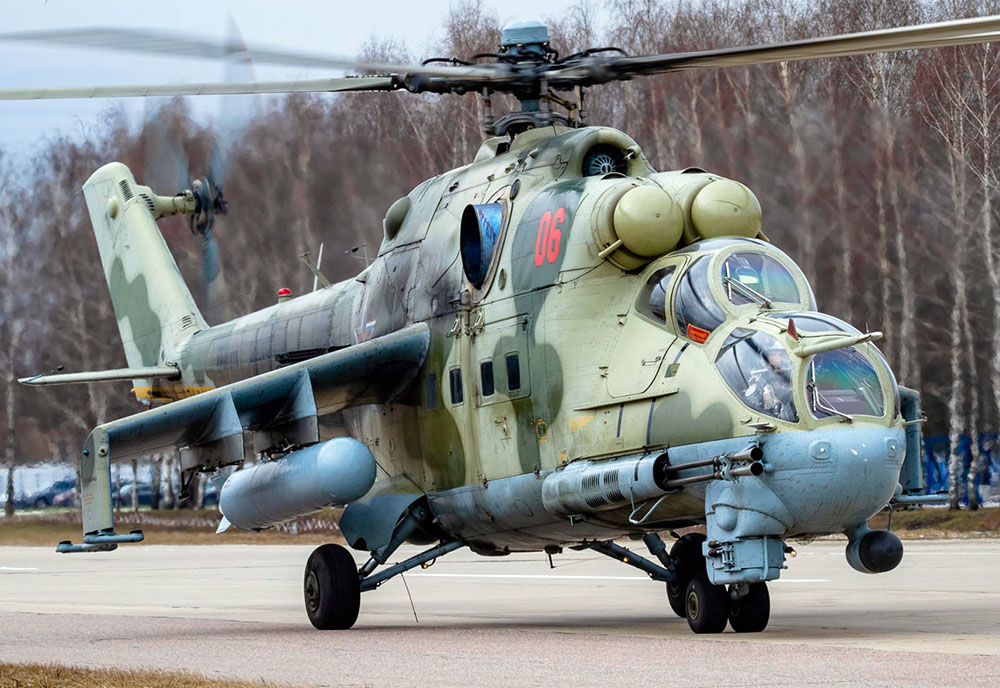
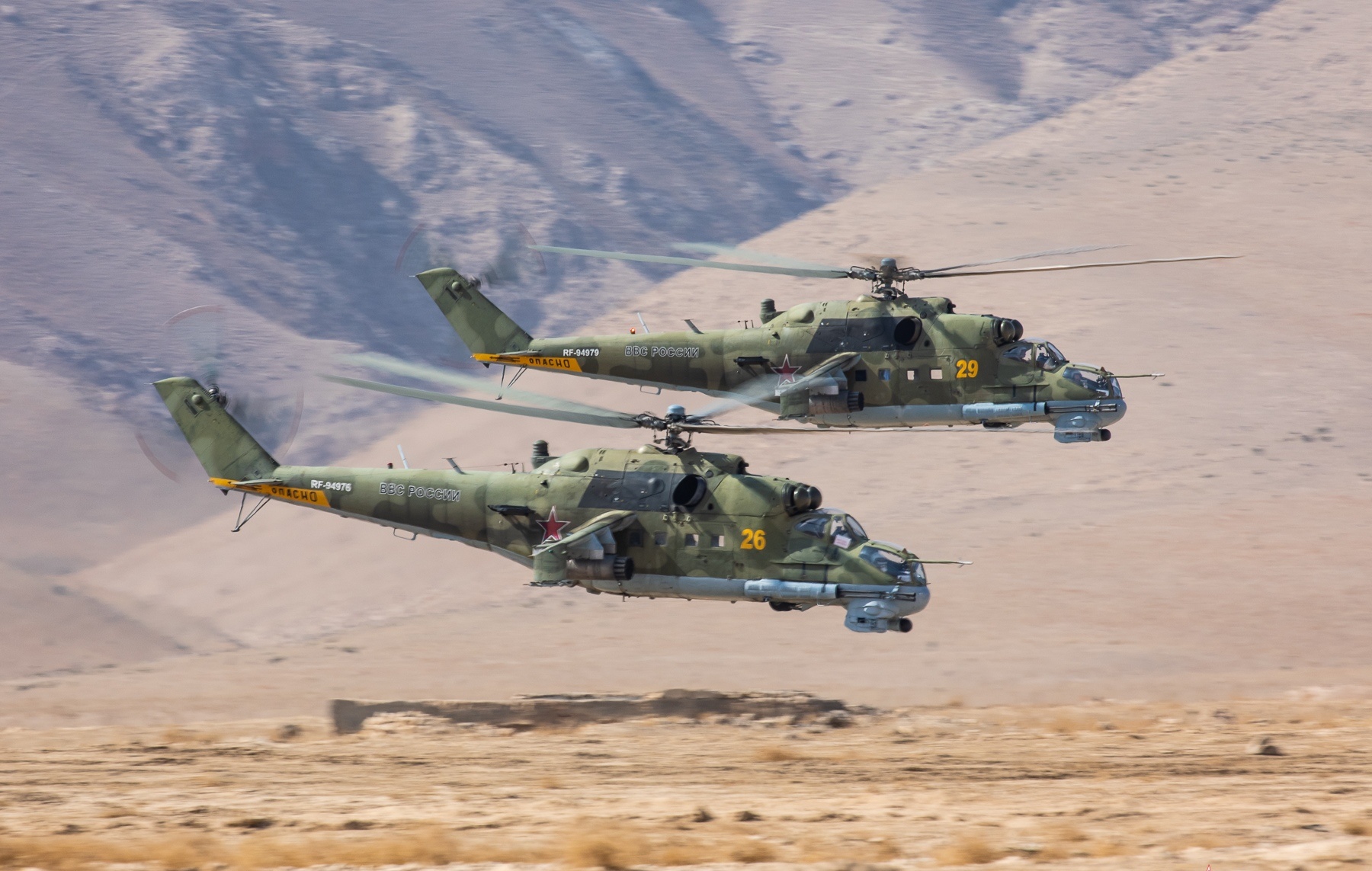
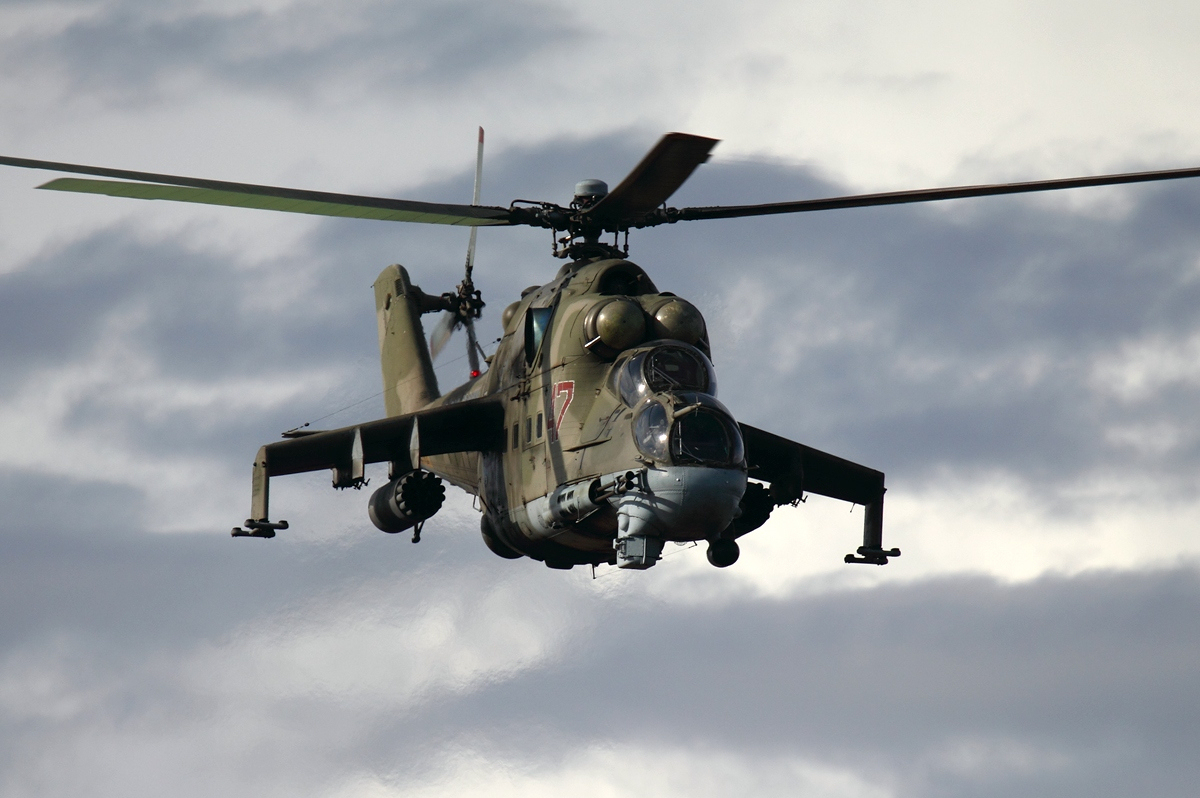
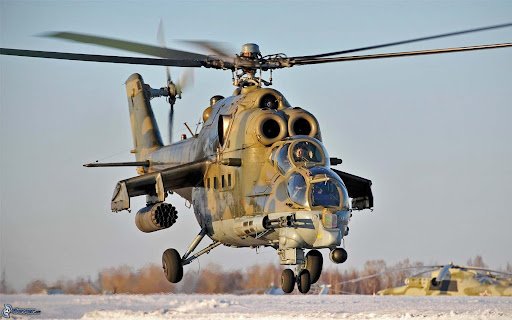
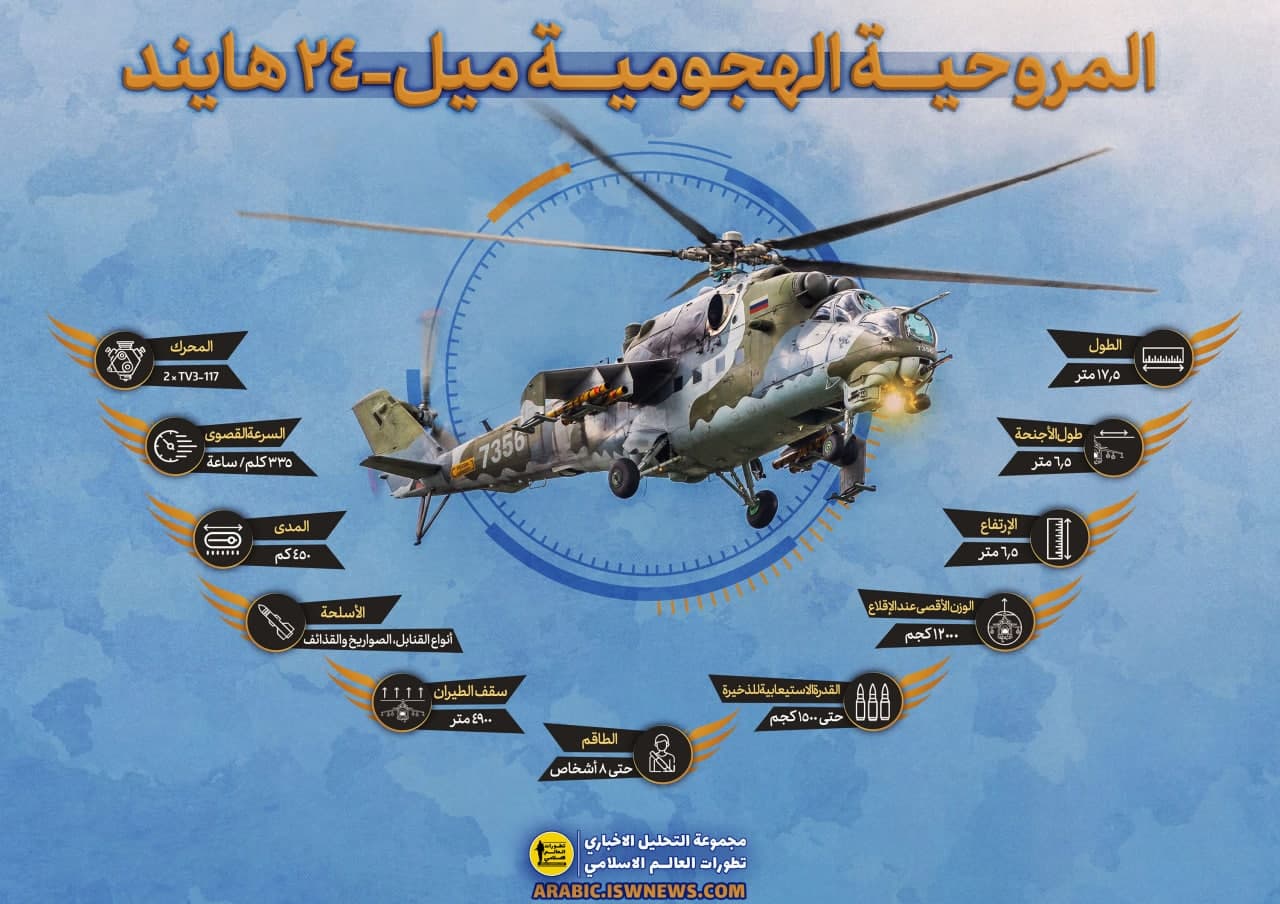
The design of the Mil-24 helicopter has striking similarities with the famous Mil-17 transport helicopter, and the number of common components between the two helicopters is significant, and this has encouraged countries that own the Mil-17 transport helicopter to use the Mil-24; The Mil-24 helicopter has been used in the armies of 48 countries.
One of the capabilities of the Mil-24 is the ability to carry up to eight people, and this feature was widely used by the Soviet Air Force in the war in Afghanistan.
The body of this helicopter is reinforced with titanium to be resistant to bullets up to 12.7 mm caliber. The rotor of the helicopter is also made of titanium and is resistant to bullets up to 12.7 caliber.
In order to protect the crew against the atomic biological chemical (ABC) agents, the air pressure inside the cabin is higher than the environment and prevents the entry of ABC agents into the cabin.
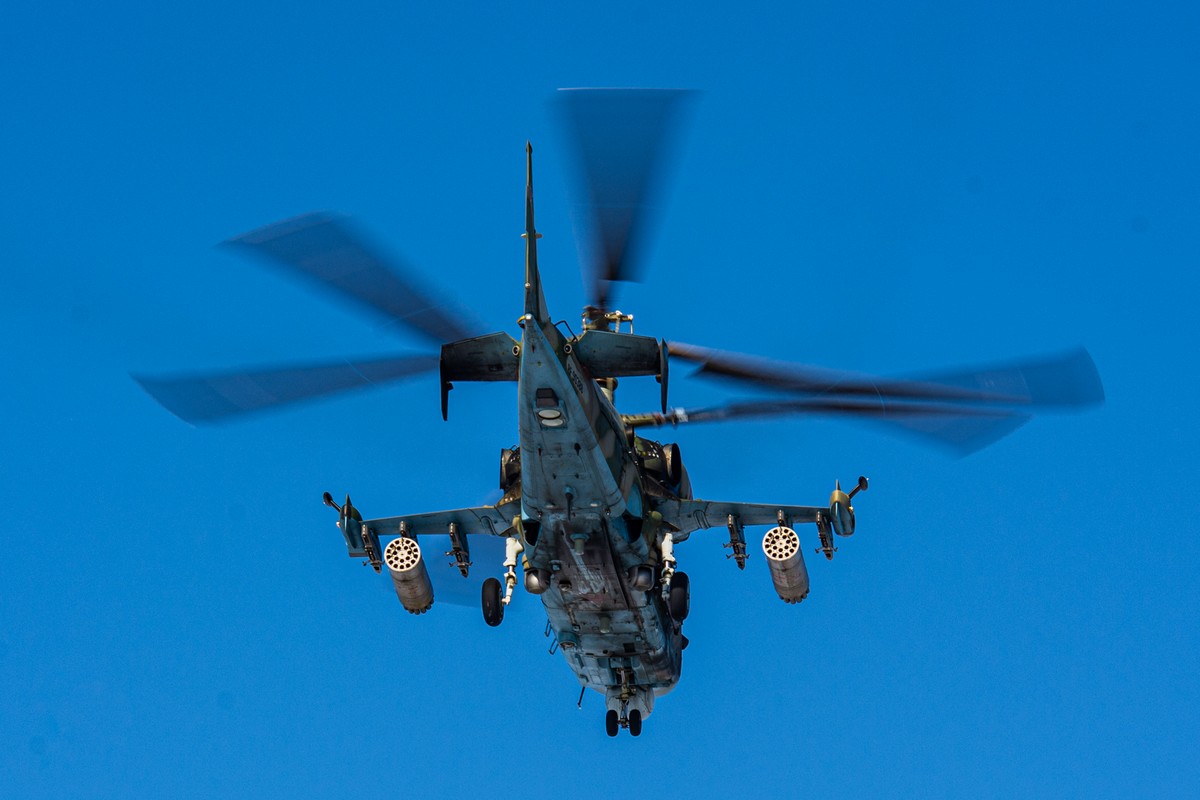
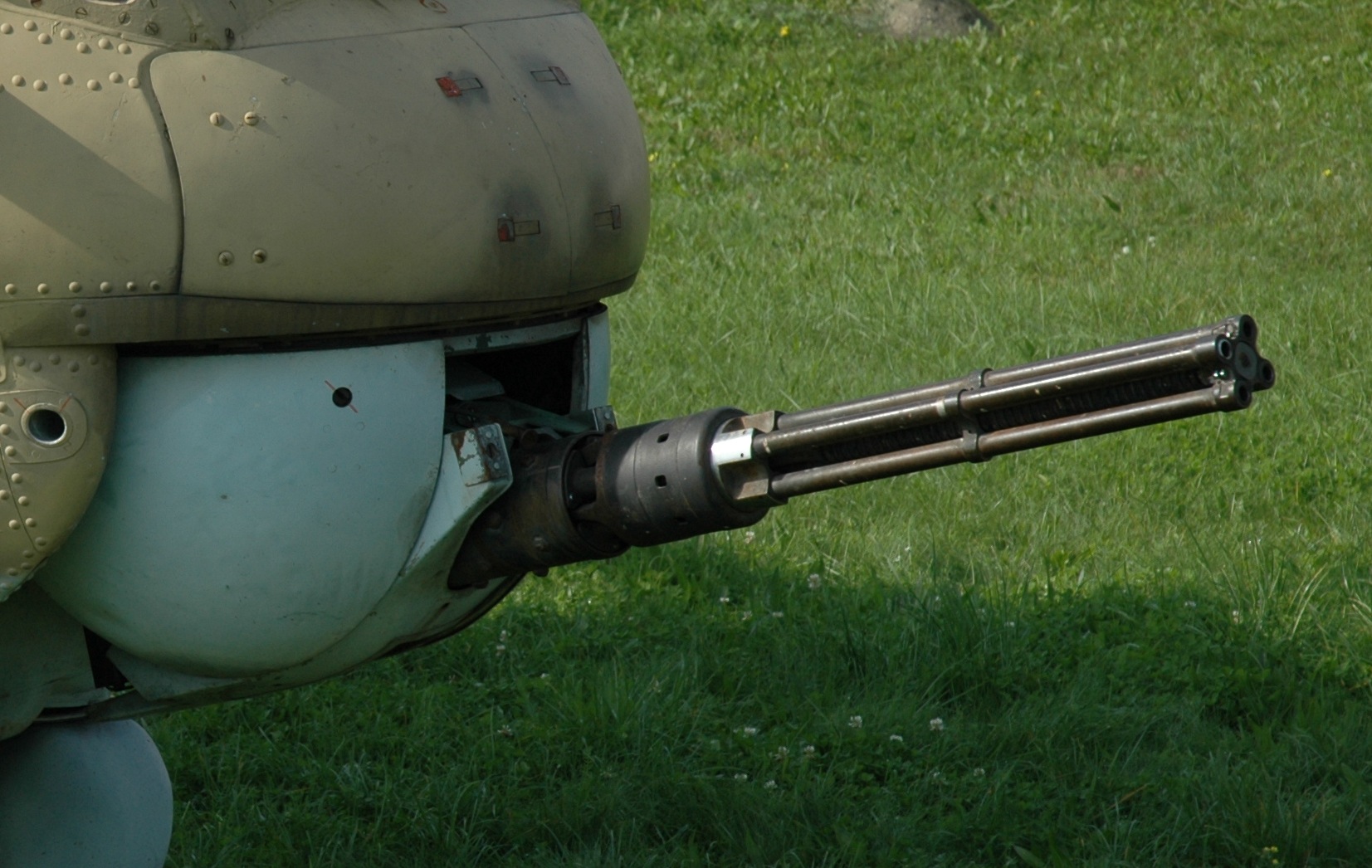
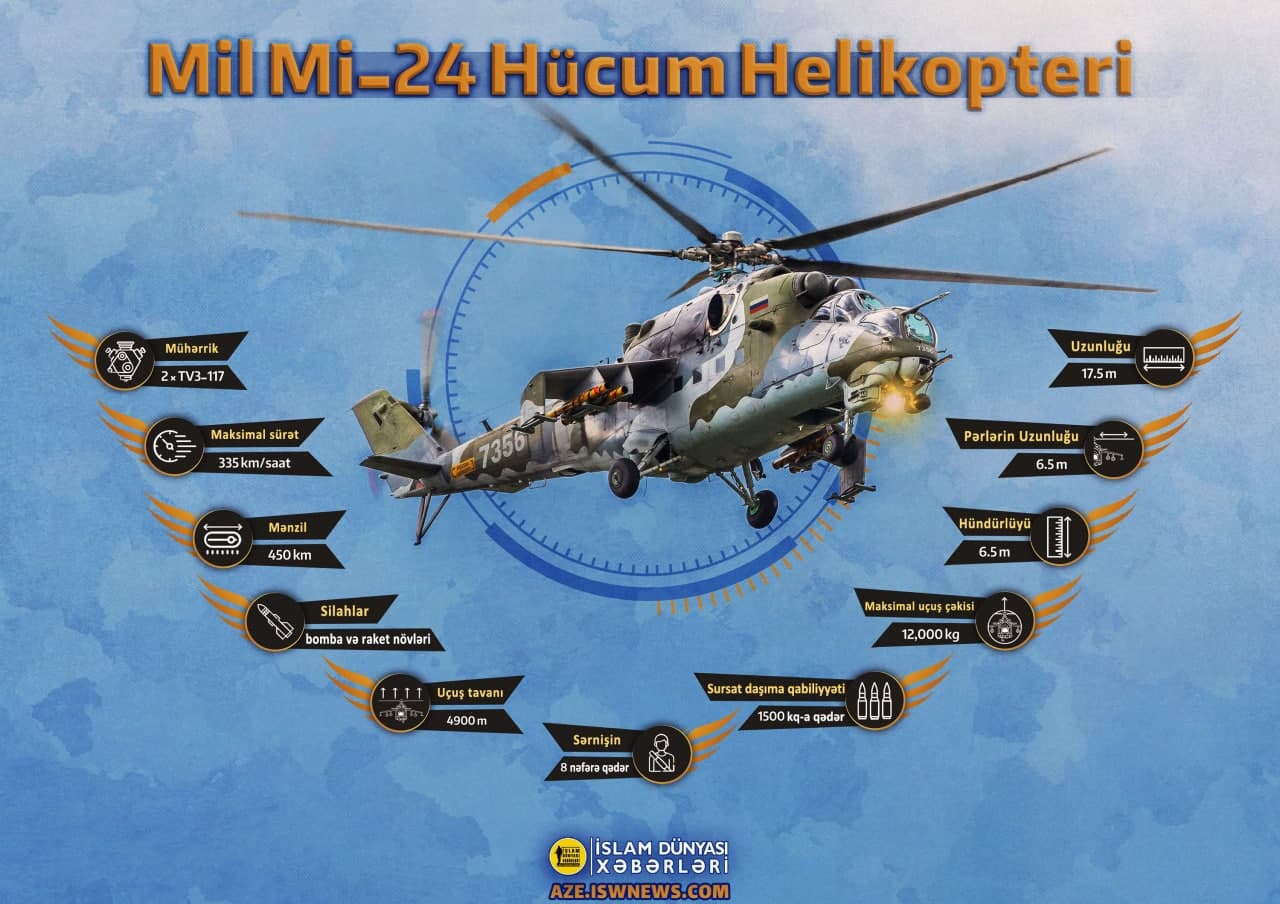
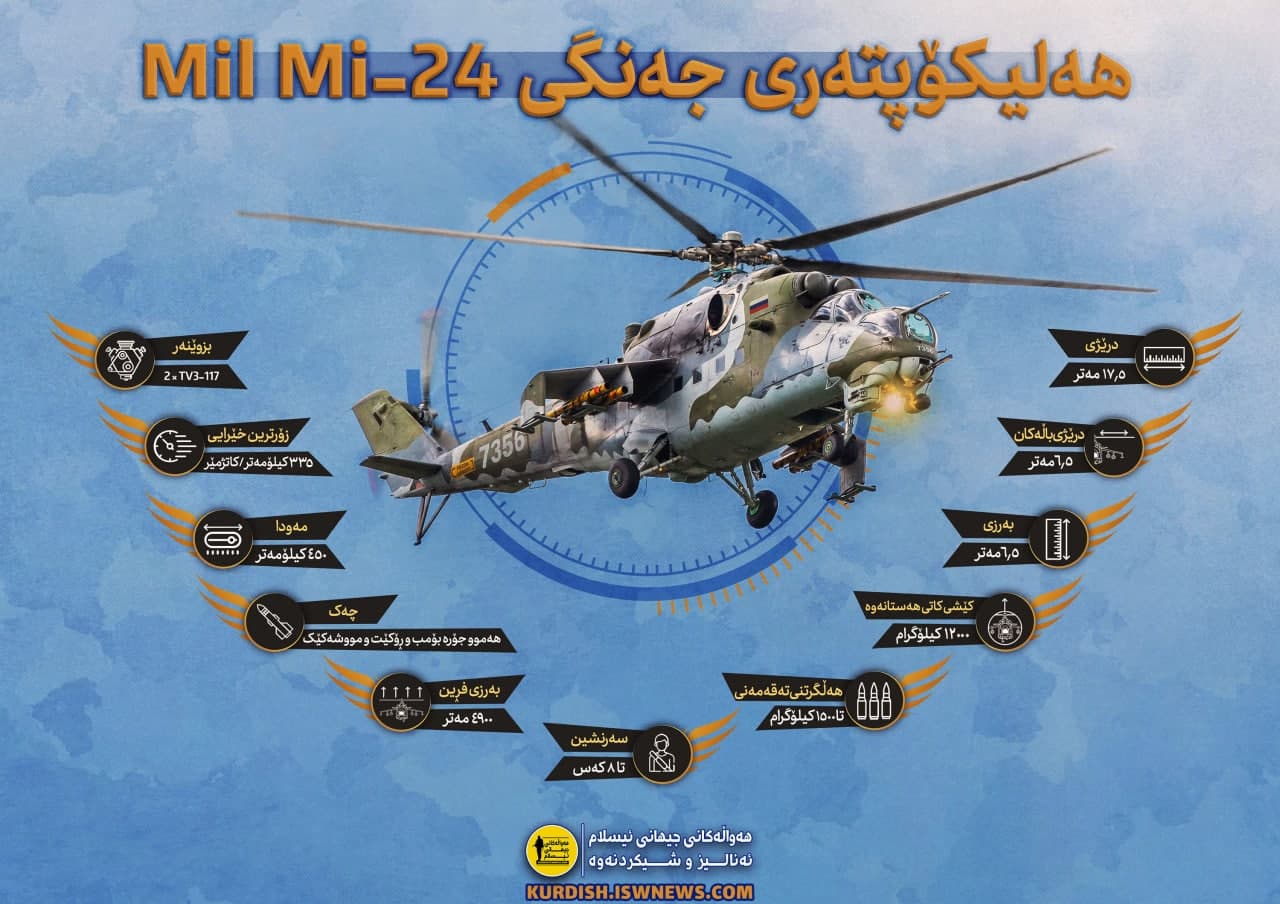
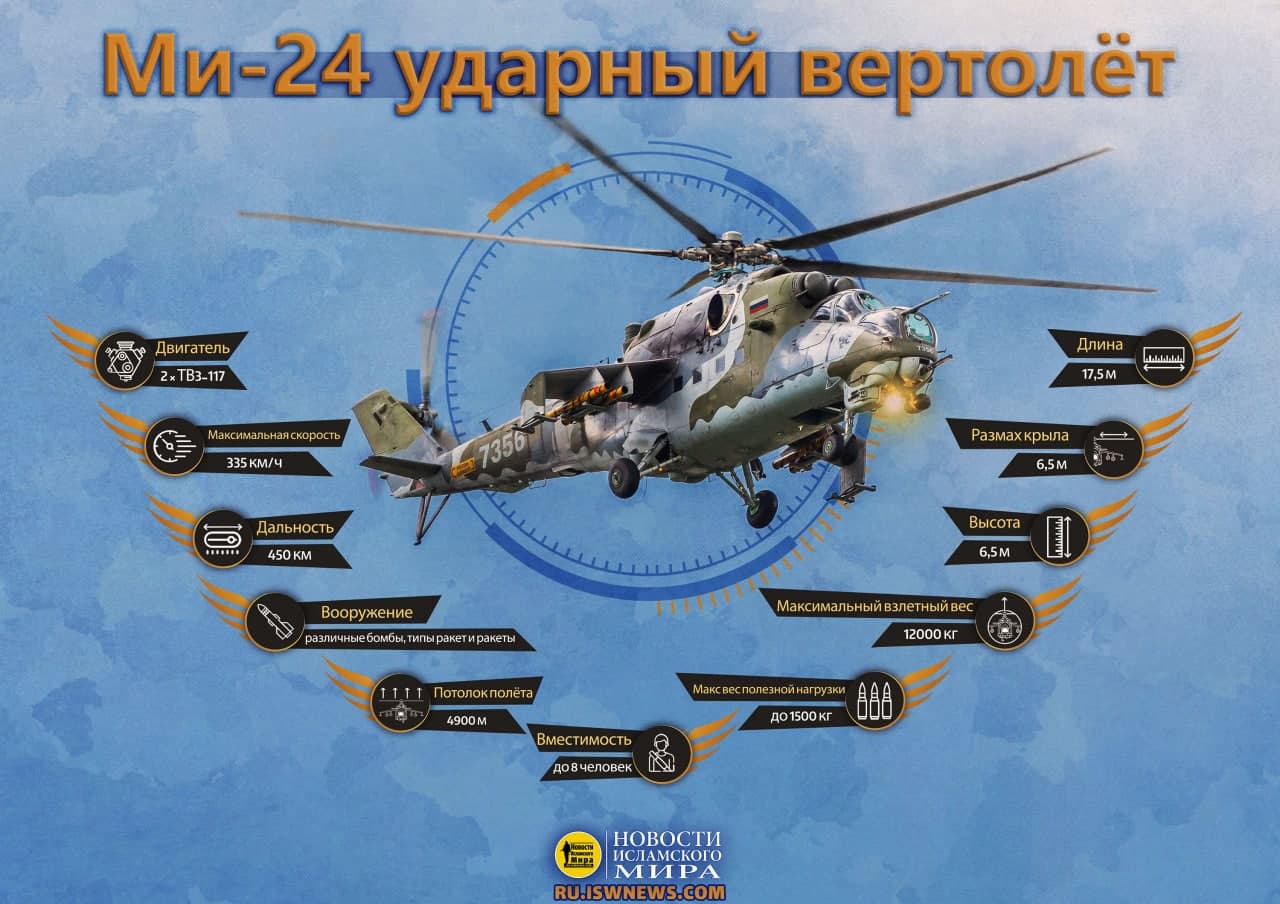
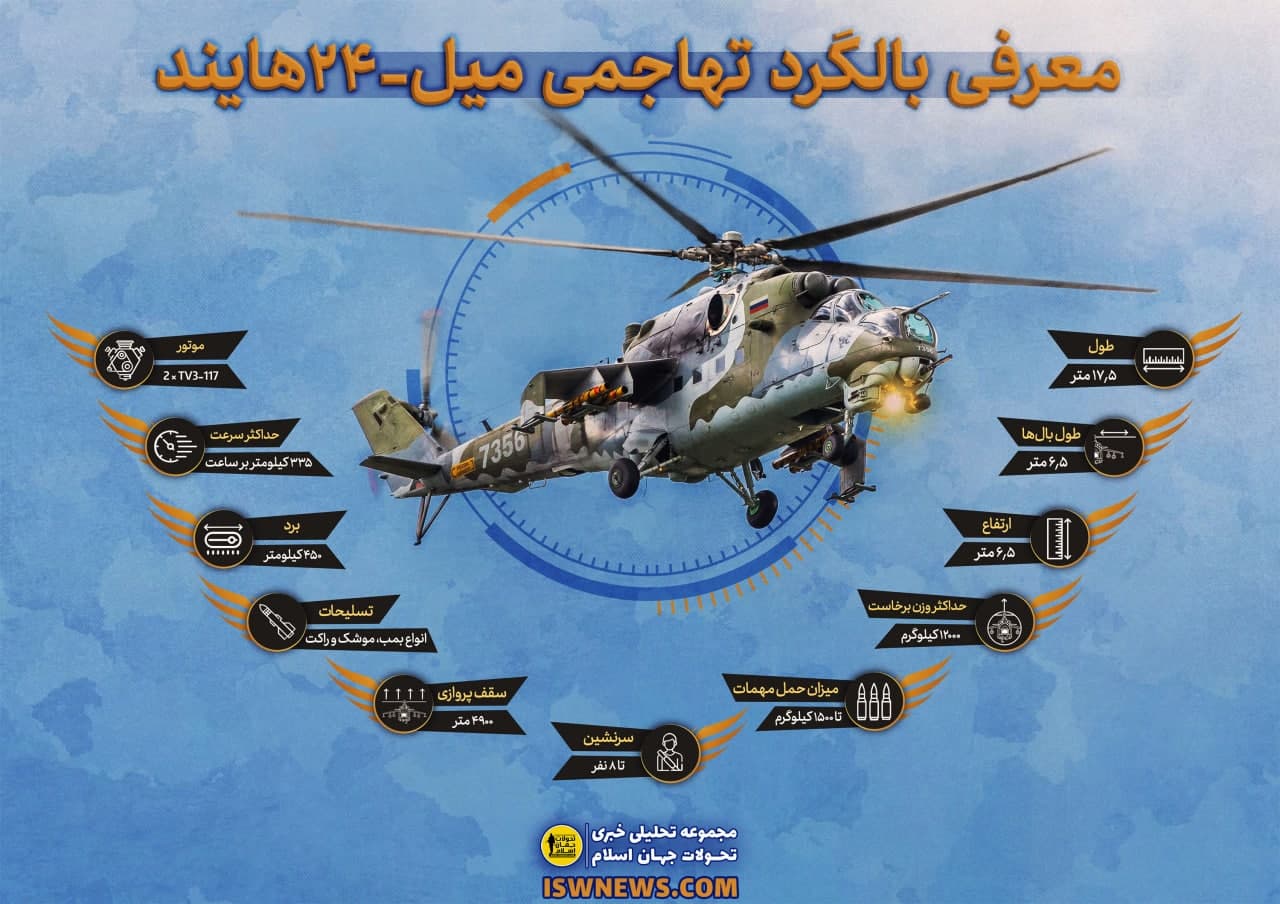
Mil Mi-24 Attack Helicopter specifications: Length: 17.5 m Wingspan: 6.5 m Height: 6.5 m Max takeoff weight: 12,000 kg Engine: 2 × TV3-117 Maximum speed: 335 km/h Range: 450 km Service ceiling: 4900 m Capacity: up to 8 troops Total ammunition payload: up to 1500 kg Armament: Variety of bombs, missiles and rockets Origin: Soviet Union (Russia)
Click to see the full size image
“Mil Mi-24 Attack Helicopter” collection of posters in Persian, Arabic, Kurdish, Azeri, Russian for Social Media: