Category: Editor’s Picks

  • Infographics: ISIS Operations In 2022

    Infographics: ISIS Operations In 2022

    Publishing infographics is one of the methods that extremist armed groups use in the best way to prove their existence. Meanwhile, it can be said that ISIS is both the pioneer and the most creative in this field. Every week, ISIS publishes an infographic of the results of its operations in the “Al-Naba” weekly newspaper, which seems to have a vital aspect for ISIS, because ISIS can say that it is still present in the field through this weekly constant infographic.

    At the end of each year, one of the media activities of extremist groups is to publish annual statistics in the form of infographics. ISIS, as the leader of these groups, annually publishes a detailed infographic of its operations and their results, which can provide good information compared to previous years’ statistics. Accordingly, at the beginning of 2023, Amaq news agency (affiliated to ISIS) has published a detailed infographic of its operations during the past year (from 2022 to 2023).

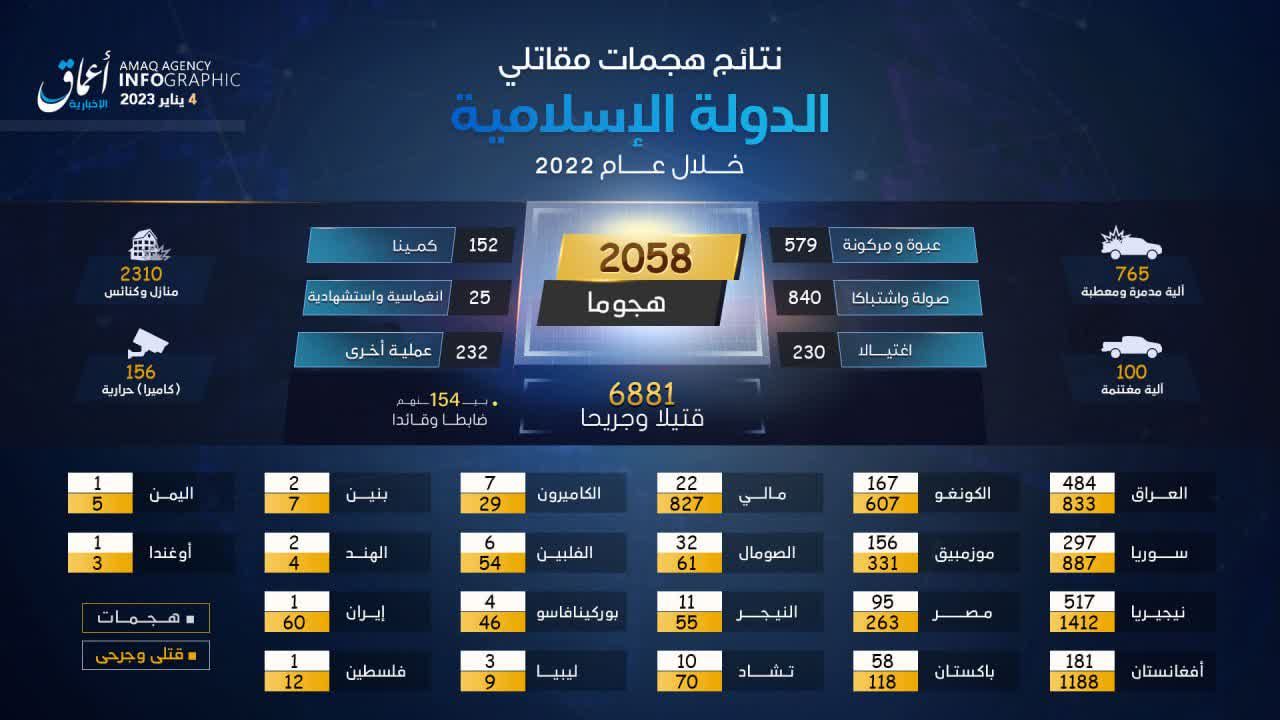
    According to the statistics, this terrorist group has carried out 2,058 terrorist operations in different regions of the world in 2022. These operations have killed and injured 6,881 people, including 154 officers and field commanders. The statistics included in this infographic are:

    According to their types, ISIS operations include 579 bombing and roadside bombs, 840 attacks and armed conflicts, 230 assassinations, 152 ambushes, 25 inghimasi and suicide operations and 232 other types. Other results of these operations include the destruction and disabling of 765 vehicles, looting of 100 vehicles, the destruction of 2,310 houses and churches, and the destruction of 156 night vision cameras.

    Most operations have been carried out in Nigeria, Iraq and Afghanistan. Its details by region are as follows:
    Nigeria: 517 operations, 1412 killed and wounded
    Iraq: 484 operations, 833 killed and wounded
    Afghanistan: 181 operations, 1188 killed and wounded
    Syria: 297 operations, 887 killed and wounded
    Congo: 167 operations, 607 killed and wounded
    Mozambique: 156 operations, 331 killed and wounded
    Egypt: 95 operations, 263 killed and wounded
    Pakistan: 58 operations, 118 killed and wounded
    Mali: 22 operations, 827 killed and wounded
    Somalia: 32 operations, 61 killed and wounded
    Niger: 11 operations, 55 killed and wounded
    Chad: 10 operations, 70 killed and wounded
    Cameroon: 7 operations, 29 killed and wounded
    Philippines: 6 operations, 54 killed and wounded
    Burkina Faso: 4 operations, 46 killed and wounded
    Libya: 3 operations, 9 killed and wounded
    Benin: 2 operations, 7 killed and wounded
    India: 2 operations, 4 killed and wounded
    Iran: 1 operation, 60 killed and wounded
    Palestine: 1 operation, 12 killed and wounded
    Yemen: 1 operation, 5 killed and wounded
    Uganda: 1 operation, 3 killed and wounded

    Read more: Infographic: ISIS activity in Syria in 2020

    At the first look at the statistics of 2021 and 2022, we notice that the number of ISIS operations in 2022 is 690 less than in 2021, and this is a sign of the weakening of ISIS in 2022. Also, the number of ISIS victims in 2022 is 1,158 less than in 2021. This decrease also shows that not only the quantity but also the quality of ISIS operations has declined compared to last year.
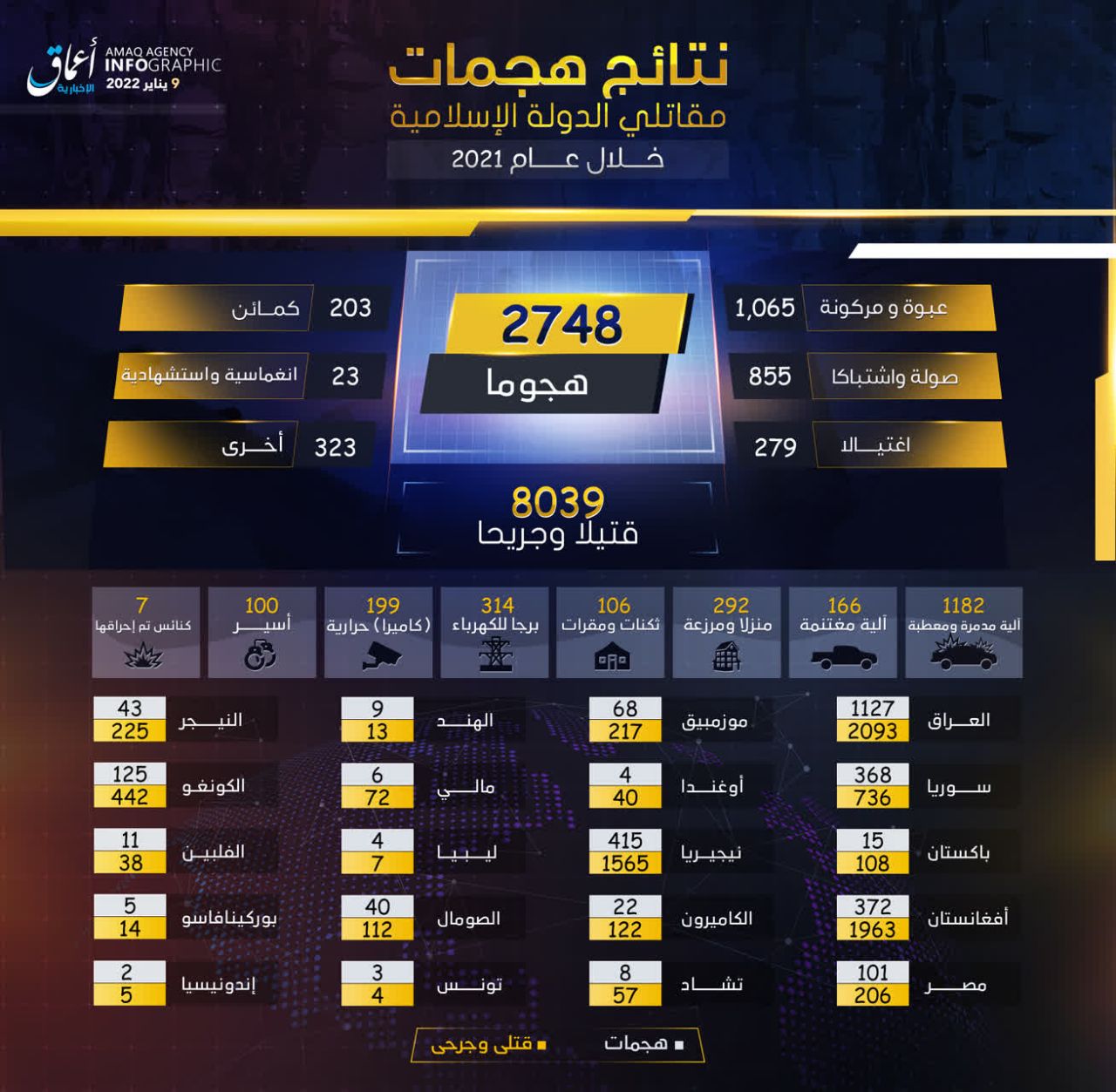
    In the section of types of operations, we can see that ISIS had a better situation in various types of operations in 2021; The only thing in 2022 that is more than 2021 is the suicide and inghimasi operations, which are only two more. The most important difference in this section is the use of bombs and roadside bombs between 2021 and 2022. In 2022, ISIS used bomb and roadside bombs 486 times less than in 2021. This issue is worthy of consideration considering the significant reduction of ISIS operations in Iraq, because ISIS mostly uses roadside bombs in Iraq.

    With the decrease of using roadside bombs by ISIS, it is natural that the number of vehicles destroyed by ISIS in 2022 will be much less than in 2021, a fact that is clearly visible when comparing the statistics of 2022 and 2021.

    In the meantime, what attracts more attention, is the statistics of destroyed houses and churches in 2022. This increase is due to the targeting of Christians in Mozambique, Congo and Nigeria.

    Another important aspects of the statistics about the regions is the significant reduction of ISIS operations in Iraq. Although ISIS operations in Iraq have increased in recent days, we can see that these operations have decreased in a long-term process. During 2022, ISIS has conducted 643 operations in Iraq less than in 2021. The number of ISIS victims in Iraq this year was 1,260 less than the previous year. This statistic clearly shows that the ISIS strength has decreased in Iraq.

    It is noteworthy, although ISIS operations in Afghanistan, Syria and some other areas have decreased, but this trend has been insignificant. Therefore, the number of “operations” in Nigeria, and the number of “operations and victims” in Chad, Mozambique, Mali, Congo and Pakistan, and the number of “victims” in Syria, Egypt, the Philippines, Burkina Faso, and Libya have increased in 2022.

    In the end, it should be said that despite the reduction of ISIS “operations” in Syria, the number of “victims” in Syria has increased, undoubtedly, this increase is due to ISIS operation on Ghuwairan prison in Hasakah and other ISIS operations against the Syrian Democratic Forces (SDF). The high number of victims in Mali and Burkina Faso is also due to the confrontation of ISIS with Jama’at Nasr al-Islam wal Muslimin and the overall increase of operations and victims in Mozambique, Congo, and Nigeria is also due to the new approach of ISIS to Sub-Saharan Africa, meanwhile, the increase of victims in Egypt and the increase of operations and victims in Pakistan is also interesting.

    ISIS Operations In 2022
  • Infographic: Saudi Coalition And US Aircraft Losses In Yemen War

    Infographic: Saudi Coalition And US Aircraft Losses In Yemen War

    1- Saudi F15S fighter on March 27, 2015, Gulf of Aden
    2- Saudi AH-64D helicopter on May 7, 2015, Al-Boqa, Saada area
    3- Moroccan F16C fighter on May 10, 2015, Wadi Nashur
    4- Saudi Seeker400 UAV, July 3, 2015, Al-Boqa
    5- Saudi AH-64D helicopter, August 5, 2015, Jizan
    6- Saudi AH-64D helicopter, August 21, 2015, Jizan
    7- UAE Schiebel Camcopter S-100, August 25, 2015, Makiras, Abyan Province
    8- UAE Schiebel Camcopter S-100, October 25, 2015, Al-Abdiyah, Marib Province
    9- Bahrain F16C fighter, December 30, 2015, Jizan
    10- UAE MQ-1 Predator UAV, January 19, 2016, Sanaa
    11- Saudi Selex ES Falco UAV, February 3, 2016, Midi, Hajjah province
    12- UAE Schiebel Camcopter S-100, February 27, 2016, Dhubab, Taiz province
    13- UAE Mirage 2000 fighter, March 13, 2016, Al-Bariqa, Aden
    14- UAE AH-64D UAE helicopter, June 12, 2016, Gulf of Aden
    15- UAE NSA407 helicopter, June 13, 2016, Al-Bariqa, Aden
    16- Saudi AH-64D helicopter, July 25, 2016, Beer Al-Maraziq, Al-Jawf
    17- Saudi Seeker400 UAV, August 16, 2016, Kataf, Saada province
    18- UAE Wing Loong UAV, September 26, 2016, Kholan, Sanaa province
    19- Saudi AH-64D helicopter, December 30, 2016, Najran
    20- US V-22 Osprey Helicopter, January 29, 2017, Al-Baydha province
    21- Saudi SA 365F Helicopter, January 30, 2017, Al-Hudaydah coast (on the Al-Madinah frigate)
    22- UAE MQ-1B Predator UAV, February 14, 2017, Al-Manin, Marib province
    23- Jordanian F16A fighter, February 24, 2017, Najran
    24- Saudi S-70A helicopter, April 18, 2017, Marib province
    25- UAE Schiebel Camcopter S-100, June 21, 2017, Dhubab, Taiz province
    26- UAE AH-60L helicopter, August 11, 2017, Wadi Amaqin, Shabwa province
    27- Saudi Seeker 400 UAV, August 15, 2017, Al-Boqa, Saada province
    28- US UH-60M helicopter, August 25, 2017, Gulf of Aden
    29- UAE AT-802U aircraft, September 11, 2017, Gulf of Aden
    30- Saudi Eurofighter Typhoon fighter, September 13, 2017, Abyan province
    31- US MQ-9 UAV, October 1, 2017, Sanaa
    32- UAE AH-64D Helicopter, October 17, 2017, Khab and Shaaf, Jawf province
    33- Saudi S-70A helicopter, November 5, 2017, Abha
    34- Saudi Panavia Tornado fighter, January 7, 2018, Kataf, Saada province
    35- Saudi F-15S fighter, March 21, 2018, Saada province
    36- Saudi CH-4B UAV, July 12, 2018, Al-Rabu’ah
    37- Saudi Panavia Tornado fighter, July 12, 2018, Asir
    38- Saudi CH-4B UAV, August 30, 2018, Jizan
    39- UAE Schiebel Camcopter S-100, September 2, 2018, Al-Jah, Hudaydah province
    40- Saudi AH-64D helicopter, September 14, 2018, Al-Mahra province
    41- Seeker 400 UAE UAV, November 26, 2018, Al-Jabaliya, Hudaydah province
    42- Saudi CH-4V UAV, December 23, 2018, Saada province
    43- US MQ-9 UAV, March 23, 2019, Hamdan, Saada province
    44- Saudi CH-4B UAV, April 11, 2019, Hadhramaut province
    45- UAE Wing Loong, April 19, 2019, Saada province
    46- UAE RQ-1E Predator UAV, May 15, 2019, Bani Matar, Sanaa
    47- UAE Schiebel Camcopter S-100, June 2, 2019, Hays, Hudaydah area
    48- US MQ-9 UAV, June 7, 2019, Al-Zaafran, Hudaydah province
    49- US MQ-9 UAV, August 20, 2019, Al-Dhamar province
    50- UAE Shiebel Camcopter S-100, November 1, 2019, Raas Issa, Hudaydah province
    51- Saudi AH-64D helicopter, November 29, 2019, Asir
    52- Saudi Wing Loong UAV, November 30, 2019, Hayran, Hajjah province
    53- Saudi Luna X2000 UAV, December 4, 2019, Saada province
    54- Saudi Karayel UAV, December 30, 2019, Al-Salif, Hudaydah province
    55- Saudi CH-4V UAV, January 7, 2020, Khab and Shaaf, Jawf province
    56- Saudi Panavia Tornado fighter, February 14, 2020, Jawf province
    57- Saudi RQ-20 UAV, August 2, 2021, Haradh, Al-Hajjah province
    58- Saudi CH-4B UAV, December 21, 2020, Marib Province
    59- Saudi Karayel UAV, January 6, 2021, Jawf province
    60- Saudi CH-4B UAV, February 12, 2021, Marib province
    61- Saudi Karayel UAV, March 7, 2021, Jawf province
    62- Saudi CH-4B UAV, March 23, 2021, Sarwah, Marib province
    63- Saudi Wing Loong UAV, May 21, 2021, Najran
    64- Saudi CH-4B drone, May 23, 2021, Jawf province
    65- Saudi Scan Eagle UAV, June 19, 2021, Marib province
    66- Saudi Scan Eagle UAV, June 21, 2021, Marib province
    67- Saudi Scan Eagle UAV, August 14, 2021, Madghal, Marib province
    68- Saudi Wing Loong UAV, September 13, 2021, Kataf, Saada province
    69- Saudi Scan Eagle UAV, September 27, 2021, Madghal, Marib province
    70- Saudi CH-4 UAV, October 6, 2021, Jubah, Marib province
    71- Saudi RQ-20 UAV, October 7, 2021, at the Jizan border
    72- Saudi Scan Eagle UAV, November 9, 2021, Al-Juba, Marib province
    73- Saudi Scan Eagle UAV, November 13, 2021, Al-Juba, Marib province
    74- Saudi CH-4 UAV, December 1, 2021, in Al-Amshia area, Amran province
    75- Saudi Scan Eagle UAV, December 4, 2021, Al-Juba, Marib province
    76- Saudi Scan Eagle UAV, December 8, 2021, Al-Juba, Marib province
    77- Saudi CH-4 UAV, December 8, 2021, Al-Wadi, Marib province
    78- Saudi Scan Eagle UAV, December 10, 2021, Sarwah, Marib province
    79- Saudi CH-4 UAV, December 14, 2021, Usaylan, Shabwa province
    80- Saudi Scan Eagle UAV, December 16, 2021, Al-Wadi, Marib province
    81- Saudi Scan Eagle UAV, December 25, 2021, Yatmah, Khab and Al-Shaaf, Al-Jawf province
    82- UAE Wing Loong UAV, January 5, 2022, Usaylan, Shabwa province
    83- UAE Wing Loong UAV, January 11, 2022, Ain Shabwah province
    84- Saudi Scan Eagle UAV, January 29, 2022, Al Juba, Marib Province
    85- Saudi CH-4 UAV, February 10, 2022, Harad, Hajjah province
    86- UAE MQ-1 UAV, February 25, 2022, Al-Jawf province
    87- Saudi Scan Eagle UAV, February 25, 2022, Al Juba, Marib Province
    88- Saudi Scan Eagle UAV, February 28, 2022, Harad, Hajjah province
    89- Saudi Scan Eagle UAV, March 8, 2022, Harad, Hajjah province
    90- Saudi Scan Eagle UAV, March 29, 2022, Al-Wadi, Marib province
    91- Saudi CH-4 UAV, May 4, 2022, Harad, Hajjah province
    92- Saudi Karayel UAV, May 21, 2022, Hayran, Hajjah province
    93- Saudi CH-4 UAV, May 23, 2022, Sana’a, Sana’a province
    94- Saudi Wing Loong UAV, May 24, 2022, Kataf, Saada province

    (Last update on 16 January 2023)

    Click to view full size

    “Saudi Coalition and US Aircraft Losses in Yemen War” poster in Persian, Arabic, Kurdish, Azerbaijani, Russian:

  • Iran’s warning to Iraq: Remove the terrorist groups from the Kurdistan Region!

    Iran’s warning to Iraq: Remove the terrorist groups from the Kurdistan Region!

    In recent years, the officials and military commanders of the Islamic Republic of Iran have repeatedly warned about the activity and deployment of terrorist groups near the borders of Iran and the Kurdistan region of Iraq, and have informed the local and government authorities of Iraq about their opposition. However, the central government of Iraq and the authorities of the Kurdistan region have not taken decisive and acceptable measures to expel these groups or prevent their attacks on the territory of the Islamic Republic of Iran.

    Therefore, with the increase of the activities of terrorist groups Komola, KDPI, PAK, PJAK and PKK in Iran’s borders, as well as attempts to carry out terrorist operations, the explosion in one of the country’s sensitive centers in Isfahan province by elements of the terrorist group Komala under the guidance of Mossad (the attack was neutralized in August), the attempt to bringing armed teams and import a large amount of weapons into Iran’s soil and the active role in the recent riots in Iran’s border cities made the Islamic Revolutionary Guard Corps determined to carry out a artillery and drone campaign against the positions of the mentioned terrorist groups in the Kurdistan region of Iraq.

    Considering the number of terrorist groups and their foreign supporters, it seems that the recent attacks of the IRGC are not enough to completely destroy the terrorist groups and this operation is just a warning message and retaliatory action. On the other hand, the authorities of the Islamic Republic of Iran, at the same time as the start of this operation, have put diplomatic consultations with the Iraqi authorities on the agenda and demanded an end to the activities of terrorist groups around their borders, especially in the Kurdistan region of Iraq.

    The presence of terrorist groups in the Kurdistan region of Iraq, in addition to threatening the security of Iran, is also considered a serious threat to the security of Iraq. If proper action is not taken by the Iraqi authorities to expel terrorist groups from the Kurdistan Region, this issue can threaten Iraq’s national security in the long term, create problems in relations with neighboring countries, increase the number of foreign military bases in northern Iraq, and turning the Kurdistan region of Iraq into an arena for resolving regional disputes and military conflicts.

    Currently, the terrorist groups of the Democratic Party of Iranian Kurdistan (KDPI), Kurdistan Free Life Party (PJAK), the Komala Party of Iranian Kurdistan (Komala) and the Kurdistan Freedom Party (PAK) are among the main separatist and terrorist groups in the eastern borders of the Kurdistan Region, focusing on attacking Iran’s national security. During the past years, many documents have been obtained about the use of the mentioned groups by western Intelligences, including the CIA and Mossad, to carry out subversive operations in Iran.

    Considering this issue, if the current negotiations to dismantle and evacuate the headquarters of these groups from the territory of the Kurdistan Region do not succeed, we may witness more effective and serious operations by Iran, including ground operations to clean up the eastern areas of the Kurdistan Region.

    Read more:
    Iran’s missile and drone attacks against terrorist groups in the Kurdistan region + Video
    15 terrorists were killed in Kurdistan Region of Iraq
    IRGC missile attacks on north of Er
    bil

    Map of the dispersion of terrorist groups in the eastern borders of the Kurdistan region of Iraq – Click to view full size
  • Military Knowledge: Qaem Smart Bombs

    Military Knowledge: Qaem Smart Bombs

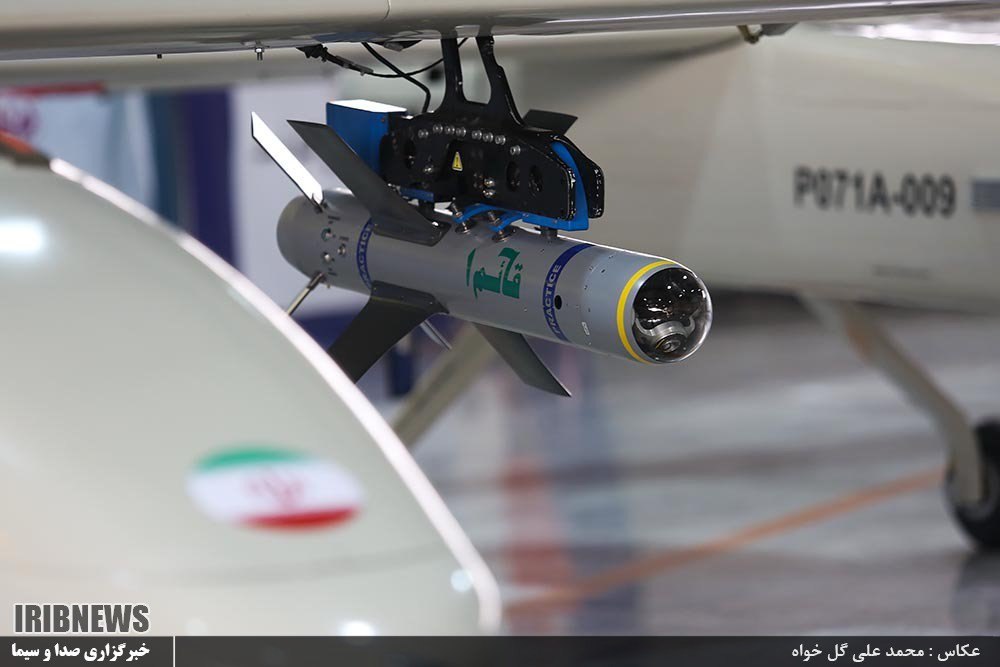
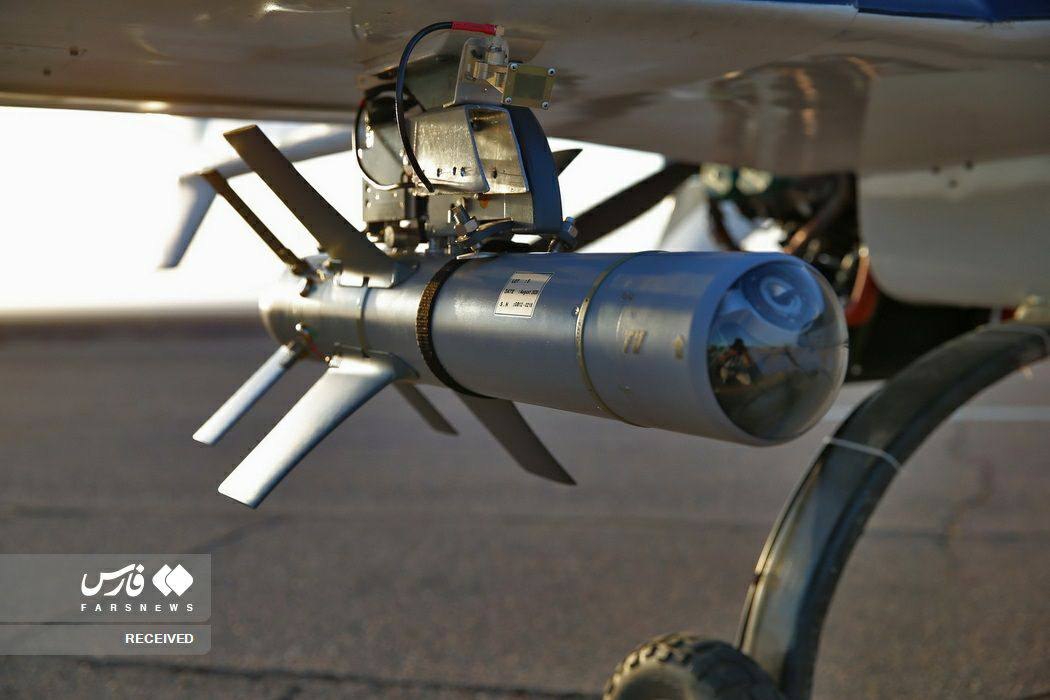
    Qaem 1, 5 and 9 bombs were all unveiled during a ceremony in August 6, 2019 in Tehran. According to Amir Hatami, Former Minister of Defense and Armed Forces Logistics of Iran, at the unveiling ceremony of Qaem bombs, this product was jointly produced by the two Organizations of Defense Industries and Iran Electronics Industries. Amir Hatami stated that the minimum operational height of these bombs is 4 to 10 thousand feet (1219 to 3048 meters) and its range is 12 to 40 kilometers, and the ability to install different penetrating and shrapnel warheads with different ranges and various destructive power is also available in these bombs.

    It should be noted that the “minimum operational height” of the Qaem bomb means that if we drop the bombs below this height (below 1219 meters), they will not be able to glide and will quickly fall towards the targets.

    The speech of the former Minister of Defense, Amir Hatami, regarding Qaem smart bombs and announcing a range of 12 to 40 kilometers for them

    But in another place, Brigadier General Shahrokh Shahram, the CEO of Iran Electronics Industries, states that the range of Qaem bombs is 20 to 40 kilometers. Due to the contradiction between the words of Amir Hatami and Shahrokh Shahram, the exact range of these bombs is in an aura of uncertainty. Also, unfortunately, the range of this series of bombs has never been officially announced in any of the military exhibitions. In the rest of the article, we will try to determine the range of each of the bombs of the Qaem series separately.

    Brigadier General Shahrokh Shahram, the CEO of Iran’s Electronics Industries, explained about Qaem series bombs and announced a range of 20 to 40 kilometers for them.

    Small Diameter Bombs (SDB) are a new type of bombs that have been produced and adopted in the last few years by the military powers like the United States. The U.S. prototypes of this model were heavy bombs and were launched by the fighter jets and from a high altitude. Due to Iran’s need for lighter but practical weapons for its modern drones, Iran was inspired by this type of bombs in making smart bombs, and these efforts finally came to fruition in 2010 with the introduction of the miniature bombs of the Sadid family. Sadid-342 can be considered the first miniature bomb of Iran, which was later developed in the Qaem family.

    Read more: Military Knowledge: Sadid Smart Bombs and Missiles

    In the process of producing these bombs, the production of seeker that can be used in all current and future Iranian smart bombs was very important. Therefore, Iran’s Ministry of Defense produced seekers with various guidance methods. Two examples of these seekers named thermal image seekers RU320ST and visible image seekers RU113ST have been displayed, which have been installed and observed on Sadid and Qaem families.

    RU320ST image thermal seeker (left side) next to RU113ST visible image seeker (right side)

    Although there is no information available about the history and order of production of Qaem bombs, but based on the available data, the category can be considered as follows:

    Qaem-5 bomb:
    The specifications of Qaem bombs have not been officially announced, but at the Baghdad defense exhibition, some specifications of Qaem-1 and Qaem-5 bombs were displayed. According to the specifications announced in this exhibition, the dimensions of the Qaem-5 and the Sadid-342 bomb are very close to each other, but due to use of fixed wings and the increase in the weight of the warhead, its weight has reached 20 kg.

    Qaem 5 specs with BS20 branding presented at ARMY 2022

    Qaem 5 specs with BS20 branding presented at Baghdad defense exhibition

    At the time of the unveiling of these bombs, Amir Hatami announced the range of the Qaem family from 12 to 40 kilometers. Looking carefully at the front and rear wings of Qaem-5, we will notice the larger dimensions and aerodynamic shape of the Qaem-5 compared to the Sadid family of bombs. Probably, the range of Qaem-5 is greater than that of Sadid 342 and 345 because it has less weight and more wing area, which will increase the lift and decrease the drag and finally increase its range. Therefore, based on the mentioned facts, Qaem-5 range can be considered 12 km if released from a height of 5 km. Qaem-5 bomb has the possibility of being installed on the fighter jet, and if it is released from a high altitude, a range of up to 20 kilometers can be considered for it.

    The middle wings of the Qaem-5 are longer and have a backward and curved shape, which indicates an improvement in the flight characteristics of the wings compared to the Sadid-345.

    The seekers used in Qaem 5 are visual/optical (TV), thermal (IR), laser and a combination of optical and laser. The use of all kinds of seekers in Qaem 5 allows operations to be carried out with great accuracy and in all weather conditions.

    Optical seeker (TV) for Qaem-9

    A variant of the Qaem-5 has also been seen, which has an infrared seeker and a proximity fuse (probably of the laser type), which is remarkable in its own right. The reason for using infrared is probably to reduce the cost of construction; But it will be less accurate. However, the use of a proximity fuse next to the infrared seeker compensates this defect to some extent.

    A variant of a Qaem 5 bomb with an infrared seeker and a proximity fuse

    Unknown variant of Qaem-5:
    A variant of Qaem-5 was showcased in the exhibition of the achievements of self-sufficient Jihad of the Iranian Navy in December 14, 2021. The length and width of the wings had increased noticeably. This increases the wing area and ultimately increases the range. And also there is the possibility of increasing the (warhead) weight without increasing the range.

    A variant of Qaem- 5 bomb with greater length and wings

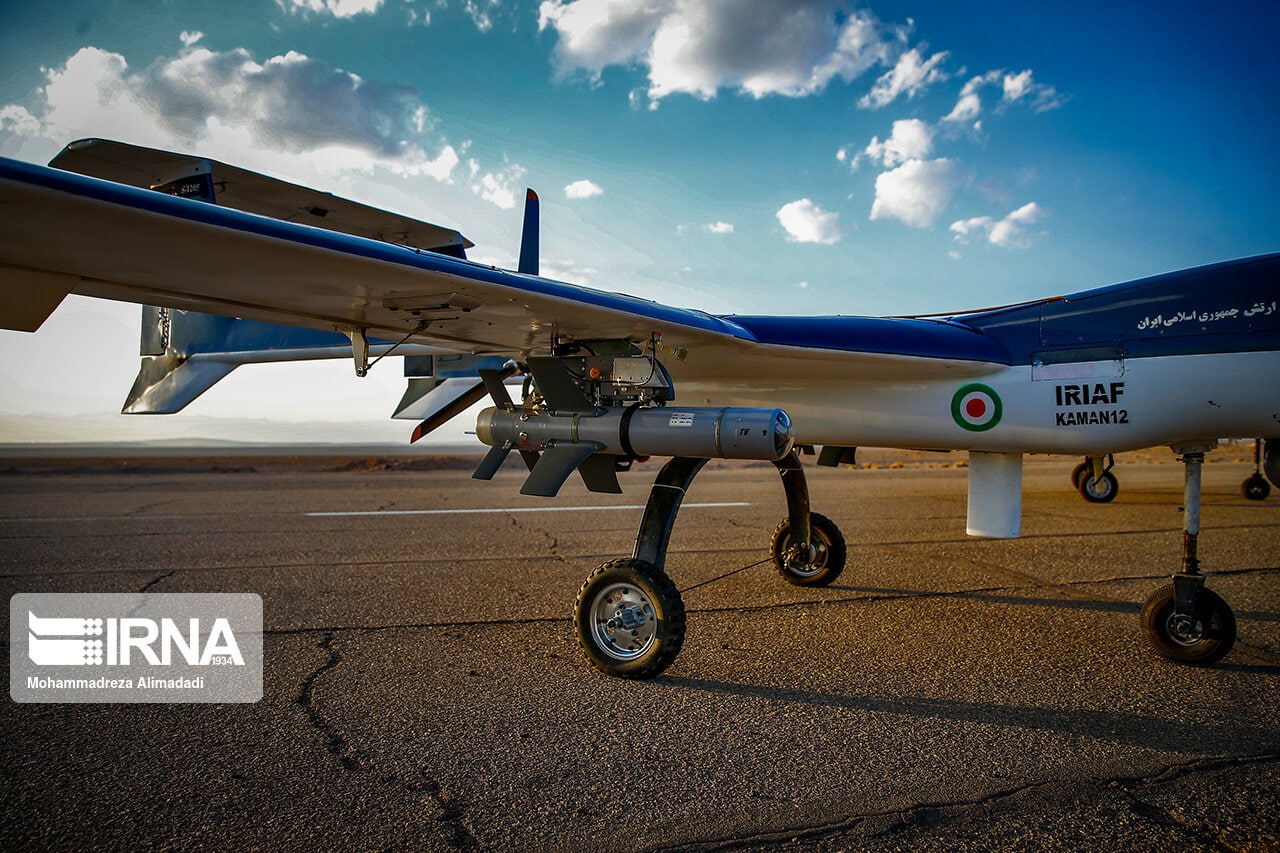
    This type of Qaem-5 bomb was seen under the wing of Fotros reconnaissance and combat drone in the Iranian Army’s Strategic UAV Base 313, which strengthens the possibility of its operational nature. Therefore, we can expect to see this bomb on other combat drones of the Iranian Armed Forces in the near future. A capability that will significantly increase the offensive power of Iranian drones.

    Read more: Military Knowledge: Fotros Reconnaissance and Combat Drone

    Army’s Fotros drone at the Strategic UAV Base 313

    Qaem-5 bomb installed on Ababil-5

    Read more: Military Knowledge: Ababil-5, Iran’s Newest Drone Achievement

    Qaem-5 bomb from the rear view

    Qaem-5 smart bomb specifications:
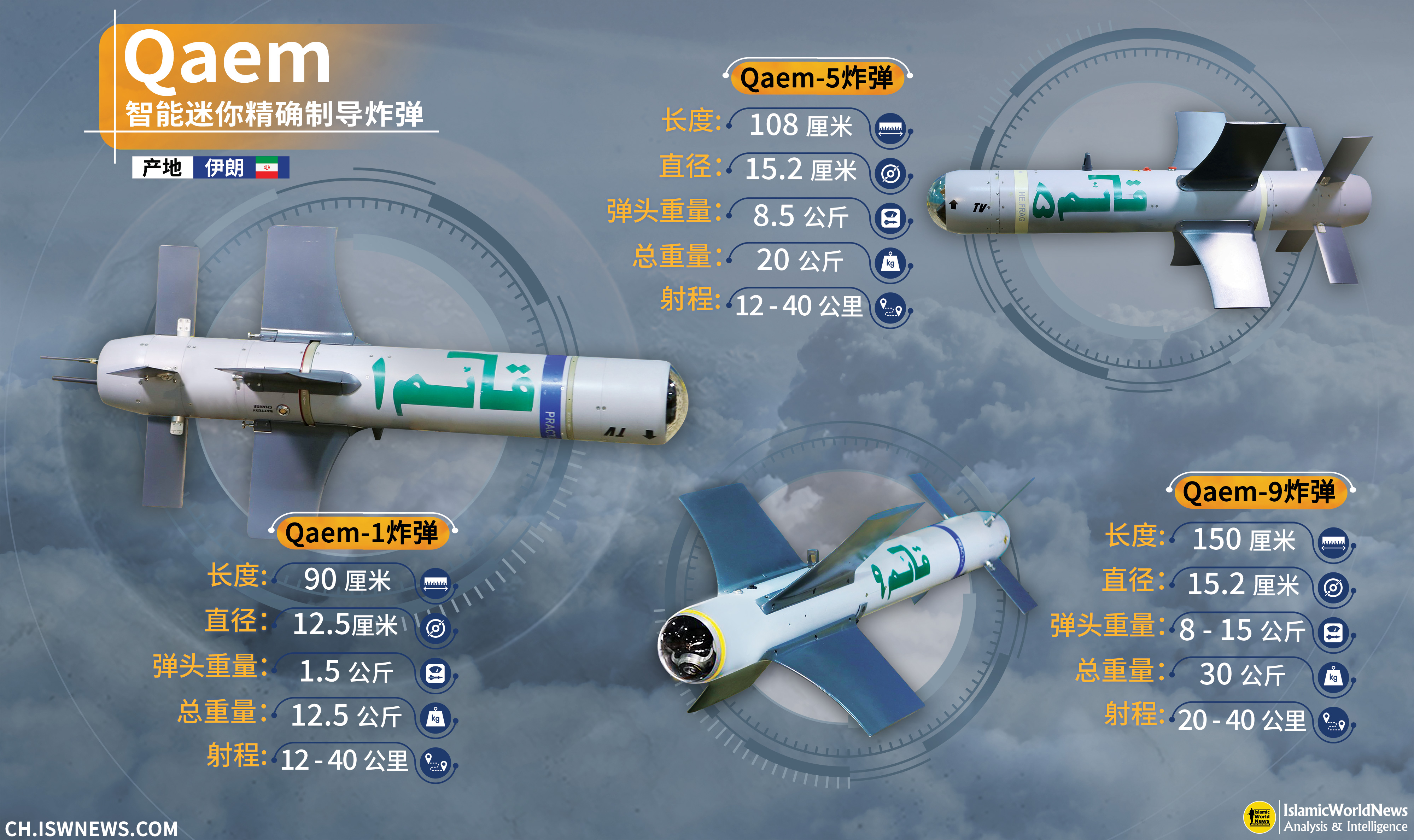
    Length: 108 cm
    Diameter: 15.2 cm
    Seeker type: Visible (TV), thermal (IR), laser (L), a combination of optical and laser
    Type of warhead: Fragmentation
    Fuse type: programmable and timed
    Warhead weight: 8.5 kg
    Total weight of the bomb: 20 kg
    Range: 12 to 20 km based on the release height (in the unknown variant of Qaem-5, its range can be increased up to 40 km)

    Qaem-1 bomb:
    The Qaem-1 smart bomb can be considered as the second member of the Qaem bomb family because the Qaem-5 was created along the lines of Sadid’s changes and the Qaem-1 was created due to the need for a light bomb to be carried by light drones. Iran uses a large number of light drones, such as Ababil 3 and 4. Because these drones do not have much power to carry ammunition; The Qaem-1 light and smart bomb can properly perform its duty on Iranian light drones in line with the doctrine of “one shot for each target”.

    ARMY 2022 exhibition and Qaem-1 and 5 bombs – the difference between the two bombs and the style and miniaturization of Qaem-1 is clear.


    The specifications of Qaem-1 bomb have also been displayed in the Baghdad defense exhibition under the brand name BS12.5 The weight of this bomb is 12.5 kg, its length is 90 cm and its diameter is 12.5 cm.

    Qaem-1 specification with BS12.5 brand


    Qaem-1 also uses visual or optical (TV), thermal (IR), laser, a combination of optical and laser seekers. But Qaem-1, in the warhead type, has been introduced with more variety. So far, warheads with fragmentation, incendiary, direct impact (kinetic energy) have been introduced for this bomb. Of course, it is important to mention that it is possible to use these warheads for the entire Qaem family. A programmable and timed fuse allows the bomb to detonate at a certain distance from the ground or at a specific height, increasing the effect of the warhead on targets. The total weight of Qaem-1 bomb is 12.5 kg and its warhead is 1.5 kg.
    The range of this bomb has not been announced like other members of the Qaem family. Qaem-1 with its light weight and small diameter and wings that are exactly similar to Qaem-5 can have a significant range. The Qaem-1 appears to have a slightly higher wing-to-body ratio than the Qaem-5. But it will probably have a range equivalent to Qaem-5, i.e. 12 km if released from a height of 5 km and a range of 20 km if released from a high altitude. The minimum release height for this bomb is 4,000 feet or 1,219 meters.

    Qaem-1 bomb

    Specifications of Qaiem-1 smart bomb with BS12.5 brand:
    Length: 90 cm
    Diameter: 12.5 cm
    Seeker type: Visible (TV), thermal (IR), laser (L), a combination of optical and laser
    Warhead type: fragmentation, incendiary, direct impact (kinetic energy)
    Fuse type: programmable and timed
    Warhead weight: 1.5 kg
    Total weight of the bomb: 12.5 kg
    Range: 12 to 40 km

    Qaem-9 bomb:
    Qaem series bombs have been widely seen on all kinds of Iranian drones, but so far no pictures of Qaem-9 bomb installation have been seen. The Qaem-9 bomb has not been exhibited and very few pictures are available. According to the statements of the former Minister of Defense of Iran at the time of the unveiling of the Qaem bombs that these bombs can be used on drones and fighter jets and since the Qaem-9 bomb has not been seen on drones, we can have the impression that Qaem-9 is specially developed for fighter jets. Of course, it should be noted that it is definitely possible to install Qaem-9 bombs on drones.
    Although the dimensions of Qaem-9 are not available, it obviously uses the same diameter as Qaem-5, i.e. 152 mm. Considering that the wing location in this model has changed and its length and weight have also undergone changes, the center of gravity of Qaem-9 has definitely changed compared to Qaem-5. By examining the available images, a significant increase in the length of the bomb can be seen. According to the investigations, the length of this bomb should be around 150 cm. Also, in this bomb, it is possible to use all kinds of warheads and seekers used in Qaeim 1 and 5.
    Next is to determine the weight of the bomb. For this purpose, due to the increase in the length of the Qaem-9 bomb and based on the Qaem-5 bomb, we increase the weight of the Qaem-5 bomb by approximately 50% and consider the weight of 30 kg for the Qaem-9.
    Considering the dimensions of the Qaem-9 bomb, this bomb is a very favorable option for using a thermobaric warhead. Because this type of warhead has more weight and requires more space.
    Regarding the range, we return to the words of Amir Hatami and Brig. Gen. Shahram. The dimensions and length of the front and rear wings have been increased for the Qaem-9, which improves its aerodynamic characteristics and increases its range. The range of this bomb can be estimated to be 20 km if released from a height of 5 km and 40 km if released from a fighter, i.e. a height of more than 8 km. It is also worth noting that Qaem-9 bombs cannot be dropped from a height of less than 3 kilometers.

    Qaem-9 bomb

    Possible specifications of Qaem-9 smart bomb:
    Length: 150 cm
    Diameter: 15.2 cm
    Seeker type: Visible (TV), thermal (IR), laser (L), a combination of optical and laser
    Warhead type: fragmentation, incendiary, direct impact (kinetic energy) and thermobaric
    Fuse type: programmable and timed
    Warhead weight: 8 to 15 kg
    Total weight of the bomb: 30 kg
    Range: 20 to 40 kilometers based on release height

    Unknown variant of Qaem family:
    A variant of Qaem smart bomb was displayed in the exhibition of achievements of the self-sufficient jihad organization of the Iranian Navy in December 14, 2021, which has much larger dimensions than other members of Qaem family. It seems that the diameter of this bomb is the same as other bombs, but its length has increased. The dimensions of the wings have also increased significantly. Definitely, this unknown bomb has more weight and range, but no accurate information can be obtained from it. This bomb may be designed to be dropped from large drones or fighter jets. It is also possible that this bomb was chosen instead of Qaem-9 due to its similarity with the main structure of the Qaem-5 bomb, which has the highest production rate in the Qaim family, and has the same specifications. This issue can be due to reducing the costs of bomb production and preventing the creation of new infrastructure in the new production chain. With no change in the diameter of the bomb, all the seekers used in Qaem-5 can be used on this variant as well.

    An unidentified bomb with larger dimensions but a similar pattern to Qaem-5

    Possible specifications of the unknown variant of Qaem bombs family:
    Length: 150 cm
    Diameter: 15.2 cm
    Seeker type: Visible (TV), thermal (IR), laser (L), a combination of optical and laser
    Warhead type: fragmentation, incendiary, direct impact (kinetic energy) and thermobaric
    Fuse type: programmable and timed
    Warhead weight: 8 to 15 kg
    Total weight of the bomb: 30 kg
    Range: 20 to 40 kilometers based on release height

    Qaem free fall bomb or laziness in installing wings?!
    A wingless bomb has been seen in footage released about the Mojaher-6 drone in Ethiopia, which is close in size to the Qaem-5. The lack of wings makes this bomb unguided and similar to a free-fall bomb. Considering the absence of any tracking system in the front part of the bomb, there is a possibility that this bomb was made according to Ethiopia’s needs in a way to be cheap so that it can be widely used.
    Another possibility is that the bomb seen in the picture is one of the three bombs of the Qaem family, and it was mounted on Mohajer-6 without wings and for promotional photography. In the meantime, due to haste or any other issue, guidance wings have not been installed on these bombs.

    Read more: Military Knowledge: Mohajer-6 Reconnaissance Combat Drone

    Mohajer-6 UAV in Ethiopia armed with Qaem free fall bomb

    More images of Qaem smart bombs:

    Click to view full size

    Collection of posters of Qaem smart bombs in Russian (Каем Умные миниатюрные бомбы), Persian (بمب هوشمند قائم), Chinese (Qaem 智能迷你精确制导炸弹), Hebrew (QAEM פצצות מיניאטוריות חכמות), Arabic (قنابل المصغرة الذكية قائم), Azeri (Qaem Ağıllı Minyatür Bomba) and Kurdish (بۆمبی مینیاتۆری زیرەکی قائیم):

  • Russian Army Retreats From the Kharkiv Oblast (Map Update)

    Russian Army Retreats From the Kharkiv Oblast (Map Update)

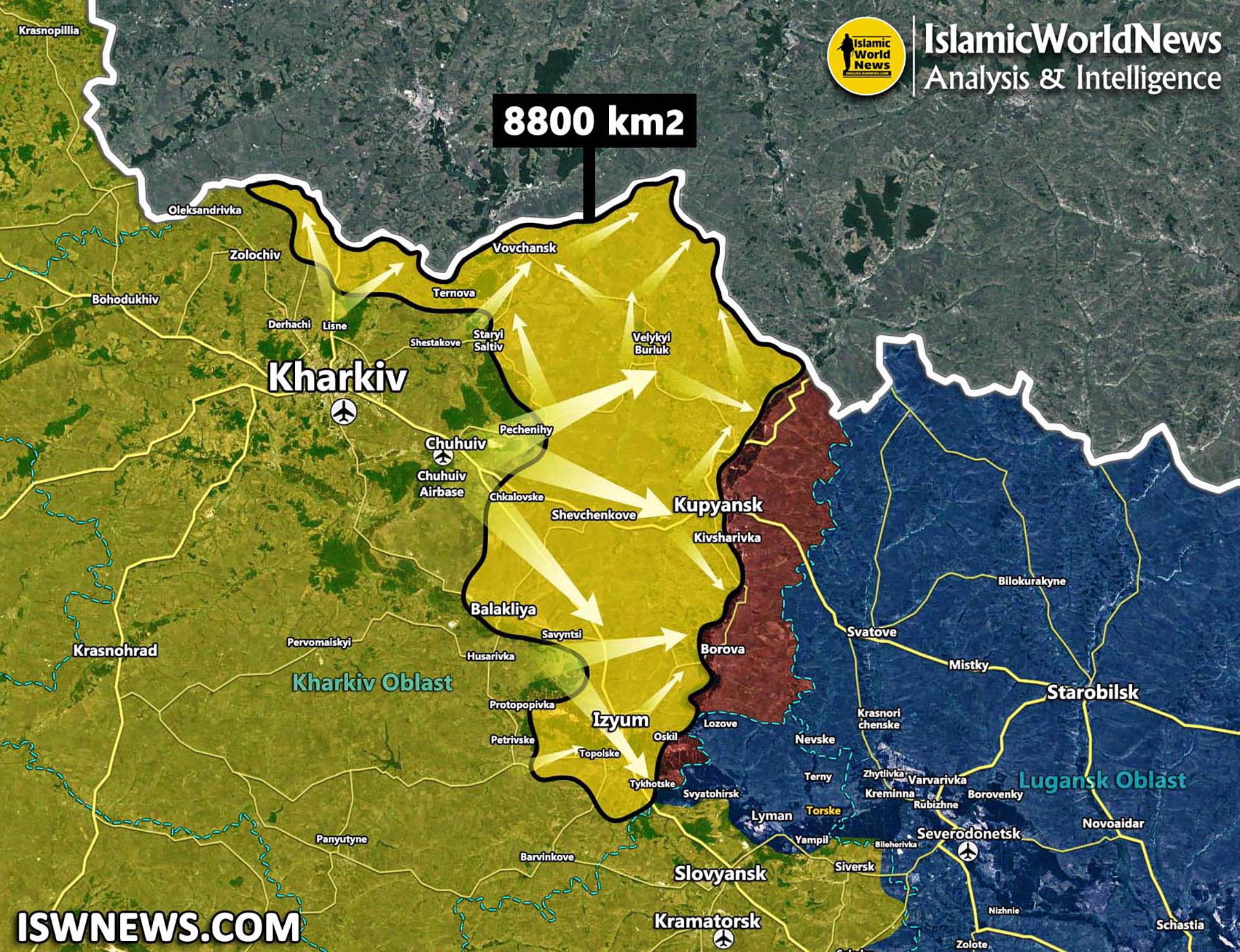
    The Russian army completely withdrew from the northern and northeastern regions of Kharkiv oblast, and the Ukrainian army took control of these regions. As predicted, the Russian forces in the north of Kharkiv retreated to the international borders, and in the east of Kharkiv, the forces went behind the Oskil river, and the eastern areas of the Oskil river are the only areas of Kharkiv oblast that are currently under the control of Russian forces.

    In this way and with the retreats, about 8800 square kilometers of Kharkiv oblast came back under the control of the Ukrainian government.

    It is noteworthy to mention that during the withdrawal of the Russian army from these areas, many Russian descent people of these areas also fled to Russia for fear of genocide, being persecuted, etc.

    Read more: Latest military situation in Ukraine after 200 days of war (Map Update)

    Click to view full size
  • Reviewing the consequences of the conflict between Eastern and Western powers in Central Asia

    Reviewing the consequences of the conflict between Eastern and Western powers in Central Asia

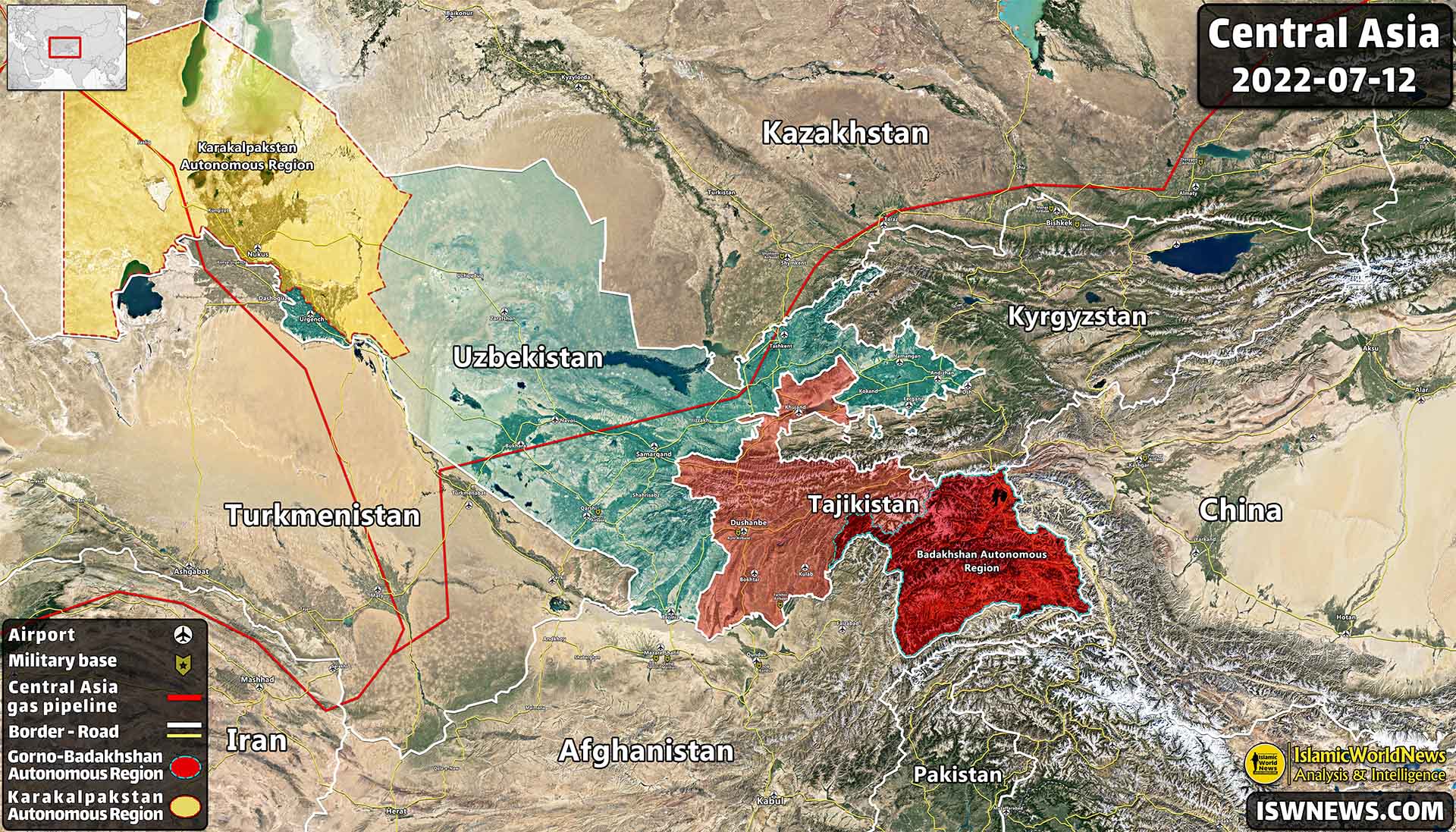
    During the last year, Central Asia has witnessed different crises, from street protests to military conflicts at different levels. Also, the activities of political movements and the military officials of various countries in the Central Asian region, especially the Americans, have increased the importance of this situation. The crises of this region can be defined as follows:

    1- Afghanistan crisis and America’s effort to influence more in Central Asia:
    After a year passed since the Taliban came to power in Afghanistan and also the withdrawal of the American forces from the country, a big security vacuum was created in the region and most of the Central Asian countries started their relations with the Taliban in limited condition.
    But in the meantime, Tajikistan publicly supported Ahmad Massoud forces and rejected the general interaction with the Taliban government. This issue arises from a close relationship with America. In general, the goal of the Americans for the warm relationship with Tajikistan is to continue to be present in the Central Asian region so that they can firstly penetrate into the backyard of Russia, China and Iran and also continue to play a role in the Afghanistan developments. America was defeated by Pakistan’s negative response regarding the construction of the base and several other things at the beginning of this matter; But now with the HUMINT policy, support for non-governmental organizations (NGOs) as well as training and military and security assistance, it has increased its influence in Tajikistan.
    One of the reasons for Putin’s recent visit to Tajikistan was the concern about the increase of American activities. In less than a month, three high-ranking American officials, Donald Lowe, Tom West, and General Michael Kurilla, had traveled to Tajikistan.

    Rocket attacks by ISIS and unknown groups from Afghanistan to Tajikistan, Uzbekistan and Turkmenistan were also among the other events that happened in the last few months, and this issue cannot be analyzed until its dimensions are hidden.

    2- Suppression of popular protests in Tajikistan’s Badakhshan:
    Since 2012, the mountainous Badakhshan Autonomous Region of Tajikistan has been the source of popular protests and severe repressions by the government of Emomali Rahmon. This issue has intensified since November 2021 and its peak can be seen in the assassination of “Martyr Mohammad Baqer MohammadBaqerov”, one of the popular leaders of this region. Also, other local leaders have had a similar fate or have been arrested.

    According to the latest field information, the government of Tajikistan seeks to suppress the popular groups in Badakhshan in order to apply its unified and autocratic rule in all of Tajikistan. With the opportunity of Russia’s war with Ukraine and simultaneous regional trips to Iran, Russia and Uzbekistan, “Rahmon” was able to complete his operations for ethnic cleansing in Badakhshan without any pressure. It should be noted that after this tension, the young fighters of Badakhshan either ran away or hid in the mountains, and the atmosphere of suffocation reigned over the city of Kharogh and other cities of Badakhshan province.

    3- Uzbekistan and the Karakalpakstan crisis:
    During the Soviet Union period, the Karakalpakstan region was first included in Kazakhstan, then in Kyrgyzstan, and later in the status of an autonomous republic, and finally it was handed over to the Soviet Republic of Uzbekistan. In 1990, the sovereignty of Karakalpakstan was approved, and at the beginning of 1993, an intergovernmental agreement was signed, according to which the Republic of Karakalpakstan became part of Uzbekistan for 20 years. Karakalpaks believe that their country is not an autonomous region, but an independent country within Uzbekistan.

    Karakalpakstan is a parliamentary republic, which has a national flag, official coat of arms, constitution and national anthem, and covers 37.1% of the territory of Uzbekistan. This region has rich resources and reserves of oil, gas and gold, and its population is about 2 million people, who are in the minority compared to the population of 35.3 million Uzbeks.

    The separatist tendencies in this republic intensified when the government of Tashkent announced that it was preparing to approve a constitutional amendment, which will remove the sovereignty of the Karakalpaks over their region. On July 5, “Dauletmurat Tazhimuratov”, the leader of Karakalpaks, planned to hold a peaceful rally on this issue, but the situation became tense after his video call. After this, military equipment and counter-insurgency forces were deployed throughout the city of Nukus, the capital of Karakalpakstan and Tazhimuratov was arrested. Of course, the Uzbek government has backed off from changing the constitution and the situation has calmed down. In the last 10 years, the situation in Karakalpakstan has become the hottest topic in the media about Uzbekistan.

    It should be noted that the authorities of Tashkent government have not renewed the autonomy agreement of Karakalpakstan since 2003 without polls and elections from the people of Karakalpakstan, and this led to start of these protests.

    4- Protests in Kazakhstan:
    What ignited the protests in Kazakhstan was the increase of fuel prices, but the demands of the protesters have now changed and they want to address broader issues. Kassym-Jomart Tokayev, the president of Kazakhstan, claims that these protests are organized by “terrorist groups” trained outside of Kazakhstan. The president of Kazakhstan declared a state of emergency following these protests across the country and promised to deal severely with the protesters. In a televised speech in the first hours of the protests, he said that he requested the help of the “Collective Security Treaty Organization” (CSTO) to establish stability in his country. Tokayev is the second leader of Kazakhstan after declaring independence from the Soviet Union in 1991. The election of Tokayev in 2019 was condemned by the Organization for Security and Cooperation in Europe (OSCE) on the pretext of not observing democratic standards in the elections.

    The presence of CSTO forces in Kazakhstan to suppress protests was one of the notable points.

    5- The military aid of the world powers to the countries of the Central Asian region:
    During the past few months, significant military aid was provided to the countries of the region, most of which was directed to Tajikistan. The establishment of the Ababil 2 drone production line in Tajikistan with the presence of Major General Bagheri, the Commander of the General Staff of the Iranian Armed Forces, the visit of the head of US CENTCOM to Tajikistan and the announcement of US$60 million military aid to Tajikistan (Puma drone, the construction of border posts in the Chaldovar region in the south of Tajikistan, ranger and mountain warfare training to the Tajik military, as well as providing special border equipment to Tajikistan), equipping the Tajik army with Chinese weapons, Russia’s promise to support and equip the Tajik border guards, and the sale of Turkish drones to Kyrgyzstan have been part of these military deals.

    Location of US border bases near Aiwaj in Chaldovar region

    Based on these developments, it can be concluded that Central Asia has always been in the spotlight due to its high importance, and due to the attention of the world’s military powers and the sending of military aid to this region, it is susceptible to important developments in the future. As Alexander Lukashenko, the President of Belarus, pointed out at the ceremony of the Independence Day of Belarus, Central Asia, like Eastern Europe, is located between two fronts and is a place where global poles clash. But the main issue today is not Ukraine, Belarus, grain and wheat exports, etc.
    Rather, the main issue is the emergence of new, powerful players in the international arena who have challenged the unipolar structure of the world. Protests and color revolutions, the greater influence of America and China and in contrast to the decrease of Russian influence in Central Asia, the possible role of Iran, etc. are among the things that we will hear more about in the future.

    Click to view full size (9 mb)
  • Infographic: Anti-Taliban Groups in Afghanistan

    Infographic: Anti-Taliban Groups in Afghanistan

    It should be noted that some of these groups, such as ISIS-K and the Resistance Movement for Justice, were also active in Afghanistan before the fall of Ashraf Ghani’s government.

    The list and details of anti-Taliban groups in Afghanistan are as follows:

    1- Resistance Movement for Justice (under the command of Abdul Ghani Alipour):
    Start of activity in 2013. Activities in Maidan Wardak, Ghor, Daykundi, Ghazni, Uruzgan and Bamyan provinces. A part of the former forces of Hezb-e Wahdat-e Islami and under the influence of Martyr Abdul Ali Mazari are present in this group. Ethnicity: Hazara.

    2- ISIS-K (Islamic State – Khorasan Province):
    Start of activity in April 2015. Activity in the eastern and northern regions of Afghanistan. With Salafi jihadist and Wahhabism tendencies.

    3- Afghan National Resistance Front (forces loyal to Ahmad Massoud):
    Start of activity on 15 August 2021. Activity in Panjshir, Baghlan, Kapisa and Parwan provinces. Ethnicity: Tajik.

    4- Afghanistan Freedom Front (forces loyal to General Yasin Zia, Chief of Army Staff of the former government):
    Start of activity on 4 February 2022. Activity in Takhar, Kunduz and Badakhshan provinces.

    5- Afghanistan Free People Front:
    Start of activity on 7 February 2022. Activities in Khost, Kapisa, Kabul, Parwan and other provinces of Afghanistan. This group does not follow a single and specific commander and they are allies of Ahmad Massoud’s forces.

    6- Turkestan Freedom Tigers (forces loyal to Yar Mohammad Dostum, son of General Abdul Rashid Dostum, leader of the National Islamic Movement of Afghanistan):
    Start of activity on 8 February 2022. Activities in Jawzjan and Faryab provinces. Ethnicity: Uzbek.

    7- National Islamic Movement for the Liberation of Afghanistan (forces loyal to General Khaled Aziz, one of the army commanders in of the former government):
    Start of activity on 23 February 2022. Activity in Nangarhar, Kunar and Helmand provinces. Ethnicity: Pashtun.

    8- Freedom and Democracy Front:
    Start of activity on 24 March 2022. Activities in the Shiite areas and central provinces of Afghanistan. The members of this group follow the thoughts of Martyr Abdul Ali Mazari. Ethnicity: Hazara.

    9- Supreme Council of Resistance (forces loyal to Atta Muhammad Nur, one of the heads of Jamiat-e Islami party):
    Start of activity on 25 March 2022. Activity in the northern and central provinces of Afghanistan. Ethnicity: Tajik and Hazara.

    10- People’s Democratic Party of Afghanistan:
    Start of activity on 9 April 2022. Activity in Kabul province. With the tendency and thoughts of communism.

    11- Western Nuristan Liberation Front:
    Start of activity on 9 April 2022. Activity in Nuristan province.

    12- Rise of Freedom:
    Start of activity on 5 May 2022. Activity in the Sang-2 Takht district located in Daykundi province. Influenced by the thoughts of Martyr Abdul Ali Mazari. Ethnicity: Hazara.

    13- Wolf Units (forces loyal to General Abdul Rashid Dostum, leader of the National Islamic Movement of Afghanistan):
    Start of activity on 6 May 2022. Activity in Barkah district in Baghlan province.

    14- Patriotic Front:
    Start of activity on 10 May 2022. Activity in Ghazni, Kabul and Herat provinces.

    Last update on July 5, 2022.

    Click to view full size
  • Yemen: Al-Durayhimi, From the Siege to the Victory + Video and Map

    Yemen: Al-Durayhimi, From the Siege to the Victory + Video and Map

    “Al-Durayhimi” is the name of a town and district in Al-Hudaydah province that was completely surrounded by the Saudi coalition during the Saudi coalition operation on the west coast of Yemen in August 2018. The siege was eventually broken by Ansar Allah and popular committees operation in October 2022, forcing Saudi-led coalition forces to retreat from around the town.

    Al-Durayhimi residents and fighters during this period (about 800 days) were faced with heavy bombardment and attacks by the Saudi coalition and a shortage of food and medicine, and despite the agreement between Ansar Allah and the resigned government of Hadi in Stockholm, they did not receive any assistance from the United Nations or international organizations.

    Situation in Durayhimi in 2020

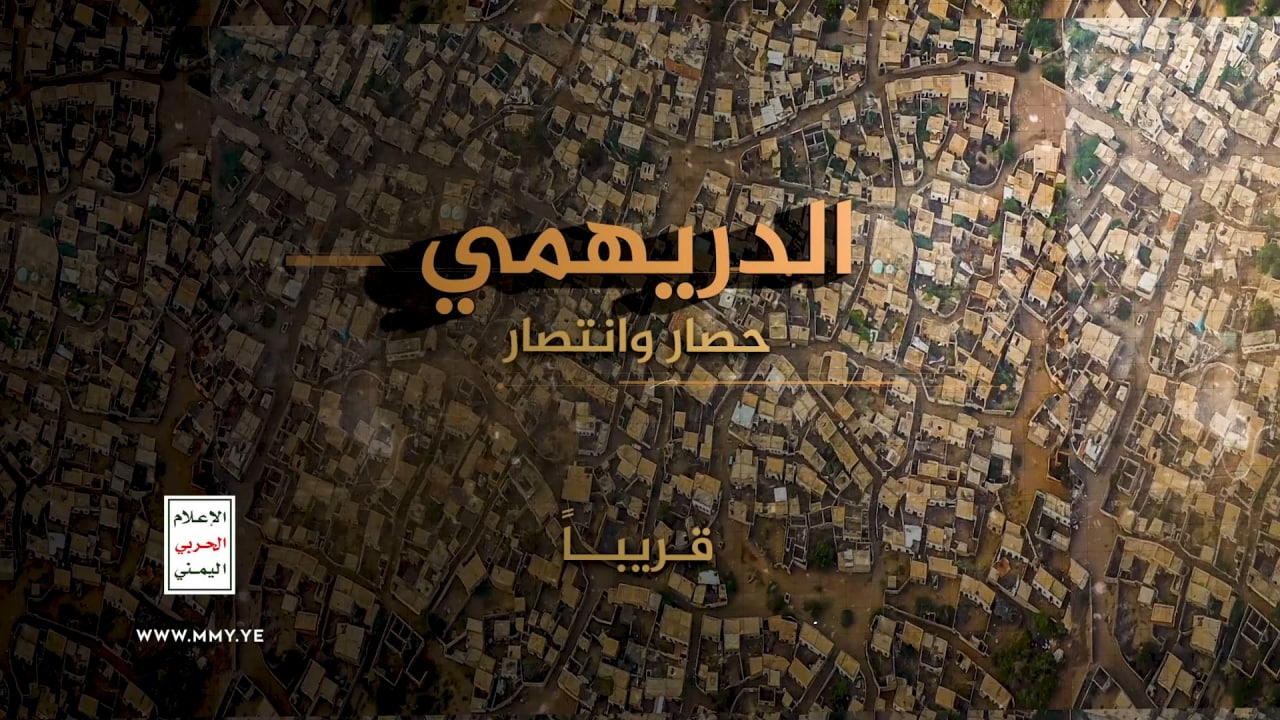
    In this regard, the Yemeni Ilam Al-Harbi media recently produced a documentary on al-Durayhimi’s situation during the 800 days of resistance, which narrates the problems caused by the siege of the Saudi coalition for the residents of this city and AnsarAllah’s surprising and impractical actions to help them.

    In this documentary, we see scenes of Ansar Allah fighters fighting Saudi-led forces from al-Amaliqa to Tariq Saleh and repelling their attack on the al-Durayhimi governorate building, the martyrdom of a number of al-Durayhimi children and the elderly due to hunger, disease and injuries from coalition bombing. Also among the spectacular parts of this documentary are sending medicine and medical equipment by UAV, embedding food in rockets and sending it with 2500 rockets into the city, sending food by Mi-171sh helicopter of the Yemeni army, sending rotten food by the United Nations, rejecting the offer Representatives of the Red Cross on the transfer of civilians to the refugee camp in al-Khukhah by the people of al-Durayhimi, etc.

    Read more:
    Saudi coalition Withdraws From the City of Al-Hudaydah and the West Coast of Yemen
    Ansar Allah defeated Tariq Saleh operation in al-Durayhimi (Map Update)

    Video No. 1: The siege and bombing of Al-Durayhimi led to the martyrdom, injury and mutilation of the residents of this town, who could not be treated after the medicine and medical equipment ran out.

    Video No. 2: Lack of food led to the martyrdom of a number of Al-Durayhimi residents due to hunger, forcing the residents of this city to consume expired food and even eat the leaves of trees and ground plants.

    Video No. 3: Martyrdom of one of Al-Durayhimi children due to severe hunger and his burial by his father

    Video No. 4: Saudi coalition bombs water source and freshwater wells

    Video No. 5: Ansar Allah sending medicine and medical equipment to the residents of Al-Durayhimi town by Rased UAV

    Video No. 6: AnsarAllah sends food embedded in rockets and fires at al-Durayhimi. AnsarAllah fired 8 to 10 rockets carrying food into the town daily after the siege of al-Durayhimi increased

    Video No. 7: UN sends rotten food to Al-Durayhim.

    Video No. 8: Food delivery by Yemeni Air Force Mi-171sh helicopter to residents of Al-Durayhimi town

    Video No. 9: Yemeni Air Force Mi-171sh helicopter returns after successfully delivering food to residents of Al-Durayhimi town and prostration of Yemeni pilot

    Video No. 10: The people of Al-Durayhimi reject the offer of the members of the Red Cross to leave Al-Durayhimi and transfer to Camp Al-Khukhah

    Video No. 11: Martyrdom of Al-Durayhimi residents due to hunger and consumption of terrestrial plants by the residents of this city to survive
    Video No. 12: Selected scenes from the operation to defeat the siege of Durayhimi by AnsarAllah fighters. AnsarAllah also liberated the villages around the town from the control of the Saudi coalition after repelling heavy attacks by Al-Amaliqa and Tariq Saleh forces to capture al-Durayhim.
  • 5 Million Views!

    5 Million Views!

    Interactive map here

    Your support is important, If you like our project, please feel free to donate, Click here.

  • Latest Military Situation in Ukraine After 38 Days of War (Map Update)

    Latest Military Situation in Ukraine After 38 Days of War (Map Update)

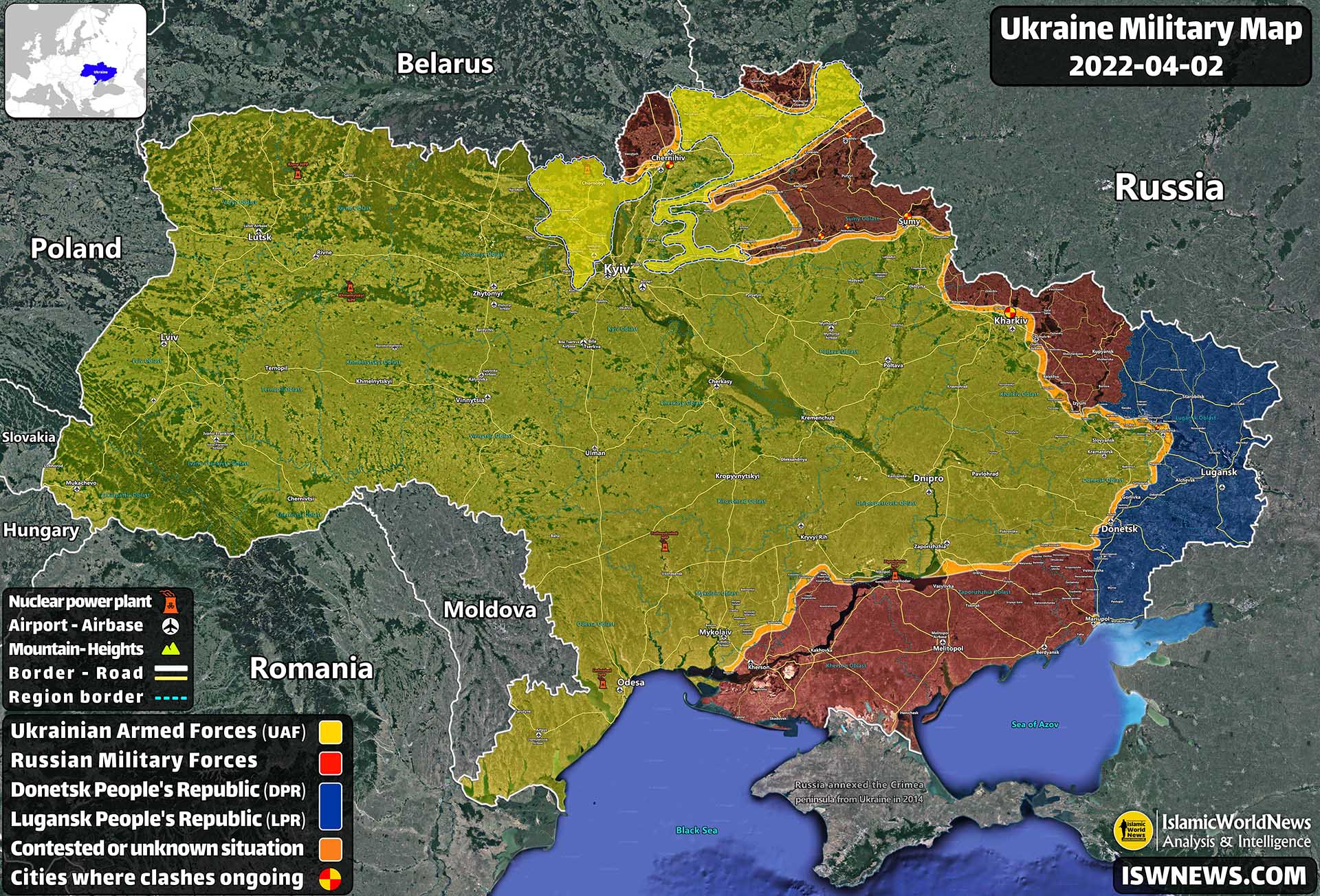
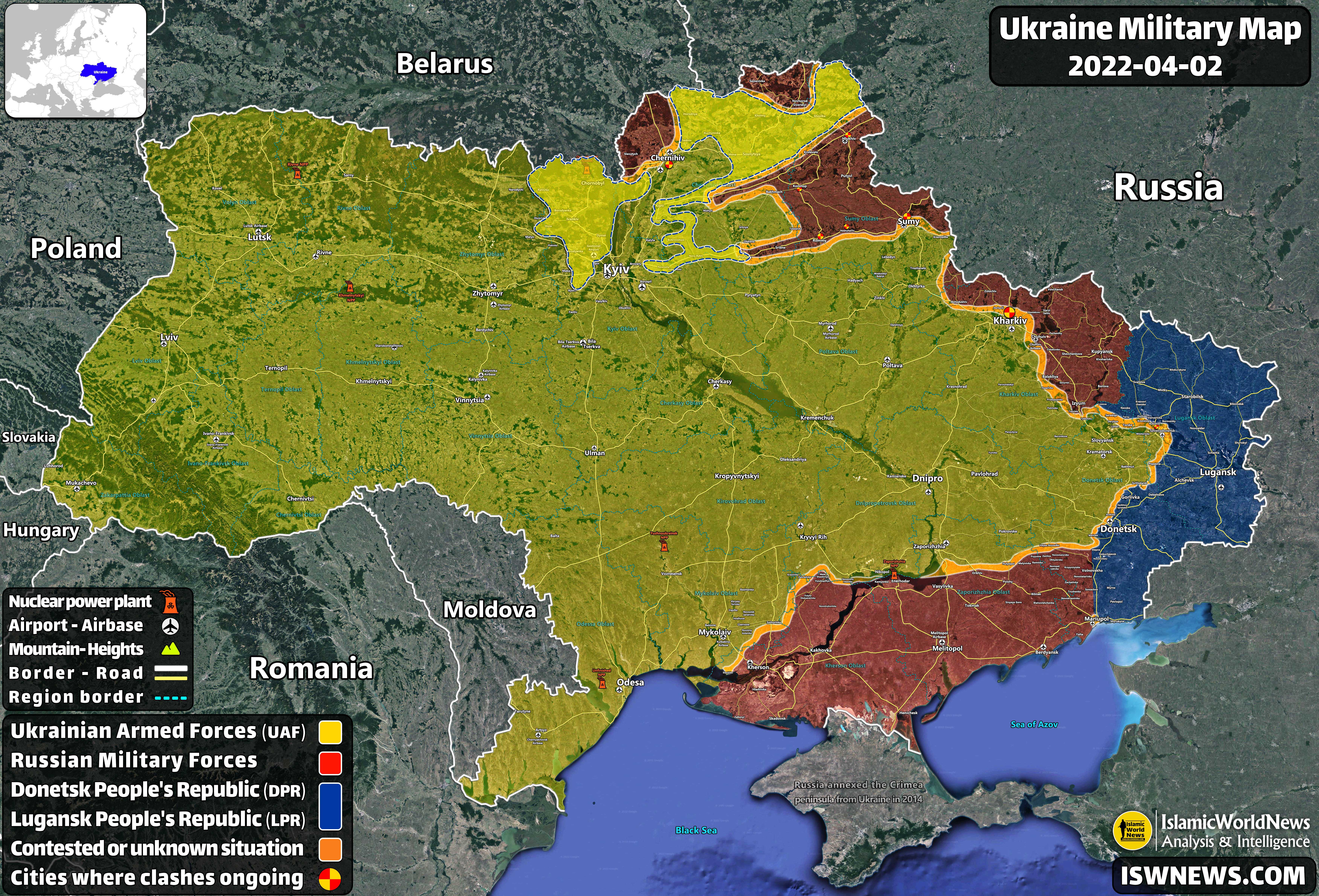
    The Russian military recently issued a statement on the recent retreats on the northern fronts, saying that the retreats carried out in a controlled manner and after achieving predetermined goals. According to Russia, the main purpose of the operation on the northern axes was to keep Ukrainian forces busy to protect the capital and important cities, and now that this goal has been achieved, the main focus will be on capturing the Donbass region.

    Although, the Russian military said the achievement of predetermined goals was the main reason for the withdrawal from the Kyiv and Chernihiv fronts; But the difficulty of fighting on these fronts, poor logistical support for leading armored units, poor execution of operational plans, incoordination between units of different factions, as well as heavy resistance of Ukrainian forces equipped with all types of anti-tank weapons were other important reasons for the Russian military to make such an important decision.

    Following the announcement of the withdrawal from the northern fronts, the Donbas region is witnessing the sending of large military convoys of the Russian army. The Russian military is now focusing on southeastern Ukraine to achieve one of its main goals since the start of the war, namely the liberation of the Donbass region. Therefore, in the coming days, the Donbas region will witness a wider range of battles and bombings, and the Russian army will attack with greater force to maintain its reputation and reliability.

    Read more:
    Latest Military Situation in Ukraine, 1 April 2022 (Map Update)
    Latest Military Situation in Ukraine, 5 March 2022 (Map Update)
    Latest Military Situation in Ukraine, 3 March 2022 (Map Update)
    Latest Military Situation in Ukraine, 1 March 2022 (Map Update)

    Click to view full size
  • What is happening in Ukraine? What is the story of the Russian military invasion of Ukraine? + Military map of Ukraine

    What is happening in Ukraine? What is the story of the Russian military invasion of Ukraine? + Military map of Ukraine

    In the early hours of February 24, Russian President, Vladimir Putin announced that Russia had officially launched a special operation to bring peace to Ukraine! According to the Russian president, which was broadcast on official Russian television; The operation was aimed at protecting residents of the Donetsk and Luhansk regions, as well as demilitarizing Ukraine and denazification of the country.

    Putin emphasized that the goal of the operation is “is to protect people who have been subjected to abuse, genocide by the Kiev regime for eight years, and for this we will seek to demilitarize and deNazify Ukraine, as well as bring to justice those who committed numerous bloody crimes against peaceful residents, including citizens of the Russian Federation,” Putin said.

    Following this statement, the Russian military operation in Ukraine began from the early hours of February 24.

    But what is the root cause of this war?

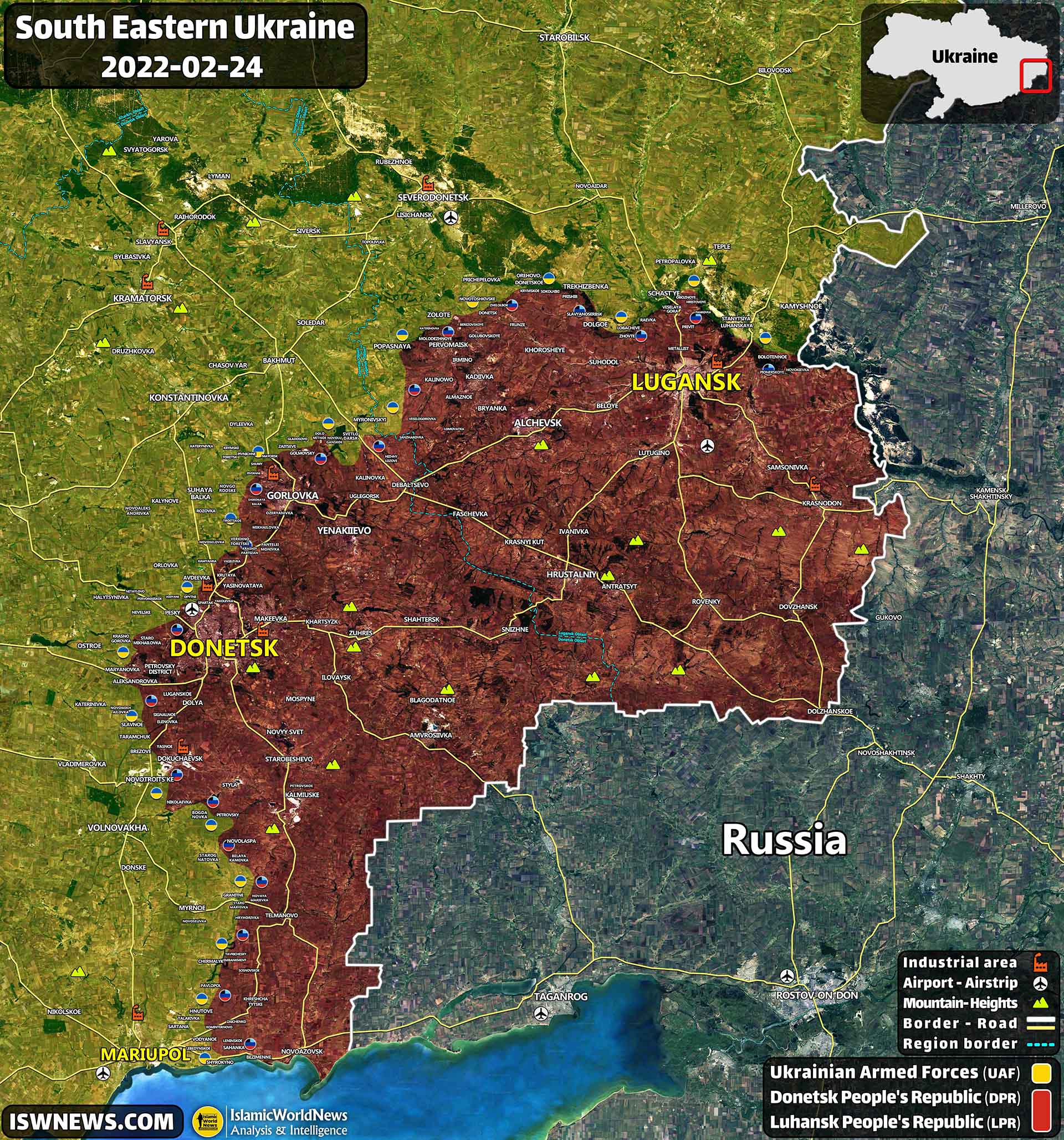
    Two days ago, on February 22, following weeks of escalating tensions in eastern Ukraine, Russian President, Vladimir Putin finally recognized the independence of the two separatist republics of Donetsk and Luhansk in southeastern Ukraine, And for the last time demanded Kiev to halt military operations in the Donbas region and hand over all the subdivisions of Donetsk and Luhansk to the people of this region.

    Donbass is a historical, economic and cultural region in southeastern Ukraine that was separated from the Soviet Union during the Soviet dissolution with Ukraine. Russia considers the Donbas region, where many Russians live, to be part of its traditional territory.

    In the riots of 2014, pro-Russian Ukrainian President Viktor Yanukovych was overthrown and pro-European politicians came to power in the Ukrainian capital, Kiev. After this revolution (or coup), the people of the Crimean peninsula showed their desire to secede from Ukraine, and eventually, after a series of events, it led to the secession of Crimea and its annexation to Russia. The people of Luhansk and Donetsk subsequently demanded secession from Ukraine and accession to Russia. Thus, on May 11, 2014, Donetsk and Luhansk oblasts witnessed a referendum on independence from Ukraine. In Donetsk, more than 89 percent of voters and in Luhansk more than 96 percent of voters voted for autonomy and independence.

    But this time, the Ukrainian government, experiencing Crimean secession, cracked down on separatists with swift action and military operations. However, the Ukrainian military operation in the Donbas region did not completely suppress separatism; But it interrupted the process. In the same year, a ceasefire agreement called the “Minsk Agreement” was signed between Ukraine and Russia and the Donetsk and Luhansk separatists. Since then (until 2022) the Donbas region has witnessed daily clashes between the two sides and killing and displacement of the people of the region. Before the war in Donbas, Donbas was the most populated region of Ukraine after Kiev, the capital of the country.

    However, over the past eight years, the areas under the control of separatist forces in Donetsk and Luhansk in southeastern Ukraine have become an unresolved challenge between Russia and Ukraine and the site of political conflicts between Russia and the West. The Minsk 1 and 2 agreements also failed to bring about a lasting ceasefire, with each side accusing the other of not adhering to the terms of the agreement.

    Over the years, the Ukrainian government, hoping for financial and military assistance from the West and the United States, tried to reclaim its territories; An issue that never materialized, and on the contrary, with increasing US influence in Ukraine, ‌practically turned the country into a place for direct military threats by NATO and the United States against Russia. Recently, the rumors about Ukraine joining NATO and the deployment of NATO defense and missile systems as well as NATO bases in this country led the Russian Federation to conclude that the only way out of this problem is the demilitarization of Ukraine!

    And therefore, the Russian military operations began to capture its traditional territories in Donbas and perhaps all of Ukraine!

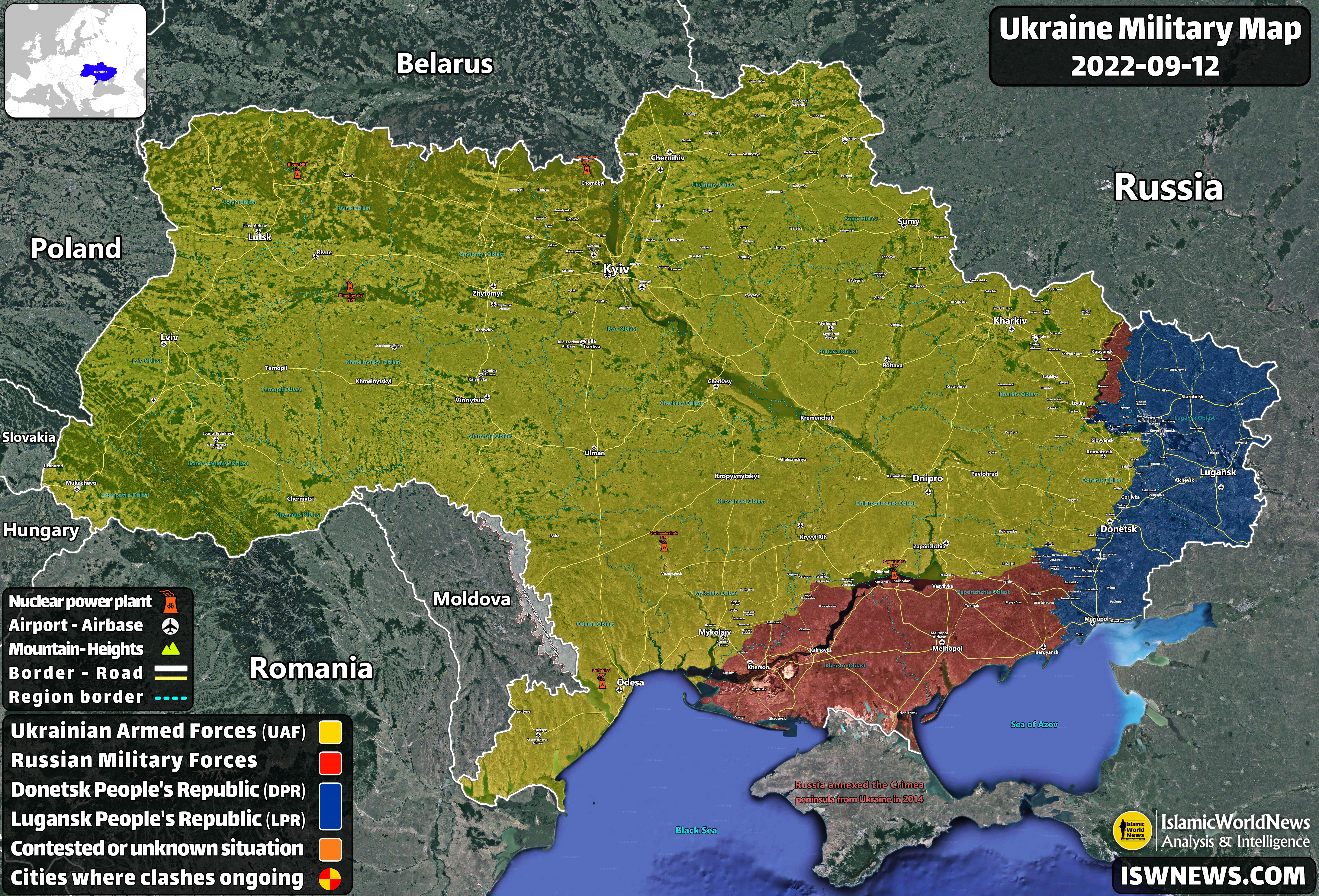
    Click to see the full size map


  • Targeted censorship of the United States and the Western bloc against independent media!

    Targeted censorship of the United States and the Western bloc against independent media!

    Of course, this is not the first action of western social media against the ISWNEWS media group; In recent years, other social media such as Facebook, Instagram, etc. have repeatedly deleted our pages, so that now there is no permission for any activity with the name and logo of the ISWNEWS on the Facebook platform!

    The continuation of targeted censorship against independent media such as ISWNEWS, South Front, etc. on social media shows the western bloc and US fear of revealing the truth about their wicked nature and the awareness of the people of the world about the facts.

    Keep up with the developments in the Islamic world; America’s empty hegemony will soon fall apart!

    Stay tuned to “ISWNEWS”; the US’s empty hegemony will soon fall apart!