After several months of tension between the supporters of the Islah Party (Reform Party) and the Southern Transitional Council (STC) in the district of Lawdar in the Abyan province, the supporters and militants of the Southern Resistance affiliated with the Islah Party attacked the military base of Hizam al-Amini forces affiliated with the Southern Transitional Council in the area.
They looted the weapons warehouse along with its equipment. After the Hizam al-Amini forces escaped from Lawdar, the pro-Islah Party forces set fire to vehicles and the remaining military hardware.
Also, this fierce conflict has resulted in the death of at least 10 militia members from both sides and the injury of several others.
According to local sources, the STC is trying to take revenge on Southern Resistance and the tribes of al-Udhalah (supporter of Islah party) by sending artillery equipment to Lawdar. This attack can be considered as the starting point of new conflicts between Islah party and Southern Transitional Council in Abyan province.
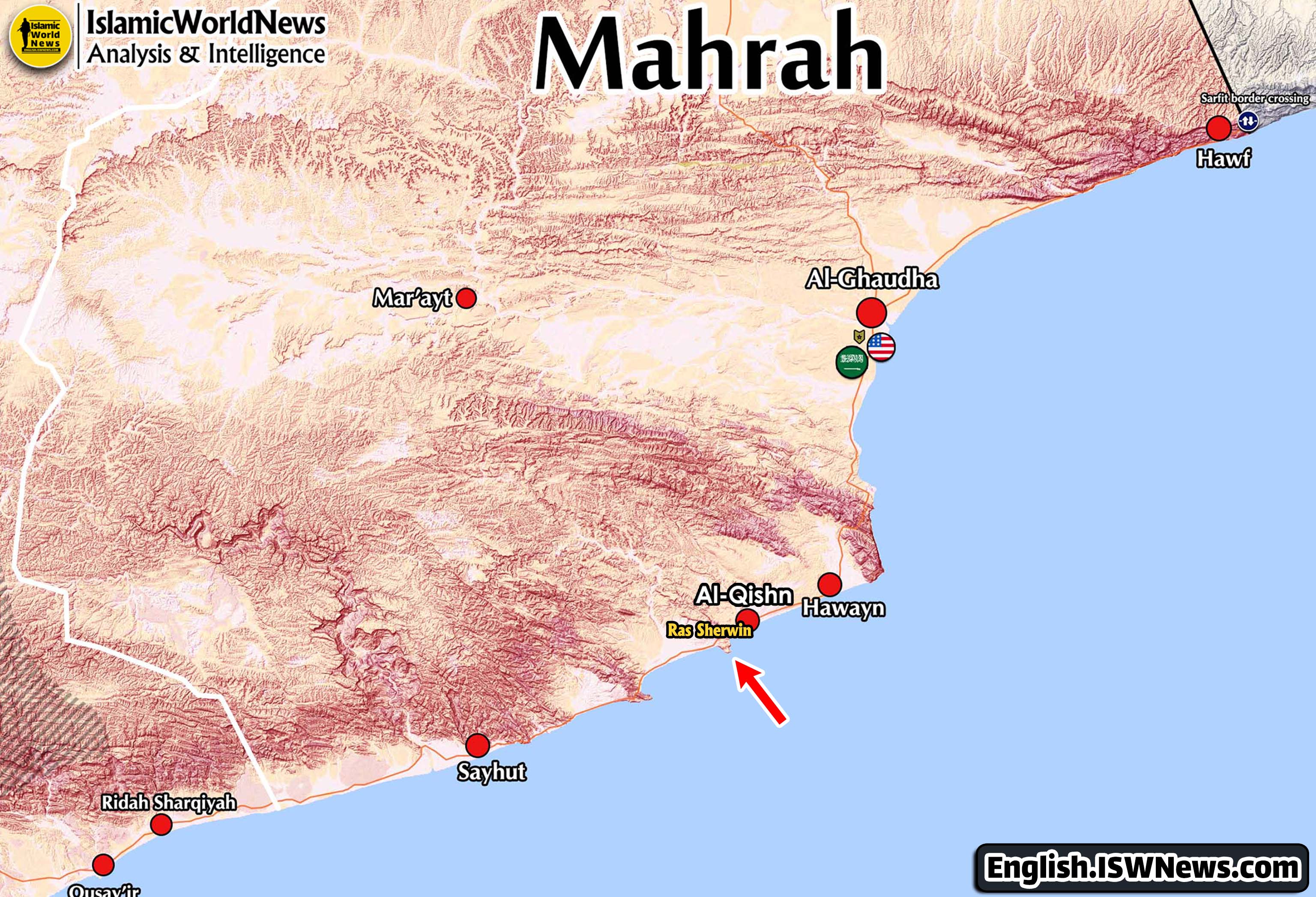
According to this contract, Ajham Company will get the privilege of exporting Yemeni minerals, including limestone, by building a port in the coastal area of Ras Sherwin, in return for paying one hundred million dollars to the resigned government. This port will include a one-kilometer-long multi-level coastal strip, a 300-meter-long pier and a 14-meter-long water inlet in the first phase.
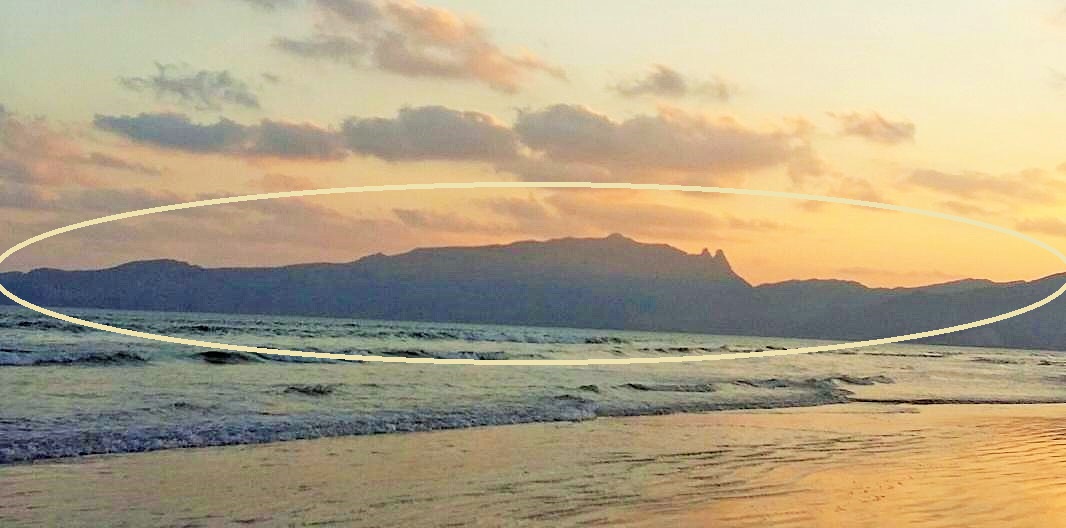
The name Ras Sherwin is derived from the Sherwin mountain range on the shores of al-Qishn administration. These heights are rich in rare minerals and its occupation by the UAE will most likely also disrupt the activities of Yemeni fishermen on the shores of Al-Mahra.
Following the issuance of an order by the Saudi coalition command room for the withdrawal of Southern Transitional Council (STC) forces and Sudanese mercenaries from Al-And Airbase in Lahij province and the deployment of Al-Dara’ al-Watan (Nation Shield) forces in this important base, the tension between the South and Saudi Arabia increased. This tension increased when Al-Dara’s al-Watan forces prevented the 1st Brigade of Southern Transitional Council militants from entering Al-Anad base, and the armed forces of both sides went to the brink of battle.
Despite the increase of tensions, December 25, Sudanese forces have evacuated their positions in the Al-Anad base and handed over to the Dara Al-Watan forces. With this situation, the possibility of the southerners retreating from the suburbs of Al-Anad base also increases.
Al-Dara’ Al-Watan (Nation Nation) forces are militias that formed in November of this year with the support of Saudi Arabia and the key role of Sagheer bin Aziz and Tareq Saleh, from the pro-Saudi tribal armed forces in Hadhramaut province, the forces of Al-Yaman Al-Saeed (subordinate to Saghir bin Aziz) and part of Pro-Tareq Saleh forces in the west of Lahij province.
Undoubtedly, these developments are not unrelated to the house arrest of Aidarus al-Zoubaidi, the head of the Southern Transitional Council in Saudi Arabia, and indicate the implementation of the Saudi plan to limit the power of the southerners in the strategic points of southwest Yemen.
After the formation of the ceasefire agreement in Yemen on April 2, 2022 and three periods of extension and finally its expiration on October 3, 2022, the areas under the control of the Saudi coalition were affected by a forced change in the head of the presidency (Resignation of Abd Rabbu Mansour Hadi and formation of the Presidential Council). This issue caused a series of tensions between different factions, and finally a kind of political and military deadlock prevailed between different groups under the command of the Saudi coalition. Therefore, the control of each of the parties was established over the regions, and now it is possible to distinguish the regions under the control of the groups in Yemen with more precision.
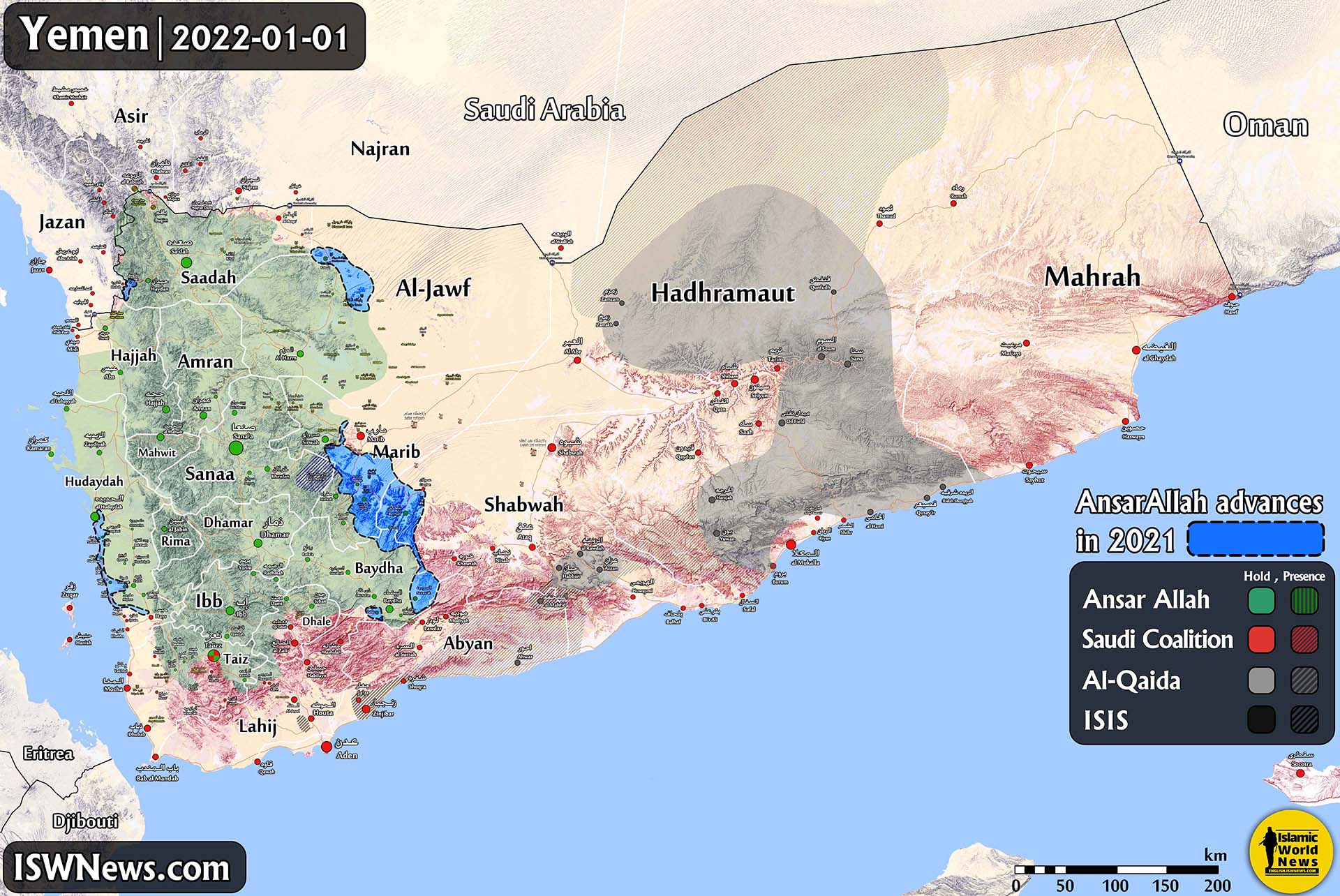
The map of Yemen war has been accurately edited in accordance with the latest field situation until December 16, 2022 and with the following categories and it is as follows:
1- Ansar Allah and popular committees: (green color) The areas under the control of Ansar Allah and popular committees include presence in 15 provinces in the west and center of Yemen, which include the capital, big cities and the majority of the country’s population. Despite the expiration of the cease-fire agreement with the mediation of the United Nations, there is no conflict in any of these fronts, and Ansar Allah is monitoring the fronts by carrying out various reconnaissance operations, as well as confronting the looting of Yemen’s oil resources by foreign tankers. Ansar Allah Movement and the National Salvation Government of Yemen are supported by the majority of the Yemeni people and the General People’s Congress and other Yemeni parties, as well as the foreign support of Iran and Islamic resistance groups.
2- The Saudi coalition and the Saudi-backed government of Yemen (ie the resigned government of Mansour Hadi): (red areas and all map colors except green) The areas under the control of the Saudi-led coalition forces include presence in 13 provinces of Yemen, which includes the largest area of this country. But the majority of these areas include desert and uninhabited areas. Despite this, the oil resources, the southern coast of Yemen and several strategic points are under the control of the Saudi coalition. The Saudi coalition uses these cases as tools to pressure Ansar Allah in negotiations. Nevertheless, despite the access of the Saudi coalition to all the areas under the control of the anti Ansar Allah groups, the factions under this coalition have competition and armed conflict with each other to control these areas. The structure of the resigned government of (Mansour Hadi) Yemen, like other countries involved in civil war, is a structure that divides positions and ministries between powerful factions in order to use the human power and military facilities of these factions against the main enemy. These factions include: Islah Party, Southern Transitional Council, Yemeni National Resistance under the command of Tareq Saleh, each of them have managed to influence and control parts of Yemen in recent years, especially after the resignation of Abd Rabbu Mansour Hadi and the formation of the Presidential Council. Which is explained as follows:
3- Southern Transitional Council: (blue color) The “Southern Transitional Council” (STC) is the name of a council consisting of the main currents of South Yemen, including Al-Hirak Al-Janoubi (Southern Movement), Southern Resistance and the South Arabian League Party, which was established on May 4, 2017, and their goal is to divide south Yemen. Currently, based on the Riyadh agreement in November 5, 2019, this movement holds the post of prime minister and half of the 24 ministries of the government. The geographical area under their control also includes: Aden province, most areas of Lahij and Abyan provinces and parts of Al-Dhale’, Hadhramaut and Taiz provinces.
It should be noted that the forces of Hizam al-Amni (Security Belt), Al-Haba Al-Hadhramiyah, Southern Resistance and other southern armed brigades are sub-groups of the Southern Transitional Council and are under the support of the United Arab Emirates.
4- Islah party: (purple color) The Islah Party (Reform Party) is one of the largest and oldest parties in Yemen, and it acts as the representative of the Muslim Brotherhood in Yemen. This party was formed on September 13, 1990 by Sheikh Abdullah ibn Husayn al-Ahmar, one of the elders of the Hashid tribe, and has been operating since 2007 under the chairmanship of Mohammed Abdullah al-Yadumi. After the start of the Saudi coalition’s invasion of Yemen, the Islah Party announced its support for this operation on April 3, 2015, and entered into a battle with Ansar Allah.
Currently, the cities of Marib, Taiz, Seiyun and the desert areas of Al-Jawf province and parts of Shabwah and Hajjah provinces are under the control of this party’s militants.
5- Forces loyal to Tareq Saleh (Yemeni National Resistance): (yellow color) “Yemeni National Resistance” is the name of a military group led by Tareq Saleh, the nephew of Ali Abdullah Saleh, the former president of Yemen, which was formed in December 2017. This organization has more than 10,000 members and consists of several factions, including former members of Ali Abdullah Saleh’s presidential guard, the former army soldiers and security forces separated from the Sana’a government, Al-Amaliqah and Al-Tihamah Resistance forces.
The areas under the control of Tareq Saleh forces are the southwestern region of Yemen, including the district of Hays in the south of Hudaydah province, the western areas of Taiz province, as well as the districts of Bayhan and Ain in Shabwah province. It is worth noting that this military group (Tareq Saleh forces) is under the support of the United Arab Emirates, the Amaliqah and Tihamah forces receive their orders from the command of the Saudi coalition, especially the UAE, instead of Tareq Saleh…
6- Al-Qaeda, Ansar al-Sharia and ISIS terrorist groups: (gray hachure) The activities of the Al-Qaeda terrorist group in Yemen under the name of “Al-Qaeda in the Arabian Peninsula” (AQAP) began in 2009 and continued under the name of Ansar al-Sharia group since 2011. After the resignation of Ali Abdullah Saleh and the presidency of Mansour Hadi, this group acted in a more organized manner and took full possession of some points; But the advance of Ansar Allah and the intelligence of the field commanders of this movement in taking control of the cities of Sana’a, Saada, etc., prevented Al-Qaeda from advancing. Therefore, in order to survive their activities, Al-Qaeda forces were stationed in the remote areas of Yemen, including the deserts of eastern Yemen, the north of Al-Baydha province, and several other places. Currently, this group does not have any city or region completely under their control, and their sphere of influence includes the desert areas of Hadhramaut, Shabwah and Abyan provinces. Also, after the Ansar Allah operation in the north of Al-Baydha province, Al-Qaeda members were transferred to the city of Marib and placed under the command of Islah Party.
The Islamic State Wilayat al-Yaman (Yemen province) group (IS-YP) also announced its formation in November 13, 2014, and apart from bombings, assassinations, etc., no special activity has been seen so far. ISIS members in Yemen are generally from extremist tribes in the east and south of Yemen and people separated from Ansar al-Sharia and al-Qaeda terrorists groups.
It should be noted that the formation of terrorist groups in Yemen is closely related to the actions of Mansour Hadi, the former president of the resigned government, Ali Mohsen Ahmar, the former vice president of the resigned government, and several other heads of parties and security institutions. In this regard, the criminal court of Yemen has convicted and prosecuted these people.
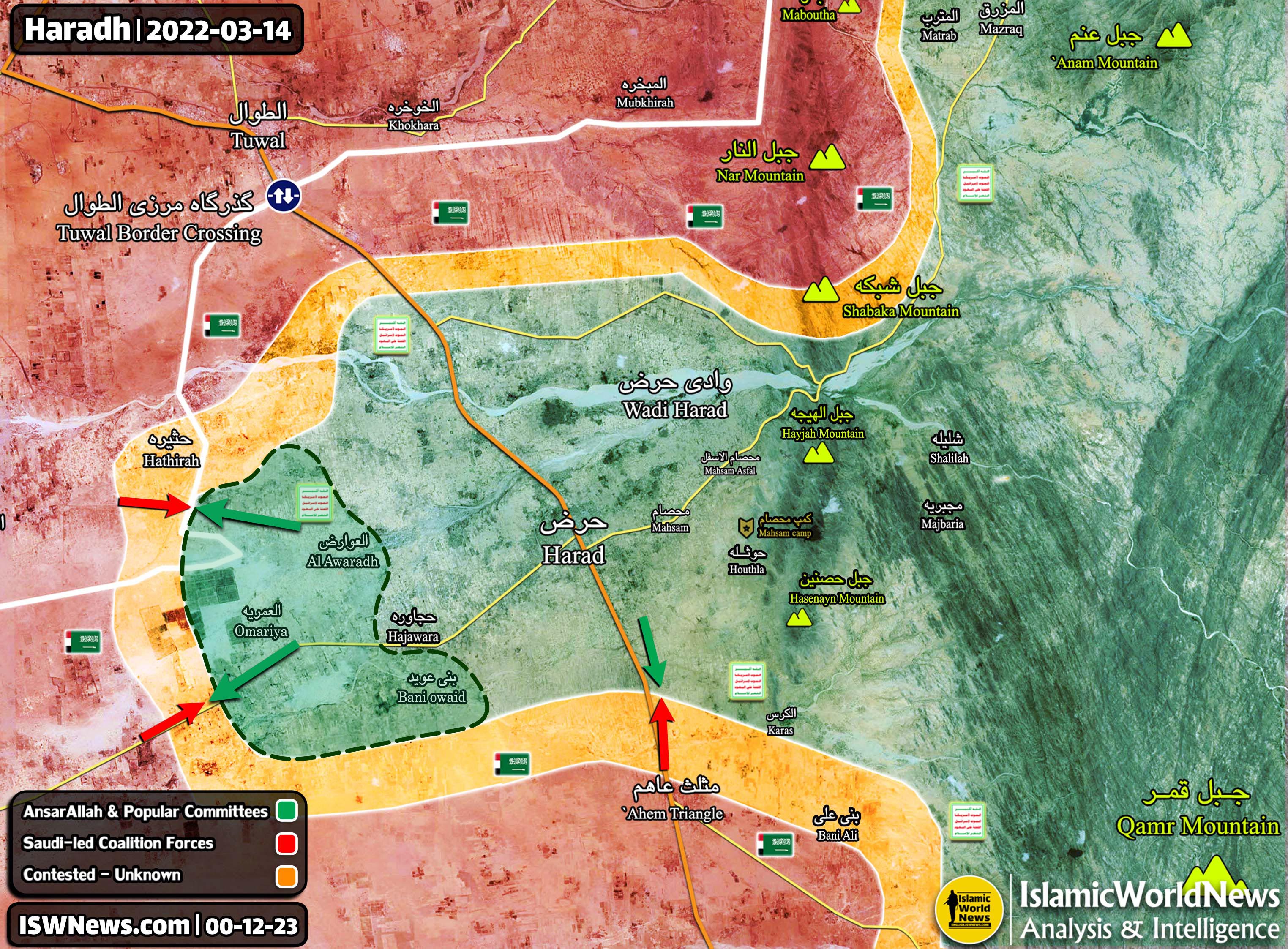
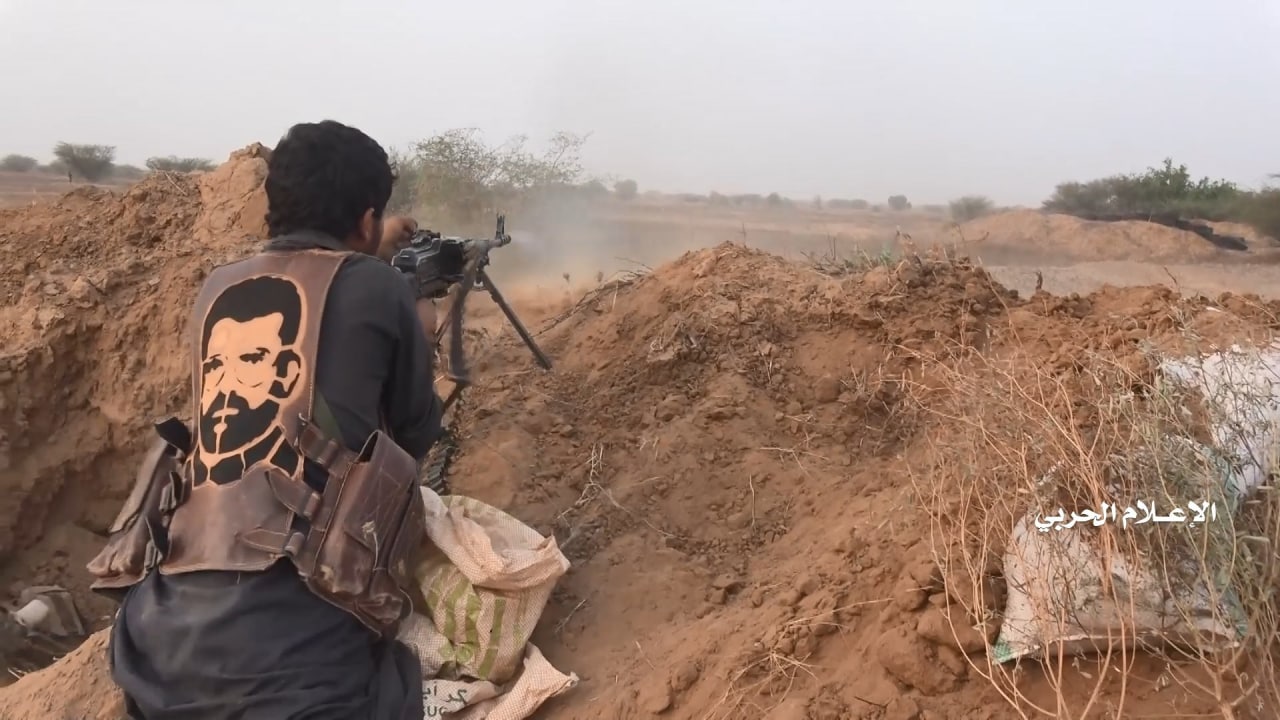
According to the latest news from the northern front of Hajjah, the Ansar Allah operation in the western axis of Haradh town lasted for two days, during which Ansar Allah fighters succeeded in liberating the villages of al-Rakab, al-Asila, Bani Uwaid, al-Awaridh, Bani Qaras, al-Adhir and al-Umariya from the Saudi coalition. These areas are located in the west of Haradh and northeast of Midi districts.
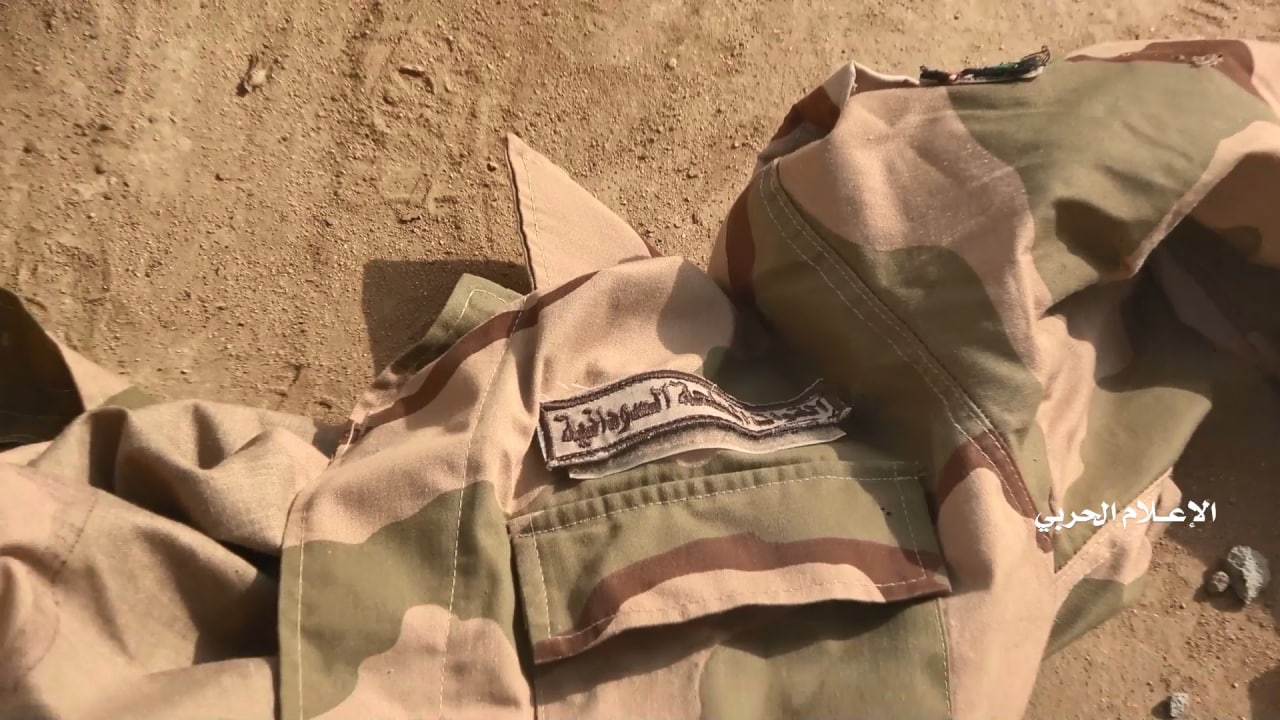
According to Ansar Allah media, more than 500 Saudi-led forces were killed and wounded during the operation. The bodies of 15 Saudi soldiers and more than 80 Sudanese mercenaries have been identified.
Ansar Allah had previously defeated the siege of Haradh town on February 14. Haradh is a strong and strategic base in northwestern Yemen, and Ansar Allah must clear the adjacent areas bordering Jizan province to keep the Saudi coalition away.
The Saudi coalition operation in the north of Hajjah province began on February 4, with the focus on Mansour Hadi and Sudanese forces and the support of the Saudi army, with the aim of taking control of the town of Haradh. In the first step of the operation, the Saudi coalition managed to completely encircle the town of Haradh, but the resistance and the adoption of appropriate tactics by Ansar Allah prevented the Saudi coalition from infiltrating the town and ultimately broke the siege of Haradh. With the completion of the liberation of the heights and villages east of Haradh by Ansar Allah, it can be said that the Saudi coalition operation to capture Haradh has completely failed.
According to ISWNEWS analysis, Ansar Allah destroyed a CH-4 drone during the operation and carried out four missile and drone attacks on Saudi coalition positions and gatherings, the details of which are as follows:
1- Attack with three missiles on positions and gatherings of the Saudi coalition at the Tawwal crossing and the Ahem triangle. By these attacks, more than 20 members of the Saudi coalition, including Maj. Gen. Majid al-Riyadi, the financial director of the Fifth Military Zone, and Brig. Gen. Yahya Heikal al-Samini, one of the commanders of Mansour Hadi forces were killed. Date: February 5. 2- Ansar Allah drone attack on the gatherings of the Saudi coalition forces in the south and west of Haradh town. Date: February 7. 3- Attack with two missiles on positions of the Saudi coalition in the towns of Midi and Hayran located in the north of Hajjah province. Date: February 7. 4- Ansar Allah drone attack on Abha Airport. The Saudi coalition claims 12 people were injured in the attack. Date: February 10.
Video: Report by Yahya Al-Shami, a reporter for Al Masirah Network from Haradh town
The Saudi coalition has used at least 6,000 ground troops in the operation, including the 1st Brigade, al-Asifa (Storm) Brigade, Armored Battalions, Special Forces and Cavalry Forces under the command of Mansour Hadi army. Several battalions of the Sudanese and Saudi armies have also provided support to operations and battles in al-Tawwal area, the number of which is unknown. Saudi coalition warplanes also bombed the northern fronts of Hajjah province 115 times during this period, which seems very heavy due to the small size of the area.
In general, the reasons for the failure of the Saudi coalition operation in Haradh can be summarized as follows:
1- Ansar Allah’s appropriate tactics and resistance in the urban war. Ansar Allah easily thwarted coalition ground attacks by building embankments, ditches, and setting up traps, etc. 2- The superiority of the engineering unit and Ansar Allah snipers in ground conflicts. 3- Ansar Allah precise missile and drone attacks on the gatherings and positions of the Saudi coalition in the suburbs of Haradh. 4- The general weakness of the Saudi coalition in carrying out military operations against Ansar Allah.
It should be noted that this operation was the second serious attempt by the Saudi coalition to capture the town of Haradh. Prior to the operation, the Saudi coalition had completely besieged Haradh town in December 2018, but the siege was broke by Ansar Allah’s attacks from the eastern flank and the coalition was forced to retreat.
Haradh district has a population of more than 100,000 and is located in the north of Hajjah province and the south of Saudi Arabia’s Jizan province. The center of this district, the town of Haardh has been under a quasi-siege since April 2018 and is currently uninhabited by civilians. After the battles of the city of Aden, the battle of Haradh can be considered the second urban warfare in Yemen; with the difference that Ansar Allah succeeded in defeating the coalition in the battle of Haradh.
Ansar Allah started its attack on February 11 to break the siege of Haradh town and continued until yesterday evening. Eventually, the Saudi coalition was forced to retreat from the eastern part of the town, and the siege of Ansar allah forces in the town was broken.
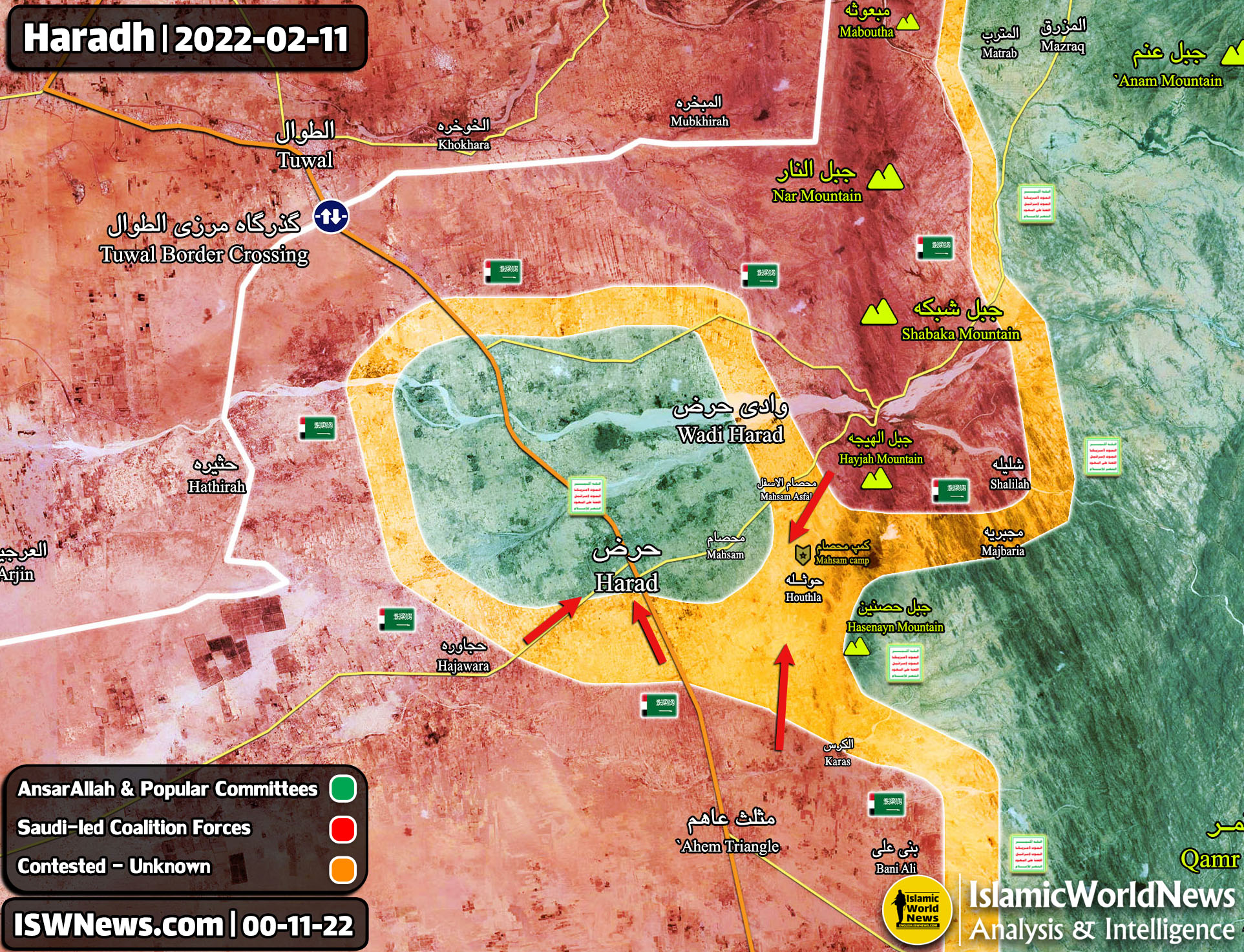
Currently, the al-Mahasam camp, al-Mahasam mountain, the villages of al-Houthalah, al-Awjara and al-Raha are out of the control of the Saudi coalition, and clashes are taking place in Hayjah mountain and the surrounding villages of the Ahem triangle.
Saudi coalition warplanes have also bombed Haradh fronts 101 times since the beginning of the conflict.
Ansar Allah is currently focusing on the al-Mazraq road, and the liberation of Hayjah mountain, Shabaka and al-Nar heights could be Ansar Allah’s next steps in this direction.
According to the latest updates on north of Hajjah front, Saudi coalition defeated AnsarAllah attacks yesterday, sieged Haradh again. At the moment Mahsam base and villages Houthala, Awjarah and Raha in control of Saudi coalition and conflict continues in Mahsam al-Asfal and Hasenayn mountain.
The Saudi-led forces intensified attacks on northeast of Haradh from today morning and brought the front line to Wadi Haradh by passing Hasm village. In the southern and western outskirts of Haradh town, the front lines are unchanged and Ansar Allah still resists.
The Saudi coalition warplanes bombed Haradh fronts 75 times since the conflict started. Ansar Allah did not perform any missile or drone operation in the last 24 hours.
Some local sources have reported that Ansar Allah is mobilizing and preparing for the operation to retake the northern areas of Hajjah province. If Ansar Allah does not take serious step to defeat the siege and reclaim north of Hajjah, fall of Haradh is imminent.
Overall situation in Hajjah province – Click to see the full size map
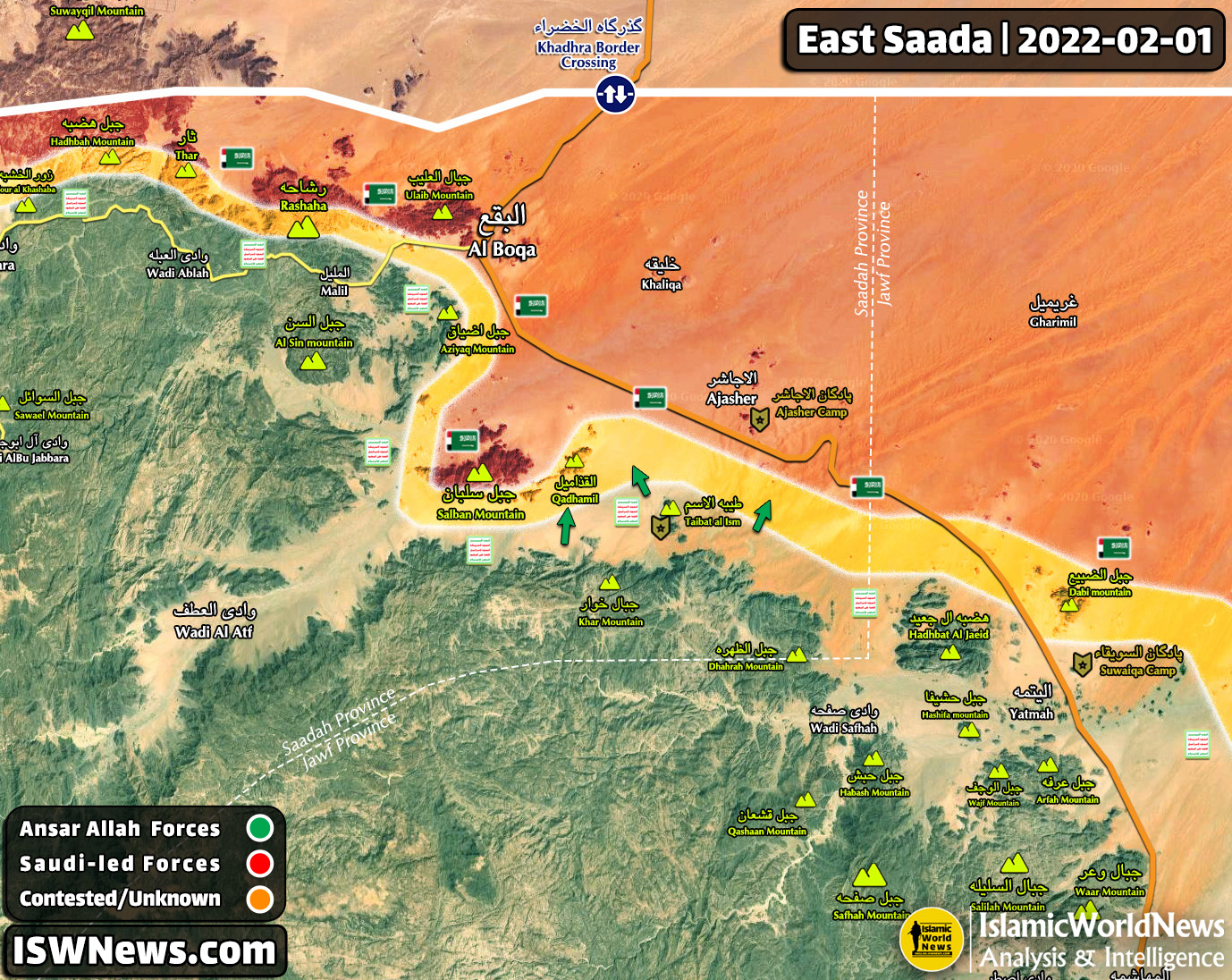
During the operation, Ansar Allah liberated the Taibat al-Ism camp, Qadhamil heights, Qahira, al-Rabaa, al-Ramla al-Sawda and al-Mahour from the control of the Saudi coalition.
Prior to the operation, Ansar Allah had liberated the town of Yatmah and its suburbs during Operation Fajr al-Sahra on December 24, 2021. Considering the direction of Ansar Allah progress in these areas, it seems that Ansar Allah’s goals in these operations are the following:
1- Clearing the mountainous areas north of al-Jawf province and the border areas of Saada province from the control of the Saudi coalition. 2- Ensuring the security of areas and roads leading to small towns such as: Kataf, Yatmah, etc. 3- Reducing the pressure from other fronts and disrupting the focus of the Hadi government on the battles of Marib. 4- Increasing pressure on the border areas with Saudi Arabia, which will force the Saudi coalition to deploy more forces in these areas.
AnsarAllah’s possible goals in future operations in the region could be to move to al-Atfin area, al-Ajasher base, al-Boqa town, and finally the al-Khadhra border crossing and enter Saudi territory.
As expected, Ansar Allah succeeded to halt the advance of the Saudi-led forces in its second line of defense in the south of Marib province, in the al-Malaa heights to Haniyah mountain.
In the Abdiyah district, the support of the Bani Abd tribes for Ansar Allah has temporarily dissuaded the coalition from entering the district, although sporadic clashes continue in the highlands overlooking al-Musawaqa.
The situation in Ain district remains unclear, and the Saudi coalition media have claimed coalition control over the Hajab town and other areas of the district. In Beyhan district also, clashes in the southern heights of Beyhan town have stopped.
In the past 48 hours, Saudi coalition warplanes have bombed Wadi, Juba, Raghwan and Majzar 30 times in the south and west of Marib province. Ansar Allah also continue to inflict casualties on Amaliqa forces by carrying out numerous missile attacks on positions of Amaliqa in the Usaylan region.
The withdrawal of Amaliqa forces from the battles of Marib indicates the cessation of the recent Saudi coalition operations in these areas. However, the daily visits of the military officials of the Mansour Hadi government from the southern fronts of Marib city, as well as the transfer of Ansar Allah forces and military equipment to al-Balaq heights, show the determination of both sides to control the southern areas of Marib. The battles of the coming days in this region will be effective in the course of the Yemeni war.
Saada: During Ansar Allah operation on late may 2021, on the southwestern front of Saada province in the Malahit region and Jizan province in southern Saudi Arabia, areas with an area of about 150 square kilometers were liberated from the occupation of the Saudi coalition.
Al-Jawf: During Ansar Allah operation, from December 4 to 23, under the name of “Fajr Al-Sahara“, more than 1,200 square kilometers of occupied lands in al-Jawf province, including the important town of Yatmah, the center of Khab and Shaaf district were liberated from the Saudi-led forces. In the eastern fronts of al-Jawf, clashes continue in the suburbs of Khanjar camp to the eastern desert of Maraziq and the heights of Alam, and the lines have not been stabilized yet.
Marib: In Marib province, Ansar Allah still holds its positions on the three main fronts in west of Marib, in Raghwan, Madghal and Sarwah. On the Raghwan front, there has been no significant change over the past year, and the Asdas tribes continue to follow the Saudi coalition. Ansar Allah also has no intention of advancing in this front. On the Madghal and Sarwah fronts, Ansar Allah attacks led to the liberation of the Kufil base and the Zena camp. Currently, clashes on the western fronts of Marib has stopped behind the Marib Dam to al-Atif and al-Khashab heights because of various reasons, such as the Saudi coalition fierce resistance, heavy bombardment of Ansar Allah positions by the Saudi coalition warplanes, etc. But in the south of Marib province, Ansar Allah has succeeded in liberating the districts of Rahba, Harib, Abdiyah, Jabal Murad (without clashes) and Jubah by carrying out Operation Rabi al-Nasr. This important advance has led Ansar Allah to the southern entrance of the city of Marib, And heavy clashes have been going on since November 2 in the suburbs of the al-Balaq al-Sharqi and al-Balaq al-Awsat heights.
Al-Baydha: During Operation Fajr al-Hurriya, Ansar Allah succeeded in completely clearing the districts of Nu’man, Nate’, al-Musawara, al-Sawma’ah and Mukayras, covering an area of about 2,500 square kilometers, from the control of the Saudi coalition and the terrorist groups al-Qaeda and ISIS.
Shabwa: Following the developments in the central fronts of Yemen, Ansar Allah carried out Operation of Nasr al-Mubin in three stages and completed the operation with launching Operation Rabi al-Nasr in the area. In total, the operations led to the liberation of 3200 square kilometers of lands in Shabwa and Marib provinces, including Usaylan, Beyhan and Ain districts in Shabwa province.
Taiz: On the Taiz front, on January 9, Ansar Allah repelled ISIS insurgency in the Azlat al-Haima area in the north of Taiz province by a security intelligence operation. Clashes continue on the axis of al-Kadhah and the district of Muqbanah, and the mentioned areas are still under the control of Ansar Allah.
Al-Hudaydah: On November 12, the Saudi coalition command issued an order to withdraw its forces from the city of Al-Hudaydah and the west coast of Yemen. By this retreat, the National Resistance forces including the forces under the command of Tariq Saleh, Tihamah forces, Amaliqa Brigades and joint forces evacuated the northern and eastern areas of al-Hudaydah city and the western areas of al-Durayhami, al-Jah and al-Tuhayta. On the other hand, on November 18, Tariq Saleh forces launched an operation called “Golden Arc” in the south of al-Hudaydah province and the west of Taiz province, with the aim of securing the positions of the Saudi coalition on the southern regions of Hudaydah province, which has not achieved significant results so far. Ansar Allah has so far managed to repel most of Tariq Saleh attacks by carrying out Operation Eighth Deterrence Balance and several other missile and drone operations.
Clashes continue on other fronts, such as al-Dhale’ and al-Hajjah provinces, sporadically between the Saudi-led forces and Ansar Allah, and there has been no significant change in the battle lines in these areas.
On November 12, 2021, an order was issued by the Saudi coalition command, which surprised many analysts and the media. In an unexpected move, they ordered the withdrawal of coalition forces from most parts of al-Hudaydah and the west coast of Yemen. According to this order, all the forces of the “National Resistance”, including the forces under the command of Tariq Saleh, Tihamah, Amaliqa and joint forces, evacuated the northern and eastern areas of al-Hudaydah and the western areas of al-Durayhimi, al-Jah and al-Tuhaita.
The most reasonable theory was assumed the fact that this retreat is done to strengthen the Shabwa and Marib fronts, and these retreats will continue until the Hays-Khukhah region in Hudaydah province.
Ansar Allah rapid advance on the Marib and Shabwa fronts had confused and weakened the Saudi coalition ground forces, and the coalition had not been able to stop Ansar Allah by sending al-Qaeda and ISIS militants. They needed trained and experienced forces to protect the city of Marib and keep Ansar Allah away from the city of Ataq, the capital of Shabwa province. With the Sudanese fleeing and the killing of mercenaries and elements of al-Qaeda and ISIS, there was no choice left for the coalition except al-Amaliqa (Giant Brigades) and Tariq Saleh forces.
According to the latest estimates from the Yemeni fronts, the Saudi coalition divided its forces on the west coast as follows: Tariq Saleh forces remained south of al-Hudaydah province to prevent possible Ansar Allah attacks, and some of them moved to the northern and western fronts of Marib.
The Tihamah forces, along with Tariq Saleh forces, carried out an operation called the “Golden Arc” around the town of Hays, which did not yield any specific results. The joint forces and the Amaliqa forces also entered the city of Ataq to retake western areas of Shabwa province.
This transfer of forces was the result of a secret agreement between the Saudis and the UAE. The UAE appears to have achieved the keys of Shabwa province in exchange for helping the Saudis to keep the Marib city. Of course, this issue will be protested by the tribes loyal to “Mansour Hadi”, and there is a possibility of a clash between Mansour Hadi supporters and the southerners in Shabwa province.
In any case, Amaliqa and joint forces under the command of Saudi Arabia and with the special support of the UAE entered the battles of Shabwa. In the first step, the UAE enticed the sheikhs of the tribes of Usayilan and Bayhan, and this led to the cancellation of peace agreements between Ansar Allah and tribes of Belharith. Thus, Ansar Allah set up a defensive line in the southern highlands of Beyhan and Ain district and prepared itself to counter a large-scale military operation by the Saudi coalition in the area.
From January 11, the conflict was transferred to the north of the Harib district, and finally the Harib district center came under the control of Saudi coalition on January 24.
According to the latest news from the Shabwa and Marib fronts, Ansar Allah’s first defensive line in the south of Beyhan remains stable. But the situation in the district of Ain is in favor of Saudi coalition.
The Saudi coalition in the south of Marib seeks to break Ansar Allah’s second line of defense from the al-Ma’laa heights to Haniyeh mountain, as well as advancing on the axis of Abdiyah district. If this line is also broken, Ansar Allah’s positions in al-Juba district will be weakened and the way will be opened for the coalition to move forward. The fall of these areas will eventually force Ansar Allah to retreat from the al-Balaq heights and the southern areas of the city of Marib. Because they will be under a quasi-siege from the north, east and south.
Simultaneously with the transfer of most of the Amaliqa forces to the central regions of Yemen, other forces under the control of the Saudi coalition, such as the Joint Forces and Mansour Hadi forces, have been deployed on the southern fronts of Marib. On the other hand, the Minister of Defense of Hadi government, Mohammad Al-Maqdashi, has visited the southern fronts of Marib, which marks the imminent operation of Mansour Hadi’s forces to retake the al-Balaq al-Sharqi heights, and Ansar Allah must prepare for a heavy battle on this front.
In general, for Ansar Allah, the future is not very pleasant for the battles of the Marib and Shabwa fronts. Ansar Allah’s delay on the western and southern fronts of Marib, for a variety of reasons, provided an opportunity for coalition forces to regroup And the Saudis brought the UAE back on the battlefield with impressive concessions. The unification of the UAE and Saudi Arabia and the use of Amaliqa forces, etc. will turn the Marib war to an erosive one. This will save the Saudis from being removed from the Yemen equation in the short term, and will increase the UAE influence in the central regions of Yemen. But Ansar Allah also has effective leverages that can thwart the Saudi coalition plans as in the past. Time will prove everything.